

- blog
- Statistics
- Lead Response Time Statistics That Win More Deals
Table of Contents
Lead Response Time StatisticsÂ
- Companies responding to leads within 5 minutes are 100 times more likely to connect compared to those waiting just 30 minutes
- Responding within the first 5 minutes leads to 8 times higher conversion rates than slower response times
- Brands that respond within 1 minute see a 391% increase in conversions compared to slower responders
- Between 35-78% of sales go to the vendor who responds first, making speed the entire competitive game
- Average company takes 42-47 hours to respond to a lead, while 82% of consumers expect a response within 10 minutes
- Only 7% of companies manage to respond within 5 minutes, and 55-58% never respond to inbound leads within five business days
- Lead qualification rates drop 21 times when you respond after 30 minutes versus within 5 minutes
- Odds of qualifying a lead decrease by 400% when you slip from 5 minutes to 10 minutes response time
- Within 2 minutes response time delivers 160% conversion boost compared to slower follow-up
- Less than 25% of businesses actually call their web leads, creating massive opportunity for those who do
- Multi-channel follow-up dramatically increases conversion rates compared to single-channel approaches like email only
- Lead scoring systems prioritize leads based on behavioral signals, with demo requests earning +35 points highest
- Companies that optimize response time see up to 8x improvement in conversion rates from inbound leads
- Context-switching kills speed, requiring dedicated inbound teams whose only job is responding within 5 minutes
- Recording every lead call enables continuous improvement by identifying what messaging works and coaching opportunities
Here’s the truth nobody wants to admit: your sales team is probably leaving money on the table.
Not because they’re lazy or unqualified, but because they’re responding to leads too slowly. And in today’s hyper-competitive market, slow = dead.
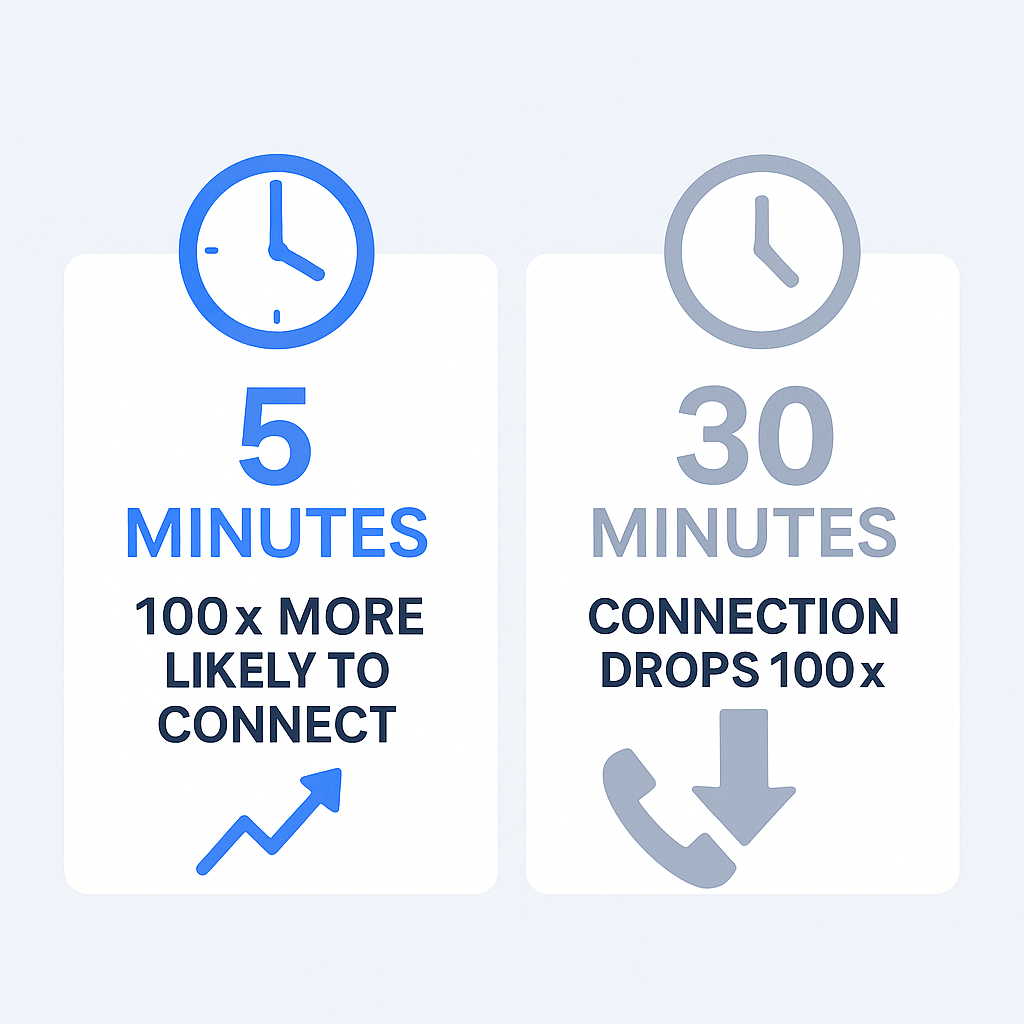
The data is brutal. Companies that respond to leads within 5 minutes are 100 times more likely to connect compared to those who wait just 30 minutes. Let that sink in. A 30-minute delay isn’t just a small hiccup—it’s basically handing your lead to a competitor.
Â

Â
Let’s dig into the numbers that should make every sales leader reconsider their lead response strategy.
Key Lead Response Statistics
Before we dive deep, here are the numbers that matter most:
Â

Â
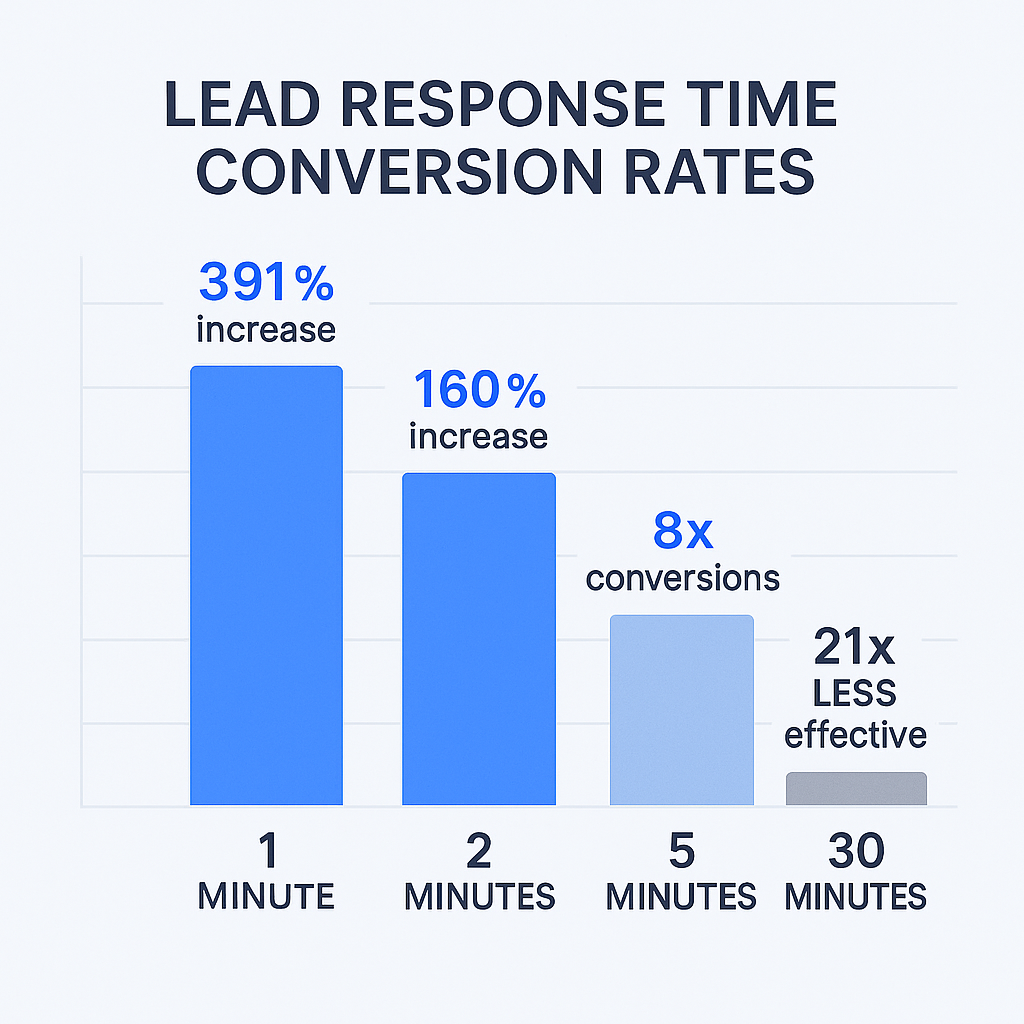
The Golden 5-Minute Window: Responding within the first 5 minutes leads to 8 times higher conversion rates. Miss this window, and you’re not just late—you’re almost irrelevant.
The 1-Minute Miracle: Brands that respond within 1 minute see a 391% increase in conversions. That’s not a typo. One minute can literally make or break your quarter.
First Mover Advantage: Between 35-78% of sales go to the vendor who responds first. Speed isn’t just important—it’s the entire game.
The Sad Reality: The average company takes 42-47 hours to respond to a lead. Meanwhile, 82% of consumers expect a response within 10 minutes. There’s your disconnect.
Most Companies Fail: Only 7% of companies manage to respond within 5 minutes, and 55-58% never respond to inbound leads within five business days. Yes, really.
⚡ Stop Waiting for Leads
Control your pipeline with LinkedIn outbound—reach decision-makers before competitors even see them
Why Lead Response Time Matters (A Lot)
Think about the last time you filled out a contact form. You were interested right then, in that moment. Your problem was top of mind. You were ready to have a conversation.
Now imagine waiting 24 hours for a response. What happened to that urgency? It evaporated. You moved on, got distracted, or found someone else who actually wanted your business.
That’s exactly what your leads are experiencing.
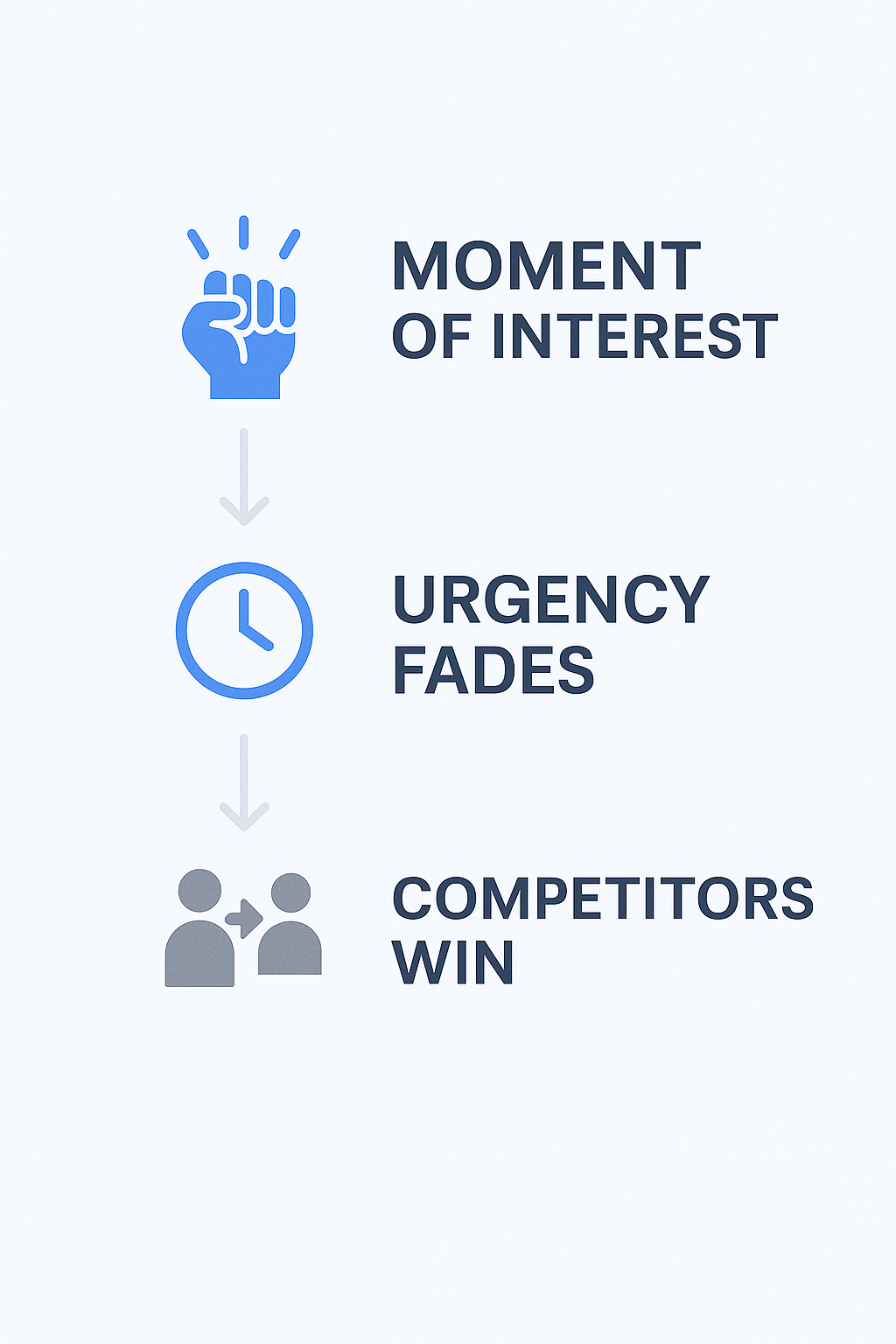
When someone reaches out, they’re at their peak moment of interest. They have a pain point they want solved now. Every minute you delay, three things happen:
Â

Â
- Their urgency fades – Life gets in the way, other priorities pop up
- Competitors swoop in – Someone else is ready to respond in minutes
- Trust erodes – If you’re this slow before they’re a customer, what happens after?
The numbers back this up. Lead qualification rates drop 21 times when you respond after 30 minutes versus within 5 minutes. And if you wait even longer? The odds of qualifying a lead decrease by 400% when you slip from 5 minutes to 10 minutes.
The Optimal Lead Response Time
Let’s cut through the noise: under 5 minutes is the gold standard.
But here’s where it gets interesting. Every second counts exponentially at the beginning:
- Within 1 minute: 391% conversion boost
- Within 2 minutes: 160% conversion boost
- Within 5 minutes: 8x higher conversion rates
- After 30 minutes: You’re 21x less effective
See the pattern? The returns diminish fast. This isn’t linear—it’s logarithmic. The first minute is worth more than the next 10 minutes combined.
And yet, with less than 25% of businesses calling their web leads, there’s a massive opportunity. While your competitors are sending automated emails and crossing their fingers, you can pick up the phone and actually connect.

🎯 Don’t Wait, Initiate
LinkedIn outbound lets you start conversations on your terms—targeted campaigns that fill your calendar
How to Respond to Inbound Leads
Speed is only half the equation. The other half? Doing it right.
Use Multiple Channels
Don’t just email. Don’t just call. Do both. Studies show multi-channel follow-up dramatically increases conversion rates. Try:
- Phone first – Nothing beats real-time conversation
- Email immediately after – Provides a paper trail and next steps
- LinkedIn message – Adds a personal touch and builds rapport
Pick Up the Phone
Here’s a crazy stat: less than 25% of businesses call their web leads. That means if you simply pick up the phone, you’re already ahead of 75% of your competition.
People don’t want to talk to robots. They want human connection, especially when they have questions or concerns.
Personalize Your Outreach
Generic “Thanks for your interest!” emails don’t cut it anymore. Reference their specific request, their company, their industry. Show that a real human is paying attention.
How to Prioritize Inbound Leads
Not all leads are created equal. When multiple leads come in simultaneously, you need a system.
Use lead scoring. Assign points based on:
- Behavioral signals: Demo request (+35 points), pricing page visits (+15 points), webinar attendance (+10 points)
- Fit indicators: Right industry (+10), ideal company size (+10), decision-maker title (+15)
- Negative signals: Personal email (-10), competitor domain (-10), unsubscribed (-25)
This creates a ranked queue. Your sales team knows exactly who to call first—the leads most likely to convert.
Apply qualification frameworks like BANT (Budget, Authority, Need, Timeline) or CHAMP (Challenges, Authority, Money, Prioritization) during first conversations to quickly assess fit.
Lead Response Requires Context
Speed without context is just noise. Before you reach out, know:
- What action did they take? (Downloaded whitepaper vs. requested demo = different urgency)
- What’s their company profile? (Size, industry, tech stack)
- What content have they engaged with? (Shows their pain points)
🚀 Build Context Before Contact
Our LinkedIn campaigns target qualified prospects with personalized messaging—no more cold context guessing
Modern tools can enrich lead data in real-time, so your first touchpoint is relevant and personalized, not generic.
How to Optimize Lead Response
Want to join the elite 7% who respond in under 5 minutes? Here’s how:
Make It Easy for Reps
Remove friction. Automate lead routing so leads instantly hit the right person’s queue. No manager approval. No manual assignment delays. The second a form is submitted, someone gets pinged.
Tools like automated dialers can connect sales reps to fresh leads in seconds. One click, and they’re on the phone.
Track and Measure Everything
You can’t improve what you don’t measure. Track:
- Time from lead creation to first contact
- Connection rate by response time
- Lead-to-meeting conversion by response speed
- Channel performance (phone vs. email vs. social)
Create accountability with service level agreements (SLAs). Define clear expectations: “All demo requests get a response within 5 minutes” isn’t a suggestion—it’s policy.
Reduced Lead Response Time = More Sales
This isn’t theory. Companies that optimize response time see:
- Higher conversion rates (up to 8x improvement)
- Better marketing ROI (stop wasting ad spend on ignored leads)
- Lower customer acquisition costs
- Competitive advantage (you win deals competitors don’t even know they lost)
And here’s the kicker: reducing response time often costs nothing. It’s not about buying more tools—it’s about committing to speed.
Accelerate Your Pipeline with Dedicated Focus
Lead Response is a Full-Time Job
This is where most companies screw up. They expect the same rep to:
- Prospect for new leads (outbound)
- Qualify inbound leads (inbound)
- Nurture deals
- Close opportunities
That doesn’t work. Context-switching kills speed.
Separate inbound from outbound. Create a dedicated team whose only job is responding to inbound leads within 5 minutes. They become specialists in speed and qualification.
Separate Teams by Function
As you scale, further specialize:
- Inbound response team: Focused solely on speed-to-lead
- Outbound prospecting team: Building pipeline through cold outreach
- Product specialists: Handle technical deep-dives
đź’Ľ Outbound Needs Specialists Too
We handle your entire LinkedIn outbound engine—targeting strategy, campaign design, and scaling execution
7-day Free Trial |No Credit Card Needed.
Each team masters their specific motion. No distractions. No competing priorities.
Use Scripts (But Stay Human)
Scripts aren’t about sounding robotic. They’re about consistency and efficiency. Create frameworks for:
- Opening lines that build rapport
- Discovery questions that uncover pain
- Objection handling for common concerns
- Next-step closes
Your team can personalize while following a proven structure.
Give Real-Time Feedback to Marketing
Your sales team sees what marketing can’t: which campaigns generate qualified leads vs. junk. Create a feedback loop:
- Weekly sync meetings between sales and marketing
- Shared dashboards tracking lead quality by source
- Actionable insights (e.g., “LinkedIn leads convert 3x better than Facebook ads”)
This transforms marketing from a cost center into a precision engine.
Record Calls for Continuous Improvement
Record every lead call. Not to spy on reps, but to:
- Identify what messaging works
- Coach based on real scenarios
- Spot patterns in objections
- Share winning approaches
The best training material is your own team’s successful calls.
Optimize Your Inbound Lead Pipeline
The bottom line? Speed wins. But speed with strategy wins bigger.
Your email response strategy needs the same level of attention. Every touchpoint matters, whether it’s phone, email, or social.
And if you’re struggling to maintain that speed because you’re manually hunting for email addresses? That’s where Salesso comes in. We provide verified cold email addresses at scale, so your team spends time selling—not researching. Check out our approach to email lead generation and see how we help sales teams accelerate their outreach.
FAQs
What is lead response time and why does it matter?
What is the optimal lead response time for B2B sales?
How should sales teams prioritize inbound leads?
What channels are best for responding to inbound leads?
Should companies have dedicated lead response reps?
Stop Chasing Inbound Leads
Build predictable pipeline with LinkedIn outbound—targeting, campaigns, and scale handled for you
Segmentation That Actually Converts
LinkedIn outbound targets precise demographics with strategic campaign design and scaling methods