- blog
- Statistics
- SDR Cold Calling Stats 2025: Success Rates & Best Times
Table of Contents
SDR Cold Calling Statistics
- Average cold call connect rate sits between 3% and 10% in the U.S. market
- It takes an average of 18 or more dials just to connect with a single prospect in modern outbound
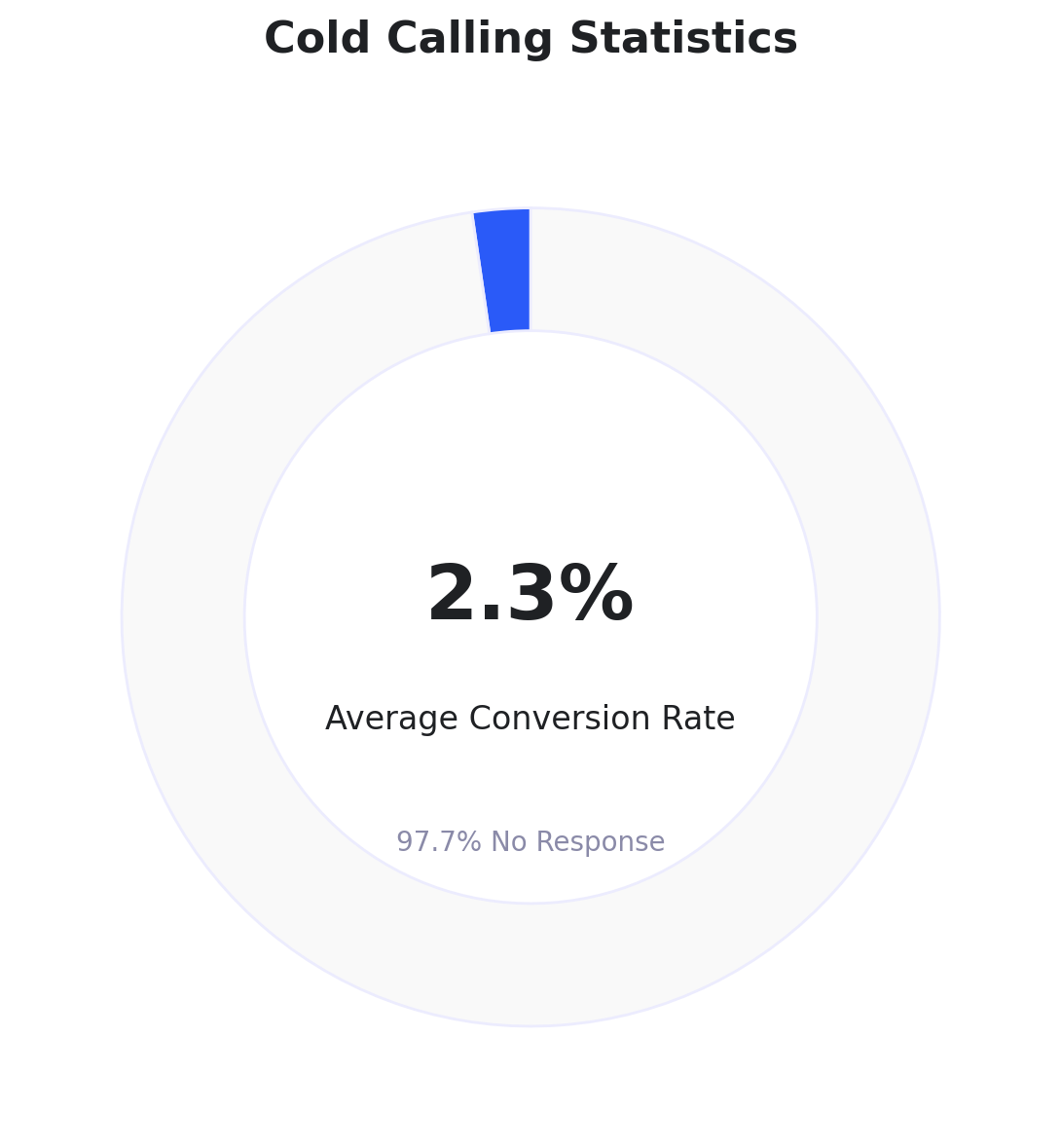
- Overall cold call success rate from dial to booked meeting is a brutal 2.3% across all attempts
- Calls made between 4-5 PM are 71% more effective than late morning calls for booking appointments
- Wednesday is the best day for cold calling, with Mondays and Fridays being dead zones for prospecting
- Average of 3 call attempts are needed to reach a prospect once in 2025
- 65.6% conversion rate for booking a meeting once you’re on the phone with the prospect
- Reps are expected to make 40-50 calls and send 40-100 emails every single day to hit quotas
- Average rep engages in over 100 outreach activities per day just to generate 3.6 quality conversations
- SDRs spend just 2 hours per day actively selling, with the rest on administrative tasks and research
- Only 2-5% of cold calls result in booked meetings on average for sales development teams
- Call connect rates have declined to 15-25%, meaning only 15-25 actual conversations happen per 100 dials
- Development reps average just 4.4 quality conversations per day, which has dropped 45% since 2014
- Multi-channel outreach combining cold calls with email and LinkedIn boosts results by over 287%
- It now takes an average of 3 call attempts just to reach a prospect once, up from previous years
Let’s cut through the noise.
You’ve probably heard the debates. “Cold calling is dead.” “Nobody answers anymore.” “Email is king.”
Here’s the truth: cold calling isn’t dead—it’s evolved. And the numbers prove it.
In 2025, cold calls still drive over 50% of leads for many companies. 78% of business leaders have attended a meeting because of a cold call. Even with all the digital noise out there, your phone remains one of the most powerful tools in your arsenal.
But here’s the catch—you need to know what you’re doing.
The difference between success and failure often comes down to strategy, not effort. When you call matters. How you approach prospects matters. The data you’re using matters.
That’s what this article is about. We’re diving into the cold calling statistics that’ll actually change how you prospect. No fluff. No outdated advice. Just real numbers from 2025 that show what’s working right now in B2B sales.
Ready to turn those dials into deals? Let’s go.
Key SDR Cold Calling Statistics
Success Rates: The Reality Check
Let’s start with the number everyone asks about: What’s the average cold calling success rate?
Here’s what the data shows for 2025:
The average cold call conversion rate is 2.3%—that’s almost half of what it was in 2024 (4.82%). Yeah, it dropped. But before you panic, here’s what that actually means.
Â

Â

🎯 Get 5x Better Response Rates
LinkedIn outbound delivers warmer leads with decision-maker targeting—no cold shoulders, just conversations.
Out of every 100 calls you make, roughly 2-3 will result in a booked meeting or meaningful next step. Some studies show B2B conversion rates ranging from 2% to 5%, depending on your industry and approach.
But here’s where it gets interesting. Top performers achieve 10-15% conversion rates. Teams using optimized data and proven strategies see a 6.7% cold call-to-meeting rate—nearly 3x the industry average.
What’s the difference? It’s not luck. It’s strategy.
When you target highly-qualified prospects instead of spray-and-pray dialing, conversion rates jump to 18%. That’s nearly 10x better than random cold calling.
Connect Rates: Getting Someone on the Line
Here’s a hard truth: most of your calls won’t get answered.
The average connect rate is 16.6%, with top performers hitting around 22%. That means for every 10 dials, you’ll talk to 1-2 actual humans. Industry average? About 10% connect rate.
But wait—there’s good news. Once you connect with someone, 65.6% of those calls turn into actual conversations. That’s a massive opportunity if you can just get them to pick up.
Here’s a pro tip: calling cell phone numbers increases your pickup rate compared to landlines. And if you’re targeting executives? CEOs are actually more likely to pick up business calls than you’d think.
Volume: How Many Calls Should You Make?
The magic number? 52 calls per day is what the average salesperson makes.
But let’s break this down practically. If each call takes about 4 minutes and 50 seconds (including research, ringing, talk time, voicemail, and CRM updates), you can comfortably make 60 cold calls per day in about 5 hours.
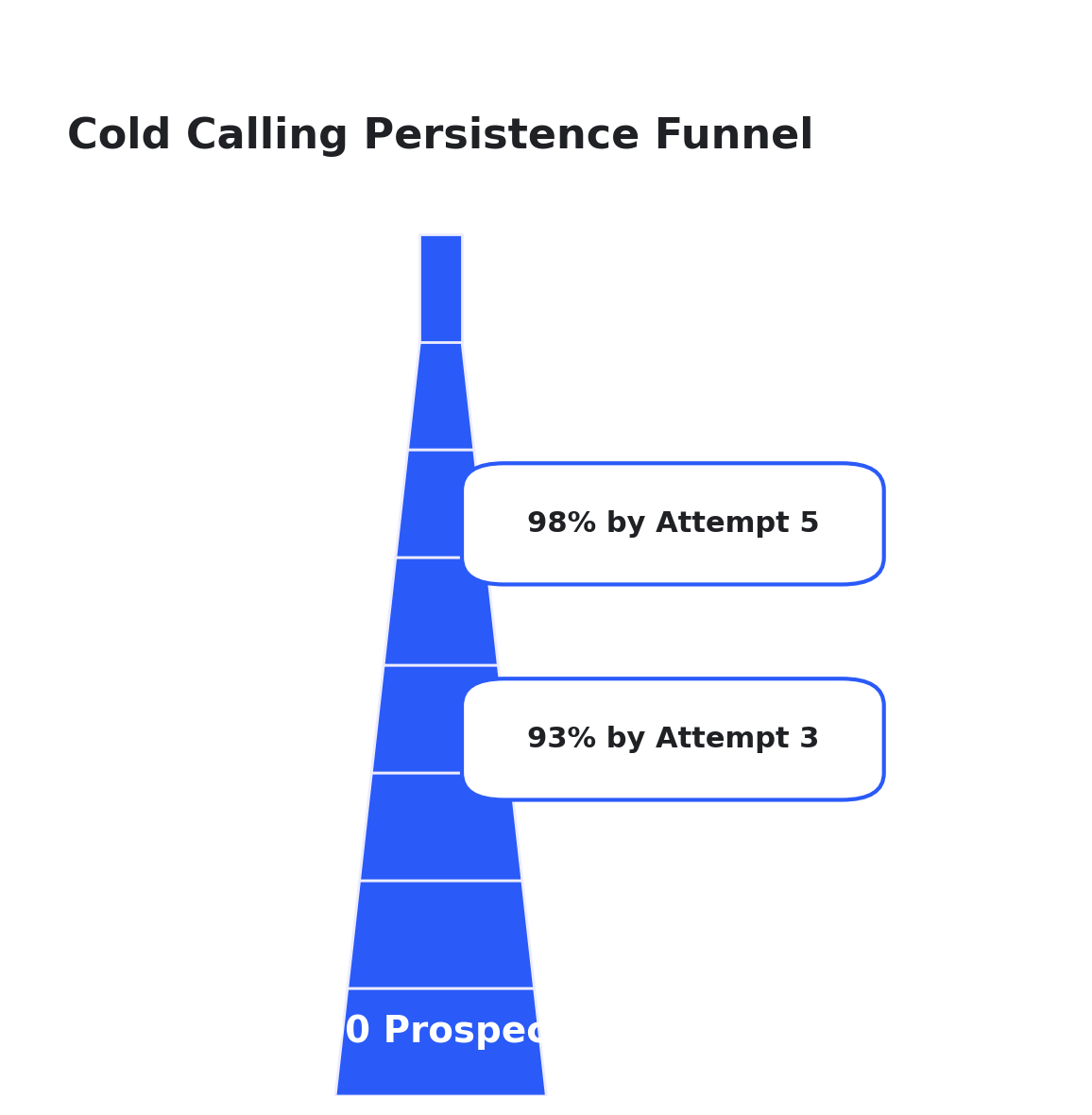
Here’s the reality though: It takes an average of 8 call attempts to reach a single prospect. By the third call attempt, 93% of conversations will have occurred. After the fifth call, you’ve captured 98% of potential conversations.
Â

Â
Translation? Don’t give up after one or two attempts. Persistence pays off, but there are diminishing returns after 5 attempts for most prospects.
Timing: When to Call for Maximum Impact
Want to know the secret weapon most sales reps miss? Timing.
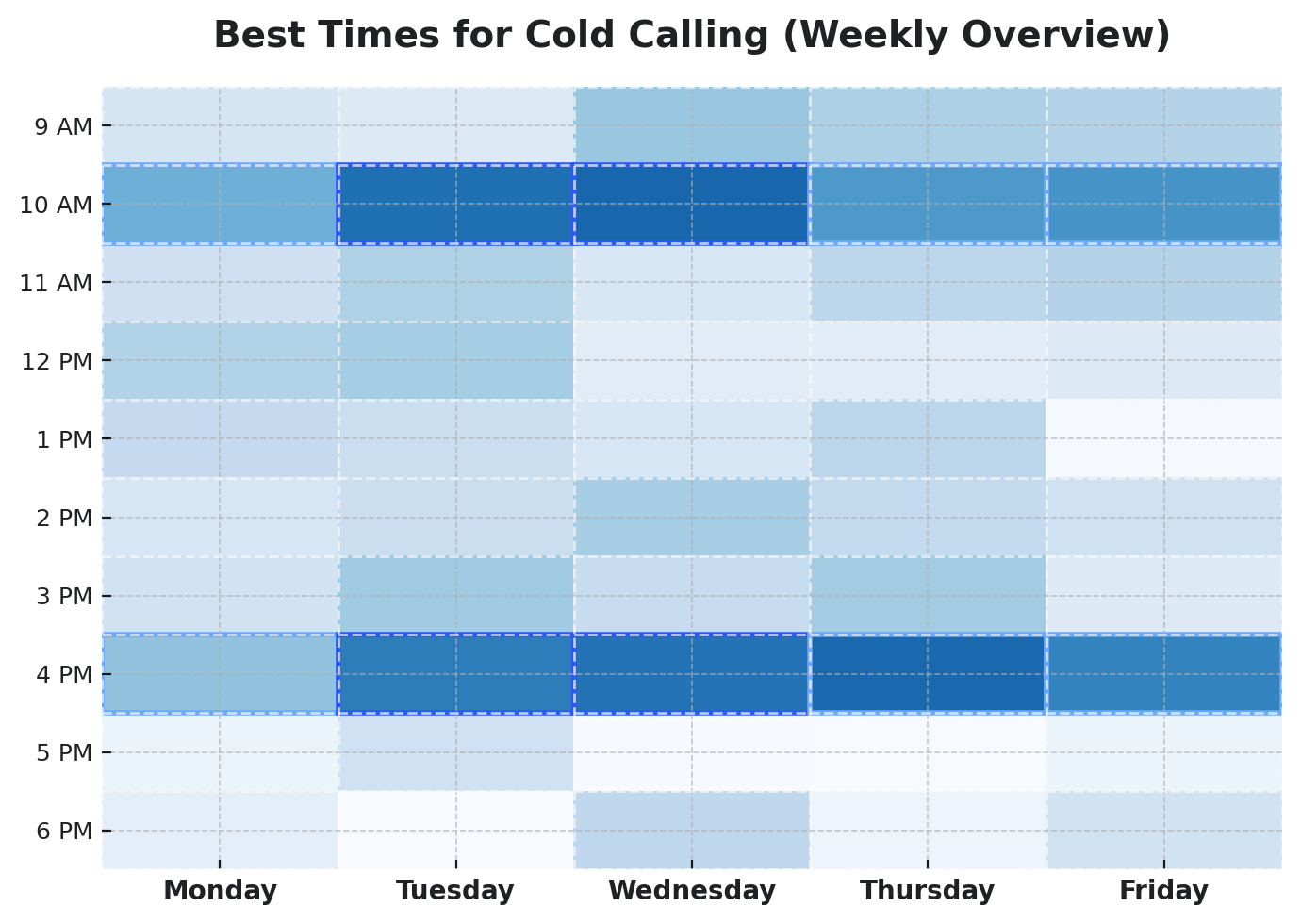
Best Days to Call:
- Tuesday and Wednesday dominate, accounting for 44% of all demos booked
- Thursday comes in third but falls behind significantly
- Monday has high efficiency but lower volume
- Friday is the worst day for booking meetings (though interestingly, it’s best for having conversations)
Best Times to Call:
- 10 AM – 11 AM: The sweet spot. Decision-makers have cleared morning emails and aren’t yet bogged down
- 4 PM – 5 PM: The golden hour. People are winding down and more willing to take unexpected calls. This time slot is 109% more effective than mid-morning for qualifying leads
- 2 PM – 3 PM: The second-best afternoon window
Worst Times to Call:
- Before 10 AM (people are organizing their day)
- 12 PM – 1 PM (lunch hour)
- After 5 PM (mentally checked out)
- Avoid calling between 7-9 AM or during the 5 PM commute—call length drops significantly
The Persistence Factor
Here’s a stat that’ll blow your mind: 80% of sales require at least 5 follow-up calls, yet 44% of sales reps give up after just one attempt.
Think about that gap. Your competition is literally quitting before they even get started.
But persistence needs to be smart. Research shows that asking 11-14 targeted questions during discovery calls correlates with a 70% higher success rate. Ask fewer than 11, you’re missing context. Ask more than 14, you hit diminishing returns.
The Role of Preparation
82% of B2B decision-makers say sales reps sound unprepared on cold calls. Ouch.
But flip that script, and you’ve got a massive advantage. 76% of top performers conduct research before making calls, while 42% of average reps lack sufficient information.
The impact? Sales training improves conversion rates by 38%. Teams that invest in continuous coaching see 50% higher net sales per employee.
Translation: do your homework. Know who you’re calling and why it matters to them specifically.
Multi-Channel Magic
Here’s where modern prospecting gets really powerful.
Phone-based reps report significantly higher success rates than email-only reps—6.8 quality conversations per day versus just 3.3 for email-centric teams.
But the real win? Combining channels.
Sales teams using phone, email, and LinkedIn together see a 28% increase in lead conversion rates. Multi-channel outreach yields 37% more conversions than single-channel approaches.

 💼 LinkedIn + Outbound = Pipeline Gold
We design multi-channel campaigns that warm up prospects before any call—complete targeting to scaling.
Sending an email before calling can boost your success rate by 40%. It’s not about choosing between cold calls and email—it’s about using them together strategically.
The Data Quality Factor
Want to know what kills more cold calling efforts than anything else? Bad data.
Bad data costs U.S. businesses more than $611 billion annually. Sales reps waste 27.3% of their time due to inaccurate contact information, and business data decays at 2% monthly.
🚀 Stop Wasting Time on Bad Data
Our LinkedIn engine targets verified decision-makers—precision campaigns that actually book meetings, guaranteed.
On the flip side, teams using clean, verified data see conversion rates up to 75% higher than those with outdated lists.
This is why tools that verify contact data before you dial are game-changers. AI can verify phone numbers with 98% accuracy, saving massive amounts of wasted time on disconnected numbers.
The AI Advantage
Speaking of AI, here’s where things get exciting for 2025.
75% of B2B companies will implement AI for cold calling by 2025. Why? Because the numbers are staggering.
AI saves sales reps an average of 2 hours per day. That’s 10 hours per week you could be spending on actual selling instead of administrative tasks.
Better yet, 83% of sales teams incorporating AI see revenue growth, and 47% use AI for call coaching to continuously improve their approach.
Opening Lines That Work
Your first few seconds can make or break the call. Here’s what actually works:
Opening with “How have you been?” increases success rates by 6.6x. It acts as a pattern interrupt that keeps the conversation going.
Using collaborative language like “we,” “our,” and “us” helps establish rapport. And stating your reason for calling upfront increases your success rate by 2.1%.
What doesn’t work? The classic “Did I catch you at a bad time?” Actually tanks your success rate to less than 1%.
Also powerful: Opening with “I understand we share a common LinkedIn group” increases meeting rates by 70%.
Talk-to-Listen Ratio
Here’s a nuance most people miss: successful SDRs speak only about 45% of the time on cold calls.
In the initial stages, you want a higher talk-to-listen ratio to reduce prospect effort. But as the conversation progresses, letting them talk more builds trust and uncovers real needs.
The average cold call lasts 93 seconds—up from 83 seconds last year. That extra 10 seconds might not sound like much, but it signals that prospects who do engage are staying engaged longer.
The Follow-Up Reality
Remember we mentioned persistence? Here’s the follow-up framework that actually works:
After your initial contact, response times matter massively. Quick follow-ups dramatically improve your chances of closing deals.
It takes at least 5 follow-up calls to turn a prospect into a qualified lead. But here’s the strategic twist: instead of always pushing for a meeting on the first call, use callbacks as your next touchpoint. Teams using this approach see significantly higher success rates than those pushing for immediate demos.
Industry Variations
Not all industries are created equal when it comes to cold calling statistics.
Technology and SaaS companies have the lowest conversion rate at 0.81%, while business services (like HR and payroll) average a much healthier 2.22%.
Why? Higher-ticket, more complex solutions require more touches and longer sales cycles. But daily sales training improves conversion rates by 6.68% regardless of industry, suggesting that skill-building matters more than your vertical.
The ROI Picture
Let’s talk money.
B2B cold calling campaigns can boost ROI by 40-50%. For many companies, cold calls remain the second-best lead source for revenue generation.
In one study, users generated over $15.7 million through cold calling in a single year, completing 802 deals. That’s substantial pipeline impact.
And here’s the kicker: acquiring new customers is 6-7 times more costly than retaining existing ones, which makes every successful cold call even more valuable when you factor in lifetime value.
Conclusion
Cold calling in 2025 isn’t about making 100 random calls and hoping something sticks.
It’s about strategy backed by data. It’s calling the right people at the right time with the right message. It’s combining your phone with email outreach and social touches for maximum impact.
The numbers don’t lie:
- 2.3% average conversion rate, but top performers hit 10-15%
- Tuesday and Wednesday at 10-11 AM or 4-5 PM are your golden windows
- 8 attempts to reach a prospect on average—but 93% of conversations happen by attempt three
- Multi-channel approaches see 37% more conversions than phone-only strategies
The gap between struggling and crushing it? It’s not that wide. Better data. Better timing. Better preparation. Better tools.
âš¡ Skip the 8-Call Chase
LinkedIn outbound connects you with warm leads who actually want to talk—full strategy included.
7-day Free Trial |No Credit Card Needed.
Every call you make is either building your pipeline or teaching you what works. With clean data, smart timing, and a multi-touch strategy, you can easily double or triple your results.
The phone isn’t dead. Your old approach might be. Update your strategy with these stats, and watch your conversion rates climb.
Need help streamlining your cold outreach with verified email data? That’s where Salesso comes in. Get accurate contact information that complements your calling strategy and keeps your pipeline full.
Ready to make every call count? Start using what the data tells you works—and leave your competition wondering how you’re booking so many meetings.
FAQs
What is the average cold call success rate in 2025?
How many cold calls should a sales rep make per day?
What is the best time to cold call prospects?
How many call attempts does it take to reach a prospect?
Is cold calling still effective in 2025?
Tired of 2.3% Cold Call Rates?
Get 10-15% conversion rates with our LinkedIn outbound engine—complete targeting, campaigns, and scaling.
Segmentation That Actually Converts
LinkedIn outbound targets precise demographics with strategic campaign design and scaling methods