

- blog
- Statistics
- Inbound SDR Stats 2025: Conversion & Response Data
Table of Contents
Inbound SDR Statistics
- Companies responding to leads within 5 minutes are 100 times more likely to connect compared to waiting just 30 minutes
- Responding within the first 5 minutes leads to 8 times higher conversion rates than slower response times
- Brands that respond within 1 minute see a 391% increase in conversions compared to slower responders
- Companies following up within the first hour report a 53% conversion rate, compared to just 17% after 24 hours
- Average company takes 42-47 hours to respond to a lead, while 82% of consumers expect a response within 10 minutes
- Only 7% of companies manage to respond within 5 minutes, creating massive competitive advantage
- Lead qualification rates drop 21 times when you respond after 30 minutes versus within 5 minutes
- Website leads convert at 31.3%, customer and employee referrals hit 24.7%, showing source quality matters
- Inbound leads are 62% more cost-effective, but outbound campaigns generate 50% larger deal sizes on average
- 36% to 40% of pipeline likely comes from marketing and SDR teams, requiring close collaboration
Look, if you’re trying to figure out whether your inbound team is crushing it or barely keeping up, you’re not alone.
Every sales leader wakes up wondering: “Are my numbers good? Are we converting leads fast enough? Should I be worried?”
Here’s the thing—inbound sales development isn’t what it used to be. Response times that were acceptable two years ago? They’re deal-killers now. Conversion rates that looked impressive in 2023? They’re baseline expectations today.
The game changed, and the stats prove it.
In this article, we’re diving into the inbound SDR statistics that actually matter in 2025. No fluff, no theory—just the cold, hard numbers that separate winning teams from those watching opportunities slip away. Whether you’re managing a sales development team or trying to hit quota yourself, these benchmarks will show you exactly where you stand.
Key Inbound SDR Statistics
Response Time: The 5-Minute Rule That Makes or Breaks Deals
Remember when responding within an hour was considered “fast”? Yeah, those days are gone.
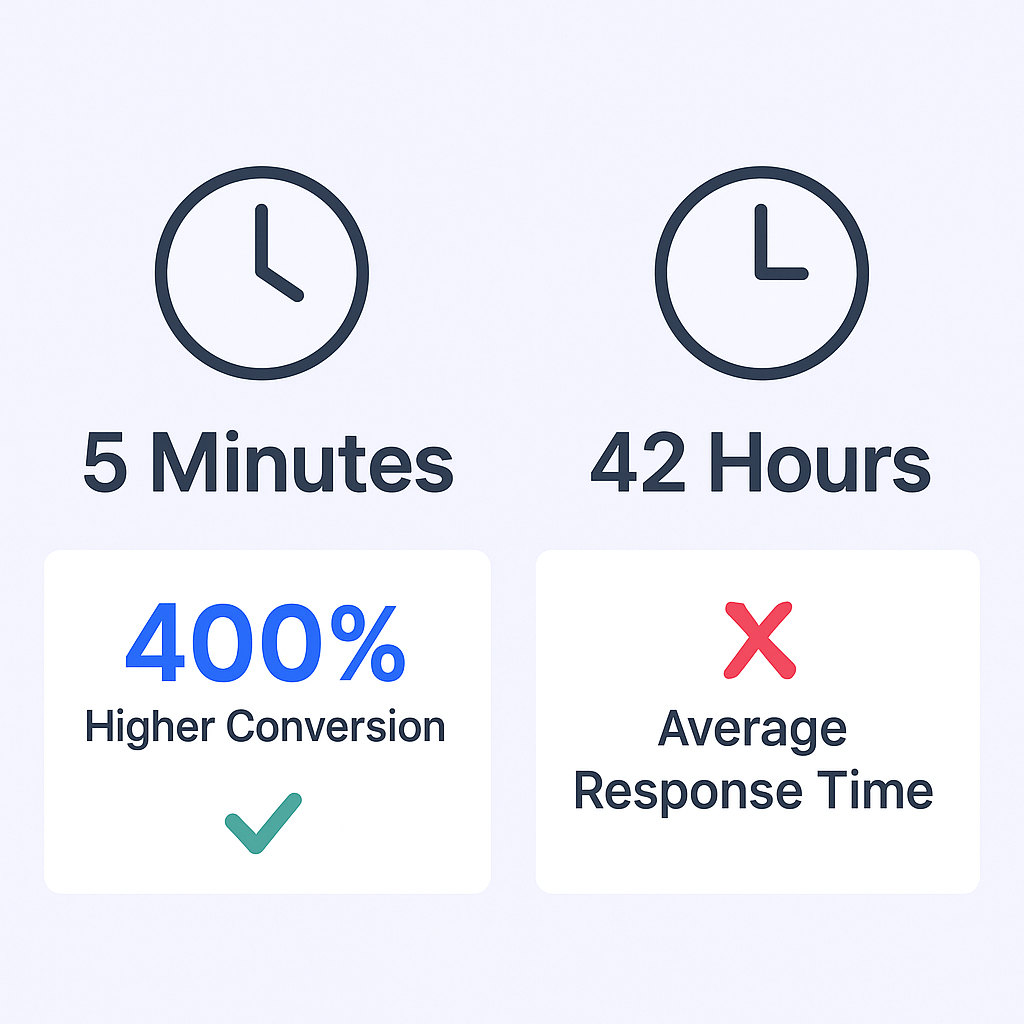
Here’s what the data shows: Only 7% of companies respond to leads within the first 5 minutes. Meanwhile, the average response time across industries sits at a painful 42 hours.
Â

Â
But here’s where it gets interesting—engaging with leads within five minutes of receiving a response increases conversion rates by 400%. Let that sink in. Four. Hundred. Percent.
Think about it from a buyer’s perspective. They just filled out your demo form. They’re interested right now. Their browser tabs are probably open comparing you to three competitors. The company that responds first—and we mean actually responds, not sends an automated email—is the one that gets the meeting.
🎯 Target Before They Search
LinkedIn outbound finds decision-makers proactively—no waiting 42 hours or losing to competitors who responded first.
The Bridge Group found that leads are 21x more likely to convert if contacted within five minutes versus 30 minutes. That’s not a typo. Twenty-one times more likely.
For teams still stuck in the “we’ll get to it when we get to it” mentality, this should be a wake-up call. Your competitors are already using AI sales assistant tools and automation to respond instantly. Every minute you wait, you’re watching money walk out the door.
Conversion Rates: What “Good” Actually Looks Like
Not all leads are created equal, and the stats back this up big time.
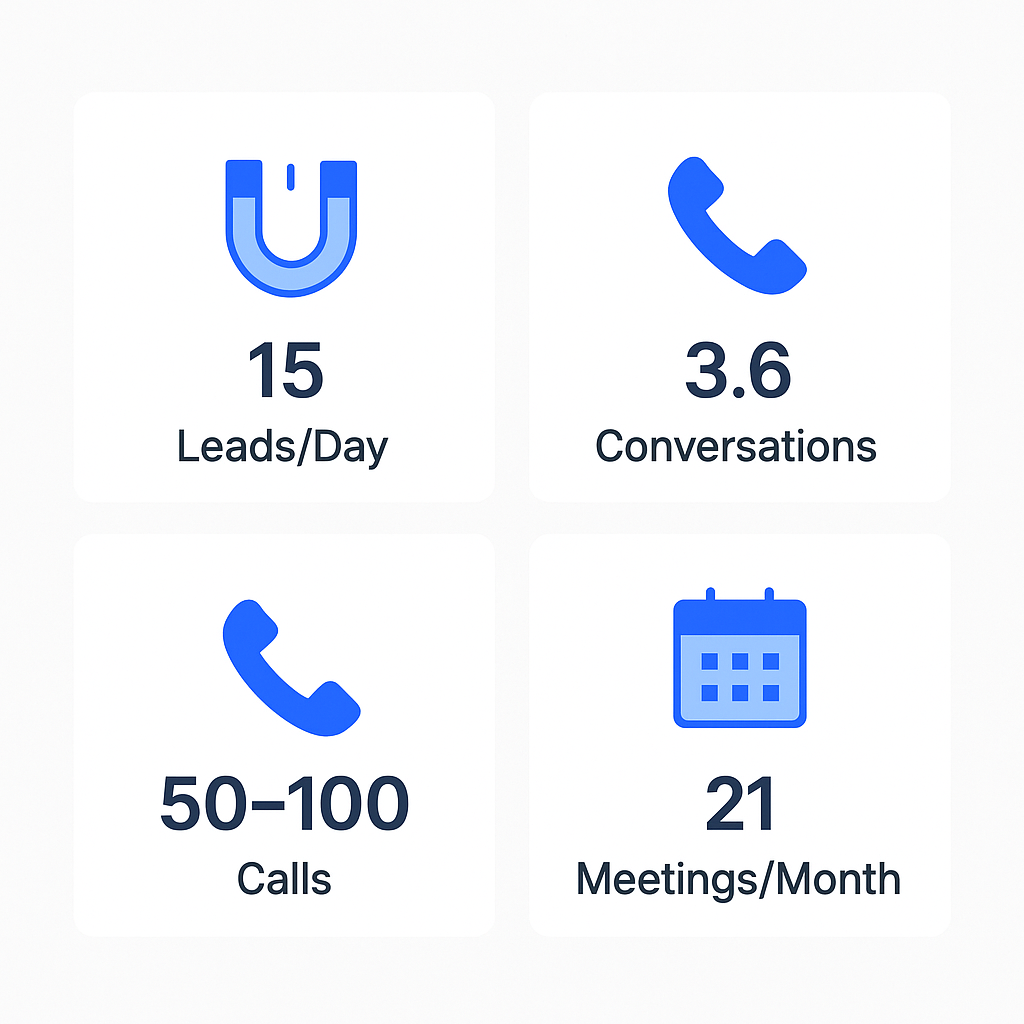
High-intent leads (think demo requests and meeting inquiries) convert at 75-80% from lead to meeting. These are your slam dunks—people who are ready to talk and probably comparing solutions right now.
Â

Â
On the flip side, lower-intent leads like ebook downloads, webinar attendees, or content syndication leads? They convert at 5-10%. Still valuable, but they need a completely different approach.
For SaaS companies specifically, the average lead-to-opportunity conversion rate is 12%. But here’s what most people miss: that number varies wildly based on how you handle inbound leads.
Let’s break it down further:
Demo request conversions: 75-80% (these people are hot and ready)
Content download conversions: 5-10% (they’re just researching)
Overall inbound-to-meeting rate: 12% average across B2B SaaS
The math here is simple but brutal. If you’re treating all leads the same, you’re wasting time on people who aren’t ready to buy while letting hot prospects cool off.
Companies using AI sales assistant technology report 30% higher conversion rates compared to traditional manual follow-up methods. Why? Because AI doesn’t take coffee breaks, doesn’t forget to follow up, and doesn’t let a hot lead sit in the queue because someone was in a meeting.
💰 Build Pipeline Without Inbound Dependency
Our LinkedIn outbound engine generates qualified meetings predictably—complete targeting, sequencing, and scaling system included.
Activity and Capacity: What One Rep Can Actually Handle
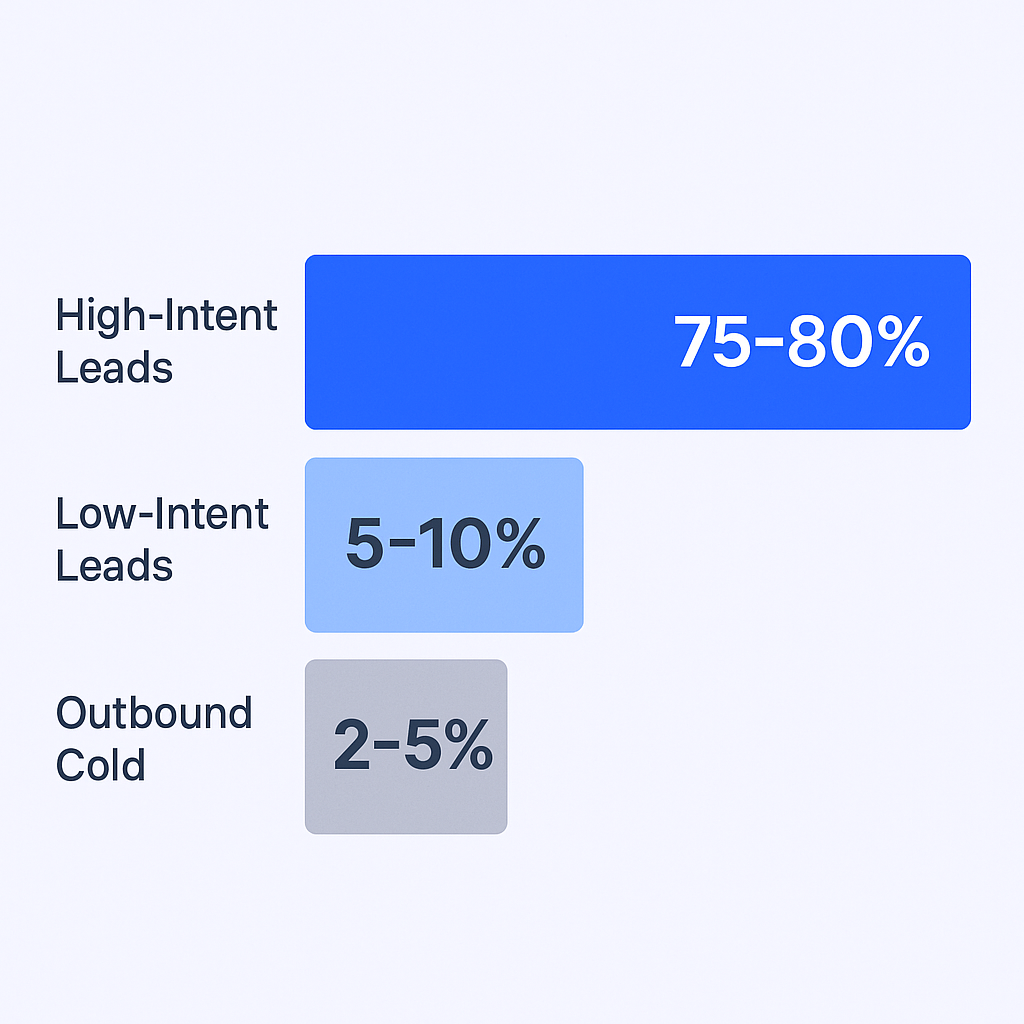
Let’s talk about what’s realistic. According to multiple studies, each inbound rep should be able to handle about 15 leads per day. That’s assuming they’re qualifying properly, following up appropriately, and not just blasting through forms.
Â

Â
But here’s the kicker: only 27% of inbound leads actually meet all three critical criteria (right company fit, right geography, right vertical). That means most of the time, your “inbound” team is actually doing outbound work—chasing down leads that aren’t quite ready or don’t quite fit.
For outbound SDRs, the numbers look different. They should produce 15 meetings per month, with a typical show rate of 80%, meaning 12 actual held meetings per month. Not exactly world-changing, but that’s the reality of cold outreach.
The productivity breakdown for active SDRs shows:
- Average of 3.6 quality conversations per day (down 55% since 2014—yikes)
- 50-100 phone calls per day for outbound teams
- 100-150 emails sent daily across mixed inbound/outbound roles
- 21 meetings booked per month for top performers
Want a reality check? If your sales reps are booking fewer than 10 meetings per month, something’s broken. Could be the lead quality, could be the follow-up process, could be the messaging. But it’s definitely something.
Pipeline Impact: The Numbers That Actually Matter to Revenue
Here’s where inbound sales development teams prove their worth—or don’t.
According to research across 500+ companies, SDRs are responsible for generating 30-45% of the sales pipeline in B2B SaaS companies. That’s huge. If your SDR function isn’t pulling its weight here, you’ve got a problem that’s probably showing up in next quarter’s forecast right now.

 📈 Control Your Pipeline Growth
Stop relying on marketing-generated leads. LinkedIn outbound lets you target ideal accounts and book meetings on demand.
The Bridge Group found that the median pipeline generated per SDR is $3 million per year. But—and this is important—there’s massive variation. Some companies see less than $750K per SDR annually, while others exceed $10 million. That spread tells you everything you need to know about the importance of process, tools, and targeting.
Breaking down conversion metrics from Sales Accepted Lead (SAL) to the next stage: if your SDR team secures 10 SALs per month, you can typically expect about 5 of those to progress to the next step in the sales process. That 50% progression rate is pretty standard, but again, it varies based on how well you’re qualifying upfront.
The AI Revolution: What’s Changing in 2025
Look, we can’t talk about 2025 without addressing the elephant in the room: AI is eating everything.
The AI Sales Assistant Software Market is projected to hit $67.36 billion by 2030, growing at a CAGR of 20.2%. That’s not hype—that’s happening right now.
Companies using AI sales assistant tools report:
- 95% increase in qualified leads
- 3 weeks saved monthly by eliminating manual scoring
- 65% reduction in sales cycle time
- Up to 7x higher conversion rates with multi-agent AI SDR systems
Here’s what that looks like in practice: while a human SDR costs $4,000-7,000 monthly, AI alternatives run at $1,000-5,000 monthly and work 24/7 without vacation days, sick days, or needing motivation.
But—and this is crucial—the best-performing teams aren’t replacing humans with AI. They’re using AI to handle the grunt work so humans can focus on the complex conversations that actually require empathy, creativity, and relationship-building.
The data shows that 22% of teams have fully replaced their SDRs with AI, while 23% don’t use AI at all. The remaining 55%? They’re in the hybrid zone, figuring out the right balance.
âš¡ LinkedIn Outbound Fills The Gap
Supplement inbound flow with predictable LinkedIn prospecting—target decision-makers actively, convert faster, scale systematically.
7-day Free Trial |No Credit Card Needed.
Multi-Channel Outreach: Because Email Alone Isn’t Cutting It
Single-channel outreach is dead. The stats prove it.
Outreach strategies spanning at least three channels see 28% higher conversion rates than email-only approaches. Think about it: email, phone, LinkedIn—hitting prospects where they actually pay attention.
For inbound outbound sales teams running hybrid models, multi-channel sequences are no longer optional. They’re the baseline.
Modern sales teams using coordinated outreach across email, phone, and social media report:
- 21 meetings per month on average
- 62% conversion rate from meeting to opportunity
- Better engagement rates across all touchpoints
The key? Timing and coordination. An email followed by a LinkedIn message the next day, then a phone call two days later—that sequence converts better than any single touchpoint ever could.
The Cold Reality: How Inbound and Outbound Compare
Let’s address this directly because people always want to know: which performs better?
Outbound SDRs are responsible for 53% of pipeline conversion, according to Tenbound. But here’s the catch: 71% of sales development teams deliver less than half the sales pipeline they’re targeting.
The difference in conversion between inbound and outbound is stark:
- Inbound (high-intent): 75-80% conversion rate
- Inbound (low-intent): 5-10% conversion rate
- Outbound (cold): Around 2-5% conversion rate
But before you slash your outbound budget, remember: inbound leads only happen if marketing is doing its job. And in most B2B companies, you need both engines running to hit revenue targets.
Companies with the strongest pipelines run 50/50 splits between inbound and outbound-generated opportunities. They’re not betting everything on one horse.
What This All Means for Your Team
Here’s the bottom line: if you’re not tracking these metrics, you’re flying blind.
Your sales development team should be monitoring:
- Response time (aim for under 5 minutes on high-intent leads)
- Lead-to-meeting conversion rates (12% minimum for mixed leads, 75%+ for demo requests)
- Meeting show rates (80%+ is the standard)
- Pipeline contribution (30-45% of total pipeline from SDRs)
- Qualification accuracy (50%+ progression from SAL to next stage)
The teams winning in 2025 aren’t necessarily doing anything revolutionary. They’re just responding faster, qualifying smarter, and using the right tools to automate the boring stuff.
Whether you’re using AI sales assistant technology, building a hybrid inbound/outbound model, or doubling down on one channel—the numbers don’t lie. Track them religiously, iterate ruthlessly, and watch your conversion rates improve.
Because at the end of the day, hitting quota isn’t about working harder. It’s about working smarter with data that shows you exactly where the opportunities are hiding.
Conclusion
The inbound SDR landscape in 2025 isn’t about following gut feelings or “best practices” from 2020. It’s about hard numbers and brutal efficiency.
Speed wins. Responding in 5 minutes instead of 42 hours can 21x your conversion rate. Intent matters. High-intent leads convert at 75-80% while low-intent leads barely crack 10%. AI is real. Teams using automation see 95% more qualified leads and save 3 weeks monthly on manual work.
But here’s what the statistics don’t capture: the best sales development teams aren’t just chasing metrics. They’re using data to understand why leads convert, when prospects are ready to talk, and how to personalize outreach at scale.
Whether you’re managing sales reps, building out your SDR team, or trying to bridge the gap between inbound and outbound sales, these benchmarks give you a starting point. But remember—they’re just that: a starting point.
The companies crushing it in 2025 took these stats, tested them against their own data, and built processes that work for their audience. You should do the same.
Now stop reading and go check your team’s response time. We’ll wait.
FAQs
What is a good conversion rate for inbound SDRs?
How quickly should SDRs respond to inbound leads?
How many leads should one inbound SDR handle per day?
What percentage of pipeline should SDRs generate?
Is the "Who's Viewed Your Profile" feature truly useful?
Stop Waiting. Start Prospecting on LinkedIn.
While competitors chase inbound leads, scale pipeline predictably with LinkedIn outbound targeting and automation.
Segmentation That Actually Converts
LinkedIn outbound targets precise demographics with strategic campaign design and scaling methods