

The world of online shopping has exploded into a trillion-dollar powerhouse, and the numbers tell an incredible story. Whether you’re planning to launch your first store or optimize an existing one, understanding these ecommerce website statistics will give you the competitive edge you need.
In 2025, we’re witnessing unprecedented growth across every corner of digital commerce. From the way people shop on their phones to how businesses handle payments and security, the landscape is evolving faster than ever.
Let’s dive into the data that’s shaping the future of online business.
General eCommerce Statistics
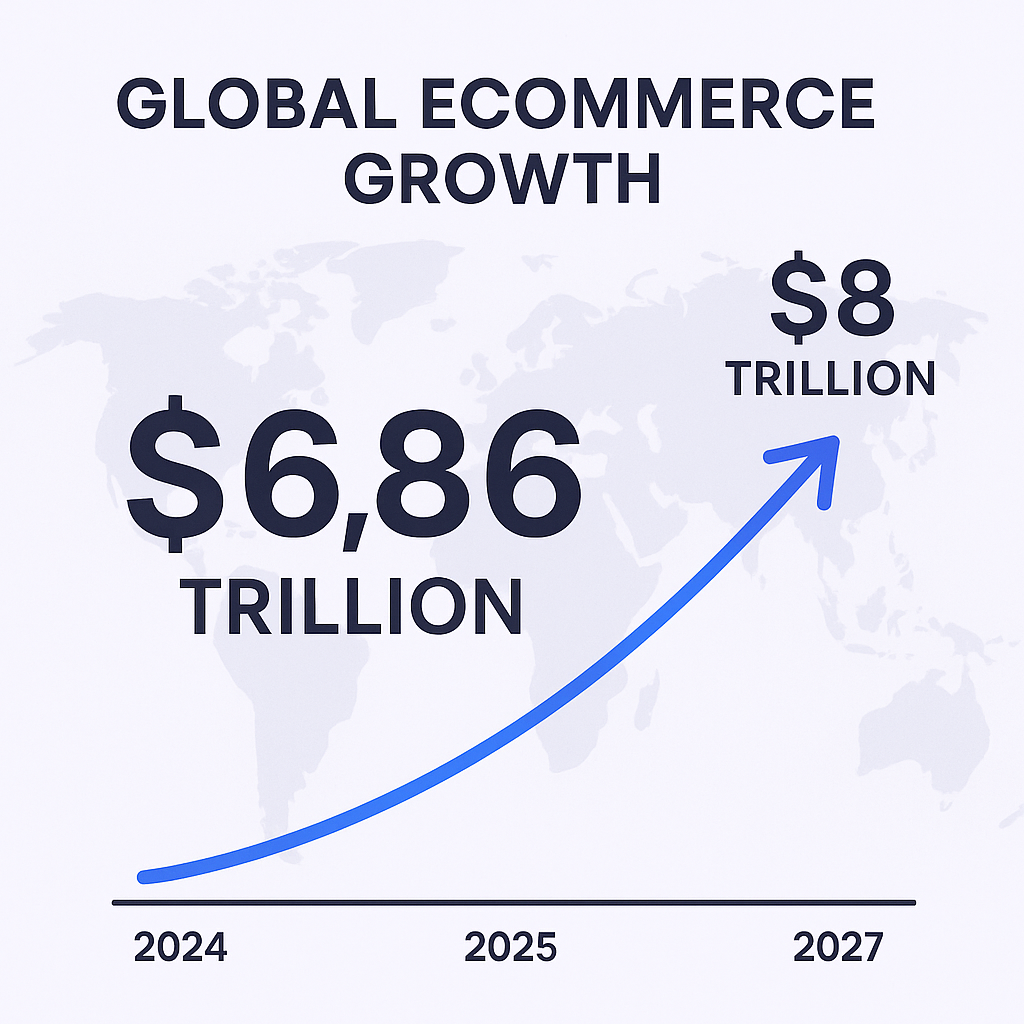
The sheer scale of ecommerce growth is mind-blowing. Global ecommerce sales are projected to hit $6.86 trillion in 2025, representing an 8.37% increase from the previous year. This massive market shows no signs of slowing down, with forecasts predicting it will approach $8 trillion by 2027.
Here’s what’s driving this explosive growth: 2.77 billion people worldwide will shop online in 2025. That’s one-third of the entire global population actively participating in online shopping. Every single day, approximately 2,162 new ecommerce websites launch, adding to the existing pool of over 28 million active online stores.
Consumer Behavior Insights
Understanding what motivates online shoppers is crucial for any business owner. The data reveals clear patterns in consumer decision-making:
Free delivery remains the top purchase motivator, influencing 50.6% of shoppers. Following closely behind are coupons and discounts (39.3%) and easy returns processes (33.2%). These aren’t just nice-to-have features anymore—they’re essential business requirements.
Trust plays a massive role in purchase decisions. An overwhelming 99% of customers check reviews before buying, with nearly half (49%) trusting online reviews as much as personal recommendations from friends.
The Cart Abandonment Challenge
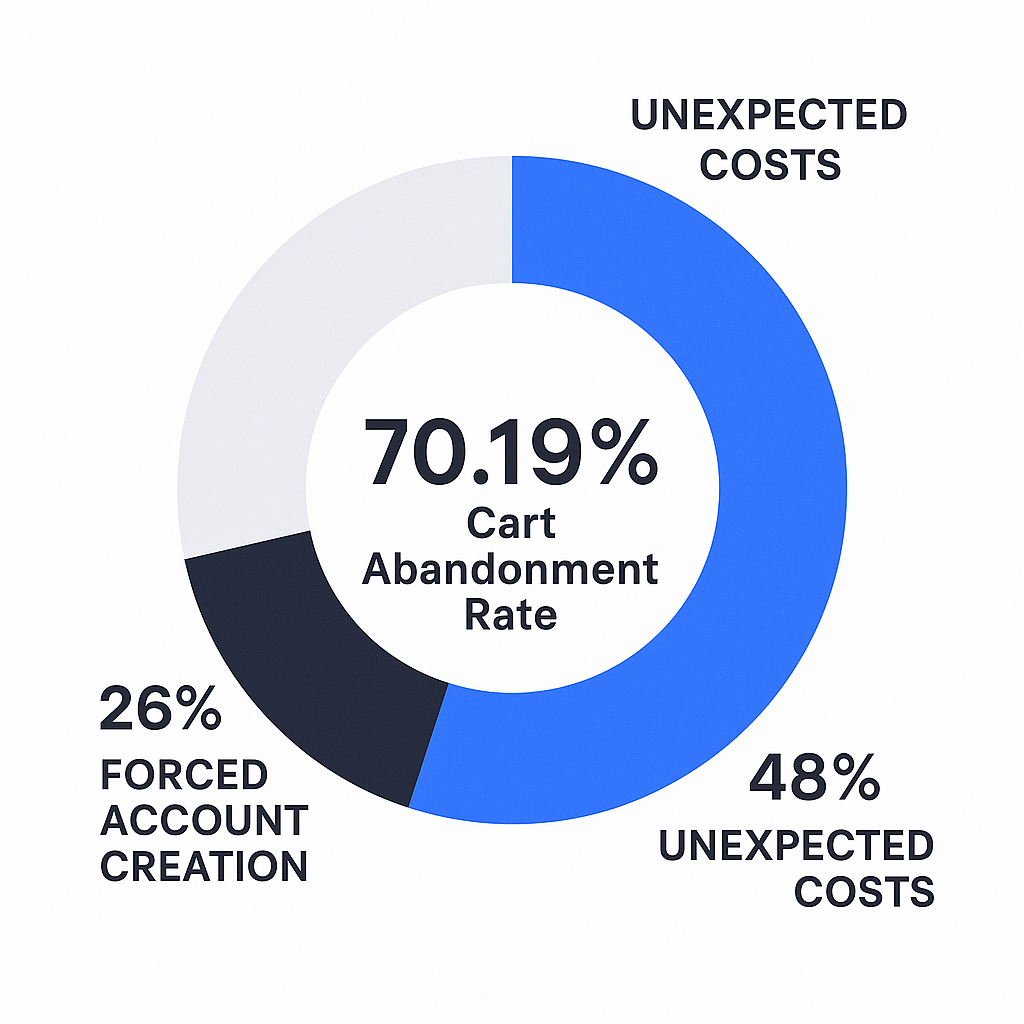
Here’s a statistic that might shock you: 70.19% of shoppers abandon their carts without completing their purchase. That means for every ten people who show serious buying intent, seven walk away empty-handed.
The biggest culprit? Unexpected extra costs like shipping and taxes drive away 48% of potential buyers. The second biggest barrier is forcing customers to create accounts before checkout, which loses 26% of shoppers.
Platform Landscape
Amazon dominates the U.S. market with a commanding 37.6% market share, attracting 2.6 billion monthly visits globally. However, there’s a growing trend toward direct-to-consumer shopping, with 15% of online shoppers globally preferring to buy directly from brands.
Shopify powers 30% of all ecommerce websites in the U.S. and supports over 2.6 million live stores worldwide, making it the backbone of independent ecommerce.
Mobile eCommerce Statistics
Mobile isn’t just part of the ecommerce story—it’s becoming the entire story. The shift to mobile-first shopping has fundamentally changed how businesses need to think about their online presence.
Mobile Traffic Dominance
Mobile devices now account for over 70% of all ecommerce traffic. This isn’t just browsing traffic—mobile commerce is projected to generate $2.5 trillion in sales globally in 2025. In the United States alone, mobile commerce sales are expected to exceed $710 billion.
The integration of social media and mobile shopping is creating new opportunities.
Nearly 40% of all mobile ecommerce purchases are expected to happen directly through social media platforms in 2025, as social media users increasingly discover and buy products without leaving their favorite apps.
The Mobile Conversion Gap
Despite mobile’s traffic dominance, there’s a significant performance gap that smart businesses can exploit. Mobile conversion rates hover between 2-3%, consistently lower than desktop rates of 3-4%.
Why the disconnect? 84% of mobile users report experiencing difficulties completing transactions on their phones. The most common complaint, cited by 67% of users, is that “pages and links are too small to click on”—a basic usability issue that costs businesses millions in lost sales.
This gap represents a massive opportunity. Mobile visitors have shown interest by visiting your site, but friction in the user experience prevents them from converting. The average order value on desktop is often $40 higher than mobile, highlighting the revenue impact of this problem.

eCommerce Payment Statistics
Payment methods reveal a lot about consumer preferences and business sophistication. The payment landscape is undergoing a dramatic shift that every online business needs to understand.
Digital Wallet Revolution
Digital wallets will account for 52.5% of global ecommerce transaction value by 2025, surpassing traditional credit cards as the preferred payment method. This isn’t just a trend—it’s become a business requirement.
The numbers are stark: 51% of consumers won’t even consider purchasing from an online store that doesn’t offer digital wallet options. PayPal leads with 434 million active users, while Apple Pay is on track to surpass 500 million global users in 2025.

The BNPL market is experiencing explosive growth, with transaction volumes predicted to exceed $800 billion by 2028. In the United States, over 60 million Americans already use BNPL services for purchases across electronics, fashion, and home goods categories.
While BNPL boosts conversion rates by lowering purchase barriers, it also introduces new fraud risks. Companies heavily promoting BNPL options are seeing increased first-party fraud, where customers acquire products with no intention of completing payment.
B2B eCommerce Statistics
While consumer ecommerce gets most of the attention, the B2B market is where the real opportunity lies. The numbers are staggering and the growth rate is even more impressive.
The Scale of B2B Opportunity
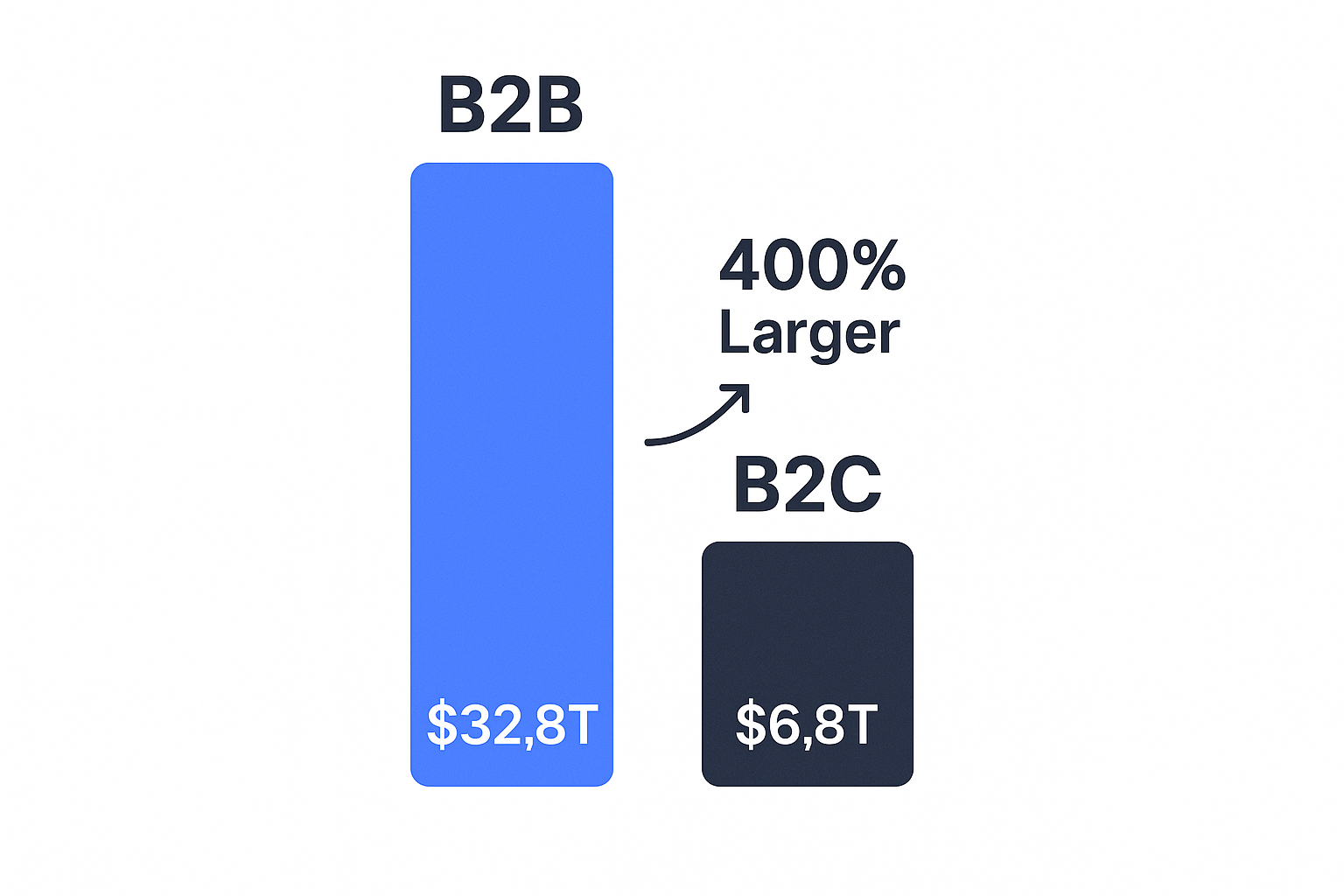
The global B2B ecommerce market is valued at $32.8 trillion in 2025—more than 400% larger than the B2C market. This massive sector is growing at a compound annual growth rate of 14.5%, with projections reaching $61.9 trillion by 2030.
B2B marketplaces like Amazon Business and Alibaba captured 65% of all B2B transaction value in 2024, demonstrating the platform-driven nature of this growth.
The Digital Transformation of B2B Buyers
Traditional B2B buying is dead. Today’s business buyers, influenced by their consumer experiences, expect the same level of convenience and personalization in their professional purchases.
89% of B2B buyers conduct extensive online research before making purchase decisions, and 75% use social media as part of their research process. Their biggest frustrations mirror consumer pain points: lack of personalization (39%), inability to see real-time stock information (38%), and overly complex purchasing processes (34%).
