

You just sent 30 cold emails and tracked the opens. But here’s what you missed: 30 hidden opportunities to book meetings, share case studies, and build unshakeable trust. That’s the untapped power hiding in your email signature.
Most people see their signature as just a name and title at the bottom of a message. The data tells a completely different story. It’s a high-frequency, low-cost marketing channel that you’re already using but probably not tracking.
With the average professional sending between 11 and 25 emails daily, and sales professionals sending well over 50, each email becomes a brand touchpoint and potential conversion opportunity. This guide breaks down the essential email signature statistics and shows you how to transform your sign-off into a strategic pipeline-filling machine.
The Importance of Email Signature Analytics: Your Hidden Revenue Channel
Email signature analytics isn’t just another marketing buzzword. It’s the process of tracking how recipients interact with links and elements in your signature, and this data is pure business gold.
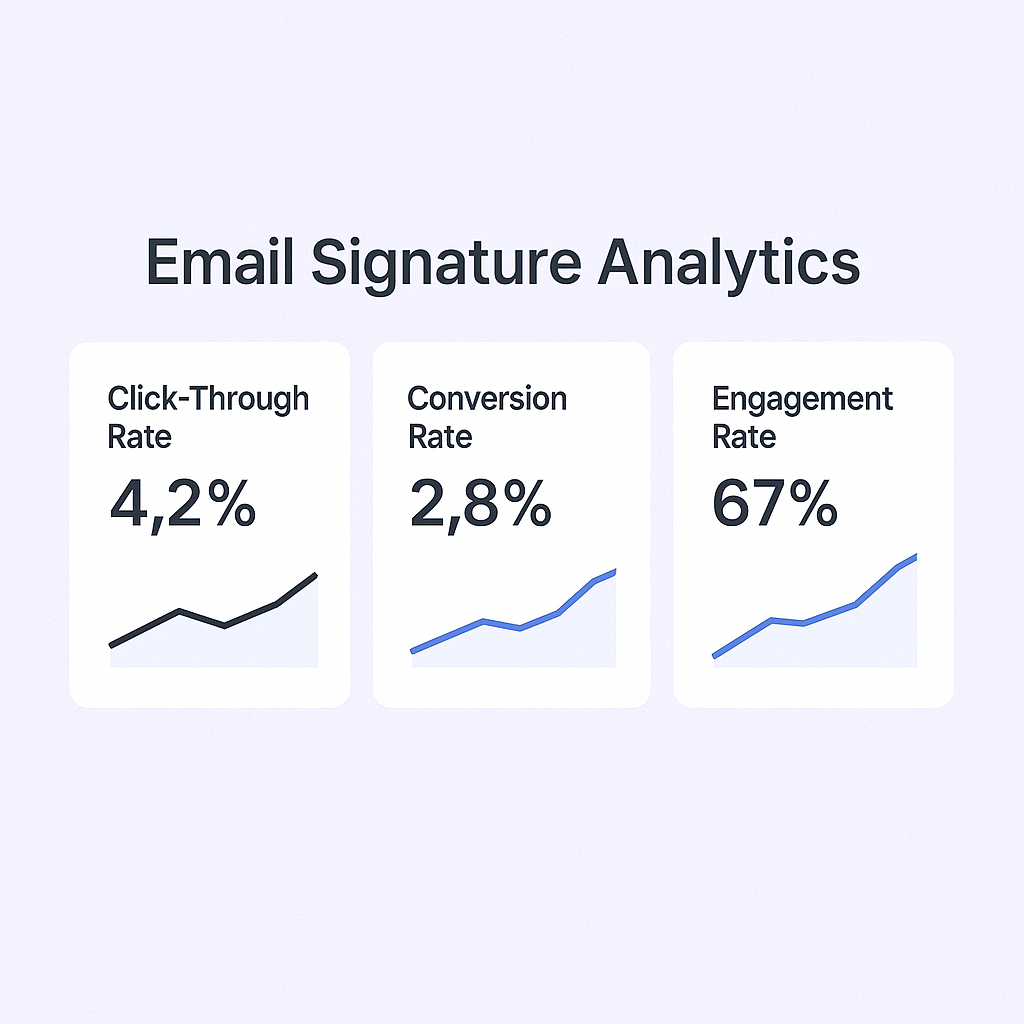
Think of it as reading your prospect’s digital body language. A click on your “Book a Demo” link signals buying intent. A click on a case study reveals specific pain points they’re trying to solve. This intelligence transforms your follow-up strategy from guessing to knowing.
The High-Frequency Advantage
Here’s the reality: you’re already sending dozens of emails daily, and your prospects are living in their inboxes. A stunning 77.8% of users check their email more than five times a day. This creates a massive, consistent engagement channel that you already own and control.
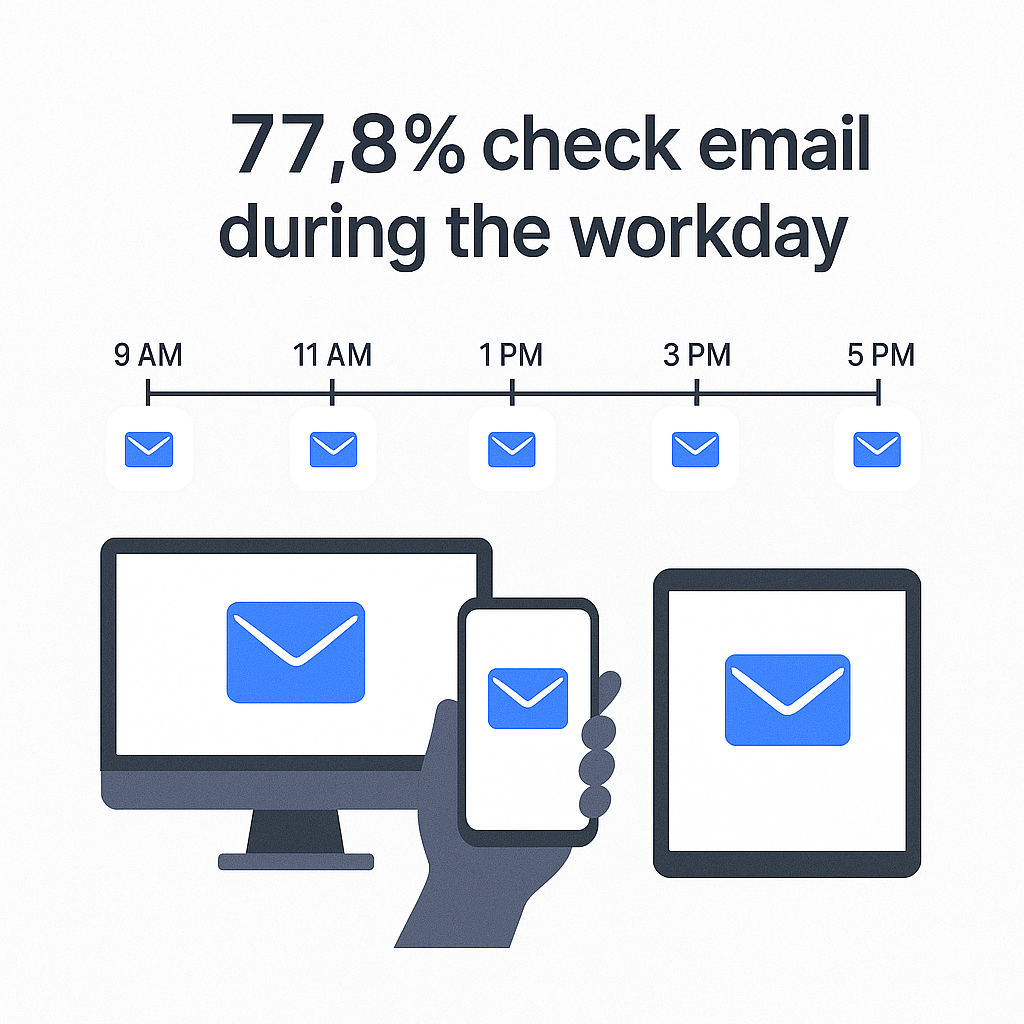
Every “send” is a new opportunity to make an impression and drive action. Unlike other marketing channels that require additional budget, your signature leverages existing communication for maximum impact.
The Credibility Factor
Trust drives every business decision. A professional, consistent email signature builds foundational credibility. 52% of users believe a solid email signature is key for communicating with clients.
When you’re reaching out to C-level executives or nurturing high-value accounts, that first impression of professionalism is non-negotiable. An inconsistent or sloppy signature undermines your credibility before prospects even read your message.
The Lead Generation Gap
Here’s where it gets interesting. Generating leads is the top business objective for using professional email signatures (cited by 18.8% of users), yet there’s a massive disconnect.
A shocking 23% of businesses don’t assess the efficacy of their email signature marketing at all. This reveals a huge gap between what companies want to do (generate leads) and what they actually do (track their efforts).
This is your money metric. It directly ties signature performance to pipeline generation. If 100 prospects click your “Book a Demo” link and 3 schedule meetings, your conversion rate is 3%. This data proves ROI and reveals how effective your calls-to-action and landing pages perform.
Engagement Rate: The Full Picture
Engagement Rate analyzes post-click behavior. How long did prospects spend on visited pages? Which other pages did they explore? Did they watch your entire demo video?
Modern sales engagement platforms provide granular details. Some tools show you precisely who opened your proposal, time spent on each page, and whether they forwarded it to colleagues. Imagine knowing a prospect spent five minutes on your pricing page—that’s a powerful signal to follow up immediately.
Email Signature Metrics That Matter:
- Click-Through Rate: High CTR on case studies reveals specific pain points
- Conversion Rate: Directly measures meetings and leads generated
- Engagement Rate: Shows serious consideration through time spent on content
- Impressions: Total signature views indicating channel reach
Leveraging Advanced Analytics Tools: Your Tech Stack Advantage
The right tools unlock signature performance data that creates immediate competitive advantages. 36.3% of users don’t use any form of email tracker, meaning early adopters gain significant market positioning.
Centralized Email Signature Management Platforms
Centralized management platforms like Exclaimer, Mailtastic, and Newoldstamp solve massive operational headaches while unlocking powerful capabilities. Manual signature updates cost companies with 500 employees over $28,000 and consume 667 hours of IT time annually.
These platforms deliver direct benefits:
Guaranteed Brand Consistency: Every email maintains professional formatting with updated logos, taglines, and messaging. No more outdated signatures damaging credibility with prospects.
Dynamic Marketing Campaigns: Marketing teams automatically push updated banners promoting webinars, limited-time offers, or feature launches. Your signature becomes a dynamic marketing channel without manual effort.
Targeted Personalization: Advanced tools integrate with CRMs, showing different signatures based on recipient data. Prospects in “Evaluation” stage see compelling case studies, while “Cold” leads see introductory content.
Integrated Analytics Dashboards
Top signature management platforms include built-in analytics dashboards—your command center for tracking performance. Instead of mastering Google Analytics complexity, you see key metrics in simple, actionable interfaces.
Real-time alerts notify you when high-value prospects click signature links or open sent proposals. This enables perfectly timed, context-aware follow-ups that differentiate closed-won from closed-lost deals.
Analyzing Link Clicks and Conversion Tracking: Technical Excellence
Understanding the technical tracking side transforms email signatures from passive elements into powerful data generators.
UTM Parameters: Tracking Every Click
UTM (Urchin Tracking Module) parameters are simple tags added to URLs that tell analytics platforms exactly where website visitors originated. Using them reveals which signature links generate clicks and which team members drive engagement.
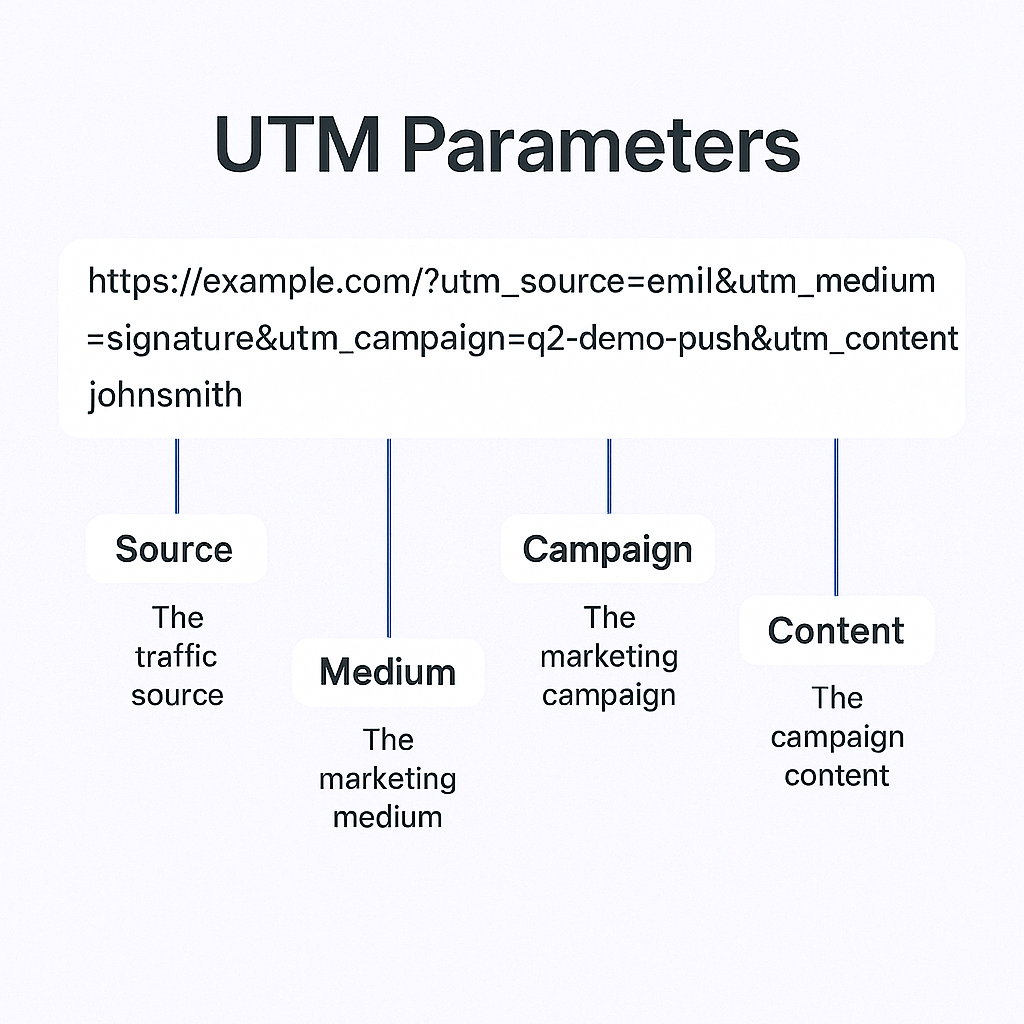
Here’s a practical UTM recipe:
- utm_source=email (identifies email as traffic source)
- utm_medium=signature (specifies signature origin)
- utm_campaign=q2-demo-push (identifies specific campaign goals)
- utm_content=johnsmith-ae (tracks individual contributor performance)
Free tools like Google’s Campaign URL Builder make UTM creation foolproof. Input your link and parameters, and it generates complete tracking URLs.
CRM Integration: Closing the Loop
The ultimate signature analytics goal connects signature clicks to CRM events on prospect contact records. This closes the loop between daily email activity and actual pipeline generation.
When prospects click UTM-tagged signature links and complete forms, CRM systems capture parameters and attribute new meetings directly to signature campaigns. Now you can definitively prove signature impact and value.
A/B Testing Your Signature
A/B testing compares two signature versions to determine optimal performance. Test these elements for maximum impact:
- CTA Wording: “Book a Demo” vs. “Schedule a 15-Min Call”
- CTA Format: Text hyperlinks vs. graphical buttons
- Social Proof: Client logos vs. clean designs
- Professional Images: Headshots vs. company logos
Test one variable at a time with statistically significant sample sizes. Measure impact on key metrics like CTR and meeting conversion rates.
Challenges and Solutions in Email Signature Analytics
Powerful signature analytics face common roadblocks, but proven solutions ensure smooth implementation and compliance.
Compliance Requirements
The Challenge: Data privacy laws like GDPR and CAN-SPAM require strict adherence. Tracking clicks without disclosure or missing required company information leads to hefty fines.
The Solution: Centralized email signature management platforms automatically append legally compliant disclaimers and required company information. These tools ensure GDPR compliance through proper privacy policy linking while maintaining tracking transparency.
Email Deliverability
The Challenge: Heavy signatures with large images, messy HTML, or excessive links trigger spam filters. Perfect outreach emails never reach prospects if signatures cause deliverability issues.
The Solution:
- Keep designs simple without complex multi-column layouts
- Host images on web servers rather than embedding directly
- Use signature generators creating clean, lightweight HTML optimized for deliverability
Mobile Consistency
The Challenge: Signatures appearing perfect on desktop can look broken and unprofessional on mobile devices. With over 41% of emails opened on mobile, inconsistent formatting damages credibility instantly.
The Solution: Use signature generators designed for mobile-first, responsive layouts. These tools automatically test signatures across screen sizes, ensuring professional appearance on any device.
Best Practices for Optimizing Email Signatures Using Analytics
Transform insights into action with proven signature optimization strategies that book meetings and build trust.
Designing for Maximum Clicks
Create Visual Hierarchy: Guide readers’ eyes to important information. Names should be most prominent, followed by titles and companies. Contact details and CTAs come next. Use bold text and font size variations naturally.
Optimize Size and Dimensions: Keep total width under 600-650 pixels for universal email client compatibility. Company logos should be approximately 100×100 pixels, promotional banners 650×100 pixels. Maintain total image file sizes under 100-150kb for fast loading.
Font and Color Strategy: Stick to web-safe fonts like Arial, Verdana, or Helvetica. Use brand colors sparingly to highlight key information and CTAs. Clean, simple designs outperform cluttered, colorful alternatives.
The Perfect Call-to-Action
Be Specific and Action-Oriented: Replace vague CTAs like “Learn More” with direct, value-driven language. Use “Book a 15-Min Call,” “Get Your Free Quote,” or “See a 2-Min Demo.”
Ultimate CTA Strategy: Include direct calendar booking links (Calendly, HubSpot Meetings, Chili Piper). This removes all booking friction—prospects see available times and book in two clicks without back-and-forth scheduling emails.
Mobile-First Signature Design
Key Principles: Use simple, single-column vertical layouts that stack neatly on narrow screens. Ensure all links and buttons meet minimum 44×44 pixel tap targets. Replace text with clean, universally understood social media icons.
Professional Standards: Never use default “Sent from my iPhone” messages—they scream unprofessionalism and waste branding opportunities. Centralized signature tools ensure professional, branded signatures across all devices.
The Ultimate Email Signature Checklist:
✓ Full professional name and specific job title ✓ Direct phone number with tel: link for mobile
✓ Company website URL ✓ ONE clear, compelling CTA (calendar link preferred) ✓ High-quality headshot or company logo (under 50kb) ✓ LinkedIn profile for credibility building ✓ Clean, mobile-friendly single-column design ✓ UTM-tracked links for performance measurement ✓ Total file size under 150kb
Transforming Email Signatures into Strategic Assets
Data-driven signature approaches generate measurable business results beyond professional appearance. Calculate real revenue potential hiding in daily email communications.
Calculating Email Signature ROI
Run this conservative calculation to reveal signature revenue potential:
Step 1: Calculate annual impressions
- 10 team members × 30 emails/day × 250 working days = 75,000 impressions
Step 2: Calculate total clicks
- 75,000 impressions × 4% CTR = 3,000 clicks
Step 3: Calculate leads generated
- 3,000 clicks × 2.35% average conversion rate = 70 leads
Step 4: Calculate influenced revenue
- 70 leads × 19% close rate × $5,000 average deal = $66,500 influenced revenue
