

Email marketing isn’t just alive in 2025 – it’s absolutely crushing it. While everyone’s chasing the latest social media trends, smart marketers are quietly building fortunes through their inboxes.
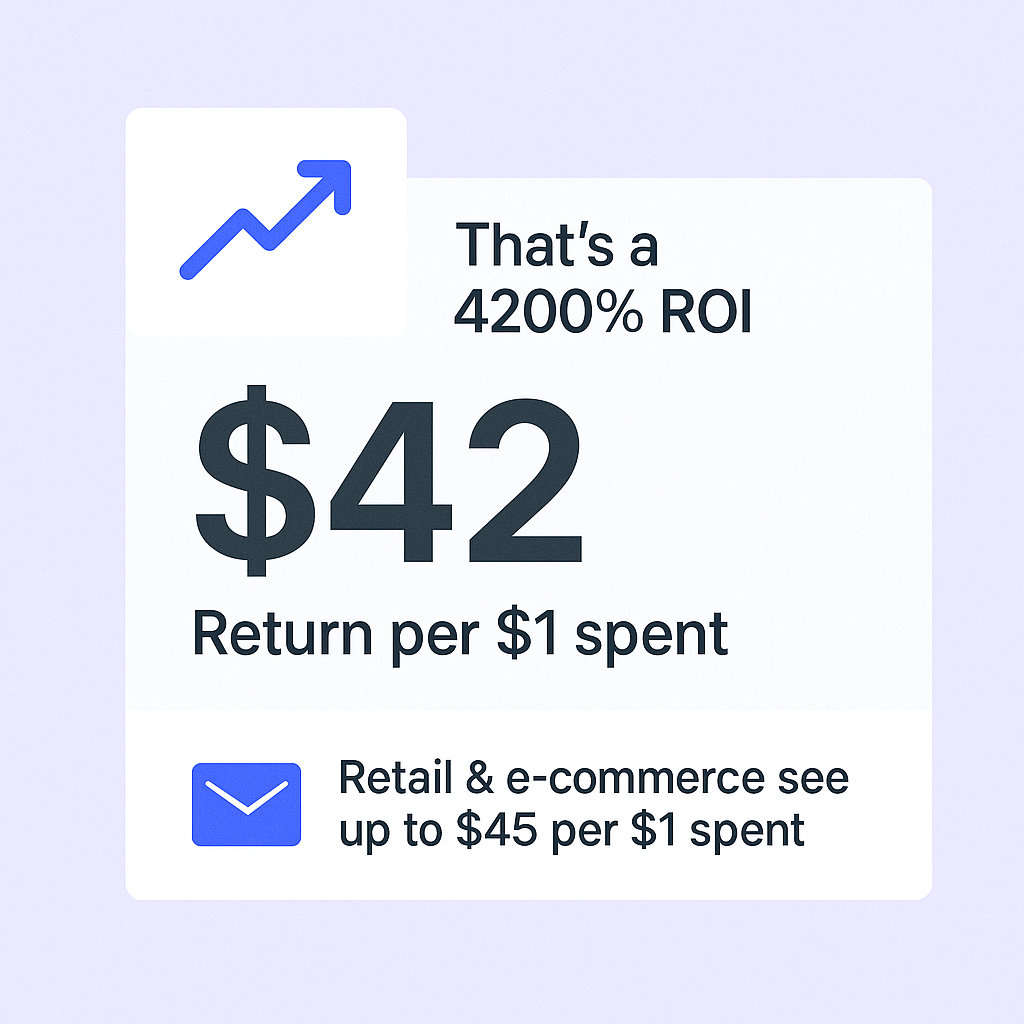
Here’s what might surprise you: the average email marketing ROI is 4200%. That means for every dollar you spend, you’re getting $42 back. No other digital marketing channel comes close to these numbers.
But here’s the catch – most people are doing email marketing completely wrong. They’re sending generic blasts, ignoring mobile optimization, and giving up after one email. The data tells a different story about what actually works.
This guide breaks down the most important email marketing statistics for 2025, showing you exactly what successful marketers are doing differently. You’ll discover industry benchmarks, proven tactics, and the specific numbers you need to transform your email performance.
Email Usage Statistics: Your Audience Lives in Their Inbox
Let’s start with why email marketing should be your top priority. The numbers are staggering.
4.48 billion people used email in 2024, and this number is growing to 4.89 billion by 2027. That’s more than half the world’s population checking their inbox regularly.
But it’s not just about reach – it’s about engagement. 99% of email users check their inbox every single day. Compare that to social media, where platform algorithms decide if your audience even sees your content.
Your prospects aren’t just checking email once and forgetting about it. The average professional checks their email 15 times per day – roughly every 37 minutes. A massive 58% of consumers check their email first thing in the morning, even before scrolling social media or reading the news.
This creates an incredible opportunity. While your competitors are fighting for attention on crowded social platforms, you have a direct line to your audience’s most-checked digital space.
The volume of daily communication makes this even more impressive. Over 361 billion emails are sent and received every single day. Your message is part of this massive flow, which means standing out requires strategy, not just volume.
Email Marketing Budget Statistics: Where Smart Money Goes
Email marketing consistently receives the highest budget allocation among digital marketing channels, and for good reason.
87% of marketing leaders say email marketing is critical to their company’s overall success. In B2B specifically, 50% of marketers consider email their single most effective tool – ranking it higher than content marketing, social media, or paid advertising.
Budget allocation reflects these priorities. Companies typically dedicate 15-20% of their total marketing budget to email marketing. This might seem high until you see the returns.
The cost per acquisition through email is remarkably low. Email marketing costs $42 per customer acquired, compared to $51 for search ads and $55 for social media advertising. This efficiency means your budget goes further with email than any other channel.
Forward-thinking companies are increasing their email marketing investments. 78% of marketers report they’ve increased their email marketing budget over the past year, with 43% planning significant increases for 2025.
Email ROI Statistics: The Numbers That Matter Most
Here’s where email marketing gets exciting. The return on investment numbers are unlike anything else in digital marketing.
The headline figure: $42 return for every $1 spent on email marketing. That’s a 4200% ROI. Some industries see even higher returns, with retail and e-commerce averaging $45 for every dollar spent.
Email marketing drives 25% of overall revenue for surveyed companies. This isn’t just small businesses – major corporations rely on email as a core revenue driver.
The customer lifetime value impact is equally impressive. Consumers who purchase through email offers spend 138% more than those who don’t receive email offers. This suggests email doesn’t just drive one-time purchases – it builds long-term customer relationships.
Automated email campaigns perform even better. They generate 320% more revenue than non-automated campaigns and see 152% higher click rates than broadcast emails.
AI email marketing is pushing these numbers even higher. Companies using AI in their email marketing report a 41% increase in overall revenue, with 41% higher open rates and 13.44% better click-through rates.
 LinkedIn Outbound Matches Email ROI
Target decision-makers directly with campaigns delivering similar 4200% ROI plus better B2B targeting
Email Engagement Statistics: What “Good” Performance Looks Like
Understanding performance benchmarks helps you gauge your success and identify improvement opportunities.
The overall average open rate across all industries is 35.63%, with a click-through rate of 2.62%. But these numbers vary dramatically by industry:
Healthcare and medical sectors see the highest engagement with 43.95% open rates and 3.08% click-through rates. This reflects the high-trust, personal nature of healthcare communications.
Technology services face the most challenging environment with 20.8% open rates and 2.6% click-through rates. The competitive, crowded tech landscape makes standing out more difficult.
Non-profits achieve impressive 40.04% open rates and 3.27% click-through rates, demonstrating that mission-driven content resonates strongly with audiences.
Business and finance sectors maintain solid performance with 31.35% open rates and 2.78% click-through rates.
Manufacturing and distribution see 30.1% open rates but lower 1.3% click-through rates, suggesting these audiences open emails but require more compelling calls-to-action.
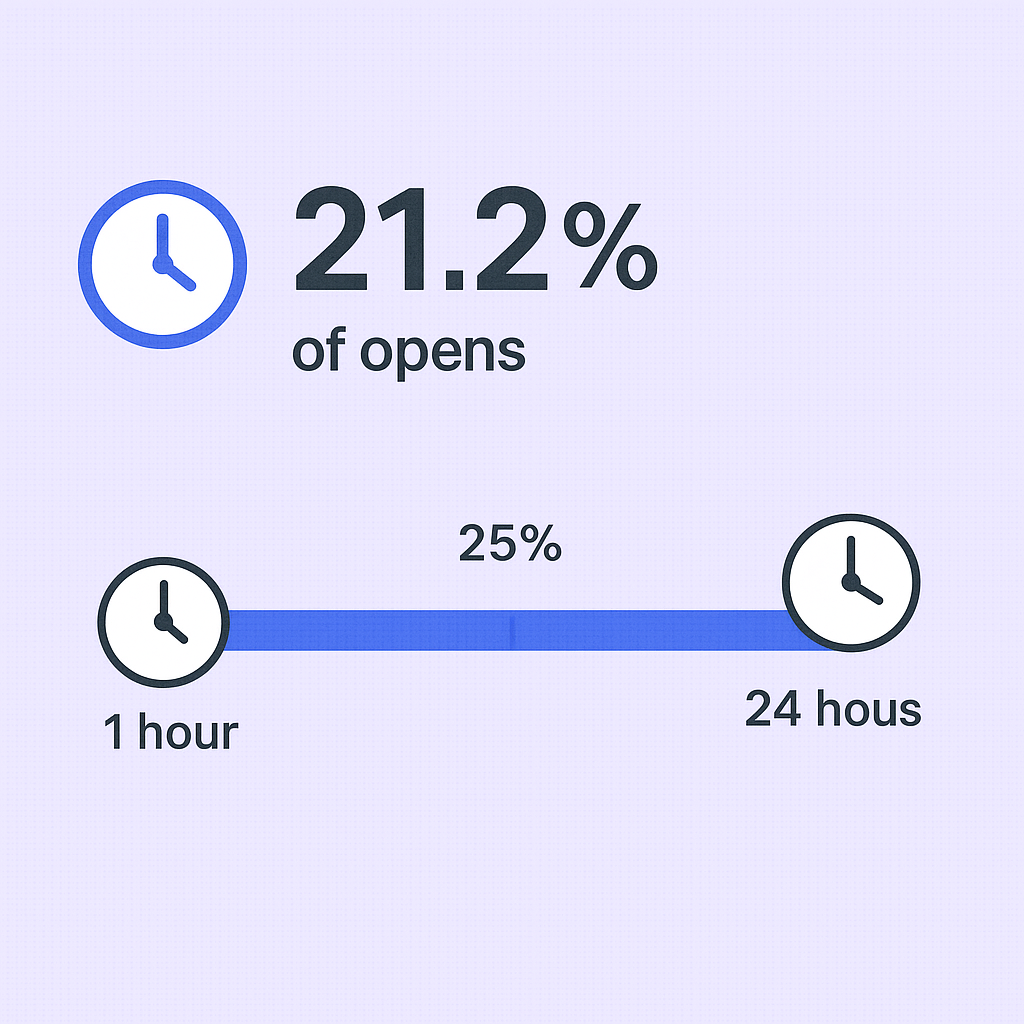
The timing of your sends matters significantly. 21.2% of all email opens happen within the first hour after sending. Thursdays currently show the highest reply rates for cold outreach, while Fridays also perform well for general email marketing campaigns.
Mobile Email Marketing Statistics: The Mobile-First Reality
Mobile optimization isn’t optional anymore – it’s essential for email marketing success.
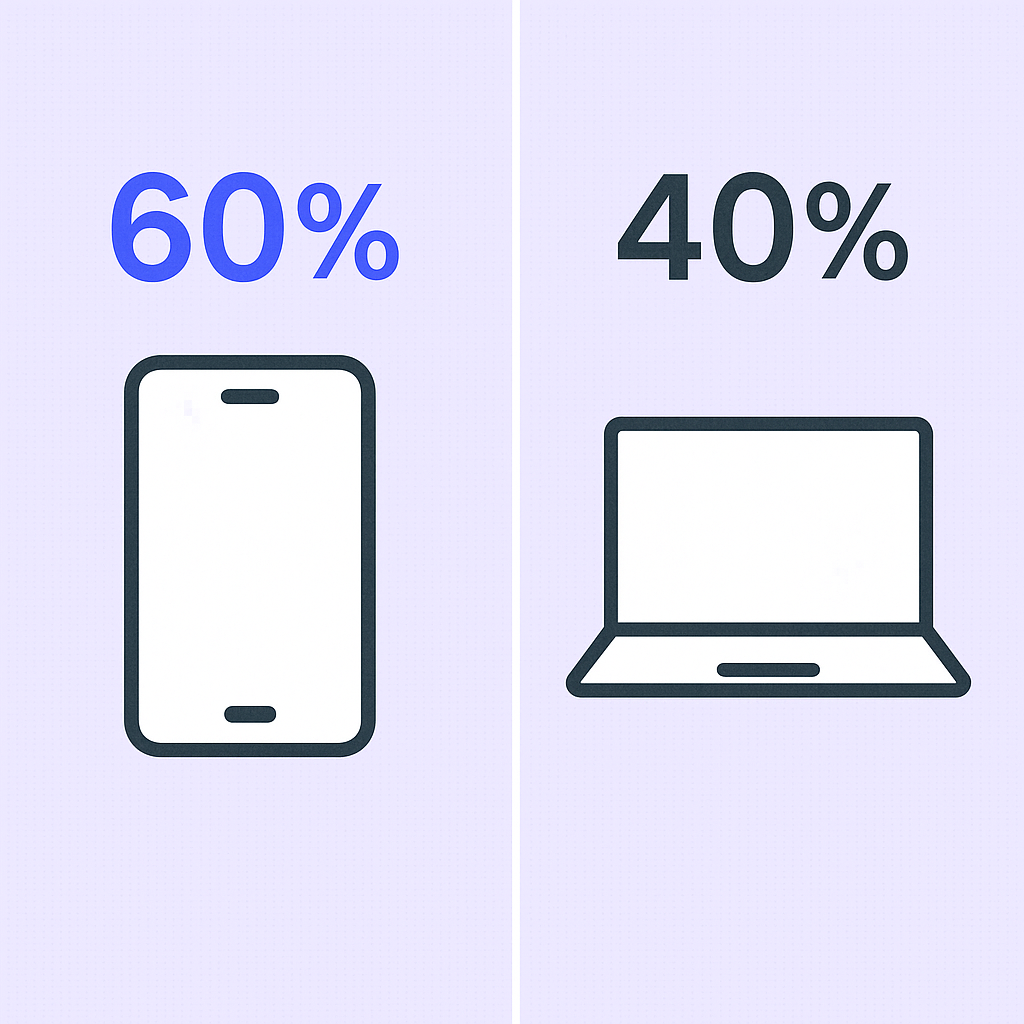
Nearly 60% of all email opens happen on mobile devices. This percentage continues growing as smartphone usage increases globally.
The penalty for ignoring mobile is severe. 42% of people will delete an email if it’s not optimized for their mobile device. That’s nearly half your audience gone because of poor formatting.
Conversely, the reward for mobile optimization is significant. Simply ensuring responsive design can lead to a 15% increase in mobile clicks. This single change can dramatically improve your campaign performance.
Mobile users behave differently than desktop users. They scan quickly, tap large buttons, and abandon emails that require zooming or horizontal scrolling. Your email design must accommodate these behaviors.
The mobile inbox experience also affects subject line performance. Subject lines with fewer than 70 characters perform best because they don’t get cut off on mobile screens.
Email Marketing Strategy Statistics: Tactics That Drive Results
The most successful email marketers follow specific strategies backed by data.
Personalization creates the biggest performance lifts. Personalized emails deliver 6 times higher transaction rates than generic emails. They achieve 29% higher open rates and 41% higher click-through rates.
Even simple personalization works. Adding the recipient’s first name to the subject line increases open rates by 26%. Personalized calls-to-action convert 202% better than generic ones.
Segmentation transforms email performance. Marketers using segmented campaigns report a 760% increase in email revenue. Segmented campaigns achieve 14.3% higher open rates and 101% higher click-through rates compared to non-segmented campaigns.
Follow-up sequences are critical for success. 70% of sales reps stop after sending just one email, yet 80% of sales require at least five follow-ups. Adding just one follow-up email boosts reply rates from 9% to 13%.
The optimal follow-up strategy involves 2-3 emails spaced 2-3 days apart. More than three follow-ups can actually decrease reply rates and increase spam complaints.
A/B testing drives continuous improvement. Companies that regularly test their emails see 28% higher revenue than those that don’t. The most effective tests focus on subject lines, send times, and call-to-action placement.
Email Subject Line Statistics: Your First Impression Matters Most
Subject lines determine whether your email gets opened or deleted. 47% of recipients open emails based solely on the subject line.
The flip side is equally important: 69% of people report emails as spam based only on the subject line. This makes subject line optimization crucial for deliverability.
AI-generated subject lines show 20% higher open rates compared to human-written ones. AI can analyze successful patterns and apply them to your specific audience and industry.
Subject line length affects performance. Shorter subject lines (6-10 words) typically perform better on mobile, while longer, descriptive subject lines can work better for cold outreach because they pre-qualify recipients.
Emoji usage can increase open rates by 56%, but moderation is key. One relevant emoji can grab attention, while multiple emojis can trigger spam filters.
Certain words and phrases consistently improve performance:
- “Video” in subject lines boosts open rates by 19% and click-through rates by 65%
- “Free” remains effective despite spam concerns, increasing opens by 10%
- Question-based subject lines create curiosity and improve engagement
Email Marketing Personalization Statistics: Making Every Message Count
Personalization goes far beyond adding a first name. The most successful campaigns use multiple data points to create relevant experiences.
Dynamic content based on user behavior improves click-through rates by 14%. This includes showing different products, content, or offers based on past purchases or browsing history.
Geographic personalization increases relevance significantly. Emails that reference the recipient’s location see 29% higher open rates and 42% higher click-through rates.
Behavioral triggers create the highest engagement. Welcome emails have an average 83% open rate because they arrive when engagement is highest. Abandoned cart emails recover 15% of lost sales on average.
Purchase history personalization drives repeat business. Emails featuring products related to past purchases have 18.8% higher click-through rates than generic promotional emails.

