
- blog
- Statistics
- Personalized Email Marketing Statistics 2025: 17 Data-Driven Insights
17 Personalized Email Marketing Statistics That Will Transform Your Campaigns in 2025
Table of Contents
17 Personalized Email Marketing StatisticsÂ
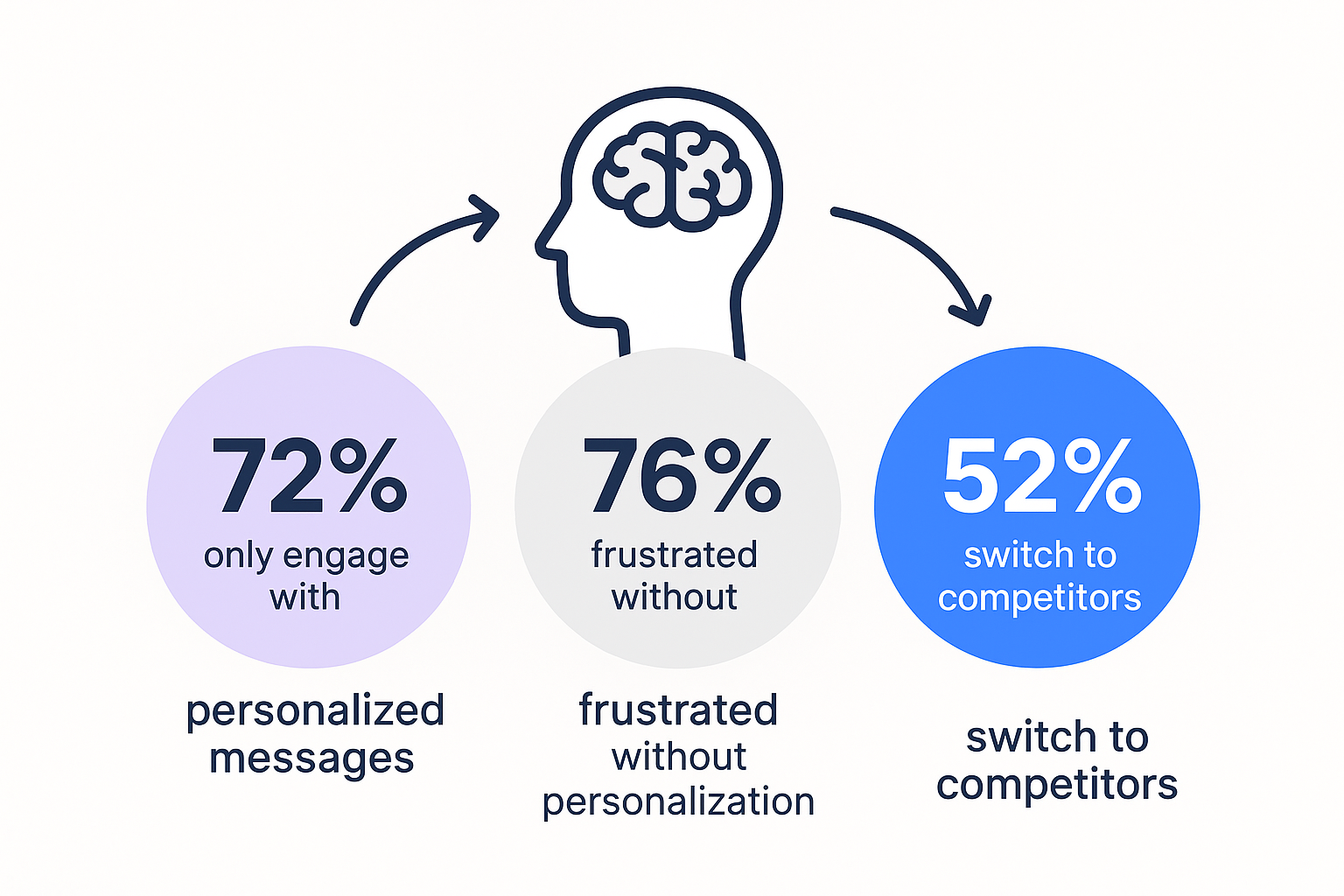
- 72% of consumers only engage with personalized messaging – making generic email blasts essentially invisible to nearly three-quarters of your audience
- 76% of people get frustrated when they don’t receive a personalized experience – with 70% of millennials reporting irritation when receiving irrelevant emails
- 52% of customers will switch to competitors if communications aren’t personalized – directly resulting in lost revenue opportunities
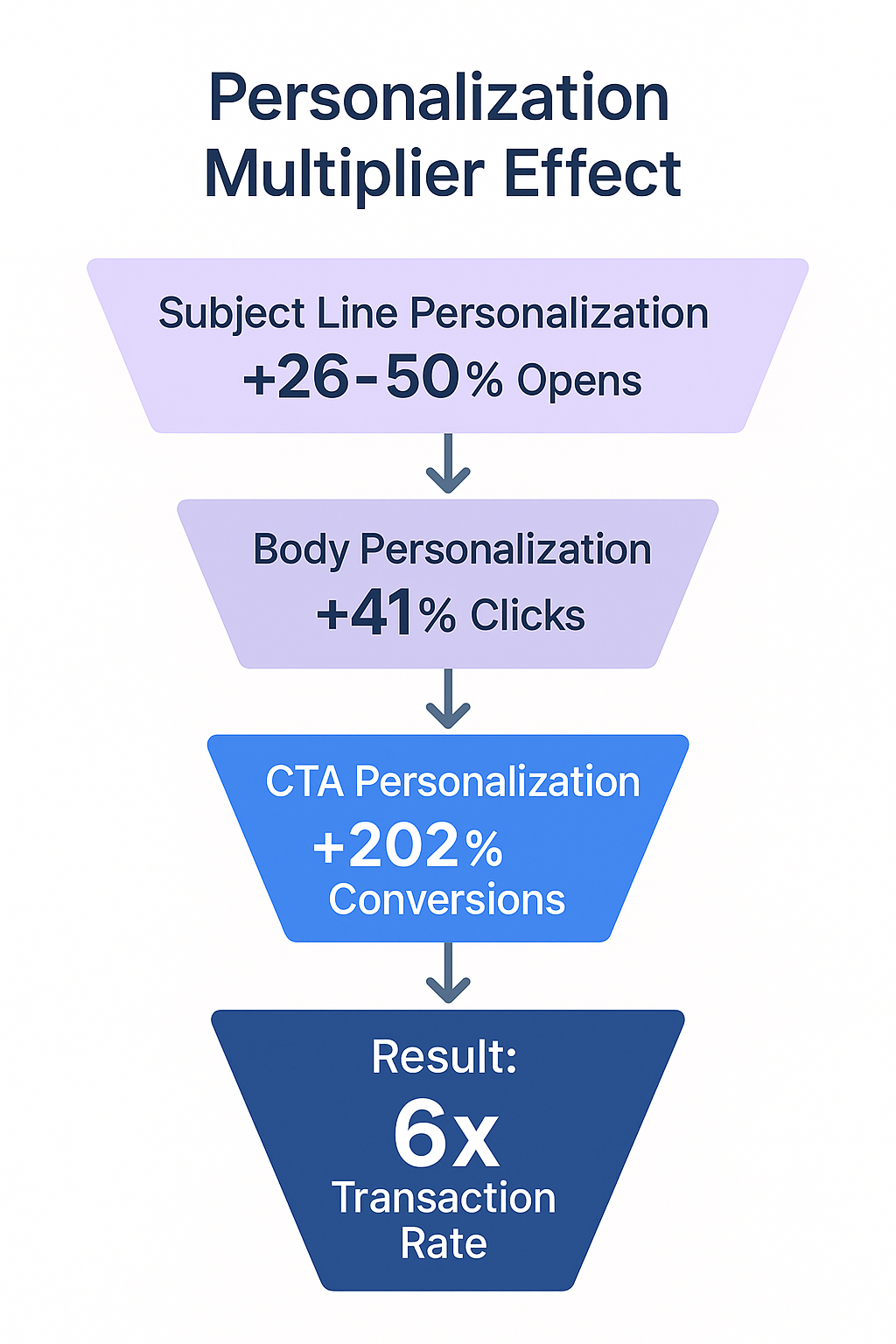
- Personalized subject lines increase open rates by 26% – one of the easiest and most impactful changes you can make immediately
- Advanced subject line personalization can boost opens by up to 50% – when referencing mutual connections, recent activity, or company news
- 42% of people look at the sender name first when deciding to open – highlighting the importance of personalizing how you present yourself
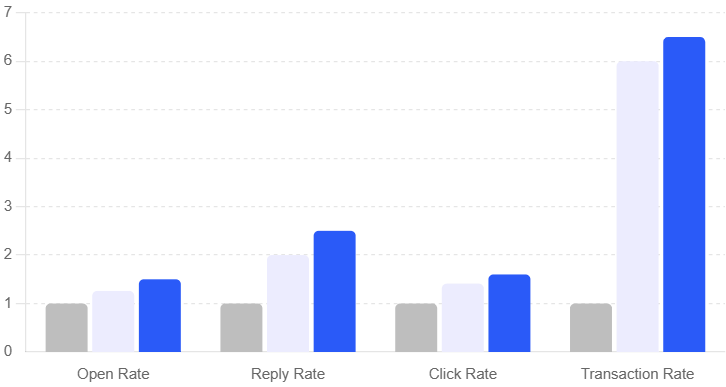
- Advanced personalization more than doubles reply rates from 7% to 17% – representing the difference between acceptable and elite performance
- Personalized call-to-actions convert 202% better than generic CTAs – transforming your ask from generic pitch to problem-solving conversation starter
- Personalized emails achieve 41% higher click-through rates – significantly more prospects will consume your educational content
- Personalized and segmented campaigns increase revenue by 760% – demonstrating transformational rather than incremental improvement
- Personalized emails deliver 6x higher transaction rates – for every one deal you close using generic approaches, you could potentially close six with personalization
- Median ROI for personalized email marketing is 122% – for every dollar invested in personalization, the return more than doubles
- Companies excelling at personalization generate 40% more revenue – creating a dominant competitive position in crowded markets
- Strategic follow-up sequences triple reply rates from 9% to 27% – structured, persistent follow-up pays off dramatically
- 69% of unsubscribes are due to “too many emails” and 56% due to “irrelevant content” – showing what happens when personalization is ignored
Your inbox is a battlefield. Every single day, the average professional receives over 121 emails, yet only a tiny fraction ever get opened, clicked, or replied to. If you’re sending generic, templated messages hoping for results, you’re essentially throwing darts in the dark—and missing every target.
How We Collected This Data
These personalized email marketing statistics aren’t pulled from a single source or outdated study. We’ve synthesized data from dozens of authoritative industry reports, including comprehensive platform analytics from Campaign Monitor, HubSpot, Mailchimp, and Litmus, along with market research studies published throughout 2024 and 2025.
This represents a meta-analysis of the most current marketing statistics available, specifically curated for professionals who need actionable insights that translate directly into better campaign performance and higher ROI.
The Reality Check: Why Your Prospects Demand Personalization
Before diving into the performance metrics, you need to understand the psychology behind these numbers. Modern consumers—including your B2B prospects—have fundamentally shifted their expectations. Personalization has moved from “nice to have” to “must have.”
When someone receives a generic email, their brain immediately categorizes it as spam or irrelevant content. This isn’t conscious decision-making; it’s an automatic filter that happens in milliseconds. Email personalization has become the key that unlocks this filter.
Â
But here’s the thing: personalized email marketing statistics reveal a completely different story. The data shows that when you take the time to customize your approach, everything changes. Open rates skyrocket. Click-through rates double. Revenue can increase by over 700%.
This isn’t just marketing fluff. These are hard numbers from real campaigns, backed by industry research that proves one simple truth: personalization isn’t optional anymore—it’s the difference between success and being ignored.
We’ve analyzed the most current email marketing statistics from leading platforms and research studies to bring you 17 data points that will completely reshape how you think about email campaigns. Whether you’re trying to boost email marketing campaigns performance or wondering about the ROI of personalization, these numbers tell the whole story.
Ready to discover why personalized emails deliver 6x higher transaction rates and how companies using segmented campaigns see 760% increases in revenue? Let’s dive into the data that will change your approach forever.
Â

Â
Statistic 1: 72% of Consumers Only Engage with Personalized Messaging
This is your wake-up call. Nearly three out of four people on your email list will only engage if your message feels personal and relevant to them. A generic email blast isn’t just less effective—to them, it’s essentially invisible.
For anyone running email marketing campaigns, this fundamentally changes the volume versus quality debate. Sending 1,000 generic emails will be far less effective than sending 100 highly researched, personalized emails. Your addressable audience shrinks by 72% the moment you send something generic.
Statistic 2: 76% of People Get Frustrated When They Don’t Receive a Personalized Experience
This statistic quantifies the emotional cost of getting personalization wrong. It’s not just about preference—it’s about actively annoying your prospects when you don’t tailor your message. This frustration is particularly pronounced among younger decision-makers, with 70% of millennials reporting irritation when receiving irrelevant emails.
Starting a business relationship from a point of annoyance creates an uphill battle you can easily avoid with proper personalization.
 🎯 Target Decision-Makers Who Actually Respond
LinkedIn outbound reaches verified prospects without spam filters, deliverability issues, or guesswork
Statistic 3: 52% of Customers Will Switch to Competitors if Communications Aren’t Personalized
This is the ultimate business consequence. More than half of your potential customers will abandon your funnel and go directly to a competitor if you fail to personalize your outreach. This stat makes the ROI case crystal clear: failing to personalize isn’t just costing you engagement—it’s directly resulting in lost revenue opportunities.
The Performance Impact: How Personalization Drives Results
Now for the core data that directly impacts your campaign performance. These numbers follow the entire email funnel, from the crucial first step of getting your email opened to driving actual business outcomes.
The performance lifts from personalization aren’t just additive—they compound. Think of it as a “Personalization Multiplier Effect.” Higher open rates create more click opportunities, which create more reply opportunities, which lead to more meetings and sale
Â

Â
Getting Your Emails Opened
Your subject line and sender name are gatekeepers to your entire message. If you can’t win here, nothing else matters.
Statistic 4: Personalized Subject Lines Increase Open Rates by 26%
This represents one of the easiest and most impactful changes you can make immediately. The difference between “Quick Question” and “Sarah, quick question about TechCorp’s recent expansion” is the difference between being deleted and being read.
For anyone focused on email marketing, this simple tactic ensures your carefully crafted message doesn’t go to waste. It’s a foundational change that amplifies everything else you do.
Statistic 5: Advanced Subject Line Personalization Can Boost Opens by up to 50%
While the 26% figure represents the baseline, this stat shows the upper range of what’s possible. The quality and depth of personalization matter enormously. Simply using a first name token is good, but referencing a mutual connection, recent LinkedIn activity, or company news can be far more powerful.
This is where a few minutes of research before hitting send pays massive dividends.
Statistic 6: 42% of People Look at the Sender Name First When Deciding to Open
This highlights a subtle but crucial point: personalization isn’t just about the recipient—it’s also about how you present yourself. An email from “John Smith at SalesCompany” feels more human and trustworthy than one from “Marketing Team” or “noreply@company.com.”
This signals a one-to-one conversation rather than a mass blast, immediately improving your credibility and open rates.

💬 Stop Fighting Email Filters Forever
Our LinkedIn campaigns deliver your message directly to decision-makers’ inboxes—no verification lists needed
Driving Engagement and Responses
Once your email is opened, the next challenge is earning meaningful engagement. This is where personalization moves beyond the subject line into the message body and call-to-action.
Statistic 7: Advanced Personalization More Than Doubles Reply Rates (from 7% to 17%)
This statistic represents the difference between acceptable performance and elite results. While a 7% reply rate might be considered decent for cold outreach, a 17% reply rate is outstanding and will dramatically impact your pipeline.
The extra research time you invest in understanding your prospect’s challenges, recent company developments, or industry trends delivers measurable ROI through significantly higher response rates.
Statistic 8: Personalized Call-to-Actions Convert 202% Better Than Generic CTAs
Most marketers personalize the email body but forget about the “ask.” Your call-to-action needs to be tailored just as much as your opening line. Instead of “Book a demo,” try “Want to see how we helped [Similar Company] reduce customer churn by 40%?”
This transforms your CTA from a generic sales pitch into a valuable, problem-solving conversation starter.
Statistic 9: Personalized Emails Achieve 41% Higher Click-Through Rates
For campaigns that include content sharing—case studies, whitepapers, webinar recordings—this metric is critical. It means significantly more prospects will actually consume the educational content you send them, which is designed to build trust and move them through your sales funnel.
This statistic bridges the gap between initial engagement and sales-qualified leads who understand your value proposition.
📈 Scale Personalization Without Scaling Headcount
Our complete LinkedIn outbound engine combines targeting, campaign design, and automated scaling for consistent pipeline growth
7-day Free Trial |No Credit Card Needed.
The Bottom Line: Revenue Impact
Ultimately, email marketing is about driving business outcomes. These final statistics connect personalized outreach directly to the numbers that matter most.
Statistic 10: Personalized and Segmented Campaigns Increase Revenue by 760%
This is the headline number that should capture every marketer’s attention. It demonstrates that strategic segmentation and personalization isn’t just an incremental improvement—it’s transformational.
Segmentation allows you to personalize at scale by grouping prospects with shared characteristics, enabling you to craft highly relevant messages without starting from scratch every time.
Statistic 11: Personalized Emails Deliver 6x Higher Transaction Rates
This stat is direct and powerful. For every one deal you close using generic approaches, you could potentially close six by implementing proper personalization. This represents a compelling argument for immediately integrating deeper personalization into every stage of your sales process.
Statistic 12: Median ROI for Personalized Email Marketing is 122%
This number speaks the language of business efficiency. For every dollar and every hour you invest in personalizing your emails, the return more than doubles. This data point helps justify the time investment in personalization to stakeholders who question the resource allocation.
Statistic 13: Companies Excelling at Personalization Generate 40% More Revenue
This frames personalization as a competitive advantage. In crowded markets, being 40% more effective isn’t a small edge—it’s a dominant position that directly translates to business growth and market share gains.
Quick Reference Guide
For those who need the key takeaways immediately, here’s a summary of the most critical performance lifts:
Metric | Performance Lift | Source Type |
Open Rate | +26% to +50% | Subject Line Personalization |
Reply Rate | >100% Increase | Advanced Personalization |
Click-Through Rate | +41% | Content Personalization |
CTA Conversion | +202% | Personalized Calls-to-Action |
Transaction Rate | 6x Higher | Full Campaign Personalization |
Revenue (Segmented) | +760% | Strategic Segmentation |
Median ROI | 122% | Overall Personalization |
Advanced Strategies: Beyond Basic Personalization
Understanding that personalization works is the first step. Implementing it strategically is what separates top performers from the rest. Here are four advanced tactics backed by data.
Statistic 14: Strategic Follow-Up Sequences Triple Reply Rates (from 9% to 27%)
Many marketers send one or two emails and give up if they don’t get responses. This data proves that structured, persistent follow-up pays off dramatically. The key is that each follow-up must continue adding value rather than just “bumping” your original message.
Each follow-up is an opportunity to share different case studies, mention new company developments, or reference additional pain points you can solve.
Statistic 15: 60% of Prospects Return After Receiving Personalized Behavioral Trigger Emails
This statistic comes from e-commerce abandoned cart email statistics, but the principle applies perfectly to B2B sales. The B2B equivalent of an abandoned cart is high-intent behavior without conversion—visiting your pricing page, downloading technical content, or attending most of a webinar without booking a meeting.
An effective abandoned cart email strategy involves reaching out with hyper-relevant messages based on specific actions. For example: “Saw you checked out our enterprise features. Happy to walk you through how we’re helping similar companies in your industry.”
Statistic 16: Segmented Audiences Account for 760% Revenue Increases
We mentioned this massive revenue impact earlier, but the strategic implementation deserves deeper focus. Segmentation is the engine that makes high-level personalization scalable. You can segment prospects by:
- Industry: Using sector-specific language, case studies, and testimonials
- Company Size: Tailoring messages to startup challenges versus enterprise needs
- Role: Addressing different pain points for executives versus managers
- Technology Stack: Mentioning specific integrations or compatibility
Statistic 17: 69% of Unsubscribes Are Due to “Too Many Emails” and 56% Due to “Irrelevant Content”
This cautionary statistic shows what happens when personalization is ignored. These numbers are deeply connected—prospects tolerate higher email frequency when content consistently provides value and relevance.
Proper segmentation and personalization turn your emails from “spam” into “helpful resources,” dramatically improving retention and engagement over time.
Â
Conclusion: Your Next Move is Clear
The data is conclusive and overwhelming. Personalized email marketing statistics prove that customization isn’t just a nice-to-have feature—it’s the fundamental difference between campaigns that succeed and those that get ignored.
Doubling reply rates, achieving 6x higher transaction rates, and seeing revenue lifts of up to 760% aren’t vanity metrics. These are the tangible results of treating your prospects like individuals rather than numbers in a database.
In today’s hyper-competitive landscape, personalization has become the definitive line between starting meaningful conversations and being relegated to the delete folder. It’s the most direct, data-backed path to better engagement, stronger pipelines, and ultimately, more closed deals.
The email marketing statistics we’ve covered show that consumers and business buyers alike now expect—and demand—relevant, personalized communication. Companies that deliver this experience gain significant competitive advantages, while those that don’t actively push prospects toward competitors who better understand their needs.
The bottom line: Generic, one-size-fits-all email campaigns are not just ineffective—they’re actively harmful to your business goals. Every unpersonalized email you send represents a missed opportunity to build relationships, establish trust, and drive revenue.
But here’s the catch: world-class email personalization requires world-class data. You can’t customize messages effectively if you’re unsure about your prospect’s role, company size, recent developments, or contact accuracy. It all starts with having verified, comprehensive prospect information that enables the personalization strategies these statistics prove work.
The numbers don’t lie. The choice is yours. Will you continue sending generic messages and accepting mediocre results, or will you implement the personalization strategies that industry data proves deliver transformational outcomes?
FAQs
What is the average open rate for personalized emails?
How often should I send personalized marketing emails?
What's the ROI of email personalization?
How do I verify email addresses for personalization?
What are the best practices for email personalization beyond first names?
Skip Email Chaos—Go Direct on LinkedIn
Access verified decision-makers with 3x higher response rates than email personalization
Segmentation That Actually Converts
LinkedIn outbound targets precise demographics with strategic campaign design and scaling methods