

🎉Find Prospects and Send Cold Emails & LinkedIn Outbound | All in One Place

Sales Breakup Email: Your Ultimate Guide to Re-Engaging Silent Prospects (+ 5 Templates That Work)

Table of Contents

Let’s talk about something every sales professional knows all too well: the deafening sound of silence. You’ve had what felt like a promising conversation, sent a thoughtful follow-up, maybe even had a demo scheduled… and then nothing. Your once-engaged prospect has vanished into the digital void.

It’s beyond frustrating. You’re left wondering whether to keep pushing or just give up entirely. Here’s where the sales breakup email becomes your secret weapon – and it’s not what you might think.

A well-crafted breakup email isn’t about dramatic goodbyes. It’s about being strategic, respectful, and surprisingly effective at jolting dead deals back to life. Think of it as your final chess move that either wins the game or gives you the clarity to move on.

This comprehensive guide will show you exactly how to master this powerful technique. You’ll learn when to send these emails, how to write them so they actually get responses, and walk away with five battle-tested templates you can use today.

Why Should You Send a Sales Breakup Email to Your Prospect?

Before we dive into the how, let’s nail down the why. A sales breakup email isn’t really a breakup at all – it’s a strategic psychological trigger designed to achieve one of two critical outcomes: either re-engage the prospect or get the closure you need to move forward.

The Psychology Behind Why Breakup Emails Work

The magic lies in a powerful psychological principle called Loss Aversion. Research consistently shows that people feel the pain of losing something twice as intensely as the pleasure of gaining something equivalent. When you professionally signal that you’re walking away, you create scarcity. Suddenly, the prospect faces the possibility of losing out on the value you offer, which can be a powerful motivator to finally respond.
 

💼 Skip the Breakup Email Entirely

LinkedIn targeting finds decision-makers who are actively ready to engage right now

The numbers speak for themselves. HubSpot famously reported a 33% response rate from their breakup emails – that’s massive for prospects who were previously radio silent. Even if they don’t reply, you still win because you get the closure needed to clean up your pipeline and focus your energy where it matters most.

The Business Case: Pipeline Hygiene and Forecasting Accuracy

Your time is your most valuable asset, and every minute spent chasing ghosts is a minute not invested in qualified prospects. But there’s more to it than time management:
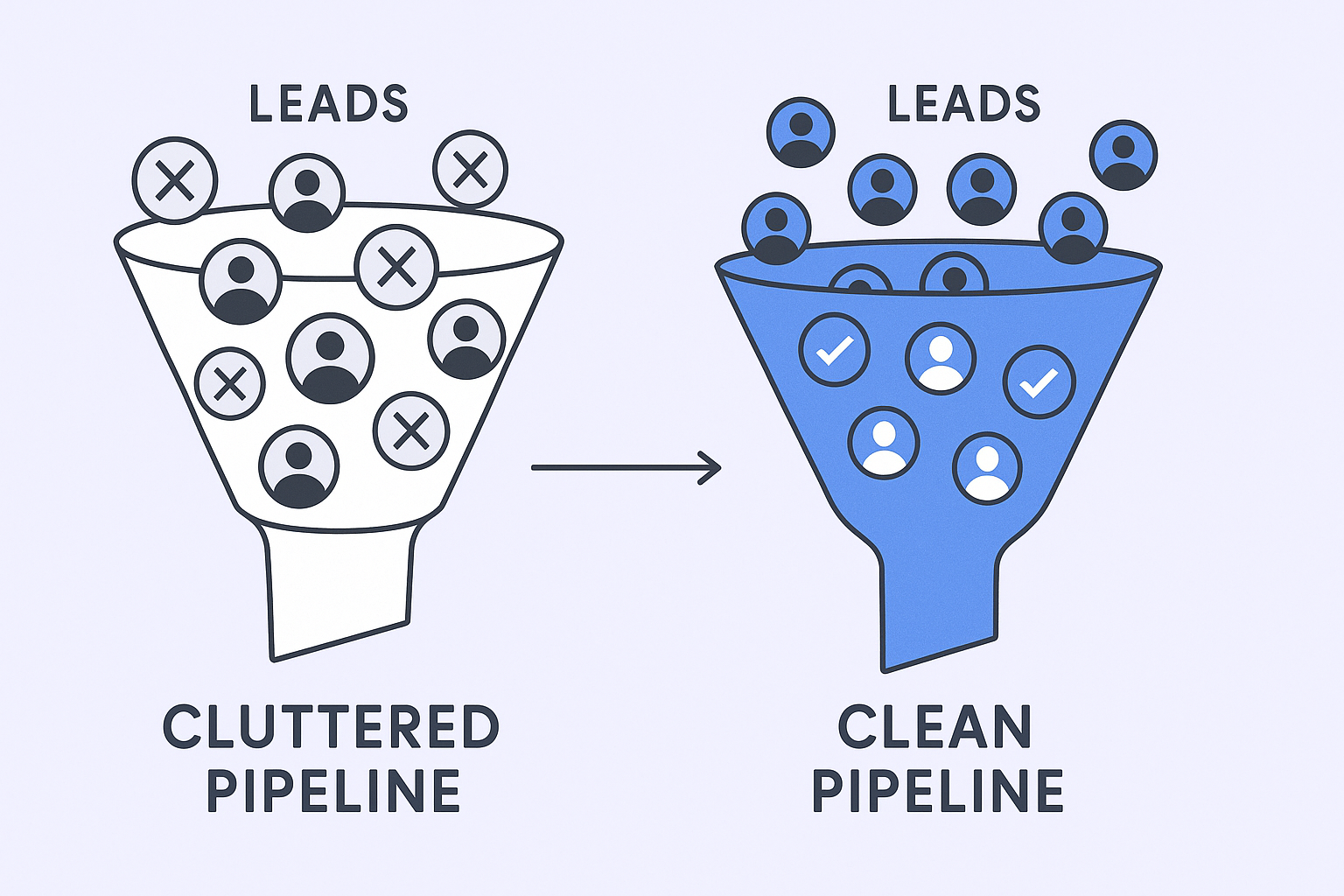


Clean Pipeline, Better Decisions: A breakup email forces a decision point on unresponsive leads, allowing you to mark them as closed-lost and remove pipeline clutter. Poor data quality costs businesses an average of $15 million per year in wasted resources and missed opportunities. For individual sales professionals, that translates into wasted hours and lost commission opportunities.

Improved Forecasting: Sales forecasts built on accurate data lead to better business decisions. A pipeline filled with unresponsive “maybes” creates unrealistic forecasts and uncomfortable conversations with management. According to Salesforce research, 79% of marketing leads never convert into sales, often because they get stuck in limbo rather than being properly qualified or disqualified.

Mental Health and Morale: Let’s be real – sending emails into a black hole is demoralizing. It leads to burnout and makes you question your effectiveness. A breakup email gives you back control, provides closure, and protects your mental energy for prospects who are actually engaged.

The Data on Follow-Up Persistence

Sales wisdom tells us that persistence pays off, and the data backs this up. 80% of sales require at least 5 follow-ups, and complex B2B sales cycles can require 8 to 50+ touchpoints depending on the lead source and complexity.

 🎯 Target Engaged Prospects First

Our LinkedIn campaigns reach executives when they’re active, not lost in email chaos

However, there’s a point where continued pursuit yields diminishing returns. A well-timed breakup email serves as the logical, data-informed final step in your outreach sequence. It lets you gracefully exit while reallocating future touchpoints to more promising opportunities.

How to Write a Breakup Email That Can Trigger a Last-Minute Response

Now for the practical part – how do you craft a breakup email that actually works? The best ones follow a specific structure that balances professionalism with psychological triggers.

The Anatomy of an Effective Breakup Email

Every successful breakup email contains three essential element
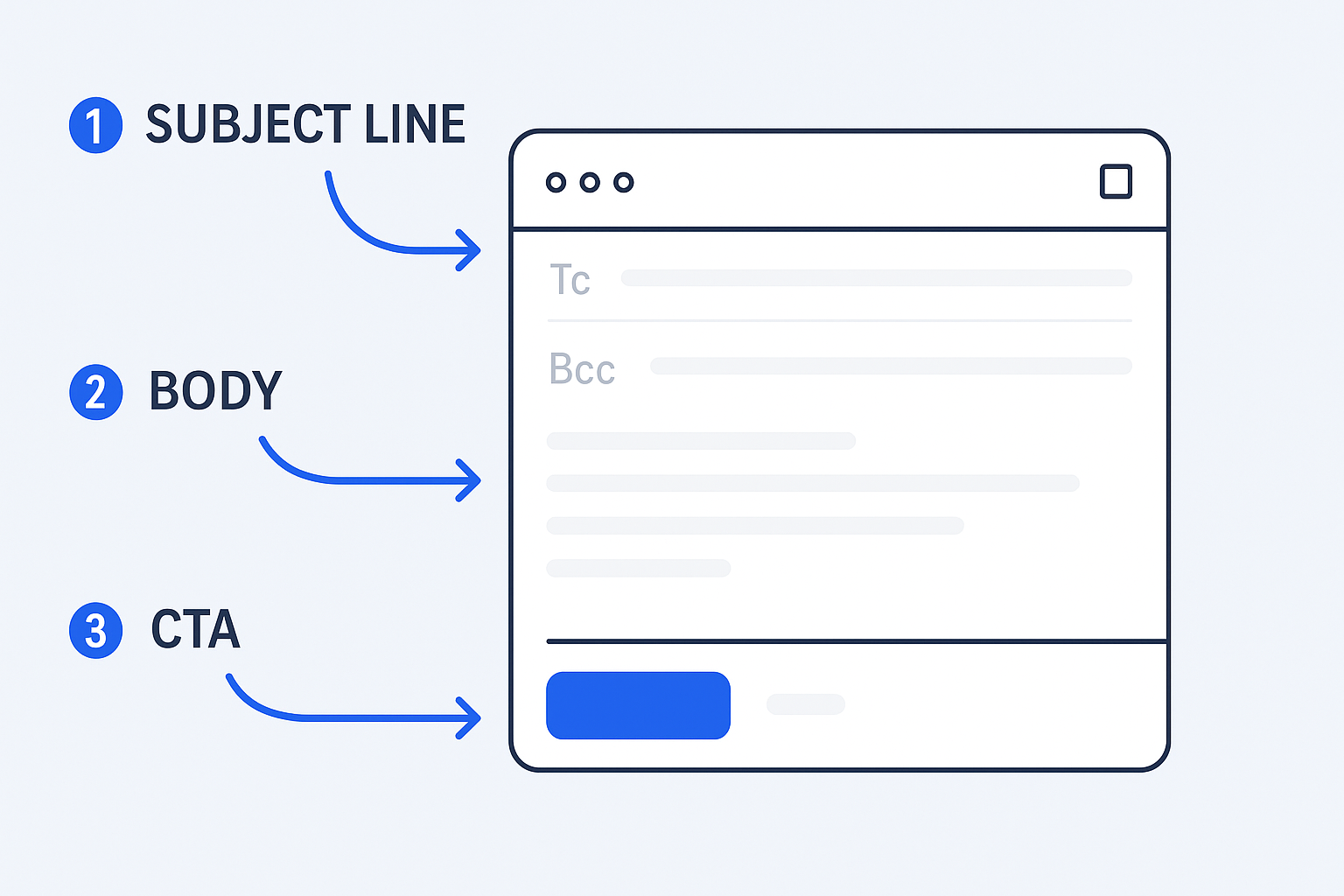


  1. The Subject Line: Your Last Impression This is arguably your most critical component. It needs to be clear, direct, and intriguing without sounding passive-aggressive or clickbaity. Keep it short – 6-10 words is optimal – and professional. Subject lines that create curiosity while signaling finality tend to perform best.
  2. The Body: Concise and Value-Focused Respect their time by keeping it incredibly brief – maximum five sentences. Your structure should be:
  • Acknowledge the silence professionally without blame
  • Briefly reiterate your value proposition one final time
  • State your intention to stop reaching out clearly
  • Leave the door open for future engagement
  1. The CTA: Make It Easy to Say No (Paradoxically) Traditional hard CTAs won’t work here. Instead, give the prospect an easy out, which counterintuitively makes them more likely to engage. Put the ball entirely in their court with phrases like “If I’ve misunderstood, just let me know” or “Feel free to reach out if priorities shift.”

The Power of Personalization in Final Outreach

Even at this stage, generic templates fall flat. Personalization becomes even more critical in breakup emails because you need to break through the pattern of silence. The statistics are compelling:

  • Personalized emails deliver 29% higher open rates and 41% higher click-through rates
  • Just personalizing the subject line makes prospects 50% more likely to open your email

The key is referencing something specific from a previous conversation. Mention a particular business challenge they shared or a goal they mentioned. This proves a real human was listening, not just an automated sequence firing off emails.

🚀 Personalization That Actually Works

LinkedIn outbound uses real-time signals to reach prospects at the perfect moment

Winning Sales Breakup Email Templates to Revive Silent Leads

Here are five battle-tested templates, each designed for different situations. Choose the one that best fits your relationship with the prospect and their communication style.

Template 1: The “Permission to Close Your File” (Direct & Professional)

This classic works because it frames your request around an internal process, making it feel less confrontational.

Best Subject Lines:

  • Permission to close your file?
  • Closing the loop on [Company Name]
  • Final check-in

Email Body:

Hi [Prospect Name],


I’m updating my sales pipeline and wanted to reach out one last time.


Since I haven’t heard back, I’m going to assume your priorities have shifted or you’ve decided to go in a different direction.


If that’s not the case and you’re still interested in [specific value proposition they mentioned], please let me know! Otherwise, I’ll close your file for now.


Best regards,

[Your Name]


Template 2: The “Value-Add Goodbye” (Helpful & Generous)

This approach positions you as a valuable resource, building goodwill for future opportunities.

Best Subject Lines:

  • Before I go…
  • One last resource for you
  • Quick favor before signing off

Email Body:

Hi [Prospect Name],


I’ve tried connecting a few times about [specific pain point they mentioned], but it seems like the timing isn’t right.


Before I stop reaching out, I thought you might find this helpful: [Link to relevant case study/article/resource].


If you ever want to revisit our conversation about [specific goal/challenge], my door is always open. Wishing you and the team at [Company Name] continued success.


Best,

[Your Name]


Template 3: The “Multiple Choice” (Low-Friction Response)

This modern approach dramatically lowers the barrier to getting any response by requiring minimal effort.

Best Subject Lines:

  • Should I stay or should I go?
  • Quick 1, 2, or 3 for you
  • 30-second favor?

Email Body:

Hi [Prospect Name],


I know you’re swamped, so I want to make this easy. Just reply with 1, 2, or 3:


  1. Not interested, please remove me from your list
  2. Timing isn’t right, check back in [timeframe]
  3. Still interested – let’s find time to connect


This will be my last email either way.


Thanks,

[Your Name]


Template 4: The “See You in 6 Months” (Strategic Patience)

Perfect for high-value accounts where you’re confident there’s eventual fit but timing is off.

Best Subject Lines:

  • Taking a pause (for now)
  • Reconnecting down the road
  • Setting a calendar reminder

Email Body:

Hi [Prospect Name],


Since I haven’t heard back, I’m assuming that [specific initiative they mentioned] isn’t a current priority – and that’s completely understandable.


I don’t want to add to your inbox clutter, so I’ll stop reaching out for now. I’ll check back in about six months to see if your situation has changed.


In the meantime, if your priorities shift sooner, you know where to find me.


Best regards,

[Your Name]


Template 5: The “Lighthearted Farewell” (Use with Established Rapport)

Warning: Only use this if you’ve already built some personal connection and rapport.

Best Subject Lines:

  • It’s not you, it’s me…
  • Taking the hint 😊
  • Officially giving up (almost)

Email Body:

Hi [Prospect Name],


I’ve reached out a few times about [topic] and haven’t heard back, so I’m starting to get the message!


I don’t want to be that salesperson who won’t take a hint, so this will be my last note.


If I got the timing wrong or there’s still interest in [specific benefit], just let me know. Otherwise, I wish you all the best with [mention their current priority/challenge].


Cheers,

[Your Name]


Expert Tips for Crafting Effective Sales Breakup Emails

Beyond the templates, here are the strategic principles that separate good breakup emails from great ones:

Master the Timing: When to Send Your Final Email

The sweet spot is after 5-8 unanswered touchpoints across different channels over 3-4 weeks. This includes emails, calls, LinkedIn messages, and any other outreach. If you’ve made this level of multi-channel effort and still get silence, it’s time.

Don’t send too early (you look impatient) or too late (you’ve already wasted too much time on a dead lead). The goal is to strike while there’s still potential energy in the relationship but before you’ve overstayed your welcome.

Subject Line Formulas That Work

Here are 10 high-performing subject line templates you can adapt:

  1. Permission to close your file?
  2. Should I stay or should I go?
  3. Before I go…
  4. Is [goal/initiative] still a priority?
  5. Taking a hint
  6. One last check-in
  7. Thanks for your time, [Name]
  8. Officially giving up (almost)
  9. Should I stop reaching out?
  10. Moving on ✌️

The “Easy Out” Psychology

The counterintuitive secret is making it comfortable for prospects to reject you. When you remove all pressure and give them permission to say no, they become more comfortable responding honestly – whether that’s “yes,” “no,” or “not right now.”

This works because most people avoid confrontation. If your email feels like it might lead to a sales conversation they’re not ready for, they’ll ignore it. But if it feels like you’re giving them a graceful exit, they’re much more likely to respond.

Never Bluff: The Credibility Rule

If you say “This is my last email,” it absolutely must be your last email in that sequence. Breaking this rule destroys your credibility and makes you look desperate and untrustworthy.

However, this doesn’t mean you can never contact them again. You can add them to a long-term nurture sequence (like a monthly newsletter) or re-engage after several months with fresh value and a completely different approach.

Common Pitfalls You Should Avoid in Your Sales Breakup Emails

Even with good intentions, it’s easy to sabotage your breakup emails. Here are the five deadly sins to avoid:

The Guilt Trip: “I’ve Emailed You 7 Times…”

This is the most common and most damaging mistake. Starting your email by listing all your previous attempts is passive-aggressive and self-centered. Your prospect doesn’t owe you a response, and making them feel guilty will guarantee they never speak to you again.

Instead: Focus on their situation and priorities, not your frustration.

The Vague Message: All Style, No Substance

A clever subject line means nothing if your email doesn’t clearly state its purpose. Your prospect shouldn’t have to work to figure out why you’re writing or what you want them to do.

Instead: Be direct about your intent to stop reaching out and what happens next.

The Empty Threat: Crying Wolf with “Final” Emails

Sending multiple “final” emails destroys your credibility faster than almost anything else in sales. If you threaten to break up but don’t follow through, you lose all leverage and look weak.

Instead: Only send a breakup email when you genuinely mean it.

The Emotional Outburst: Taking It Personally

It’s natural to feel frustrated by silence, but letting that frustration creep into your email is professional suicide. Accusatory, bitter, or overly emotional language will permanently burn the bridge.

Instead: Maintain a professional, respectful tone throughout.

The Wall of Text: Disrespecting Their Time

A long breakup email contradicts its own purpose. If they didn’t have time to respond to your previous short emails, they definitely won’t read a novel-length farewell.

Instead: Keep it brief, scannable, and focused.

All these mistakes stem from the same core problem: focusing on the sender’s emotions rather than the recipient’s reality. Remember, your prospect isn’t ignoring you maliciously – they’re just busy, and their priorities have shifted. When your breakup email acknowledges their world instead of dwelling on your frustration, it feels respectful rather than manipulative.

📊 Never Get Ignored Again

Complete LinkedIn outbound strategy: targeting, messaging, and scaling that bypasses inboxes entirely

7-day Free Trial |No Credit Card Needed.

Moving On! Conclusion

The sales breakup email is far more than a last-ditch effort – it’s a strategic tool that gives you control, clarity, and often surprising results. Whether you’re trying to revive a stalled deal or simply clean up your pipeline, a well-crafted breakup email serves multiple purposes: it can re-engage silent prospects, provide the closure you need to move forward, and maintain your professional reputation.

The key is executing it correctly. Use the templates and principles in this guide to craft emails that are professional, respectful, and psychologically compelling. Remember to personalize your approach, time your outreach appropriately, and most importantly, mean it when you say goodbye.

But the story doesn’t have to end with an unanswered breakup email. Smart sales professionals know that “no response” often just means “not right now.” After you’ve sent your breakup email and officially closed the deal in your CRM, consider adding the contact to a long-term nurture sequence – perhaps a quarterly newsletter with valuable industry insights or relevant case studies.

This approach allows you to stay top-of-mind without being intrusive. You’re playing the long game, building your reputation as a helpful expert rather than just another persistent salesperson. When their priorities inevitably shift and the timing becomes right, you’ll be the first person they think of.

Remember: every “no” gets you closer to a “yes,” and every clean breakup maintains a potential future opportunity. Master this final step in your sales process, and you’ll find yourself closing more deals while spending less time chasing ghosts.

For more strategies on improving your cold email outreach and maintaining professional email communication, check out our comprehensive guides on effective sales communication.

FAQs

What is a sales breakup email?

A sales breakup email is a strategic final message sent to unresponsive prospects after multiple follow-up attempts. Its primary purpose is to either re-engage the prospect through psychological triggers like loss aversion or gain closure to clean up your sales pipeline. Despite the name, it's not about being dramatic – it's about being professional while creating a sense of finality that often prompts a response.

When should I send a breakup email?

Send a breakup email after 5-8 unanswered touchpoints across multiple channels over 3-4 weeks. This should include emails, phone calls, LinkedIn messages, and other outreach methods. The key is ensuring you've made a genuine multi-channel effort before concluding the prospect is unresponsive. Sending too early makes you look impatient, while waiting too long wastes valuable time on dead leads.

Do sales breakup emails actually work?

Yes, they can be highly effective. HubSpot reported a 33% response rate from their breakup emails, which is remarkable for prospects who were previously silent. Even when they don't generate responses, they provide value by forcing a decision point that helps clean your pipeline and improve forecasting accuracy. The psychological principle of loss aversion makes people more likely to respond when they feel they might lose an opportunity.

Can I contact a prospect again after sending a breakup email?

You should honor your word and stop active, direct outreach after sending a breakup email – this maintains your credibility. However, you can add them to passive, long-term nurture campaigns like quarterly newsletters or re-engage after 6-12 months with completely fresh value and a different approach. The key is distinguishing between breaking your immediate promise and maintaining long-term relationship building.

Is the "Who's Viewed Your Profile" feature truly useful?

The most damaging mistake is the guilt trip approach – starting emails with complaints about how many times you've reached out without response. This is passive-aggressive and self-centered. Your prospect doesn't owe you a response, and making them feel guilty guarantees they'll never engage. Instead, focus on their situation and priorities while maintaining a professional, respectful tone throughout.

Stop Chasing Email Ghosts

LinkedIn outbound gets 3x responses without the breakup drama or spam folders

Segmentation That Actually Converts

LinkedIn outbound targets precise demographics with strategic campaign design and scaling methods

How to Build a High-Converting B2B Sales Funnel from Scratch on LinkedIn ​