
🎉Find Prospects and Send Cold Emails & LinkedIn Outbound | All in One Place

Sales Cycle: Master the 7 Stages That Drive Revenue Growth

Table of Contents

Picture this: You’re juggling multiple prospects, each at different stages of considering your product. One needs a demo, another is comparing competitors, and a third is ready to sign but stuck in procurement hell. Sound familiar?

Without a clear sales cycle framework, you’re flying blind through what should be a predictable, revenue-generating machine.

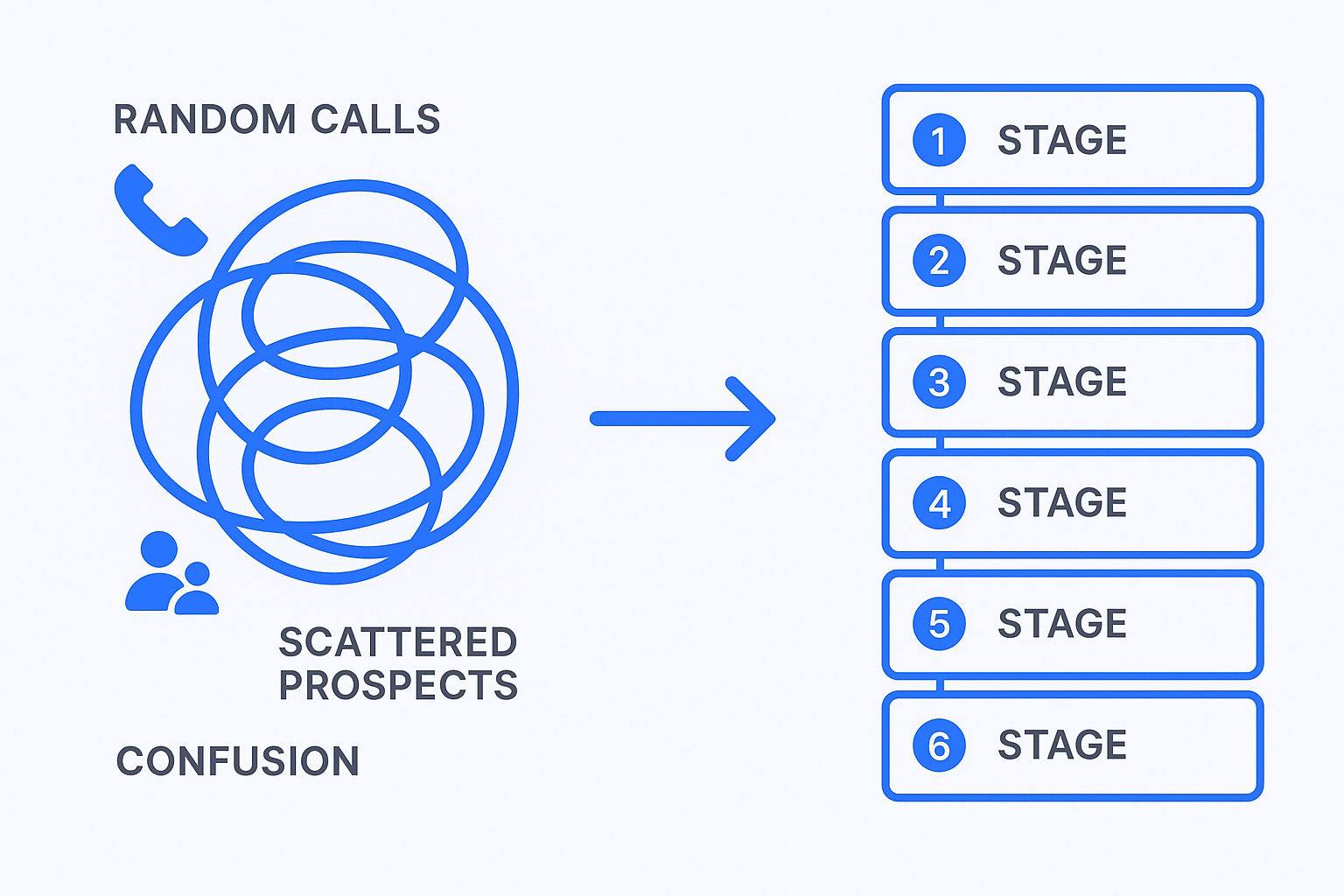
The modern sales process isn’t just about making calls and hoping for the best. It’s a strategic system that transforms chaos into consistent results. When done right, it’s your GPS for turning strangers into paying customers.


What is a Sales Cycle?

A sales cycle is the repeatable, step-by-step process that takes a prospect from initial awareness of your product to becoming a paying customer. Think of it as your roadmap for predictable revenue.

Unlike random sales activities, a structured sales cycle provides:

  • Clear next steps for every prospect interaction
  • Predictable timelines for forecasting revenue
  • Consistent processes that your entire sales team can follow
  • Data-driven insights to identify and fix bottlenecks

Sales cycle vs. Sales process: Your sales cycle represents the overarching stages a deal moves through, while your sales process includes the specific tactics and activities within each stage.

The numbers tell the story: Companies with a defined sales process see 18% more revenue growth than those winging it. Yet surprisingly, 68% of companies don’t even know their average sales cycle length.

Why is the Sales Cycle Process Important?

The difference between top performers and struggling salespeople often comes down to process discipline. Here’s why mastering your sales cycle matters:

Predictable Revenue Forecasting

When you track deals through defined stages, you can calculate realistic close dates and revenue projections. Sales teams with structured processes are 33% more likely to be high performers.

Shorter Time-to-Close

A well-managed sales cycle eliminates wasted time and keeps deals moving. Organizations with optimized sales processes experience 28% higher revenue growth.

Better Resource Allocation

Understanding where prospects typically get stuck helps you allocate time and resources more effectively. Instead of spreading yourself thin, you focus efforts where they matter most.

Consistent Team Performance

A defined process ensures every team member follows proven best practices, reducing the performance gap between your best and worst performers.

The stakes are higher than ever. Recent data shows 58% of B2B SaaS professionals report their sales cycles have gotten longer, with deals over $250k now taking more than six months to close deals. Without a systematic approach, longer cycles mean more risk and fewer closed opportunities.

7 Stages of a Sales Cycle

Stage 1: Prospecting

Prospecting is where every future deal begins. Your goal is to identify potential customers who fit your ideal customer profile and have a genuine need for your solution.

Key Activities:

  • Research target accounts and key decision-makers
  • Build targeted prospect lists using company size, industry, and other qualifying criteria
  • Leverage multiple data sources to find accurate contact information
  • Prioritize prospects based on fit and buying signals

Success Metric: More than 40% of salespeople say prospecting is the most challenging part of the sales process, which explains why systematic prospecting separates winners from strugglers.
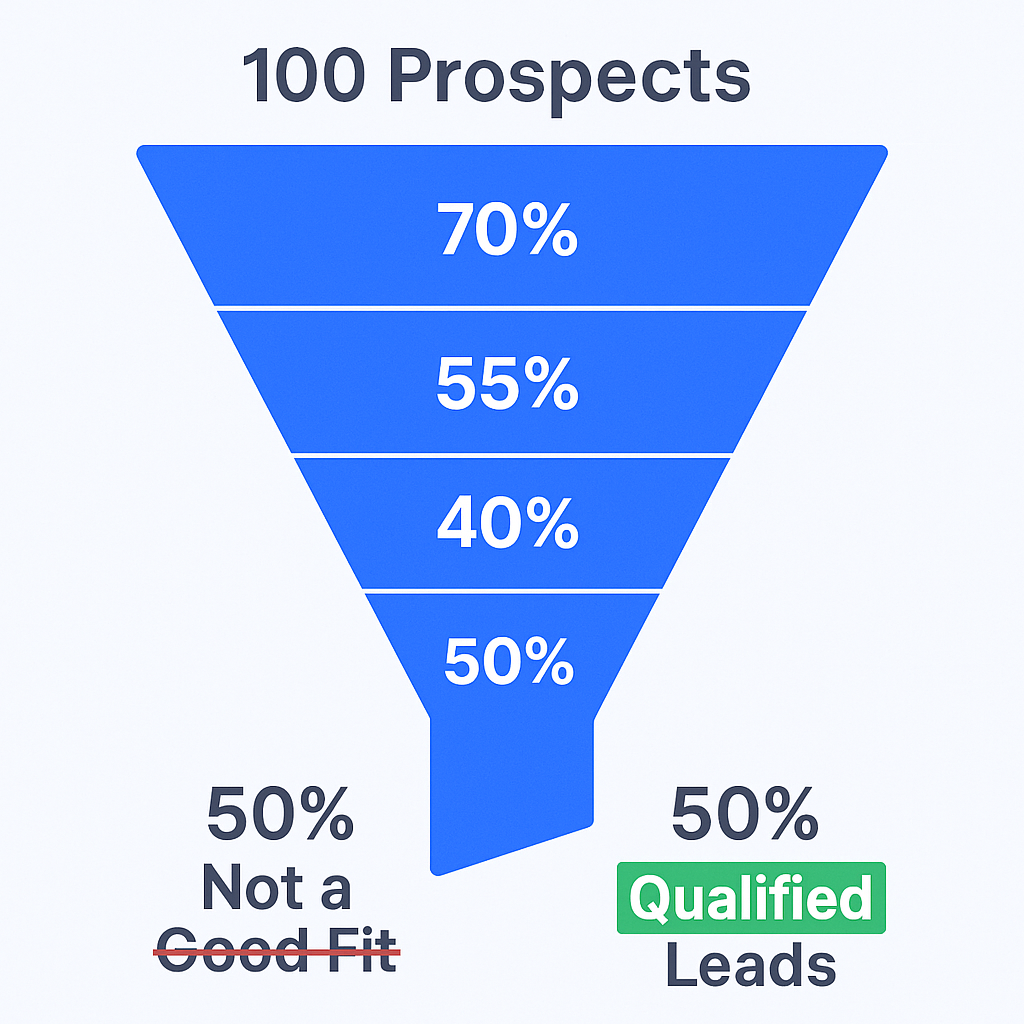


Pro Tip: Focus on quality over quantity. 50% of prospects in any list are not a good fit for your business, so thorough research upfront saves countless hours later.

Stage 2: Connecting

Once you have your prospect list, it’s time to break through the noise and initiate meaningful conversations. Your goal is to spark interest and secure a formal meeting.

Key Activities:

  • Execute multi-channel outreach (email, phone, social media)
  • Craft personalized messages that reference specific business challenges
  • Follow up persistently but respectfully
  • Focus on selling the meeting, not the entire solution

🎯 Skip Manual Prospecting Forever

Our LinkedIn engine delivers pre-qualified decision-makers directly to your pipeline with automated precision

Success Metric: 31% of sellers report that personalized, one-to-one messages are extremely effective, while generic templates get deleted instantly.

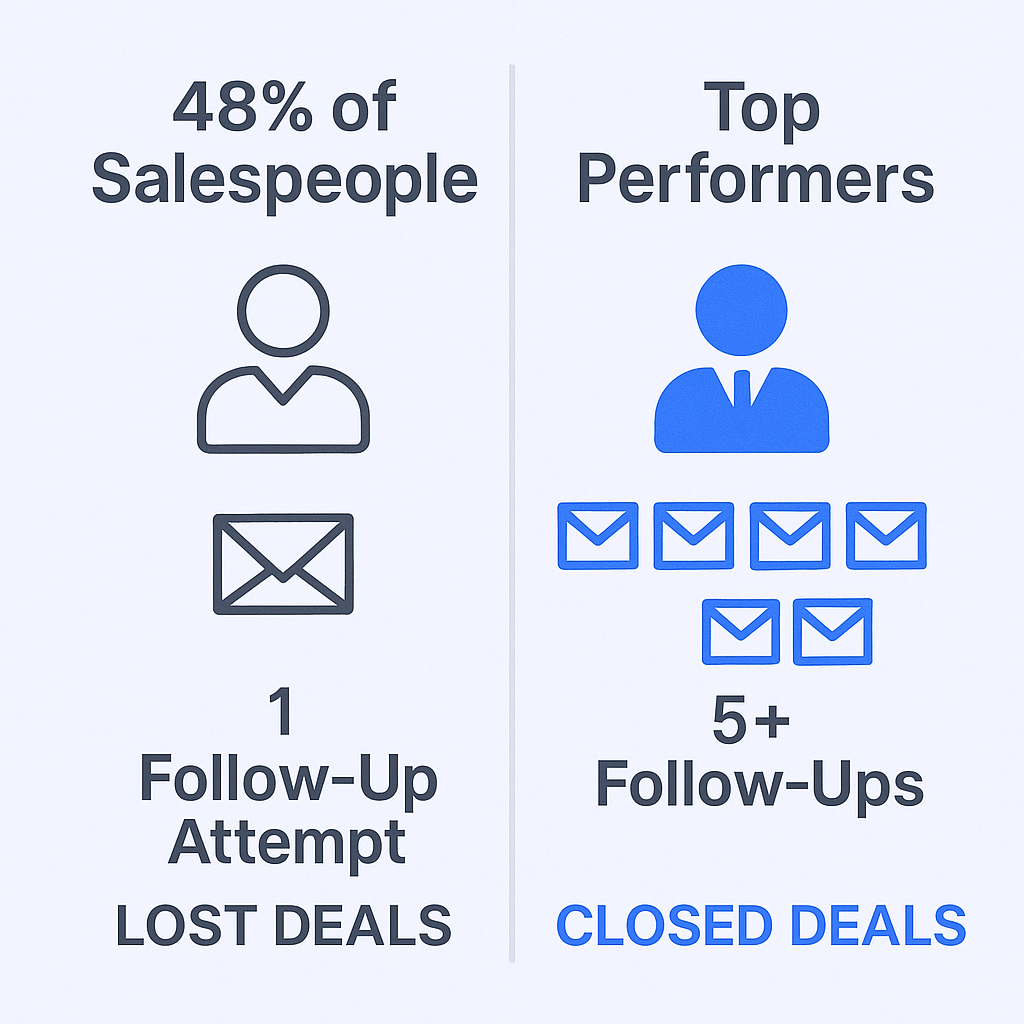
The persistence factor cannot be overstated: 80% of sales require at least five follow-up attempts, yet 48% of salespeople never make a single follow-up. This gap represents a massive opportunity for disciplined professionals.



💼 LinkedIn Outbound Solves Multi-Touch Complexity 

Our campaign sequences automate 5-15 personalized touchpoints across LinkedIn messaging and InMail outreach.

Stage 3: Qualifying

This critical stage separates real opportunities from time-wasters. Your goal is to determine if the prospect has genuine need, budget authority, and timeline to make a purchase decision.

Key Activities:

  • Conduct discovery calls to uncover pain points and business goals
  • Use qualification frameworks like BANT (Budget, Authority, Need, Timeline) or MEDDIC
  • Identify the decision-making unit and key influencers
  • Confirm there’s a compelling business case for change

Success Metric: Proper qualification is a productivity multiplier. Remember that 50% of initial prospects aren’t a good fit – every unqualified lead you filter out saves hours of wasted effort.

Red Flags to Watch:

  • Vague or non-specific pain points
  • No clear budget or timeline
  • Unable to identify decision-makers
  • Lack of urgency or compelling event

Stage 4: Presenting

Now comes your moment to shine. The goal is to demonstrate how your solution directly addresses the specific challenges uncovered during qualification.

Key Activities:

  • Deliver tailored presentations focused on their specific use case
  • Conduct product demonstrations that map features to their business outcomes
  • Position your solution against alternatives they’re considering
  • Provide social proof through relevant case studies and testimonials

Success Metric: The bar is surprisingly low here. 58% of buyers feel that most sales meetings are not valuable. By delivering personalized, relevant presentations, you immediately differentiate yourself from most competitors.

Modern Reality Check: 96% of prospects research solutions independently before talking to sales. Your presentation must acknowledge what they already know while focusing on insights they can’t find online.

📈 Fill Your Pipeline Faster

LinkedIn outbound shortens stages 1-2 from weeks to days with precision targeting and campaign automation.

Stage 5: Handling Objections

Objections aren’t roadblocks – they’re engagement signals. A prospect raising concerns is seriously considering your proposal. Your goal is to address these concerns while building trust and maintaining momentum.

Key Activities:

  • Listen completely before responding
  • Acknowledge their concern to show you’re on their side
  • Ask clarifying questions to understand the root issue
  • Respond with data, social proof, or creative solutions
  • Use objections as opportunities to reinforce value

Success Metric: Resilience pays off. 60% of customers say “no” four times before saying “yes”. Top performers view objections as part of the conversation, not the end of it.

Common Objection Categories:

  • Price/budget concerns
  • Feature comparisons with competitors
  • Implementation timeline worries
  • Internal approval processes

Stage 6: Closing

This is where deals live or die. Your goal is to secure commitment and navigate the final hurdles to getting contracts signed.

Key Activities:

  • Present formal proposals with clear pricing and terms
  • Navigate procurement and legal review processes
  • Create appropriate urgency through limited-time incentives
  • Maintain clear communication about next steps and timelines
  • Use proven closing techniques like assumptive or suggestion closes

Success Metric: The average sales close rate across industries is only 29%. This highlights why having a methodical closing process is essential for improving your odds.

Closing Psychology: Never ask “Are you ready to move forward?” Instead, assume the sale and ask implementation questions: “When would you like to start the onboarding process?”

Stage 7: Nurturing & Upselling

Many salespeople disappear after the contract signature, missing massive revenue opportunities. Your goal is ensuring customer success while identifying expansion possibilities.

Key Activities:

  • Ensure smooth handoff to customer success teams
  • Check in during implementation to address any concerns
  • Monitor usage and adoption metrics
  • Identify opportunities for additional products or services
  • Cultivate referrals and testimonials

Success Metric: The economics are compelling. 72% of a typical company’s revenue comes from existing customers versus just 28% from new business. Additionally, nurtured leads make purchases that are 47% larger than non-nurtured leads.

Implementing and Improving Your Sales Cycle

Track the Right Metrics

You can’t improve what you don’t measure. 65% of B2B sales organizations are expected to become data-driven by 2026. Focus on these key metrics:

Average Sales Cycle Length: Calculate total days to close divided by number of deals. Track this monthly to spot trends.

Stage-by-Stage Conversion Rates: Identify where deals typically stall or drop off. This reveals your biggest improvement opportunities.

Activity Metrics: Track calls, emails, and meetings per stage to understand what activities drive progression.

Leverage Technology Wisely

Sales reps spend only 30% of their time actually selling – the other 70% goes to administrative tasks. Technology can reclaim that time:

  • CRM Systems provide the single source of truth for all deal information
  • Sales engagement platforms automate follow-up sequences and multi-channel outreach
  • AI conversation intelligence analyzes calls and provides coaching insights
  • Automation tools can increase team efficiency by 10-15% and free up 20% of capacity

Master Value-Added Follow-Up

Most deals aren’t lost to competitors – they’re lost to “no decision.” The cause? Weak follow-up that doesn’t add value.

Instead of “checking in,” provide:

  • Relevant industry insights and reports
  • Case studies from similar successful implementations
  • Connections to existing satisfied customers
  • Updates on product enhancements that address their needs

Remember: It takes an average of 31 touches to close a B2B deal. Your follow-up cadence must provide value at every interaction.

Align with the Modern Buyer’s Journey

Today’s buyers are self-directed. 80% of B2B sales interactions happen on digital channels, and buyers use 10 or more channels during their research process.

Your sales cycle must adapt to this reality:

  • Awareness Stage: Provide educational content that helps them understand their problem
  • Consideration Stage: Offer detailed comparisons and ROI calculators
  • Decision Stage: Focus on implementation support and risk mitigation

Top Sales Cycle Management Software

CRM Platforms (Your Foundation)

Salesforce: The enterprise standard with unlimited customization options, though it requires dedicated administration.

HubSpot: User-friendly all-in-one platform perfect for aligning sales and marketing efforts. Visual pipeline management makes tracking deals intuitive.

Pipedrive: Sales-focused CRM with excellent visual pipeline tools and straightforward setup.

Sales Engagement Tools (Your Outreach Engine)

Outreach: Enterprise-grade platform with AI-driven insights and advanced analytics for high-performance teams.

SalesLoft: Clean interface with sophisticated cadence-building capabilities for targeted outreach strategies.

Salesso: Complete cold email solution combining prospect finding, email warming, and campaign management – perfect for scaling outbound efforts efficiently.

Prospecting & Intelligence Tools (Your Data Source)

Apollo.io: Comprehensive go-to-market platform combining massive B2B database with engagement features.

ZoomInfo: Industry-leading contact and company intelligence with buying intent signals.

Hunter.io: Specialized email finding and verification tool for building clean, deliverable prospect lists.

Conclusion

Your sales cycle is more than a series of checkboxes in your CRM – it’s your blueprint for predictable revenue growth. In today’s complex B2B landscape, the sales professionals who thrive aren’t those with the smoothest pitch, but those with the most disciplined process.

The data is clear: Companies with defined sales processes see 18% more revenue growth than those operating without structure. With 58% of B2B sales cycles getting longer, having a systematic approach isn’t just helpful – it’s essential for survival.

Start improving your sales cycle today:

  1. Calculate your current average sales cycle length to establish your baseline
  2. Identify your biggest conversion bottleneck by analyzing stage-by-stage drop-off rates
  3. Implement one improvement from this guide – whether it’s better qualification questions or value-added follow-up sequences
  4. Track your progress monthly and adjust based on what the data tells you

Remember: 72% of revenue comes from existing customers, so don’t disappear after the sale. The most successful sales professionals understand that closing a deal is just the beginning of a profitable relationship.

Your sales cycle is your competitive advantage. Master it, and you’ll master predictable revenue growth.

🚀 Advanced LinkedIn Targeting

Strategic demographic segmentation delivers personalized campaigns with systematic scaling approaches

7-day Free Trial |No Credit Card Needed.

FAQs

How long should a sales cycle be?

Average sales cycle length varies by deal size and industry. Deals under $100k typically take 3 months, while deals over $250k often require 6+ months. The key is consistency - track your specific metrics to establish realistic expectations.

What's the difference between a sales cycle and sales funnel?

A sales cycle focuses on the seller's process and activities to move deals forward. A sales funnel represents the buyer's journey and how many prospects convert at each stage. Both are important for sales cycle management.

How can I shorten my sales cycle?

Focus on better qualification early, provide value-added content that addresses buyer concerns, leverage automation for consistent follow-up, and align your process with how modern buyers research and make decisions.

What tools do I need for sales cycle management?

At minimum, you need a CRM system to track deals and activities. Most sales teams also benefit from sales engagement platforms for outreach automation and prospecting tools for finding quality leads.

Is the "WhoHow do I know if my sales cycle is working?'s Viewed Your Profile" feature truly useful?

Track conversion rates between stages, monitor your average cycle length over time, and measure overall revenue growth. If deals consistently stall at certain stages, that's where you need to focus improvement efforts.

Automate Your Prospecting & Connecting Stages

Our LinkedIn outbound engine handles stages 1-2 with precision targeting and proven campaign designs.

Segmentation That Actually Converts

LinkedIn outbound targets precise demographics with strategic campaign design and scaling methods

How to Build a High-Converting B2B Sales Funnel from Scratch on LinkedIn ​