
Formal Email Writing Format (Elements of a Formal Email Format)
Every effective formal email follows the same five-part structure. Master this blueprint and you’ll never struggle with professional email again.

Craft a Subject Line That Gets Opened
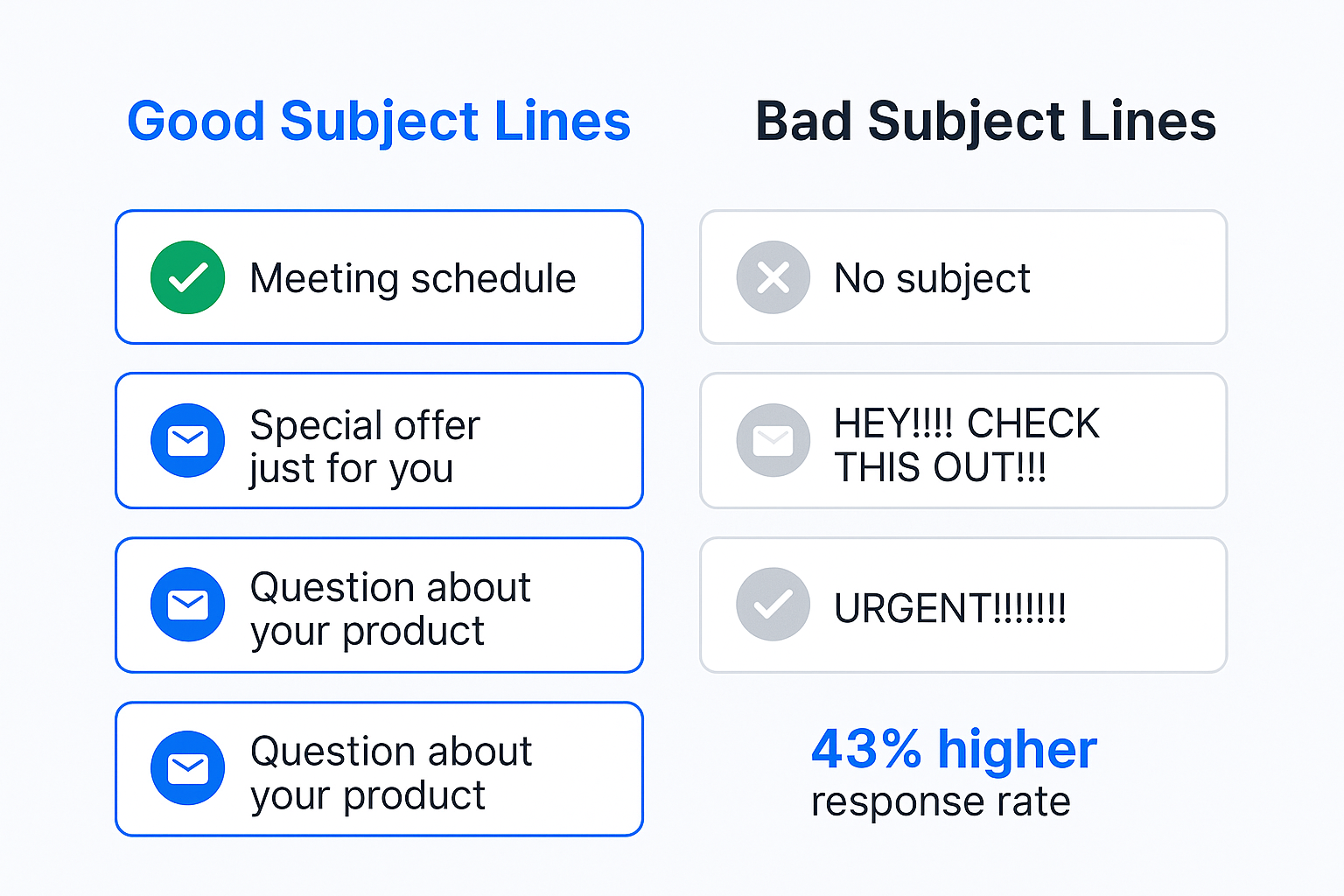
Your subject line determines whether your email gets opened or deleted. 47% of recipients decide to open emails based solely on the subject line.
The winning formula:
- Be Specific: “Q3 Budget Review” beats “Meeting”
- Keep it Short: Aim for 30-50 characters
- Add Urgency When Appropriate: “Action Required: Contract Review by Friday”
- Avoid Spam Triggers: Skip words like “Free,” “Urgent,” or “Act Now”
Examples that work:
- “Follow-up: Marketing Strategy Discussion”
- “Proposal for Social Media Campaign”
- “Meeting Request: Project Timeline Review”
Use a Greeting That Opens Doors
The greeting sets your email’s tone. Choose the right level of formality for your audience:
Ultra-Formal (C-Suite, Government, Legal)
Dear Mr. Johnson,
Dear Ms. Rodriguez,
Professional Standard (Most Business Situations)
Hi Sarah,
Hello Michael,
Never Use These:
- “To Whom It May Concern” (screams mass email)
- “Hey there” (too casual)
- No greeting at all (immediately unprofessional)
Pro tip: Always use their name when possible. Personalized emails generate 6x higher transaction rates than generic ones.
Write Body Copy That Delivers Value
Your email body should be scannable, valuable, and focused on the recipient’s needs. The average professional spends just 11 seconds scanning an email before deciding to read it fully or delete it.
The winning structure:
Opening Line (The Hook) Reference something specific about them or their company:
- “I noticed your recent expansion into the European market…”
- “Congratulations on your promotion to VP of Sales…”
Value Statement (The Why) Explain what’s in it for them:
- “This could help reduce your customer acquisition costs by 30%…”
- “Based on your LinkedIn post about productivity challenges…”
The Ask (The What) Make your request clear and specific:
- “Would you be available for a 15-minute call next Tuesday?”
- “Could you provide feedback on the attached proposal?”
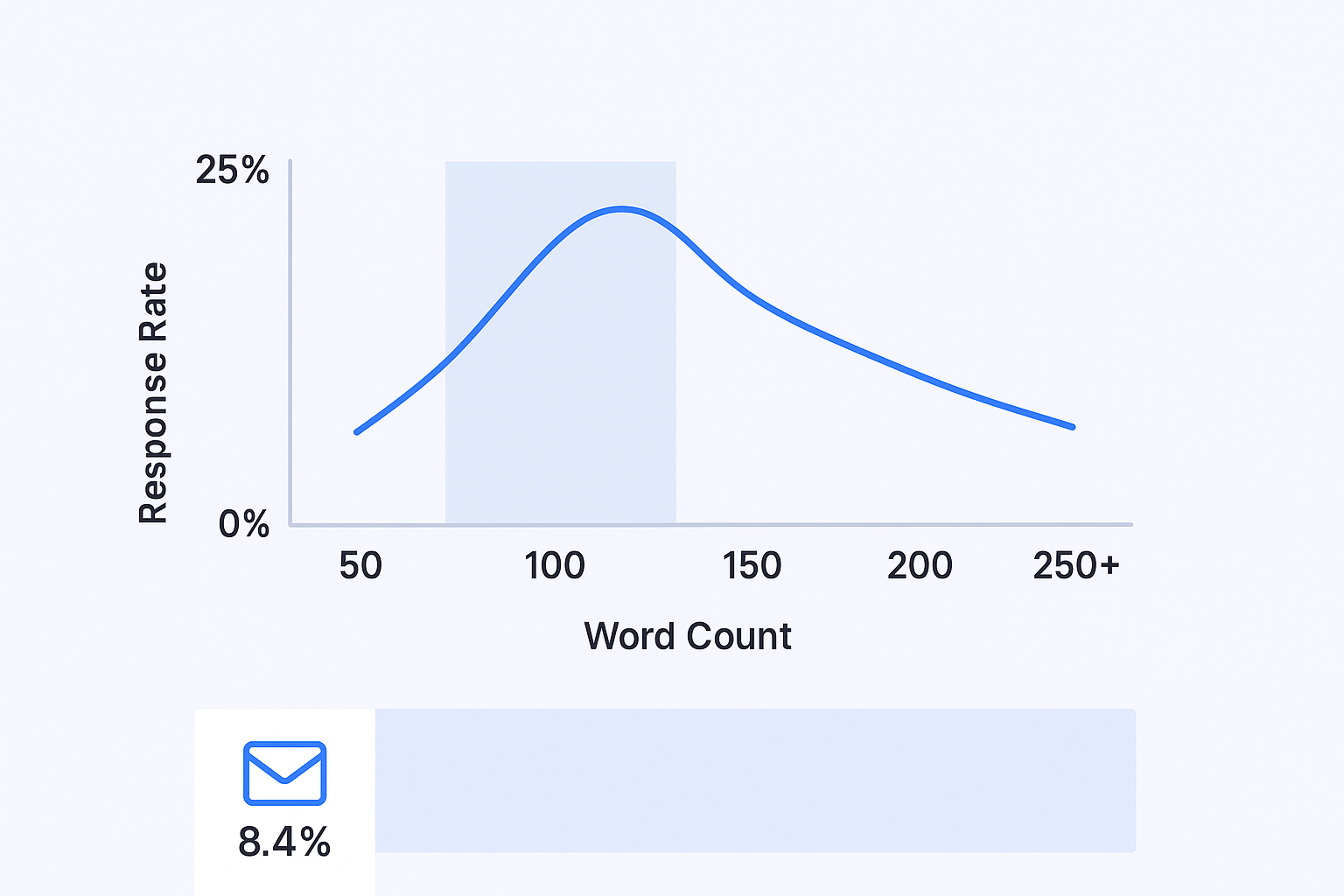
Keep it concise: Aim for 50-150 words total. Anything longer requires exceptional value to justify the reader’s time.
Add a Closing & Signature That Drives Action
Your email’s ending should guide the recipient toward your desired outcome.
Professional Closings:
- “Best regards,” (most versatile)
- “Sincerely,” (most formal)
- “Thank you,” (when requesting something)
- “Looking forward to your response,” (creates expectation)
Your Signature Should Include:
- Full name and job title
- Company name
- Phone number
- Professional email address
- LinkedIn profile (optional but recommended)
Example signature:
Best regards,
Sarah Johnson
Senior Marketing Manager
TechCorp Solutions
(555) 123-4567
sarah.johnson@techcorp.com
LinkedIn: linkedin.com/in/sarahjohnson
Proofread Like Your Career Depends On It
73% of professionals say they’ve lost respect for someone due to poor grammar in emails. One typo can undermine an otherwise perfect message.
Quick proofreading checklist:
- Read it out loud (catches awkward phrasing)
- Check all names and company spellings
- Verify dates and numbers
- Ensure your call-to-action is clear
- Test any links you’ve included
14 Examples of Formal Email
Here are proven templates for the most common professional scenarios:
The Cold Outreach Email
Subject: Quick question about [Company Name]’s growth plans
Hi [Name],
I noticed [Company Name] recently [specific trigger – funding, expansion, hire, etc.]. Congratulations on the milestone.
Companies at your growth stage often face [relevant challenge]. We’ve helped similar organizations like [relevant client] [specific result achieved].
Would you be open to a brief 15-minute call next week to explore if there might be a fit?
Best regards, [Your name]
The Follow-Up Email
Subject: Re: [Original subject]
Hi [Name],
I wanted to follow up on my email from last week regarding [topic].
I found this [article/case study/resource] that directly relates to [their challenge/goal you discussed]. The section on [specific part] reminded me of our conversation about [specific point].
Are you still interested in exploring this further?
Best regards, [Your name]
The Meeting Request Email
Subject: Meeting request: [Specific topic] discussion
Dear [Name],
I hope this email finds you well.
I’d like to schedule a meeting to discuss [specific topic] and how it relates to [their goal/project]. Based on our previous conversation, I believe we could [specific benefit/outcome].
Would you be available for a 30-minute meeting next week? I’m flexible with timing and can accommodate your schedule.
Please let me know what works best for you.
Best regards, [Your name]
The Thank You Email
Subject: Thank you for your time today
Hi [Name],
Thank you for taking the time to meet with me today. I enjoyed learning more about [specific topic they discussed] and your perspective on [relevant issue].
As promised, I’ve attached [resource/document you mentioned]. I’m particularly excited about [specific opportunity discussed] and believe we could [specific outcome].
I’ll follow up next week with [specific next step]. Please don’t hesitate to reach out if you have any questions in the meantime.
Best regards, [Your name]
The Proposal Email
Subject: Proposal for [Specific Project/Service]
Dear [Name],
Thank you for the opportunity to submit a proposal for [project name].
Based on our discussion, I understand your main objectives are:
- [Objective 1]
- [Objective 2]
- [Objective 3]
I’ve attached a detailed proposal that outlines our approach to achieving these goals. The proposal includes [brief overview of what’s included].
I’m confident we can deliver [specific outcome] within your [timeline/budget] requirements.
Would you be available for a call this week to review the proposal and answer any questions?
Sincerely, [Your name]
The Apology Email
Subject: Apology for [Specific Issue]
Dear [Name],
I sincerely apologize for [specific mistake/issue]. This was unacceptable and falls short of the standards you deserve.
Here’s what happened: [brief, honest explanation without excuses]
To make this right, I’ve [specific corrective action taken]:
- [Action 1]
- [Action 2]
- [Action 3]
I’ve also implemented [preventive measure] to ensure this doesn’t happen again.
I value our relationship and appreciate your patience as we resolve this matter.
Sincerely, [Your name]
The Job Application Email
Subject: Application for [Position Title] – [Your Name]
Dear Hiring Manager,
I am writing to express my interest in the [Position Title] role advertised on [where you found it].
With [number] years of experience in [relevant field], I have developed strong skills in [2-3 key skills mentioned in job posting]. In my previous role at [Company], I [specific achievement with measurable result].
I’ve attached my resume and cover letter for your review. I’m particularly drawn to this opportunity because [specific reason related to the company/role].
I would welcome the opportunity to discuss how my background aligns with your needs. Thank you for considering my application.
Best regards, [Your name]
The Networking Email
Subject: Introduction from [Mutual Connection’s Name]
Hi [Name],
[Mutual connection] suggested I reach out to you regarding [specific topic/reason].
I’m [brief introduction – title, company, relevant background]. I’m particularly interested in [specific area related to their expertise] and would value your insights on [specific question/topic].
Would you be available for a brief 20-minute coffee meeting next week? I’m happy to work around your schedule.
Thank you for considering my request.
Best regards, [Your name]
The Client Check-in Email
Subject: How are things going with [Project/Service]?
Hi [Name],
I wanted to check in and see how things are progressing with [specific project/service].
Since we last spoke, [brief update on your end]. I’m curious to hear how [specific aspect] is working out for your team.
Are there any challenges you’re facing that I can help address? I’m always available if you need support or have questions.
Looking forward to hearing from you.
Best regards, [Your name]
The Referral Request Email
Subject: Referral request – [Brief description]
Hi [Name],
I hope you’re doing well.
Given your network in [industry/field], I wondered if you might know someone who could benefit from [your service/product]. We’ve had great success helping companies like yours [specific benefit/result].
If anyone comes to mind who might be facing [relevant challenge], I’d appreciate an introduction. I’m happy to provide more details about how we might be able to help.
Thank you for considering this.
Best regards, [Your name]
The Contract Negotiation Email
Subject: Discussion on [Contract/Agreement] terms
Dear [Name],
Thank you for sending the [contract/agreement] for [project/service]. I’ve reviewed the terms and am excited about moving forward.
I’d like to discuss a few points to ensure we’re both comfortable with the arrangement:
- [Point 1 with brief rationale]
- [Point 2 with brief rationale]
- [Point 3 with brief rationale]
I believe these adjustments will create a mutually beneficial agreement. Would you be available for a brief call to discuss these items?
I look forward to finalizing this partnership.
Best regards, [Your name]
The Status Update Email
Subject: [Project Name] Status Update – [Date]
Hi [Name],
I wanted to provide you with an update on [project name] progress.
Completed this week:
- [Task 1]
- [Task 2]
- [Task 3]
Upcoming milestones:
- [Milestone 1] – [Date]
- [Milestone 2] – [Date]
Potential concerns:
- [Issue if any, with proposed solution]
We remain on track to meet our [date] deadline. Please let me know if you have any questions or concerns.
Best regards, [Your name]
The Event Invitation Email
Subject: Invitation: [Event Name] on [Date]
Dear [Name],
You’re invited to [event name] on [date] at [time].
This [type of event] will focus on [main topics/benefits]. We’ll be discussing [specific relevant topics] that I believe would be valuable for your work in [their field/industry].
Event Details:
- Date: [Date]
- Time: [Time]
- Location: [Address/Virtual link]
- Duration: [Length]
Please RSVP by [date] so we can plan accordingly. Light refreshments will be provided.
I hope to see you there.
Best regards, [Your name]
The Partnership Proposal Email
Subject: Partnership opportunity between [Your Company] and [Their Company]
Dear [Name],
I’ve been following [Their Company]’s impressive growth in [specific area] and believe there’s a strong opportunity for collaboration between our organizations.
[Your Company] specializes in [your expertise], and I see clear synergies with your focus on [their focus area]. A partnership could help both companies [specific mutual benefit].
I’d love to explore this opportunity further. Would you be interested in a preliminary discussion about potential collaboration?
I’m available for a call at your convenience.
Sincerely, [Your name]
Dos & Don’ts While Writing a Formal Email
DO:
- Personalize every email with specific details about the recipient
- Focus on their benefits, not your features
- Use clear, concise language that respects their time
- Include a single, specific call-to-action
- Proofread multiple times before sending
DON’T:
- Send generic, templated messages that scream mass email
- Write walls of text that intimidate readers
- Use industry jargon without explanation
- Include multiple requests that create decision paralysis
- Forget to follow up on important communications
The golden rule: Every sentence should provide value to the reader or move them toward your desired action.
Common Mistakes Made While Writing a Formal Email
The “All About Me” Trap Starting emails with “I am writing to…” immediately signals that this email is about YOU, not THEM. Instead, lead with something relevant to their world.
Subject Line Disasters
Vague subjects like “Following up” or “Quick question” provide no context and often get deleted. 91% of professionals check email on mobile devices, where subject lines get cut off after 30-35 characters.
The Wall of Text Long paragraphs are intimidating and rarely get read completely. Research shows that emails over 200 words see dramatic drops in response rates.
Weak or Missing Call-to-Action
Ending with “Let me know your thoughts” puts the burden on the recipient to figure out what you want. Be specific: “Are you available for a 15-minute call Tuesday at 2 PM?”
Professional Credibility Killers:
- Spelling recipient’s name wrong (instant delete)
- Using personal email addresses for business (looks unprofessional)
- Forgetting attachments you mention in the email
- Including outdated information in your signature
The biggest mistake? Not following up. 80% of sales require 5+ follow-up touches, but most people give up after one email.
