

🎉Find Prospects and Send Cold Emails & LinkedIn Outbound | All in One Place

Social Selling: The Complete Guide to Transform Your Sales Performance

Table of Contents

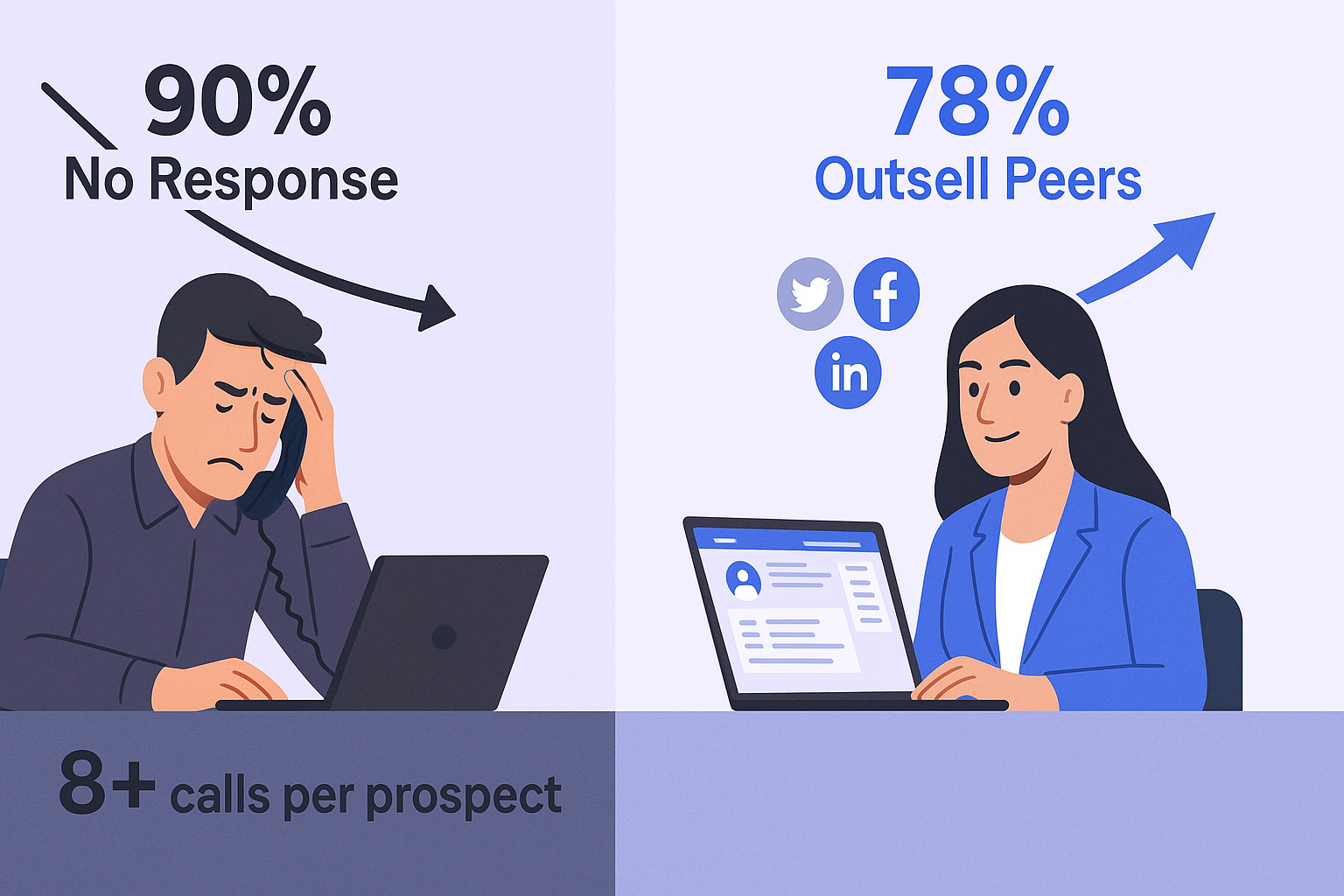
Cold calling is dead. Well, not literally, but its effectiveness has plummeted so dramatically that 90% of executives never respond to cold calls. Meanwhile, the average sales rep needs to make at least eight cold calls just to reach a single prospect. If you’re still relying on interruption-based selling, you’re fighting an uphill battle with outdated weapons.
 

🚀 Skip Cold Calls. Get Warm Leads

Our LinkedIn outbound engine delivers 15-25% response rates with zero DIY work required

There’s a better way. Social selling has emerged as the modern sales methodology that aligns with how today’s buyers actually research and make purchasing decisions. Instead of interrupting strangers, you build genuine relationships and position yourself as a trusted advisor before prospects even realize they need your solution.

What is social selling?

Social selling is the strategic use of social media platforms to find, connect with, understand, and nurture sales prospects. It’s not about spamming people with promotional messages or sending generic connection requests. Instead, it’s about leveraging social networks to build authentic relationships and provide value throughout the buyer’s journey.

At its core, social selling transforms your role from a traditional “pitcher” into a trusted advisor. You become a valuable resource in your prospects’ networks, so when they’re ready to buy, you’re the first person they think of. 78% of salespeople who use social media outsell their peers who stick to traditional methods.

The shift toward social selling isn’t just a trend – it’s a response to fundamental changes in buyer behavior. 91% of Business-to-Business buyers are now active on social media, and 84% of senior executives use social media to support their purchasing decisions. Your prospects are already online, researching solutions and forming opinions about vendors. Social selling ensures you’re part of that conversation rather than being excluded from it.

This methodology works because it aligns with the modern buyer’s journey. Today’s potential customers are typically 60-70% through their decision-making process before they want to speak with a sales representative. Social selling allows you to influence and guide that self-education phase instead of arriving too late in the process.

5 benefits of social selling


Higher Sales Performance and Quota Achievement

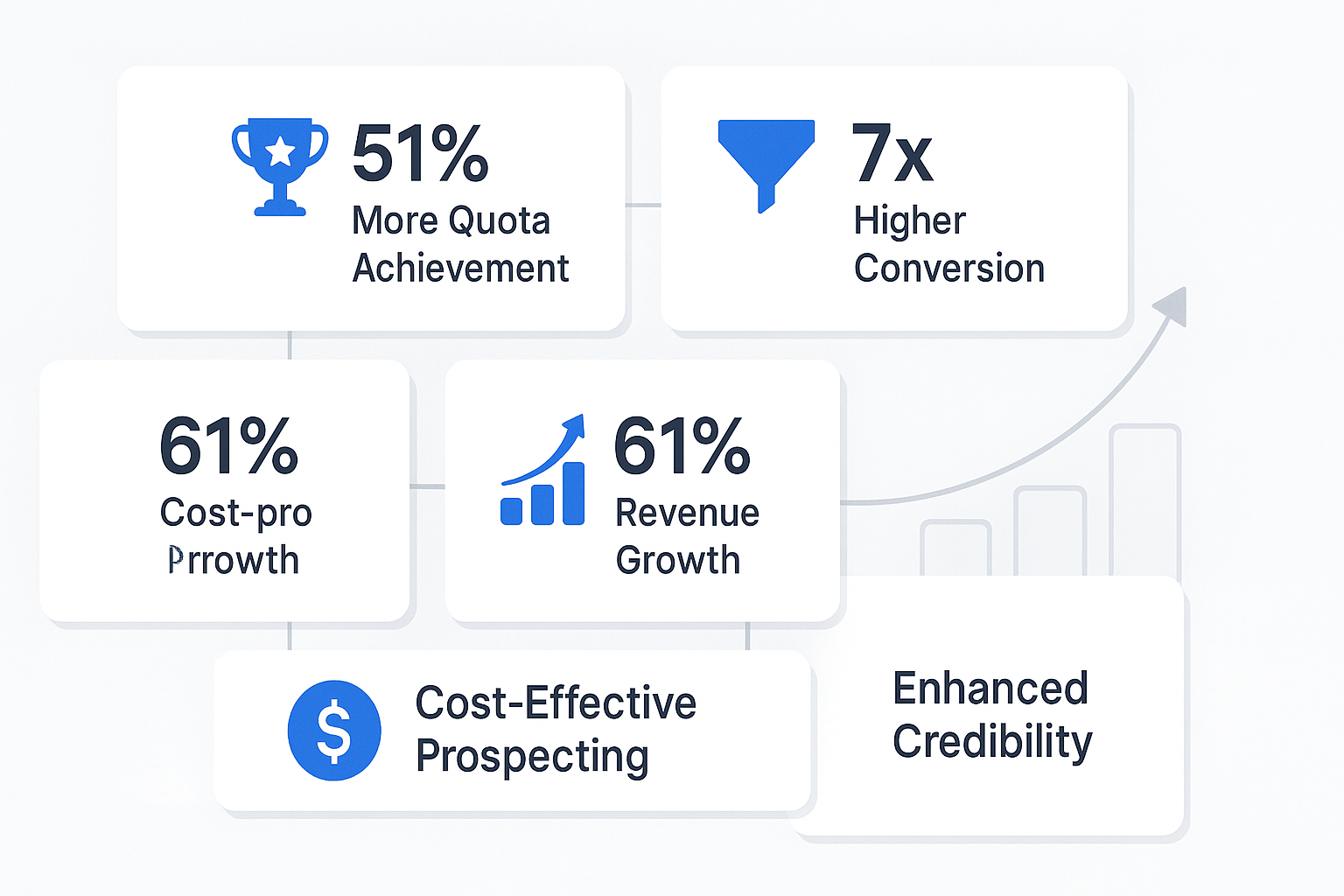
The numbers speak for themselves: companies that prioritize social selling are 51% more likely to achieve their sales quotas. Sales reps with high LinkedIn Social Selling Index scores create 45% more sales opportunities than their peers with lower scores. This isn’t marginal improvement – it’s a competitive advantage that directly impacts your income and career growth.

Superior Lead Quality and Conversion Rates

Not all leads are created equal. Leads developed through employee social marketing convert seven times more frequently than leads from other sources. When you build relationships before selling, prospects enter your pipeline with higher trust levels and clearer understanding of your value proposition. This means shorter sales cycles and higher close rates.

Significant Revenue Growth

Organizations that actively engage in social selling report a 61% higher rate of revenue growth compared to companies that don’t. Additionally, more than half of all revenue across 14 major industries is influenced by social selling. This methodology isn’t just changing individual sales performance – it’s transforming entire businesses.

💼 Done-For-You LinkedIn Outbound Engine

Complete targeting, campaign design, and scaling strategy that outperforms DIY social selling

Cost-Effective Prospecting

Traditional prospecting methods require significant investment in lists, tools, and time. Social selling leverages the data and targeting capabilities already built into social media platforms. You can identify and research prospects more efficiently while building relationships at scale without the high costs associated with traditional outbound marketing.

Enhanced Professional Brand and Credibility

Social selling positions you as a thought leader in your industry. By consistently sharing valuable content and engaging in meaningful conversations, you build a professional brand that attracts opportunities rather than chasing them. This compound effect grows stronger over time, creating a sustainable competitive advantage.

How does social selling work?

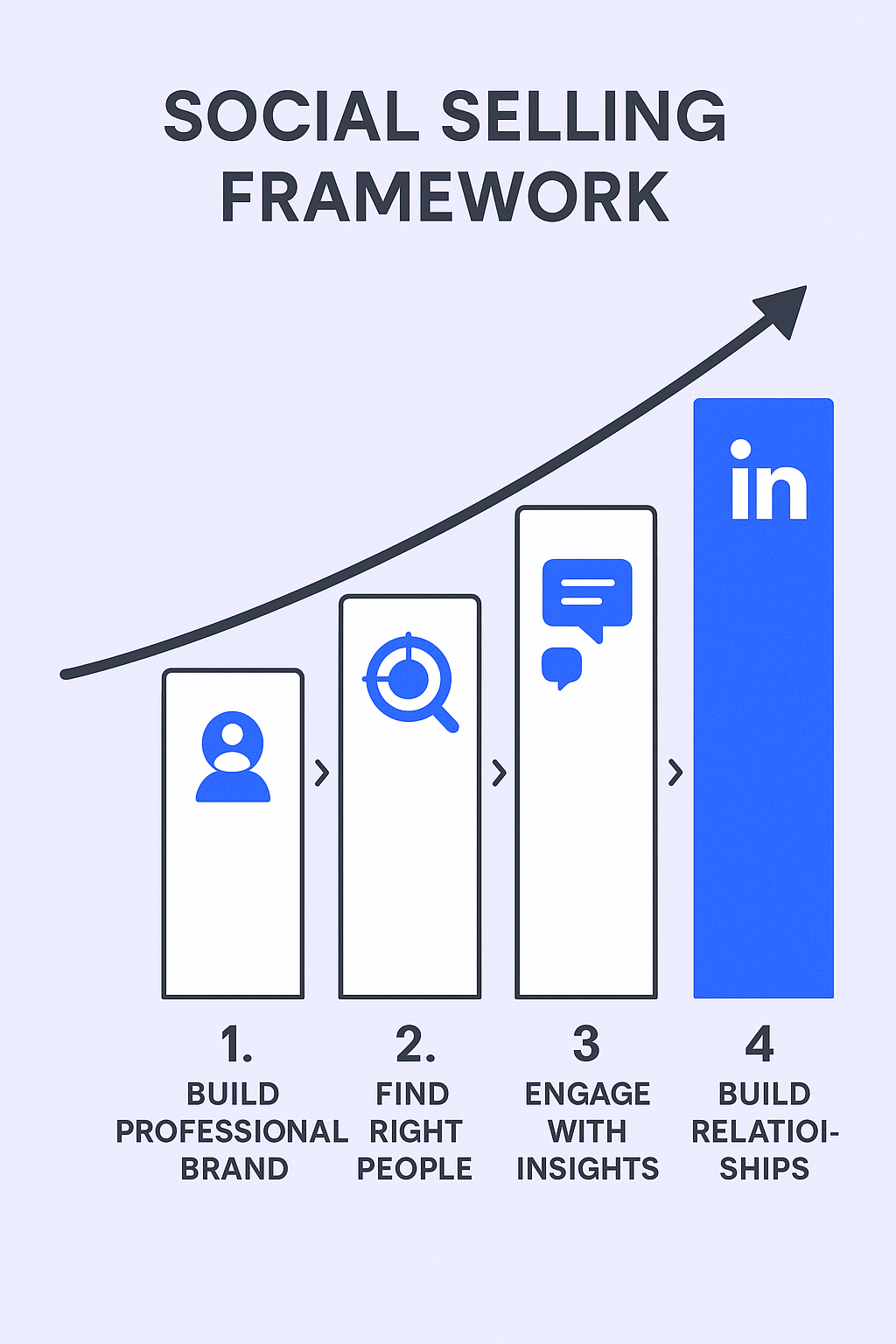
Social selling follows a systematic four-step framework that transforms random social media activity into a strategic sales process. This isn’t about posting occasionally or sending connection requests to everyone – it’s about building a methodical approach that generates consistent results.


Build Your Professional Brand

Your social media profiles serve as your digital business card, landing page, and credibility statement all in one. Profiles with professional photos are viewed 14 times more often than those without. But a good photo is just the beginning.

Your headline should articulate your value proposition, not just your job title. Instead of “Account Executive at XYZ Company,” try “Account Executive | Helping SaaS companies reduce churn and increase revenue.” Your summary should tell a story about the problems you solve and the results you deliver, backed by specific examples and social proof.

Skills and recommendations provide third-party validation of your expertise. Actively request endorsements for your core competencies and recommendations from satisfied clients. These elements work together to establish trust before you ever have a conversation.

Find the Right People

Effective social selling is not a numbers game – it’s about quality over quantity. Use advanced search features on social media platforms to identify prospects who match your Ideal Customer Profile. Filter by industry, job function, company size, geography, and other relevant criteria to ensure your efforts focus on high-potential prospects.

The goal is building a curated network of decision-makers and influencers who align with your target market. This targeted approach increases connection acceptance rates and ensures your content reaches the right audience.

Engage with Insights, Not Just Emojis

Meaningful engagement separates professional social sellers from casual users. Follow the 70-20-10 content strategy: 70% third-party content with your unique perspective, 20% company content shared strategically, and 10% original content that showcases your expertise.

Join LinkedIn groups where your prospects congregate. Listen to conversations, understand common challenges, and contribute valuable insights when appropriate. This positions you as a helpful resource rather than just another vendor trying to sell something.

Social listening tools can help you identify “hand-raiser” moments when prospects actively signal interest in solutions like yours. Monitor mentions of competitors, industry keywords, and pain points your product addresses.

Build Real Relationships That Generate Revenue

The ultimate goal is transforming connections into trusted business relationships. This requires consistent nurturing, even when prospects aren’t in an active buying cycle. Authenticity and personalization are paramount in every interaction.

Your Social Selling Index score reflects how effectively you execute these four pillars. The SSI measures your performance across establishing your professional brand, finding the right people, engaging with insights, and building relationships. For every 10-point increase in SSI score, sales reps generate an average of 4.3 more opportunities.

âš¡ Skip the Learning Curve

Get immediate pipeline with our proven LinkedIn prospecting system and complete campaign management

4 best platforms for social selling

LinkedIn: The Premier Platform for Professional Sales

LinkedIn dominates the social selling landscape with 65 million decision-makers and 10 million C-level executives actively using the platform. 84% of marketers spend most of their social media time on LinkedIn, making it the obvious choice for most sales professionals.

LinkedIn Sales Navigator provides advanced prospecting capabilities, including lead recommendations, real-time alerts about prospect activities, and sophisticated filtering options. The platform’s algorithm favors users with higher Social Selling Index scores, creating a virtuous cycle where effective social selling leads to increased visibility and more opportunities.

The key to LinkedIn success lies in consistent, valuable content sharing and genuine engagement with your network’s posts. Quality comments that add insights generate more visibility than simple likes or generic responses.

Twitter/X: Real-Time Engagement and Thought Leadership

Twitter’s fast-paced environment offers unique opportunities for real-time engagement and establishing thought leadership. The platform’s conversation-driven format makes it ideal for joining industry discussions and sharing quick insights.

Use Twitter’s advanced search features to find prospects discussing challenges your solution addresses. Engage authentically in these conversations without immediately pitching your product. The goal is building recognition and credibility that translates into business opportunities over time.

Facebook: Business Groups and Local Networking

While often overlooked for sales, Facebook’s business groups provide access to engaged professional communities. Many industry-specific groups facilitate high-quality discussions and networking opportunities.

Facebook’s strength lies in relationship building rather than direct prospecting. Focus on adding value to group discussions and building genuine connections that may develop into business relationships over time.

Instagram: Visual Storytelling and Behind-the-Scenes Content

Instagram’s visual format offers unique opportunities for storytelling and humanizing your brand. Share behind-the-scenes content from your work, customer success stories, and industry insights in visually appealing formats.

While Instagram may not generate direct sales opportunities as frequently as LinkedIn, it builds brand awareness and personal connection that supports your overall social selling strategy.

How to get started with social selling

Week 1: Foundation Building

Start with profile optimization across your chosen platforms. Invest in a professional headshot – this single change can dramatically increase profile views and connection acceptance rates. Rewrite your headline and summary to focus on the value you provide to customers rather than listing job responsibilities.

Complete every section of your LinkedIn profile to achieve “All-Star” status. Add relevant skills and begin requesting endorsements from colleagues and clients. Upload rich media like presentations, case studies, or articles to your Featured section.

Week 2: Research and Discovery

Identify 5-10 LinkedIn groups where your ideal customers are active. Spend time observing conversations without immediately participating. What questions do people ask? What challenges do they discuss? This market research informs your content strategy and engagement approach.

Follow 10-15 industry thought leaders and influencers whose content resonates with your target audience. Study their posting patterns, engagement strategies, and the types of content that generate the most discussion.

Week 3: Content and Engagement

Begin sharing valuable content using the 70-20-10 framework. Start with curating relevant third-party articles and adding your unique perspective in the caption. Ask questions to encourage engagement and discussion.

Leave thoughtful comments on posts from prospects and industry leaders. Quality comments that add insight or ask relevant questions generate more visibility than simple likes or emoji reactions.

Week 4: Strategic Connecting

Begin sending personalized connection requests to prospects you’ve previously engaged with through comments or shared content. Reference your prior interaction in the connection request: “Hi [Name], I enjoyed your insights on [topic] in the [Group Name]. Would love to connect and continue the conversation.”

Focus on quality over quantity. It’s better to send 5-10 highly personalized connection requests per week than 50 generic ones. Track your acceptance rate as a key performance indicator – rates below 30% suggest your targeting or messaging needs refinement.

🎯 Let Experts Handle Your Outbound

We deliver 15-25% response rates while you focus on closing high-quality LinkedIn leads

7-day Free Trial |No Credit Card Needed.

Essential Tools and Technology

Modern social selling benefits from the right technology stack. Tools like Apollo.io, ZoomInfo, and Salesso help automate repetitive tasks while maintaining personalization. Use these platforms to find accurate contact information, track prospect activities, and manage multi-channel outreach campaigns.

Remember that automation should enable authenticity, not replace it. Use technology to scale your research and follow-up processes, but ensure every direct interaction feels personal and relevant.

Measuring Success

Track key performance indicators including Social Selling Index score, connection acceptance rate, content engagement levels, and ultimately, pipeline generation from social activities. Set aside time weekly to analyze these metrics and adjust your strategy accordingly.

Active users of social media platforms who maintain consistent social selling activities typically see measurable results within 60-90 days. The key is treating social selling as a long-term relationship-building strategy rather than a quick-fix sales tactic.

Ready to start with effective and compliant social selling?

Social selling represents the future of sales – but success requires the right approach, tools, and mindset. The shift from interruption-based selling to relationship-building isn’t just a tactical change; it’s a fundamental transformation in how sales professionals create value for prospects.

The data is clear: 75% of Business-to-Business buyers state that social media significantly influences their decision-making process. Sales reps who embrace social selling methodologies consistently outperform their peers across every major metric, from opportunity generation to quota achievement.

Your prospects are already active on social media platforms, researching solutions and forming opinions about vendors. The question isn’t whether social selling works – it’s whether you’ll master it before your competitors do.

Start with one platform where your buyers spend time, focus on providing value before asking for anything in return, and maintain consistency in your efforts. Social selling rewards patience and authenticity over aggressive tactics and quick fixes.

The investment you make in building your social selling capabilities today will compound over time, creating a sustainable competitive advantage that generates opportunities for years to come. Your future self will thank you for starting now.

FAQs

How long does it take to see results from social selling?

Most sales professionals see initial engagement improvements within 30 days and measurable pipeline impact within 60-90 days of consistent social selling activities.

Which social media platform should I prioritize?

LinkedIn dominates for most sales scenarios, but the best platform depends on where your specific buyers spend their time. Start where your prospects are most active.

How often should I post content?

Consistency matters more than frequency. Aim for 3-5 valuable posts per week rather than daily posts of lower quality.

Can social selling replace traditional prospecting methods?

Social selling works best as part of an integrated approach that includes email, phone, and in-person interactions. It enhances rather than replaces other prospecting methods.

How do I measure social selling ROI?

Track Social Selling Index scores, engagement rates, connection acceptance rates, and ultimately, pipeline and revenue generated from social activities. Use your CRM to attribute closed deals to social selling touchpoints.

Skip DIY. Get Done-For-You LinkedIn

15-25% response rates with complete targeting, campaigns, and scaling strategy

Segmentation That Actually Converts

LinkedIn outbound targets precise demographics with strategic campaign design and scaling methods

How to Build a High-Converting B2B Sales Funnel from Scratch on LinkedIn ​