
🎉Find Prospects and Send Cold Emails & LinkedIn Outbound | All in One Place

Lead Prospecting: The Complete Guide to Building a Sales Pipeline That Actually Converts

Table of Contents

Lead prospecting is the backbone of sales success. While 91% of marketers say lead generation is their most important goal, most sales teams struggle with one critical problem: they confuse prospecting with lead generation and end up with weak pipelines that never convert.

If you’re tired of chasing dead-end leads and want to build a predictable sales pipeline, this guide will show you exactly how to do it. We’ll cover what lead prospecting actually is, how it differs from lead generation, and give you a step-by-step framework that works.

What is Lead Prospecting?

Lead prospecting is the proactive process of identifying and reaching out to potential customers who fit your ideal customer profile. Unlike lead generation, which casts a wide net hoping to catch interest, prospecting involves targeted outreach to specific individuals who are likely to buy your product.

Think of it this way: if lead generation is fishing with a net, prospecting is spearfishing. You’re not waiting for fish to swim into your net – you’re actively hunting the exact fish you want.

The key difference? Timing and approach. Lead prospecting happens after someone has been identified as a potential fit, while lead generation occurs at the very top of your funnel to attract initial interest.


Cold Email:

  • Keep it under 100-125 words
  • Personalized subject lines are 26% more likely to be opened
  • Focus on one clear message that addresses a specific pain point
  • Average response rate is only 1-5%, so personalization is non-negotiable

Cold Calling:

  • First 15 seconds are critical – open with clear purpose
  • Goal is to “sell the appointment,” not the product
  • Takes 18+ dials to connect with a prospect
  • Don’t pitch – focus on the value they’ll get from a meeting

Social Media Outreach:

  • Engage with their content before pitching
  • Share insights and provide value first
  • Use mutual connections when possible

Qualify Like a Pro

Not every response is worth your time. Use qualification frameworks to identify which prospects are worth pursuing:

  • Need: Do they have a problem you can solve?
  • Authority: Can they make or influence the buying decision?
  • Budget: Do they have money allocated for a solution?
  • Timeline: When are they looking to implement a solution?

Ask probing questions to uncover pain points and priorities. The goal is to determine if they’re worth passing to your closing process.

Master the Follow-Up Game

Here’s the stat that will shock you: 80% of sales are made between the fifth and twelfth contact, but 90% of salespeople stop after the fourth contact.

Most prospects aren’t ready to buy immediately. 96% of website visitors aren’t ready to purchase on their first visit. Your follow-up system is what separates winners from everyone else.

Create a systematic follow-up schedule:

  • Day 1: Initial outreach
  • Day 3: Value-add follow-up
  • Day 7: Different angle/case study
  • Day 14: Final attempt with different approach

Where to Find Leads for Prospecting (and Which Channel Works Best)

Not all prospecting channels are created equal. Here’s where top performers focus their time:

LinkedIn (Most Effective)

  • 62% of marketers confirm LinkedIn’s effectiveness for lead generation
  • Best for: professionals, decision-makers, relationship building
  • Use advanced search filters and Sales Navigator

Email Databases

  • Tools like Apollo.io, ZoomInfo, and UpLead provide verified contacts
  • Best for: scale outreach, reaching specific job titles
  • Focus on data quality over quantity

Company Research

  • Monitor target accounts for trigger events
  • Best for: timely, relevant outreach
  • Look for: funding announcements, leadership changes, job postings

Social Media Platforms

  • Engage in industry groups and communities
  • Best for: building relationships, thought leadership
  • Focus on providing value before pitching

Referrals and Networks

  • Highest conversion rates
  • Best for: warm introductions, trust building
  • Ask existing customers for introductions

Winner: LinkedIn dominates for relationship-based selling, while email databases win for scale. The best approach? Use both.

🎯 LinkedIn Outbound Done Right

Skip the manual grind—get 15-25% response rates with complete targeting, campaign design, and scaling systems

Tools That Make Lead Prospecting 10x Faster (and Smarter)

The right tools can automate repetitive tasks and give you a massive edge. Here’s your essential prospecting stack:

Lead Finding & Data Tools

Salesso (Our Recommendation)

  • 700M+ verified prospects
  • AI-powered cold email sequences
  • High deliverability rates
  • Starting at $25/month
  • Perfect for startups and growing sales teams

Apollo.io

  • 275M+ contacts
  • All-in-one platform with CRM integration
  • Advanced search filters
  • Transparent pricing with generous free plan

ZoomInfo

  • 321M+ contacts, 105M+ companies
  • Enterprise-grade data depth
  • Predictive lead scoring
  • Best for: large enterprises with bigger budgets

UpLead

  • 95% data accuracy guarantee
  • Real-time email verification
  • 50+ search filters
  • Great for teams prioritizing data quality

Sales Engagement Platforms

Saleshandy

  • Multi-channel sequences (email, LinkedIn, calls)
  • AI-powered personalization
  • Deliverability optimization
  • Easy-to-use interface

Instantly.ai

  • Advanced email automation
  • Multiple sender accounts
  • Built-in warm-up features
  • Great for high-volume outreach

CRM Systems

HubSpot

  • Free tier available
  • Great integration ecosystem
  • User-friendly interface

Salesforce

  • Most customizable
  • Enterprise features
  • Steep learning curve

Pipedrive

  • Simple, visual pipeline management
  • Great for small to medium teams
  • Affordable pricing

My Lead Prospecting Workflow (What I Actually Do)

💼 Replace Your Prospecting Stack With One System

LinkedIn outbound eliminates deliverability chaos, gets 3x better response rates, and reaches decision-makers directly.

Here’s the exact workflow that consistently generates qualified prospects:

Monday: Research & List Building

  • Review target account list
  • Research trigger events (funding, leadership changes, job postings)
  • Build weekly prospect list using LinkedIn and data tools
  • Update CRM with new prospects

Tuesday-Thursday: Outreach

  • Send personalized emails (50-75 per day max)
  • Make follow-up calls
  • Engage on social media
  • Track responses and book meetings

Friday: Review & Optimize

  • Analyze week’s metrics (open rates, response rates, meetings booked)
  • Update email templates based on performance
  • Plan next week’s target accounts
  • Follow up on pending prospects

Daily Habits:

  • 30 minutes of LinkedIn engagement
  • 2 hours blocked for prospecting activities
  • 15 minutes CRM updates
  • 10 minutes industry news/trigger events

Key Metrics I Track:

  • Emails sent vs. responses received
  • Meetings booked vs. meetings held
  • Response rate by message type
  • Time from first contact to meeting

📈 Get Predictable Pipeline From LinkedIn

Done-for-you campaigns with complete targeting, messaging strategy, and systematic scaling—no manual prospecting required.

Common Lead Prospecting Mistakes That Kill Your Pipeline

Avoid these seven deadly prospecting mistakes:

Thinking Quantity Over Quality

Stop collecting random names. Focus on prospects who actually fit your ICP. It’s better to have 50 qualified prospects than 500 random contacts.

Not Following Up Enough

80% of sales happen after the fifth contact, but most people give up after two attempts. Create a systematic follow-up process.

Pitching Too Early

Don’t jump into your pitch before understanding their needs. Your first goal is to “sell the appointment,” not the product.

Sending Generic Messages

When prospects receive 15 cold emails per week, generic messages get deleted immediately. Personalization is mandatory, not optional.

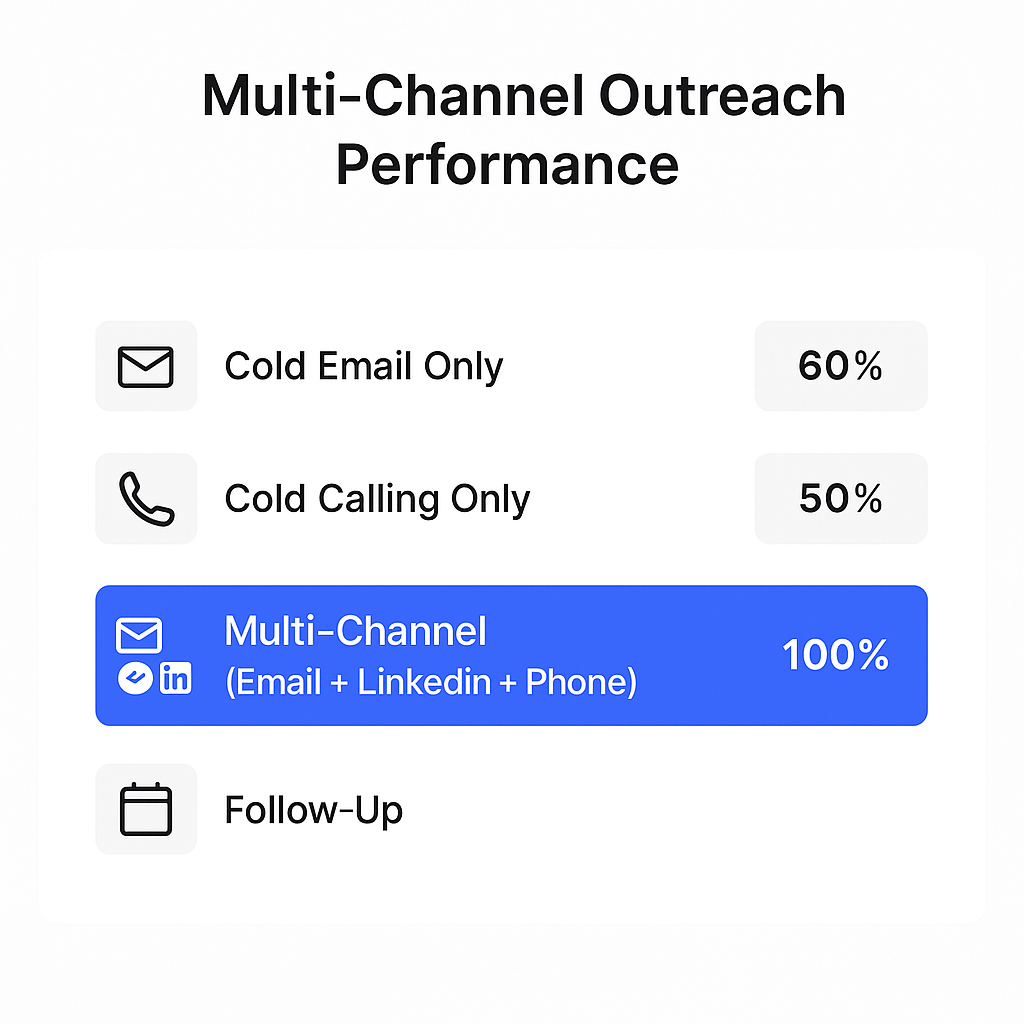
Not Using Multiple Channels

Email-only outreach limits your reach. Use phone, LinkedIn, and email together for maximum impact.

Ignoring Data and Analytics

Track everything: open rates, response rates, meeting-to-close ratios. You can’t improve what you don’t measure.

Lack of Persistence

90% of salespeople stop after four contacts, missing the 80% of deals that happen later. Build persistence into your process.

âš¡ Automate LinkedIn Prospecting Without Losing Quality

We handle targeting, sequences, and follow-ups so you book meetings—not manually chase prospects.

7-day Free Trial |No Credit Card Needed.

TL;DR: Prospecting Done Right = Better Pipeline

Lead prospecting isn’t about sending more emails or making more calls. It’s about being strategic, systematic, and persistent. Here’s what works:

✅ Define your ICP clearly and update it regularly ✅ Use multiple channels – email, phone, and social media ✅ Personalize everything – generic messages die in inboxes ✅ Follow up consistently – most deals happen after the 5th contact ✅ Track your metrics – measure what matters ✅ Focus on quality over quantity ✅ Provide value first before pitching

The companies winning in 2024 treat prospecting as a science, not an art. They have systems, they measure everything, and they never stop improving.

FAQs

What's the difference between lead prospecting and lead generation?

Lead generation is a marketing function that attracts potential customers through content, SEO, and advertising. Lead prospecting is a sales function that involves actively reaching out to specific individuals who fit your ideal customer profile.

How many prospects should I contact per day?

Quality beats quantity. Aim for 50-75 personalized emails per day rather than 200 generic ones. Focus on prospects that match your ICP.

What's the best prospecting tool for beginners?

Salesso offers the best combination of ease-of-use, data quality, and affordability for beginners. It provides verified email addresses and automated sequences starting at $25/month.

How long should I wait between follow-ups?

Follow up every 3-7 days for the first few attempts, then extend to 2-3 weeks. Remember, 80% of sales happen after the fifth contact.

Is the "Who's Viewed Your Profile" feature truly useful?

Yes, seeing who has viewed your profile acts as a warm lead indicator. Proactively reaching out to these individuals can significantly increase engagement chances, as prospects are 86% more likely to accept an InMail if you view their profile first.

Scale Your LinkedIn Outbound Like the Top 1%

Share your current approach. We’ll show you exactly how to 10X your qualified conversion

Segmentation That Actually Converts

LinkedIn outbound targets precise demographics with strategic campaign design and scaling methods

How to Build a High-Converting B2B Sales Funnel from Scratch on LinkedIn ​