

Look, we need to be real about something: if your pipeline is empty, your business is in trouble. Sales prospecting is the lifeblood that keeps deals flowing and revenue growing. Yet 40% of salespeople find it the most challenging part of their job.
Here’s the thing—it doesn’t have to be that hard. When you understand the right approach, sales prospecting becomes a predictable system for generating opportunities. This guide breaks down everything you need to know to fill your pipeline consistently.
What is Sales Prospecting?
Sales prospecting is the strategic process of identifying potential buyers and initiating contact to turn them into paying customers. It’s more than just finding contact information—it’s about building relationships and solving problems.
The key difference? A lead shows interest through actions like visiting your website or downloading content. A prospect is a qualified lead that fits your ideal customer profile and has genuine potential to buy your product service.
Modern sales prospecting has evolved beyond simple lead hunting. With 96% of prospects researching companies independently before engaging, your role isn’t to be a walking brochure. You need to become a trusted advisor who provides real value from the first interaction.
Think of it this way: you’re not selling to people, you’re helping people buy. The best sales reps operate with a “helping, not selling” mindset, focusing on the right people to help rather than pushing product service features.
What is the Importance of Sales Prospecting?
Here’s a simple truth: pipeline is lifeline. Without consistent sales prospecting, your business slowly dies. It’s the fuel that powers growth and keeps the revenue engine running.
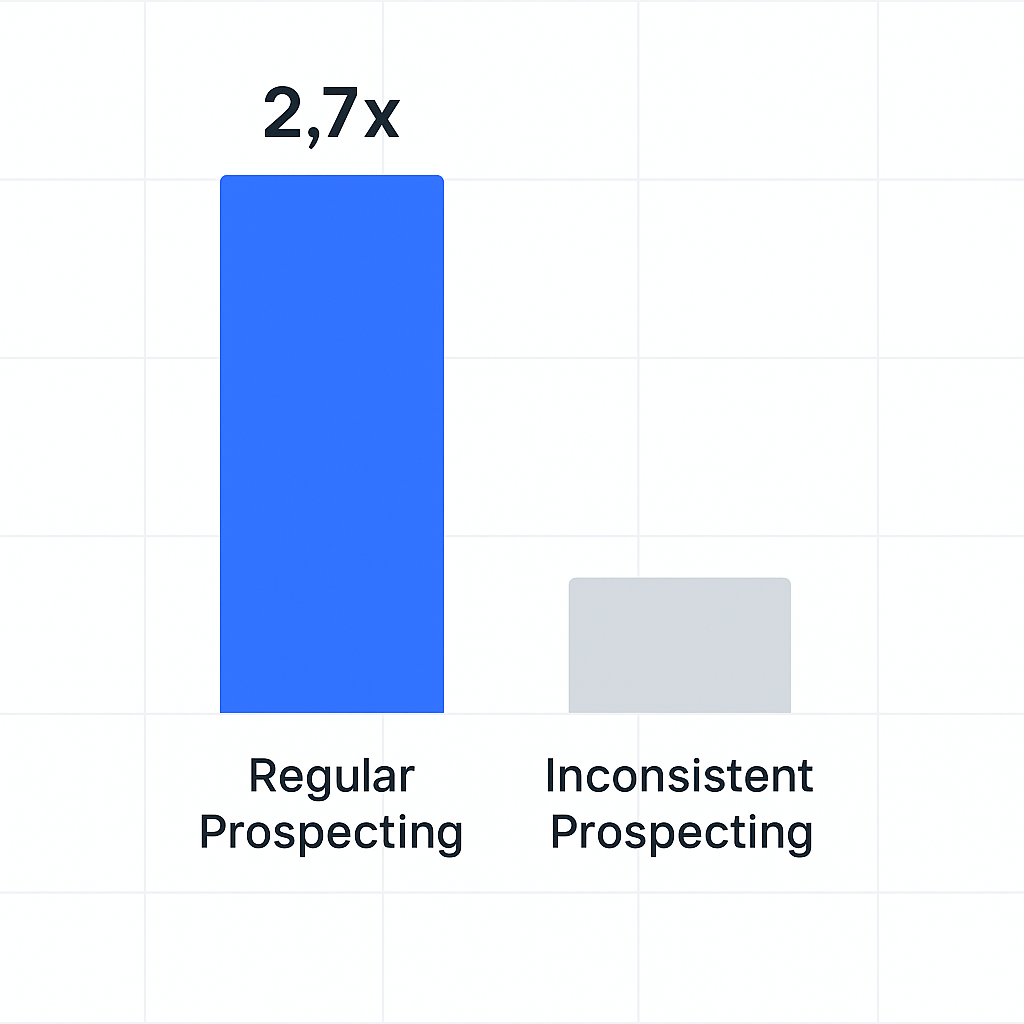
The numbers don’t lie. Sales reps who dedicate regular time to prospecting generate 2.7 times more conversions than those who don’t. That’s not a small difference—that’s the difference between hitting quota and missing it completely.
Sales prospecting creates a virtuous cycle. As you engage more prospects, you gather market intelligence that helps position your product service against competitors. You learn what messaging resonates, what pain points matter most, and how to differentiate your offering.
This knowledge is power. In competitive markets, understanding what alternatives prospects are considering allows you to strategically highlight your unique advantages. The insights from your sales prospecting process don’t just fill your pipeline—they make every conversation more effective.
What Are the Different Types of Sales Prospecting?
Sales prospecting falls into two main approaches: outbound and inbound. Smart sales reps use both to maximize their reach and efficiency.
Outbound Prospecting is proactive. You initiate contact with potential customers who may not know your company exists. This includes cold calling, cold emailing, and social media outreach. While it requires more effort upfront, outbound lets you reach high-volume audiences quickly and control your message timing.
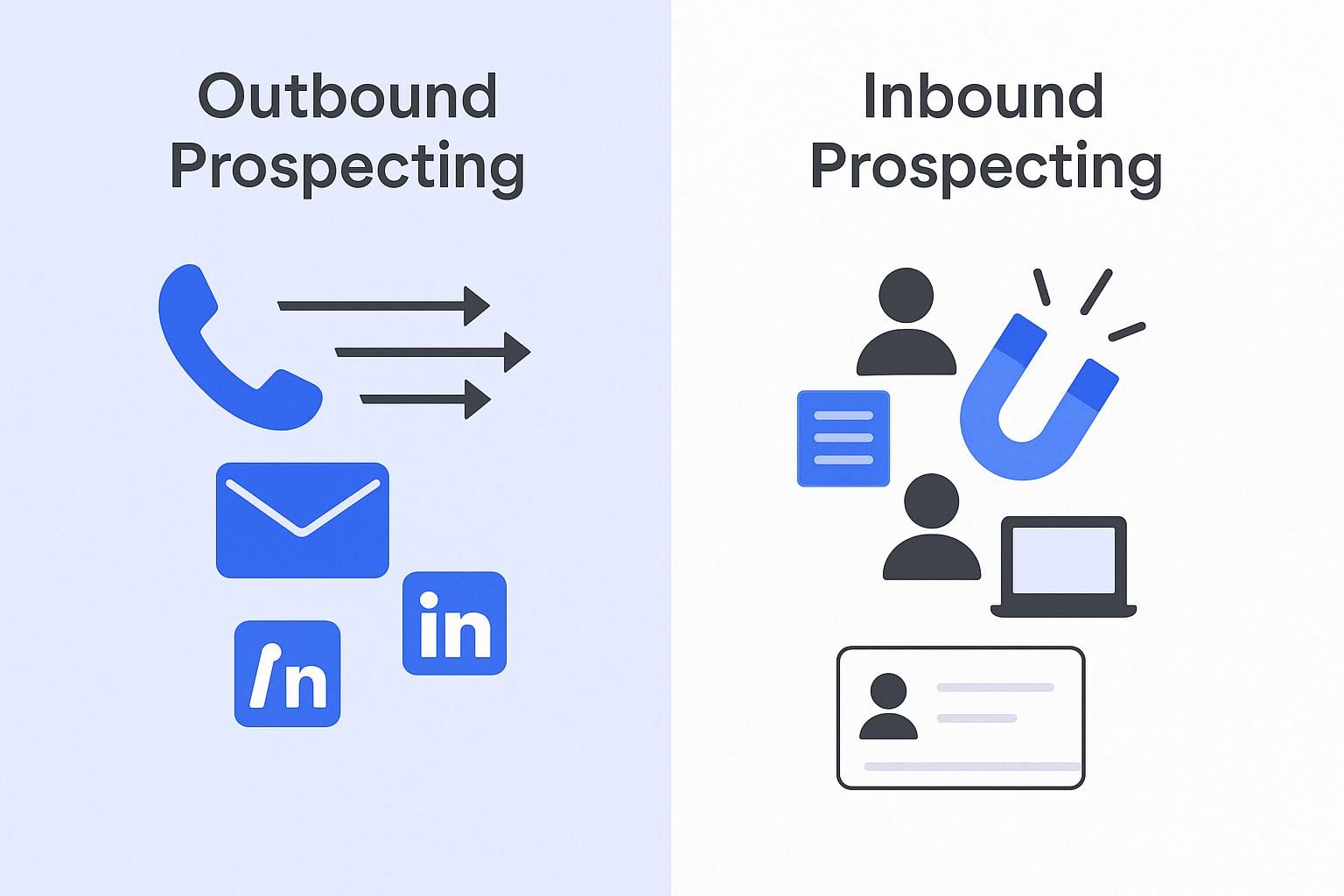
Inbound Prospecting attracts prospects to you through valuable content and digital channels. This includes SEO, social media engagement, webinars, and content marketing. Inbound prospects are “warm” because they’ve already shown interest, making them easier to convert. However, building consistent inbound flow takes time and ongoing content creation.
Here’s the comparison:
Aspect | Inbound | Outbound |
Approach | Attract customers to you | Reach out to customers |
Prospect Temperature | Warm and engaged | Cold, need nurturing |
Cost | Lower per lead long-term | Higher initial investment |
Speed | Slower to establish | Faster initial results |
Channels | Content, SEO, webinars | Cold calls, emails, social selling |
The most successful teams blend both approaches. Use outbound to fill immediate pipeline gaps while building inbound systems for sustainable long-term growth.
Sales Prospecting Process: A Clear Step-by-Step Breakdown
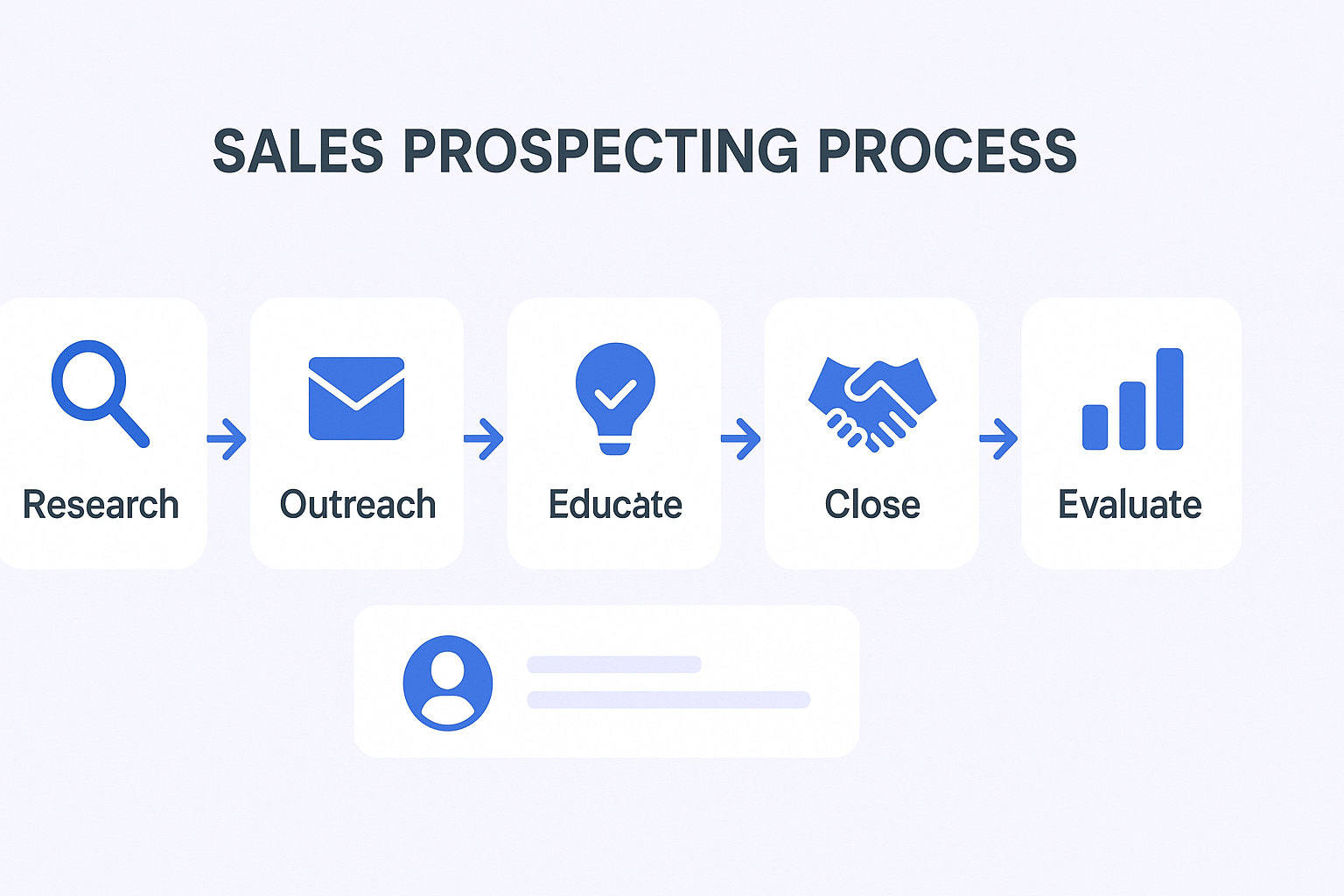
Effective sales prospecting isn’t random activity—it’s a systematic process that builds on itself. Here’s the proven framework:
Research comes first. You can’t prospect effectively without knowing who to target. Start by defining your ideal customer profile based on industry, company size, job titles, and pain points. Use this profile to identify specific prospects and research their companies, recent news, and challenges.
Outreach initiates the conversation. Remember, 91% of buyers are open to engaging early in the sales process if your message provides genuine value. Your first contact should be personalized and helpful, not a generic pitch about your product service.
Qualify determines if this prospect is worth pursuing. Ask thoughtful discovery questions to understand their needs, budget, timeline, and decision-making process. Sales reps who ask 11-14 questions during discovery calls see 74% higher success rates.
Educate shows how your product service solves their specific problems. Share relevant case studies, provide demos, or offer free trials. The key is demonstrating value, not just describing features.
Close finalizes the deal through negotiation and agreement. This stage often takes weeks and involves multiple stakeholders, so patience and persistence are essential.
Evaluate analyzes your results to improve future efforts. Track metrics like response rates, conversion rates, and deal velocity. Use this data to refine your ideal customer profile and messaging for better results next time.
This process creates a feedback loop of continuous improvement, turning sales prospecting from a series of tasks into a system that gets better with each cycle.
Top Sales Prospecting Strategies That Actually Work
After working with thousands of sales reps, these are the strategies that consistently drive results:
Personalization is Everything
Generic outreach gets ignored. True personalization means referencing a prospect’s recent LinkedIn post, company announcement, or shared connection. This level of research shows you’ve done your homework and aren’t just blasting templates.
The impact is real: personalized outreach increases reply rates by 17% and click-through rates by 14%. That might seem small, but when you’re sending hundreds of emails, those improvements add up to significantly more conversations.
The Power of Referrals
Your network is your net worth. Referral-based deals close at 50-70% rates and tend to be more profitable. Yet only 11% of sales reps consistently ask for referrals, creating a massive opportunity.
Sales reps who actively seek referrals earn four to five times more than those who don’t. Start every successful deal by asking: “Who else do you know who might benefit from this solution?”
Multi-Channel Persistence
Modern buyers aren’t waiting by their phones or email inboxes. Successful sales prospecting happens across email, phone, LinkedIn, and even video messages. Layer your outreach across these channels for maximum impact.
Here’s what persistence looks like: it takes an average of seven interactions to make a sale, and 80% of successful deals require five or more follow-ups. But here’s the kicker—44% of sales reps give up after just one follow-up attempt.
That means most of your competition quits exactly when prospects are getting ready to engage. Stay persistent with value-added follow-ups, and you’ll capture deals others leave on the table.

