
Let's Build Your First Campaign Together with our LinkedIn Expert

LinkedIn Profile Statistics 2026: The Data That Actually Matters

Table of Contents

LinkedIn Profile Statistics 2026

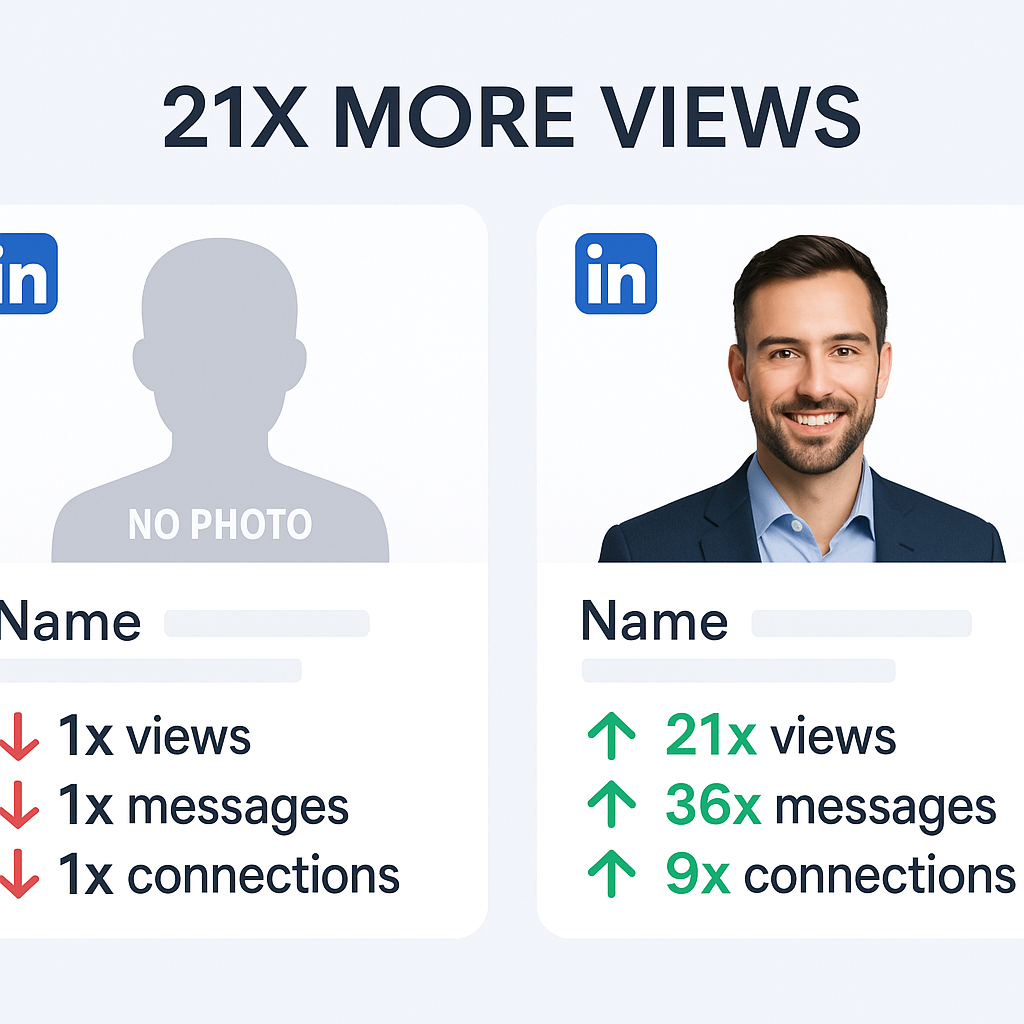
  • Profiles with photos get 21 times more views – than profiles without photos, making professional headshots non-negotiable for visibility

    Profiles with photos receive 9x more connection requests – and are 36x more likely to receive messages compared to profiles without photos

    Professional headshots get 14 times more views – than amateur photos like cropped group shots or vacation selfies

    People remember 65% of visual content three days later – compared to only 10% of text, making photos critical for memorability

    Complete profiles receive 40 times more opportunities – achieving “All-Star” status multiplies job offers, leads, and partnership inquiries

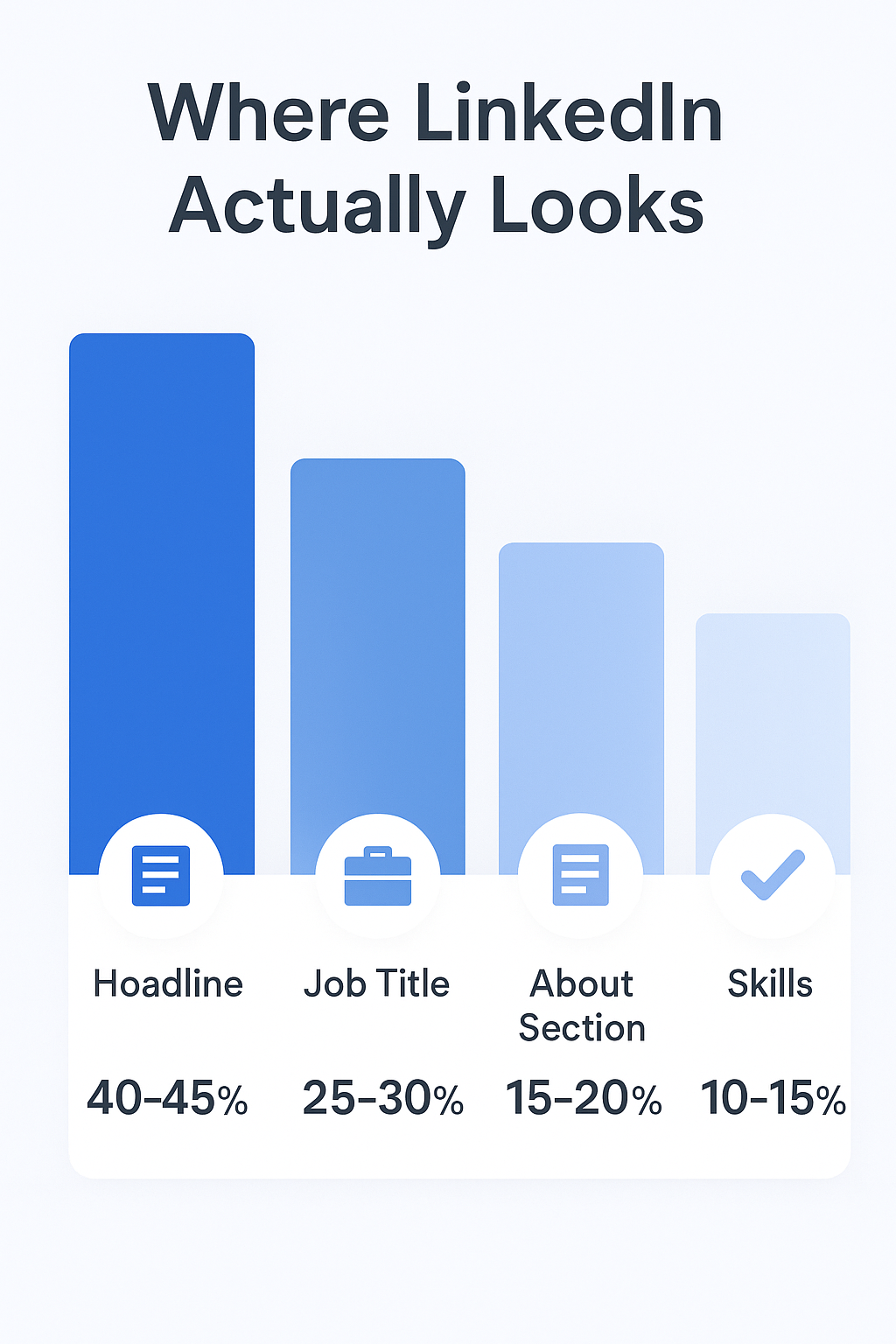
    Headlines carry 40-45% of your search weight – the most important text field, worth 3-4x more for discoverability than the About section

    Only the first 40-50 characters of headlines appear in search results – making front-loading critical keywords essential for visibility

    Profiles with optimized headlines receive 5x more connection requests – compared to generic headlines like “Marketing Manager”

    Listing at least 5 relevant skills increases discovery by 31 times – because recruiters and prospects use Skills as hard filters in searches

    Average engagement rates increased 21% in one year – from 4.48% in January 2024 to 5.76% peak in March 2025

    Posting 10 quality comments daily increases profile views by 40% – and follower growth by 20%, making “Super-Commenter” strategy highly effective

    LinkedIn DM response rate: 10.3% versus cold email’s 5.1% – literally double the efficiency for professional outreach

    Multi-channel campaigns see 287% better results – combining LinkedIn, email, and phone versus single-channel approaches

    Personalized connection requests get 9.36% acceptance versus 5.44% for generic – representing a 72% improvement from simple customization

    Desktop represents 74.24% of LinkedIn visits – meaning profiles must look impeccable on landscape monitors for decision-making moments


Here’s what most people get wrong about LinkedIn profiles.

They think it’s just an online resume. Fill it out, slap a photo on it, maybe update it when job hunting. Done.

Wrong.

Your LinkedIn profile in 2025 isn’t a resume. It’s a conversion machine that’s either working for you 24/7 or actively costing you opportunities.

The data doesn’t lie. Profiles with photos get 21 times more views. Complete profiles receive 40 times more opportunities. Your headline alone carries 40-45% of your search visibility.

These aren’t marginal differences. These are exponential multipliers that separate invisible profiles from magnetic ones.

Think about it. When was the last time you searched for someone on LinkedIn and clicked on a profile with no photo? Or took seriously someone whose headline just said “Sales Professional”?

You didn’t. And neither does anyone else.

The brutal truth is this: over 1.1 billion users are on LinkedIn, with three new professionals joining every second. In this ocean of profiles, optimization isn’t optional anymore. It’s the difference between being discovered and being ignored.

Here’s what the latest linkedin profile statistics reveal about what actually works in 2025.

The Visual Foundation That Changes Everything

Let’s start with the uncomfortable truth: your profile picture matters more than everything else combined.

Not kind of matters. Not “nice to have.” 21 times more profile views level of matters.

The Profile Photo Multiplier Effect

The numbers are wild. Profiles with photos don’t just perform slightly better. They completely dominate:

  • 21x more profile views than profiles without photos
  • 9x more connection requests
  • 36x more likely to receive messages

Think about what that means. For every person who messages a profile without a photo, 36 people message profiles with photos.


But here’s where it gets interesting. Not all photos work.

Professional headshots get 14 times more views than amateur photos. That selfie from your vacation? That cropped group shot where you’re barely visible? They’re actively hurting your credibility.

The psychology is simple. In an era where AI bots and fake profiles flood social media platforms, a professional photo serves as proof you’re human. It triggers what psychologists call the “Halo Effect” — where one positive trait (professional appearance) makes people assume other positive traits (competence, reliability, trustworthiness).

And here’s the kicker: people remember 65% of visual content three days later, compared to only 10% of text. Your photo isn’t just getting you views. It’s making you memorable.

The Banner Nobody Talks About

While everyone obsesses over profile pictures, most people leave their banner as the default gray geometric pattern.

Huge mistake.

Your banner is the largest visual element on desktop (which represents 74.24% of LinkedIn visits). It’s billboard-sized real estate that either reinforces your value proposition or screams “I didn’t even try.”

Complete profiles with custom banners contribute to achieving “All-Star” status, which triggers that 40x opportunity multiplier we mentioned. Without it, you’re voluntarily cutting your visibility by 97.5%.

The Algorithm: How LinkedIn Actually Finds You

Here’s what nobody tells you about LinkedIn search: not all text fields carry equal weight.

The algorithm has favorites. And if you’re putting your keywords in the wrong places, you’re basically invisible.

The Weighted Hierarchy That Controls Visibility

This is the exact breakdown of how LinkedIn’s search algorithm prioritizes your profile text:

  • Headline: 40-45% of search weight
  • Current Job Title: 25-30%
  • Summary/About Section: 15-20%
  • Skills & Experience: 10-15%

Read that again. Your headline is worth 3-4 times more for discoverability than your carefully crafted About section.


Most people do this backwards. They write a generic headline like “Marketing Manager” or “Sales Professional,” then bury their actual value in the summary hoping someone will read it.

They won’t. Because they never find you in the first place.

The First 50 Characters Rule

Your headline has 220 characters total. But here’s the brutal part: only the first 40-50 characters appear in search results, connection requests, and mobile feeds.

Everything after that? Hidden behind “see more.”

This creates a requirement for what content creators call “front-loading” — putting your most critical keywords and value proposition in those first 50 characters.

Bad headline: “Passionate marketing professional helping companies achieve their goals…”

Optimized headline: “B2B Marketing Director | 3X Pipeline Growth | SaaS Specialist…”

See the difference? The optimized version front-loads searchable keywords while immediately communicating specific value.

And the data backs this up: profiles with optimized headlines receive 5 times more connection requests.

📊 Profile Views ≠ Pipeline Growth

Get 15-25% response rates through complete LinkedIn outbound: targeting 65M+ decision-makers, campaign design, automated scaling.

The All-Star Completeness Threshold

LinkedIn gamifies profile completion with a strength meter. Hit “All-Star” status and watch what happens.

The linkedin users who achieve this see:

  • 40x more opportunities (job offers, leads, partnership inquiries)
  • 21x more profile views
  • 36x more messages

What triggers All-Star status? You need:

  • Professional photo (check)
  • Current position with description
  • Two past positions
  • Education
  • At least 5 skills
  • Minimum 50 connections

The algorithm actively suppresses incomplete profiles in search results. It’s not even subtle. Miss any of these requirements and you’re essentially shadow-banned from discovery.

Skills: The Filter Most People Ignore

“Skills” feel like a legacy feature from 2010. Most people add them once and forget they exist.

Big mistake.

Listing at least five relevant skills increases discovery by 31 times. Some data suggests it’s even higher — up to 17x depending on how you measure it.

Why? Because recruiters and prospects use Skills as hard filters in LinkedIn Recruiter and Sales Navigator. If someone searches for “Marketing Automation” and you don’t have that skill listed, you’re excluded from results. Period.

Doesn’t matter how extensively you discuss it in your summary. You’re not in the game.

The Content Engine: Visibility Beyond Your Profile

A perfect profile sitting in isolation is like a billboard in the desert. Content creates the highway that leads people to you.

And in 2025, the content linkedin statistics show something surprising: engagement rates are actually rising.

The Golden Age of LinkedIn Engagement

While organic reach on other social media platforms has collapsed, LinkedIn is experiencing the opposite.

Average engagement rates per post:

  • January 2024: 4.48%
  • December 2024: 5.42%
  • March 2025 peak: 5.76%

That’s a 21% increase in engagement in just one year. On a platform with 533.5 million monthly active users globally.

Even more interesting: 40% of LinkedIn visitors engage with content every week, and 25% interact with brand content daily.

This isn’t Facebook circa 2015. This is happening right now, on a platform where 69% of U.S. users check in daily — roughly 161.5 million professionals treating LinkedIn like email.

The Content Format Hierarchy

Not all content formats perform equally. The 2025 data shows a clear hierarchy:
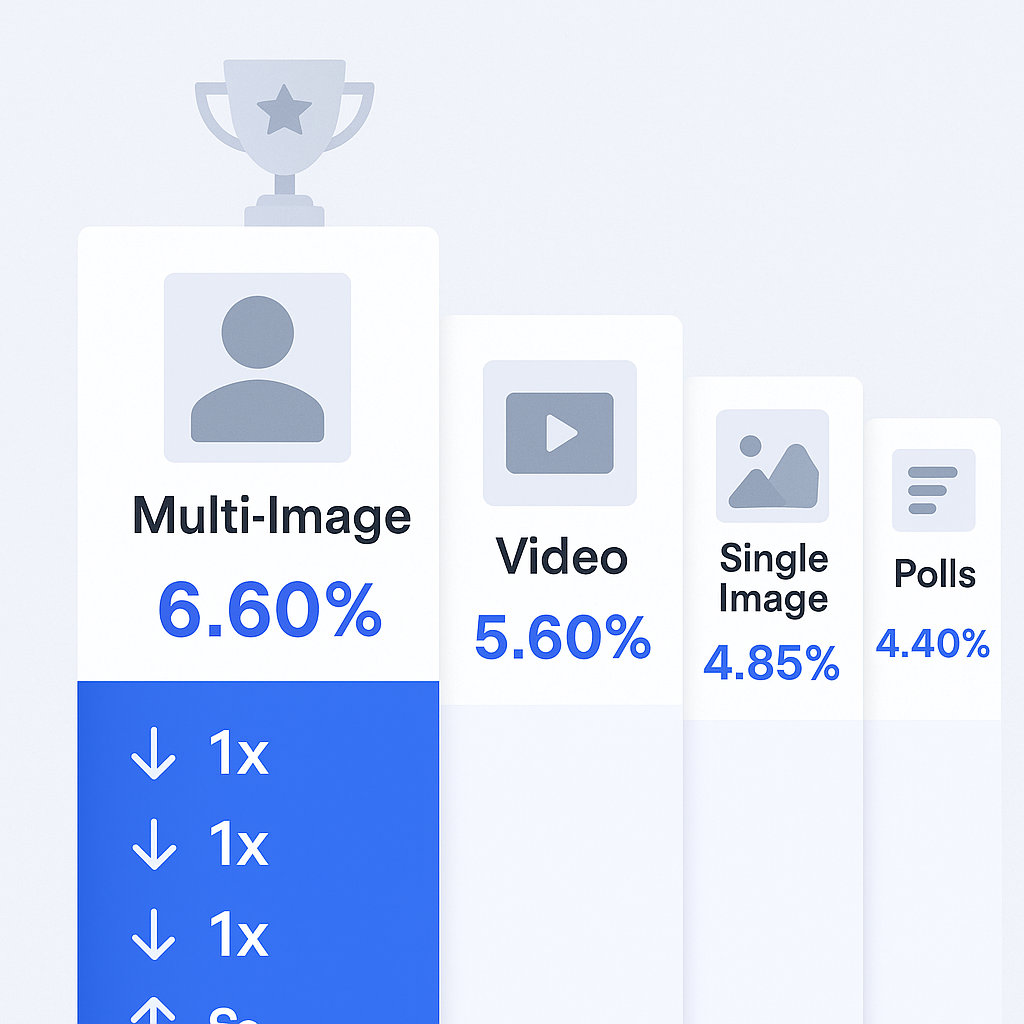


Multi-image posts: 6.60% engagement — Highest performing. Great for showing before/after, process steps, or case studies.

Native Documents (PDFs): 6.10% — The “carousel” format. Creates dwell time as people click through slides, which boosts algorithmic ranking.

Video: 5.60% — Video views are up 36% year-over-year. Live video gets 24x more engagement than pre-recorded.

Single Image: 4.85% — The baseline. Still performs 2x better than text-only in terms of comments.

Polls: 4.40% — Engagement doubled in 2024. Excellent for low-friction engagement and market research.

Text-only: 4.00% — Lowest engagement rate, yet often highest for driving thoughtful conversations and positioning expertise.

The tactical takeaway? If you want reach, use documents and visuals. If you want depth and authority, use text.

The Comment Marketing Hack

Here’s the strategy nobody talks about because it’s not sexy.

Posting 10 quality comments daily on other people’s content increases your profile views by 40% and follower growth by 20%.

You don’t need to create original content. You just need to show up in the right conversations.

But there’s a quality threshold. Comments need to exceed 15 words to be weighted as “high quality.” Those “Great post!” and “Thanks for sharing!” comments? The algorithm sees right through them.

Each meaningful comment on your own posts boosts reach by 5%. Which means a post with 20 quality comments gets 100% more reach than one with zero engagement.

This is the ROI play for 2025: Be a “Super-Commenter” before you’re a creator.

💰 Beyond Engagement: Book Actual Meetings

Skip content creation. Our done-for-you LinkedIn outbound targets decision-makers, designs campaigns, scales results—meeting bookings guaranteed.

The Conversion Metrics That Actually Matter

Vanity metrics (likes, views) feel good. Sanity metrics (opportunities, sales) pay bills.

Let’s talk about what actually converts on LinkedIn.

Social Selling Index: The Leading Indicator

LinkedIn’s proprietary Social Selling Index (SSI) scores you 0-100 across four pillars: Professional Brand, Finding the Right People, Engaging with Insights, and Building Relationships.

The correlation with success is absurd:

  • 45% more opportunities created by high SSI sellers vs. low SSI peers
  • 51% more likely to hit sales quotas
  • Average score: 40-50
  • Elite threshold: 75+

Your SSI score is basically a report card for how well you’re using LinkedIn for business development. If it’s below 50, your pipeline will dry up. It’s not a question of if, but when.

LinkedIn DMs vs. Cold Email: The Channel War

Here’s where things get controversial.

Cold email average response rate: 5.1%

LinkedIn DM response rate: 10.3%

That’s literally double. And LinkedIn InMail (the paid version) hits 18-25% response rates — absolute dominance over traditional cold outreach.

⚡ 10.3% Response Rates. Zero Technical Hassle.

We handle LinkedIn targeting, campaign execution, and scaling while you focus on closing. Complete outbound system—no tools required.

But before you abandon email entirely, here’s the kicker: multi-channel campaigns combining email, LinkedIn, and phone see 287% better results than single-channel approaches.

The optimal strategy in 2025 isn’t choosing between channels. It’s orchestrating them:

Day 1: LinkedIn profile visit (soft signal)
Day 2: LinkedIn connection request (personalized message)
Day 3: Cold email (referencing the LinkedIn interaction)
Day 5: Follow-up touch via secondary channel

This sequence leverages LinkedIn’s high open rates to warm up prospects before the cold email even arrives. The social proof of an existing connection dramatically increases email open rates and response likelihood.

Connection Request Acceptance Rates

Your connection request acceptance rate is your first funnel metric. Here’s what the data shows:

Personalized connection requests: 9.36% acceptance
Generic requests: 5.44% acceptance

That’s a 72% improvement from adding a simple personalized note.

But there’s industry variance. SaaS and Software have the lowest acceptance rates (4.77%) due to oversaturation. Legal and Professional Services have the highest (10.42%) because fewer people spam those verticals.

A healthy acceptance rate is around 30%. If you’re below 20%, your headline or photo is the bottleneck, not your message.

The Ecosystem Context: Why This Matters More in 2025

Here’s the bigger picture most people miss.

LinkedIn has surpassed 1.1 billion users across more than 200 countries. The platform is adding 70 million new members annually — that’s three professionals every second.

Your total addressable market is expanding constantly. That “perfect prospect list” you built? It’s obsolete by the time you finish building it.

But here’s what makes LinkedIn uniquely powerful: it’s not just volume. It’s quality of the user base.

44% of linkedin members earn over $75,000 annually — significantly above national median income. Over 65 million users are business decision-makers. The platform hosts 234 million U.S. users, but nearly 80% of total users reside outside the U.S., meaning global reach is built-in.

And while consumer social media platforms are seeing declining engagement, 43% of general consumers maintain LinkedIn profiles, blurring the B2B/B2C distinction.

This isn’t “just” a professional network anymore. It’s where commerce happens.

The Device Usage Pattern Nobody Talks About

Here’s a counterintuitive finding: Despite the “mobile-first” trend everywhere else, LinkedIn remains desktop-dominant.

74.24% of visits happen on desktop devices, with mobile comprising only 25.76%. Though some conflicting data suggests 48.5% use the app for casual browsing.

What this tells us: Initial engagement might happen mobile (profile views, connection acceptance). But the deep dive — the moment someone decides if you’re credible enough to message or meet with — happens on desktop.

Your profile needs to look impeccable on a landscape monitor with someone in “work mode” mindset.

Why Most Profiles Still Fail (Despite Knowing This Data)

You’ve read the statistics. You understand the multipliers. Yet most profiles still make the same fatal mistakes:

The Resume Trap: 50% of profiles list duties instead of achievements. “Responsible for cold calling” means nothing. “Generated $1.2M pipeline via outreach” is magnetic.

Headline Stuffing: Using internal jargon or vague statements that confuse the algorithm. If the headline makes no sense to a stranger in 5 seconds, it’s broken.

Ignoring Completeness: Leaving profile fields blank because “they don’t matter.” The algorithm disagrees. Every empty field is a red flag that triggers suppression.

Profile Neglect: Treating LinkedIn like a resume you update annually. In reality, profiles are living assets that require consistent optimization and content activity.

The Brutal Truth About LinkedIn and Cold Email in 2025

Let’s connect the dots.

Cold email still works. The average 5.1% response rate isn’t dead — it’s just harder. Deliverability issues, spam filters, and inbox saturation make email a technical challenge requiring dedicated infrastructure, warmup systems, and constant monitoring.

LinkedIn offers something email can’t: guaranteed delivery to professional feeds. No spam filters. No deliverability problems. Direct access to 65+ million decision-makers who check the platform daily.

But LinkedIn alone isn’t the answer either. The scale is limited. You can’t send 10,000 LinkedIn messages a month without getting banned.

The winning strategy is orchestrated outbound. Use LinkedIn for credibility and high-intent engagement. Use email for scale and follow-up. Combine them for the 287% performance lift that multi-channel approaches deliver.

🚀 Done-For-You Multi-Channel Outbound

LinkedIn targeting + campaign design + automated scaling = 15-25% response rates. We handle everything. You close deals.

7-day Free Trial |No Credit Card Needed.

And here’s where most people get stuck: orchestrating this manually is impossible. You need a system that handles targeting, campaign design, and execution across both channels without constant babysitting.

That’s exactly why platforms like Salesso exist — to give you the best of both worlds. Professional LinkedIn outbound combined with cold email infrastructure, managed end-to-end so you can focus on closing deals instead of managing tools.

Because at the end of the day, LinkedIn profile statistics don’t matter if they don’t translate into conversations. And conversations don’t happen if you’re spending all day managing technical complexity.

Conclusion

Here’s what the linkedin profile statistics tell us in 2025:

Profiles with photos get 21x more views. Period. No photo = invisible.

Complete profiles receive 40x more opportunities. All-Star status isn’t optional.

Headlines carry 40-45% of your search weight. Front-load your value in the first 50 characters.

Content engagement is rising 21% year-over-year. Unlike other platforms, LinkedIn rewards consistent participation.

High Social Selling Index correlates with 45% more opportunities. Your profile is either building pipeline or killing it.

The gap between optimized and unoptimized profiles isn’t shrinking. It’s widening. Every day you delay optimization is another day of missed conversations, lost opportunities, and prospects finding your competitor instead.

The data doesn’t care about excuses. It only tracks results.

Your move: Optimize your profile today, or accept that you’re losing to someone who already did.

And if you’re serious about turning LinkedIn into a systematic lead generation engine (not just a better-looking profile), we should talk. Book a strategy meeting to see how we help teams generate 15-25% response rates through done-for-you LinkedIn outbound — no complex tool stacks required.

Other Useful Resources

To convert profile optimization intelligence into systematic outreach campaigns that deliver meetings beyond profile views, explore these resources:

LinkedIn Automation & Tools:

  • Read our comprehensive Dripify review for understanding automation tools that convert profile credibility into scalable outreach
  • Explore our Phantom Buster review to evaluate data extraction platforms supporting multi-channel campaigns

Premium Tools & Investment:

Core Methodology:

Account Management:

Related Intelligence:

LinkedIn profile statistics reveal powerful optimization multipliers—21x views with photos, 40x opportunities with complete profiles, headlines carrying 40-45% search weight, and 31x discovery boost with 5 skills. These optimizations are essential prerequisites for visibility. But here’s the gap: optimized profiles attract profile views; they don’t book meetings. Converting that visibility into pipeline requires systematic outbound execution—LinkedIn DMs achieving 10.3% response (versus cold email’s 5.1%), InMail hitting 18-25%, and multi-channel orchestration delivering 287% better results. Most professionals lack bandwidth for this: optimizing profiles, creating content, managing 10+ daily comments, coordinating LinkedIn + email sequences, and handling technical deliverability. Our complete LinkedIn outbound system assumes your profile is optimized, then targets 65M+ decision-makers with proven campaigns delivering 15-25% response rates—converting profile credibility into actual meetings without the execution complexity.

FAQs

What is the most important LinkedIn profile statistic for 2026?

The "21x" statistic. Profiles with professional photos receive 21 times more views than those without. It's the prerequisite for everything else — connection requests, messages, opportunities. Without a photo, the rest of your optimization efforts are pointless because nobody sees your profile.

How many users are on LinkedIn in 2025?

LinkedIn has surpassed 1.1 billion registered users globally, with approximately 70 million new members joining annually. That's three new professionals every second. The platform also has roughly 533.5 million monthly active users, with 161.5 million U.S. professionals checking it daily.

What is a good Social Selling Index (SSI) score?

An SSI score of 75 or higher puts you in the elite tier and correlates with 45% more sales opportunities compared to lower scores. The average user scores between 40-50. If your SSI is below 50, your pipeline is at risk — it's a leading indicator that opportunity flow will drop in the following quarter.

Is LinkedIn better than cold email for outreach?

LinkedIn DMs achieve 10.3% response rates compared to cold email's 5.1% — literally double the efficiency. LinkedIn InMail performs even better at 18-25% response rates. However, the best approach combines both channels. Multi-channel campaigns using LinkedIn, email, and phone see 287% better results than single-channel strategies.

How often should I post on LinkedIn?

While posting 2-3 times weekly is ideal for content creators, the data shows a more efficient strategy for most professionals: leave 10 high-quality comments (15+ words each) on other people's posts every day. This "Super-Commenter" approach boosts your profile views by 40% and follower growth by 20% without requiring original content creation.

What keywords should I put in my LinkedIn headline?

Your headline should prioritize keywords that your target prospects actually search for — typically your role, industry, and specific expertise (e.g., "SaaS Sales Leader | B2B Pipeline Growth | Enterprise Accounts"). Remember, the headline carries 40-45% of LinkedIn's search weight — more than your About section. Front-load the most critical keywords in the first 50 characters since that's all that's visible in most contexts.

What to Build a High-Converting B2B Sales Funnel from Scratch on LinkedIn

Build a Full LinkedIn Pipeline in Just 30 Days—Guaranteed