
Let’s be real—recruiting has changed.
If you’re still treating LinkedIn like it’s 2015, you’re already behind. The platform has exploded past 1 billion members globally, and the way people find jobs (and how companies find talent) has completely transformed.
Here’s the thing: LinkedIn isn’t just a social media platform anymore. It’s become the single most important tool for recruiting professionals worldwide. Whether you’re a hiring manager, recruiter, or just curious about the job market, understanding these numbers will give you a massive advantage.
In this article, you’ll discover the most important linkedin recruitment statistics that reveal how hiring actually works today. No fluff, no outdated data—just the numbers that matter.
The Massive Scale of LinkedIn’s Professional Network
First, let’s talk about size. Because when you understand how big LinkedIn has become, everything else makes more sense.
LinkedIn has officially surpassed 1 billion users worldwide, spanning over 200 countries and regions. That’s not a typo—one billion professionals all in one place.
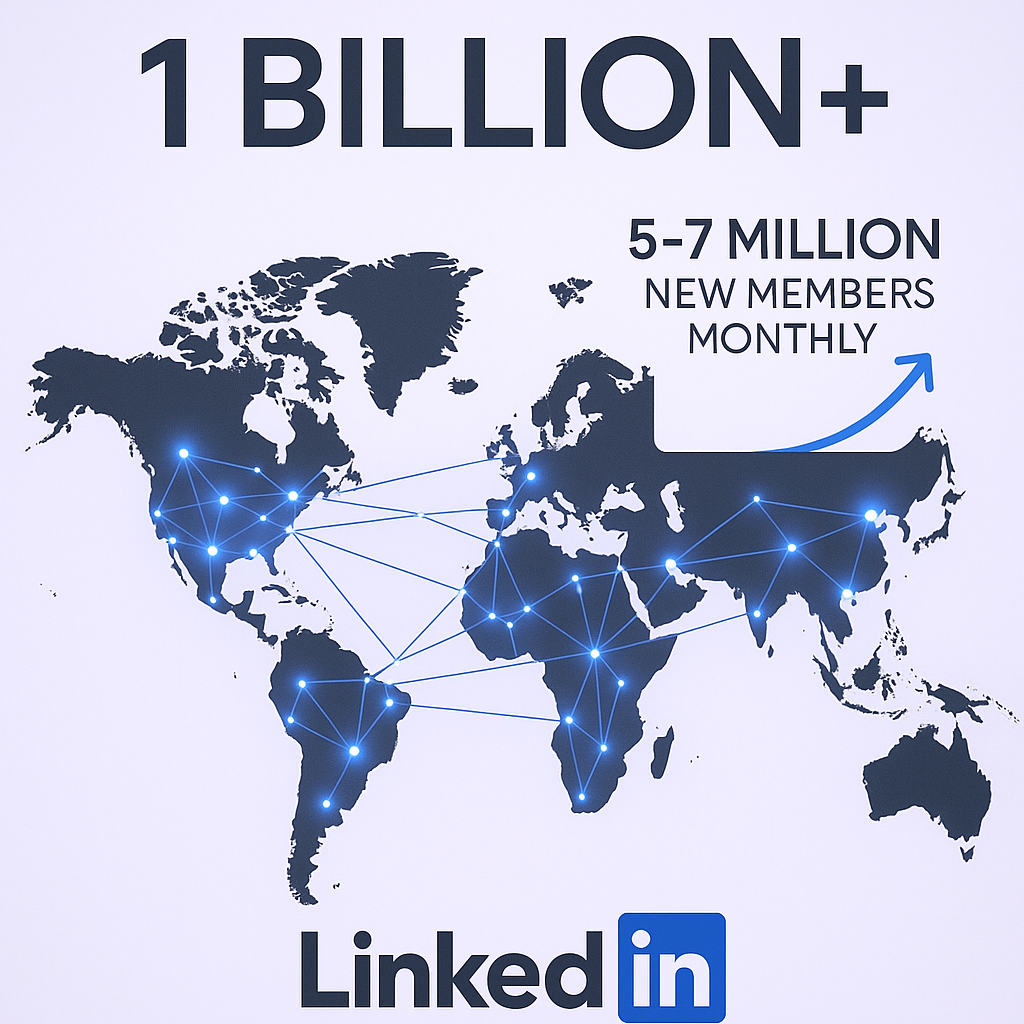
But here’s what really matters: LinkedIn adds between 5.18 million and 7.78 million new members every single month. That means roughly 2-3 new sign-ups happen every second. Think about that. By the time you finish reading this sentence, six more professionals have joined the platform.
What This Means for Recruiting
If you’re hiring, your talent pool is literally growing every day. The person you couldn’t find last month? They might have just joined LinkedIn yesterday.
Experts project the active user base will hit 942 million by 2028—a 22.3% growth from 2024. Your recruiting strategy from even six months ago is already outdated because the landscape keeps expanding.
Where the Decision-Makers Are
Here’s where it gets interesting for recruiters: LinkedIn isn’t just full of random people—it’s packed with linkedin members who actually make hiring decisions.
The platform hosts:
- Over 65 million business decision-makers
- 10 million C-level executives
- 69 million registered companies
And here’s a stat that should change how you think about outreach: 44% of Linked
The Demographics That Shape Hiring
Millennials dominate LinkedIn, making up over 59% of the user base. And get this: 11 million of those 87 million Millennials are now in decision-making roles.
If your recruiting messages still sound like they’re written for Baby Boomers, you’re missing your target audience completely. This generation values digital fluency, authenticity, and speed—not traditional corporate speak.
Gender breakdown sits at 56.9% male and 43.1% female, which is important context when you’re thinking about diversity recruiting initiatives.
How People Actually Use LinkedIn for Job Seeking
Let’s talk behavior. Because understanding how people use LinkedIn is just as important as knowing who uses it.
49-50 million people search for jobs on LinkedIn every single week. That’s roughly the entire population of Spain hitting the job search button weekly.
But here’s the reality check: the average user spends only about 17 minutes per month on LinkedIn. Mobile users engage more—closer to 48 hours monthly—but that desktop number is brutal.
What This Means for Your Job Posts
You have a tiny window to catch someone’s attention. If your job post looks like every other boring description on the platform, you’re invisible.
Quick engagement numbers:
- 69% of US users log in daily
- 15% access the platform several times a week
- About 5% check in once weekly
The takeaway? Your job postings need to be scroll-stopping good, because most people are skimming fast and deciding faster.
LinkedIn Hiring Statistics That Change Everything
Now let’s get to the core numbers that actually impact your recruiting success.
The Hiring Velocity
Here’s something wild: approximately 7 people are hired through LinkedIn every single minute. That’s 420 hires per hour, 10,080 per day.
Meanwhile, over 10,000 job applications are submitted every minute—that’s roughly 101 applications per second.
Think about the math here. Thousands of applications flying in, but only 7 hires happening per minute globally. The competition is absolutely fierce, which means your job seekers need to stand out, and your recruiting process needs to be razor-sharp.
Quality Matters More Than Ever
Here’s a stat that should make you reconsider your sourcing strategy: employees sourced through LinkedIn are 40% less likely to leave within the first 6 months compared to other channels.
Why? Because LinkedIn encourages self-selection. People who actively maintain professional profiles tend to be more serious about their careers. They’re not just throwing resumes at everything—they’re being strategic.
Companies are catching on. Many now measure quality of hire partly by whether an employee moves to a second role within the company, which speaks to cultural fit and long-term potential.
The Shift to Skills-Based Hiring
One of the biggest transformations in linkedin hiring statistics is the move away from traditional credentials.
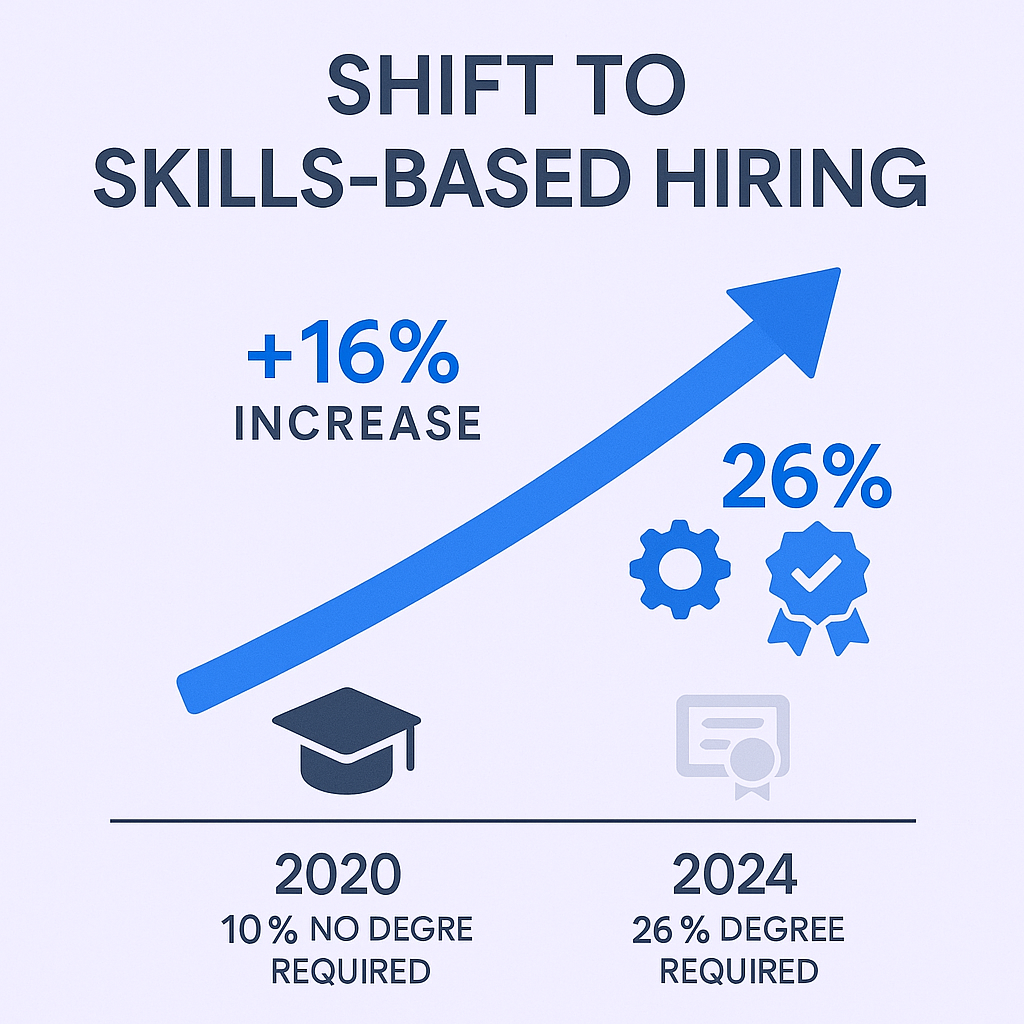
26% of paid job posts in 2024 didn’t require a degree—that’s a 16% increase from 2020. The message is clear: skills are overtaking pedigree.
What’s Driving This Change?
Companies finally realized that a piece of paper doesn’t predict job performance. Plus, limiting candidates to degree-holders cuts your talent pool dramatically in a competitive market.
Here’s what recruiters are looking for instead:
- Specific skill sets that match job requirements
- Demonstrated experience through projects and recommendations
- “Green talent” for sustainability roles (demand is surging)
- Soft skills like relationship development (job posts are now 54x more likely to list this as required)
If you’re still filtering resumes by college names, you’re missing incredible talent and probably violating some progressive hiring laws too.
How Hiring Trends Changed in 2025
After the chaos of the pandemic years and the hiring frenzy of 2022, we’ve entered what experts call “The Great Normalization.”
National hiring in the US was down 4.9% in August 2025 compared to July 2024. Yes, there are month-to-month fluctuations (a 4.6% uptick from June to July 2025), but the overall trend shows companies being more conservative with headcount.
Which Industries Are Still Hiring?
Not all sectors are slowing down:
Financial Services: Hiring is up 1.4%, defying broader slowdowns. If you’re in fintech or banking, opportunities are still strong.
Technology & Media: Showing signs of recovery after major corrections. Tech budgets are thawing, especially for AI and efficiency tools.
Government & Utilities: Stable hiring despite general downturn. Long sales cycles, but recession-proof budgets.
Retail & Consumer: Struggling with 26.7% turnover and reduced hiring. The labor challenges here are real.
Manufacturing: Among 20 industries that saw decreased hiring during mid-2025 slumps.
The Internal Mobility Trend
Companies are looking inward before looking outward. With external hiring slowing, organizations are focusing on internal mobility—promoting and transferring existing employees rather than bringing in new blood.
This changes the game for external recruiters. The “trigger event” of a new executive joining a company happens less often now, because that executive is more likely to be promoted from within.
How AI Is Changing Recruitment on LinkedIn
Let’s talk about the elephant in the room: artificial intelligence.
37% of organizations are now integrating generative AI into recruitment, and that number is accelerating fast.
What AI Is Actually Doing
Recruiters using AI tools are saving approximately 20% of their workweek—effectively gaining back a full day. They’re using it to:
- Screen resumes at scale (handling those 101 applications per second)
- Generate personalized outreach messages
- Analyze candidate profiles for fit
- Predict candidate success based on historical data
But here’s the catch: job posts mentioning AI attract 17% more applications. Candidates know AI is part of the future and want to work for companies embracing it.
The concern? Over-reliance on generic AI templates makes everything sound the same. The most effective recruiters use AI for research and screening, but keep the human touch in actual conversations.
Cold Email vs. LinkedIn: The Reality for Recruiters
Since we’re talking recruiting, let’s address the elephant in the room: should you reach out via LinkedIn or cold email?
The data tells a clear story:
LinkedIn Outreach Performance
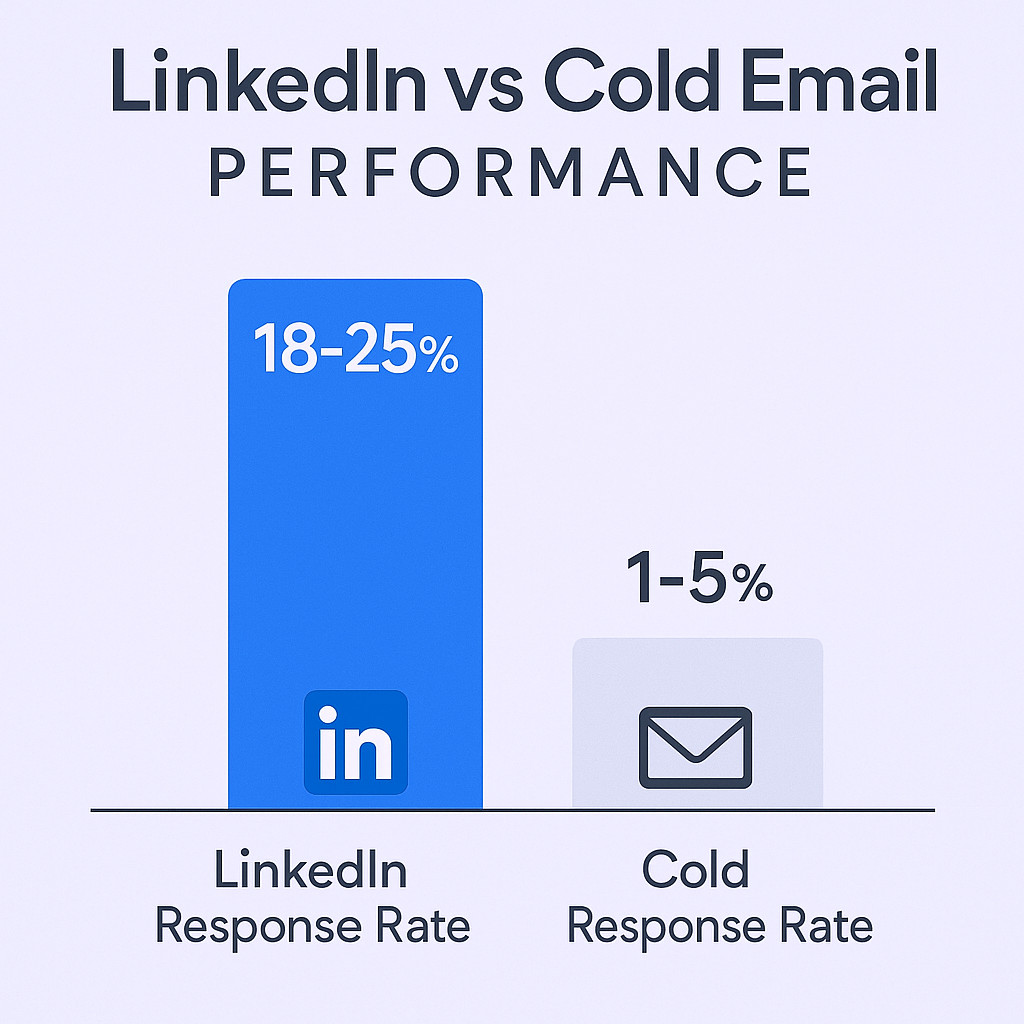
- Response rates: 18-25% for InMail
- Open rates: Up to 57.7% (often pushed as mobile notifications)
- Trust factor: High (face attached to message)
Cold Email Performance
- Response rates: 1-5% typically
- Open rates: 27.7% average in 2024 (down from 36% in 2023)
- Trust factor: Lower (spam filters are brutal)
But here’s the twist: scalability.
LinkedIn caps you at 50 InMails per month even on premium tiers. Meanwhile, a properly configured cold email setup can safely send thousands of messages monthly.
The winning strategy? Use both. LinkedIn for high-value, targeted outreach to executives and hard-to-reach candidates. Cold email for volume outreach to build your pipeline. Many recruiters are now using social selling techniques combined with email automation for maximum impact.
Data Quality Is Everything
Here’s a sobering stat: B2B data decays at roughly 70.3% per year. People change jobs, companies merge, emails bounce.
LinkedIn’s advantage? Self-cleaning data. Users update their own profiles because they’re incentivized to (attract recruiters, show career progress, build personal brand). Your email list from two years ago? Probably mostly dead.
When you’re building your outreach strategy, invest in tools that verify contact data against live LinkedIn profiles. This bridges the accuracy gap.
