
Here’s something most people won’t tell you: your company’s reputation as an employer directly impacts your ability to close deals.
Think about it. Before anyone replies to your outreach, they’re checking you out. They’re looking at your LinkedIn company page, reading employee reviews, and forming opinions about whether they can trust you.
The data backs this up in a massive way. Companies with strong employer brands on LinkedIn see 31% higher InMail acceptance rates and can cut sales cycles by up to 16 weeks. That’s not a recruiting metric—that’s pure sales fuel.
Let’s dig into the numbers that prove employer branding is no longer optional for revenue teams.
Why Your Employer Brand Actually Matters for Sales
The traditional separation between “employer brand” (HR’s job) and “corporate brand” (Sales’ job) has completely collapsed.
Today’s buyers operate in what experts call the “Vetting Economy.” They’re skeptical, self-directed, and they research everything before taking a meeting. When they receive your cold email or LinkedIn message, their first move is to audit your credibility.
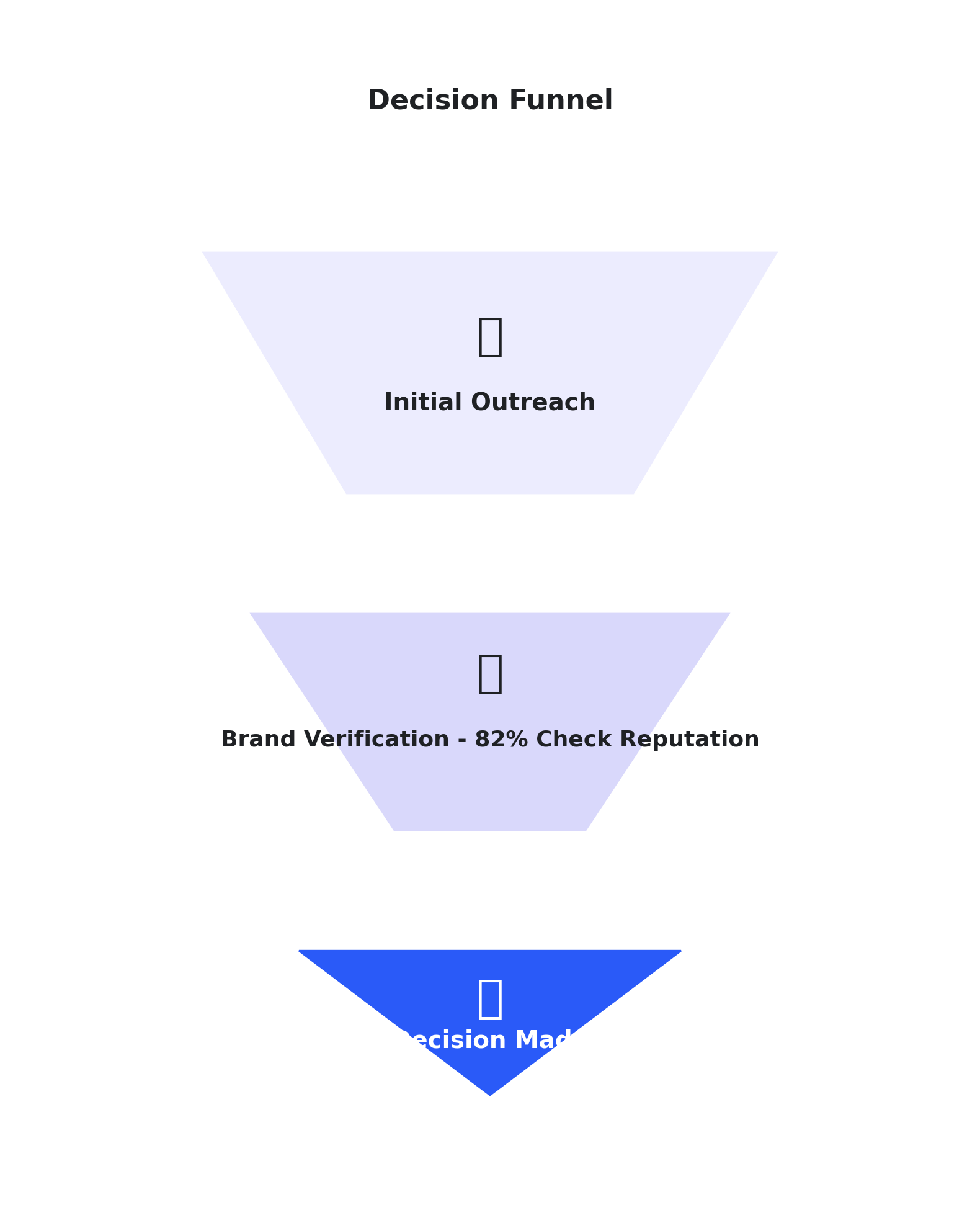
And here’s the kicker: 82% of buyers say their trust in the parent company is important or a dealbreaker when deciding to purchase. They’re not just evaluating your product—they’re evaluating your entire organization.
Even more revealing, 60% of consumers now buy, choose, or avoid brands based on their values or politics. Your internal culture isn’t internal anymore. It’s public, it’s scrutinized, and it’s affecting your pipeline.
Let’s talk about what’s actually happening with cold email right now.
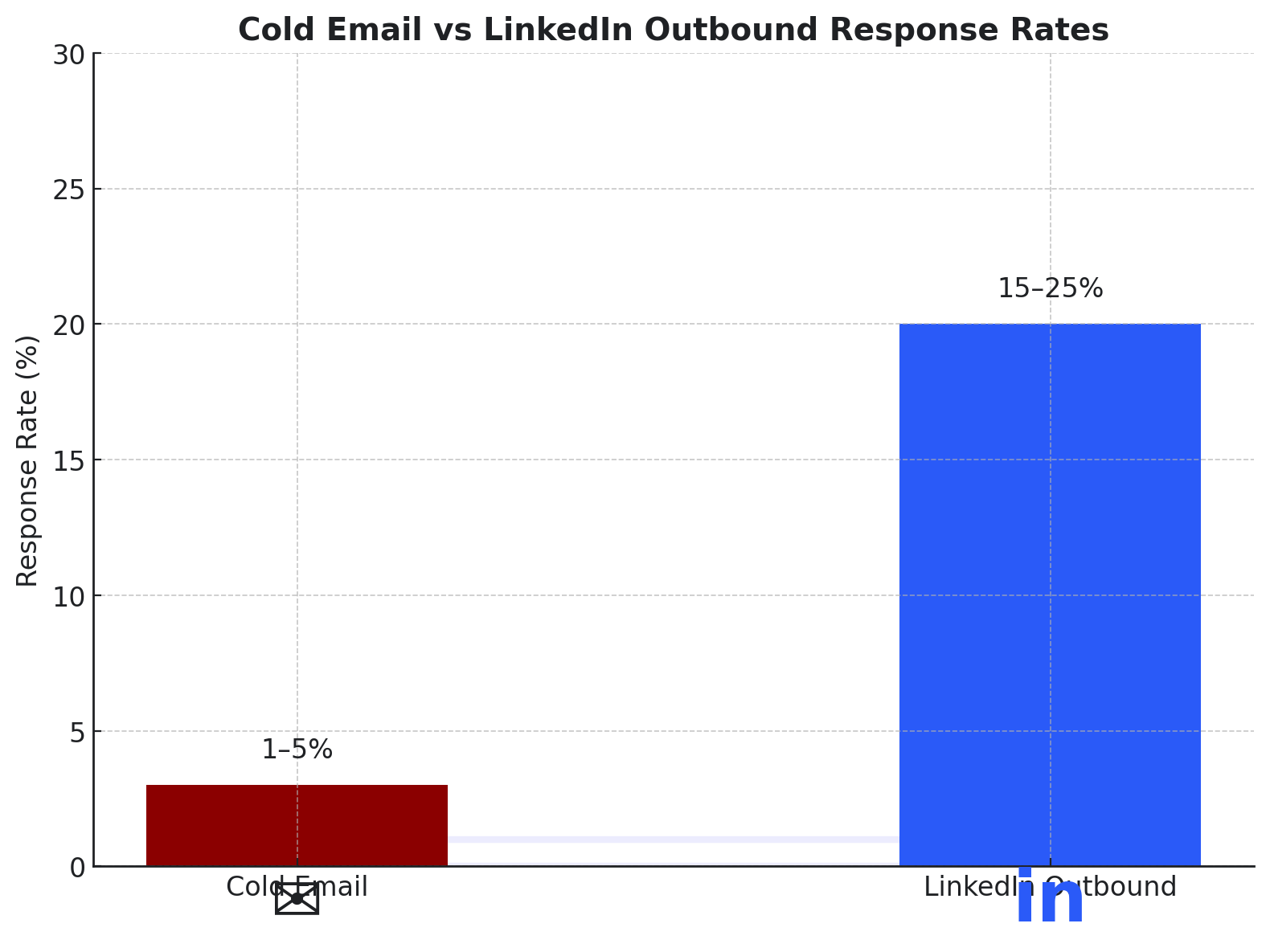
The average response rate sits somewhere between 1% and 5%. That means 95 out of 100 emails you send get ignored. The peak reply rate hits around 8.4% on the first email, then drops with every follow-up.
It gets worse. About 17% of cold emails never even reach the inbox due to spam filters and authentication issues. And if you’re sending aggressive follow-up sequences (four or more emails), you’re tripling your unsubscribe and spam complaint rates.
The market has developed immunity to generic outreach. Volume alone doesn’t work anymore.
But here’s what does work: trust.
When your company has a strong reputation, you’re not fighting against skepticism—you’re leveraging existing credibility. Your prospects already believe you might be worth their time.
The InMail Acceptance Multiplier
This is where employer branding becomes a sales weapon.
Companies with strong talent brands achieve a 31% higher InMail acceptance rate. For context, if you’re booking 10 meetings a month, a company with a better brand would book 13 meetings with the same effort.
That’s a “Brand Dividend” that compounds over time.
But it goes deeper. When prospects are exposed to both brand content and sales messaging, they’re 6 times more likely to convert compared to sales messaging alone. And if they’ve seen your brand messaging before receiving your outreach, they’re 44% more likely to accept your message.
This isn’t about making your company page look pretty. It’s about creating a trust environment where your outreach lands differently than everyone else’s.
The pattern is clear: strong brands open doors that cold tactics can’t.
How Employer Brand Accelerates Your Sales Cycle
Time kills deals. The longer a sales cycle drags, the more likely it is to stall or die.
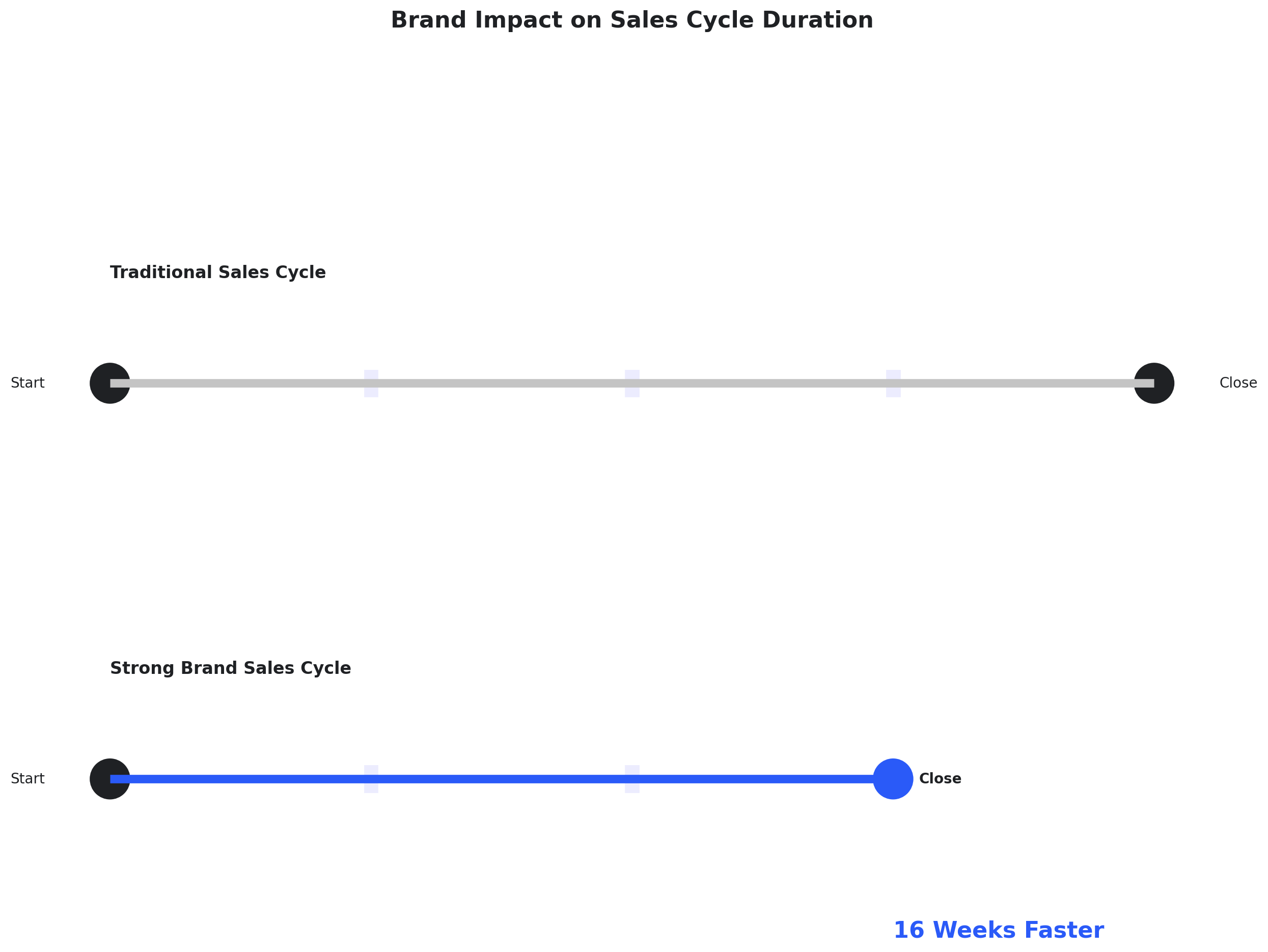
Research shows that B2B companies with well-established brands can cut decision-making time by as much as 16 weeks. Here’s how that breaks down:
Initial Interaction: Save 16 weeks because immediate credibility eliminates the “proof of legitimacy” phase. Buyers skip preliminary vetting.
Peer Recommendation: Save 11 weeks as strong advocacy accelerates consensus among buying committees, reducing internal debate.
Negotiation & Contracting: Save 11 weeks because high-trust brands face less scrutiny during legal review and contract redlining.
Digital Experience: Save 9 weeks when robust self-serve content allows buyers to educate themselves rapidly, moving through the funnel autonomously.
For sales teams, this is massive. A 16-week reduction often determines whether a deal closes this quarter or slips to next quarter. Your employer brand acts as a lubricant, reducing the friction of skepticism.
The Financial Impact You Can’t Ignore
Employer branding gets miscategorized as a cost center, but the data tells a different story.
Companies with strong talent brands on LinkedIn grow 20% faster than their peers. This isn’t just headcount growth—it’s business velocity.
They also see an 11.6% increase in shareholder returns. Meanwhile, companies with poor employer brands must pay 10% higher salaries to attract the same quality of talent, diverting capital away from product development and sales enablement.
Here’s the reality: 81% of job seekers would not join a company with a bad reputation. And if job seekers ghost bad employers, B2B buyers will ghost bad vendors.
Poor reputation creates a “reputation tax” on every business function. Strong reputation creates a “reputation dividend.”
What LinkedIn Users Actually Want from Companies
Understanding user behavior is critical if you want to leverage employer branding for sales.
The primary reason people follow companies on LinkedIn? To receive educational information. They’re tired of promotional content and product pitches. They want insights, industry analysis, and professional development.
In fact, 66% of social users find “edutainment” (educational + entertaining content) to be the most engaging form of brand content.
For sales professionals, this means your content strategy should shift from “selling” to “teaching.” Share industry reports, how-to guides, and insights that help prospects do their jobs better.
Video matters too. Users are more likely to engage with videos shorter than 15 seconds compared to longer formats. And 25% of LinkedIn users interact with brand content daily—this power user segment often includes the decision-makers you’re trying to reach.
The Buying Committee Reality
