
Let's Build Your First Campaign Together with our LinkedIn Expert

Recruitment Marketing Statistics: The Complete 2025-2026 Data Guide

Table of Contents

Recruitment Marketing Statistics

  • Sourced candidates 5-8x more likely to get hired than job board applicants – yet 70% of companies struggle to fill positions despite thousands of applications, revealing core challenge of reaching right people not getting more applicants
  • Job boards: 49% of applications but contribute to less than 25% of actual hires – massive resources spent screening hundreds of unqualified applicants while best candidates remain unreachable through these channels
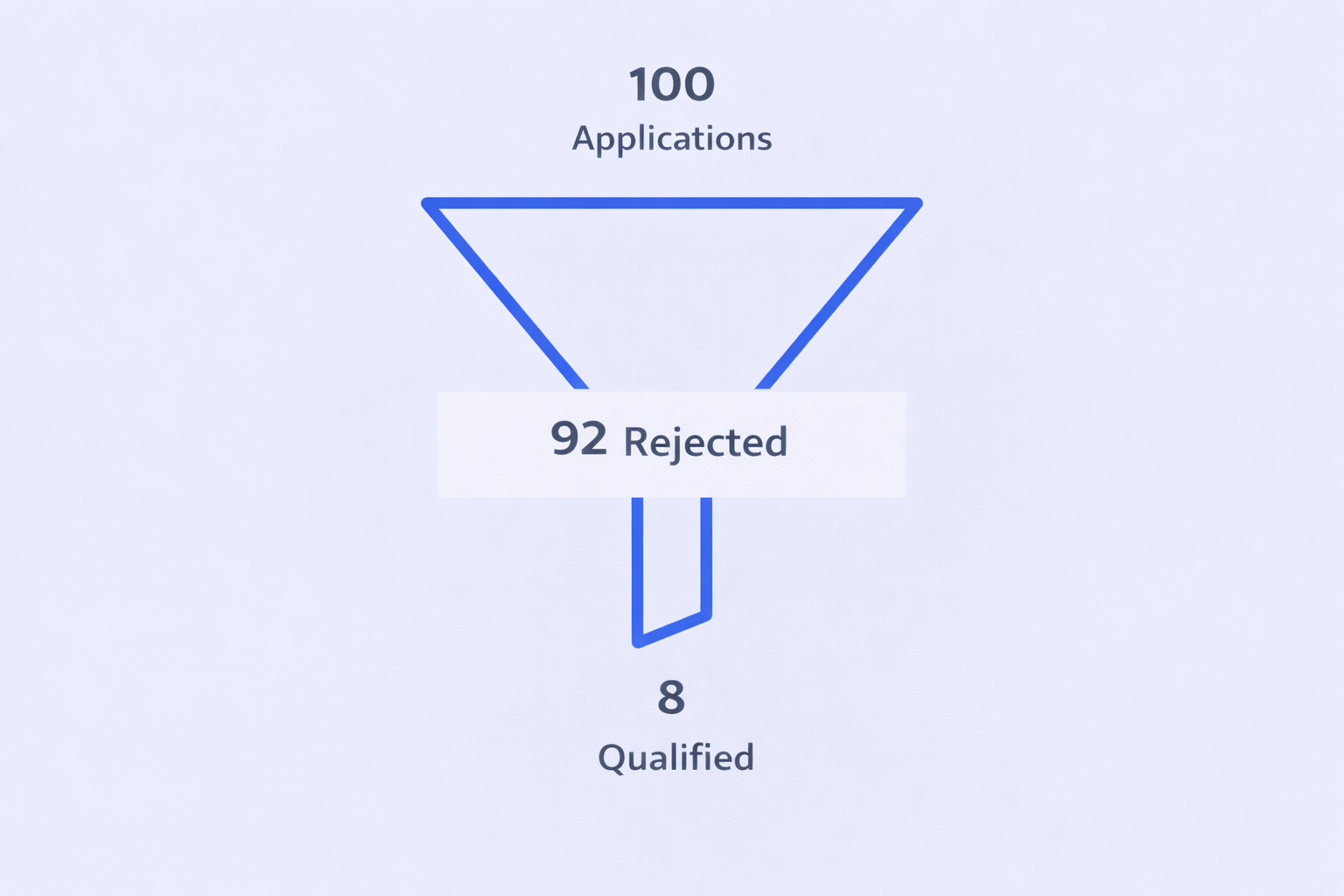
  • Only 8% of applicants advance past initial screening – for every 100 applications received, 92 immediately rejected creating frustrating cycle where recruiters spend more time saying “no” than building relationships
  • Strong employer brands: 50% lower cost-per-hire and 28% less employee turnover – companies with positive brands attracting 2x as many applications and seeing 11.6% higher shareholder returns
  • Replacing employee costs 90-200% of their annual salary – making 28% reduction in turnover represent millions in saved capital for mid-sized companies, justifying employer branding investment
  • 0.5-point Glassdoor rating boost leads to 20% increase in job clicks, 16% increase in apply starts – yet most companies treating employer branding as marketing afterthought rather than strategic priority
  • 77% investigate potential employers on social media before applying – looking for authentic employee content with 82% valuing employee testimonials more than any corporate statement
  • Employee referrals 11x more likely to result in hires than job board applications – internal mobility candidates 32x more likely to get hired when proactively moved between roles
  • “Talent Rediscovery” accounts for 46% of all sourced hires (up from 26% in 2021) – best next hire probably already in database as past applicant, previous conversation, or “silver medalist” from earlier role
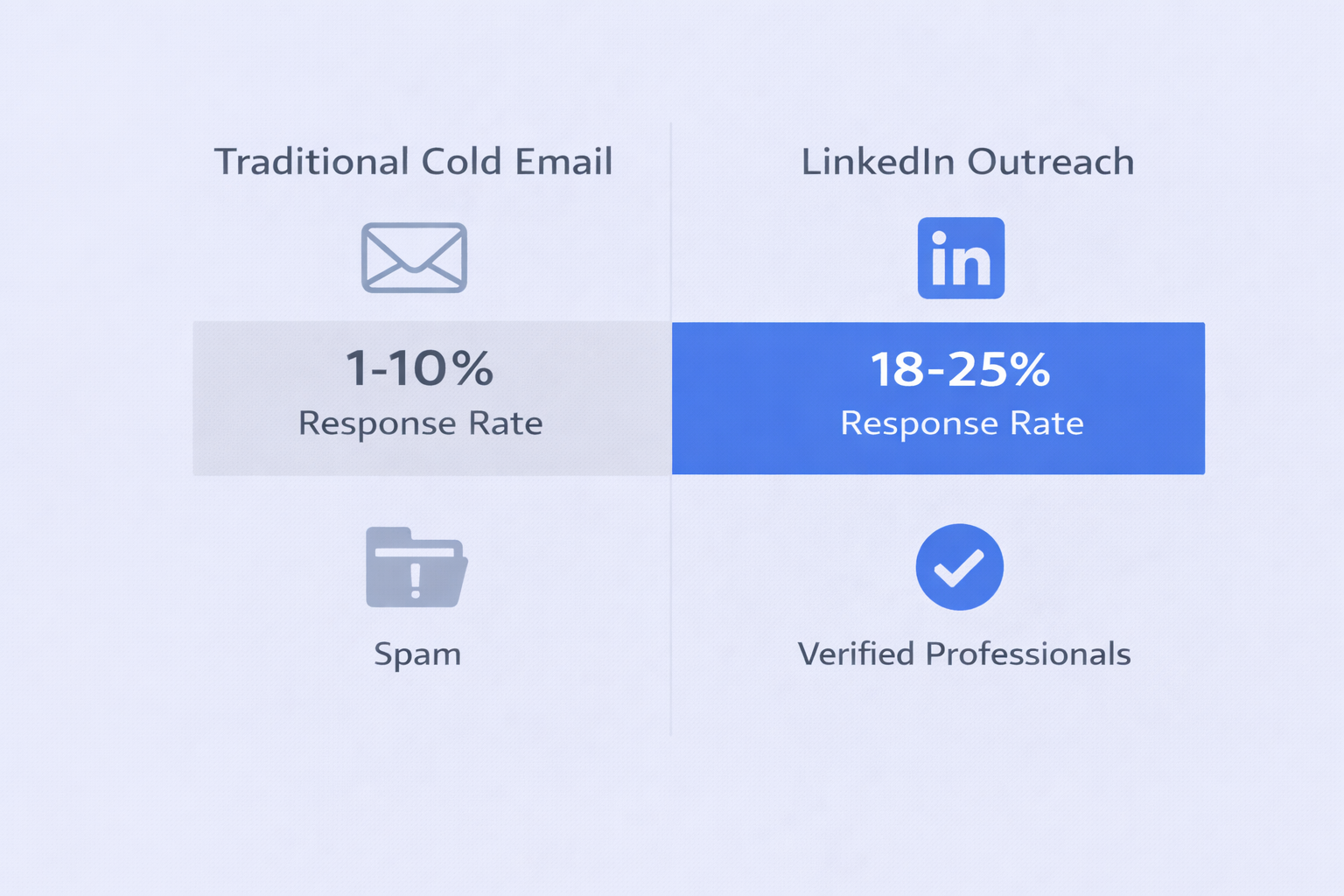
  • LinkedIn InMail: 18-25% reply rates with 85% open rates vs cold email 1-10% response – social proof allowing candidates to immediately verify profile, connections, and credibility crushing traditional email
  • Highly targeted campaigns (under 50 recipients): 5.8% response vs 2.1% mass outreach (1000+) – multi-point personalization referencing specific achievements or mutual connections increasing reply rates by up to 142%
  • Messages 50-125 words achieve up to 50% reply rates when properly targeted – subject line personalization alone delivering 50% higher open rates, these being difference between campaign that works and gets ignored
  • Nearly 1 in 6 emails never reach inbox due to ISP filtering – Gmail and Outlook using AI to detect “mass sender” behavior patterns instantly routing messages to spam or promotions tab
  • 43% AI adoption in HR in 2025 with early adopters reporting 20% time savings – roughly one full day per week by automating routine screening and scheduling, though 40% fear over-reliance makes process too impersonal
  • 50-70% of newly hired executives fail within 18 months – executive search industry reaching $10.8 billion in 2024 yet staggering failure rate underscoring why executive recruitment can’t rely on traditional methods

The way companies attract talent has completely changed. Gone are the days when posting a job ad and waiting for applications was enough. Today’s recruitment marketing statistics paint a different picture—one where proactive outreach, employer branding, and data-driven strategies determine who wins the talent war.

The numbers tell a clear story: sourced candidates are 5-8x more likely to get hired than those who simply apply through job boards. Meanwhile, 70% of companies struggle to fill open positions despite thousands of applications flooding in. This paradox reveals the core challenge—it’s not about getting more applicants, it’s about reaching the right people before they even think about job hunting.

The current landscape is defined by what experts call the “Great Stay”—where employees remain in their roles due to market uncertainty, making 75% of professionals passive job seekers who never visit traditional job boards. With the U.S. unemployment rate stabilized at 4.6% and hiring growing 8.3% year-over-year, the competition for skilled talent has never been fiercer.

Why Traditional Recruiting Methods Are Failing

Job boards still dominate as a sourcing channel, accounting for 49% of all applications. But here’s the problem—they contribute to less than 25% of actual hires. That means companies are spending massive resources screening hundreds of unqualified applicants while the best candidates remain completely unreachable through these channels.

The math is brutal: only 8% of applicants advance past initial screening. For every 100 applications you receive, 92 are immediately rejected. This creates a frustrating cycle where recruiters spend more time saying “no” than building relationships with qualified talent.


Traditional cold email campaigns face similar challenges. With average reply rates dropping to 1-10% in 2025, and 1 in 6 emails never reaching the inbox due to spam filters, the old playbook of mass outreach is broken. Even well-crafted emails struggle when inboxes are saturated with low-effort, AI-generated content that has trained professionals to ignore most recruitment messages.

🎯 Stop Chasing Job Board Applicants

Target decision-makers directly on LinkedIn where 65M+ professionals actively engage with quality outreach

The Employer Branding ROI That Changes Everything

While companies struggle with traditional methods, recruitment marketing statistics reveal that strong employer branding creates an entirely different game. Organizations with powerful employer brands enjoy 50% lower cost-per-hire and 28% less employee turnover compared to competitors.
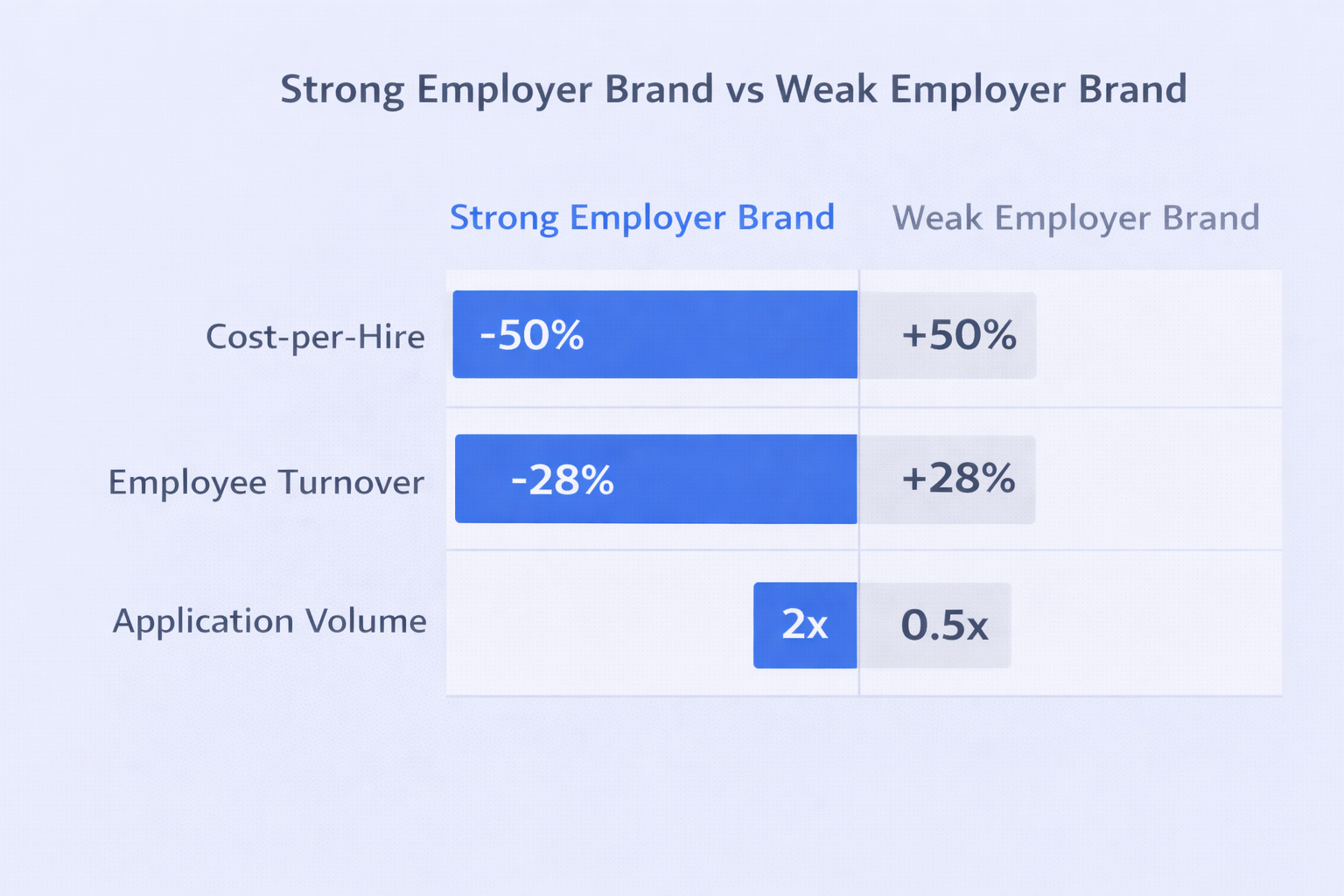


The financial impact is staggering. Companies with positive employer brands attract 2x as many applications and see 11.6% higher shareholder returns. When you consider that replacing an employee costs 90-200% of their annual salary, that 28% reduction in turnover represents millions in saved capital for mid-sized companies.

But there’s a credibility gap. While 62% of HR professionals believe their brand enhances company reputation, less than 44% think it actually attracts talent effectively. This disconnect happens because candidates do their own research—77% investigate potential employers on social media before applying, looking for authentic employee content rather than polished corporate messaging.

A simple 0.5-point boost in Glassdoor rating leads to a 20% increase in job clicks and 16% increase in apply starts. Yet most companies still treat employer branding as a marketing afterthought rather than a strategic priority. 80% of executive management teams now consider it critical, but execution remains inconsistent.

The modern candidate expects transparency. They want to see real employee testimonials—82% of job seekers value these more than any corporate statement. They’re “light stalking” on Instagram, TikTok, and LinkedIn to verify whether your culture matches your claims.

📊 Your Employer Brand Is Your Biggest Recruiting Asset

Build systematic LinkedIn campaigns that showcase culture, reduce cost-per-hire 50%, and fill roles faster

Sourcing vs. Inbound: The Data-Driven Reality

The most successful companies in 2025-2026 aren’t waiting for applications—they’re hunting for talent. Employee referrals are 11x more likely to result in hires than job board applications. Internal mobility candidates are 32x more likely to get hired when they’re proactively moved between roles.

Here’s where it gets interesting: “Talent Rediscovery” now accounts for 46% of all sourced hires, up from just 26% in 2021. This means the best next hire is probably already in your database—a past applicant, a previous conversation, or a “silver medalist” from an earlier role. Companies using lead enrichment tools to mine their existing CRM are finding gold in data they already own.

The yield ratio tells the complete story. A sourced candidate has an 11% hire rate per 2.6% application rate. Compare that to job boards where you might see 2% hire rates per 49% application volume. One approach gives you quality, the other gives you noise.

Social media plays a critical role but not how most think. While it directly accounts for 1 in 10 hires, its real value is in brand visibility. 75% of candidates are more likely to apply to companies that actively manage their social presence. This makes platforms like LinkedIn not just sourcing channels but essential brand-building tools that warm up your entire talent acquisition pipeline.

The Multi-Channel Outreach Reality

Successful recruitment marketing strategy in 2026 requires understanding where each channel excels. LinkedIn InMail achieves 18-25% reply rates with open rates up to 85%, crushing traditional email’s 1-10% response rates. The reason? Social proof. When a recruiter reaches out on LinkedIn, candidates can immediately verify their profile, connections, and credibility.
But LinkedIn has limitations—50-100 messages per month maximum due to credit restrictions. This is where sophisticated teams use a hybrid approach: cold email for broad awareness at scale, LinkedIn for high-value executive-level engagement with decision-makers.

The personalization imperative has never been stronger. Highly targeted campaigns (under 50 recipients) see 5.8% response rates compared to 2.1% for mass outreach (over 1000 recipients). Multi-point personalization—referencing specific achievements or mutual connections—can increase reply rates by up to 142%.

Short emails win. Messages between 50-125 words can achieve up to 50% reply rates when properly targeted. Subject line personalization alone delivers 50% higher open rates. These aren’t marginal improvements—they’re the difference between a campaign that works and one that gets ignored.

For teams managing outreach at scale, pipeline management tools become essential to track multi-touch sequences across platforms without losing the personalization that makes each message effective.

⚡ Skip the Email Deliverability Nightmare

LinkedIn outbound bypasses spam filters entirely, connects you with verified decision-makers, and requires zero technical setup

Funnel Conversion Benchmarks That Matter

Understanding where candidates drop off reveals exactly where to optimize your hiring process. Current recruitment marketing statistics show dramatic differences across industries in conversion rates from initial contact to hire.

Staffing & Recruiting sees 25% of leads become marketing qualified, 32% advance to sales qualified, and 56% of those close as hires. Healthcare shows the strongest progression: 45% lead-to-MQL, 52% MQL-to-SQL, and 49% SQL-to-close. Finance has the toughest top-of-funnel at 25% but the strongest close rate at 56%.

The common pattern? The “Lead-to-MQL” stage is consistently the lowest-converting part of the funnel because most candidates are in early research mode. They’re gathering information, comparing options, and not ready to commit. This is where educational content—webinars, industry reports, career guides—becomes crucial for nurturing early-stage interest.

For companies using alternative prospecting approaches, understanding these benchmarks helps set realistic expectations for how many initial contacts you need to generate one qualified candidate.

The average hiring process now takes 41 days from first contact to offer. Teams handling 13.4+ open roles simultaneously have increased 93% compared to previous years, meaning recruiters are leaner but busier. This time compression makes efficient funnel management critical—you can’t afford to waste weeks nurturing unqualified leads.

The Cold Email Deliverability Crisis

Let’s talk about the elephant in the room: email deliverability in 2025-2026 is the hardest it’s ever been. Nearly 1 in 6 emails never reach the inbox due to ISP filtering that’s grown increasingly aggressive. Gmail and Outlook now use AI to detect “mass sender” behavior patterns, instantly routing messages to spam or the promotions tab.

Technical “warmup” strategies are no longer optional. Teams must limit sends to under 100 emails per mailbox per day and maintain strict domain authentication (SPF, DKIM, DMARC). Without these foundations, even perfectly crafted messages disappear into spam folders.

Bounce rates above 2% trigger immediate red flags with ISPs. This means every email list needs verification before sending. Using deliverability tools to test inbox placement before launching campaigns has become standard practice for serious recruiters.

The irony? While email gets harder, cold email still delivers a 3,600% ROI—$42 for every $1 spent—when done correctly. The key is volume paired with precision: send to smaller, highly verified lists with messages that feel personal rather than blasting thousands of generic templates.

This is why many recruiting teams now view LinkedIn as their primary outreach channel. No spam filters. No deliverability issues. No warmup requirements. Just direct access to verified professional profiles.

AI’s Role in Modern Recruitment Marketing

Artificial intelligence adoption in HR has climbed to 43% in 2025, with early adopters reporting 20% time savings—roughly one full day per week—by automating routine screening and scheduling tasks. 92% of businesses plan to invest in generative AI tools this year.

But the impact goes beyond simple automation. AI-powered candidate targeting is used by 41% of teams to identify prospects who match specific criteria across millions of profiles. Sentiment analysis tools identify employee satisfaction trends before they become turnover problems. AI agents can improve sourcing accuracy by 300% through better routing and matching.

Yet 40% of specialists fear that over-reliance on AI makes the process too impersonal, causing top-tier talent to disengage. The data supports this concern—candidates want human connection, especially for senior roles where cultural fit matters as much as qualifications.

There’s also a looming “pipeline crisis.” 37% of companies are replacing entry-level roles with AI, eliminating the traditional training grounds for future managers. This creates a gap where junior talent never develops the skills needed to advance.

The consensus among successful recruiting teams: AI handles repetitive tasks (scheduling, initial screening, data entry) while humans focus on relationship building, negotiation, and assessment of soft skills that algorithms can’t evaluate.

A new frontier is Generative Engine Optimization (GEO)—optimizing content for AI search engines like ChatGPT and Gemini. Job seekers increasingly use these LLMs to find “the best tech recruiter in New York” rather than traditional Google searches. Brands with clear headings, structured schema markup, and frequently refreshed content are more likely to be cited as authoritative sources by AI agents.

The Executive Search Premium

The executive search industry reached $10.8 billion in 2024 with a steady 6.3% five-year growth rate. But here’s the shocking statistic: 50-70% of newly hired executives fail within 18 months of placement.

This staggering failure rate underscores why executive recruitment can’t rely on traditional methods. At this level, every placement requires deep assessment methodology, cultural alignment verification, and often months of relationship building before a candidate even considers making a move.

Private equity firms replace 50-70% of CEOs shortly after acquisition, creating a constant demand for executive-level talent. Yet finding these leaders requires an entirely different approach—one focused on “alignment storytelling” where recruiters use LinkedIn to humanize opportunities and connect with niche talent pools.

Diversity data shows that executive teams with strong diversity are 25-36% more profitable than peers. Yet traditional search methods struggle to break networks and patterns that perpetuate homogeneous leadership teams. Proactive outreach that expands beyond standard referral networks becomes essential for building diverse executive pipelines.

Marketing Data Analyst: The New Recruiting Power Role

As recruitment becomes more data-driven, demand for Marketing Data Analysts has surged. The field is growing 22% faster than average with market projections reaching $43.51 billion by 2030.

These professionals bridge talent acquisition and data science, ensuring every dollar spent on recruitment marketing is measurable and optimized. The median salary sits at $65,810 annually, with top performers earning over $127,410.

Organizations employing dedicated analysts are 12% more likely to make quality hires because they can accurately assess which sourcing channels, messaging angles, and campaign timings deliver the best results. This isn’t just about reporting—it’s about predictive modeling that forecasts hiring needs, identifies talent shortages before they become critical, and optimizes spending across channels.

The requirement for advanced analytics (Google Analytics, SQL, Python) in recruiting teams highlights a fundamental shift: modern talent acquisition is a tech-enabled discipline requiring the same sophistication as growth marketing or sales operations.

What This Means for Your Recruiting Strategy

The 2025-2026 recruitment marketing statistics reveal three clear imperatives:

First, prioritize quality over volume. Smaller, targeted campaigns consistently yield 5.8% response rates versus 2.1% for mass outreach. Every hour spent refining your ideal candidate profile saves ten hours screening unqualified applicants.

Second, invest in multi-channel nurturing. Use one channel for initial awareness and another for trust-building. A first follow-up message boosts replies by 49%. The best recruiters layer touchpoints across email, LinkedIn, and even phone without feeling spammy because each interaction adds genuine value.

Third, leverage your existing data. Before spending on new lead lists, mine your CRM for past candidates. 46% of successful hires come from talent rediscovery—people already in your database who are now ready for a conversation.

The technical requirements are non-negotiable: maintain email bounce rates under 2%, never exceed 100 sends per mailbox daily, and verify every contact before outreach. These aren’t optional best practices—they’re the difference between messages that land in inboxes versus disappearing into spam.

🚀 Ready to Transform Your Talent Pipeline?

See how our complete LinkedIn outbound system generates 15-25% response rates with zero spam filter worries—targeting, campaign design, and scaling all handled

7-day Free Trial |No Credit Card Needed.

Conclusion

The shift from reactive job posting to proactive recruitment marketing isn’t coming—it’s already here. With 69-70% of companies struggling to fill roles despite record application volumes, the winners are those who master targeted outreach, authentic employer branding, and data-driven optimization.

Traditional methods like job boards and mass cold email are dying slow deaths, suffocated by spam filters, oversaturation, and candidates who’ve learned to ignore generic outreach. Meanwhile, sourced candidates are 5-8x more likely to get hired, and LinkedIn response rates up to 25% prove that professionals respond when approached with context and credibility.

The organizations dominating talent acquisition in 2026 are those who treat recruiting like marketing: building awareness, nurturing relationships across multiple touchpoints, and measuring every metric to continuously improve. They understand that a 0.5-point Glassdoor rating improvement drives 20% more applications, and they optimize accordingly.

For those ready to escape the job board chaos and build predictable talent pipelines, the path forward is clear: invest in employer branding, master multi-channel outreach, leverage your existing data, and use platforms where professionals actually want to have conversations about their careers.

FAQs

What is recruitment marketing and why does it matter in 2025?

Recruitment marketing applies marketing principles to attract and nurture talent, focusing on employer branding, multi-channel outreach, and data analytics to build long-term talent pipelines.

How do sourcing strategies compare to traditional job board postings?

Sourced candidates are 5-8x more likely to be hired than job board applicants, despite boards receiving 49% of applications but contributing under 25% of actual hires.

What's the biggest factor impacting recruiting success in 2026?

Employer branding drives 50% lower cost-per-hire and 28% less turnover. Strong brands attract 2x more applications and see 11.6% higher shareholder returns than competitors.

Why are cold email response rates dropping for recruiters?

Inbox saturation from AI-generated content and aggressive spam filtering means 1 in 6 emails never reach inboxes. Average reply rates have dropped to 1-10% without hyper-personalization.

What makes LinkedIn outreach more effective than traditional cold email for recruiting?

LinkedIn achieves 18-25% reply rates versus email's 1-10% because professionals can immediately verify sender credibility, bypassing spam filters and technical deliverability issues entirely while accessing verified decision-maker profiles.

What to Build a High-Converting B2B Sales Funnel from Scratch on LinkedIn

Build a Full LinkedIn Pipeline in Just 30 Days—Guaranteed