
Let's Build Your First Campaign Together with our LinkedIn Expert

Recruitment Chatbot Statistics: The Numbers That Changed Hiring Forever

Table of Contents

Recruitment Chatbot Statistics

  • 43% of organizations use AI for HR tasks (up from 26% year ago), 99% of hiring leaders using in some capacity – complete transformation showing AI becoming non-negotiable for competitive hiring teams not just trend
  • 45% of workforce using AI professionally by Q3 2025 – jump from 40% months earlier with market expanding at 23.3% annually, projections hitting $27.3 billion by 2030
  • Small business adoption democratized: 8.8% vs large enterprises 10.5% – gap basically disappeared by August 2025, tools that required enterprise budgets now accessible to companies of all sizes
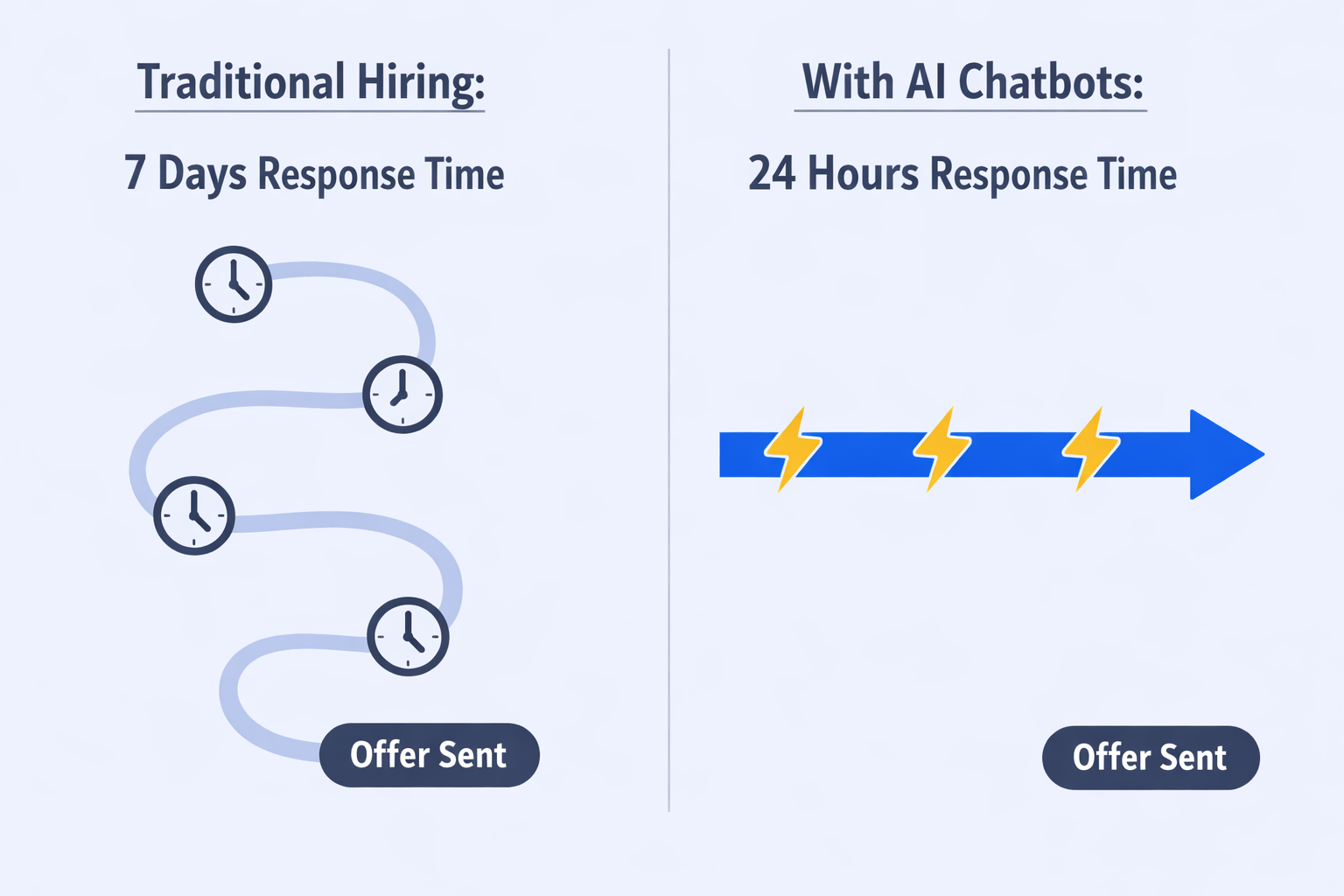
  • Response times slashed from 7 days to under 24 hours – organizations using chatbot systems obliterating traditional snail-pace timelines where applications sat for days before any contact
  • Time-to-hire dropped by up to 50% – role that used to take 60 days to fill now taking 30, representing full month of productivity gained and revenue not left on table
  • 75% of candidate communications automated entirely – FAQs, status updates, basic screening questions handled instantly 24/7, no more losing great candidates due to slow response
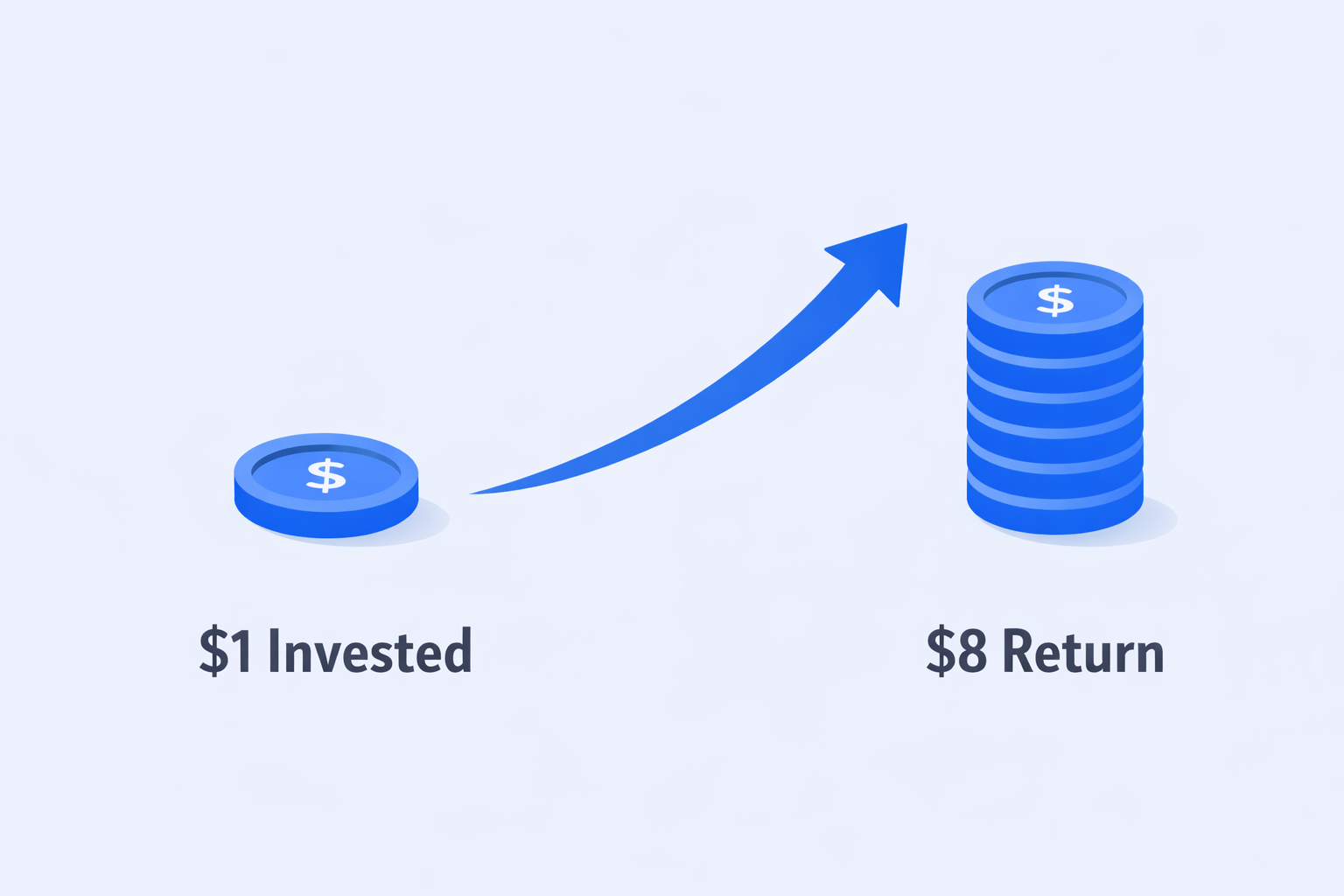
  • $8 return for every $1 invested in recruitment chatbots – documented performance not marketing fluff, 66% of organizations reporting measurable cost reductions after implementation
  • North America hiring costs drop up to 40%, Europe 36%, Asia 25% – L’Oreal saving $250,000 in recruiter wages while cutting time per applicant by 40 minutes processing 2M+ applications
  • Recruiters reclaim 4-8 hours per week (14 hours manual work eliminated) – reallocating human talent to high-value work like strategic planning, relationship building versus drowning in administrative tasks
  • 62% of job seekers prefer chatbot over waiting for human, 75% report better experience – speed mattering more than “human touch” in early stages, instant answers eliminating wondering if application disappeared
  • 79% demand transparency when AI evaluating them, only 26% currently trust AI to evaluate fairly – gap companies need to close through better communication and clearer processes about decision-making
  • 67% comfortable with automated screening when humans make final decisions – hybrid model working, but 80% refuse to consider company again if not notified of application status
  • 30-67% improvements in candidate-to-role fit matching accuracy – algorithmic screening predicting success with 68% accuracy better than most human recruiters flying on gut instinct
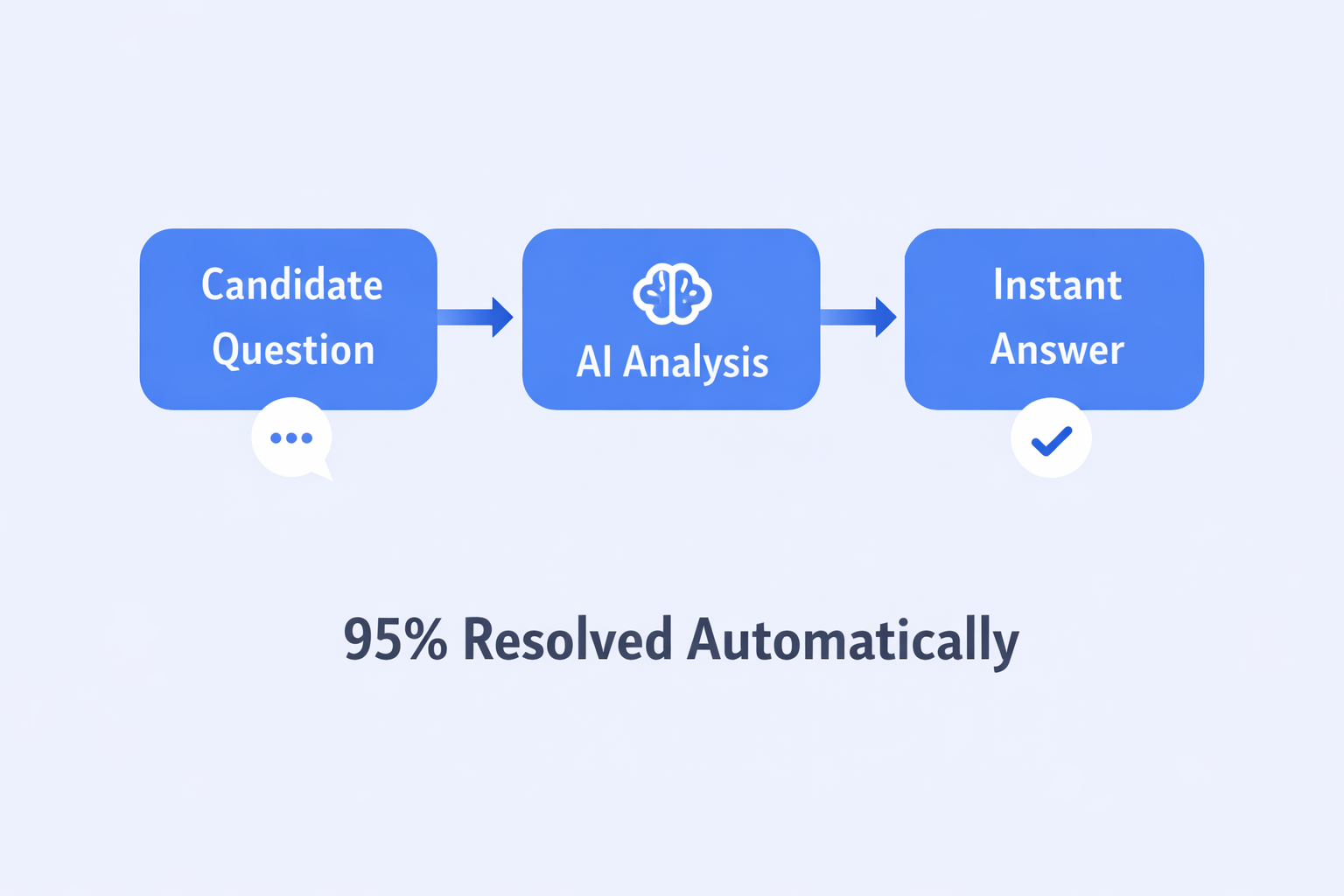
  • 40% of resume filtering automated, 95% of simple queries resolved instantly – modern systems learning and adapting using natural language processing to understand intent not just keywords
  • Reducing bias by up to 60% with 55% increases in workforce diversity – properly designed AI systems evaluating based on defined criteria consistently without unconscious bias or bad days


The Explosive Growth Nobody Saw Coming

The recruitment chatbots market is experiencing rocket-ship growth that’s hard to ignore.

By Q3 2025, 45% of the workforce was using AI professionally. That’s a jump from 40% just months earlier. The market itself is expanding at 23.3% annually, with projections hitting $27.3 billion by 2030.

Here’s what’s wild: small businesses are catching up fast. In early 2024, large companies used these tools at nearly double the rate of smaller firms. By August 2025, that gap basically disappeared. Small business adoption hit 8.8% while large enterprises reached 10.5%.

The democratization is real. Tools that used to require enterprise budgets are now accessible to companies of all sizes.

Speed Wins Everything

Let’s talk about the metric that matters most: time.

Traditional hiring moves at a snail’s pace. Applications sit for days. Candidates wait a week for responses. Interviews take weeks to schedule.

Recruitment chatbots obliterate these timelines. Organizations using these systems have slashed response times from seven days to under 24 hours. Time-to-hire has dropped by up to 50%.

Think about what that means. A role that used to take 60 days to fill now takes 30. That’s a full month of productivity gained. That’s revenue you’re not leaving on the table.

The numbers get even better: 75% of candidate communications can be automated entirely. FAQs, status updates, basic screening questions—all handled instantly, 24/7.

No more losing great candidates because they didn’t hear back fast enough.
 

🎯 Fill Your Pipeline Faster

Get qualified decision-makers on calls in days, not weeks

The Money

Talk is cheap. Let’s look at ROI.

For every $1 invested in recruitment chatbots, companies see an $8 return. That’s not marketing fluff—that’s documented performance.

66% of organizations report measurable cost reductions after implementation. In North America, hiring costs drop by up to 40%. Europe sees 36% savings, Asia 25%.

L’Oreal processes over two million applications annually to fill 5,000 roles. After implementing a digital assistant, they saved $250,000 in recruiter wages while cutting time spent per applicant by 40 minutes.

The efficiency gains are staggering: recruiters reclaim 4 to 8 hours per week. That’s roughly 14 hours of manual work eliminated from their schedules.

And it’s not just about cutting costs. It’s about reallocating human talent to high-value work. Strategic planning. Relationship building. Actually talking to great candidates instead of drowning in administrative tasks.
 

💼 Stop Chasing Cold Leads

Target warm prospects already open to opportunities

What Candidates Actually Think

Here’s where it gets interesting. Candidates love this stuff.

62% of job seekers would rather interact with a chatbot than wait for a human to respond. Speed matters more than the “human touch” in early stages.

75% report a better overall experience when recruitment chatbots handle initial interactions. Why? Because they get instant answers. No waiting. No wondering if their application disappeared into a black hole.

But here’s the catch: 79% demand transparency when AI is evaluating them. They want to know when they’re talking to a bot. They want to understand how decisions are being made.

Only 26% currently trust AI to evaluate them fairly. That’s the gap companies need to close with better communication and clearer processes.

The good news? 67% of candidates are comfortable with automated screening as long as humans make final decisions. The hybrid model works.

One more stat that should terrify hiring teams: 80% of candidates refuse to consider a company again if they’re not notified of their application status. B2B prospecting teaches us the same lesson—follow-up is everything.

🚀 Build Your Talent Pipeline

Connect with passive candidates before competitors reach them

The Tech Behind the Magic

Let’s peek under the hood.

Modern recruitment chatbots use natural language processing to understand intent, not just keywords. They analyze syntax, sentiment, and context. They detect confidence levels and communication styles.

This isn’t your 2019 decision-tree bot. These systems learn and adapt.

The matching accuracy speaks for itself: improvements of 30% to 67% in candidate-to-role fit. Algorithmic screening predicts success with 68% accuracy. That’s better than most human recruiters flying on gut instinct.

40% of resume filtering now happens automatically. The systems identify top candidates, flag red flags, and surface insights humans might miss.

Integration is almost universal. 49% of organizations have fully connected their chatbots to Applicant Tracking Systems. Data flows seamlessly. No duplicate entry. No context loss during handoffs.

Modern integration platforms make this connection effortless, ensuring every candidate interaction is tracked and actionable.

The result? 95% of simple candidate queries get resolved instantly without human intervention. Multiple recipients can get personalized responses simultaneously—something impossible with manual processes.


The Bias Problem Getting Solved

Here’s something that doesn’t get enough attention: recruitment chatbots are reducing bias by up to 60%.

Unconscious bias in hiring is real. We favor candidates who remind us of ourselves. We make snap judgments based on names, schools, or writing styles.

Properly designed AI systems don’t have these problems. They evaluate based on criteria you define. They’re consistent. They don’t have bad days.

Companies using automated screening have seen 55% increases in workforce diversity. That’s not just an ethical win—diverse teams outperform homogeneous ones in innovation and revenue.

But it’s not automatic. The EU AI Act and NYC Local Law 144 now require bias auditing and explainability. You can’t just flip a switch and assume fairness.

The key is transparency. Show candidates how decisions are made. Audit your systems regularly. Keep humans in the loop for final calls.

Organizations reaching decision-makers effectively know that trust comes from clear communication, not hidden algorithms.

📊 Scale Your Outreach System

Our targeting, campaigns, and scaling methods fill your calendar

7-day Free Trial |No Credit Card Needed.

Industry-Specific Performance

Not all sectors adopt at the same pace.

Healthcare leads the pack with 90% adoption for automated candidate nurturing. When you’re constantly hiring nurses and support staff, automation isn’t optional.

Financial services hit 68% adoption, focused heavily on matching and fit assessment. Tech companies use chatbots for 89% of global sourcing efforts.

Retail lags slightly in advanced screening but dominates in automated interview scheduling at 59%. The opportunity here is massive for companies willing to go deeper.

Transportation and logistics have seen 35% reductions in interview no-shows after implementing reminder bots. That alone pays for the technology.

Here’s the pattern: high-volume industries adopt fastest. But every sector benefits once they commit.

Companies using lead enrichment tools see similar patterns—the ones who commit to systematic processes win.

The Future Is Already Here

Let’s zoom out and look at what’s coming.

The HR tech market hit $90 billion in 2025, up from $47.4 billion in 2020. That’s not incremental growth. That’s a transformation.

100% of sales professionals using AI assistants report saving at least one hour per week on qualification work. Sales teams using these technologies report 83% revenue growth.

The line between recruitment and sales is blurring. Both are about finding the right people, qualifying them quickly, and moving them through a pipeline efficiently.

Companies treating talent acquisition like B2B marketing are winning. They’re using LinkedIn statistics to inform sourcing strategies. They’re A/B testing messaging. They’re tracking conversion rates at every funnel stage.

The organizations dominating 2030 are the ones investing in these systems today. Not tomorrow. Today.

Those new position posts on LinkedIn? They’re goldmine signals for companies with automated systems to act on them instantly.

Conclusion

The numbers tell a clear story.

Recruitment chatbots deliver 75% better candidate experiences, 50% faster hiring, and 8x ROI. They’re reducing bias by 60% while cutting costs by up to 40%.

This isn’t experimental technology anymore. 99% of hiring leaders are using it. The market is growing at 23.3% annually. Small businesses and enterprises are adopting at nearly equal rates.

The hiring process has fundamentally changed. Speed wins. Automation handles the volume. Humans focus on relationships and final decisions.

If you’re still doing everything manually, you’re competing with one hand tied behind your back.

The winners in this new landscape are the companies that embrace automation while maintaining the human touch where it matters most.

The data proves it. The question is: what are you waiting for?

FAQs

Can LinkedIn outbound replace traditional recruitment chatbots?

Yes—LinkedIn outbound bypasses spam filters, connects directly with decision-makers, and delivers 15-25% response rates. Our targeting, campaign design, and scaling methods book qualified meetings faster. Book a strategy meeting to see how.

Can chatbots reduce hiring costs significantly?

Absolutely. 66% of organizations report direct cost reductions, with North American companies seeing up to 40% lower cost-per-hire after implementation.

Are AI chatbots effective for diversity hiring?

Very effective. Companies using automated screening report 60% bias reduction and 55% increases in workforce diversity through consistent, objective evaluation criteria.

Do candidates trust AI in the recruitment process?

Trust is building. While only 26% fully trust AI evaluation, 67% are comfortable with automated screening when humans make final decisions and companies maintain transparency.

Do recruitment chatbots improve candidate experience?

Yes. 75% of candidates report better experiences with chatbots, primarily due to instant responses and 24/7 availability eliminating frustrating wait times.

What to Build a High-Converting B2B Sales Funnel from Scratch on LinkedIn

Build a Full LinkedIn Pipeline in Just 30 Days—Guaranteed