

Let's Build Your First Campaign Together with our LinkedIn Expert

Recruitment Software Statistics 2026: Market Data That Actually Matters

Table of Contents

Recruitment Software Statistics

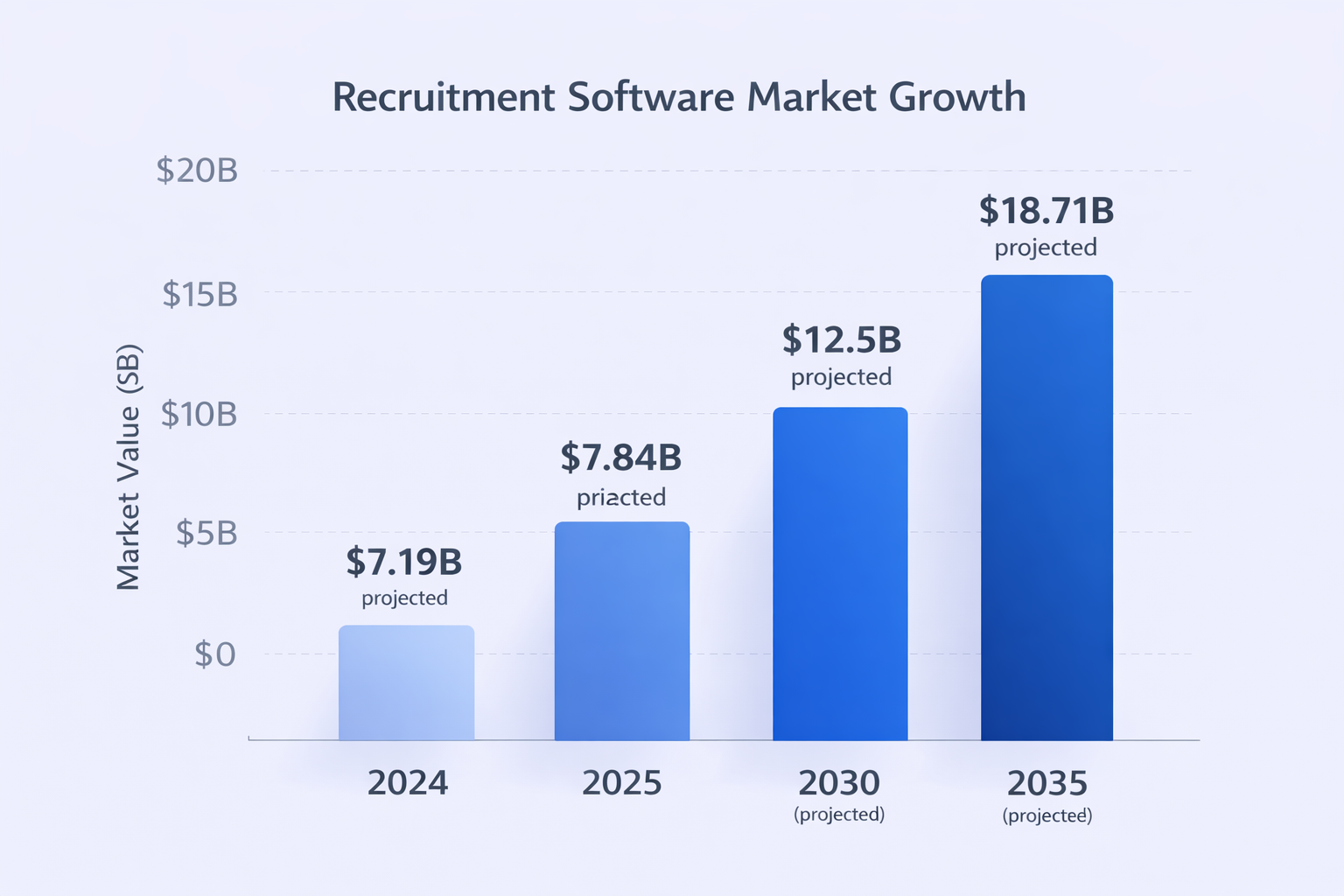
  • Global recruitment software market: $7.191 billion in 2024, racing toward $18.71 billion by 2035 – growing at 9.08-9.7% CAGR with North America dominating 35.3-35.6% of global revenue
  • 79% of market runs on cloud infrastructure delivering 25% cost reduction – cloud-based solutions dropping barrier to entry enabling real-time collaboration that actually works for businesses of all sizes
  • Average time-to-hire: 36-44 days in 2024 – every empty desk costing companies $500 per day on average, with 44-day vacancy costing over $22,000 in lost productivity before recruiting expenses
  • AI-powered tools slashing hiring timeline by up to 50% – cutting just one week from hiring process saving $4,000 per hire, fastest teams hitting 30% decision-maker contact rate, 14.5% meaningful conversation rate
  • Average cost-per-hire: $4,700-$5,000 in U.S. (direct costs only) – replacing departing employee costing 33% of annual salary, for $60K role burning nearly $20K every time hiring gets wrong
  • Companies using modern ATS report 40% lower turnover for new hires vs those without – software paying for itself in retention alone through better candidate matching and selection processes
  • 43% of organizations use AI for personnel tasks in 2025 (up from 26% in 2024) – 70% of corporate AI experimentation happening in HR departments with recruitment leading the charge
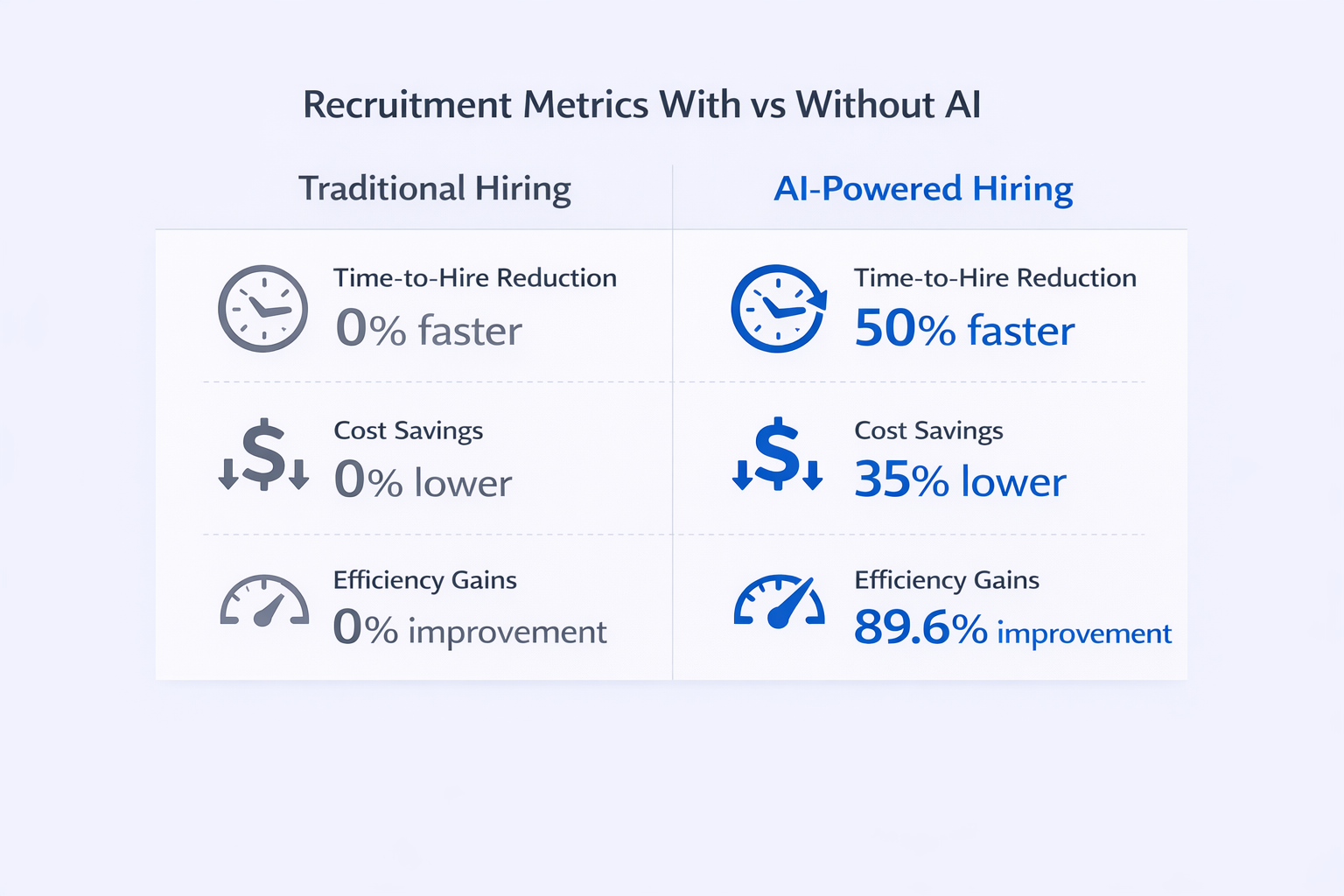
  • Organizations using AI report 35-50% reduction in time-to-hire – 66% seeing decreased hiring expenses, 89.6% reporting greater hiring efficiency through automated screening and matching
  • 78% of applicants expect clear timeline, 80% won’t consider roles without status updates – 69% declining job offers if company takes too long to respond, speed killing in good way for competitive advantage
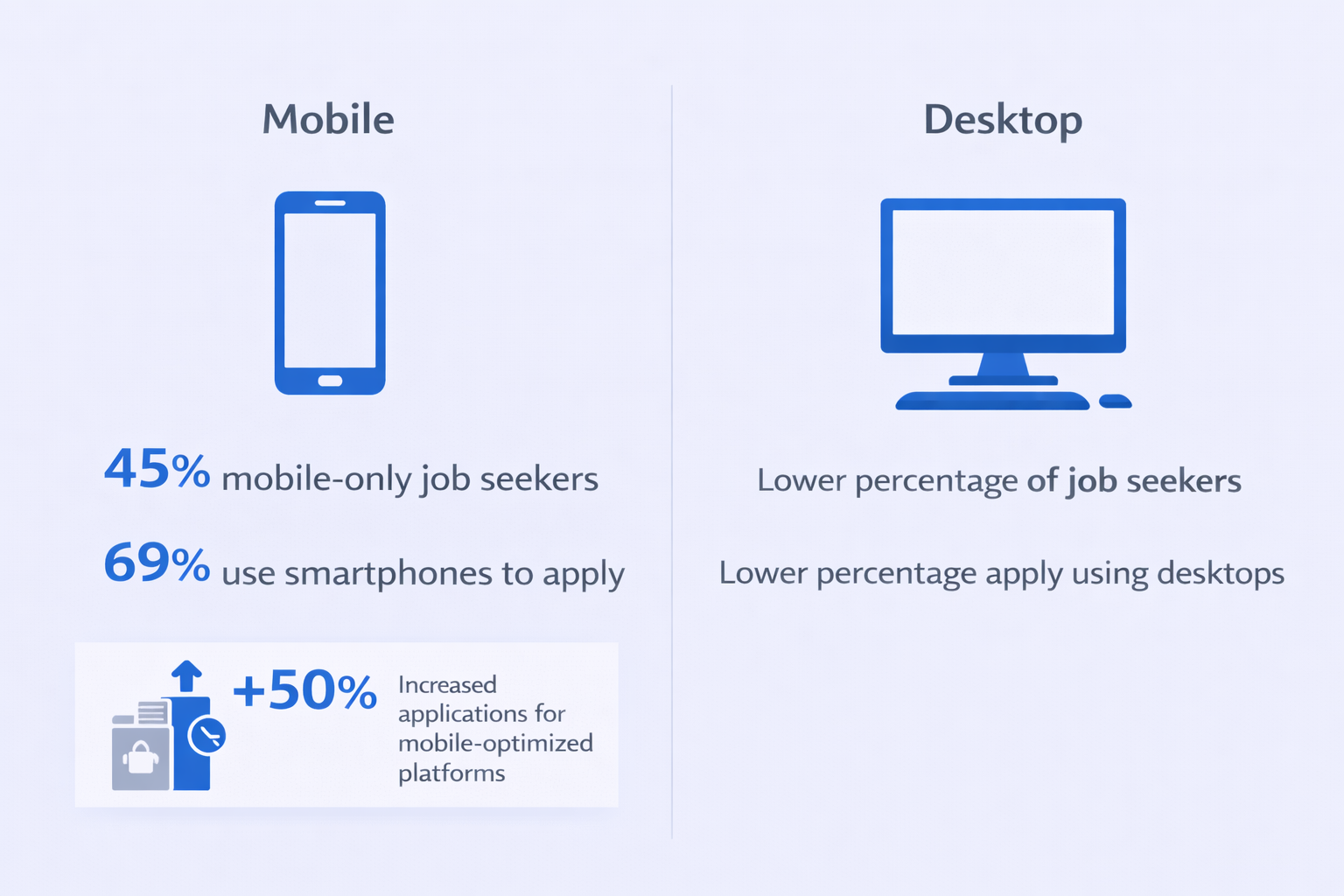
  • 45% of job seekers exclusively use mobile devices for searches – companies with mobile-optimized strategies seeing 50% higher application rates vs desktop-only interfaces, younger applicants 69% on smartphones
  • IT and Telecommunications dominate adoption at 39.8% of market – Healthcare following at 18.5%, BFSI holding 12.2%, large enterprises commanding 52.6% market share but SMEs catching up fast
  • 81% of firms adopted skills-based hiring in 2024 – 40% prioritizing skills over formal education, shift opening talent pools companies never accessed before through objective AI-powered assessments
  • 61% of HR teams use AI tools specifically for diversity hiring – organizations with diverse management reporting 19% higher innovation revenue, manual processes increasing bias by 48% making automation essential
  • Referral hires: 45% retention rate after 2 years vs 20% for job boards – referral hires onboarding 55% faster than traditional candidates, networks employees trust providing best candidates
  • 85 million unfilled roles projected by 2030 potentially costing trillions – U.S. market expected to reach $1.36 billion by 2033, companies mastering recruitment technology now positioning themselves to win talent war ahead

Hiring the right people shouldn’t feel like searching for a needle in a haystack.

Yet most companies struggle with slow hiring cycles, rising costs, and mountains of unqualified resumes. The good news? Recruitment software is solving these problems faster than ever.

The market hit $7.191 billion in 2024 and is racing toward $18.71 billion by 2035. But here’s what really matters: organizations using these tools are cutting time-to-hire by up to 50% and reducing costs by 25%.


This isn’t just about software anymore. AI is transforming how companies find talent, with 43% of organizations now using AI for hiring tasks. The shift is real, and the data proves it works.

Let’s break down the numbers that actually matter for your hiring strategy.

Recruitment Software Statistics 2026

The Market Is Growing Fast (And You Need to Know Why)

The global recruitment software market isn’t just growing—it’s exploding.

$7.844 billion. That’s where the market lands in 2025, climbing at a 9.08% to 9.7% CAGR through 2033. North America still dominates with 35.3% to 35.6% of global revenue, but Asia-Pacific is the real story. It’s the fastest-growing region, driven by rapid industrialization and over 4.7 billion people creating a massive talent pool.

Small and medium businesses are jumping in fast. Cloud-based solutions dropped the barrier to entry, and now 79% of the market runs on cloud infrastructure. The reason? 25% cost reduction and real-time collaboration that actually works.

Here’s the thing: B2B prospecting methods are evolving, and recruitment is no different. The companies winning right now are the ones moving fast on technology adoption.

Time-to-Hire: The Metric Everyone’s Watching

Want to know the most painful stat in recruitment right now?

36 to 44 days. That’s how long it takes to fill one position in 2024.

Every empty desk costs companies $500 per day on average. For tech roles? That number skyrockets. Do the math: a 44-day vacancy costs over $22,000 in lost productivity before you even calculate recruiting expenses.

Companies using AI-powered recruitment tools are slashing this timeline. Some see reductions up to 50%. Cut just one week from your hiring process and you save $4,000 per hire.

The fastest teams hit a 30% decision-maker contact rate and 14.5% meaningful conversation rate. Those aren’t lucky numbers—they’re the result of smart systems and better targeting.

🚀 Stop Losing Top Candidates to Slow Hiring

LinkedIn outbound puts you in front of decision-makers in days, not weeks. Complete targeting, campaign design, and scaling included.

The Real Cost of Hiring (It’s More Than You Think)

Let’s talk money. The average cost-per-hire in the U.S. sits between $4,700 and $5,000. That’s just direct costs—advertising, interviews, background checks.

But here’s what most people miss: 33% of an employee’s annual salary. That’s what it costs to replace someone who leaves. For a $60,000 role, you’re burning nearly $20,000 every time you get hiring wrong.

The job seekers market is competitive. 45% of candidates search exclusively on mobile devices. 69% will decline your offer if you take too long to respond. Speed matters, and outdated systems kill your chances with top talent.

Companies using modern applicant tracking systems report 40% lower turnover for new hires compared to those without. The software pays for itself in retention alone.

AI Is Changing Everything (And It’s Happening Right Now)

Here’s the stat that should make you pay attention:

43% of organizations use AI for personnel tasks in 2025. That’s up from 26% in 2024. Corporate AI experimentation? 70% happens in HR departments, with recruitment leading the charge.

The ROI is clear. Organizations using AI report 35% to 50% reduction in time-to-hire. 66% see decreased hiring expenses. 89.6% report greater hiring efficiency.

AI resume screening handles in minutes what takes humans days. 68% of companies believe AI algorithms effectively predict candidate success. 67% see improvements in candidate matching through predictive analytics.

But there’s a trust gap. Recruiters worry about bias, inaccuracies, and losing the human touch. The next wave focuses on transparency and explainable AI decisions.


What Candidates Actually Want (The Data Might Surprise You)

Your candidate experience can make or break your hiring success.

78% of applicants expect a clear timeline for the hiring process. 80% won’t consider roles at companies that fail to provide status updates. 69% will decline your job offer if you take too long to respond.

Speed kills—in a good way. Organizations prioritizing positive candidate experience reduce time-to-hire by up to 30%.

Here’s the twist: candidates are using AI too. 53% of new hires in early 2024 used Generative AI in their job search. 70% use it to research companies, draft cover letters, and prepare for interviews.

The flood of AI-generated resumes creates new challenges. 65% of employers believe they contribute to more underqualified candidates. 74% consider this a significant issue affecting decisions.

Modern scheduling appointments with candidates needs to happen in hours, not days. Automated communication tools cut average response time from seven days to under 24 hours.

💼 Your Next Top Hire Is Already on LinkedIn

Skip the resume pile. Our proven outbound system connects you with active decision-makers ready to have conversations.

Mobile-First or Get Left Behind

If your hiring process isn’t mobile-optimized, you’re invisible to half your potential candidates.

45% of job seekers exclusively use mobile devices for job searches. 69% of younger applicants use smartphones to discover and apply for opportunities. Companies with mobile-optimized strategies see 50% higher application rates compared to desktop-only interfaces.


This isn’t just about candidate experience. Cloud-based platforms with mobile functionality let hiring managers review resumes, schedule interviews, and extend offers on-the-go.

92% of systems now include social media integration, broadening candidate reach by 50%. 82% use resume parsing, cutting manual entry by 70%. These aren’t nice-to-have features anymore—they’re table stakes.

Industry Leaders and Who’s Adopting Fastest

IT and Telecommunications dominate adoption at 39.8% of the market. The sector faces massive skill shortages and high workforce mobility, making digital sourcing essential.

Healthcare follows at 18.5%, driven by continuous demand for qualified personnel and complex compliance requirements. Banking, Financial Services, and Insurance (BFSI) hold 12.2%, focused on security and background checks.

Large enterprises commanded 52.6% market share in 2025, but SMEs are catching up fast. Lower cloud costs and easier implementation remove barriers that once kept small businesses out.

The fastest-growing region? Asia-Pacific at 24.5% projected market share for 2025, up from 22.1% in 2024. Europe maintains strong presence at 27.9%, particularly focused on GDPR compliance and data protection.

Skills-Based Hiring: The Future Is Now

Here’s a trend that’s reshaping how companies think about talent:

81% of firms adopted skills-based hiring in 2024. 40% now prioritize skills over formal education in selection strategies. This shift away from degree-based hiring opens talent pools companies never accessed before.

Modern recruitment software makes this possible through AI-powered testing and assessment tools. Objective skill evaluation replaces subjective judgment, reducing hiring cycles and improving candidate-job fit.

The LinkedIn new position notifications and updates help companies spot candidates making moves in real-time. 85% of companies hired senior-level international employees in 2024, embracing borderless talent strategies.

🌍 Access Global Talent Without Global Headaches

Our LinkedIn outbound engine finds top talent anywhere in the world. Complete targeting, personalized outreach, and proven campaign frameworks included.

Diversity Hiring: Technology’s Secret Weapon

Technology drives meaningful progress in diversity initiatives.

61% of HR teams use AI tools specifically for diversity hiring—blind resume reviews, bias-mitigation analytics, structured interview processes. Organizations with diverse management teams report 19% higher innovation revenue.

This isn’t just about compliance. 85% of talent acquisition leaders identify inclusive hiring practices as a top priority. Platforms offering auditable digital footprints and structured processes help companies comply with anti-discrimination laws.

Manual hiring processes increase bias by 48%, making automation essential for fair evaluation. The data shows technology removes human bias more effectively than human oversight alone.

Referral Programs: Your Secret Hiring Weapon

Want better retention? Focus on referrals.

45% retention rate after two years for referral hires. Compare that to 20% for job board candidates. Referral hires onboard 55% faster than traditional candidates.

Modern software platforms integrate referral programs seamlessly, tracking candidate sources and incentivizing employee participation. The best candidates often come from networks your current employees already trust.

The Integration Challenge (And Why It Matters)

Here’s what separates good recruitment software from great:

78% adoption rate for collaborative hiring features improves selection accuracy by 25%. 65% use CRM functionality, increasing passive candidate engagement by 35%. 42% leverage automated scheduling, reducing time-to-schedule by 40%.

The modern recruitment tech stack connects with broader HR and ERP systems. Data flows seamlessly between platforms, eliminating manual data entry and reducing errors. 82% of systems with resume parsing cut manual entry by 70%.

Integration isn’t optional anymore. Companies need recruitment software that talks to their existing tools, shares data, and provides analytics across the entire hiring process.

What’s Coming: 2030 and Beyond

By 2030, the metaverse adds $1.5 trillion to the global economy, and it’s already entering recruitment. Virtual recruiting solutions enable broader candidate reach, particularly for remote and globally distributed teams.

Predictive analytics could reduce employee turnover by 50% by identifying which hires stay long-term and which current employees risk leaving. McKinsey predicts AI-powered tools will reduce average recruitment timelines by an additional 15% by 2030.

The projected global talent shortage? 85 million unfilled roles by 2030, potentially costing trillions in unrealized revenue. Companies mastering recruitment technology now position themselves to win the talent war ahead.

The U.S. market alone is expected to reach $1.36 billion by 2033, growing steadily as more organizations realize recruitment software isn’t optional—it’s survival.

📈 Scale Your Hiring 3x Faster With LinkedIn Outbound

Stop competing for active job seekers. Our system finds passive candidates who aren't even looking yet. Complete outbound strategy included.

7-day Free Trial |No Credit Card Needed.

Conclusion

The recruitment software market tells a clear story: companies embracing technology hire faster, spend less, and keep talent longer.

$7.191 billion in 2024, racing toward $18.71 billion by 2035. But the real story lives in what these tools deliver—50% faster hiring, 25% cost reduction, and 40% better retention.

AI adoption jumped from 26% to 43% in one year. Mobile-first strategies generate 50% more applications. Skills-based hiring hit 81% adoption. These aren’t trends—they’re the new standard.

Your competition is already moving. The question isn’t whether to adopt recruitment technology. It’s whether you can afford not to.

The companies winning the talent war right now? They made their move yesterday.

FAQs

What is the average time-to-hire in 2024?

36 to 44 days. Companies using AI tools cut this by up to 50%, reducing vacancy costs significantly.

How much does hiring cost per employee?

$4,700 to $5,000 for direct costs in the U.S. Replacing departing employees costs 33% of annual salary—making retention critical.

What features matter most in applicant tracking systems?

Resume parsing (82% adoption), automated scheduling (42%), CRM functionality (65%), and mobile compatibility. Integration with HR tools and deep analytics separate good systems from great ones.

How does diversity impact business revenue?

Companies with diverse management teams achieve 19% higher innovation revenue. 61% of HR teams now use AI for diversity hiring, and LinkedIn B2B marketing statistics show diverse outreach generates stronger engagement and better results.

Is AI replacing human recruiters?

No. 93% of hiring managers say human involvement remains essential for final decisions. AI improves efficiency (98% see gains) but doesn't replace relationship building. LinkedIn outbound combines AI targeting with human personalization—delivering qualified candidates through complete outbound methodology including precision targeting, proven campaign design, and systematic scaling. Book a strategy meeting to see how LinkedIn outreach outperforms traditional recruitment approaches.

What to Build a High-Converting B2B Sales Funnel from Scratch on LinkedIn

Build a Full LinkedIn Pipeline in Just 30 Days—Guaranteed