

The corporate world is changing fast. Full-time executive roles are giving way to fractional leadership, and if you’re an experienced HR professional, this shift creates a massive opportunity.
Starting a fractional CHRO business isn’t just about doing HR consulting. It’s about building a recurring revenue practice where you deliver strategic human resources leadership to multiple companies simultaneously. You get paid more, work with diverse teams, and never put all your eggs in one basket.
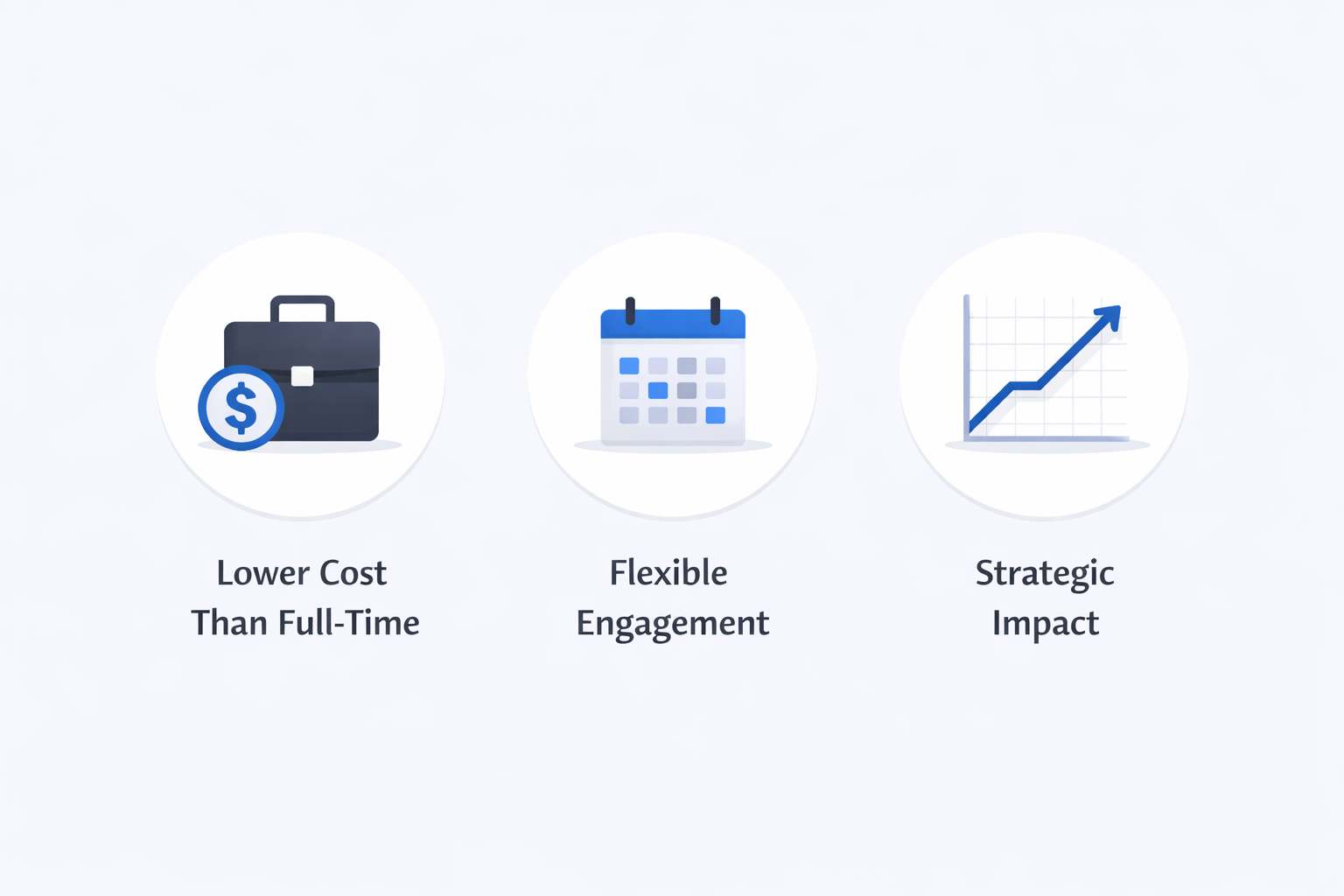
According to recent data, 61% of companies with 50-150 employees struggle to afford full-time executive talent. Yet these same companies desperately need strategic HR guidance as they scale. That’s where you come in.
This guide walks you through everything: defining your services, setting up your legal structure, pricing strategically, and most importantly—how to actually find and land clients when you’re starting from zero.
Let’s build your fractional practice.
What Is a Fractional CHRO and Why Now?
A fractional CHRO (Chief Human Resources Officer) is a part-time strategic HR executive who works with multiple companies at once, typically spending 1-2 days per week with each client.
You’re not a consultant who writes reports and leaves. You’re embedded in the business. You sit in leadership meetings, make hiring decisions, and own HR outcomes.
The market timing couldn’t be better. Three major forces are driving demand:
The Complexity Explosion: Companies with just 40-50 employees now face the same compliance risks as Fortune 500 firms. From ACA requirements to state-specific labor laws, the regulatory landscape is a minefield. CEOs need expert guidance but can’t justify a $250,000 full-time hire.
Faster Capital Deployment: Venture capital and private equity firms are deploying capital 30% faster than five years ago (PitchBook, 2024). They’re installing fractional executives to professionalize portfolio companies without inflating burn rates.
The Talent Density Shift: High-growth companies need world-class HR strategy for the critical 20% of work (org design, compensation strategy, culture building) while delegating the tactical 80% (payroll, admin) to junior team members. Fractional leaders bridge this gap perfectly.
Legal Setup: Protecting Your Assets
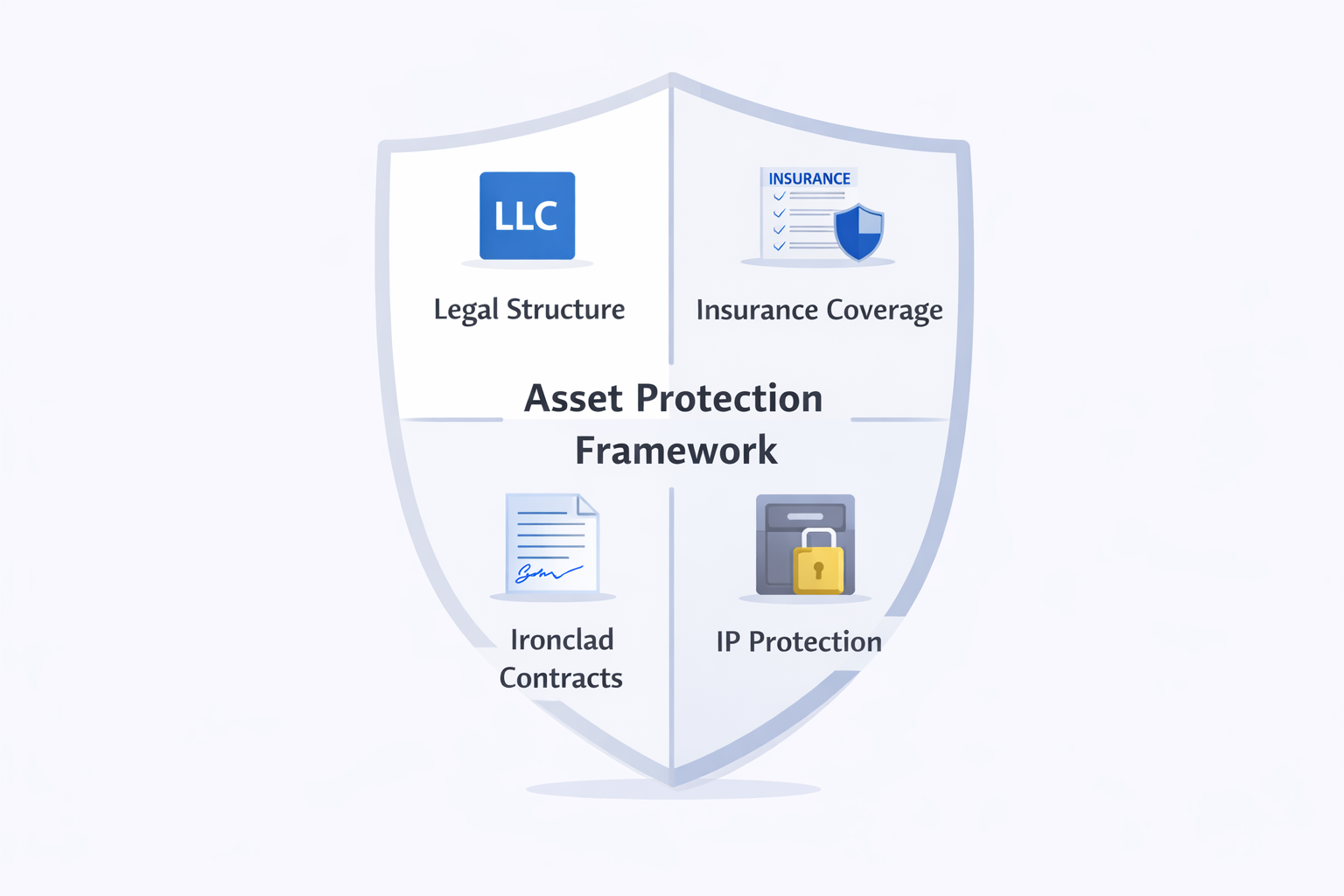
Before you land your first client, you need a defensive legal structure. As a fractional leader making hiring, firing, and compensation decisions, you’re in the liability line of fire.
Operating without proper protection is professional suicide.
The LLC Shield
Never operate as a sole proprietor. In the eyes of the law, a sole proprietor IS the business. If the business gets sued, your house, car, and personal savings are all exposed.
Form a Single-Member LLC instead. This creates a “corporate veil” separating your personal assets from business liabilities. You’ll need:
- LLC formation in your state (or Delaware/Wyoming for added protection)
- An EIN from the IRS
- A dedicated business bank account
Critical rule: Never commingle funds. Don’t pay for groceries with your business card. Courts will “pierce the corporate veil” if you treat the business wallet like your personal wallet.
Tax note: LLCs are “pass-through” entities—profits flow to your personal return. Once you cross $100K in revenue, consider S-Corp election to save on self-employment taxes. Discuss this with a CPA.
The Insurance Stack
You need multiple layers of protection. Don’t rely on client insurance to cover you.
Professional Liability (E&O Insurance): Your primary shield. Covers claims of professional negligence. For example, if you design a flawed commission plan and the company overpays salespeople by $200,000, E&O covers your legal defense. Cost: $500-$1,500/year for $1M coverage.
General Liability: Covers physical accidents. Less critical for remote work but often required by client vendor contracts. Cost: $350-$500/year.
Cyber Liability: Essential for HR work. You’re handling Social Security numbers, salary data, medical information. If your laptop gets hacked or you accidentally forward confidential data, this covers notification costs and damage control. 47% of data breaches in 2024 involved HR records (IBM Security Report).
Employment Practices Liability (EPLI): This covers the client’s employment lawsuits (harassment, discrimination). Most clients have EPLI, but if you’re acting as Head of HR, you might be named personally. Either get added as “Additional Insured” on their policy or verify your E&O covers it.
Contract Engineering: Preventing Scope Creep
Your contract isn’t just legal paperwork—it’s an operational tool. The #1 profitability killer in fractional businesses is scope creep: doing 30 hours of work for a 10-hour retainer.
Include these critical clauses:
Strict Scope Definition: List exactly what’s included (e.g., “Weekly executive meeting attendance,” “Monthly compensation reviews”). List exactly what’s excluded (e.g., “Recruiting coordination,” “Payroll data entry,” “Employee mediation below Director level”).
The Overage Clause: “Services performed outside the defined scope will be billed at $350/hour in 15-minute increments. Consultant will notify Client before incurring overage charges.” This empowers you to say “Yes, but…” to new requests.
Indemnification: The client must agree to indemnify you for claims arising from good-faith performance. If you fire someone at the CEO’s direction and that person sues, the company pays your defense.
IP Ownership: You create valuable assets—handbooks, comp models, training materials. The contract should state: clients own specific deliverables created for them, but you retain ownership of frameworks, templates, and methodologies. This prevents clients from claiming they own your “proprietary HR audit process.”
The Cold Email That Works
CEOs delete sales emails. They read peer emails. Your tone must be “Executive to Executive,” not “Vendor to Buyer.”
Keep it under 100 words. Reference the trigger event immediately. No fluff like “I hope this finds you well.” Use a low-friction CTA—don’t ask for 30 minutes, ask for “interest” or a “quick look.”
Template: The Series A Growth Angle
Subject: The team growth / Series A
Hi [First Name],
Saw the news on the raise—congrats.
Typically, when teams cross the 50-person mark, the “family vibe” breaks and processes become necessary to keep culture alive. Most founders hate this phase because it feels bureaucratic.
I act as a Fractional CHRO for Series A startups (like [Client A] and [Client B]). I come in 1 day/week to build the “people OS” (comp bands, hiring scorecards, performance reviews) so you don’t have to hire a $250k full-time exec yet.
Worth a brief chat to see if we can take “HR headaches” off your plate?
Best,
[Your Name]
Template: The Risk Angle
Subject: 1099 contractor classification question
[First Name],
I noticed you’re hiring several contractor roles in [location].
With recent regulatory changes, misclassification here is a major audit target. I recently helped a similar SaaS company avoid a significant fine by restructuring contractor agreements.
I’m not a lawyer—I’m a Fractional CHRO who fixes this operationally.
Open to a 10-min audit of your contractor setup?
Best,
[Your Name]
The Follow-Up Sequence
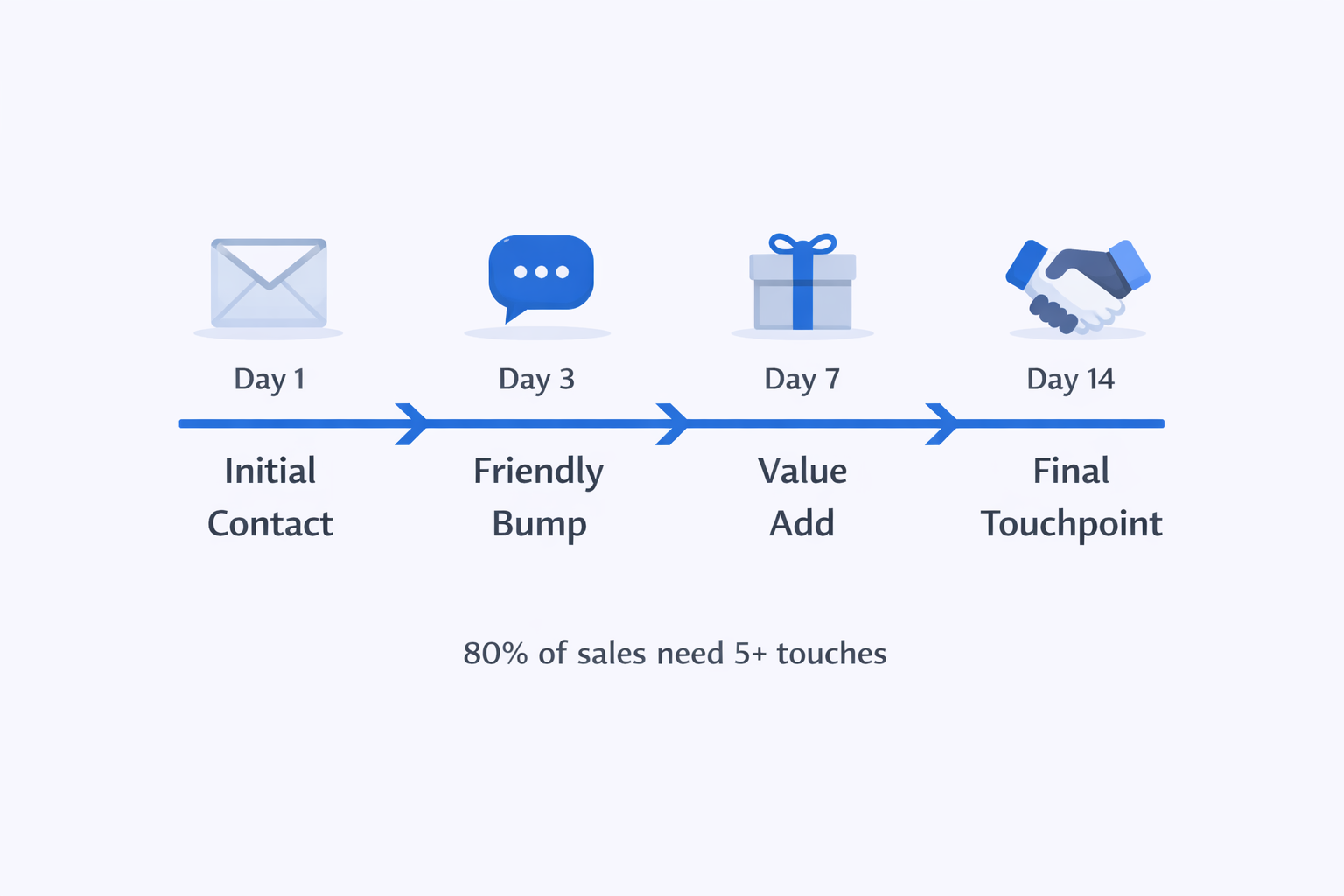
One email isn’t a campaign. You need a sequence:
- Day 1: Initial email
- Day 3: Short bump (“Any thoughts on this, [Name]?”)
- Day 7: Value add (“Here’s a PDF of Series B comp bands I built. Thought the engineering salaries might be useful for benchmarking.”)
- Day 14: Breakup (“Seems like this isn’t a priority right now. I’ll take you off my list.”)
This sequence respects their time while demonstrating persistence. Studies show 80% of sales require 5+ touchpoints, but most people give up after one.
For systematic outreach, consider using LinkedIn growth hacking tactics combined with email campaigns. The multi-channel approach—LinkedIn + email—typically delivers 2.5x higher response rates than single-channel outreach.
Building LinkedIn Authority
While cold email hunts, LinkedIn attracts. As a fractional CHRO, you’re selling expertise. You must demonstrate it publicly.
Profile optimization: Your headline shouldn’t be “HR Consultant.” Try “Fractional CHRO for Series B Fintechs | Helping Founders Scale Culture Without the Bureaucracy.”
Content strategy: Post 3x per week minimum.
- Story post: “I just had to fire a VP of Sales. Here’s how we did it with dignity and zero legal risk.”
- Contrarian take: “Unlimited PTO is a scam. Here’s why accrual is better for startups.”
- Case study: “Client X saved $50k in recruiting fees by implementing this internal referral program.”
This content warms up leads you’re cold emailing. When they check your profile, they see a proven expert, not another vendor.
Many professionals use LinkedIn Sales Navigator alternatives to scale their prospecting efforts while maintaining personalization. The goal is consistent visibility in your target market’s feed.
Delivering Value as a Fractional Leader
Winning the client is half the battle. Delivering value requires a completely different operating system than being a full-time employee.
The First 30 Days: Prove ROI Fast
You must demonstrate value immediately to secure the long-term retainer.
Week 1 – The Audit: Interview the executive team. Review the handbook, employment agreements, cap table. Look for “smoking guns” like non-compliant non-competes or missing I-9 forms.
Week 2 – The Red/Yellow/Green Report: Present a simple dashboard to the CEO.
- Red (Critical): Illegal or high-risk items requiring immediate fixes
- Yellow (Warning): Operational drag requiring Q2 attention
- Green (Good): Keep as-is
Week 4 – The Quick Win: Solve one painful problem. Fill a difficult role, fix a payroll error, resolve a dispute. This earns political capital for the strategic work ahead.
Managing the Fractional Schedule
Time boxing: Dedicate specific days to specific clients (e.g., Client A on Mondays/Wednesdays AM, Client B on Tuesdays/Thursdays AM).
Asynchronous first: Train clients to use Slack/Loom/email rather than calling. Set expectations: “I check Slack at 9am, 1pm, and 4pm daily.”
The embedded illusion: Even if you only work 10 hours per week, being responsive on Slack makes you feel full-time. Visibility equals value.
According to workflow automation statistics, fractional executives who implement automated communication systems see 35% higher client satisfaction scores compared to those relying on manual check-ins.
Essential Tech Stack
- Project management: Trello or Asana. Create a board visible to the CEO showing “What HR is working on.” Transparency kills anxiety.
- Documentation: Notion or Coda. Build your playbook here. Clone it for each new client. (This is your IP!)
- Scheduling: Calendly for managing interviews and meetings across multiple client calendars.
- Data enrichment: Tools like ZoomInfo alternatives help you research prospects and understand client industries deeply.
Scaling Beyond Solo Practice
Eventually, you’ll hit a capacity ceiling. You can’t handle more than 4 high-touch clients simultaneously.
The Associate Model: Hire a junior HR generalist (full-time or fractional). You sell and deliver Tier 3 strategy ($8,000/month). The generalist executes Tier 1 tactics ($3,000/month). You keep $5,000/month for oversight and strategy. This allows scaling to 10+ clients.
The Referral Network: Partner with fractional CFOs and CTOs. They sit in the same boardrooms. When the CFO sees a payroll mess, they refer you. When you see financial chaos, you refer them. Build these relationships deliberately.
The Succession Upsell: Ironically, your goal is to eventually fire yourself. When clients grow to 200+ employees, they need a full-time CHRO. Charge a recruiting fee (20% of first-year salary, roughly $40K-$50K) to find and vet your replacement. Then transition to a quarterly advisory role ($2,000/quarter) mentoring the new hire. This keeps revenue flowing for years.
For tracking all these relationships and opportunities, understanding LinkedIn profile statistics helps you optimize your positioning and measure the impact of your authority-building efforts.
Conclusion
Starting a fractional CHRO business isn’t just a career pivot—it’s a financial arbitrage of your expertise. You’re taking knowledge undervalued in a single W-2 role and selling it at a premium to multiple desperate buyers.
The market conditions are perfect. The post-pandemic workforce is distributed, complex, and heavily regulated. The “Series A Gap” between startups needing strategic HR and affording full-time executives is widening every quarter.
The tools to find clients—cold email, LinkedIn, automation platforms—are accessible and powerful.
The only barrier is mindset. You must stop seeing yourself as an “HR Professional” and start seeing yourself as a “Business of Talent.” You are the product. Your knowledge is inventory. Your cold email is the storefront.
Build the list. Send the email. Fix the culture. Send the invoice.
Welcome to the fractional economy.
