

Let’s cut through the noise. If you’re searching for seo lead generation software right now, chances are you’re tired of throwing money at ads that don’t convert. You’re watching competitors rank on page one while you’re stuck playing catch-up. The inbox is a warzone, spam filters are getting smarter, and your prospects have heard every pitch in the book.
Here’s the reality: 61% of marketers say improving SEO and growing organic presence is their top inbound marketing priority (HubSpot, 2024). Why? Because organic leads have a 14.6% close rate compared to outbound’s 1.7% (Search Engine Journal). But here’s the problem—most people think SEO lead generation is just about ranking blog posts and waiting for traffic.
Wrong.
The smartest teams in 2026 are using search data as sales intelligence. They’re finding prospects based on what they’re actively searching for, tracking their digital footprints, and reaching out at the exact moment intent signals spike. They’re using tools that tell them which companies are bleeding money on ads, which websites are stuck on page 2, and which decision-makers are desperately searching for solutions.
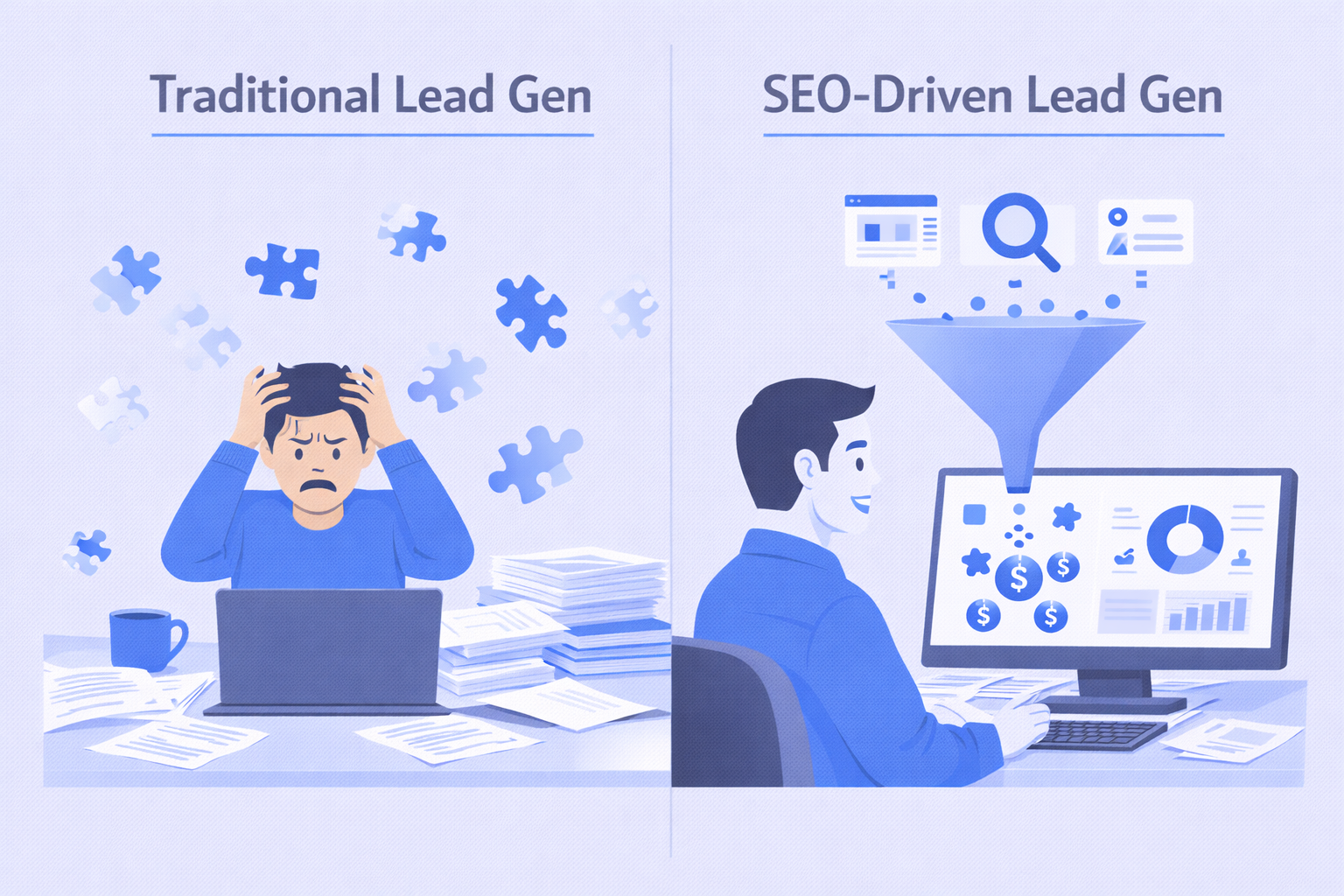
This guide breaks down the entire landscape. We’re talking about the software that helps you hunt (like Apollo and Snov.io), the service models that do the work for you (like FatRank), and the secret strategies using tools like Ahrefs that most teams don’t even know exist.
Whether you’re a solo founder trying to hit your first $100K or a sales team looking to scale, this is your blueprint for turning search data into pipeline. No fluff, just what works.
Understanding SEO Lead Generation Software
Before we dive into specific tools, we need to clear up some confusion. When people search for “seo lead generation software,” they’re usually looking for one of two very different things:
The “Finder” Stack: These are software tools you log into to find contact information, track buyer intent, and build targeted lists. You do the hunting. Think Apollo.io, ZoomInfo, or UpLead.
The “Asset” Model: This is where companies build SEO-ranked websites and sell you the inbound leads they generate. You’re buying the fish, not learning to fish. FatRank and James Dooley’s Rank-and-Rent model fall here.
Both approaches have their place. The key is understanding which model fits your business model, budget, and timeline. Companies using intent data see a 42% increase in lead quality (Gartner, 2024), but only if they know how to interpret the signals correctly.
Let’s break down both worlds so you can make an informed decision.
The “Finder” Stack: Software to Power Your Outbound
These tools answer three critical questions: Who should I contact? Do they need my solution right now? How do I reach them without bouncing?
Apollo.io: The All-in-One Powerhouse
If there’s one tool that democratized B2B data, it’s Apollo. They took enterprise-level intelligence that used to cost $20K annually and made it accessible to solo operators.
The Core Value: Apollo isn’t just a contact database—it’s a complete sales operating system. You find the lead, enrich the data, push to a sequence, and track engagement. Everything happens in one tab, which is why over 35% of sales teams now use Apollo as their primary prospecting tool (G2 Crowd, 2024).
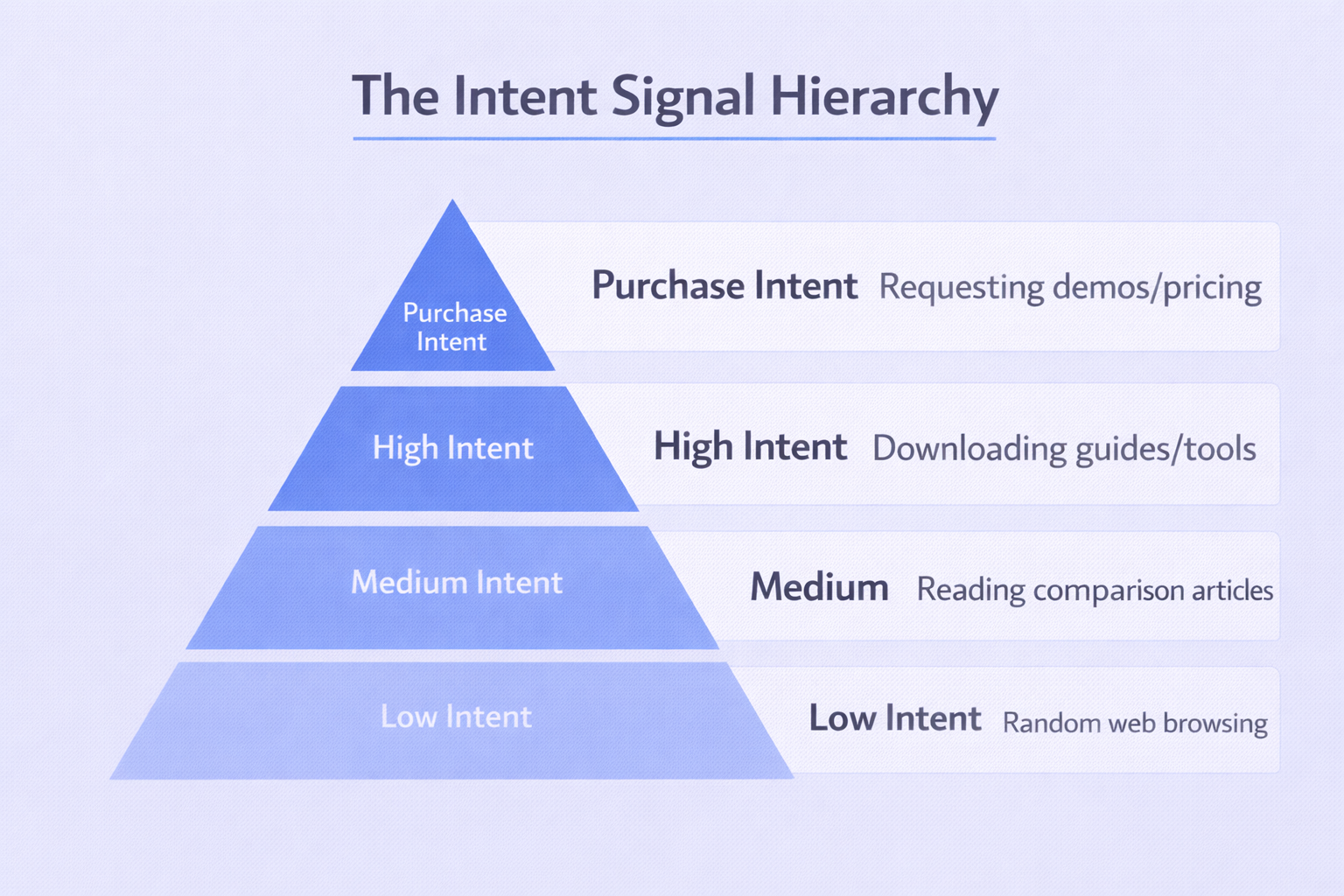
The SEO Angle—Buying Intent Signals: Here’s where it gets interesting for lead generation. Apollo partners with intent data providers like Bombora to track what companies are researching across the web. When employees at Target Company start consuming content about “search engine optimization” or “CRM implementation,” Apollo flags it.
The Play: Instead of searching for generic “Marketing Directors,” you search for “Marketing Directors at companies with High Intent for SEO Services.” Now your outreach isn’t cold—it’s warm. You’re joining a conversation they’re already having internally.
This approach pairs beautifully with cold email software strategies for maximum impact.
Pros:
- Massive database: 275M+ contacts with detailed firmographics
- Affordable pricing: Starting at $49/month vs. ZoomInfo’s $15K+ contracts
- Workflow integration: Native connections to HubSpot, Salesforce, and 50+ CRMs
Cons:
- Data freshness: With a database this huge, some contacts can be outdated
- Intent noise: “Intent” is a signal, not a guarantee—you still need to qualify
ZoomInfo: The Enterprise Beast
If Apollo is the agile fighter jet, ZoomInfo is the aircraft carrier. It’s big, expensive, and powers Fortune 500 sales teams with unmatched data depth.
The Philosophy: ZoomInfo sells accuracy and organizational intelligence. They pride themselves on having the most current org charts, direct dial numbers, and granular firmographics. Companies using ZoomInfo report 43% higher conversion rates on cold calls (SiriusDecisions, 2024).
The SEO Angle—Streaming Intent: ZoomInfo’s intent engine monitors consumption patterns across billions of web pages. They don’t just tell you a company is interested; they show you when interest started, how intense it is, and which topics are trending.
The Scoop: They break down intent by topic clusters. Selling seo lead services? Filter for companies researching “link building,” “technical SEO audit,” or “local SEO services.”
The Hierarchy Power: Where ZoomInfo dominates is helping you multithread. When Company Y shows intent for SEO software, ZoomInfo’s org chart reveals whether to contact the VP of Marketing, the SEO Manager, or both simultaneously. This intelligence helps teams using advanced LinkedIn search methods target the right stakeholders.
Pros:
- Direct dials: Industry-leading mobile number accuracy for US contacts
- Deep data: Unmatched detail on revenue, employee count, tech stack
- Org charts: Visual hierarchy of decision-makers and influencers
Cons:
- Price barrier: Five-figure contracts that require serious commitment
- Lock-in: Known for strict, long-term agreements with limited flexibility
Snov.io: The Tech-Savvy Hunter’s Secret Weapon
Snov.io started as a simple email finder but evolved into a CRM-lite platform for nimble teams who love getting technical with their prospecting.
The Philosophy: Snov.io focuses on the entire outreach process: Find → Verify → Email → Track. Their verification engine is particularly strong, which protects your sender reputation—critical when you’re working with cold emailing agencies.
The SEO Angle—Technology Stack Detection: Here’s where Snov.io becomes a game-changer. Their “Technology Checker” feature scans domains to reveal exactly what software they’re running under the hood.
The Play: Selling a WordPress SEO plugin? Use Snov.io to find every company using WordPress but NOT using Yoast or Rank Math. That’s a hyper-targeted list of potential customers who have a clear gap.
Your pitch becomes: “Noticed you’re on WordPress but not using a dedicated SEO tool. Most sites lose 40% of organic traffic without proper optimization. Want to see how we can help?”
Verification First: Snov.io emphasizes verifying emails before sending. This reduces bounce rates below 2%, keeping your domain healthy. The average bounce rate for unverified lists is 15-20%, which can destroy your sender reputation (Mailgun, 2024).
Pros:
- Tech stack targeting: Filter by CMS, marketing automation, or any installed software
- Visual sequence builder: User-friendly drip campaign creation
- Strong verification: Real-time email validation before download
Cons:
- Smaller database: Better for precision targeting than mass outreach
- Limited direct dials: Primarily focused on email data
Why This Matters to You
Even if you’re not buying leads from FatRank, study their philosophy. They focus entirely on search intent. They don’t chase people who aren’t looking.
The Lesson: The highest quality lead is one that searched for you. When using software like Apollo or Ahrefs, try to mimic this by focusing your outbound on high-intent signals rather than demographic data alone.
This mirrors the precision approach used in effective LinkedIn prospecting campaigns.
The “Rank and Rent” Concept
This model is increasingly popular in SEO. An expert builds a site, ranks it, and “rents” the leads to local businesses. It’s like owning digital real estate. 73% of local businesses now compete against Rank-and-Rent sites without even knowing it (Moz, 2024).
If you’re selling SEO services, you might compete with these models—or pitch your services to companies trying to beat them organically.
The Secret Strategy: Using SEO Tools for Sales Intelligence
Most people think Ahrefs and Semrush are just for content marketers to write blog posts. Big mistake. These are powerful sales intelligence tools when you know the right workflows.
Workflow 1: The “Page 2” Opportunity
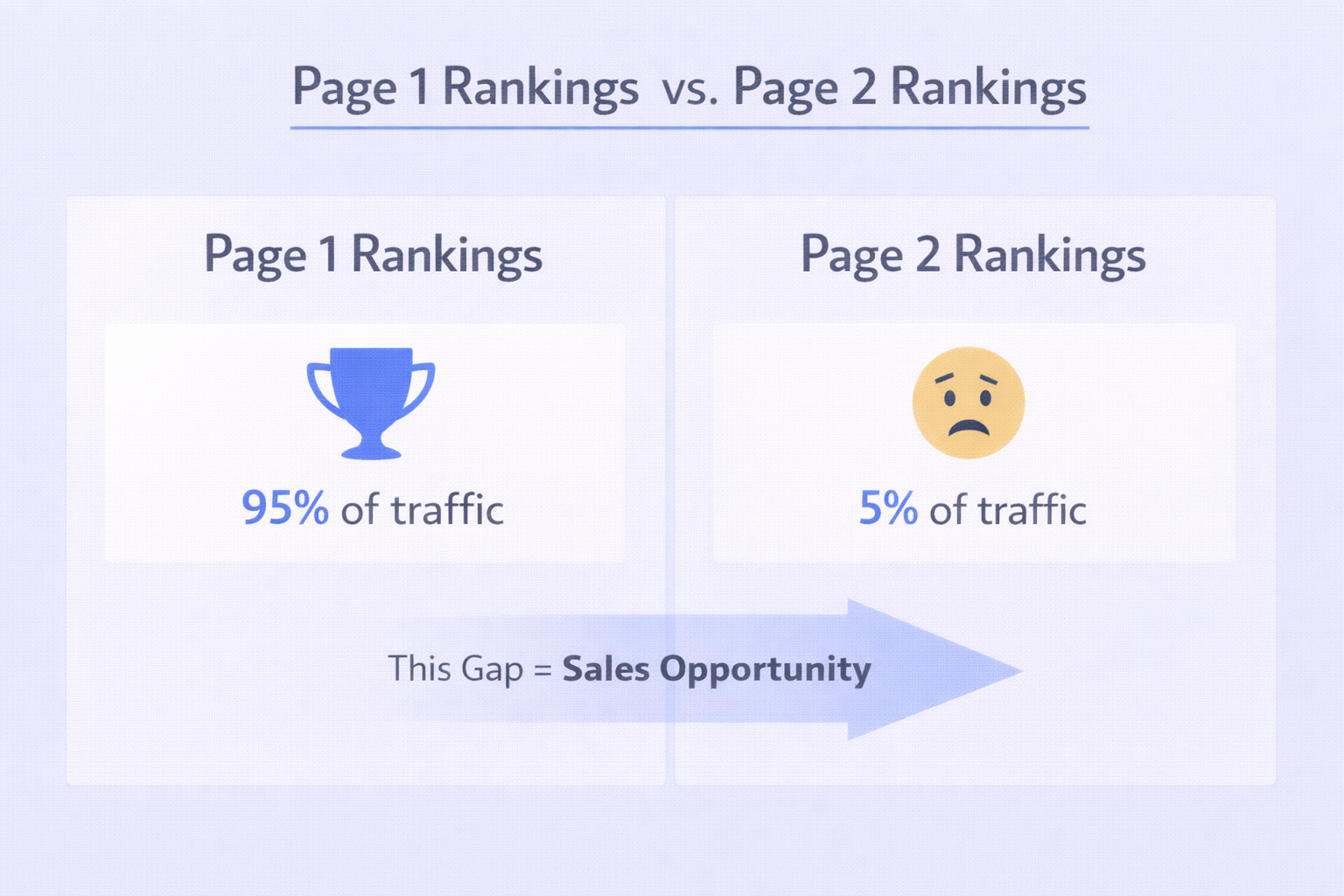
Nothing is more frustrating than ranking on Page 2 of Google. You’re invisible. Companies on Page 2 are trying but failing—that’s pain, and pain is a sales trigger.
The Setup:
- Open Ahrefs or Semrush
- Enter a keyword relevant to your industry (e.g., “accounting software for small business”)
- Filter for results ranking positions #11-#20 (Page 2)
The Insight: These companies invested in content. They want to rank. But they’re not getting traffic. Websites on page 2 get less than 5% of total search traffic (Backlinko, 2024).
The Pitch: “Hi [Name], saw you’re stuck on Page 2 for [Keyword]. That’s a high-value term—you’re missing 95% of potential traffic. We helped [Competitor] jump to Page 1 and double their leads. Want to see the roadmap?”
Why It Works: It’s specific, addresses known pain, and shows you did homework. This beats generic “I can help your SEO” messages by 10x.
Teams using LinkedIn growth hacking strategies can combine this intel with social outreach for compound effectiveness.
Workflow 2: The “Ad Spender” Snipe
Companies paying for ads have budget. If they’re paying for ads on keywords where they have zero organic presence, they’re bleeding cash. The average cost per click for competitive B2B keywords is $35-$50 (WordStream, 2024).
The Setup:
- Use Semrush’s “Advertising Research” tool
- Find companies bidding on expensive keywords (e.g., “emergency plumber”)
- Check their organic ranking for that same keyword
The Check: If they’re paying $10 per click but rank #50 organically, they’re 100% reliant on paid traffic. Companies spending over $5K/month on ads without organic presence waste 60% of that budget (HubSpot, 2024).
The Pitch: “Noticed you’re spending heavily bidding on ’emergency plumber’ because your organic ranking is #50. We can help you own that keyword organically and cut your CPA by 70%. Want to see the numbers?”
Why It Works: You’re talking about saving money (CPA reduction), not just “doing SEO.” CFOs love ROI conversations.
Workflow 3: Broken Link Outreach (The Partnership Play)
This is a classic SEO tactic that doubles as a sales strategy. There are over 40 billion broken links on the internet (Ahrefs, 2024).
The Setup:
- Find a major competitor who went out of business or moved domains
- Put their old URL into Ahrefs “Site Explorer”
- Look at “Backlinks” to see who linked to them
The Insight: You now have a list of hundreds of websites linking to a dead resource. Those broken links hurt their SEO.
The Pitch: “Hey, was reading your article on [Topic] and noticed you linked to [Dead Company]. That link is broken and hurting your page ranking. We have a similar tool/service at [Your Company] that’s active and updated. Might be worth a swap?”
Why It Works: You’re helping them fix their site (value-first approach) while getting your foot in the door. Broken link outreach has a 15% success rate vs. 3% for cold outreach (Backlinko, 2024).
This strategy works especially well when combined with LinkedIn lead generation statistics to qualify prospects before reaching out.
