Learn how to start a business in 2025
- Sophie Ricci
- Views : 28,543
Table of Contents
Starting a business in 2025 isn’t what it used to be. The barriers? Lower than ever. The competition? More intense than ever. But here’s the thing—if you understand the fundamentals and leverage the right systems, you’re already ahead of 80% of people who never make it past the idea stage.
Whether you’re launching a side hustle while keeping your day job or going all-in on your entrepreneurial dream, this guide breaks down everything you need to know. No fluff, no corporate jargon—just practical steps that work.
Here’s what’s different in 2025: AI has democratized technical skills, but it’s made authentic human connection more valuable than ever. The founders who win aren’t necessarily the best coders or designers. They’re the ones who can sell, build relationships, and generate leads consistently.
🚀 Build Your Lead Pipeline
Stop struggling with startup growth. Get qualified meetings booked through systematic LinkedIn outreach and cold email campaigns.
Starting a Business: The Foundation
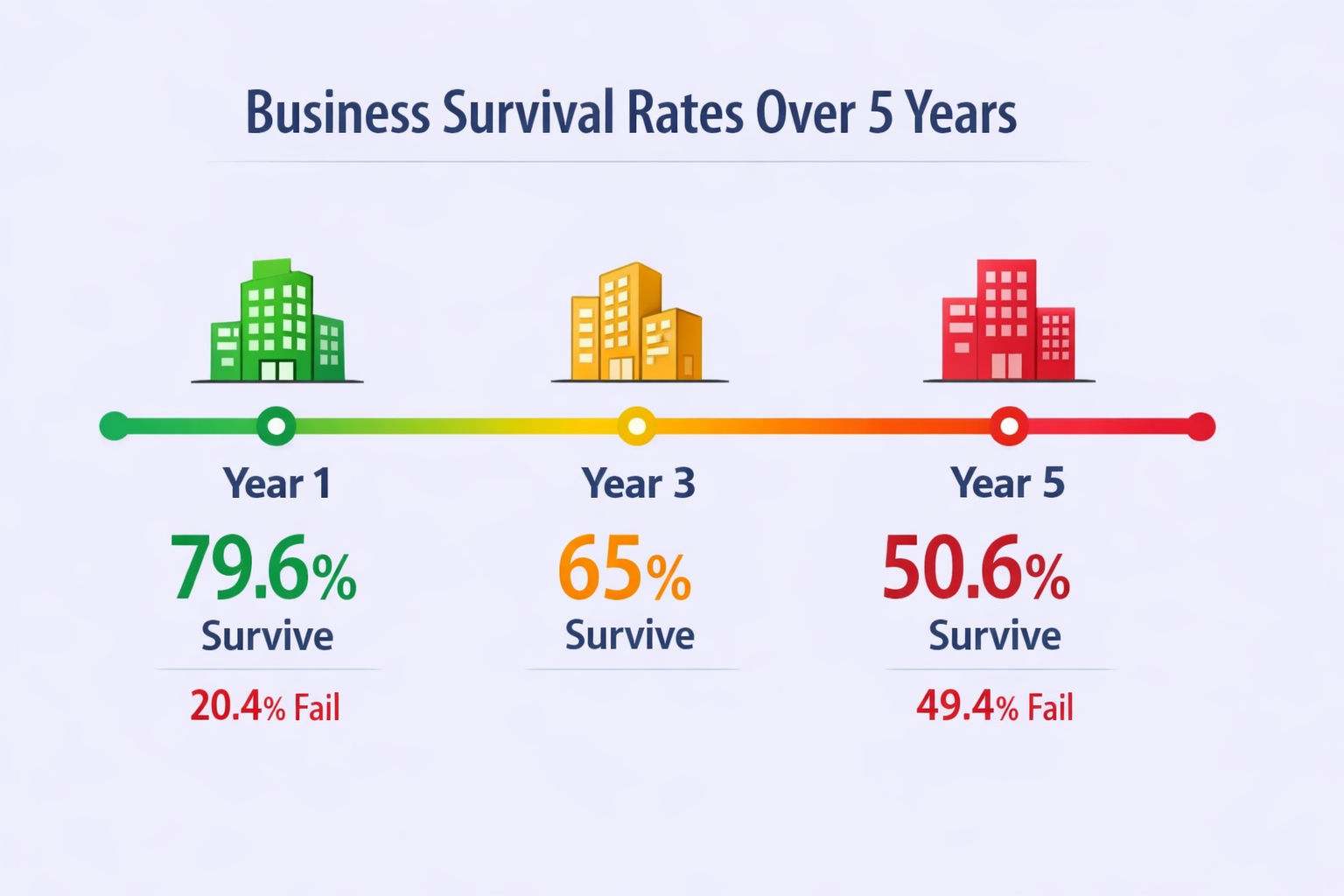
The statistics are sobering but valuable. 20.4% of businesses fail in year one. 49.4% fail by year five. But here’s the counterpoint: businesses with a written plan are 7% more likely to achieve high growth compared to those without one.
So what separates the survivors from the statistics? Three things: validation, planning, and execution. Let’s break each one down.
Validation Before Building
The biggest mistake new entrepreneurs make? Building something nobody wants. 42% of startups fail because there’s no market need for their product. That’s almost half of all failures that could be prevented with one simple step: validation.
Validation isn’t asking your friends if your idea is good. It’s getting strangers to exchange money or time for your solution. The fastest way to validate? Cold outreach to your target market.
In 2025, cold email still works—but the game has changed. The average open rate has dropped to 27.7%, down from 36% in previous years. However, this aggregate data hides a crucial truth: targeted, personalized campaigns to curated lists achieve reply rates of 15-25%, compared to 1-5% for mass blasts.
This is where LinkedIn prospecting becomes your unfair advantage. While email inboxes are flooded with AI-generated spam, LinkedIn provides direct access to 65+ million decision-makers with verified professional identities.
💡 Skip the Guesswork
Most startups fail because they can’t find customers. We help you build a predictable pipeline with proven outbound strategies.
Building Your Business Plan
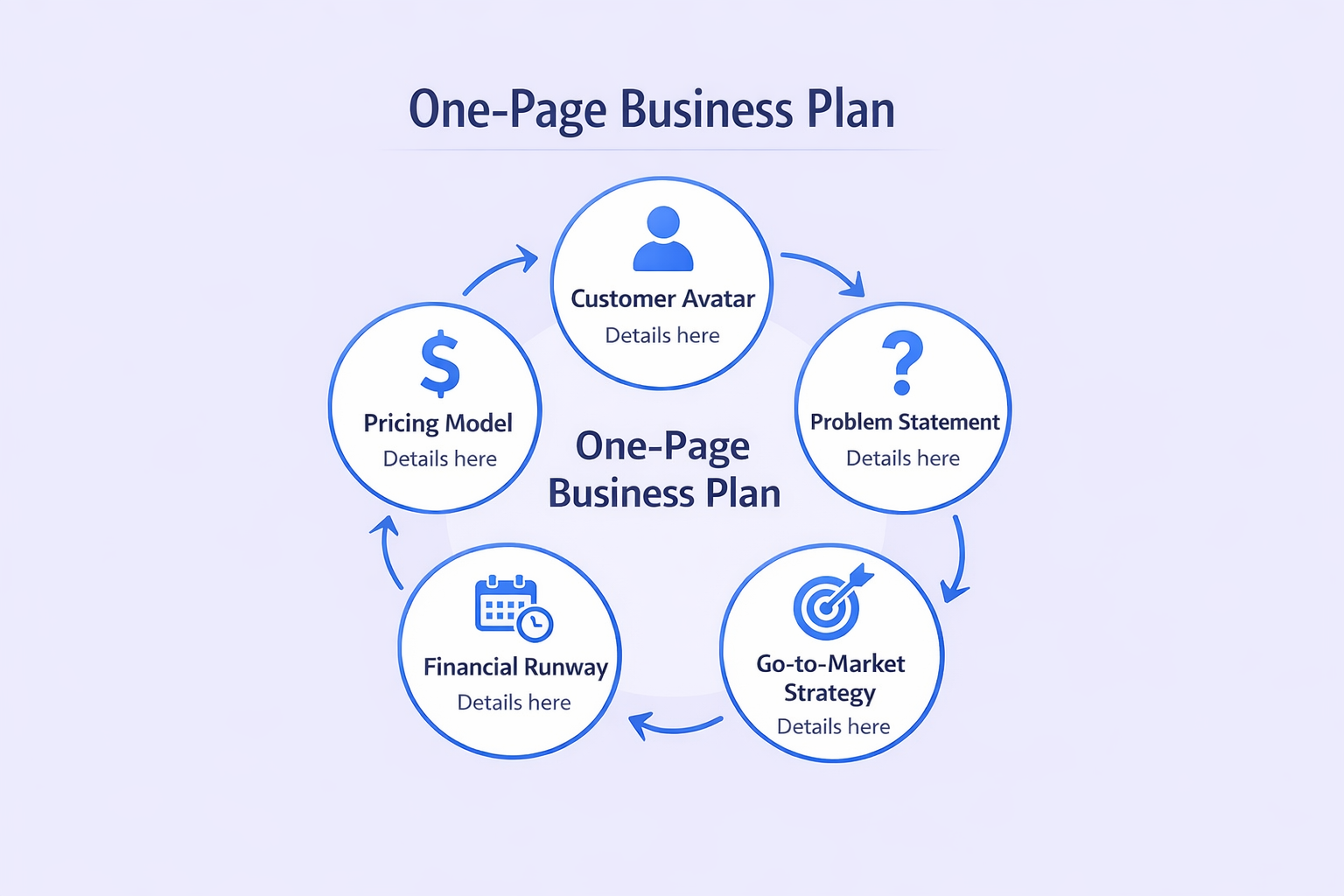
A business plan doesn’t need to be a 50-page thesis. For modern entrepreneurs, a lean one-page plan is often superior. Focus on agility and execution over theoretical forecasting.
Your plan should answer five critical questions:
Who is your customer? Define your ideal customer profile with painful specificity. “Small business owners” is too broad. “Series B SaaS companies with 20-50 employees struggling with remote sales onboarding” is specific enough to build a targeted strategy around.
What problem are you solving? Not what your product does—what outcome does it create? Your customer doesn’t buy features; they buy the elimination of pain or the achievement of a desired state.
How will you reach them? This is your go-to-market strategy. In 2025, the most effective B2B lead generation combines multiple channels: cold email, LinkedIn automation, and strategic partnerships. Tools like LinkedIn automation tools and cold email software make one person capable of executing campaigns that previously required entire teams.
What will you charge? Move away from hourly billing. Value-based pricing—charging for outcomes rather than time—aligns incentives and maximizes margins. If you solve a $100,000 problem, charging $20,000 for the solution is a bargain for your customer.
How much runway do you have? Calculate your monthly burn rate (expenses) and divide it by your cash reserves. This tells you how many months you can survive without a deal. Most experts recommend maintaining 6-12 months of runway.
Legal and Administrative Foundation
Once you’ve validated your idea, it’s time to make it official. Choosing the right business structure isn’t just paperwork—it’s protection.
Sole Proprietorship is the default. It costs nothing to start, but offers zero liability protection. If someone sues your business, your personal assets—home, car, savings—are at risk.
Limited Liability Company (LLC) is the gold standard for small businesses in 2025. It separates personal assets from business liabilities. For service businesses handling client data or sending cold outreach campaigns, the risk of litigation exists. An LLC provides the “corporate veil” necessary for legal protection.
S-Corp Election becomes valuable once you’re generating over ~$80,000 in profit. It can offer significant savings on self-employment taxes, though it requires payroll setup.
Beyond structure, you’ll need:
- EIN (Employer Identification Number): The social security number for your business. Required to open a business checking account and build business credit.
- Business Licenses: Check city/county requirements. Even home-based consulting often requires a Home Occupation Permit.
- Insurance: General liability covers basic risks. Professional liability (E&O insurance) is critical for consultants—if a client claims your advice caused them to lose revenue, E&O covers legal defense.
📊 Get Meetings, Not Rejections
Traditional cold outreach gets 1-5% response rates. Our systematic approach delivers 15-25% response rates through targeting precision and campaign design.
The Business Checking Account: Your Financial Foundation
Separating personal and business finances isn’t optional—it’s essential. Commingling funds can pierce the corporate veil, nullifying your LLC protection and creating tax nightmares.
A dedicated business checking account:
- Legitimizes your business: Clients trust invoices from “Acme Consulting LLC” more than “John Smith Personal”
- Simplifies taxes: Creates a clean audit trail for expenses
- Enables business credit: Foundational step for building a business credit score separate from personal credit
The 2025 banking landscape offers unprecedented options. Neobanks provide superior UI/UX, lower fees, and tech integrations. Traditional banks offer branch access and deeper lending products.
For freelancers and consultants, consider these features:
- Interest on balances: Some neobanks offer 2%+ APY on business checking, softening the blow during slow months
- Automated tax reserves: Platforms like Found automatically set aside a percentage of every deposit for taxes
- Multiple accounts: Tools like Relay allow up to 20 separate checking accounts for the “Profit First” methodology—segregating operating funds, taxes, profit, and owner pay
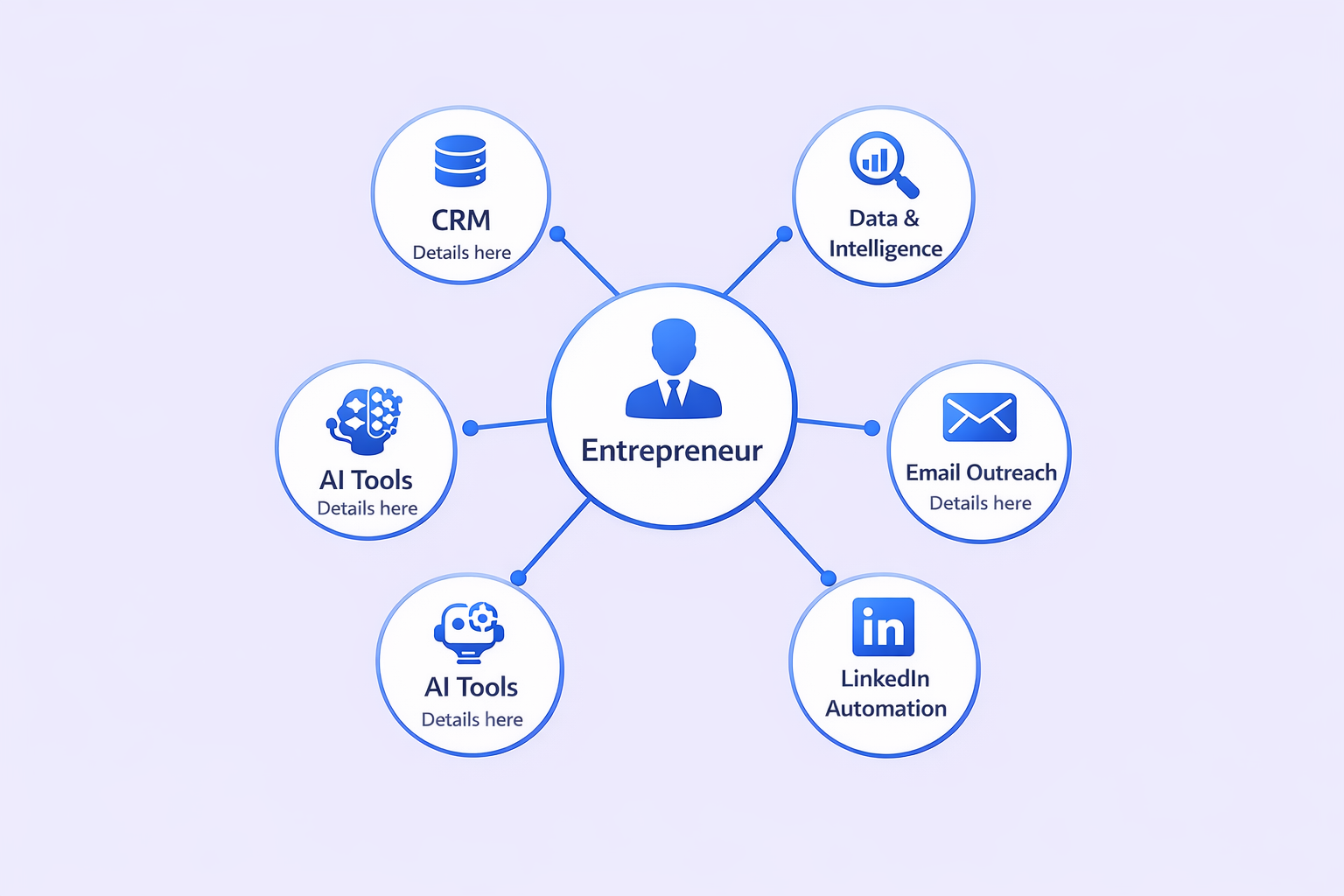
The Minimum Viable Tech Stack
The modern entrepreneur is a cyborg—augmented by software that makes one person as effective as a team. Your goal is building a “Minimum Viable Stack” that scales without breaking the bank.
CRM (Customer Relationship Management)
Your business brain. HubSpot offers a robust free tier including email tracking, deal pipelines, and meeting scheduling. Close CRM is built for high-velocity sales, minimizing clicks and maximizing efficiency.
Data & Intelligence
Apollo.io and ZoomInfo provide verified business emails and direct dials. For 2025, Clay has emerged as the new standard for “waterfall enrichment”—pulling data from 50+ sources to build hyper-targeted lists.
Outreach Infrastructure
SmartLead and Instantly lead the market for cold email deliverability. They offer “unlimited warm-up” features critical for protecting domain reputation. Never send cold emails from your main domain—always use secondary domains managed through Google Workspace or Outlook.
For LinkedIn message automation, dedicated tools allow you to generate sales leads on LinkedIn at scale while maintaining personalization.

⚡ Stop Cold Outreach Guesswork
We don't just send messages—we architect complete outbound systems: targeting strategy, campaign design, deliverability optimization, and scale systems that work.
7-day Free Trial |No Credit Card Needed.
The AI Multiplier Effect
2025 is the year AI shifts from buzzword to business necessity. AI isn’t replacing entrepreneurs—it’s replacing the need to hire for certain tasks.
Tools like ChatGPT and Claude can:
- Draft cold email sequences and personalized icebreakers
- Generate blog content for SEO authority building
- Write legal contracts (always review with a human attorney)
- Create social media content calendars
Personalization at scale becomes achievable: Feed a prospect’s LinkedIn “About” section into an LLM, and generate a highly personalized opening sentence that outperforms generic templates. Combined with workflow automation software, you can execute campaigns that would’ve required a team of five people just two years ago.
However, AI-generated content has flooded inboxes and feeds. This makes authentic human connection more valuable, not less. Buyers crave real conversations. A founder who can get on a call, articulate value, and build trust face-to-face has a distinct advantage over faceless automated competitors.
Sales-Led vs. Product-Led Growth
Understanding when to sell directly versus letting the product sell itself is critical.
Sales-Led Growth (SLG): The traditional model. Marketing generates leads, sales qualifies and closes them. High customer acquisition cost (CAC), but high lifetime value (LTV). Best for complex, high-ticket solutions.
Product-Led Growth (PLG): The product sells itself through free trials or freemium versions. Users experience value and upgrade without human interaction. Low CAC, high volume. Best for simple, user-friendly tools.
The 2025 reality: Pure PLG is difficult without a large engineering team. The emerging winner is the hybrid model—Product-Led Sales. The product captures users through free trials, then salespeople use engagement data to reach out and close enterprise contracts.
For service businesses, the equivalent is “productizing” your offering. Instead of vague “consulting,” sell a “30-Day Audit” with fixed price and deliverables. This mimics the friction-free nature of PLG while leveraging sales skills.
Your First 10 Customers: The Playbook
Getting your first 10 customers requires high-activity prospecting with extreme personalization. You no longer have a corporate brand behind you—you’re selling yourself. But you also have a new advantage: founder authenticity.
The “Beta” Offer: Offer your service at a discount in exchange for a detailed testimonial and case study. Script: “I’m launching a new firm and looking for 5 founding partners to work with at cost in exchange for a detailed case study.”
Network Activation: Update your LinkedIn profile. Message every former colleague and connection (honoring non-competes) announcing your venture. The ask: “I’ve started [Company]. Who’s the one person you know struggling with [Problem] right now?”
The Value-First Cold Email: Instead of asking for a meeting, give something away. Record a Loom video reviewing their current setup. Audit their LinkedIn profile. Example: “Saw you’re hiring. I recorded a 3-minute video on three changes to your job description to attract top talent. Link here.”
According to LinkedIn marketing statistics, personalized outreach on LinkedIn generates 15-25% response rates compared to 1-5% for generic cold email—making it the most efficient channel for early-stage customer acquisition.
Risk Management: Learning from Failure Statistics
29% of businesses fail because they ran out of cash, not because they had a bad product. 23% fail because of team issues. These are preventable failures.
Cash flow discipline: Don’t count revenue until it’s in your business checking account. Sales optimism (“That deal is definitely closing!”) is how businesses die. Budget pessimistically.
Client concentration: Don’t let one client represent more than 20% of revenue. If they churn, your business collapses. Diversification is survival.
Continuous validation: Markets shift. Competitors emerge. What worked six months ago may not work today. Stay close to your customers. Ask why they bought, why they stay, and what would make them leave.
Conclusion
Starting a business in 2025 is simultaneously easier and harder than ever before. The tools are better, the barriers are lower, but the noise is deafening.
The entrepreneurs who succeed aren’t necessarily the most talented—they’re the most persistent. They validate before building. They plan without over-planning. They execute with discipline. And most importantly, they master the art of getting qualified strangers on calls.
Your path forward is clear:
- Validate your idea through cold outreach before building anything
- Write a lean business plan focused on go-to-market strategy
- Legitimize your operation with proper legal structure and a business checking account
- Build your minimum viable tech stack
- Execute relentlessly on lead generation
The market rewards those who can generate revenue predictably. Master that skill, and the rest becomes manageable.
The quota is now yours to set. The territory is the world. It’s time to close the biggest deal of your life—the deal where you bet on yourself.
Your First 10 Customers: The Playbook
Getting your first 10 customers requires high-activity prospecting with extreme personalization. You no longer have a corporate brand behind you—you’re selling yourself. But you also have a new advantage: founder authenticity.
The “Beta” Offer: Offer your service at a discount in exchange for a detailed testimonial and case study. Script: “I’m launching a new firm and looking for 5 founding partners to work with at cost in exchange for a detailed case study.”
Network Activation: Update your LinkedIn profile. Message every former colleague and connection (honoring non-competes) announcing your venture. The ask: “I’ve started [Company]. Who’s the one person you know struggling with [Problem] right now?”
The Value-First Cold Email: Instead of asking for a meeting, give something away. Record a Loom video reviewing their current setup. Audit their LinkedIn profile. Example: “Saw you’re hiring. I recorded a 3-minute video on three changes to your job description to attract top talent. Link here.”
According to LinkedIn marketing statistics, personalized outreach on LinkedIn generates 15-25% response rates compared to 1-5% for generic cold email—making it the most efficient channel for early-stage customer acquisition.
Risk Management: Learning from Failure Statistics
29% of businesses fail because they ran out of cash, not because they had a bad product. 23% fail because of team issues. These are preventable failures.
Cash flow discipline: Don’t count revenue until it’s in your business checking account. Sales optimism (“That deal is definitely closing!”) is how businesses die. Budget pessimistically.
Client concentration: Don’t let one client represent more than 20% of revenue. If they churn, your business collapses. Diversification is survival.
Continuous validation: Markets shift. Competitors emerge. What worked six months ago may not work today. Stay close to your customers. Ask why they bought, why they stay, and what would make them leave.
Conclusion
Starting a business in 2025 is simultaneously easier and harder than ever before. The tools are better, the barriers are lower, but the noise is deafening.
The entrepreneurs who succeed aren’t necessarily the most talented—they’re the most persistent. They validate before building. They plan without over-planning. They execute with discipline. And most importantly, they master the art of getting qualified strangers on calls.
Your path forward is clear:
- Validate your idea through cold outreach before building anything
- Write a lean business plan focused on go-to-market strategy
- Legitimize your operation with proper legal structure and a business checking account
- Build your minimum viable tech stack
- Execute relentlessly on lead generation
The market rewards those who can generate revenue predictably. Master that skill, and the rest becomes manageable.
The quota is now yours to set. The territory is the world. It’s time to close the biggest deal of your life—the deal where you bet on yourself.
FAQs
How do I validate a business idea before investing money?
What's the most important first step when starting a business?
Should I get an LLC or stay a sole proprietor?
How much money do I need to start a business?
What's the fastest way to get my first customers?
We deliver 100–400+ qualified appointments in a year through tailored omnichannel strategies
- blog
- Sales Development
- Starting a Business: Complete 2025 Guide (+ Statistics)