
Atomic Habits by James Clear: Build Systems That Stick
This is where everything starts—with behavior.
You can have the best strategy in the world, but if you can’t execute consistently, it means nothing. Atomic Habits gives you the framework for building consistency into everything you do.
Clear’s core insight? Success is the product of daily habits, not once-in-a-lifetime transformations. A 1% improvement each day leads to being 37 times better over one year. That’s compound potential.
Most people fail not because they lack ambition. They fail because they can’t maintain the small actions that create big results. Clear calls this the “Valley of Disappointment”—where your efforts haven’t yielded visible results yet, but the potential energy is building.
The Four Laws of Behavior Change
Here’s how to apply this to your business:
Make it Obvious: Design your environment for success. If you need to prospect daily, make your lead list the first thing you see when you open your laptop.
Make it Attractive: Pair high-dopamine activities with low-dopamine tasks. Listen to your favorite podcast while doing admin work. Drink premium coffee during your focus blocks.
Make it Easy: Remove friction from important tasks. This is where tools like workflow automation software become game-changers. If finding a lead takes 5 minutes, your habit will break. If it takes 5 seconds, it sticks.
Make it Satisfying: Create immediate rewards. Track your progress visually. Celebrate small wins. When you feel smart, you associate that feeling with the person who made you feel that way—yourself.
The key insight for business owners: You do not rise to the level of your goals. You fall to the level of your systems. Stop obsessing over outcomes. Build better systems.

Zero to One by Peter Thiel: Find Your Unique Advantage
Once you’ve got the habits, you need a strategy that actually differentiates you.
Peter Thiel’s Zero to One challenges conventional wisdom: “Competition is for losers.” In competitive markets, margins get crushed and survival becomes a grind.
The winning move? Create a monopoly in a micro-niche. Be so good at serving a specific market that no one else can compete. This isn’t about being unethical—it’s about being exceptional at something specific.
The Contrarian Truth
Thiel asks: “What important truth do very few people agree with you on?” This question is gold for business positioning.
Everyone says “we help you get more leads.” That’s noise. Everyone agrees, everyone ignores.
The contrarian pitch? “Most lead generation is a waste because you’re targeting wrong. You should send fewer emails to better prospects.” Now you’ve got attention.
The Last Mover Advantage
Thiel discusses being the “last mover”—the company that solves the problem so completely that no further innovation is needed in that space. For small business owners, this means becoming the last vendor a client ever needs to speak to.
How? By being the most prepared, most specialized, most committed to their specific problem. With tools like LinkedIn automation, you can identify the exact micro-niches where you can dominate.
The Lean Startup by Eric Ries: Test, Learn, Iterate
You’ve got the habits. You’ve got the strategy. Now you need an execution model.
The Lean Startup gives you the scientific method for business. Eric Ries defines a startup as “a human institution designed to create a new product or service under conditions of extreme uncertainty.”
That uncertainty is exactly what kills most businesses. They guess wrong and run out of resources before they can pivot.
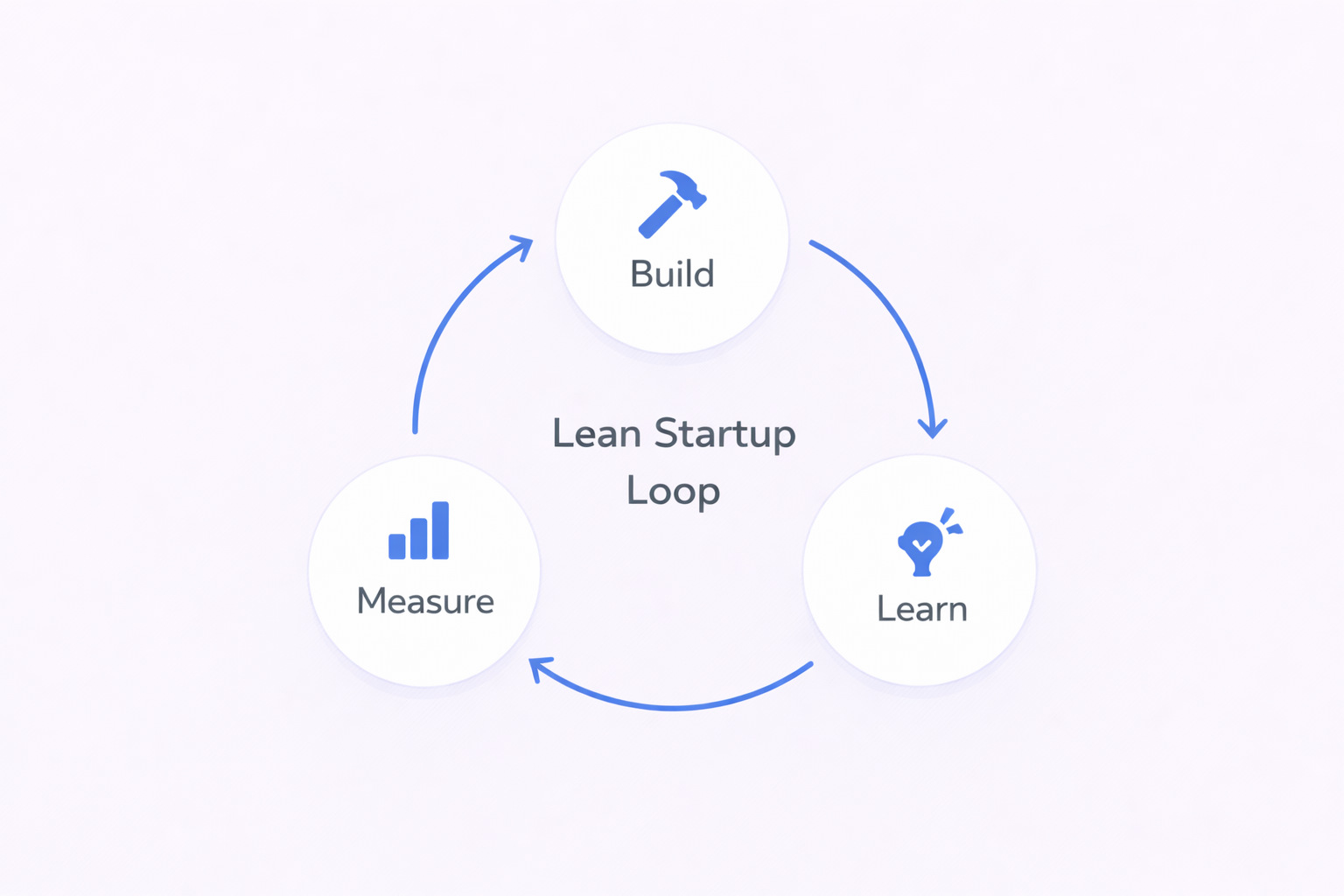
The Build-Measure-Learn Loop
Instead of spending months building the “perfect” product or campaign, build a Minimum Viable Version. Test it with real customers. Measure the results. Learn what works. Iterate.
This applies to everything in your business:
- Email subject lines: Don’t guess which will work. Test two versions on 50 prospects each. The data tells you what to scale.
- Value propositions: Test “speed” vs. “cost savings” in your messaging. See which resonates.
- Target markets: Test two different industries simultaneously. Double down on the one that responds.
The Power of Pivots
A pivot isn’t failure—it’s validated learning. If your open rate is below 20% after 100 emails, your subject line failed. Don’t send 900 more hoping for different results. Pivot immediately.
Innovation Accounting
You need metrics that matter. Not vanity metrics like “emails sent” or “website visitors.” Track actionable metrics like conversion rates, response rates, and time-to-close.
Using cold email software with proper analytics lets you track what’s working and what’s not. You move from guessing to knowing.
The E-Myth Revisited by Michael Gerber: Work ON Your Business
Here’s where most entrepreneurs hit the wall. You start seeing success, but you’re drowning in execution.
Michael Gerber’s The E-Myth Revisited addresses the critical transition from doing the work to designing the business that does the work.
The Technician vs. The Entrepreneur
Most businesses fail because they’re run by “Technicians”—people who are great at the core skill but terrible at building systems. The Technician makes the sale. The Entrepreneur designs the system that generates sales consistently.
The Franchise Prototype
Gerber argues you should build your business like you’re going to franchise it tomorrow. Could someone else step into your role and maintain the same quality? If not, you don’t have a business—you have a job.
This means creating Standard Operating Procedures (SOPs) for everything:
- How you qualify leads
- Your exact email templates and when to send them
- Your discovery call framework
- Your objection handling scripts
Working ON vs. IN
Block time every week to work on the business, not just in it. Friday afternoons? Review your data, refine your processes, clean your systems. This doesn’t generate immediate revenue, but it ensures the machine runs smoothly next week.
Automation tools like LinkedIn message automation help you build these systems. They ensure consistent delivery regardless of how you feel that day.
Profit First by Mike Michalowicz: Manage Your Resources
You can have great systems, but if you can’t manage time and money, you’ll still fail.
Profit First offers a radical approach to resource allocation. Instead of the traditional formula (Revenue – Expenses = Profit), Michalowicz flips it: Revenue – Profit = Expenses.
Parkinson’s Law Applied to Business
Parkinson’s Law states that work expands to fill the time available. If you give yourself 8 hours to prospect, it will take 8 hours. If you give yourself 2 hours, you’ll find a way to do it in 2 hours.
The solution? Take your “profit” first—block your most important hours for revenue-generating activity. During these hours, administrative tasks are forbidden. Force yourself to become more efficient at everything else because you’ve restricted the time available.
The Pumpkin Plan for Leads
Michalowicz also wrote The Pumpkin Plan, which advocates killing small, weak pumpkins to let giant ones grow. In business, this means ruthlessly disqualifying small, time-sucking opportunities to focus resources on high-value accounts.
Stop trying to serve everyone. Identify your “giant pumpkin” opportunities and pour resources into those. Tools like LinkedIn prospecting help you identify which accounts deserve your focused attention.
The Hard Thing About Hard Things by Ben Horowitz: Build Mental Resilience
Finally, let’s talk about the psychological toll of running a business.
Ben Horowitz’s The Hard Thing About Hard Things is the antidote to toxic positivity. Business is hard. Really hard. And pretending otherwise doesn’t help anyone.
The Struggle
Horowitz validates “The Struggle”—when the dream turns into a nightmare, resources are low, and failure seems inevitable. For business owners, this is the mid-quarter slump when nothing seems to be working.
His insight: “The Struggle is not failure. But it causes failure, especially if you are weak.” You must separate your identity from your performance. A bad month is a data point, not a character flaw.
Wartime vs. Peacetime
Horowitz distinguishes between “Peacetime” and “Wartime” leadership. In peacetime, leads are flowing. You focus on relationships and creativity. In wartime, the pipeline is dry. You shift to strict discipline, higher volume, and aggressive qualification.
Recognize which mode you’re in and adjust your behavior. Peacetime behavior during wartime leads to death. Wartime behavior during peacetime burns out your team.
Radical Transparency
“Bad news travels fast, good news travels slow.” Practice radical transparency with yourself and your team. If a deal is dead, kill it in your CRM immediately. Hanging onto false hope prevents you from addressing the gap.