
Getting in front of healthcare decision-makers has never been more challenging. You’re competing against hundreds of vendors trying to reach the same Chief Medical Officers, IT Directors, and procurement teams. Traditional cold email campaigns deliver a disappointing 1-5% response rate, and most messages never make it past spam filters.
The medical sector has unique barriers that make standard lead generation approaches ineffective. HIPAA compliance requirements, multi-layered approval processes involving 6-10 stakeholders, and sales cycles stretching 12-24 months mean you need a fundamentally different approach.
But here’s the reality: some teams are consistently booking 15-25 qualified meetings per month with healthcare organizations while others struggle to get a single response. The difference isn’t luck—it’s methodology.
This guide breaks down exactly how healthcare lead generation works in 2026, the channels that deliver results, and the compliant strategies you need to build a predictable pipeline.
What Makes Healthcare Lead Generation Different
Healthcare isn’t like other B2B sectors. The buying process involves multiple departments, strict regulatory frameworks, and decision-makers who are bombarded with outreach daily.
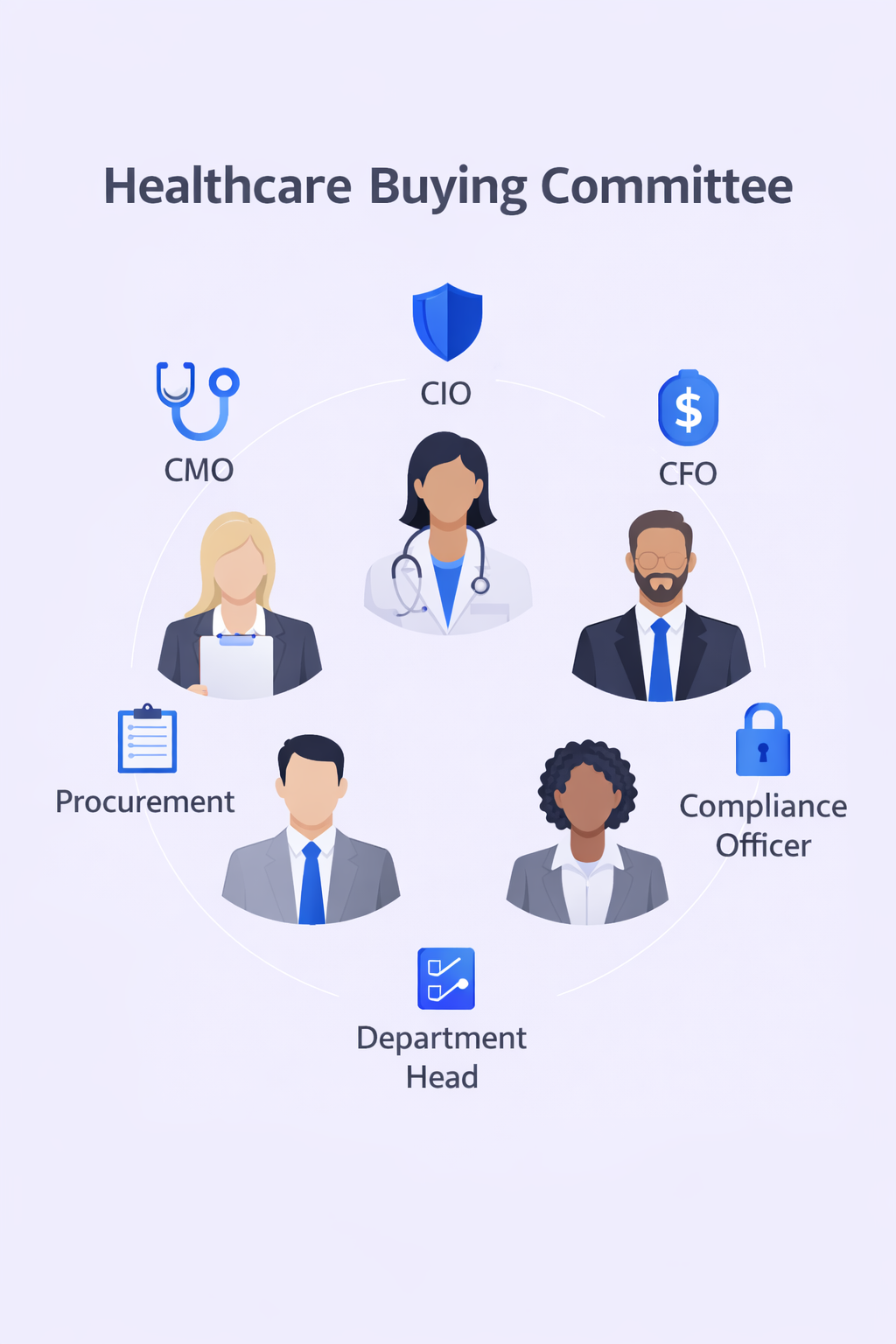
The typical healthcare procurement committee includes:
- Chief Medical Officers focused on clinical outcomes
- Chief Information Officers prioritizing data security
- Chief Financial Officers demanding ROI projections
- Procurement Directors managing vendor relationships
- Department Heads concerned with workflow adoption
- Compliance Officers ensuring HIPAA adherence
Research shows that 95% of professional medical buyers are influenced by outreach personalized to their specific role. Generic pitches fail because a CMO cares about patient safety data while a CIO wants technical security audits.
The numbers tell the story:
- Average healthcare cost per lead: $377
- Medical equipment leads: $609 per lead
- Healthcare technology leads: $130 per lead
- Typical sales cycle: 6-12 months (up to 24 months for enterprise)
- Email marketing ROI: $36 per $1 spent
The HIPAA Compliance Challenge
Every healthcare lead generation strategy must navigate strict data protection rules. The 2026 updates to the HIPAA Security Rule now mandate Multi-Factor Authentication (MFA) and AES-256 encryption for any vendor handling electronic Protected Health Information (ePHI).
Here’s what you need to know:
Professional contact data (names, work emails, office phone numbers) generally falls under non-PHI when not linked to patient records. This data can be used for B2B outreach with standard sales protocols.
Protected Health Information (PHI) includes any patient-specific data, medical histories, or treatment records. The moment your outreach touches PHI, full HIPAA compliance requirements activate.
Key regulatory frameworks in 2026:
- HIPAA Security Rule: Mandatory MFA and encryption for all vendors
- HIPAA Privacy Rule: 30-day patient record access window; enhanced reproductive health protections
- CMS One-to-One Consent: Documented individual consent for Medicare/ACA lead generation
- TCPA/FCC Rules: One-to-one consent required for automated calls and texts
The good news? Compliance can be a competitive advantage. Healthcare organizations actively seek vendors who demonstrate a privacy-first approach because it reduces their own risk exposure.
Channels That Work for Healthcare Lead Generation
LinkedIn Professional Networking
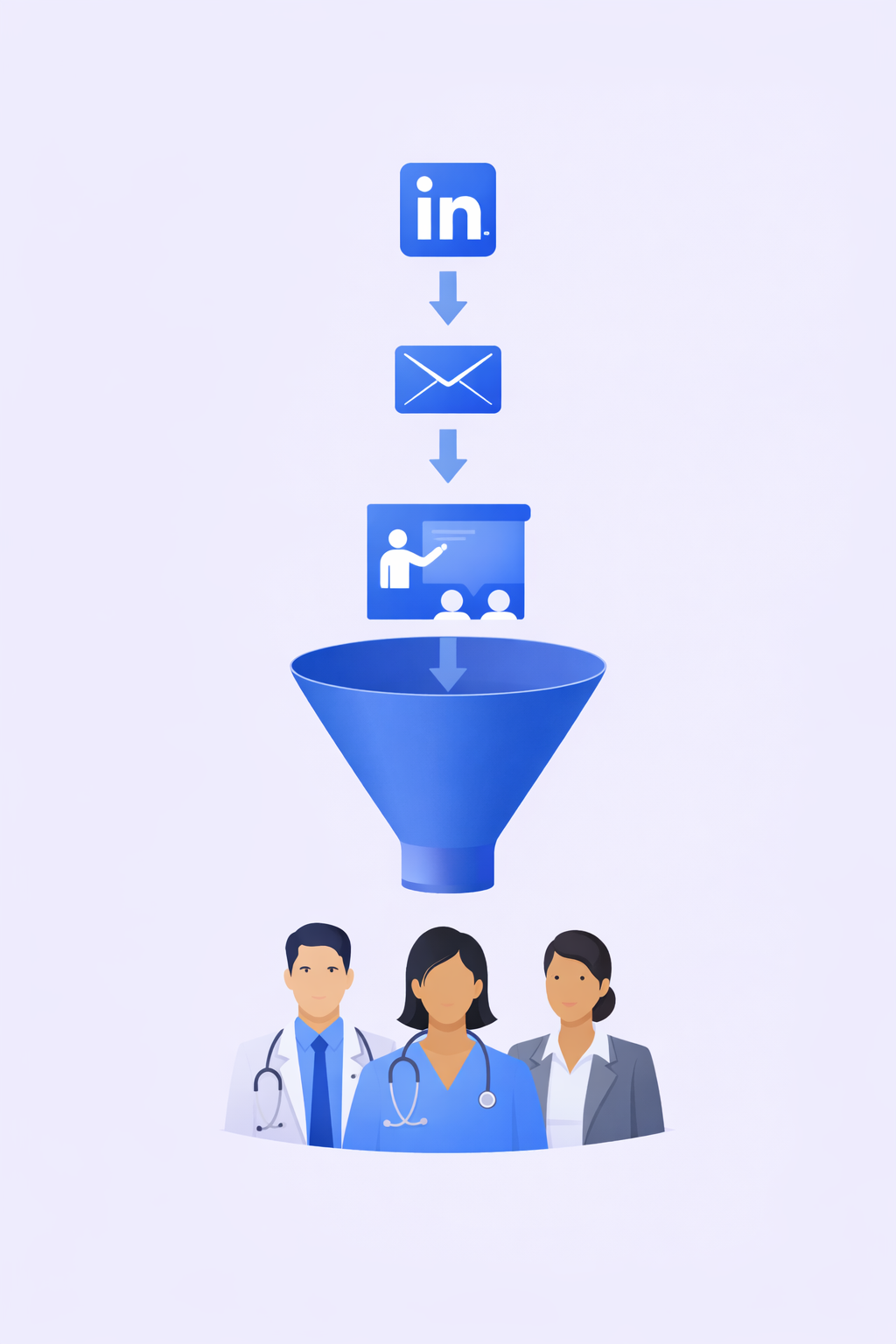
LinkedIn has become the primary discovery channel for healthcare decision-makers. Unlike email, LinkedIn messages land in a professional environment where medical executives expect business conversations.
The platform advantage:
- Direct access to 65+ million decision-makers worldwide
- No spam filter obstacles or email deliverability concerns
- Professional context that establishes credibility immediately
- Ability to share clinical case studies and research before the first message
Healthcare buyers research vendors extensively before responding. 78% of B2B buyers engage with a vendor’s thought leadership content before agreeing to a conversation. LinkedIn allows you to build that credibility through strategic content sharing and community participation.
Response rate comparison:
- Traditional cold email: 1-5% response rate
- LinkedIn outreach with targeting: 15-25% response rate
- Cold calling C-level executives: 6.7% meeting conversion rate
Educational Webinars and Thought Leadership
For prospects in the middle of the buying journey, webinars demonstrate expertise without requiring immediate commitment. 78% of B2B marketers plan to increase webinar investment in 2026 because these events allow self-qualification.
Effective webinar topics:
- “Navigating HIPAA Compliance in [Specific Medical Technology]”
- “ROI Case Studies: How [Health System Type] Reduced Costs by X%”
- “Interoperability Strategies for [Healthcare Challenge]”
The key is delivering genuine educational value rather than disguised sales pitches. Prospects who attend your webinars are 4x more likely to book a discovery call than those who only engage with written content.
Cold Calling: The Surprising Comeback
Despite predictions of its demise, strategic cold calling has shown renewed effectiveness in 2026. 57% of C-level and VP-level healthcare executives prefer phone contact over email for initial vendor discussions.
The numbers:
- Average call attempts to reach a prospect: 8 attempts
- Conversion from conversation to booked meeting: 6.7%
- Best time to call: 4-5 PM on Wednesdays
The difference between successful and failed cold calling is preparation. Knowing the prospect’s recent initiatives, regulatory challenges, or published research makes the conversation consultative rather than interruptive.
Finding the Right Healthcare Leads
Accurate targeting is everything. A perfectly crafted message sent to the wrong person wastes time and damages your sender reputation.
Essential data points for healthcare targeting:
- Job title and department: CMO, CIO, Procurement Director, Department Head
- Organization size: Number of beds, patient volume, revenue
- Recent trigger events: New leadership, facility expansion, regulatory changes
- Technology stack: Current systems, integration requirements
- Budget cycles: Fiscal year timing, capital expenditure windows
Creating a detailed ideal customer profile helps focus resources on prospects most likely to convert. Healthcare organizations with 500+ beds typically have dedicated procurement departments and structured buying processes, while smaller practices may have faster decision cycles but lower contract values.
Data Sources and Verification
The foundation of healthcare lead generation is accurate contact data. Outdated information leads to bounced emails, wasted calls, and frustrated prospects.
Top data platforms for medical sector:
ZoomInfo: Deepest US database with direct phone numbers for healthcare executives. Enterprise-level pricing but superior coverage of C-suite contacts. Best for high-volume calling campaigns.
Apollo.io: Integrated sequencing with transparent pricing. Global reach makes it ideal for medical device companies selling internationally. Strong for multi-channel campaigns.
UpLead: 95%+ data accuracy with real-time verification. Credit-based pricing accessible for mid-market teams. Excellent for maintaining low bounce rates and protecting sender reputation.
Each platform offers different trade-offs between database size, accuracy, and price. Teams focused on B2B SaaS lead generation for healthcare often combine platforms—using ZoomInfo for initial discovery and UpLead for email verification.
Lead Qualification and Scoring
Not every healthcare lead deserves equal attention. A robust scoring system ensures your team focuses on prospects most likely to convert.
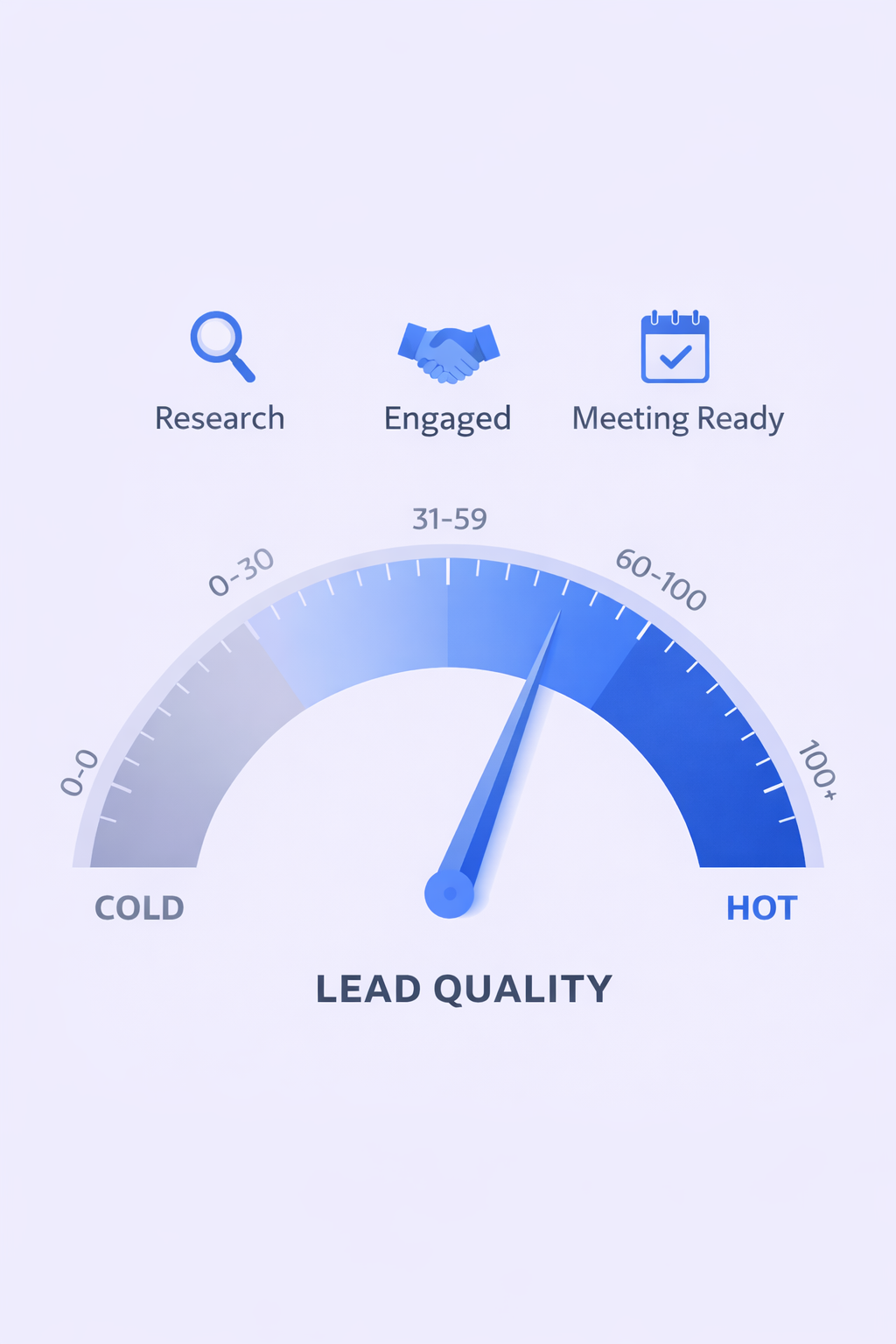
Firmographic scoring:
- C-suite clinical roles: 25 points
- Department directors with budget authority: 20 points
- Organizations facing compliance deadlines: 15 points
- Health systems with 500+ beds: 15 points
Behavioral scoring:
- Requested pricing information: 30 points
- Scheduled demo with multiple stakeholders: 25 points
- Downloaded implementation guides: 20 points
- Attended educational webinar: 15 points
Qualified leads in healthcare typically score 60+ points across both categories. This threshold indicates genuine interest and budget authority rather than casual research.
Nurturing Long Sales Cycles
Healthcare deals require 12-20 touchpoints across multiple channels before conversion. The challenge is maintaining engagement during the long evaluation period without appearing pushy.
Effective nurturing strategies:
Value-first content sharing: Send peer-reviewed studies, regulatory updates, or industry research that helps prospects regardless of whether they buy from you. This positions you as a trusted resource.
Stakeholder mapping updates: As you learn about new committee members, share role-specific content that addresses their unique concerns. A CFO gets ROI calculators while a Compliance Officer receives audit documentation.
Event-triggered outreach: When prospects experience relevant trigger events—new leadership, facility expansion, regulatory changes—reach out with specific resources addressing that transition.
The teams that win healthcare deals aren’t the most aggressive. They’re the ones who stay “top of mind” through consistent, valuable touchpoints that respect the prospect’s timeline.
