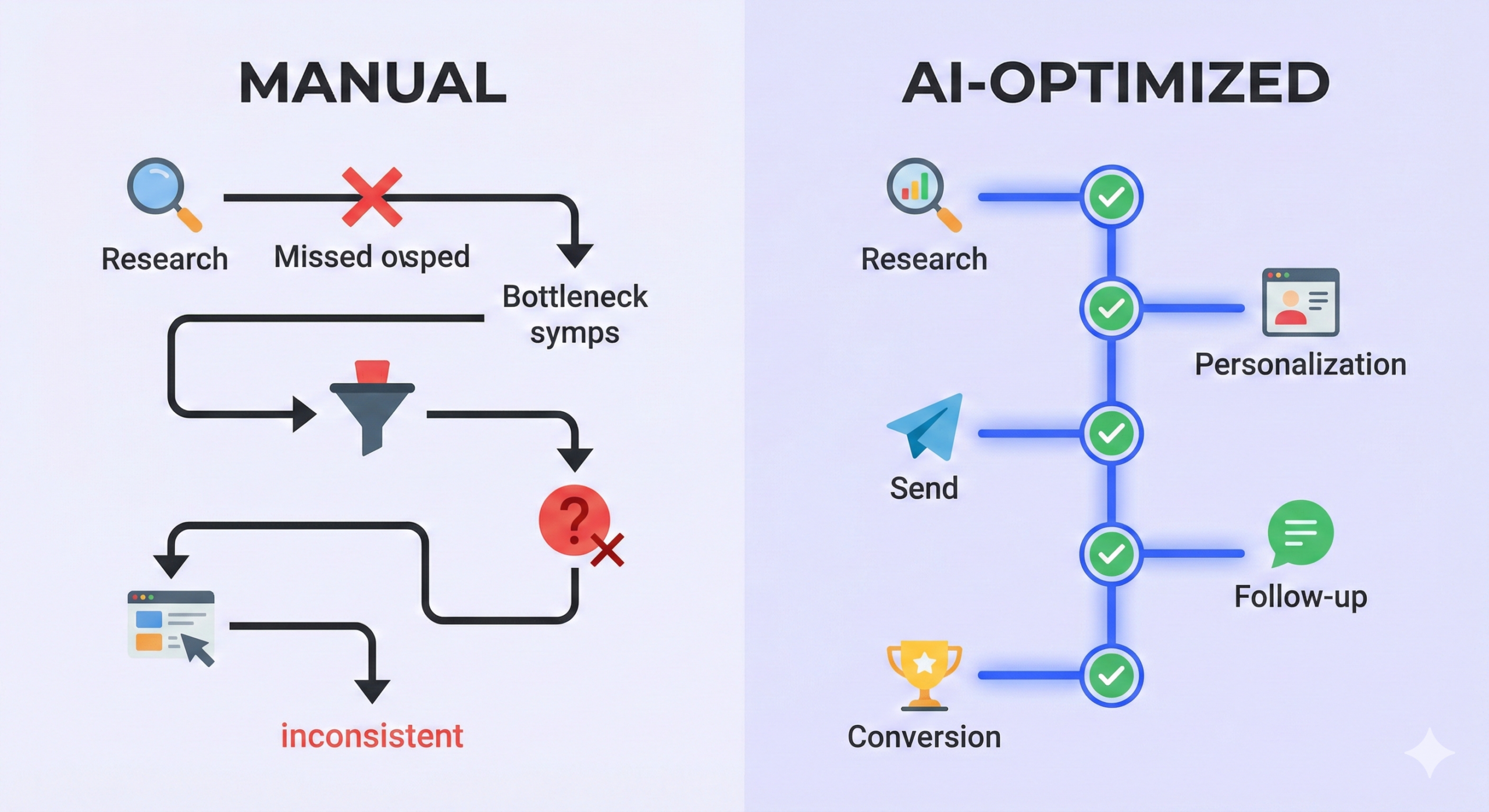
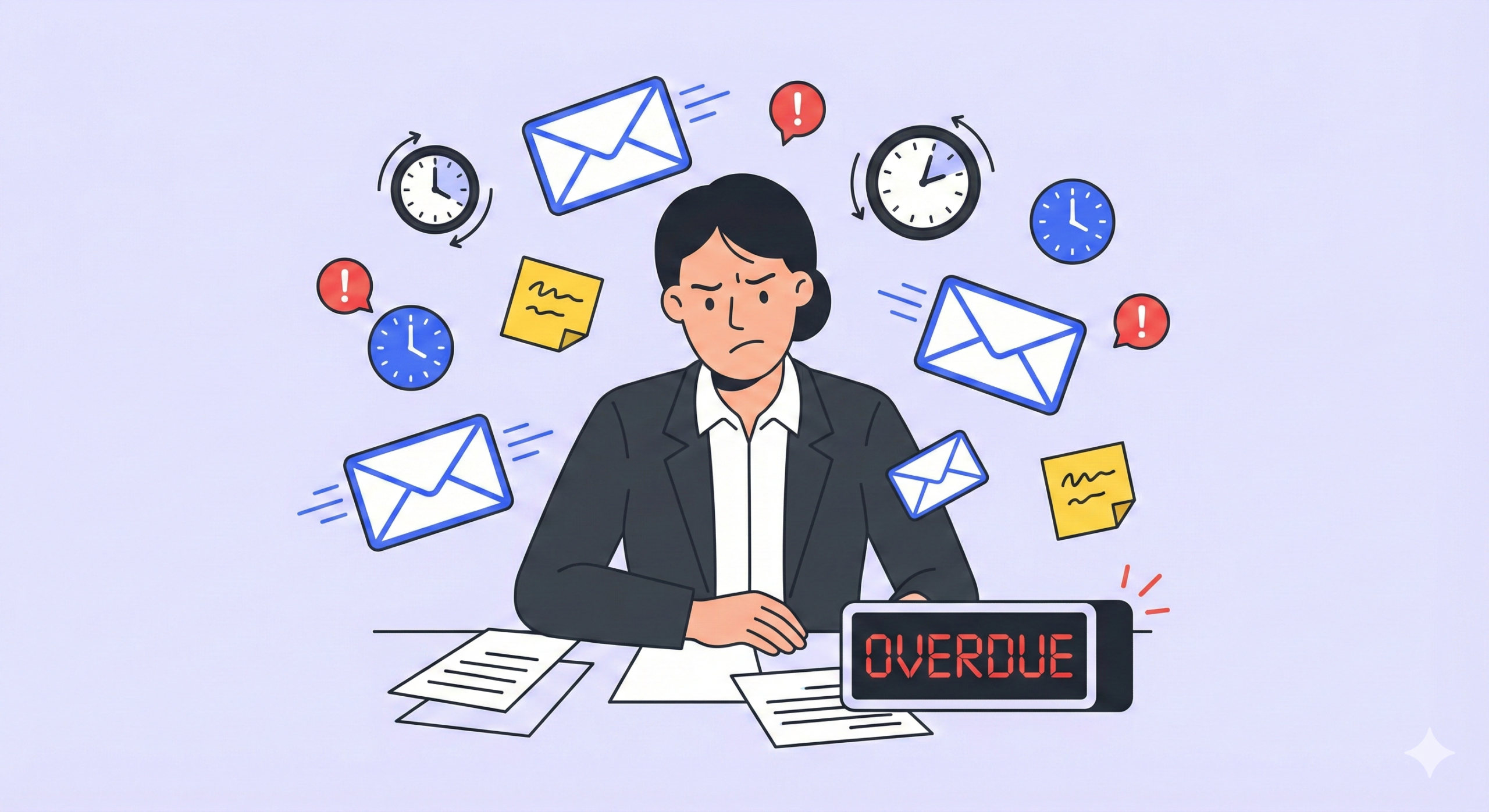
You write the email. You pick a time. You hit send. And then… silence.
Sound familiar? If you’re running cold outreach at any real volume, manual email scheduling starts breaking down fast. You miss follow-ups, lose track of who replied, and spend hours doing work that software could handle in seconds.
Here’s the hard truth: sales reps spend nearly 70% of their time on non-selling activities (Salesforce). That’s time lost to copy-pasting, rescheduling, logging, and chasing. AI changes that game completely.
This guide breaks down the key differences between AI and manual email scheduling — so you can decide which one actually fits your goals.
What Manual Email Scheduling Actually Looks Like
Manual scheduling is exactly what it sounds like: you’re in charge of every step. Research, write, time it, hit send, follow up, repeat.
At small volumes, this works fine. But as your outreach grows, the cracks start to show.
Here’s what starts breaking:
Consistency collapses. Without a system, follow-up rates drop to 20–35%. Prospects slip through the cracks, not because you don’t care — just because there’s too much to track.
Time gets eaten alive. Researching leads, crafting messages, scheduling sends — it adds up to hours every single day. Hours you could spend in conversations that actually move the needle.
Human error creeps in. A wrong name, a duplicate email, a missed follow-up. These aren’t signs of a bad rep — they’re signs of a system that wasn’t built to scale.
Deliverability suffers. Manual warmup (the process of slowly building domain trust with mailbox providers) is tedious and error-prone. One spike in send volume and your emails start landing in spam.
How AI Email Scheduling Actually Works
AI scheduling isn’t just automation. It’s intelligent orchestration — where the system learns, adapts, and acts on your behalf.
Modern ai tools don’t just send emails on a timer. They analyze data, monitor engagement, personalize at scale, and protect your sender reputation — all simultaneously.
Here’s what that looks like in practice:
Predictive send timing. Instead of guessing “Tuesday morning,” the system analyzes when each specific recipient actually opens emails — then schedules your message to appear at the top of their inbox at exactly that moment.
Automated warmup. AI places your email address into a network of real inboxes that interact with your messages, building domain trust steadily and safely. No manual babysitting required.
Dynamic personalization. AI-driven personalization increases reply rates by up to 300% compared to generic templates. The system adapts copy based on prospect data — without you writing a unique email every time.
Real-time adaptation. If bounce rates spike or engagement drops, the system automatically adjusts the sending pace to protect your domain. This kind of constant vigilance isn’t possible to maintain manually.
The time savings alone are significant: professionals report saving 4+ hours per week just on inbox management, which translates to 18–20 additional hours per month redirected toward high-value conversations.
The Numbers That Make This Decision Easy
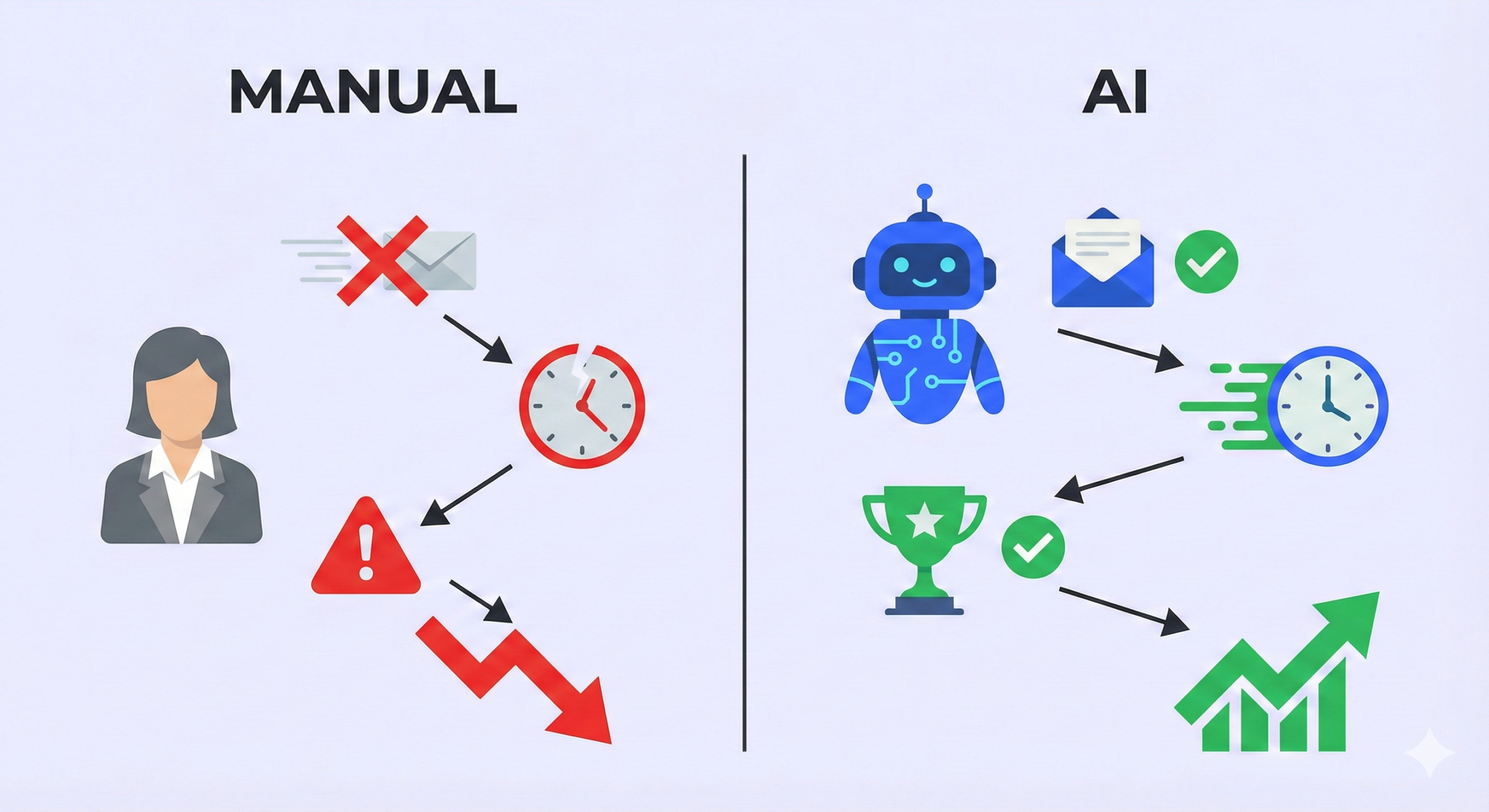
Let’s be direct. Here’s what the data says about AI-driven outreach:
14.5% increase in overall sales and marketing productivity (Nucleus Research)
40–50% more time spent in direct customer conversations for high-performing teams using AI
4+ hours per week saved on inbox management per rep
300% higher reply rates with dynamic personalization vs. generic templates
$2.86 CAC achieved in optimized AI-driven campaigns — versus unpredictable, high labor costs in manual outreach
These aren’t incremental improvements. They’re the difference between a team that’s scrambling and a team that’s scaling.
How This Fits Into Your Broader Lead Generation Strategy
Email scheduling is one piece of a much larger puzzle. Whether you’re building outbound lead generation processes from scratch or optimizing an existing funnel, the tools you use for email scheduling directly impact your pipeline velocity.
If you’re running targeted outreach campaigns, AI scheduling ensures your messages land at the right time — not just in the right inbox. And if you’re partnering with a cold email agency, understanding the tech stack matters for setting realistic expectations on timelines and results.
For teams working with sales development services, AI-driven scheduling is increasingly the baseline — not a premium feature. And when evaluating any B2B lead generation company, ask directly how they handle deliverability and send timing.
The analogy that makes this click for operations teams: it mirrors the accounts payable process in finance. Just as AP automation eliminates manual invoice matching and approval routing — reducing per-invoice cost from ~$10 to ~$3 — email automation eliminates the manual steps that slow down your lead generation engine.
Whether you’re working with lead generation companies in the USA or building it in-house, the underlying principle is the same: systematize what can be systematized, so your people can focus on what actually requires a human.