You’ve heard the pitch: combine Instantly — one of the most popular outbound sending platforms — with Valley, a LinkedIn automation tool built for AI-driven personalization, and you’ll have a pipeline machine that practically runs itself.
Sounds great. But is it actually reliable?
Before you build your entire outbound motion on this stack, you need honest answers. Does the data flow hold up at scale? Will your domains survive? Can the LinkedIn automation keep your account safe? And — most importantly — will you actually get replies?
This article breaks it all down. No fluff, no hype. Just a clear-eyed look at what this stack does well, where it struggles, and what you should watch out for. If you’re exploring cold email software options or trying to decide whether this stack fits your workflow, you’re in the right place.
Let’s get into it.
Instantly + Valley Integration: Is This a Reliable Cold Email Stack?
How the Integration Actually Works
The integration connects Instantly’s email sequencing engine with Valley’s LinkedIn automation layer using Instantly’s Version 2 API — built on REST standards with Bearer token authentication. Translation: the data transfer between the two platforms is structured, secure, and not cobbled together with duct tape.
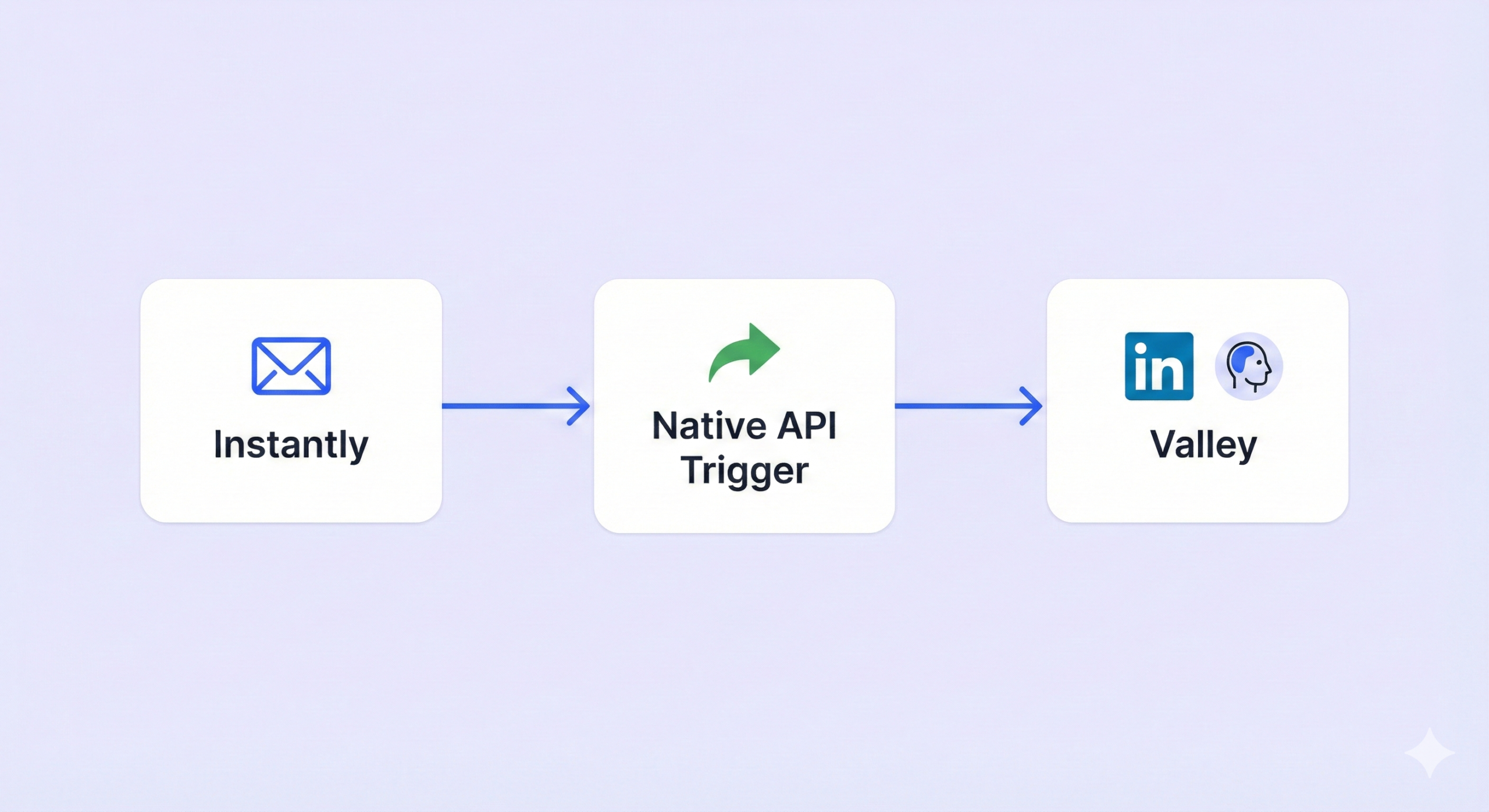
Here’s the basic flow: a prospect gets your cold email through Instantly. They open it, maybe reply, maybe don’t. Based on their status — say, “Interested” — Valley automatically picks them up and continues the conversation on LinkedIn. No CSV exports. No manual copying. The handoff is triggered by a native webhook the moment the status changes.
That’s a meaningful technical win. CSV exports are where context dies. Native webhooks mean the transition is instant and the data — including the text from their last email reply — carries over as a personalization variable in the LinkedIn message.
Key fields that transfer seamlessly include: the prospect’s email (used as a unique identifier), their last reply text, their campaign status, and custom ICP variables like tech stack or firmographic score. This is what enables Valley to send a LinkedIn message that references your actual prior email conversation — not a generic opener.
Deliverability: The Real Test
Let’s talk about the thing that matters most in any cold email stack: inbox placement.
Google, Yahoo, and Microsoft have all tightened their bulk sender rules significantly. In 2026, if your spam complaint rate exceeds 0.3% or your bounce rate climbs past 2%, you’re on thin ice. Instantly addresses this with automated warmup — a network of accounts that simulate real email conversations to build a positive sending history for your domains.
Teams that maintain stable domain health see a 15–20% higher reply rate compared to those with erratic sending patterns. That gap compounds quickly at scale.
Instantly also uses inbox rotation and AI-generated message variations (spintax) to prevent content fingerprinting. The result: your messages look genuinely different across sends, which reduces the chance of pattern-based filtering.
Here’s the honest catch, though. Some users report a “deliverability split” — 100% inbox placement for Google Workspace addresses and near-zero for Microsoft-managed inboxes in the same campaign. This suggests that even with perfect technical setup (SPF, DKIM, DMARC all clean), certain industries — especially financial services — trigger aggressive Microsoft filters based on language patterns alone.
This is why your email deliverability tools and monitoring setup matter as much as the sending platform itself. Don’t assume a clean technical setup means clean inboxing everywhere.
Deliverability Metric | 2026 Industry Benchmark | Stack Capability |
Spam Complaint Rate | < 0.3% | AI spintax + automated monitoring |
Bounce Rate | < 2% | Built-in email verification |
Average Open Rate | 25–30% | Inbox rotation + ESP matching |
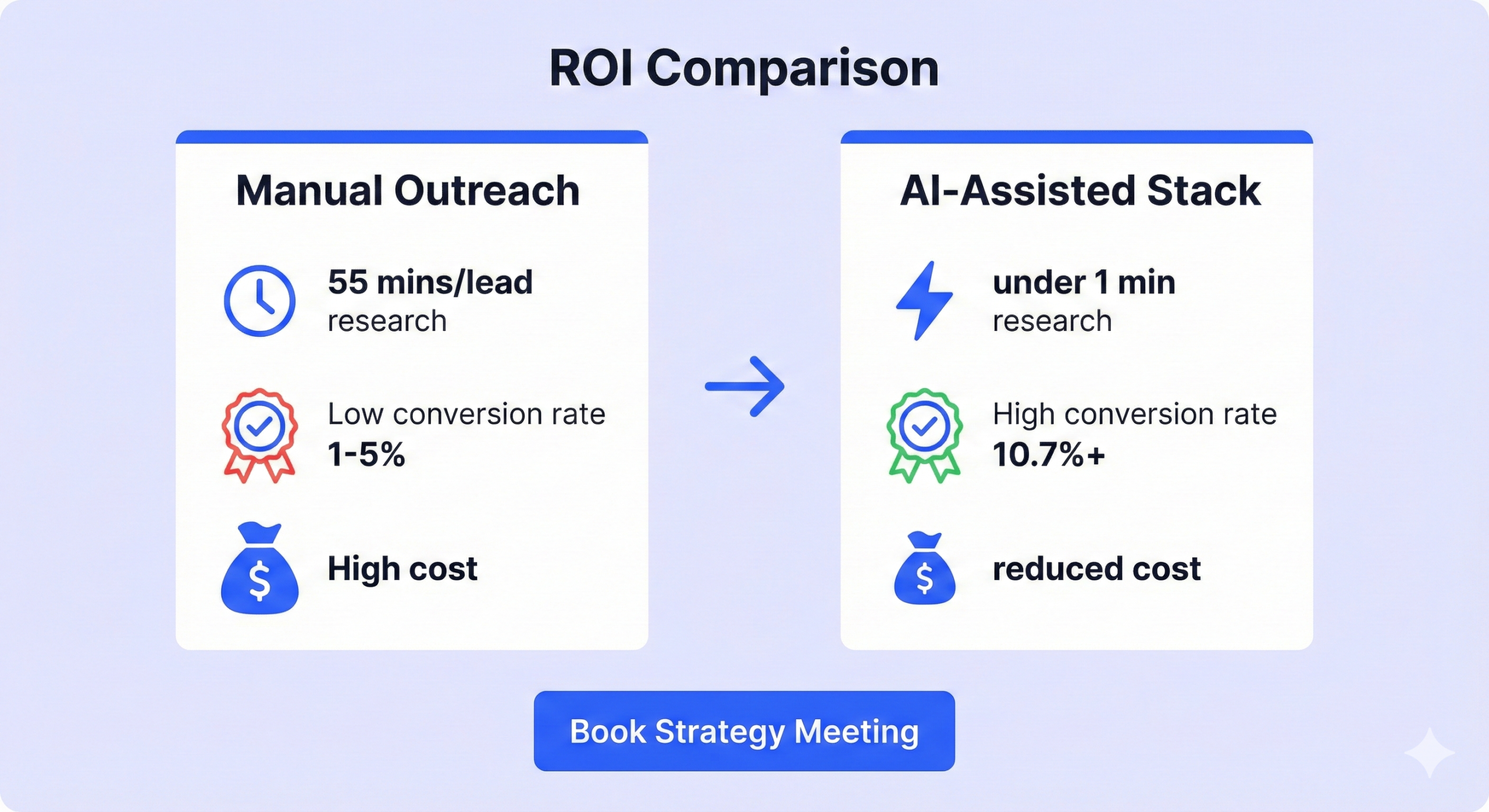
Reply Rate (Elite Campaigns) | 10.7%+ | Micro-segmentation + agentic personalization |
Scaling: Where Things Get Complicated
Instantly’s unlimited sending accounts model is one of its biggest selling points. One flat fee, unlimited inboxes. For agencies or fast-growing teams, this sounds ideal.
But scaling isn’t just about volume. It’s about managing complexity without introducing risk.
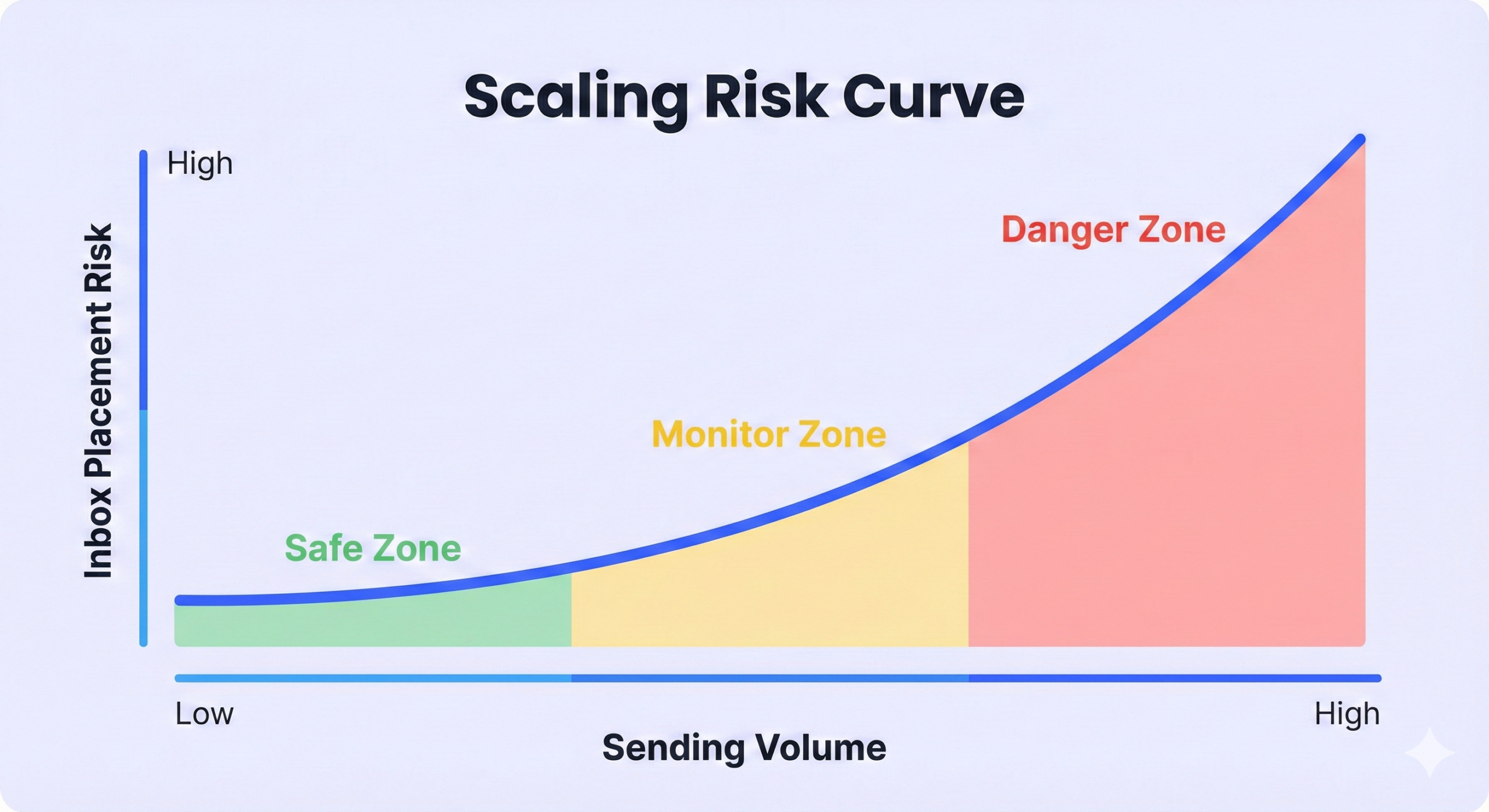
The hard truth: scaling too fast often triggers inbox pausing. Instantly’s systems flag patterns that resemble mass-sending signatures — even when individual account metrics look healthy. One moment your campaign is running; the next, hundreds of inboxes are paused and your pipeline stalls. For any team relying on this as their primary lead generation channel, that’s a significant continuity risk.
The most resilient approach for high-volume teams involves dedicated IP infrastructure and aged domains, rather than relying entirely on the platform’s pre-warmed pool. If you’re doing serious volume, budget for that infrastructure. It’s not optional.
You can read more about building a proper warm-up foundation in our guide on email warm up tools.
Valley’s LinkedIn Layer: Opportunity and Risk
Valley’s core value is research-driven personalization. It analyzes 60+ signals per prospect — funding news, blog posts, newsletters, job changes — and crafts LinkedIn messages in your voice. The result is outreach that reads like you actually did your homework, because the system did it for you.
The practical workflow benefit is real: manual prospect research takes an average of 55 minutes per lead. Valley compresses that to under a minute. That time reclaimed can go into closing conversations instead of research tasks.
But LinkedIn automation carries inherent risk. LinkedIn’s detection systems are increasingly sophisticated, targeting Chrome extensions and suspicious IP patterns. Valley uses cloud-based infrastructure with location-matched IPs to reduce this risk. Still, the risk is never zero.
The best practices that keep accounts safe in 2026:
✅ Use a paid LinkedIn account (Premium or Sales Navigator). Paid accounts are far less likely to face immediate permanent bans — they typically get a warning first.
✅ Ramp up gradually. New accounts need to warm up by connecting with known contacts before high-volume automation begins.
✅ Maintain a 35%+ connection acceptance rate. LinkedIn uses this as a key signal to differentiate genuine outreach from spam.
✅ Go hybrid. Automate the research and initial touch. Take over manually the moment a prospect replies. This preserves the trust window on social platforms.
Data Quality: The Underrated Factor
Here’s what many teams overlook: a stack is only as good as the contact data feeding it. “Inaccurate data” is the most common complaint across both Instantly and Apollo user reviews. Wasted credits, bounced emails, damaged domain reputations.
The industry benchmark to protect your sender reputation is a hard bounce rate below 0.5%. In 2026, ESPs will blacklist domains that consistently exceed the 2% bounce threshold. Even a short spike can take weeks to recover from.
The most reliable approach separates the sourcing tool from the sending tool. While Instantly handles delivery, you need a dedicated, verified contact source to ensure every address in your sequences is valid and active. This dual-layer approach is what separates teams that maintain clean domains from those constantly firefighting.
Elite practitioners go one step further: real-time SMTP verification at the point of export — not just a one-time batch clean. Employment changes constantly. A valid address today can be a bounce tomorrow. You can explore how this fits into a broader lead generation strategy for a fuller picture.
Data Challenge | Impact | Best Practice |
Outdated Employment Records | High bounce rate, domain risk | Real-time SMTP verification at export |
Generic Catch-all Emails | Wasted volume, low engagement | Filter for professional verified addresses only |
Missing Multi-Channel Data | Single-channel bottleneck | Use enriched providers with phone + email |
ROI: What the Numbers Say
At the end of the day, a software stack is a financial decision. Here’s what the data shows for teams running automated outbound systems like this one.
Companies see an average return of $8 for every $1 invested in sales automation. When that automation is purpose-built (specialized AI, dedicated infrastructure), ROI grows an additional 10–20%.
Teams using AI-powered outbound report a 30% reduction in sales cycles and a 25% increase in qualified leads entering the pipeline.
Speed-to-lead matters more than most people realize: reaching a prospect within five minutes of a signal makes them nine times more likely to convert. Automated stacks with real-time triggers are the only way to achieve that consistently.
For a deeper look at measuring returns, our cold email outreach ROI guide walks through the full calculation framework.