Operational Excellence and Tech Stack Management
A VP of Sales in 2026 also needs to think like a tech architect.
Sales reps today spend 64% to 70% of their time on non-selling tasks — manual data entry, research, internal reporting. That’s a massive productivity leak. The VP’s job is to plug it by building a tech stack that automates the repetitive work and frees up reps to actually sell.
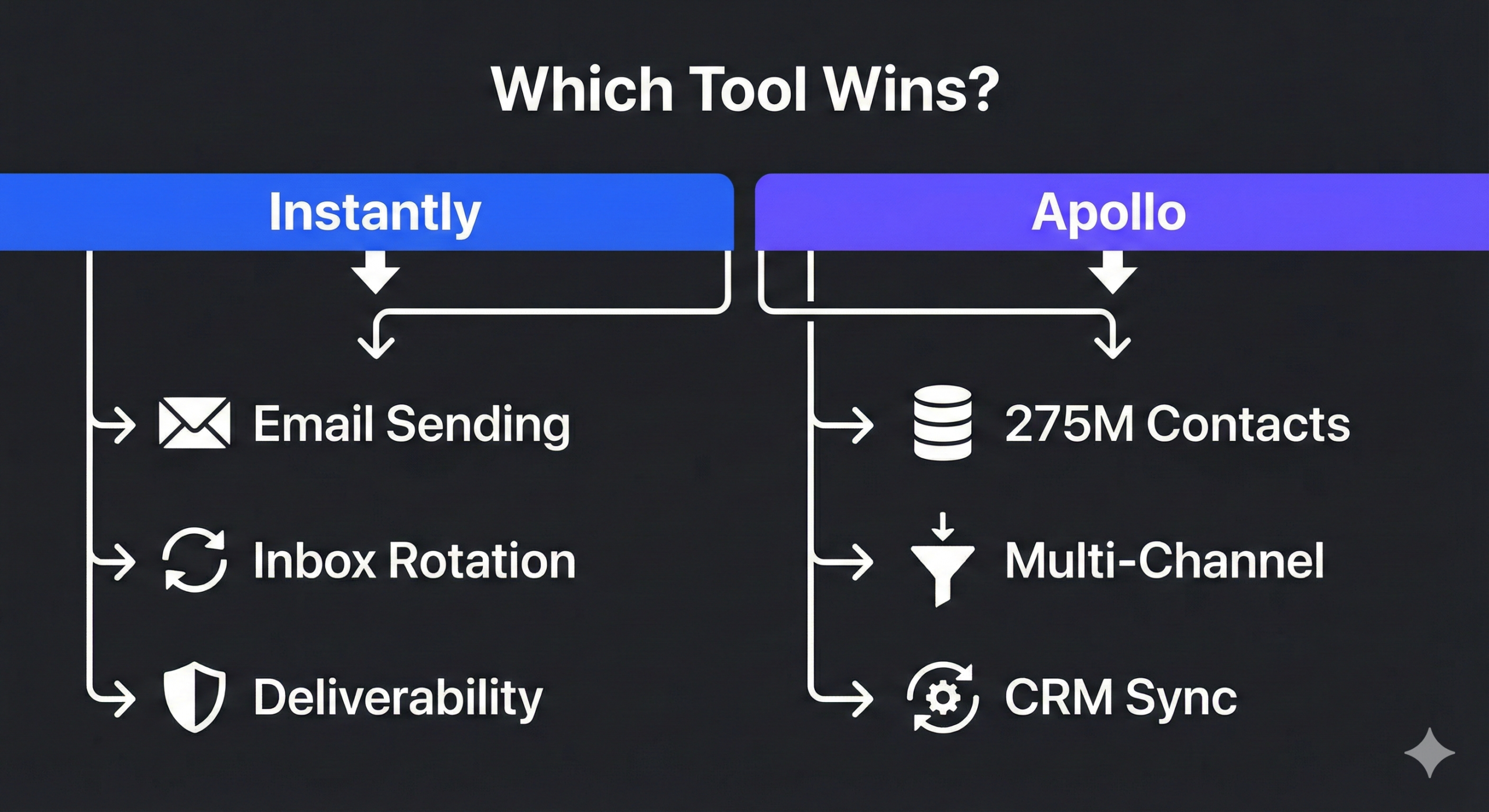
This includes CRM platforms (Salesforce, HubSpot), sales engagement tools (Outreach, Apollo.io), and data providers — all integrated to reduce friction and maximize selling time. Explore top sales tools that improve rep productivity →
Data quality deserves special attention here. Nearly 28% of an email list becomes invalid every year. Bad data means wasted outreach, high bounce rates, and damaged sender reputation. A VP who doesn’t actively manage list hygiene is quietly burning budget every single day.
And when it’s done right? Email marketing delivers an average ROI of 4200% — but only with clean data and personalized messaging.
Leadership, Mentorship, and Building a Sales Culture
Here’s the truth that a lot of people miss: the best VPs aren’t the best salespeople. They’re the best coaches.
Once you’re in this seat, your job isn’t to close deals — it’s to help other people close them better.
This means coaching the coaches (your managers), building internal career paths that keep your best talent growing, and creating a culture where feedback isn’t feared — it’s expected. The best sales cultures treat a lost deal the same way a sports team watches game film: as data, not failure.
One of the smartest moves a VP can make is treating junior team members as a talent pipeline for future senior closers. Promoting from within is cheaper, faster, and tends to produce people who ramp to full productivity faster than outside hires.
See how a structured sales development process improves team performance →
Leadership, Mentorship, and Building a Sales Culture
Here’s the truth that a lot of people miss: the best VPs aren’t the best salespeople. They’re the best coaches.
Once you’re in this seat, your job isn’t to close deals — it’s to help other people close them better.
This means coaching the coaches (your managers), building internal career paths that keep your best talent growing, and creating a culture where feedback isn’t feared — it’s expected. The best sales cultures treat a lost deal the same way a sports team watches game film: as data, not failure.
One of the smartest moves a VP can make is treating junior team members as a talent pipeline for future senior closers. Promoting from within is cheaper, faster, and tends to produce people who ramp to full productivity faster than outside hires.
See how a structured sales development process improves team performance →
Essential Skills for the VP of Sales Role
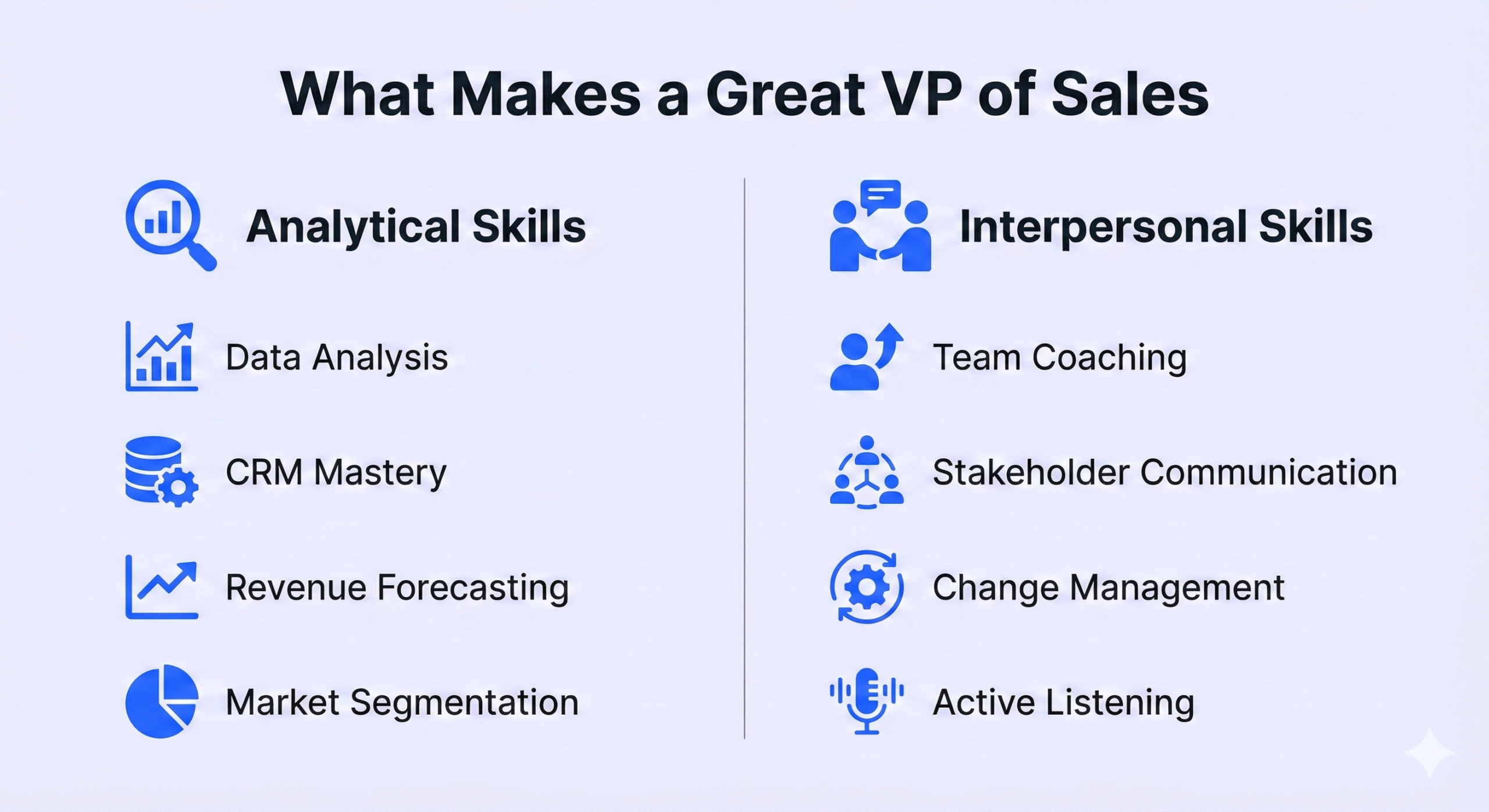
The skills that make a great VP of Sales fall into two buckets: analytical and interpersonal. You need both. One without the other will eventually get you fired.
On the analytical side:
Great VPs live inside their data. They can look at a pipeline report and immediately spot where deals are getting stuck, which segments are performing, and where revenue is leaking. This informs everything from hiring decisions to territory design. Dig into the sales performance statistics that matter most →
On the interpersonal side:
The ability to communicate with everyone — board members, managers, entry-level reps, customers — is non-negotiable. So is the ability to make hard calls under pressure without losing the room. This “command instinct” is what separates good managers from true executives.
Skill Type | Competency | Application |
Analytical | Statistical Analysis | Forecasting revenue, spotting pipeline gaps |
Technological | CRM & Automation | Building a tech stack that scales |
Interpersonal | Active Listening | Understanding team morale and customer pain |
Leadership | Change Management | Navigating org shifts or market pivots |
Strategic | Market Segmentation | Finding the most profitable customer profiles |
Project Management: The Underrated Essential Skill
Here’s one that surprises most people: project management is one of the most underrated essential skills in this role.
When you’re rolling out a new CRM, launching into a new territory, or onboarding 10 new reps at once — that’s a project. And if it’s not managed well, it fails. Using frameworks like SMART goals (Specific, Measurable, Achievable, Realistic, Time-based) keeps large initiatives on track and accountable.
In 2026, artificial intelligence ai has made this significantly easier. AI-powered tools now monitor project health in real time, flag bottlenecks before they become crises, and allow sales leaders to stay ahead of problems rather than reacting to them.
The result? Faster rollouts, fewer surprises, and a team that trusts leadership to execute.
Artificial Intelligence in Modern Sales Leadership
Speaking of artificial intelligence ai — it’s no longer optional.
56% of sales professionals now use AI tools daily, and those who do are significantly more likely to exceed their quota targets. The VP who still thinks of AI as “just a writing tool” is already falling behind.
At the executive level, AI shows up in three powerful ways:
Predictive analytics flags which leads are most likely to convert, so the team focuses energy where it matters most. This alone can increase sales productivity by up to 40% and reduce sales cycles by up to 25%.
Conversation intelligence transcribes and analyzes sales calls, surfacing coaching opportunities without managers sitting in on every call.
Workflow automation eliminates manual data entry, keeping the CRM clean and reps in more selling conversations. See how targeted outreach powered by clean data drives pipeline →
Diversifying Revenue Through Affiliate and Channel Programs
As a sales org matures, the VP often takes ownership of an affiliate program blog and channel partnership strategy.
This is basically leveraging other people’s audiences to drive leads — without the fixed cost of adding headcount. Affiliates (industry influencers, content creators, complementary SaaS companies) promote your product to their audiences in exchange for a commission.
Done right, this is one of the most cost-effective lead generation channels available. Done poorly, it’s a mess of misaligned messaging and compliance headaches.
The VP’s job is to build the system: recruit the right partners, design the right incentives, track attribution accurately, and ensure every affiliate is representing the brand properly.
Program Area | What to Focus On |
Recruitment | Partner audience quality and relevance |
Incentives | Tiered commissions tied to revenue, not just clicks |
Compliance | Brand guidelines, legal accuracy |
Technology | Accurate attribution and tracking software |
Enablement | Marketing assets and dedicated support |
The Career Path: From the Front Lines to the Executive Suite
Most VPs of Sales didn’t start in a boardroom. They started making cold calls.
Here’s how the typical path unfolds:
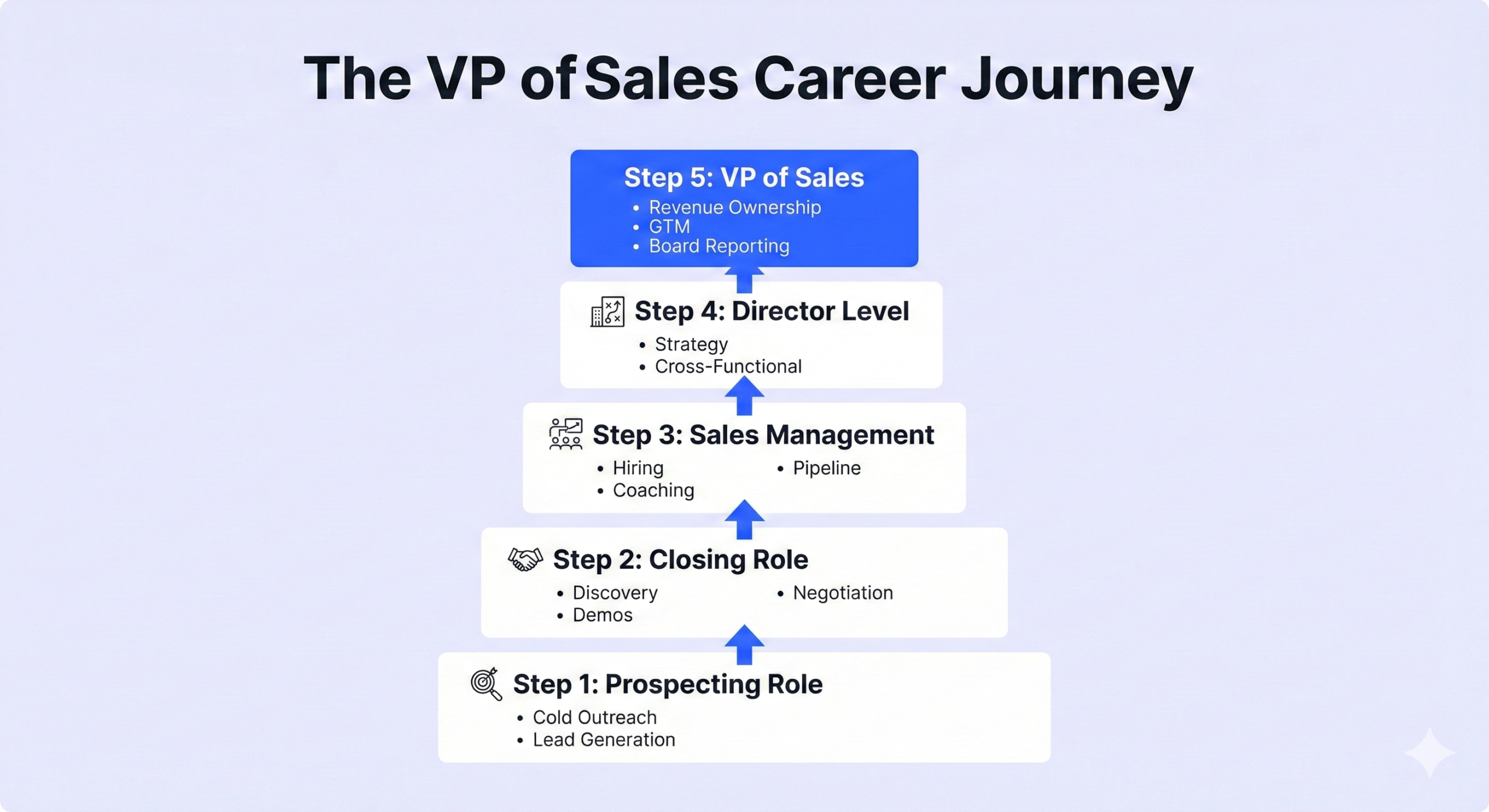
The Prospecting Phase: This is where it all begins — cold emailing, cold calling, LinkedIn outreach. The goal is mastering the fundamentals: handling objections, understanding buyer psychology, and developing resilience. See how the full sales cycle connects →
The Closing Phase: After mastering top-of-funnel, the natural progression is moving into closing roles. This is where reps learn discovery, demo delivery, negotiation, and how to navigate complex buying committees. Moving from smaller deals into mid-market or enterprise accounts accelerates growth dramatically.
The Management Phase: The first leadership role is the hardest transition. Suddenly, your success isn’t measured by your own quota — it’s measured by your team’s. Hiring, coaching, pipeline reviews, and culture-building become the daily focus. Most people underestimate how much this shift requires.
The Executive Phase: At the VP level, you’re no longer in the weeds of individual deals. You’re running the machine — long-term forecasting, GTM strategy, cross-functional alignment with marketing and product, and board-level reporting. Most organizations look for 10+ years of progressive experience, with at least 5 years in leadership.