

If your sales team is spending more time hunting for the right content, fumbling with tools, or sitting through training that doesn’t stick — that’s a revenue problem. And the person hired to fix it? The Head of Sales Enablement.
This role has quietly become one of the most important positions in any modern sales organization. It’s not glamorous. It’s not often on the homepage. But without it, pipelines stall, new hires ramp slowly, and quota attainment stays frustratingly average.
Here’s everything you need to know about what this role actually does, what skills it takes, and how careers in this space unfold — without the fluff.
Head of Sales Enablement: Key Responsibilities, Essential Skills, and Career Path
What Does a Head of Sales Enablement Actually Do?
Let’s get specific. This isn’t a “run some training sessions and call it done” role. The Head of Sales Enablement owns the entire system that helps sales professionals perform at their best — day in, day out.
Sales professionals currently spend only 28–30% of their working hours actually selling. The rest gets eaten by admin tasks, searching for content, and sitting in internal meetings. The enablement leader exists to reclaim that time and convert it into revenue.
Companies that invest in structured sales enablement programs see quota attainment rates of 84%, compared to just 60% in organizations that don’t prioritize it. That’s not a small gap — that’s the difference between hitting targets and missing them quarter after quarter.
Responsibility One: Onboarding and Training That Actually Sticks
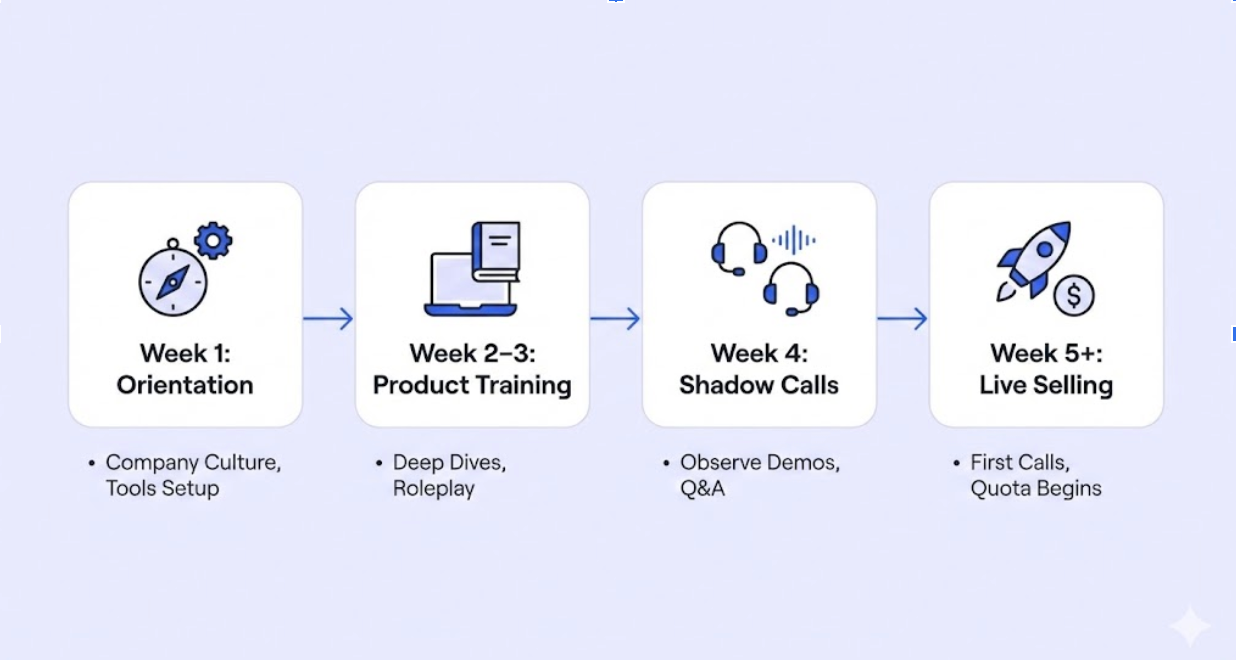
The first major pillar is getting new hires productive as fast as possible. In most companies, the time between a new hire’s start date and their first closed deal — often called “ramp time” — is painfully long.
Structured enablement programs reduce onboarding time by 40–50%. That means reps start generating pipeline faster, which directly impacts quarterly numbers.
But this isn’t just about speed. The Head of Sales Enablement designs training that builds real skills — consultative selling, objection handling, and deep discovery — not just product knowledge dumps that people forget by next Monday.
Responsibility Two: Content That Sales Actually Uses
Here’s a brutal truth: 65% of marketing-created content goes completely unused by sales teams. Not because it’s bad content — but because it’s not mapped to where sellers actually need it.
The enablement leader bridges that gap. They ensure every piece of content — from cold outreach templates to ROI calculators to case studies — is organized, accessible, and tied to a specific stage of the buyer’s journey.
When reps can pull the right asset at the right moment, deals move faster. When they can’t, prospects ghost.
Explore how sales tools stack up when it comes to content delivery and management for modern revenue teams.
Responsibility Three: Managing the Sales Technology Stack
The average sales professional uses 8 different tools to close a single deal. And 42% report feeling overwhelmed by the complexity of their tech environment.
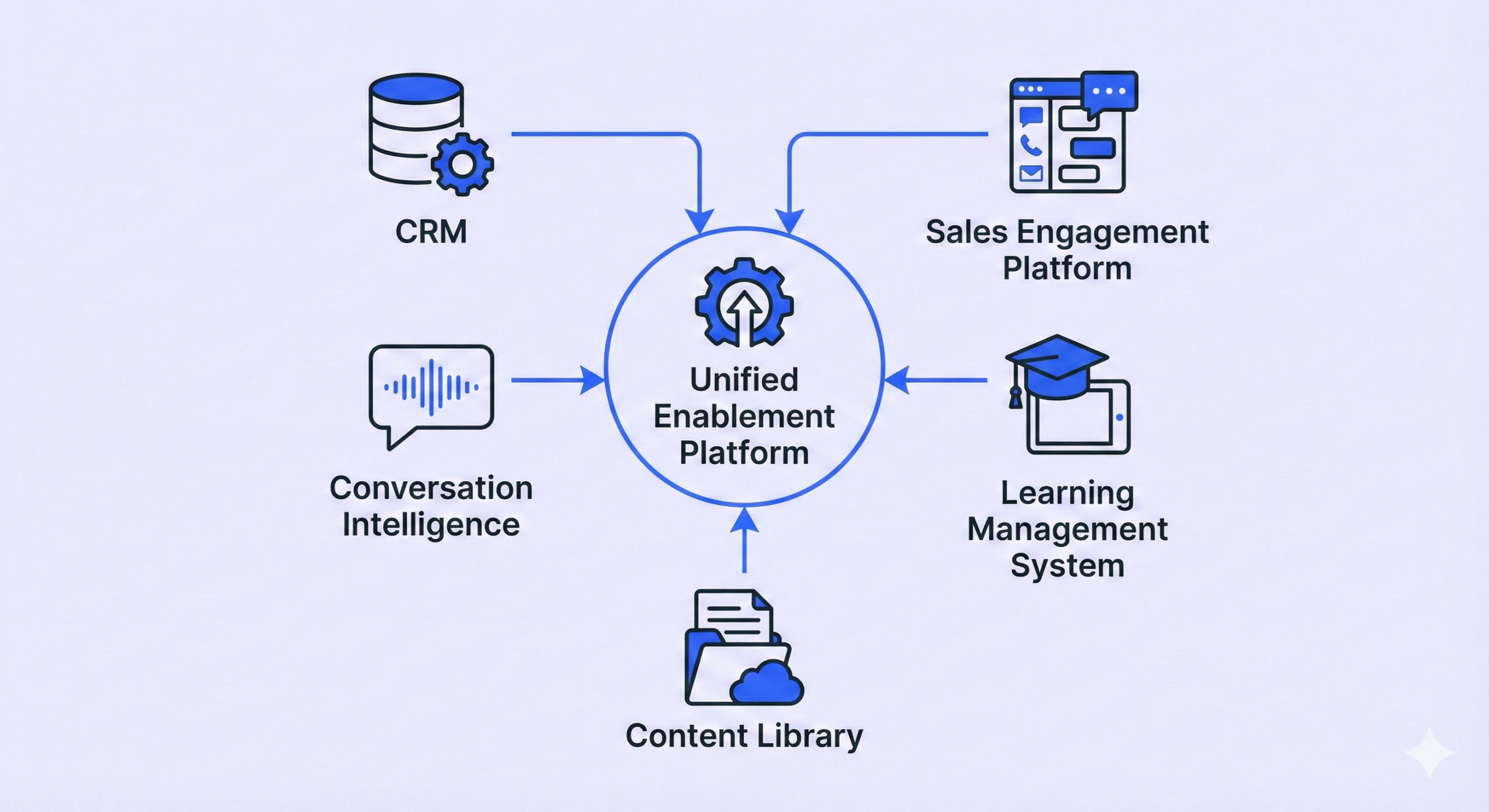
The enablement leader is responsible for selecting, integrating, and training the team on tools that actually help — not just tools that look impressive in a vendor demo. This includes CRM systems, sales engagement platforms, conversation intelligence tools, and increasingly, AI-powered coaching solutions.
By 2026, the strategic priority is “intelligent convergence” — consolidating fragmented tools into unified, AI-native platforms where data flows seamlessly between coaching, content, and pipeline reporting.
If you want to understand which tools are worth the investment, check out this breakdown of sales cadence tools that actually drive results.
Responsibility Four: Cross-Functional Alignment
The enablement leader isn’t just managing sales. They’re sitting at the intersection of sales, marketing, and product — and making sure those three teams are actually talking to each other.
Without that alignment, marketing creates campaigns that sales ignores. Product launches features that nobody knows how to sell. And the customer gets a fragmented, confusing experience.
Companies with tightly aligned sales and marketing teams see win rates up to 60% higher than those without it. The Head of Sales Enablement is the connective tissue that makes that alignment real.
This means shared KPIs, joint planning sessions, consistent messaging, and a feedback loop where sales informs marketing what’s actually landing in real conversations.
Essential Skills to Thrive in This Role
The Head of Sales Enablement needs to be a rare combination of strategist, coach, data analyst, and relationship builder — all in one.
Strategic and Analytical Thinking — You need to be able to look at sales data and find the specific bottleneck. Is it email open rates? Conversion from discovery to demo? Time-to-close? The enablement leader uses sales productivity statistics to calculate ROI on every initiative and justify budget decisions to leadership.
Technological Fluency — You don’t need to be an engineer, but you need to understand how your tools work, how they integrate, and how AI is reshaping what’s possible. Platforms like Salesforce, HubSpot, and Highspot are table stakes. AI-powered coaching and predictive analytics are the next frontier.
Coaching and Pedagogy — Knowing how adults learn — and building programs that drive lasting behavior change instead of one-time knowledge dumps — is a genuine skill. The best enablement leaders understand the science of habit formation, not just content delivery.
Communication and Influence — This role has no direct authority over marketing or product. Everything gets done through relationships and persuasion. If you can’t bring people along without a mandate, this role will grind you down fast.
Sales Methodology Knowledge — Frameworks like MEDDIC, SPIN Selling, and The Challenger Sale aren’t just buzzwords. Understanding when and how to apply them — and how to teach them to a team — is core to the role.
The Career Path: From the Sales Floor to the Executive Table
Here’s the real version of the career path — because it’s rarely a straight line.
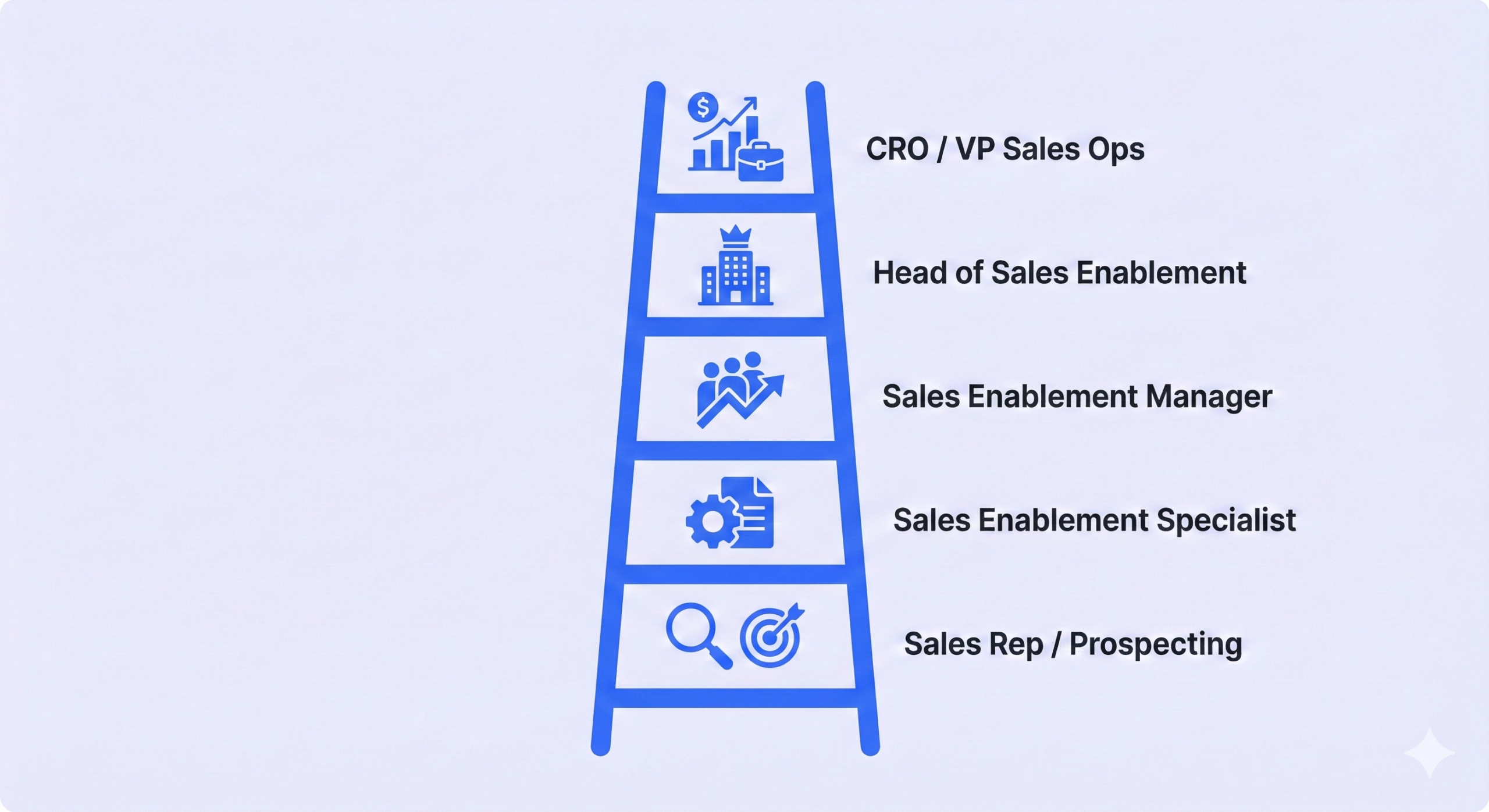
It usually starts in frontline selling. The most effective enablement leaders have lived the experience of cold prospecting, objection handling, and missing quota by a hair. That credibility is what lets them walk into a room full of experienced sellers and actually be heard.
From there, many professionals move into management — coaching smaller teams, running onboarding, or owning a specific piece of the sales process. Others specialize early, stepping into a sales enablement specialist role focused on content, tooling, or training delivery.
Moving into a sales enablement manager position typically requires three or more years of demonstrated impact — measurable improvements in ramp time, content adoption, or win rates. Reaching the Head of level generally requires 7–10 years of total experience, with at least 3 years in a senior management role.
The career doesn’t stop there. Many enablement leaders go on to become VP of Sales Operations, Chief Revenue Officer, or Chief Sales Officer. The skills they’ve built — cross-functional leadership, data analysis, and strategic planning — translate directly into the executive suite.
Some use an MBA as a catalyst to accelerate this transition, particularly in companies where the C-suite values formal business training alongside operational experience.
The AI Factor: What’s Changing Right Now
AI isn’t coming for the Head of Sales Enablement role. It’s making it more important.
AI-powered coaching tools can now analyze hours of sales calls in minutes — flagging where conversations stall, how reps handle objections, and where deals are quietly dying. This enables “always-on” coaching — real-time nudges delivered directly inside the tools reps are already using.
By 2026, predictive enablement will use live performance signals and CRM patterns to surface the exact playbook or case study a rep needs — before they even know they need it. Less cognitive load. More time on the human parts of selling: empathy, storytelling, and guiding the buyer’s decision-making.
For anyone building or running a lead generation engine, the implications are significant. The reps who are enabled to use AI well will consistently outperform those who aren’t.
