
Cold outreach is having a moment. Not the spray-and-pray kind—the smart, precise, “right person, right message, right time” kind. And AI is the engine making it all happen.
If you’re still sending the same template to 500 people and wondering why no one replies, this article is your wake-up call. In 2026, the rules have changed. The reps winning the most meetings aren’t sending more emails—they’re sending smarter ones.
Here’s what’s actually happening in cold outreach in 2026—and what you need to know to stay ahead.
AI Personalization Trends in Cold Outreach 2026
Buyer Intent Data Is Now the Starting Point, Not an Add-On
Gone are the days of buying a static contact list and blasting it. In 2026, the most effective sales teams build their outreach around buyer intent data—signals that tell you who’s actively looking for what you sell.
Think about it: Would you rather call someone cold, or call someone who just visited your competitor’s pricing page three times this week?
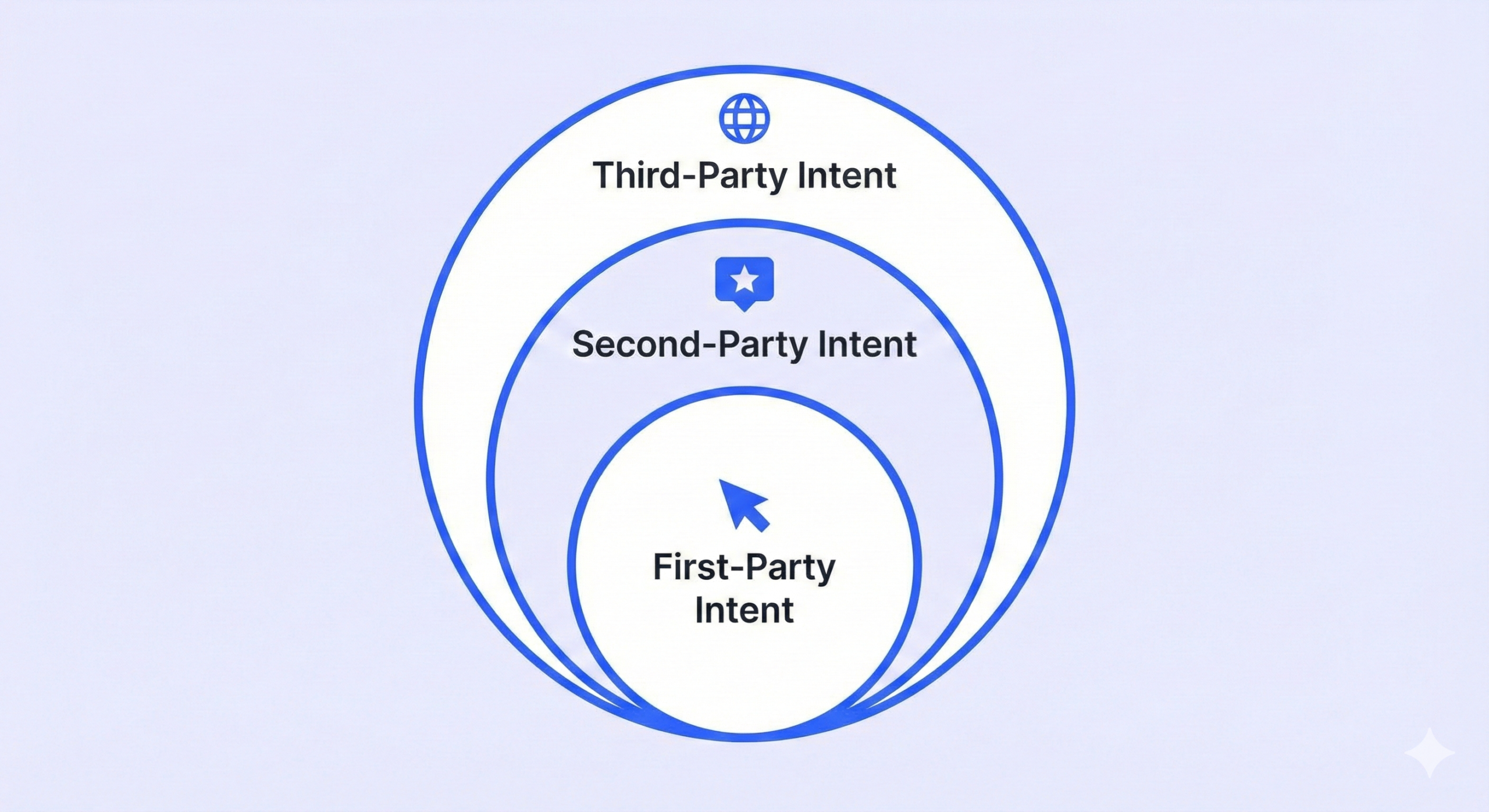
Intent data exists on three levels:
First-party signals (someone visits your site, reads your case studies, attends a webinar) are the hottest leads. They deserve a response within 5 minutes.
Second-party signals (activity on review platforms like G2 or Capterra) tell you someone is actively comparing options.
Third-party signals (broad web research behavior tracked by networks like Bombora) indicate early-stage research—great for nurture sequences.
The result? Reps are now engaging prospects who are already 60–70% through the buyer journey before even making first contact. That’s a massive head start.
Multi-Channel Orchestration Beats Single-Channel Every Time
Cold email alone is no longer enough. The data is unambiguous:
Single-channel cold email converts at 1–3%.
Multi-channel sequences (email + LinkedIn + phone) convert at 12–18%.
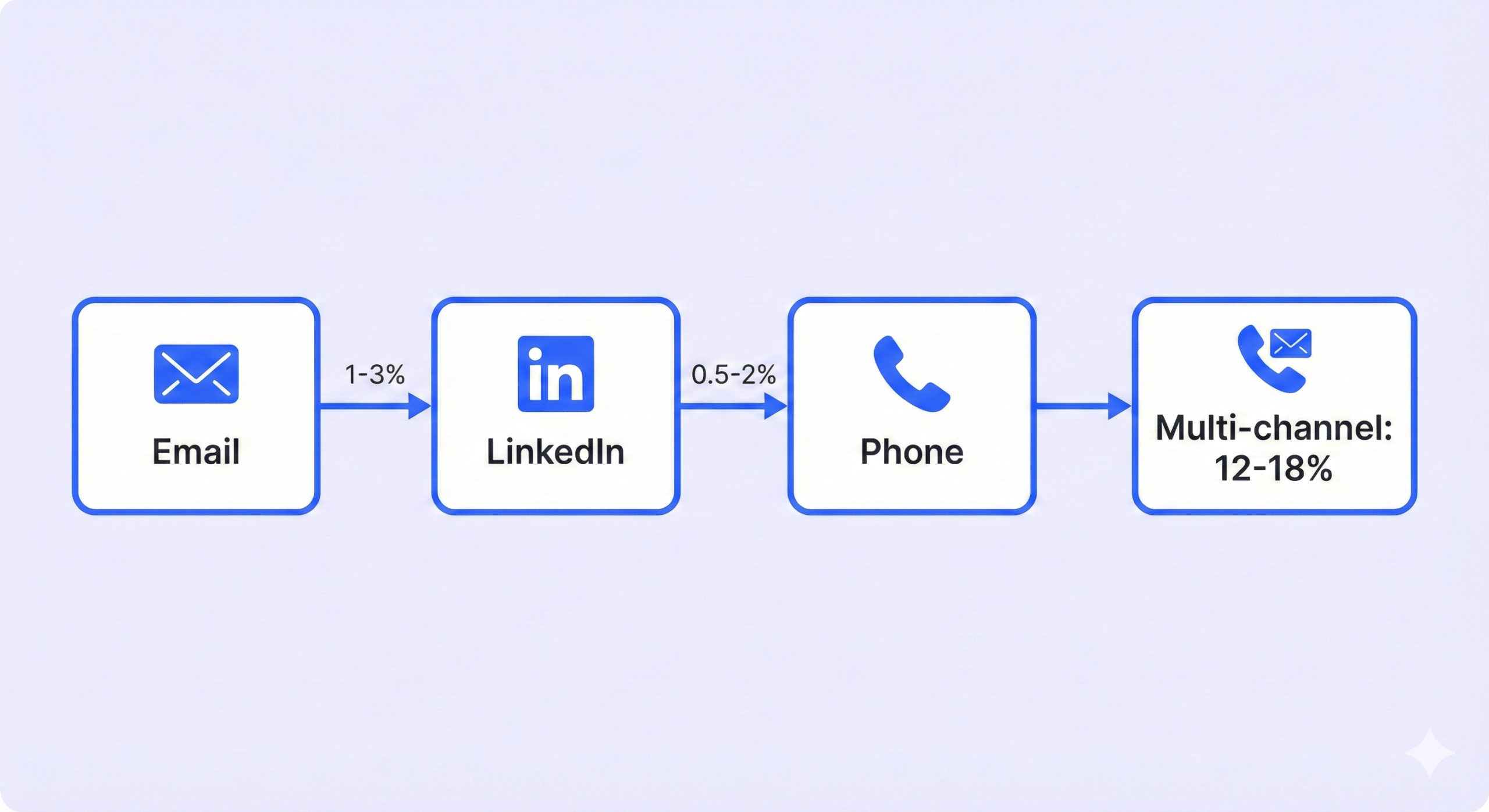
In 2026, cold outreach means coordinated touchpoints across every channel where your prospect shows up. And ai automation is the orchestration layer that makes this manageable at scale.
Here’s how it works in practice: A prospect opens your email three times but doesn’t reply. The system automatically triggers a LinkedIn connection request. If they connect but don’t respond there either, a phone call is added to the sequence. Every action is driven by behavior, not just a rigid schedule.
Interactive elements are amplifying results further. One-click polls and instant booking links embedded in emails have seen engagement rates rise by 50%—and they generate behavioral data that makes future personalization sharper. See how this fits into a full outreach automation strategy.
Behavioral Timing: The When Matters as Much as the What
You can write the world’s best email and still get ignored if it lands at the wrong time.
In 2026, ai tools use predictive send-time optimization to determine exactly when each individual prospect is most likely to open and engage. This isn’t just “send on Tuesday at 9am.” It’s individual-level micro-patterns built from historical data across millions of interactions.
The impact is measurable: dynamic, personalized send timing generates 40% higher engagement than fixed-schedule sending. Adaptive frequency (adjusting how often you reach out based on intent spikes) also significantly reduces opt-out rates.
This matters because every opt-out or spam report damages your sender reputation—and in 2026, even a 2% bounce rate can trigger automatic campaign pauses and reputation damage from email service providers.
Deliverability Is the Foundation Everything Sits On
Here’s the hard truth: none of the personalization, timing, or multi-channel magic matters if your email doesn’t reach the inbox.
In 2026, approximately 17% of marketing emails never reach the inbox—often because of bad data, poor domain setup, or list hygiene issues.
The consequences escalate fast:
Hard bounces immediately damage sender reputation.
Spam traps can cut deliverability by 50% overnight and get your domain blacklisted.
Low engagement causes ESPs to deprioritize your domain’s traffic globally.
The new baseline in 2026 is proper SPF, DKIM, and DMARC authentication—no exceptions. Beyond that, best-practice teams are now verifying every email address at the moment of send, not quarterly. Real-time verification ensures the mailbox is active before a single message goes out.
Valid, verified contact data is the single highest-leverage investment you can make in your outbound stack. Everything else builds on it. Curious how this affects campaign returns? Our cold email outreach ROI guide breaks down the numbers.
AI Writing Tools Are Raising the Bar (and That’s a Good Thing)
Yes, everyone’s using AI to write emails now. Which means the bar for quality has gone up, not down.
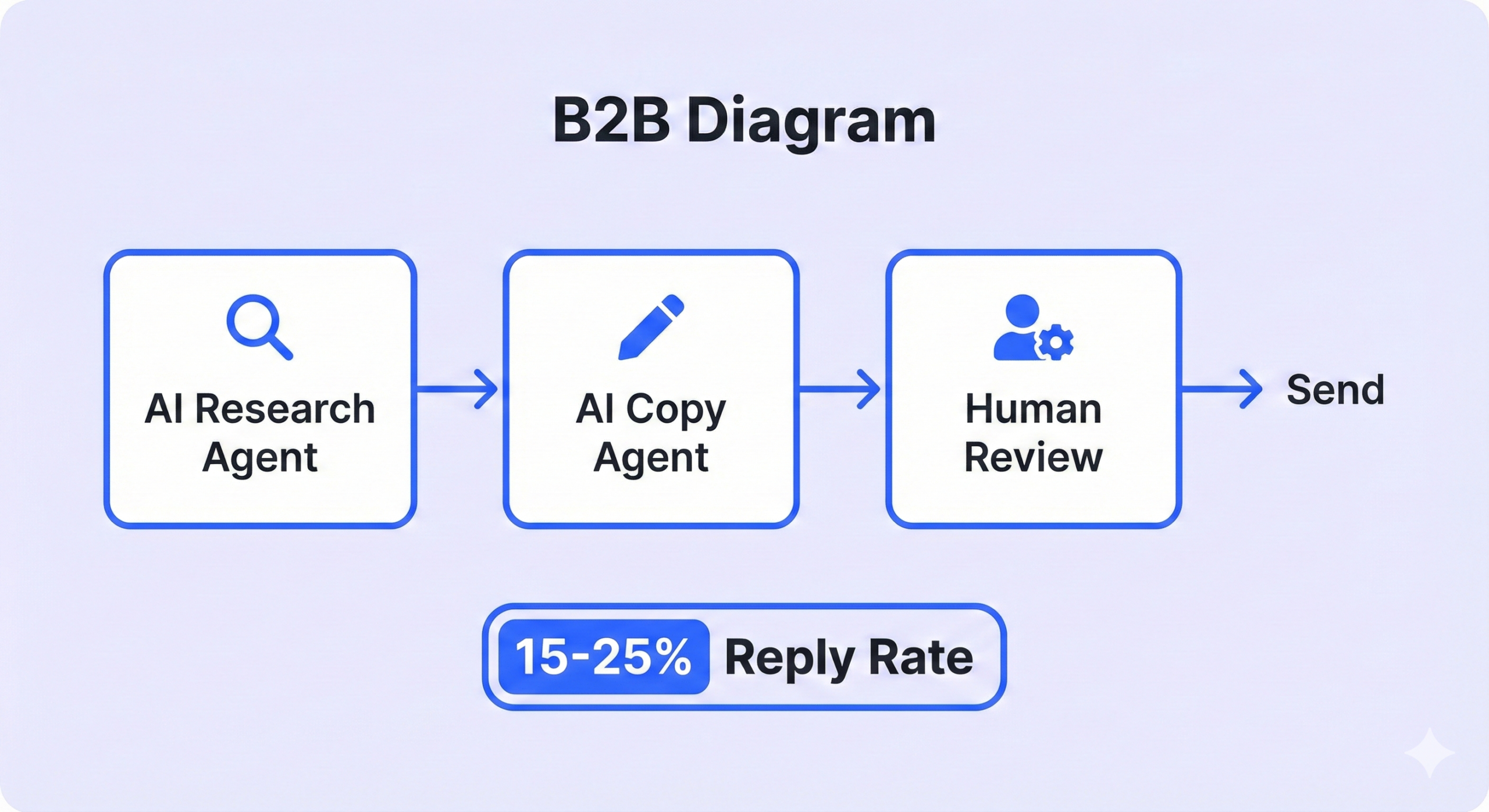
The reps who win are using AI as a starting point, then adding the human nuance that makes a message feel like it came from a real person who actually did their homework. The “Human-in-the-Loop” model is now the gold standard for high-value accounts.
Multiple LLMs are often used for different tasks: one for creative copywriting, another for deep research analysis, another for technical deliverability checks. Multi-agent systems where a “Research Agent” gathers intelligence and a “Copy Agent” drafts the message are becoming standard for enterprise outbound.
If you want a practical starting point, our guide on using ChatGPT for cold emails shows you exactly how to combine AI-generated drafts with the human touch that gets replies.
What This All Means for Lead Generation in 2026
The teams seeing the best results in 2026 share a common approach: they treat lead generation as a system, not a series of one-off tactics.
Lead-to-opportunity conversion rates have jumped from 1–3% in 2023–2024 to 5–6% with AI-integrated workflows—a 200–300% improvement. Average time to first meeting has dropped from 2–3 weeks to 8 days. Sales reps are now spending 45–50% of their time actually selling versus 28% before AI took over the administrative work.
The common thread? Targeting precision + campaign quality + systematic scaling. Get all three right and results compound. Our guide to targeted outreach goes deeper on how to build that targeting layer.
For a full picture of how these pieces fit together, the lead generation playbook covers the end-to-end system.
Conclusion
The 2026 cold outreach landscape rewards precision, punishes laziness, and makes the gap between good and great impossible to ignore.
Intent data tells you who to contact. AI personalization tells you what to say. Behavioral timing tells you when to reach out. Multi-channel orchestration ensures you actually get seen. And verified data ensures you actually land in the inbox.
None of these elements work in isolation. But put them together and you’re not doing cold outreach anymore—you’re doing precision outreach that converts at rates most people think are impossible.
The question isn’t whether to adopt these trends. It’s how fast you can implement them before your competitors do.
At Salesso, we run complete outbound systems across cold email, LinkedIn, and calling—with targeting, campaign design, and scaling built in. If you want to see what a modern outbound engine looks like in action, book a strategy meeting and we’ll show you.

