
Why B2C Lead Generation Is Different
The year is 2025, and capturing consumer attention has never been harder. While businesses chase corporate accounts with long sales cycles, consumer-facing companies face a different beast entirely. You’re not selling to committees or navigating approval chains—you’re connecting with individuals making emotional, often impulsive decisions.
Your success depends on one thing: reaching the right person at the exact moment they’re ready to buy. That’s where lead generation software becomes your competitive advantage. But here’s the catch: most tools are built for B2B teams hunting corporate executives, not for brands trying to connect with homeowners, online shoppers, or local service seekers.
This guide cuts through the noise. We’ll show you which tools actually work for consumer markets, how to combine them into a system that fills your pipeline, and the strategies that turn software features into closed deals. Whether you’re selling real estate, insurance, e-commerce products, or local services, you’ll walk away knowing exactly which tools to buy and how to use them.
Understanding B2C Lead Generation Software
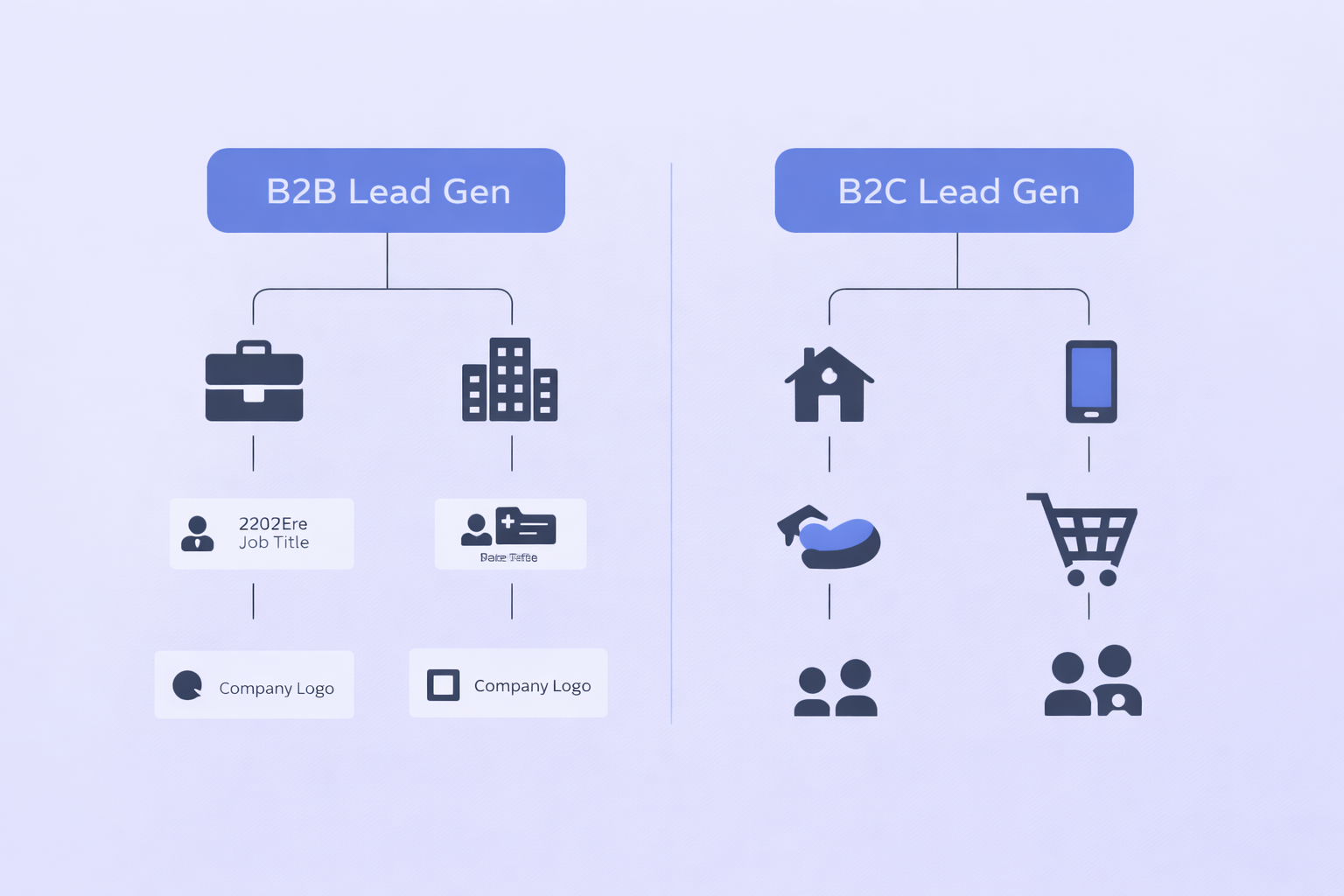
Let’s get clear on what we’re actually talking about. B2C lead generation software helps consumer-facing businesses identify, capture, and nurture potential customers at scale. Unlike B2B tools that focus on job titles and company revenue, these platforms track demographics, interests, location data, and personal contact information.
The distinction matters because your ideal customer isn’t defined by their job—they’re defined by their life situation. A new parent, a homeowner in a specific zip code, someone who just searched “best yoga classes near me”—these are your targets, and standard B2B databases miss them entirely.
The Three Pillars of B2C Lead Generation
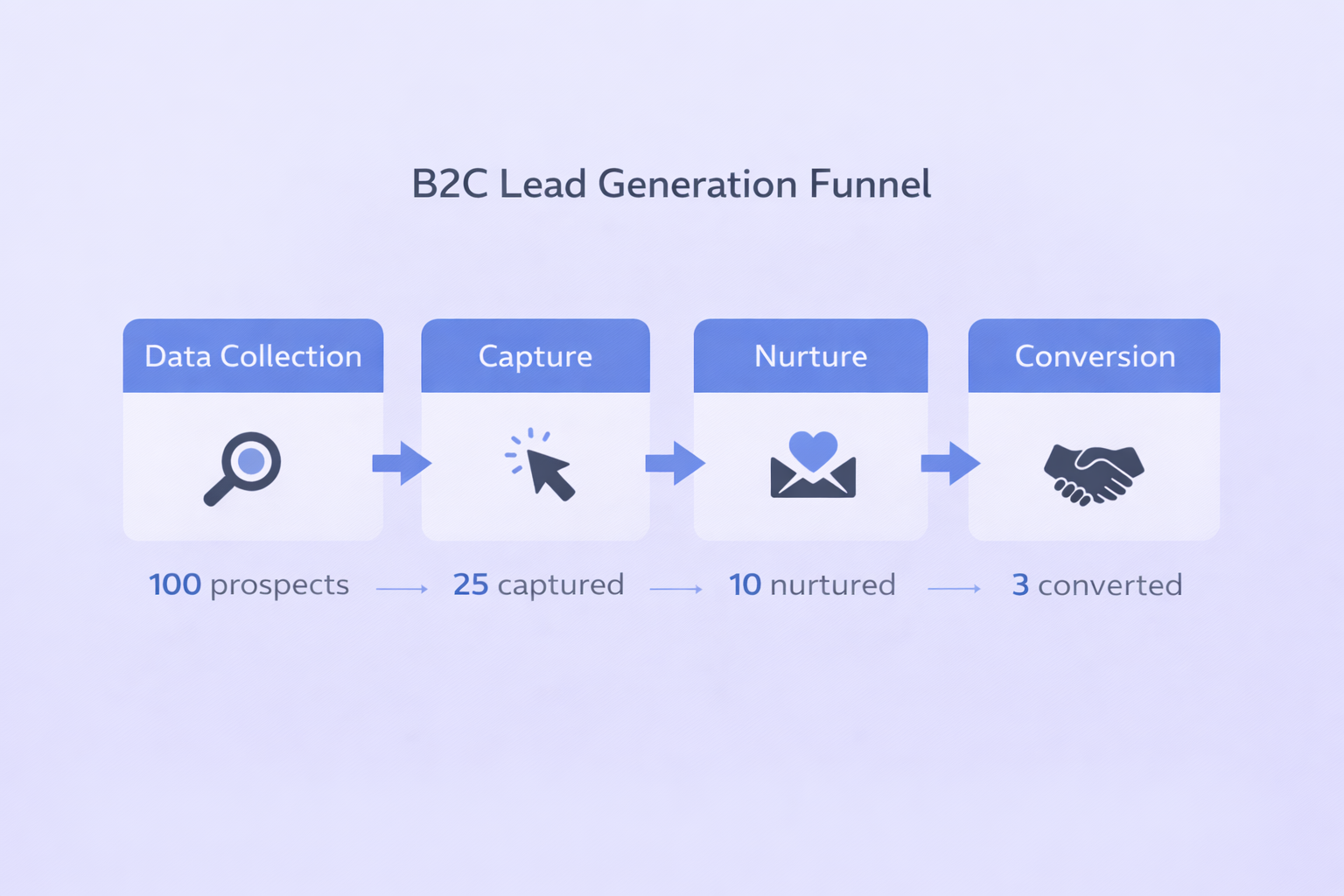
Modern generation software operates across three core functions, and understanding this framework helps you build the right stack:
- Data Collection & Prospecting
These tools help you find people who match your ideal customer profile. For consumer markets, this means demographic filtering (age, location, income level) and behavioral signals (recent home purchase, gym membership, online shopping patterns). The best platforms combine public records, social media activity, and verified contact databases to give you actionable lists.
Research shows that businesses using dedicated lead generation tools see 3-5x higher conversion rates compared to manual prospecting methods. Why? Because you’re starting with people who already exhibit buying signals rather than calling completely cold contacts.
- Capture & Engagement
Once you identify potential customers, you need to capture their information. This happens through landing pages, lead magnets (free guides, discounts, quizzes), and interactive content. 51% of marketers cite Facebook as their top platform for lead generation because social media platforms offer built-in capture forms that auto-fill user data, eliminating friction.
The psychology here is critical. Consumers are 10x more likely to share their email for something valuable (a personalized quiz result, a discount code) than for a generic newsletter. Modern software automates this exchange—you offer value, they give contact info, and the system immediately tags them based on their interests.
- Nurture & Conversion
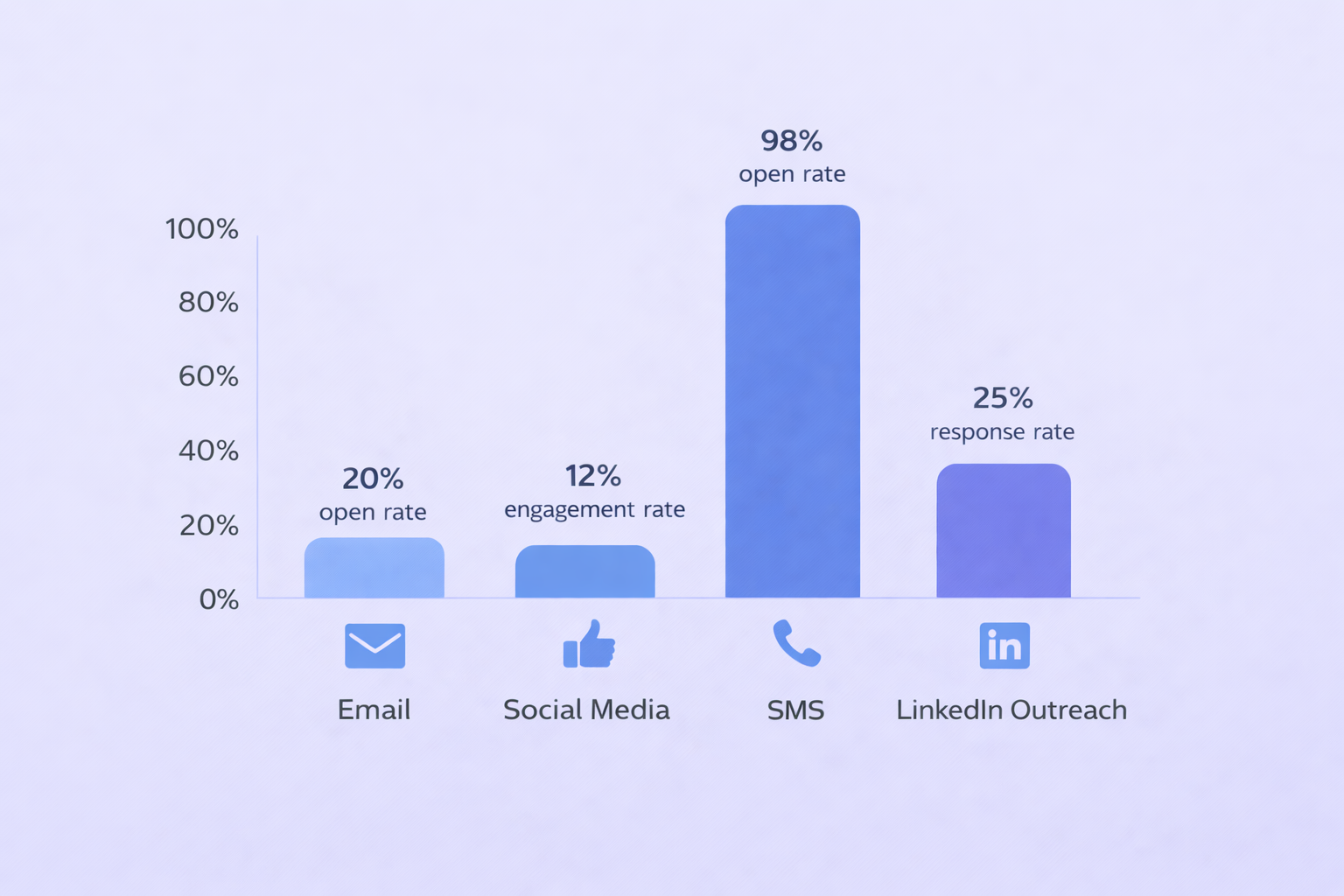
Raw leads are worthless without follow-up. Email and SMS automation platforms keep your brand top-of-mind until prospects are ready to buy. Email marketing delivers an average ROI of $36-42 for every $1 spent, making it the highest-returning channel in digital marketing. For time-sensitive offers, SMS outperforms with a staggering 98% open rate and 45% response rate compared to email’s 6%.
How Lead Generation Software Actually Works
Let’s demystify the technology. At its core, lead generation platforms use data aggregation, behavioral tracking, and automation to move people through your funnel.
Data aggregation pulls information from public records (property ownership, voter registration), social media profiles (interests, location check-ins), business directories (for local services), and third-party data brokers. Advanced platforms verify this data in real-time—checking that email addresses are deliverable and phone numbers are active—so you’re not wasting time on dead contacts.
Behavioral tracking monitors how prospects interact with your digital presence. Did they visit your pricing page three times? Watch 80% of your product demo video? Abandon their shopping cart? These signals indicate buying intent, and modern software automatically triggers follow-up actions based on these behaviors.
Automation is what makes it all scalable. Instead of manually sending emails or remembering to follow up, the system does it for you. You create the sequences once—a series of emails, texts, or social media touches—and the software executes them based on triggers. Someone downloads your guide? They automatically enter a 5-day educational sequence. They don’t open the first three emails? The system tries a different subject line or switches to SMS.
Using cold email software combined with social selling creates a multi-channel approach that catches prospects wherever they’re most active. The integration between platforms means one person never receives duplicate outreach, maintaining a professional brand experience.
The Best B2C Lead Generation Software for 2025
The market is flooded with options, but only a handful truly excel at consumer prospecting. We’ve tested dozens of platforms, and these are the ones that consistently deliver results for brands targeting individual consumers rather than corporate accounts.
1. Salesso – The LinkedIn Outbound Powerhouse
While most lead generation tools focus on email databases or social ads, Salesso takes a different approach: LinkedIn automation that actually works. Here’s why this matters for consumer brands: 65+ million decision-makers use LinkedIn daily, including business owners, high-net-worth individuals, and professionals making personal purchase decisions (real estate investments, luxury goods, professional services).
Core Features:
- Automated LinkedIn prospecting that connects with your ideal customers at scale
- Personalized outreach sequences that feel human, not robotic
- Built-in CRM to track conversations and book meetings
- Response rate optimization using A/B tested message templates
The platform excels at what we call “warm cold outreach.” Unlike blasting emails to purchased lists, you’re connecting with people who already operate in professional environments and expect networking conversations. Salesso automates the manual work—finding profiles, sending connection requests, following up—while keeping your approach personal and compliant with LinkedIn’s policies.
Pricing: Plans start around $49/month for individual users, with team plans offering unlimited campaigns and advanced targeting filters.
Best For: Service-based businesses (financial advisors, real estate agents, B2B2C coaches), luxury consumer brands, and anyone targeting professionals for personal purchases.
The LinkedIn automation tool functionality removes hours of manual prospecting work, letting you focus on conversations that actually convert. Users report 15-25% response rates compared to cold email’s typical 1-5%, making it significantly more efficient for high-value customer acquisition.
6. SimpleTexting – The SMS Powerhouse
SMS is the most underutilized channel in consumer marketing. People read 98% of text messages within 3 minutes, and response rates hit 45% compared to email’s 6%. SimpleTexting makes mass SMS campaigns manageable while keeping you compliant with TCPA regulations.
Core Features:
- Bulk texting with personalization
- Two-way conversations (customers can text back)
- Automated drip campaigns via SMS
- Compliance management for opt-ins and opt-outs
The platform shines for appointment-based businesses. Sending SMS reminders reduces no-show rates by 30-50%, directly impacting revenue without additional marketing spend.
Best For: Appointment-based services (salons, medical practices, consultations), time-sensitive consumer offers, event-driven marketing.
7. Viral Loops – The Referral Amplifier
Your best leads come from existing customers. Viral Loops helps you build referral programs that turn buyers into brand ambassadors. Think Dropbox’s famous “invite a friend, both get storage” model—customers who come via referral convert 3-5x higher than cold prospects.
The software creates unique referral links for each customer, tracks who they share with, and automatically distributes rewards (discounts, cash, credits). Gamification elements (leaderboards, milestone rewards) encourage sharing without making it feel forced.
Best For: E-commerce brands, subscription services, consumer products with network effects.
Building Your B2C Lead Generation System
Owning tools doesn’t make you successful—knowing how to combine them does. Here’s the framework that consistently works across consumer markets.
The Multi-Channel Approach
Stop betting everything on one channel. The most successful consumer brands use 3-4 lead sources simultaneously, creating redundancy and capturing prospects wherever they’re most active.
A Typical High-Performing Stack:
- LinkedIn outreach (Salesso) for professional consumers and high-value prospects
- Email automation (Klaviyo) for nurturing captured leads
- Web capture (OptinMonster) for converting anonymous traffic
- SMS follow-up (SimpleTexting) for time-sensitive offers and reminders
This approach works because different prospects prefer different channels. Some people ignore emails but respond instantly to LinkedIn messages. Others check texts religiously but rarely open emails. By diversifying, you’re not leaving money on the table.
Warm-Up Your Cold Outreach
Cold outreach still works, but only if you do it right. The biggest mistake? Sounding like a robot. Here’s a script framework that consistently outperforms traditional templates:
“Hi [Name], full transparency—this is a cold message, so feel free to ignore if it’s not relevant. I’m reaching out because [specific reason related to their profile/location/interest]. Quick question: [single, relevant question]. If this isn’t a fit, no worries—just thought I’d ask.”
Why this works: You acknowledge the cold nature (building trust), give them an easy out (respecting their time), and make it about them rather than your product. Using advanced LinkedIn search filters ensures you’re only reaching relevant prospects, increasing response rates.
The 5-Minute Rule
Research shows leads contacted within 5 minutes are 100x more likely to convert than those contacted after 30 minutes. This single stat should reshape your entire operation.
Implementation:
- Connect capture tools directly to your CRM with instant notifications
- Set up automated SMS/email responses immediately upon lead capture
- Assign leads to team members in real-time if you have multiple reps
The psychology is simple: Someone who just filled out your form is thinking about your product RIGHT NOW. Wait an hour, and they’ve moved on. Strike while the iron is hot, and conversion rates skyrocket.
Test Everything
Your gut instinct about what works is probably wrong. The only way to know which messages, offers, and channels drive results is systematic testing.
What to A/B Test:
- Email subject lines (try 3-4 variations)
- Landing page headlines
- CTA button colors and text
- Offer types (discount vs. free trial vs. lead magnet)
- Outreach timing (morning vs. evening messages)
Even small wins compound. A 10% improvement in conversion rates across five touchpoints increases overall pipeline by 61% (compound math). Most generation software includes built-in testing tools—use them.
Agencies specializing in cold emailing agencies can help implement testing frameworks if you lack in-house expertise, but the fundamental principle remains: measure everything, improve continuously.

