
Your inbox is flooded with cold emails every day. Most get deleted within seconds. The harsh reality? Only 0.21% of cold emails actually convert into customers. That’s roughly 1 deal for every 464 emails sent.
But here’s what most people don’t realize: the companies achieving 1% to 5% conversion rates aren’t just getting lucky. They’re following specific, data-backed strategies that separate winners from the 99% who fail.
This guide breaks down exactly how to improve your cold email conversion rate with proven strategies like advanced personalization, targeted contact lists, and strategic follow-ups. By focusing on quality over quantity and experimenting with your campaigns, you can significantly boost your replies and conversions.
Key findings about effective cold emails
Understanding cold email conversion rates isn’t as simple as looking at one number. Success happens in three distinct tiers, and most people measure the wrong metrics.
The Three Conversion Tiers:
Tier 1: Reply Rate – The percentage who respond (positive or negative). Industry average: 1% to 8.5%, with top performers hitting 12-15%.
Tier 2: Meeting Booking Rate – Positive replies that convert to scheduled calls. Good performers convert 50% of interested prospects to meetings.
Tier 3: Deal Closure Rate – The ultimate metric. This is where most campaigns fail, with industry averages around 0.215%.
Industry Reality Check:
- Average performance: 0.2% to 1% deal conversion rate
- Good performance: 1% to 5% deal conversion rate
- Poor performance: Below 1% (signals broken targeting or messaging)
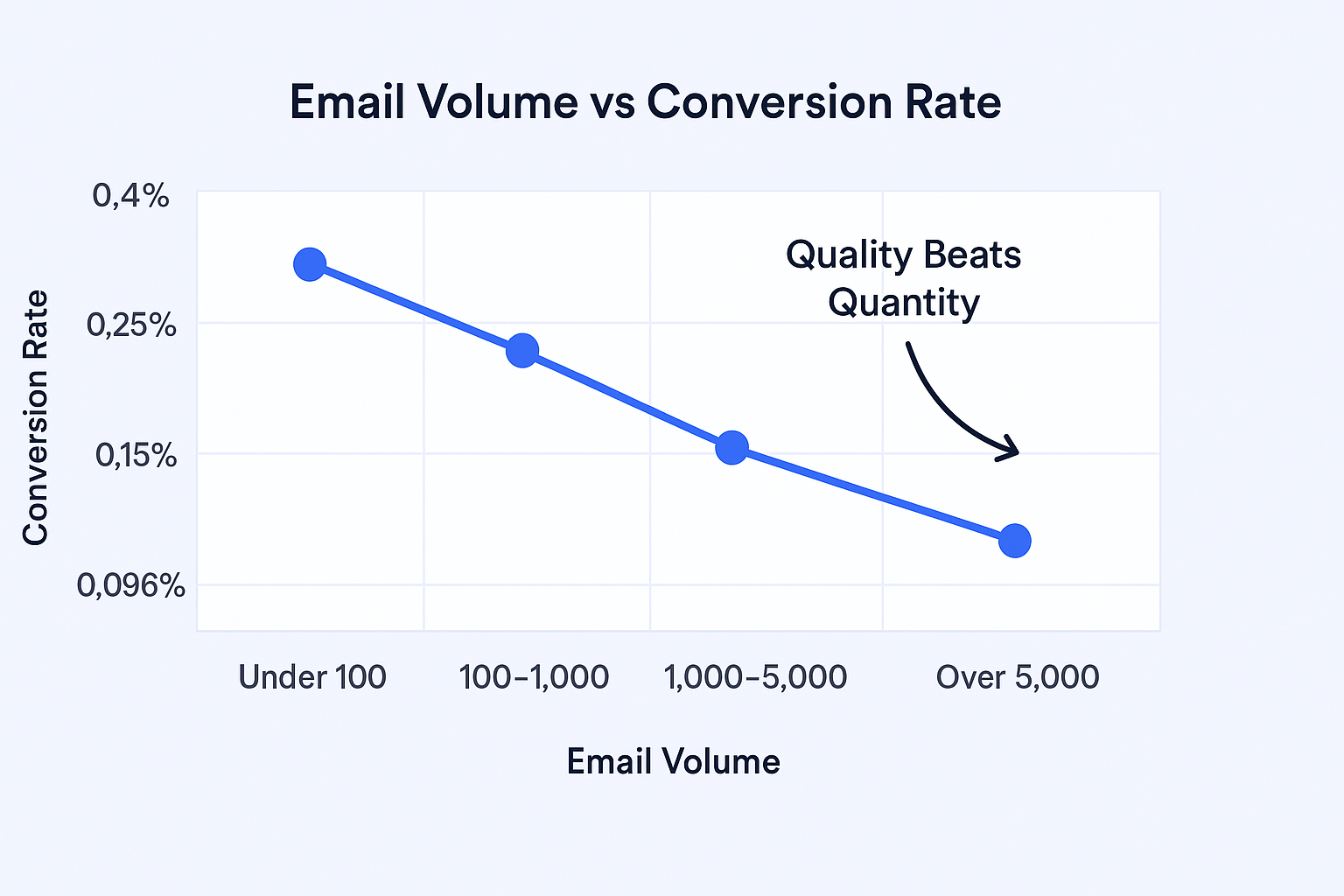
The data reveals a harsh truth: campaigns sending over 5,000 emails achieve only 0.096% conversion rates, while focused campaigns under 100 emails hit 0.4%. Volume kills conversion.
Here’s the conversion funnel breakdown from a real campaign:
- 1,000 emails sent
- 950 delivered (5% bounce rate)
- 380 opened (40% open rate)
- 38 total replies (4% reply rate)
- 19 positive replies (2% positive rate)
- 7 meetings booked (0.74% meeting rate)
- 2 deals closed (0.21% final conversion)
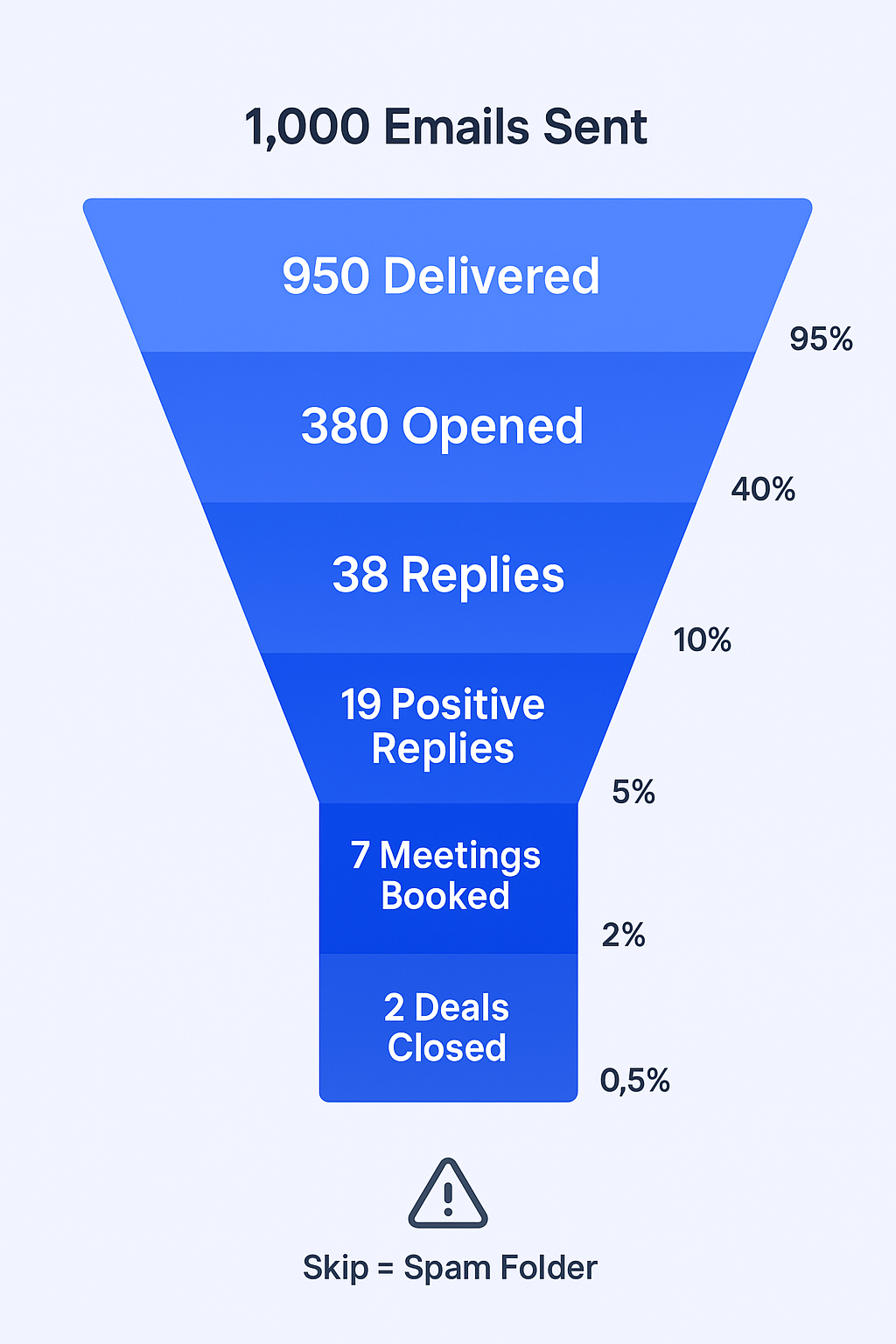
This shows why tracking only reply rates misleads you. The real bottlenecks happen deeper in the funnel.
Double your email reply rate with advanced personalization
The single most powerful tactic for improving cold email conversion rates isn’t better subject lines or timing. It’s multi-point personalization – and the results are staggering.
The Personalization Impact:
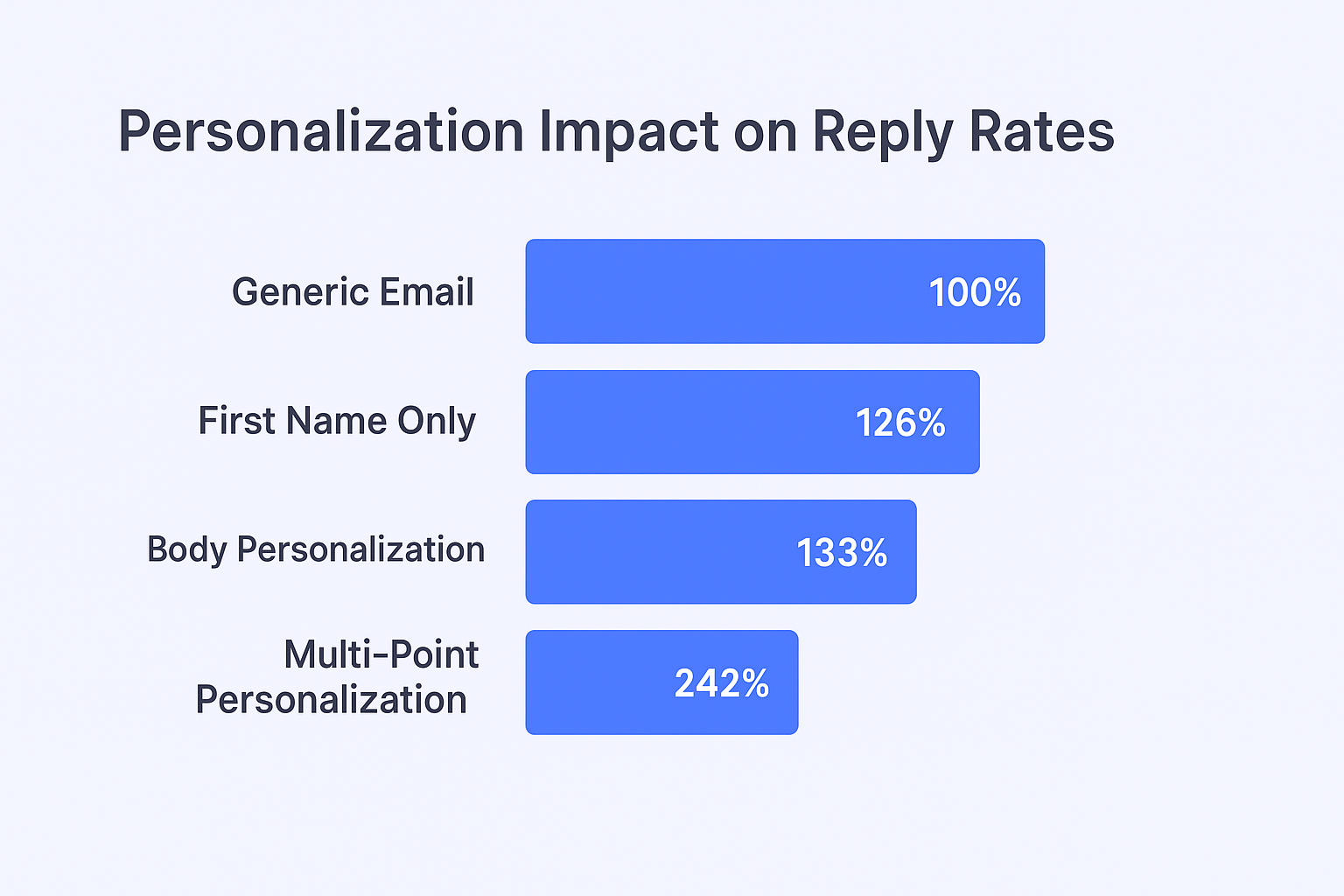
- Reply rate boost: 32.7% increase with personalized email body
- Transaction rates: 6x higher than non-personalized emails
- Multi-point personalization: Up to 142% increase in replies
- Personalized CTAs: Convert 202% better than generic ones
Beyond {{first_name}}:
True personalization goes far deeper than inserting someone’s name. The highest-converting emails weave multiple unique data points about the prospect into the message.
Effective personalization elements include:
Custom Opening Line: Reference a recent LinkedIn post, article they wrote, or podcast appearance. Example: “I saw your recent post about AI’s impact on marketing – your point about data privacy really resonated.”
Company-Specific Triggers: Mention recent company news like funding rounds, product launches, or market expansions. This shows you’ve done real research.
Personal P.S. Note: Add a postscript connecting on shared experiences – mutual connections, alma mater, or common interests from their social profiles.
Scalable Personalization Workflow:
Create a spreadsheet with prospect details and add columns for:
- Custom_Opening_Line: Unique hook for each person
- Custom_PS: Personal connection point
- Company_Trigger: Recent company news or achievement
Import these as custom attributes in your cold email campaigns tool. When emails send, each recipient gets a genuinely personalized message without manual work for each email.
Segmentation as Implicit Personalization:
Even with standardized copy, sending to hyper-specific segments makes messages feel relevant. An email to “B2B SaaS startups in Austin using HubSpot” with the subject “HubSpot integration for Austin SaaS firms” feels personalized because it directly addresses their situation.
Research shows segmented and personalized email campaigns generate 58% of all email marketing revenue. The investment in personalization directly impacts your bottom line.
A high-quality list of contacts makes your email reply rate skyrocket
The quality of your prospect list determines success before you write a single word. The data presents an undeniable conclusion: volume-based approaches fail consistently.
The Volume vs Value Reality:
Cold email campaigns show a direct inverse relationship between volume and conversion rates:
- Under 100 emails: 0.4% average conversion rate
- 100-1,000 emails: 0.25% average conversion rate
- 1,000-5,000 emails: 0.15% average conversion rate
- Over 5,000 emails: 0.096% average conversion rate
As volume increases, personalization and relevance inevitably decline, crushing your conversion rates.
Precision Targeting Strategies:
Company-Level Targeting: The most effective approach targets 2-4 people within the same company, achieving a 7.8% reply rate. This “cluster” strategy increases your chances of reaching the right decision-maker without appearing as spam. However, contacting 10+ people at one organization drops reply rates to 3.8%.
Seniority Level Optimization:
- Entry-level professionals: 8% reply rate (high engagement, low decision authority)
- Mid-level managers: 6-7% reply rate (balanced engagement and authority)
- C-level executives: 5% reply rate (low engagement, high authority)
Choose your target level based on your sales strategy. Bottom-up adoption plays target junior staff, while enterprise deals require C-suite personalization.
Company Size Impact:
- 11-50 employees (SMBs): 8.2% reply rate – most receptive to outreach
- 51-200 employees: 7% reply rate – good balance of accessibility and budget
- 201-1,000 employees: 6% reply rate – more structured but reachable
- 5,000+ employees: 5% reply rate – heavily siloed, harder to penetrate
List Quality Indicators:
High-converting prospect lists share these characteristics:
- Recent company growth or changes
- Active on social media platforms
- Industry publications or speaking engagements
- Technology stack alignment with your solution
- Geographic clustering for account-based strategies
Building smaller, highly-targeted lists consistently outperforms large, generic databases. Quality always beats quantity in cold email.
Other Useful Resources
Optimizing cold email conversion requires mastering deliverability fundamentals. Our Mail Tester alternative guide helps validate your technical setup, while Mailreach reviews compare leading warm-up solutions that protect your sender reputation and inbox placement rates.
Many teams supplement low-converting email campaigns with LinkedIn outbound strategies. LinkedIn Chrome extensions streamline prospecting workflows, while LinkedIn Sales Navigator provides advanced targeting that email databases can’t match. Understanding social selling frameworks transforms cold outreach into relationship-building that consistently delivers higher conversion rates than traditional email blasts.
For individual contributors facing email deliverability challenges, LinkedIn Premium features for job seekers enable direct outreach without SMTP configuration or domain warming. Finally, benchmark your multi-channel performance against LinkedIn search statistics to identify whether email’s 0.21% conversion baseline justifies continued investment versus alternative channels.
These resources provide both optimization tactics for existing email programs and strategic alternatives when conversion rates plateau despite best practices.

