

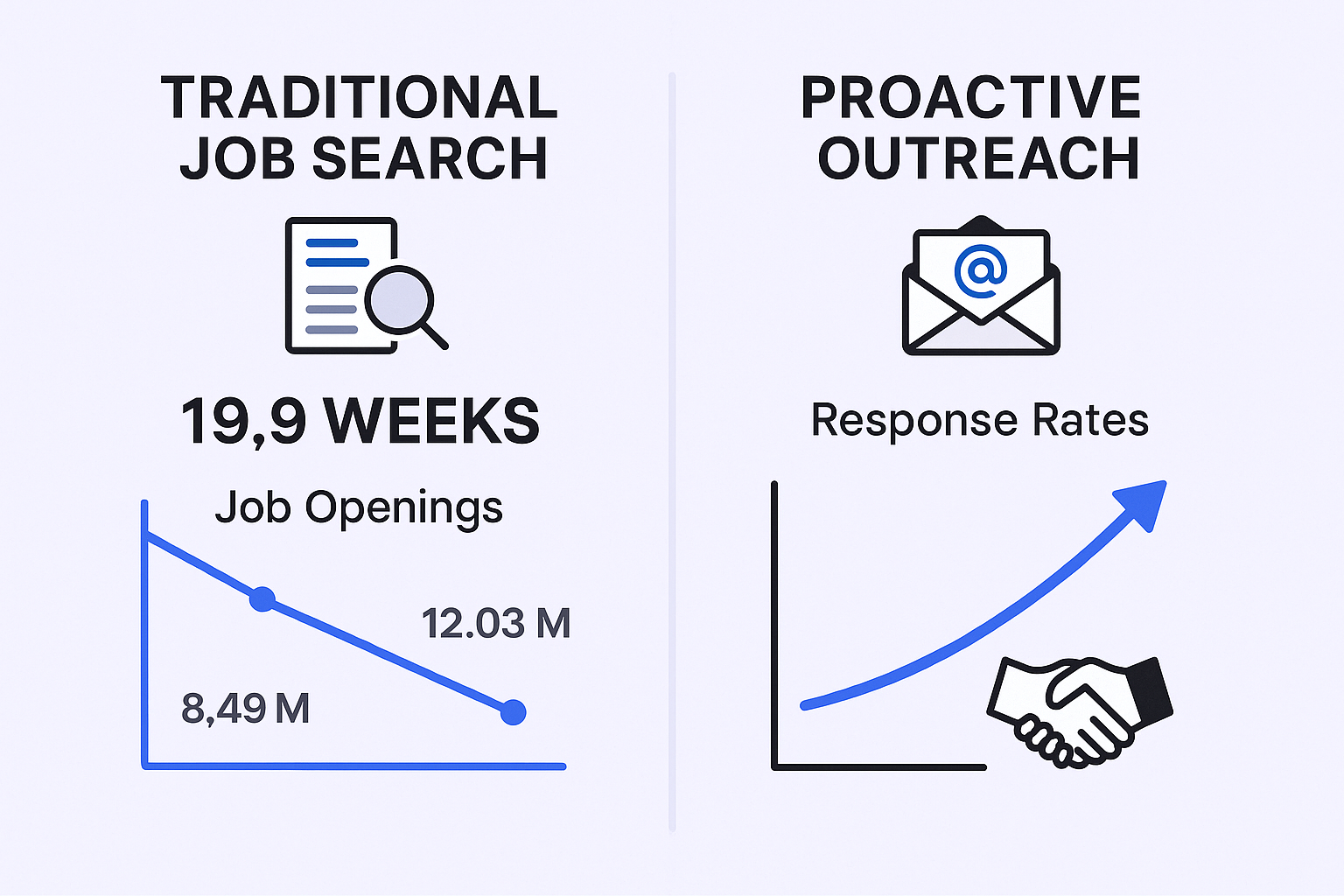
The modern job market is tougher than ever. As of March 2024, job openings in the U.S. have dropped by 29.4% compared to two years prior, falling from 12.03 million to 8.49 million. This dramatic decrease means more competition for every position, and the average job search now takes nearly 5 months or 19.9 weeks to complete.
How to Write a Cold Email Useful for Job Hunting
Writing an effective cold email for a job isn’t about sending your resume to random companies. It’s about creating a compelling value proposition that makes hiring managers want to learn more about you.
The Subject Line That Demands an Open
Your subject line determines whether your email gets opened or deleted. The most effective subject lines are under 7 words and avoid spam trigger words like “opportunity” or “free.”
Here are proven subject line approaches:
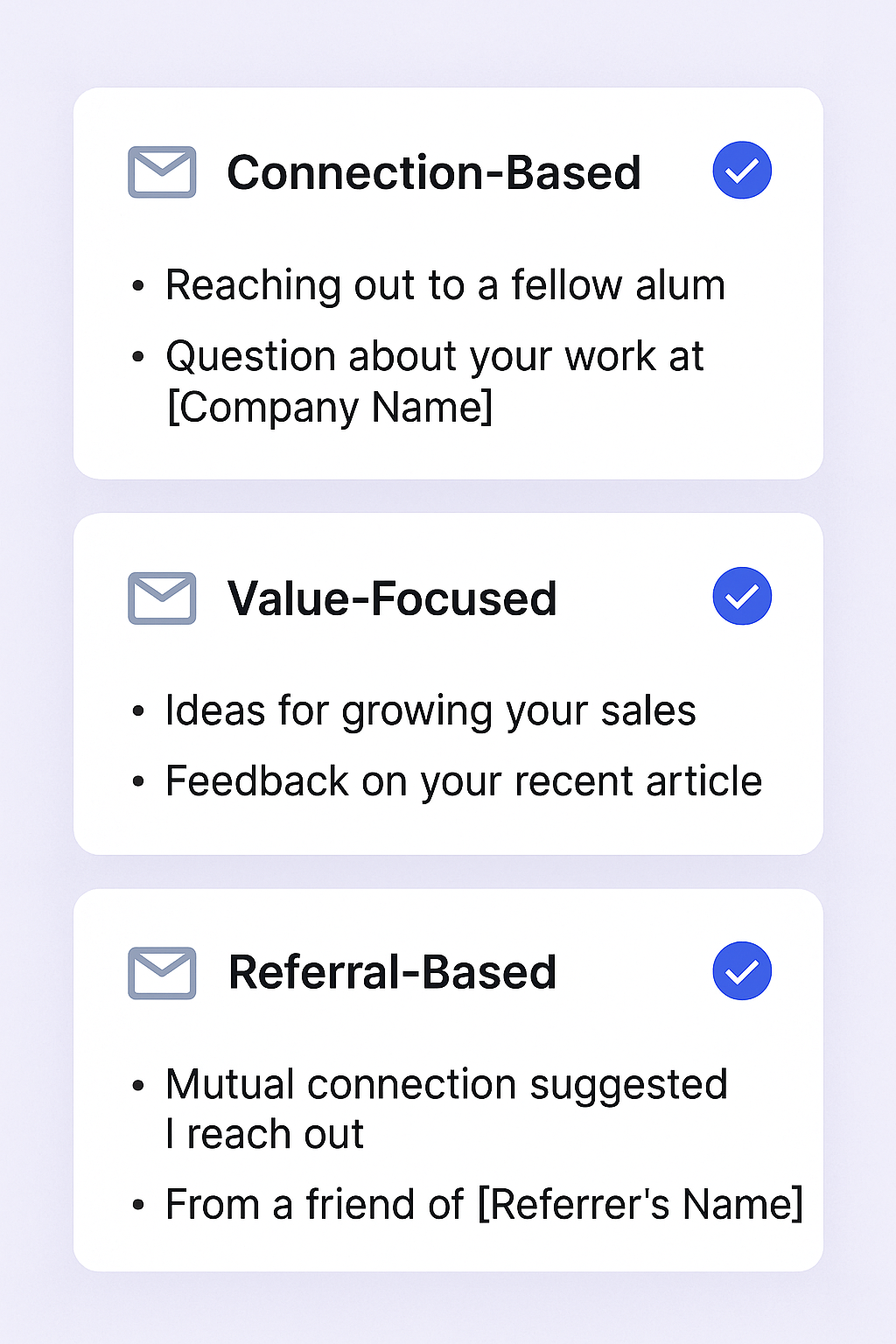
Connection-Based Examples:
- “Quick question about [Company Name]”
- “Following up on your LinkedIn post”
Value-Focused Examples:
- “15% growth insight for [Company]”
- “Marketing expertise needed?”
Referral-Based Examples:
- “Referral from [Mutual Connection]”
- “Congrats on the [recent milestone]”
The Personal Hook: Your First Line That Captures Attention
Generic, copy-paste emails contribute to “inbox fatigue” where professionals ignore irrelevant messages. The effectiveness of cold emails is directly tied to personalization quality.
Your first sentence must prove you’ve researched the recipient specifically. Reference a recent article they wrote, a company milestone, a speaking engagement, or a shared connection. This personal hook demonstrates respect for their time and breaks through the noise.
The Pitch: Show Them What You Can Do
The body of your email isn’t a resume summary – it’s a value proposition focused on their needs, not yours. Instead of listing job responsibilities, highlight specific achievements with metrics.
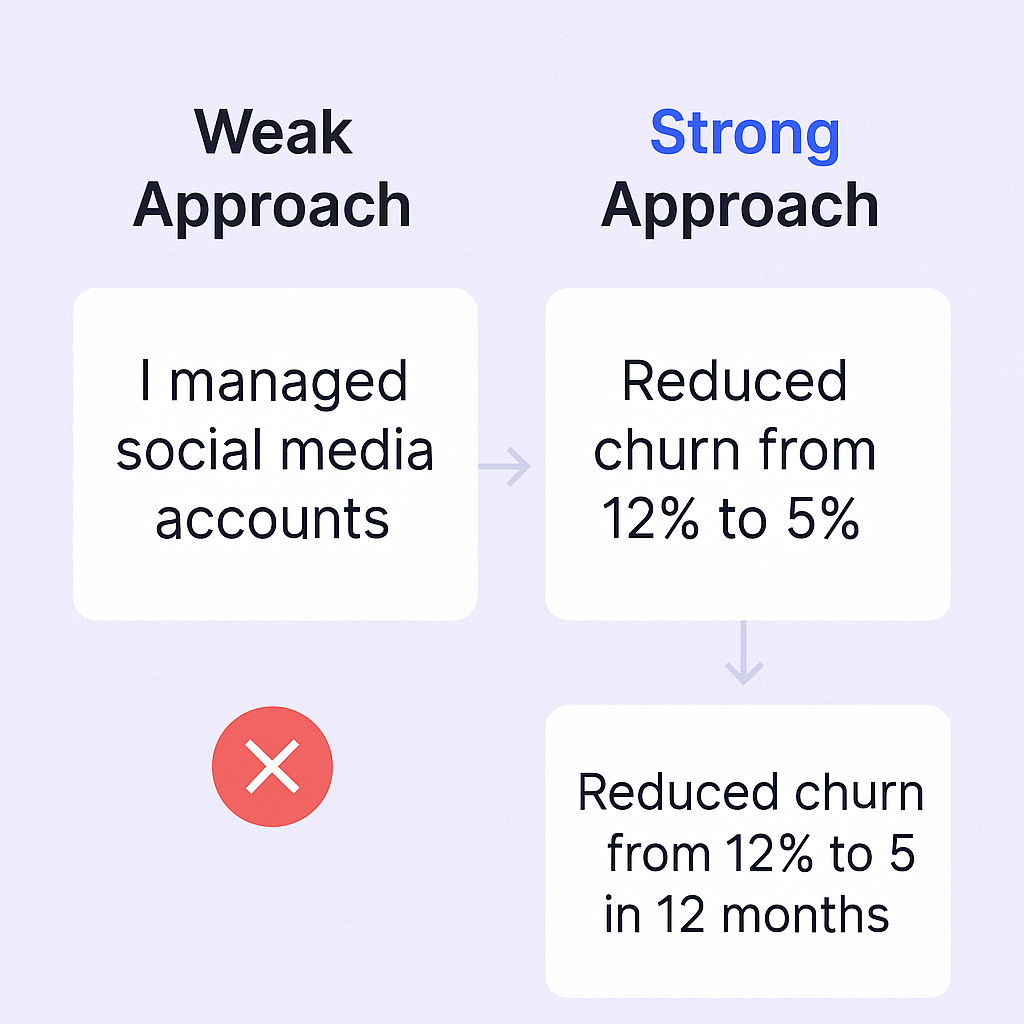
Weak approach: “I managed social media accounts.”
Strong approach: “I reduced customer churn from 12% to 5% in 12 months for a similar SaaS company.”
This connects your past wins to their potential pain points, answering their unspoken question: “Why should I care about this email?”
The Call-to-Action: Make It Easy to Say Yes
End with a clear, low-friction call-to-action. Don’t ask for a job offer or hour-long meeting right away. Make a “soft ask” like requesting a brief conversation for advice or to learn about the company.
Research shows emails with no questions at all can yield higher reply rates, suggesting hard asks like “Are you hiring?” feel too pressured. Keep it simple: “Would you be open to a quick 15-minute chat?”
Cold Email Templates for Job Seekers
Here are actionable cold email templates that apply proven principles. Customize these frameworks with your specific details and research.
Template: The “I’m a Fan” Approach
Use this when targeting a company you genuinely admire, even without open roles.
Subject: Impressed by [Company Name]’s work on [Project]
Body:
Hi [Name],
I’ve been following [Company Name]’s work for some time, and I was particularly impressed by [mention specific project/blog post/product update]. The way you’ve approached [specific challenge] in [project] really resonated with me.
My background is in [your field] and I’m deeply interested in contributing to the work you’re doing. In my last role at [Previous Company], I [specific achievement with metric, e.g., “streamlined the product launch process, reducing time-to-market by 20%”].
I understand you’re busy, but I’d be grateful for a brief opportunity to connect and learn more about the team’s goals this quarter. I’ve attached my resume for your reference.
Thank you for your time.
Best,
[Your Name]
[LinkedIn Profile]
[Portfolio Link]
Template: The “Specific Role” Approach
Use this when following up on a job application to stand out from other candidates.
Subject: Following up on the [Role] position
Body:
Hi [Name],
My name is [Your Name], and I recently applied for the [Position] at [Company] that I found on [Platform]. I saw you’re a [Title] at the company and wanted to reach out directly.
I noticed the job description mentions experience in [specific skill]. In my previous role, I led a project involving [relevant experience] that resulted in [quantifiable result, e.g., “15% increase in user retention”]. I believe this experience, combined with my passion for [company mission aspect], makes me a great fit for your team.
If you have a moment, I’d appreciate discussing how my skills align with the team’s needs. I’ve attached my resume for your review.
Thank you for your time.
Sincerely,
[Your Name]
[LinkedIn Profile]
Template: The “Quick Question” Networking Approach
This low-pressure approach builds relationships that can lead to opportunities later.
Subject: Quick question about [Company Name]
Body:
Hi [Name],
I hope you’re having a great week. I’m a [your role] at [company] and have been following your career. I was particularly impressed by [specific thing you admire, e.g., “your recent blog post on AI ethics”].
I’m very interested in the work at [Company Name] and was hoping to get your advice. Would you be open to a brief 15-minute chat to share your thoughts on the best way to align my experience with the company’s goals?
Any insights you could offer would be incredibly helpful.
Thank you for your time.
Best,
[Your Name]
[LinkedIn Profile]
Cold Email Writing Outline for Job Hiring
From a recruiter’s perspective, cold emailing is essential for reaching passive candidates – professionals who aren’t actively job searching but are open to opportunities. This group represents about 80% of the candidate market.
The Recruiter’s Strategy
Quality over quantity matters. Data shows targeting only 1-2 people per company yields 7.8% reply rates, compared to 3.8% when emailing 10 or more people.
Interestingly, C-level executives have the lowest reply rates around 5% due to crowded inboxes, while entry-level professionals and team leads exceed 8% response rates. These individuals are more engaged with day-to-day operations and can better see the value a new team member would bring.
Template: The “Passive Candidate” Approach
Subject: Your impressive work in [Industry] – Career opportunity
Body:
Hi [Candidate’s Name],
I came across your profile and was highly impressed with your accomplishments in [Field]. Your work on [specific project] was particularly notable.
We have a position at [Company] that aligns perfectly with your skill set. This role offers a unique opportunity to [key benefit, e.g., “lead a new project team” or “impact our core product”]. Our team is pushing boundaries in [relevant field], and I believe someone with your caliber could be a major asset.
Would you be open to a brief conversation to learn more? I’m confident [Company] could be the next great step in your career.
Best regards,
[Your Name]
Template: The “Job Opening” Approach
Subject: [First Name], this opportunity might interest you
Body:
Hi [First Name],
[Company] is searching for our next [Position], and your [profile/resume] caught my attention. Your skills in [specific area] look like a great match, and I thought this might stretch your career in a new direction.
In this role, you’ll get to:
- [Key responsibility]
- [Another responsibility]
- [Third responsibility]
The salary range is [$XXX-$XXX] with comprehensive benefits. I’d love to tell you more about what we offer to see if we’re the right fit.
Would you be open to a 15-minute chat on [day] to discuss your goals and this opportunity?
Looking forward to hearing from you!
Sincerely,
[Your Name]
Best Practices for Sending Cold Email for a Job
Success in cold emailing comes from disciplined execution of proven best practices, whether you’re a job seeker or recruiter.
Mind the Length
Emails with 6-8 sentences and under 200 words have the highest reply rates. Longer messages get saved for later and often forgotten. Brevity shows respect for the recipient’s time and increases the likelihood of immediate action.
Timing Matters More Than You Think
Tuesday, Wednesday, and Thursday have the highest reply rates, while Monday is generally the worst day for outreach. People catch up on emails Monday and mentally check out by Friday.
Evening sends (8:00-11:00 PM) can perform exceptionally well as people check email during less-distracted hours. The best strategy uses a sequence hitting different times and days throughout the week.
The Follow-Up Factor
The first follow-up alone can boost reply rates by 49%. The initial email might get lost in a crowded inbox or seen at a bad time. A polite follow-up shows persistence and repositions your message at the top of their inbox.

