What to Look For: A top-tier tool must have built-in email warm-up features to gradually build a positive sender reputation. It should also provide clear guidance and support for setting up essential email authentication protocols like SPF, DKIM, and DMARC. Features like inbox rotation (sending from multiple email accounts to mimic natural human behavior) are also critical for maintaining high deliverability at scale.
Email Sequence
The vast majority of deals are won in the follow-up, yet it’s the step most often neglected. Data shows that the majority of sales professionals stop after sending just one email. This is a massive missed opportunity, as campaigns with multiple emails in a sequence can achieve significantly higher reply rates compared to single-email campaigns.
What to Look For: The tool must make it simple to build, manage, and optimize multi-step email sequences. This includes the ability to customize the time delays between each step (e.g., wait 2 days, then 4 days, etc.) and, for more advanced strategies, to incorporate multi-channel touchpoints like LinkedIn tasks or call reminders.
Tracking
Tracking opens and clicks isn’t about vanity metrics; it’s about identifying crucial buying signals. An email open is a sign of curiosity. A link click is a digital hand-raise indicating interest. This data is invaluable for a sales professional, as it helps them prioritize their daily activities and focus their time on the most engaged prospects who are more likely to convert.
What to Look For: The platform must provide reliable and accurate open, click, and reply tracking. A critical feature is the ability to use a custom tracking domain. This replaces the tool’s default tracking links with one that matches the sender’s domain, which is essential for avoiding spam filters that often flag generic tracking URLs.
Analytics
Good analytics are what allow a sales rep to move from guesswork to a data-driven strategy. Clear reporting helps professionals understand which subject lines are getting the most opens, which email copy is generating replies, and which campaigns are falling flat. This data is not only crucial for personal optimization but also for reporting performance to sales leadership and proving the value of outreach efforts.
What to Look For: The tool should offer a clean, intuitive dashboard that displays campaign-level and sequence-step-level performance. The ability to easily conduct A/B tests and compare the results side-by-side is a must-have for any rep serious about improving their ROI.
Top 12 Cold Email Outreach Tools
The market for cold email tools is crowded, and choosing the right platform can feel overwhelming. To cut through the noise, this analysis focuses on the top 12 contenders, evaluating them based on the features that matter most to a sales professional on the front lines. The following table provides a high-level comparison for a quick overview, followed by a more detailed breakdown of each tool.
The Cold Email Tool Matrix (2025)
Tool | G2 Rating | Starting Price | Best For… | Key Differentiator |
Salesso | 4.8/5 | $39 | Complete cold email solution | All-in-one prospecting & outreach |
Hunter.io | 4.4/5 | $34 | Finding & verifying emails | High-quality data & simple UI |
Lemlist | 4.6/5 | $39 | Creative, personalized outreach | Advanced image & video personalization |
SalesHandy | 4.6/5 | $25 | High-volume cold email campaigns | Generous sending limits & team features |
Woodpecker | 4.4/5 | $29 | Small to mid-sized teams | Simplicity and deliverability focus |
Smartlead.ai | 4.7/5 | $39 | Scaling agencies & power users | Unlimited warm-up & master inbox |
QuickMail | 4.6/5 | $49 | Agencies & deliverability experts | Strong agency features & inbox rotation |
Mixmax | 4.5/5 | $29 | Reps living in Gmail | Deep Gmail integration & scheduling |
Mailshake | 4.7/5 | $25 | Sales reps needing a simple solution | Ease of use and AI email writer |
Instantly | 4.9/5 | $37 | High-volume outreach at scale | Unlimited email warm-up & accounts |
Outreach | 4.3/5 | $100+ | Enterprise sales engagement | All-in-one platform with deep analytics |
Reply.io | 4.6/5 | $59 | Multichannel sales teams | AI-powered sequences & multichannel |
Salesso
- Best For: Complete cold email solution for teams wanting to consolidate their tech stack and maximize ROI.
- G2 Rating: 4.8/5
- Key Features: Salesso stands out by combining a massive B2B contact database with a full-featured cold email outreach platform. This allows reps to find prospects and launch campaigns within a single tool, eliminating the need for separate subscriptions for data and sending. Its “unlimited credits” model is a major draw for high-volume teams.
- Pricing Snapshot: Starter ($39/mo), Growth ($99/mo for 5 users), Pro ($199/mo for unlimited users)
- Verdict:
- Pro: Extremely cost-effective, especially for teams, due to its unlimited credits for prospecting and outreach. The integrated workflow saves significant time.
- Con: As an all-in-one solution, some of its individual features may not have the same depth as a dedicated, best-in-class point solution.
Hunter.io
- Best For: Sales teams that prioritize high-quality data and need a reliable tool for finding and verifying email addresses.
- G2 Rating: 4.4/5
- Key Features: While Hunter is primarily known for its incredibly accurate Email Finder and Verifier, it also offers a solid cold email campaign sender. Its strength lies in its data quality, which is the foundation of good deliverability.
- Pricing Snapshot: Free plan available. Paid plans start at $34/mo for the Starter package, which includes 2,000 credits and 3 connected email accounts.
- Verdict:
- Pro: Excellent data accuracy reduces bounce rates. The user-friendly interface requires minimal training.
- Con: The campaign features are more basic compared to specialized outreach platforms.
Lemlist
- Best For: Creative sales teams who want to break through the noise with highly personalized, visually engaging outreach.
- G2 Rating: 4.6/5
- Key Features: Lemlist’s key differentiator is its advanced personalization capabilities, particularly with images and videos. Reps can dynamically insert prospect names, company logos, or website screenshots into images within their emails, creating a “wow” factor that grabs attention.
- Pricing Snapshot: Plans start at $39/mo for the Email Starter plan. The popular Email Pro plan, which includes lemwarm, is $69/mo.
- Verdict:
- Pro: Unmatched visual personalization features can lead to significantly higher reply rates.
- Con: Some users find the interface less intuitive than competitors.
SalesHandy
- Best For: Growing teams and agencies that need to send high volumes of cold emails at an affordable price point.
- G2 Rating: 4.6/5
- Key Features: SalesHandy is built for scale. Its plans offer generous limits on the number of prospects and monthly emails, along with the ability to connect unlimited email accounts.
- Pricing Snapshot: Starts at $25/mo for the Outreach Starter plan. The Pro plan, which unlocks unlimited team members and CRM integrations, is $74/mo.
- Verdict:
- Pro: Excellent value for money, with high sending limits and unlimited accounts.
- Con: The most critical features for a growing sales team are not available on the starter plan.
Transform Your Sales Pipeline
Find verified prospects, warm up your domains, and automate campaigns
Try Now
Woodpecker
- Best For: Small to mid-sized teams looking for a simple, reliable, and user-friendly tool with a strong focus on deliverability.
- G2 Rating: 4.4/5
- Key Features: Woodpecker’s core strength is its simplicity and unwavering focus on getting emails delivered. It offers all the essential features in an intuitive package.
- Pricing Snapshot: Pricing is based on the number of prospects contacted per month, starting at $29/mo for 500 prospects.
- Verdict:
- Pro: Very easy to set up and use. Strong reputation for deliverability.
- Con: The pricing model can become expensive as a team scales.
Smartlead.ai
- Best For: Lead generation agencies and high-volume power users who need to manage campaigns for multiple clients or projects at scale.
- G2 Rating: 4.7/5
- Key Features: Smartlead is built for sophisticated users. Its standout features include unlimited email account warm-up on all plans and a centralized master inbox.
- Pricing Snapshot: The Basic plan starts at $39/mo. The Pro plan is $94/mo and includes a custom CRM and API access.
- Verdict:
- Pro: Powerful features for deliverability and campaign management at scale.
- Con: The sheer number of features can present a steeper learning curve.
QuickMail
- Best For: Agencies and sales teams that are highly focused on deliverability and need granular control over their sending infrastructure.
- G2 Rating: 4.6/5
- Key Features: QuickMail is known for its robust deliverability features, including a free auto-warmer and detailed blacklist monitoring.
- Pricing Snapshot: The Basic plan starts at $49/mo for 10,000 active prospects.
- Verdict:
- Pro: Excellent deliverability tools and agency-specific features.
- Con: Can be more expensive for individual users or small teams.
Mixmax
- Best For: Sales reps who live inside their Gmail inbox and want to enhance their productivity without leaving it.
- G2 Rating: 4.5/5
- Key Features: Mixmax is a Chrome extension that supercharges Gmail with powerful sales engagement features directly into the familiar Gmail interface.
- Pricing Snapshot: Offers a free plan with basic tracking. The SMB plan starts at $29/user/mo.
- Verdict:
- Pro: Seamless integration with Gmail creates a highly efficient workflow.
- Con: Entirely dependent on Gmail/Google Workspace.
Mailshake
- Best For: Startups and sales reps looking for a straightforward, easy-to-use platform to automate their email outreach.
- G2 Rating: 4.7/5
- Key Features: Mailshake’s primary appeal is its simplicity and ease of use. It includes all the core functionalities needed for effective outreach.
- Pricing Snapshot: The Starter plan is $25/mo. The Email Outreach plan is $45/mo.
- Verdict:
- Pro: Very intuitive and user-friendly, making it great for beginners.
- Con: Lacks some of the more advanced deliverability features.
Instantly
- Best For: High-volume outreach teams and agencies focused on scaling their campaigns aggressively while protecting deliverability.
- G2 Rating: 4.9/5
- Key Features: Instantly has gained massive popularity for its “unlimited” philosophy. All paid plans include unlimited email accounts and unlimited email warm-up.
- Pricing Snapshot: The Growth plan starts at $37/mo for 1,000 contacts and 5,000 monthly emails.
- Verdict:
- Pro: Unbeatable value for scaling outreach due to the unlimited accounts.
- Con: The focus is heavily on email outreach; teams looking for multi-channel engagement may need other tools.
Outreach
- Best For: Enterprise and mid-market sales teams that need a comprehensive, all-in-one sales engagement platform with deep analytics.
- G2 Rating: 4.3/5
- Key Features: Outreach is more than just a cold email tool; it’s a complete sales execution platform that combines email, phone, and social touchpoints.
- Pricing Snapshot: Custom pricing, typically starting around $100/user/mo or higher.
- Verdict:
- Pro: Incredibly powerful, all-in-one platform with best-in-class analytics.
- Con: Very expensive and often too complex for small businesses.
Reply.io
- Best For: Sales teams that want to execute a true multichannel outreach strategy, combining email, LinkedIn, calls, and SMS.
- G2 Rating: 4.6/5
- Key Features: Reply.io shines in its ability to create complex, conditional multichannel sequences with AI tools for sequence creation.
- Pricing Snapshot: Starts at $59/mo for an email-only plan. The Multichannel plan starts at $99/user/mo.
- Verdict:
- Pro: Excellent for executing a sophisticated, multi-channel sales strategy.
- Con: Can be more complex to set up than email-only tools.
The choice between these tools often boils down to a strategic decision: adopting an all-in-one platform versus assembling a stack of specialized point solutions. While a lower-cost point solution might seem cheaper upfront, calculating the true ROI requires looking at the Total Cost of Ownership. An integrated platform, while potentially having a higher sticker price, can maximize a rep’s most valuable asset: time spent on high-value activities like personalization and live conversations.
Best Practices for your Cold Email Outreach Campaign
The best tool in the world won’t save a bad strategy. The highest ROI comes from combining powerful software with proven, data-driven tactics. Implementing the following five practices will dramatically increase reply rates, book more meetings, and drive more revenue from any cold email campaign.
Personalize: Go Beyond Their First Name
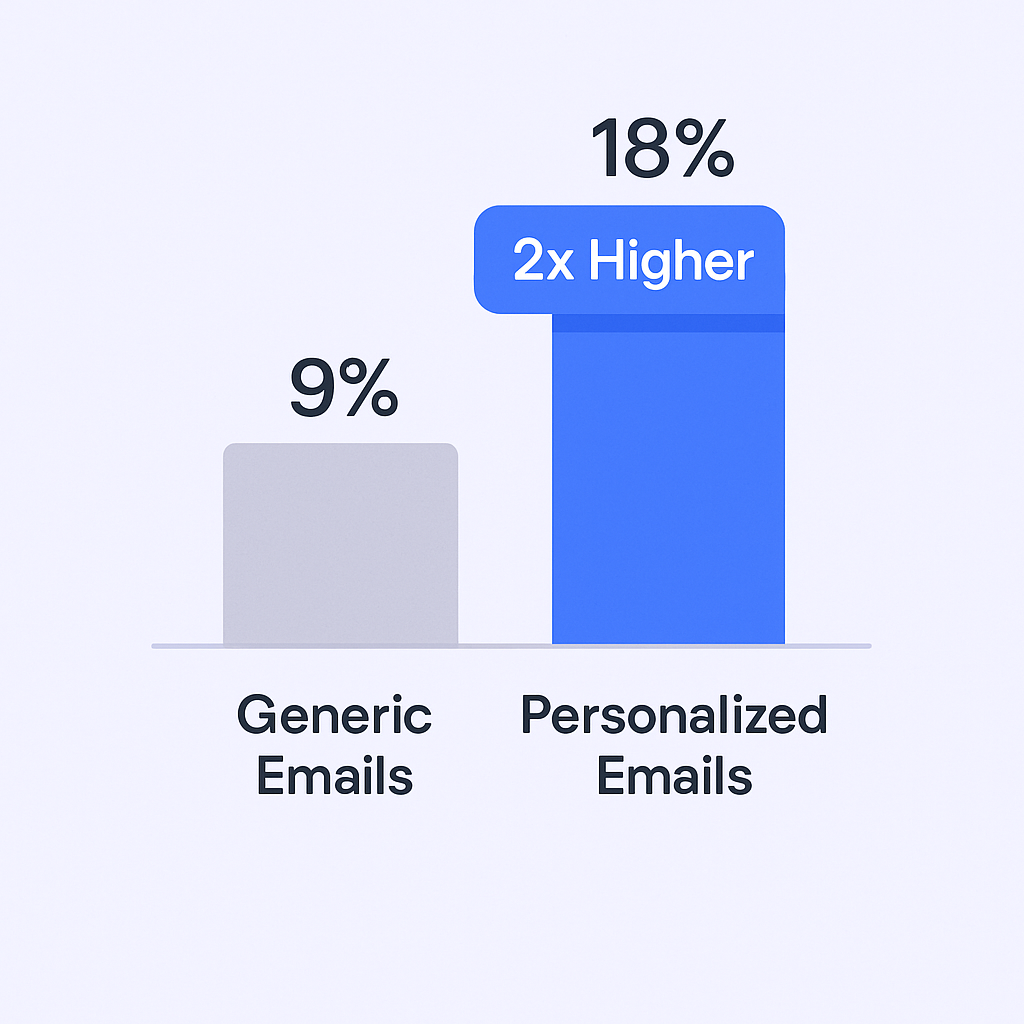
Generic, one-size-fits-all emails are the primary reason for low reply rates. Prospects can spot a lazy, templated message from a mile away. To earn a reply, the email must feel like it was written specifically for them. 89% of marketers see a positive ROI when they use personalization in their cold email campaigns. Furthermore, personalized subject lines increase average email open rates by 50%.
How to Do It: Before emailing, spend five minutes on the prospect’s LinkedIn profile. Look for a recent post they wrote, an article they commented on, or a shared experience like attending the same university. Use this as your opening line. For example: “Saw your post on LinkedIn about the challenges of scaling sales teams—couldn’t agree more with your point on data-driven coaching.” This immediately shows you’ve done your homework and separates you from the 99% of other cold emails in their inbox.