But here’s the catch: You need a full book of business to hit those numbers. Most fractional CFOs struggle with business development. They’re excellent at finance but terrible at sales. Sound familiar?
That’s why having a systematic approach to <a href=”https://salesso.com/blog/linkedin-growth-hacking/”>LinkedIn growth</a> is critical. You can’t rely on referrals alone.
Pricing Models That Work
There are three main pricing approaches:
Retainer model (recommended): Fixed monthly fee for defined scope. This provides predictable income and makes planning easier. Example: $7,500/month for monthly close, board reporting, and strategic planning calls.
Hourly model: Good for ad-hoc consulting or project-based work. The downside? Income is unpredictable and you’re constantly tracking time.
Value-based pricing: Taking lower cash fees in exchange for equity or success fees (percentage of funds raised). This works for high-growth startups where you believe in the upside.
Most successful fractional CFOs use a combination. Retainers for core clients, hourly for special projects.
Landing Your First Fractional CFO Jobs
Getting started is the hardest part. You have the skills—you’ve been a controller, VP of finance, or full-time CFO. But how do you transition to fractional work?
Step 1: Position yourself correctly
Stop calling yourself “available for part-time work.” That sounds desperate. Instead, you’re a “Fractional CFO specializing in SaaS companies preparing for Series A funding.” Specificity sells.
Create a simple one-page website. List your services, case studies (even if disguised), and testimonials. Use <a href=”https://salesso.com/blog/advanced-linkedin-search/”>advanced LinkedIn search</a> to find companies matching your ideal client profile.
Step 2: Leverage your network initially
Your first 1-2 clients will likely come from people who already know you. Former colleagues, board members, investors. That’s fine. Get those initial engagements to build case studies.
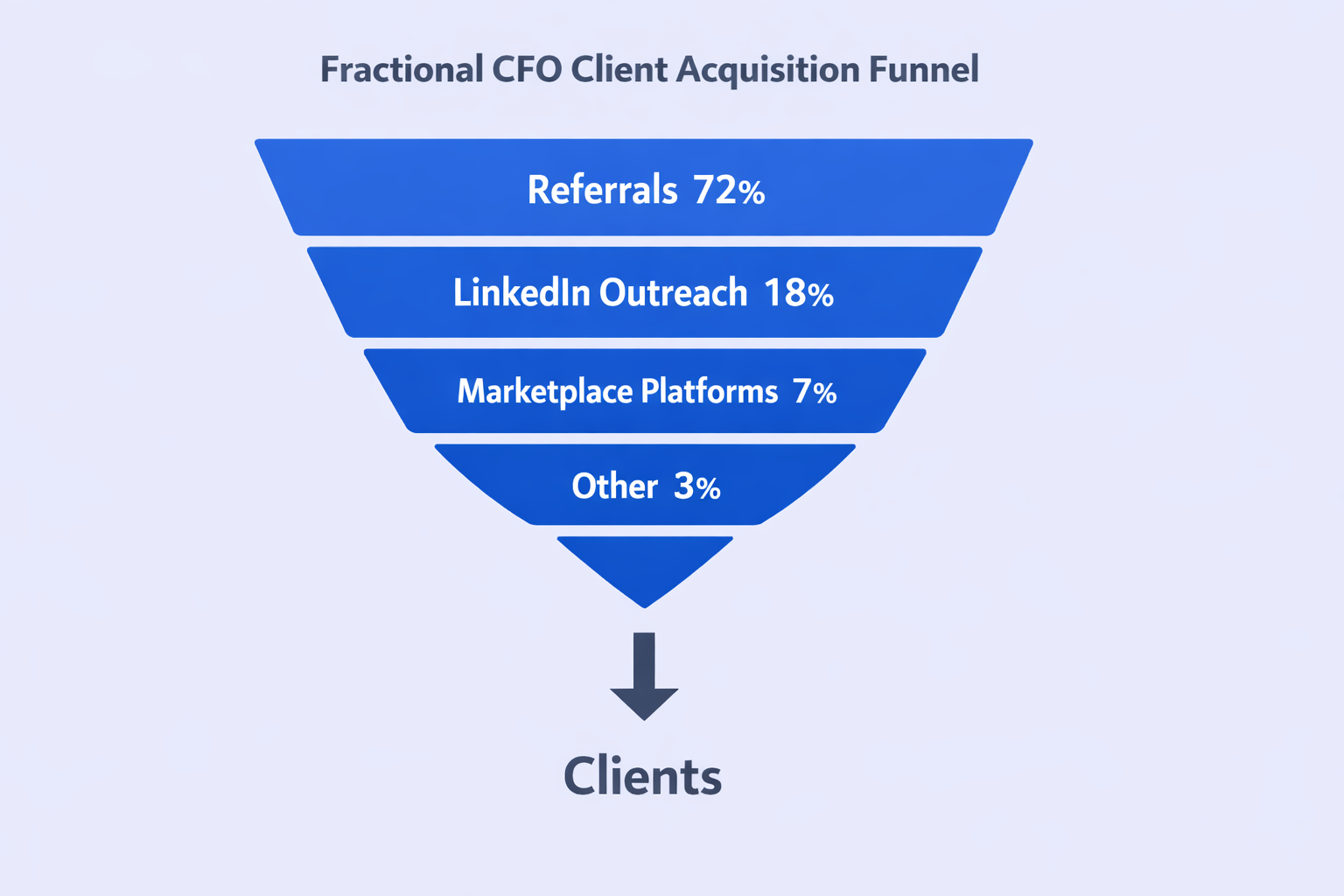
According to research, 72% of fractional CFOs get their first client through referrals. But relying solely on referrals isn’t scalable.
Step 3: Build a systematic outbound engine
This is where most fractional CFOs fail. You can’t wait for the phone to ring. You need proactive outreach.
That means:
- Building targeted lists on <a href=”https://salesso.com/blog/linkedin-sales-navigator-alternatives/”>LinkedIn Sales Navigator</a>
- Sending personalized connection requests and messages
- Offering free value (financial health assessments, quick audits)
- Following up consistently
The data is clear: Companies using systematic outbound generate 5-7x more qualified leads than passive strategies alone.
Where to Find Opportunities
If you’re actively searching “fractional cfo jobs remote” or “fractional cfo jobs uk,” here are the best sources:
LinkedIn: The #1 platform. Use filters for “CFO,” “Finance,” “Startup,” “Series A” to find companies in growth mode. Look for job postings mentioning “fractional” or “part-time CFO.”
Marketplace platforms: Sites like Paro, Toptal, The CFO Centre, and FocusCFO connect fractional talent with companies. The downside? They take 20-40% commission.
Job boards: Indeed, LinkedIn Jobs, and AngelList occasionally post fractional openings. These are decent for supplemental income but aren’t the main game.
Direct outreach: This is where the real money is. Identify companies at inflection points (recent funding, rapid growth, executive departures) and reach out proactively.
What You’ll Actually Do: The Work of Financial Leadership
Let’s get practical. What does a typical fractional engagement look like?
Your first 90 days follow a predictable framework:
Days 1-30: Diagnosis You’re putting out fires and assessing damage. Build a 13-week cash flow forecast immediately. Audit the chart of accounts. Review the tech stack integration between CRM and accounting systems.
Deliverable: A “Financial Health Report” showing immediate risks and quick wins.
Days 31-60: Stabilization Reduce the monthly close cycle from 20+ days to 5-10 days. Implement proper KPIs (not just revenue—think Net Revenue Retention, CAC Payback, Rule of 40 for SaaS).
Deliverable: First accurate, timely financial statements and board deck.
Days 61-90: Strategy Build a rolling 12-24 month operating model. Connect financial outcomes to operational drivers (“If we hire 3 sales reps in May, revenue converts in August”). Prepare capital planning for debt or equity financing.
Deliverable: Comprehensive strategic plan and long-term financial model.
This framework works across industries. Whether you’re working with SaaS, agencies, manufacturing, or healthcare, the bones stay the same.
Tools You’ll Need
Technology is your friend in fractional work. You can’t manually manage 4-5 clients with spreadsheets alone.
Essential stack:
- Accounting: QuickBooks Online or Xero (cloud-based is non-negotiable)
- Spend management: Bill.com, Ramp, or Brex for tracking expenses
- Forecasting: Excel is still dominant, but tools like Mosaic, Jirav, or Fathom overlay nicely
- Reporting: Fathom, Syft Analytics for automated dashboards
- Payroll: Gusto, Rippling, or Deel for global teams
Don’t forget your own business tools. You need a CRM (HubSpot, Close) to manage your pipeline and <a href=”https://salesso.com/blog/top-workflow-automation-software/”>workflow automation</a> to stay organized.
Industries with the Highest Demand
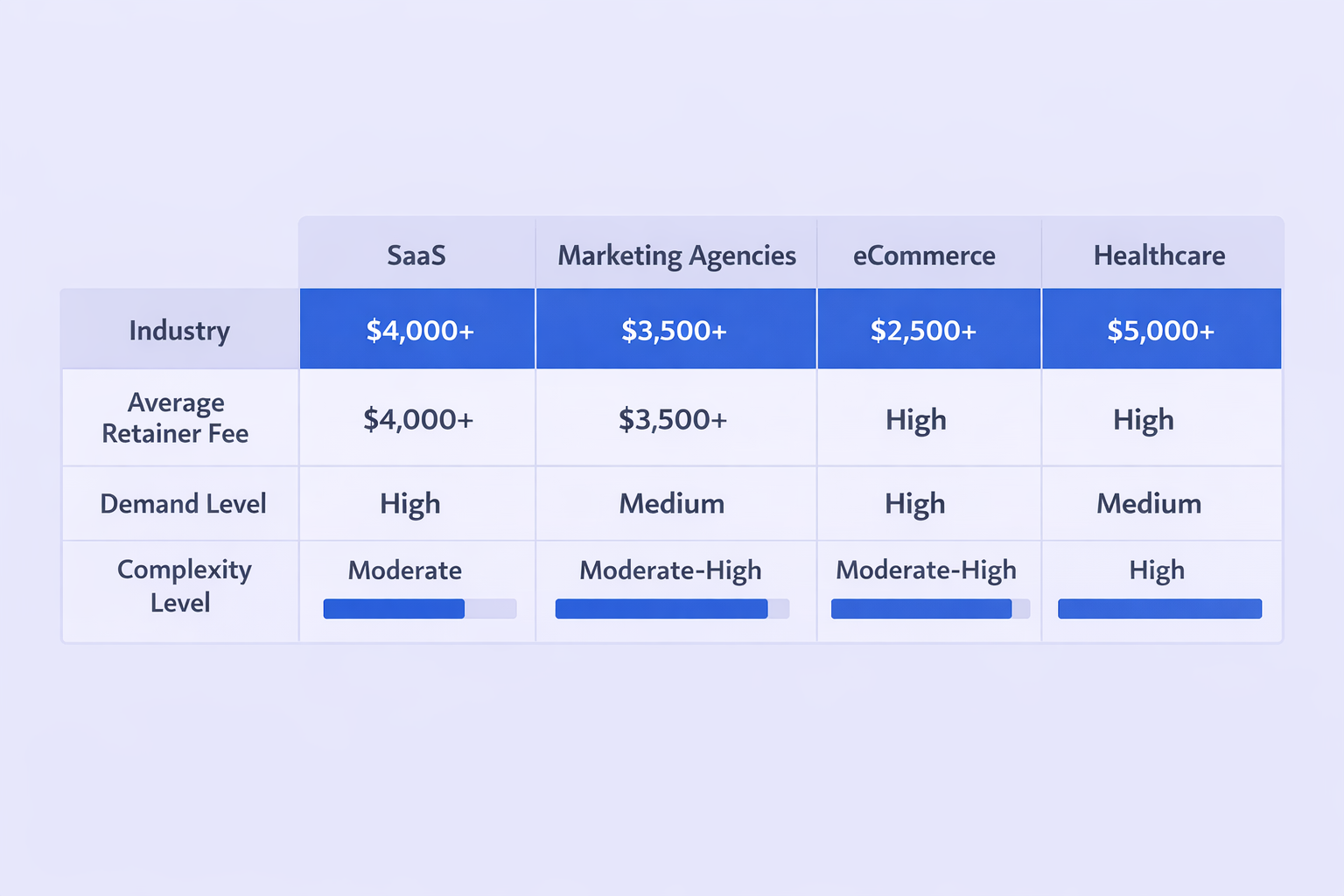
Not all fractional cfo opportunities are equal. Some industries desperately need financial leadership while others can get by with just a good controller.
SaaS (Software as a Service): This is the holy grail. SaaS companies have complex subscription metrics, deferred revenue challenges, and investor reporting requirements. They need CFOs who understand ARR, churn, CAC payback, and the Rule of 40. Demand is highest here.
Marketing agencies: Project-based revenue creates cash flow volatility. Agencies need help transitioning to retainer models and managing contractor vs. employee classification (IR35 in UK). Common pain point: feast or famine cycles.
eCommerce and manufacturing: Capital-intensive businesses with cash trapped in inventory. They need expertise in working capital optimization, supply chain financing, and inventory forecasting. Growing demand, especially post-pandemic.
Healthcare and dental practices: Complex insurance reimbursement, regulatory compliance, and margin pressures create strong demand for fractional support. Stable, recession-resistant sector.
Each vertical has unique needs. Specializing in one makes you infinitely more valuable than being a generalist.
The Biggest Challenges (And How to Overcome Them)
Fractional CFO jobs aren’t all sunshine. Let’s be honest about the difficulties:
Challenge 1: Client acquisition is hard Most fractional CFOs are excellent at finance but struggle with sales. You’re competing against referrals, marketplaces, and other independents. Solution: Build a systematic outbound system using <a href=”https://salesso.com/blog/zoominfo-review/”>quality data</a> and consistent follow-up.
Challenge 2: Managing multiple clients simultaneously Juggling board meetings, month-end closes, and strategic projects across 4-5 companies is intense. Solution: Implement strict processes, leverage automation, and set clear boundaries on availability.
Challenge 3: The trust barrier Business owners worry that a part-timer won’t care as much as a full-time employee. Solution: Deliver exceptional results in your first 30 days. Nothing builds trust faster than solving immediate problems.
Challenge 4: Inconsistent income Client churn happens. Startups fail. Projects end. Solution: Maintain a pipeline of prospects even when fully booked. Never stop marketing.
According to industry surveys, the average fractional CFO loses 1-2 clients per year. If you don’t have replacement pipeline, your income drops dramatically.
Building Your Fractional CFO Practice: A 90-Day Plan
Ready to make the leap? Here’s your actionable roadmap:
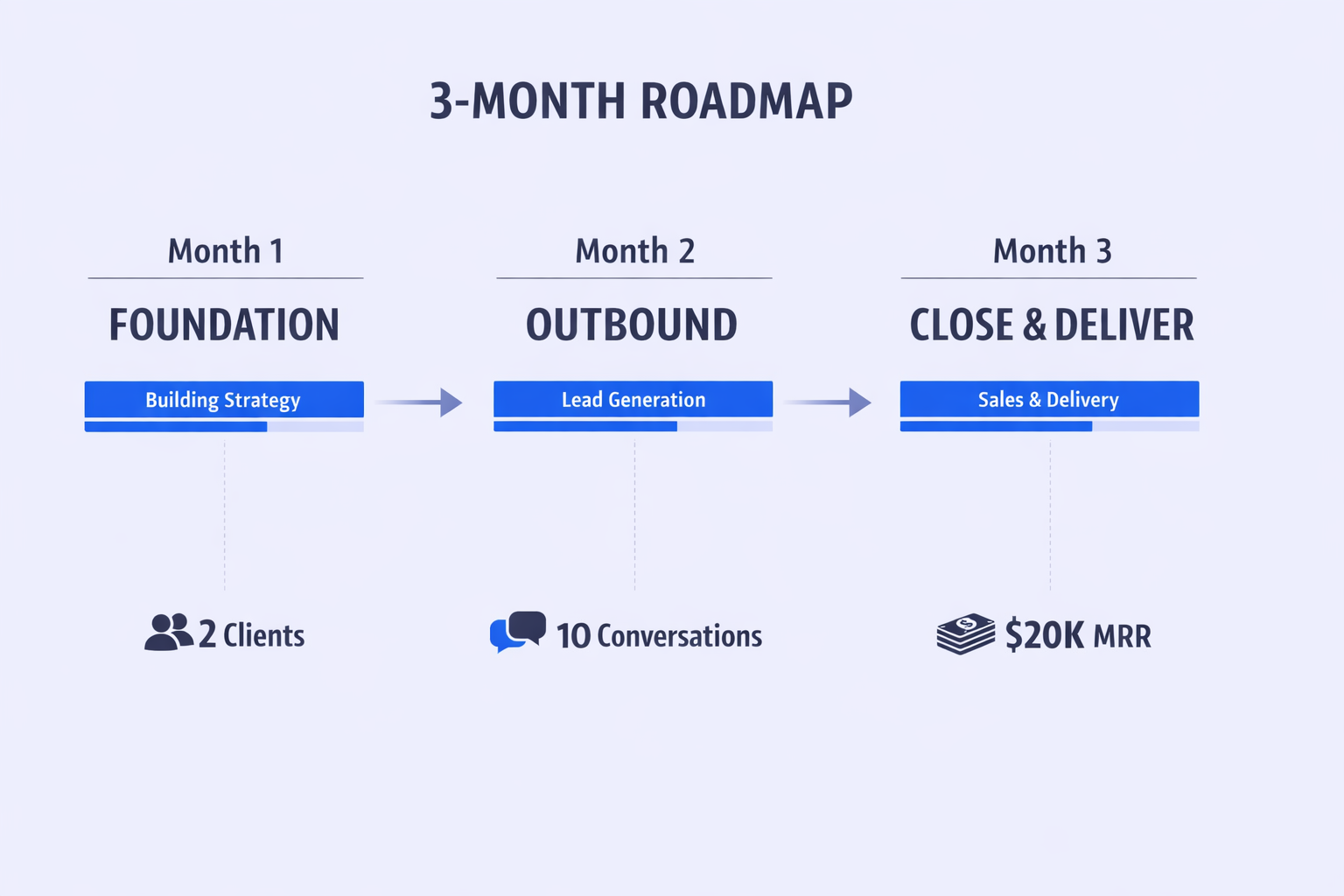
Month 1: Foundation
- Define your niche (industry + company stage)
- Build a simple website with case studies
- Set up LinkedIn profile optimization using <a href=”https://salesso.com/blog/linkedin-profile-statistics/”>best practices</a>
- Reach out to your immediate network
- Goal: 1-2 discovery calls
Month 2: Outbound engine
- Build targeted prospect lists (100-200 companies)
- Launch LinkedIn outreach campaign
- Create valuable content (LinkedIn posts, short articles)
- Attend 2-3 industry events (virtual or in-person)
- Goal: 5-10 qualified conversations
Month 3: Close and deliver
- Convert 1-2 clients from pipeline
- Deliver exceptional first month results
- Ask for referrals and testimonials
- Refine outreach based on feedback
- Goal: $10,000-$20,000 in monthly recurring revenue
This isn’t overnight success. But with focus and consistency, you can build a $200,000+ practice in 6-12 months.