

The executive job market just got flipped on its head.
Right now, there’s a revolution happening that most sales professionals are completely missing. While everyone else is grinding away trying to climb the corporate ladder one painful rung at a time, a select group of sales leaders are taking a completely different path—one that’s faster, more lucrative, and offers actual freedom.
We’re talking about fractional CSO jobs.
Here’s what’s wild: Companies are now paying $200-$350 per hour for fractional Chief Sales Officers who work part-time. That’s $192,000 to $288,000 annually for managing just 2-3 clients. Meanwhile, traditional full-time CSOs are stuck at around $179,000—with zero flexibility and all the corporate politics.
The demand is exploding. Industry data shows a 20% year-over-year surge in fractional executive positions, with 72% of CEOs planning to increase their use of fractional leaders in the next year. This isn’t a trend—it’s a permanent shift in how companies access top-tier talent.
But here’s the catch: Most people searching for “fractional CSO jobs” have no idea there are two completely different roles fighting for that same acronym. One focuses on revenue growth (Chief Sales Officer), while the other tackles sustainability compliance (Chief Sustainability Officer).
Confuse them, and you’ll waste months applying for the wrong positions.
In this guide, we’re breaking down everything you need to know about fractional CSO jobs—from understanding which role matches your skills, to finding the best platforms, to actually landing high-paying clients. By the end, you’ll know exactly how to position yourself in this booming market and potentially double your income while working fewer hours.
Let’s dive in.
Understanding Fractional CSO Jobs: Two Paths, One Acronym
Here’s the first thing you need to understand: When you search for “fractional CSO jobs,” you’re stepping into a battlefield where two completely different executive roles are fighting for the same title.
Both use “CSO.” Both are experiencing explosive growth. But they serve fundamentally different business needs.
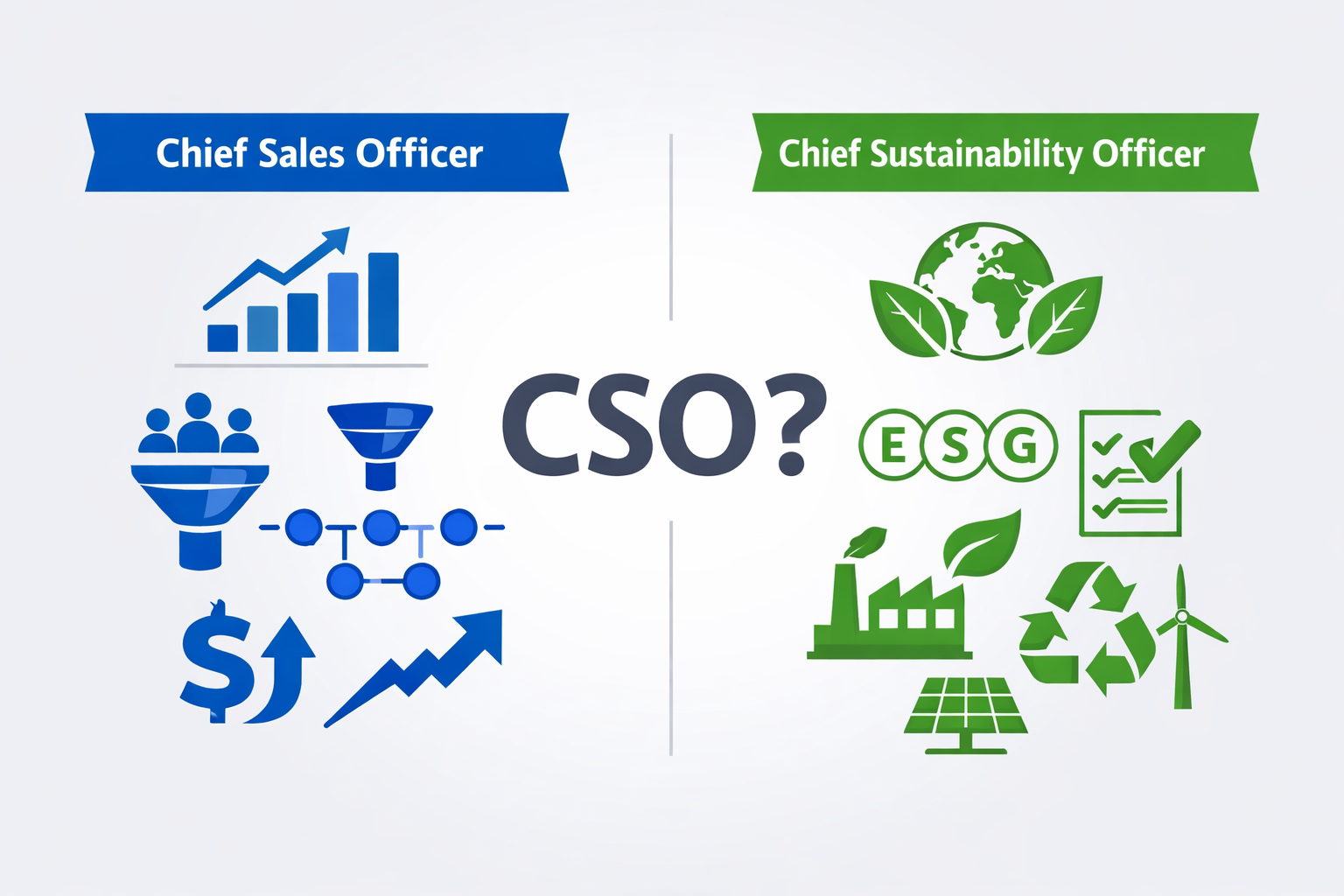
The Fractional Chief Sales Officer (Revenue Focus)
This is the revenue architect role. A fractional Chief Sales Officer is brought in when a company has a solid product but can’t figure out how to sell it at scale. They’re the strategist who transforms a struggling sales team into a revenue-generating machine.
What they actually do:
- Design go-to-market strategies and refine ideal customer profiles
- Implement CRM systems and establish KPI frameworks
- Recruit, train, and coach sales teams to hit quota
- Enhance forecasting accuracy and pipeline health through data analysis
The typical trigger for hiring: Stalled revenue growth, missing sales targets, or high turnover in the sales department.
Key metrics they’re measured on: Annual Recurring Revenue (ARR), Customer Acquisition Cost (CAC), Win Rates, and Pipeline Velocity. In other words, they live and breathe the top line of the income statement.
Here’s what makes this role powerful: Research from Deloitte shows that companies using fractional sales leadership experience an average 24% increase in sales revenue and a 31% rise in sales productivity. That’s not incremental improvement—that’s transformation.
For sales professionals looking to make the leap, this is where your existing skills translate directly. Everything you’ve learned about prospecting, deal cycles, and pipeline management becomes the foundation for this executive role.
The Fractional Chief Sustainability Officer (ESG Focus)
Now, let’s talk about the other CSO—the one most sales professionals have never even heard of.
This is the compliance and brand equity role. A fractional Chief Sustainability Officer operates in the world of Environmental, Social, and Governance (ESG) initiatives. They’re brought in when companies face regulatory pressure or investor demands around sustainability reporting.
What they actually do:
- Navigate complex reporting standards like GRI, SASB, and TCFD
- Align sustainability initiatives (decarbonization, circular economy) with business objectives
- Communicate ESG performance to investors, customers, and board members
- Ensure compliance with regulations like the EU’s CSRD and SEC climate disclosure rules
The typical trigger for hiring: New environmental regulations, investor pressure for ESG credentials, or supply chain mandates from enterprise clients.
Key metrics they’re measured on: Carbon footprint reduction, diversity and inclusion statistics, and regulatory compliance scores. They’re protecting the company from legal risk while building brand equity.
The demand is real: As mid-sized companies face increasing pressure to demonstrate eco-credentials without the budget for a full-time ESG executive, the fractional sustainability market is growing rapidly. These roles typically pay $150-$250 per hour depending on technical expertise.
The Critical Distinction: Which CSO Path Is Right for You?
Let’s make this crystal clear with a side-by-side comparison:
Feature | Fractional Chief Sales Officer | Fractional Chief Sustainability Officer |
Primary Goal | Revenue growth, sales efficiency | ESG compliance, risk mitigation |
Your Background | Sales team leadership, quota attainment | Environmental science, regulatory compliance |
Key Metrics | ARR, CAC, Win Rate, Pipeline Velocity | Carbon Footprint, DEI Stats, Compliance |
Typical Hire Trigger | Stalled revenue, missing targets | New regulations, investor pressure |
Search Keywords | Sales leadership, revenue growth, GTM strategy | ESG, carbon accounting, CSRD |
Income Range | $200-$350/hour or $8,000-$15,000/month | $150-$250/hour or $6,000-$12,000/month |
Here’s the reality check: If your background is in sales, prospecting, or revenue generation, you’re naturally suited for the Chief Sales Officer track. The sustainability route requires specialized knowledge in environmental regulations, carbon accounting, and ESG frameworks.
But here’s something most people miss: These two roles are increasingly intersecting. Forward-thinking fractional sales leaders are adding basic ESG knowledge to their toolkit because companies with diverse leadership integrating both revenue and sustainability viewpoints are 39% more likely to experience financial outperformance.
Understanding both sides of the CSO equation makes you more valuable and opens up collaboration opportunities where you work alongside sustainability leaders to win deals that require ESG credentials.
The Economics of Fractional CSO Jobs: Why This Career Path Pays More
Let’s talk money. Because that’s probably why you’re reading this in the first place.
The fractional model fundamentally changes how you’re compensated. You’re no longer trading time for a salary—you’re trading outcomes for premium rates.
What Fractional CSOs Actually Earn
Here are the real numbers from 2024-2025 market data:
Hourly Rates: Fractional CSOs typically charge $200-$350 per hour for strategic advisory work. That’s not a typo. When you’re solving a $1M revenue problem, $350/hour suddenly looks like a bargain to the CEO writing the check.
Monthly Retainers (The Sweet Spot):
- Small Scope ($5,000/month or less): About 29.5% of fractional leaders charge in this range, typically working with very early-stage startups on limited advisory
- Mid-Range ($5,000-$8,000/month): This is where 40% of the market sits—the standard rate for managing a specific function or team
- High-End ($8,000-$10,000+/month): Roughly 30% of fractional leaders command premium fees exceeding $8,000 monthly per client
The Portfolio Math: Here’s where it gets interesting. A fractional executive managing 2-3 clients at an average of $8,000 per month generates $192,000 to $288,000 annually. That’s significantly more than the average full-time CSO salary while offering greater tax efficiency, autonomy, and flexibility.
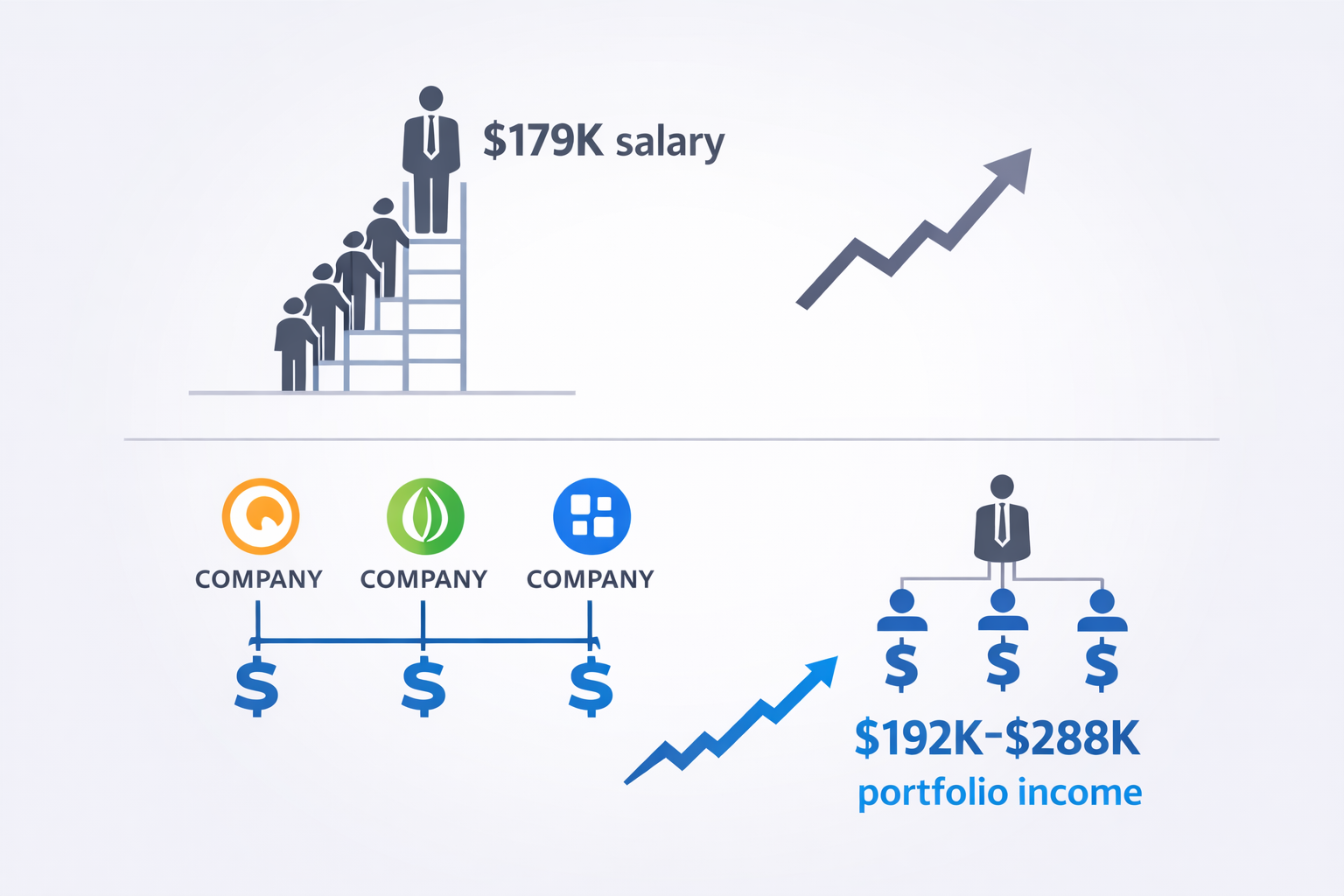
Compare that to the traditional route: Full-time CSOs earn around $179,000 on average (varying by location), but they’re locked into one company, dealing with office politics, and hoping they don’t get laid off during the next round of budget cuts.
Technical Execution: Avoiding the Spam Folder
Here’s the harsh truth: Even a perfect cold email is worthless if it never gets read. For fractional executives, landing in spam destroys your professional reputation.
Follow these technical guidelines:
Volume Control: Send no more than 5-10 highly researched emails per day. This is precision targeting, not spray-and-pray. Each email should feel personalized because it genuinely is.
Infrastructure: Use a dedicated domain or a properly “warmed up” inbox to protect your primary business email deliverability. If you’re serious about fractional work, invest in tools that gradually build your sending reputation. Understanding workflow automation software can help you scale this process without sacrificing personalization.
Follow-Up Strategy: Persistence is professional at the executive level. A well-timed follow-up email providing a case study or additional value often converts better than the initial outreach. But never follow up with “just checking in.” Add value every single time.
Pro tip: Before hitting send, apply the advanced LinkedIn search filters to verify your prospect’s current role and recent company activity. Referencing a recent achievement or challenge in your outreach dramatically increases response rates.
Career Pathways: From Individual Contributor to Fractional CSO
Let’s address the elephant in the room: Most fractional CSOs have 15+ years of sales leadership experience. But here’s what most people don’t realize—the fractional model is creating new “micro-fractional” stepping stones that allow faster progression and earlier autonomy.
The Traditional Ladder vs. The Fractional Shortcut
The conventional path looks like this:
Sales Rep → Account Executive → Sales Manager → Director of Sales → VP of Sales → Chief Sales Officer
Time required: 10-15 years of continuous employment, navigating office politics, waiting for someone to retire or leave so you can move up.
The fractional market disrupts this by allowing specialization earlier. A high-performing account executive with deep expertise in outbound prospecting can position themselves as a “Fractional Outbound Strategist” or “Fractional BDR Manager” for startups that can’t afford a full-time manager.
The Rise of “Fractional” Individual Contributors
It’s not just the C-suite that’s fragmenting. There’s a burgeoning market for fractional roles at every level:
Fractional Business Development Roles: These professionals work for multiple companies simultaneously, focusing on lead generation and appointment setting. Compensation structure: Typically a base retainer ($3,000-$5,000/month) plus performance commission, totaling $5,000-$10,000 per month for full-time equivalent work.
Strategic Advantage: Working across multiple industries concurrently (SaaS, HealthTech, FinTech) rapidly accelerates business acumen—a prerequisite for eventually assuming a CSO role. You’re compressing 10 years of experience into 3 years by working in parallel rather than series.
Actionable Advice: Rather than waiting for an internal promotion, start consulting for early-stage startups on the side (contract permitting). Tasks like setting up a first HubSpot instance, writing initial cold email sequences, or establishing LinkedIn growth hacking strategies build the “consultative muscle memory” required for future fractional leadership.
Transitioning to Fractional Leadership
To graduate from individual contributor to fractional CSO, you must demonstrate the ability to build systems, not just operate within them.
Required skill development:
- Pipeline forecasting models
- Compensation plan design
- CRM architecture (Salesforce, HubSpot, Pipedrive)
- Recruitment and coaching frameworks
- Tech stack integration (understanding tools like ZoomInfo for data enrichment)
The Experience Threshold: While most fractional CSOs have 15+ years of experience, niche specialists can enter the market sooner. A “Founder-Led Sales Transition Expert” who has successfully scaled 3-4 companies from $0 to $2M can charge fractional rates without decades of corporate experience.
The key differentiator: Results documentation. Your ability to walk into a sales call and say, “I scaled outbound for three FinTech companies from zero to $500K ARR in 120 days” is worth more than a VP title at a Fortune 500 company where you managed the status quo.
The Operational Reality: What Fractional Work Actually Looks Like
Here’s what nobody tells you about fractional work: It’s not just about having the expertise—it’s about delivering results at compressed timelines while juggling multiple clients.
The transition from full-time employee to fractional executive requires a fundamental re-engineering of your professional operating system.
The Fractional Operating System
Unlike a full-time leader who has months to absorb company culture and gradually implement change, fractional leaders are on the clock from Day 1. Their value proposition is tied directly to speed of impact.
The typical engagement structure:
Diagnosis Phase (Days 1-14): Rapid audit of people, processes, and technology. Interview the sales team, analyze CRM data integrity, review historical win/loss reports. Output: “State of the Union” report delivered to CEO.
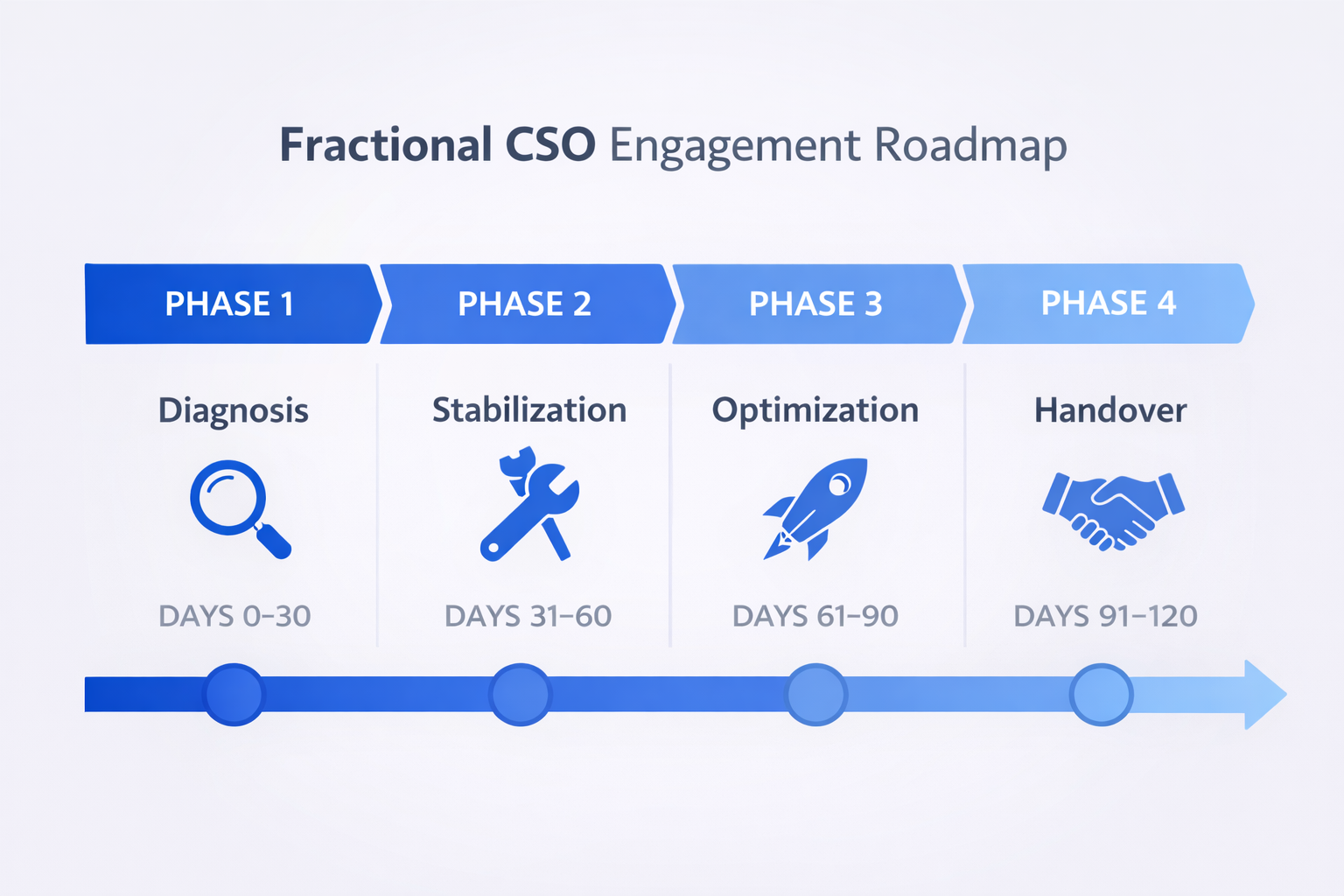
Stabilization Phase (Days 15-45): Fix immediate problems. This might involve restructuring a broken comp plan, terminating underperformers, or repairing lead routing in Salesforce. Goal: Stop revenue leakage immediately.
Optimization Phase (Days 46-90): Build the new engine. Install proven playbooks—new scripts, sales stages, KPI dashboards. This is where transformation happens.
Handover Phase (Day 90+): Prepare the organization for long-term success. Document everything so intellectual property resides with the company, not just in your head. Often leads to either a full-time hire or long-term fractional maintenance.
Managing the Portfolio Life
One of the biggest challenges: Managing the cognitive load of multiple clients. A fractional CSO might have a 9 AM call with a HealthTech startup, a 10:30 AM pipeline review with a logistics company, and a 1 PM strategy session with a FinTech firm.
Survival tactics successful fractional leaders use:
Time Blocking: Dedicate specific days or half-days to specific clients to minimize context-switching costs. Monday/Wednesday = Client A, Tuesday/Thursday = Client B, Friday = Strategy and admin.
Asynchronous Communication: Rely heavily on Loom videos, Slack updates, and shared documentation. This keeps clients informed without drowning you in meetings.
The “Fractional Chief of Staff”: As their practice grows, many fractional CSOs hire virtual assistants or operations support to handle scheduling and administrative overhead, allowing them to focus entirely on high-value strategy.
Tech Stack Mastery: The Non-Negotiable Skill
For modern fractional CSOs, technical literacy is no longer optional—it’s a core competency. In the past, a VP of Sales might delegate CRM management to a Sales Ops team. In fractional work, especially with SMBs, you often are the RevOps team initially.
Essential proficiencies:
- CRM architecture (Salesforce, HubSpot, Pipedrive)
- Sales engagement platforms (Outreach, Salesloft, Apollo)
- Conversation intelligence tools (Gong, Chorus)
- Data enrichment platforms (ZoomInfo, Lusha, Clay)
The differentiator: Being able to say, “I can not only lead your team but also fix your broken HubSpot instance” makes you significantly more valuable in the fractional market.
Mastering LinkedIn Sales Navigator alternatives and understanding LinkedIn profile statistics for optimization gives you additional leverage when helping clients build comprehensive outbound systems.
Legal and Administrative Reality: The Unsexy But Critical Stuff
While the allure of high rates and flexibility is strong, the administrative burden of being a “company of one” is real. Ignoring this can lead to significant financial and legal exposure.
Entity Structure and Contracts
Key decision: LLC vs. Sole Proprietorship. Forming an LLC (Limited Liability Company) is standard practice to protect personal assets and appear more professional to enterprise clients.
The Contract (Never Start Without One): Every engagement requires a signed Master Services Agreement (MSA). Critical clauses:
Scope Creep Protection: Explicitly state what happens if the client requests additional hours (e.g., “Additional work billed at $350/hour with 48-hour notice”).
IP Ownership: Clarify that strategies and systems built belong to the client upon payment.
Non-Compete Nuance: Ensure you’re not barred from working with other clients in the same industry. Your industry expertise is often your primary selling point—you can’t agree to restrictions that eliminate your market.
Pricing Psychology and Negotiation
Pricing is the ultimate signal of value. Here’s how successful fractional CSOs frame it:
Value-Based Pricing: Instead of “I cost $200/hour,” pitch “I cost $8,000/month to fix your $1M annual churn problem.” This reframes the conversation from cost to investment.
The Discovery Audit: Many fractional CSOs sell a paid “Audit” (typically $2,500-$5,000) as the first engagement. This lowers the barrier to entry for the client (they can “test drive” you) while you get paid to do the research necessary to build a comprehensive proposal. Win-win.
Building Your Personal Brand
In a crowded market, you are your own marketing department.
LinkedIn Strategy: Your profile must pivot from “Job Seeker” (listing duties) to “Solution Provider” (listing outcomes). The headline should not be “Seeking Opportunities” but rather “Fractional CSO for Series A SaaS | Scaled Revenue from $0-$10M | Ex-[Recognizable Company].”
Content Creation: Writing case studies, recording short video testimonials from clients, and sharing tactical frameworks establishes authority. You’re not just claiming expertise—you’re demonstrating it publicly.
Conclusion
The fractional CSO market represents more than just a new way to work—it’s a democratization of executive impact.
For decades, the ability to shape company strategy was reserved for those who climbed the corporate ladder for 20 years and secured one of the few coveted C-suite seats. Today, that level of impact is accessible to any sales leader with the skills to deliver it.
The path forward is clear:
Understand the distinction between the two CSO roles (Sales vs. Sustainability) and position yourself in the right market.
Master the economics: Build a portfolio of 2-3 clients at $8,000-$10,000/month each to generate $200K+ annually while maintaining flexibility.
Leverage the right platforms: Use Fractional Jobs, Hire A Fractional, and Vendux to access vetted opportunities while simultaneously warming your network for referrals.
Execute strategic outreach: Deploy insight-first cold email templates and position yourself as a problem-solver, not a service provider.
Build operational systems: Develop your fractional operating system to deliver rapid impact across multiple clients without burning out.
The fractional revolution isn’t coming—for the most agile operators, it’s already here. The question is: Will you be one of the professionals who capitalizes on this seismic shift, or will you watch from the sidelines while others build portfolio careers with executive-level income and founder-level freedom?
Your skills are liquid assets, tradeable across a portfolio of companies. You’re not an employee number—you’re a strategic partner.
The C-suite is no longer a destination you retire to. It’s a service you provide.

