Let's Build Your First Campaign Together with our LinkedIn Expert

Hiring Discrimination Statistics 2026: The Numbers That Expose Workplace Bias

Table of Contents

Hiring Discrimination Statistics

  • 45% of workers report facing unfair treatment during job search – millions of professionals experiencing invisible opponent whether fresh out of college or bringing decades of experience, discrimination reshaping career thinking
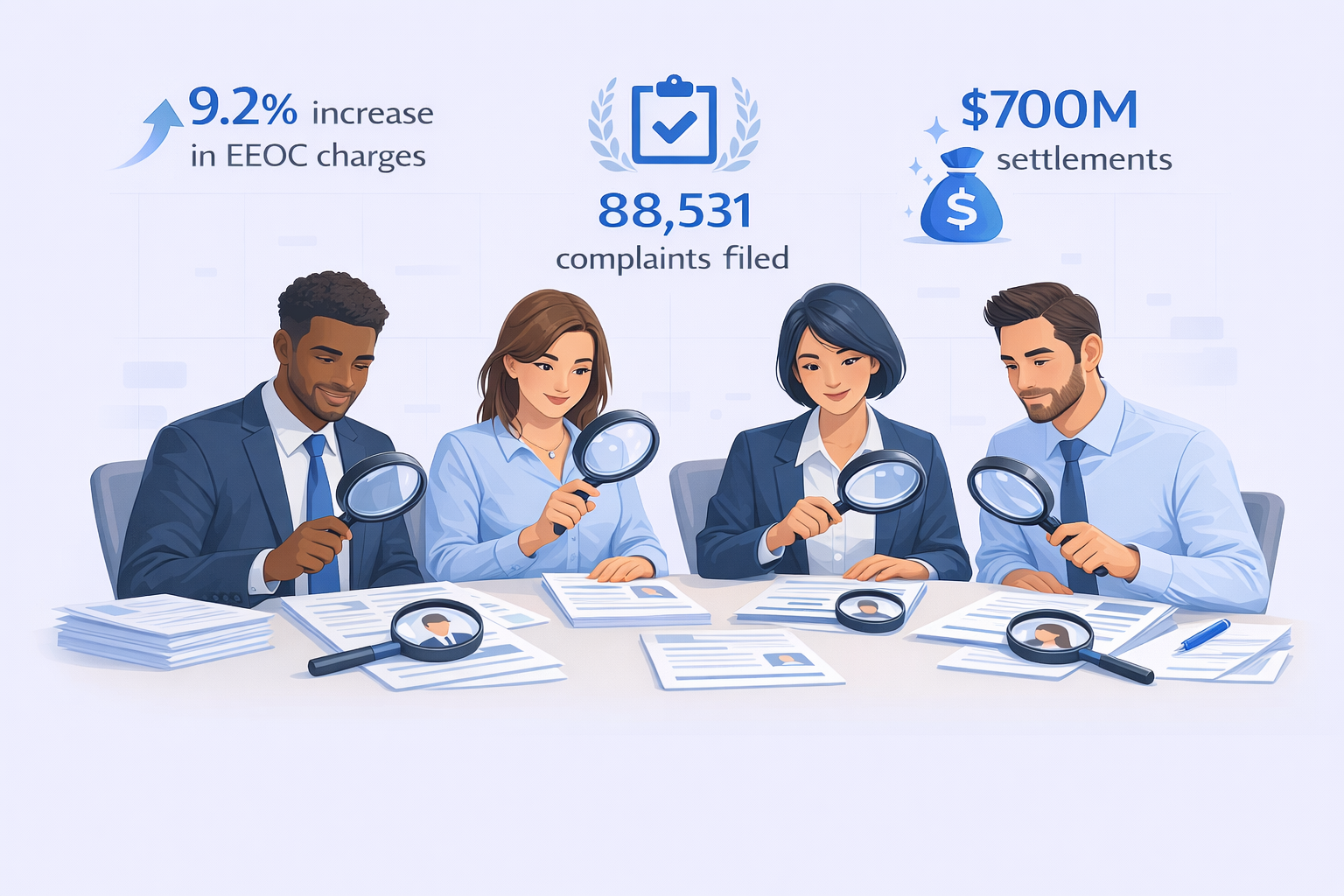
  • EEOC saw 9.2% spike in discrimination charges reaching 88,531 in FY 2024 (up from 81,055 in 2023) – more people recognizing discrimination when they see it and willing to speak up about workplace bias
  • $700 million in monetary recovery in 2024 (up from $665M in 2023, +5.2%) – representing real settlements to real people who faced bias with public inquiries reaching 553,000 calls and 90,000 emails
  • White-sounding names receive 50% more callbacks than identical Black-sounding resumes – studies of 80,000 fictitious applications to Fortune 500 companies showing same qualifications and experience but different name, different outcome
  • 30,270 charges of racial discrimination (10% increase from 27,505 previous year) – as companies dismantling DEI departments, structural accountability keeping bias in check disappearing creating enforcement challenges
  • Black Men: -33.5% callback rate for junior roles, Black Women: -25.9%, White Women: -16.8% – brutal bottleneck where entry point heavily guarded while senior Black professionals face less bias as “valuable assets” for company image
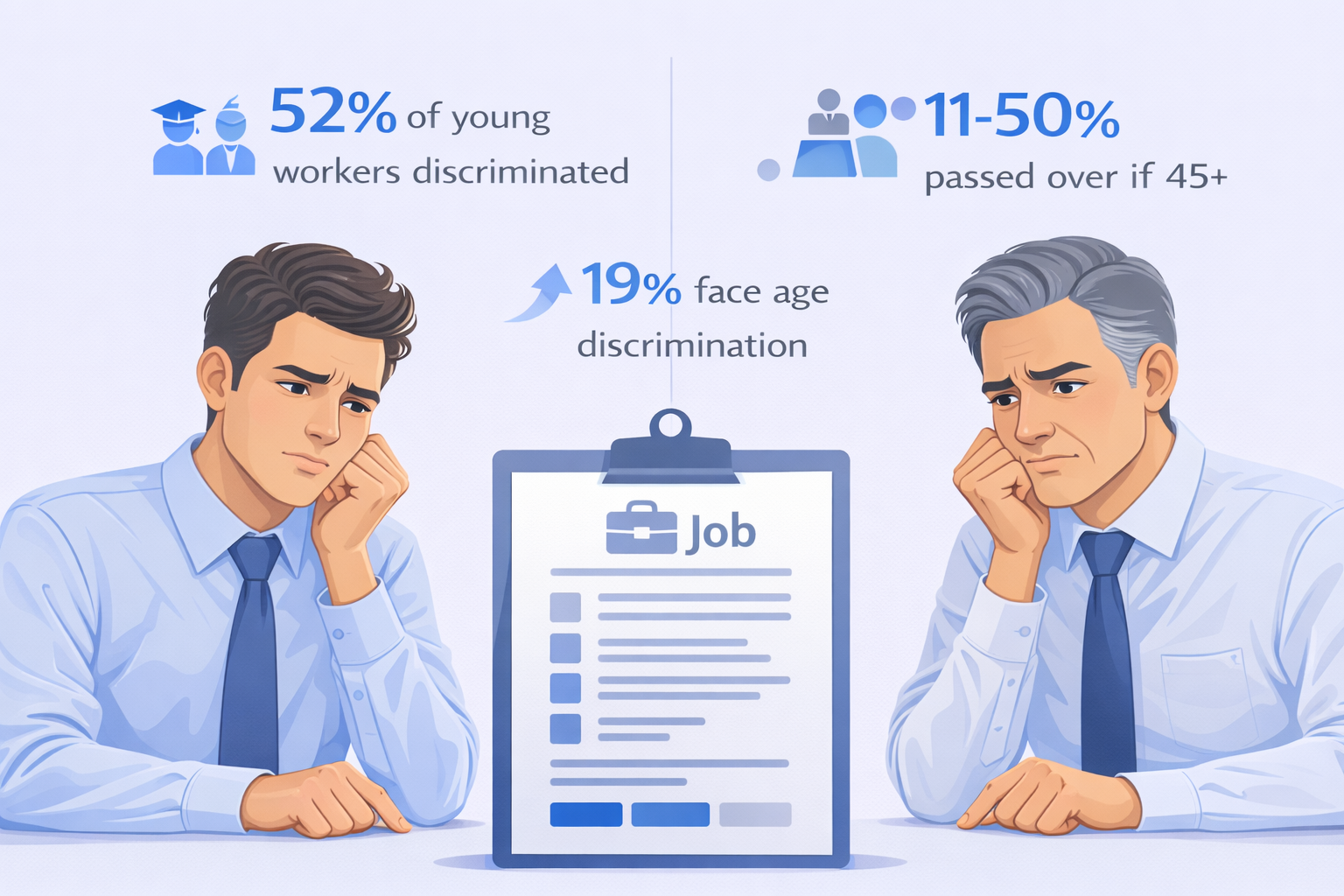
  • Age discrimination affects 19% of UK workforce in 2025 (most frequently cited form) – cutting both ways with companies squeezing out wisdom and fresh perspective creating homogeneous fragile workforce
  • Older workers (45+): 11-50% more likely to be passed over for younger candidates – while simultaneously 52% of job seekers under 24 believing they’ve faced “too young” discrimination (up from 31% in 2022)
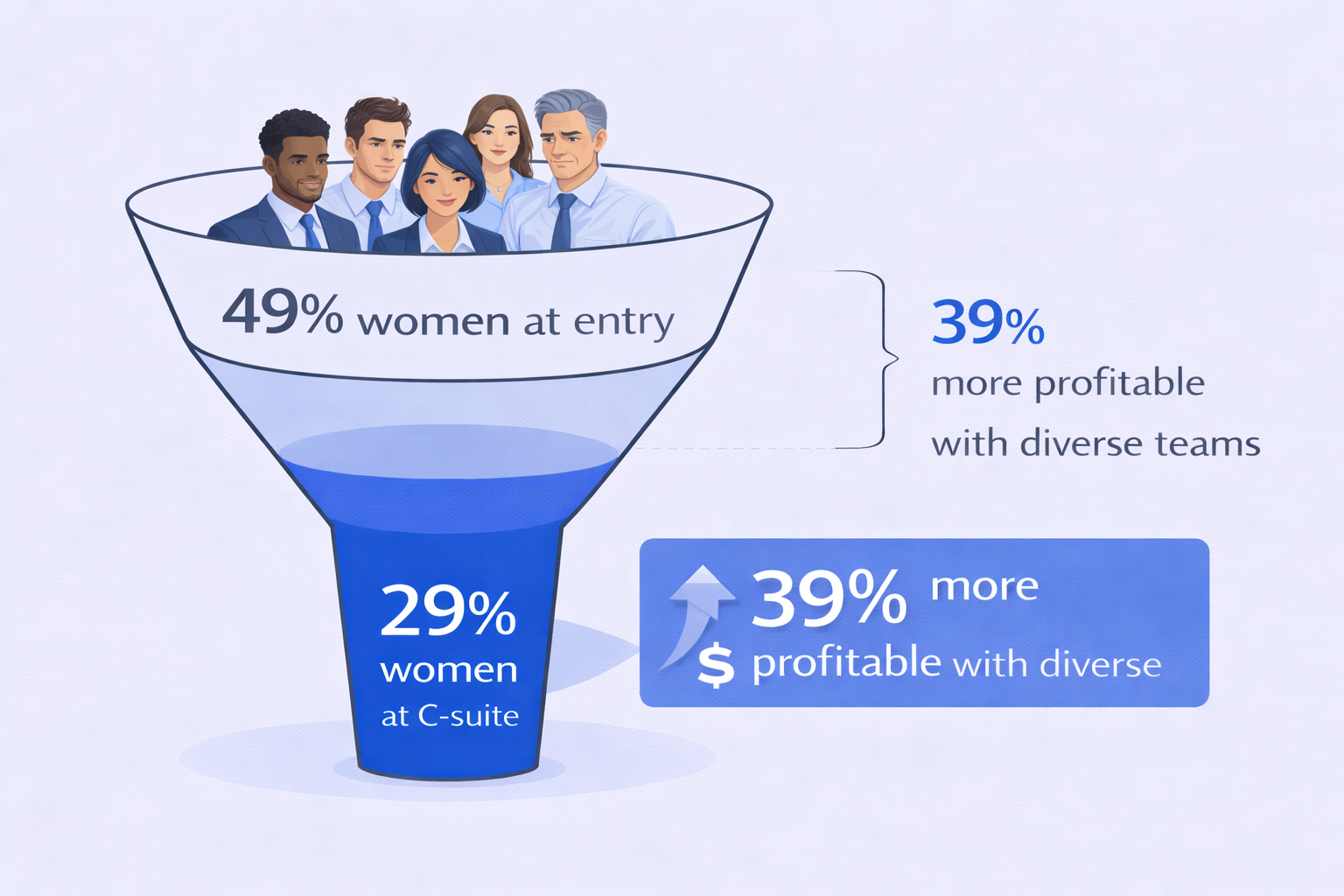
  • Women: 49% of entry-level positions but only 29% of C-suite – not because women lack ambition but because they lack sponsorship with broken rung preventing advancement at every level
  • Entry-level women 11% less likely than men to say they want promotion – but gap disappears entirely when women receive same manager advocacy that men do, showing structural not personal issue
  • Only 33% of women working remotely promoted in last 2 years vs 50%+ women on-site – men don’t face this penalty for remote work, push back to offices disproportionately hurting women’s careers through “flexibility stigma”
  • Diverse teams 39% more likely to outperform peers in profitability – business case clear showing diversity not just morally right but massive business efficiency driver for bottom line
  • 13% of workers cite appearance-based discrimination as barrier during job search – including weight bias, perceived attractiveness, dress code judgments with “professional appearance” being subjective hiding unconscious bias
  • 72% of companies using RPO providers report achieving greater diversity – through blind resume screening and skills-based assessments standardizing hiring process and tapping into diverse candidate networks internal HR teams miss
  • DEI-leading organizations: 54% lead-to-opportunity conversion vs 26% DEI-lagging (107% performance lift) – opportunity-to-customer conversion 24% vs 19% (+26%), revenue forecast 9% vs 6% (+50%), sales attainment 43% vs 31% (+38%) showing representation mattering for building trust

Looking for a job shouldn’t feel like fighting an invisible opponent. Yet for millions of professionals in 2025, that’s exactly what it feels like. 45% of workers report facing unfair treatment during their job search, and the numbers tell a story that’s hard to ignore.

Whether you’re fresh out of college or bringing decades of experience, hiring discrimination isn’t just a headline—it’s a reality that’s reshaping how people think about their careers. The good news? We finally have the data to understand what’s really happening.

In this guide, we’re breaking down the latest statistics on workplace bias, from callback gaps to age discrimination trends. These aren’t just numbers—they’re patterns that affect real people trying to build real careers.

Let’s dive into what the 2025-2026 data reveals about the state of fair hiring.

Hiring Discrimination Statistics 2026

The Big Picture: EEOC Complaints Are Surging

The Equal Employment Opportunity Commission (EEOC) saw a 9.2% spike in discrimination charges in fiscal year 2024, reaching 88,531 individual complaints. That’s up from 81,055 the previous year.

Here’s what that surge looks like:

EEOC Metric

2023

2024

Change

New Charges Filed

81,055

88,531

+9.2%

Public Inquiries (Calls)

522,000

553,000

+5.9%

Public Inquiries (Emails)

85,700

90,000

+5.0%

Total Monetary Recovery

$665M

$700M

+5.2%

What does this mean? More people are recognizing discrimination when they see it—and they’re willing to speak up. That $700 million in monetary recovery represents real settlements to real people who faced bias.
🚀 Struggling With Outbound Lead Gen?

Skip the hiring headaches—let our LinkedIn outbound system fill your pipeline with qualified prospects.

Race and Ethnicity: The Resume Name Test

This one hits hard. Studies involving 80,000 fictitious applications sent to Fortune 500 companies found that resumes with white-sounding names receive 50% more callbacks than identical resumes with Black-sounding names.

Let that sink in. Same qualifications. Same experience. Different name. Different outcome.

The EEOC received 30,270 charges of racial discrimination in the most recent fiscal cycle—a 10% increase from the previous year’s 27,505 charges. As companies dismantle DEI departments, the structural accountability that kept bias in check is disappearing.

Here’s how the callback rates break down:

Candidate Group

Junior Role Callbacks

Senior Role Callbacks

White Men

Baseline (1.0x)

Baseline (1.0x)

Black Men

-33.5%

Comparable

Black Women

-25.9%

Comparable

White Women

-16.8%

Preferred/Advantaged

Interestingly, Black professionals who make it to senior levels often face less bias—they’re seen as “valuable assets” for company image. But that creates a brutal bottleneck: the entry point is heavily guarded while leadership positions prioritize a select few. Using B2B prospecting tools won’t fix this, but awareness helps.

 📊 Targeting Quality Leads?

Our LinkedIn outbound engine connects you with decision-makers who actually respond—no resume bias included.

Ageism: A Two-Sided Problem

Age discrimination is now the most frequently cited form of unfair treatment, affecting 19% of the UK workforce in 2025. And it cuts both ways.

Older workers (45+) are 11% to 50% more likely to be passed over for younger candidates. Meanwhile, 52% of job seekers under 24 believe they’ve faced discrimination for being “too young”—up from just 31% in 2022.

Think about that: companies are squeezing out both wisdom and fresh perspective. You end up with a workforce that’s homogeneous and fragile. When you’re focused on lead enrichment, you want diverse perspectives—not cookie-cutter teams.
 

💡 Need Better Pipeline Management?

Stop wasting time on bad fits. Our targeting system finds prospects at the right seniority, every time.

Gender Gaps: The Broken Rung Effect

Women make up 49% of entry-level positions but only 29% of the C-suite. That’s not because women lack ambition—it’s because they lack sponsorship.

McKinsey’s 2025 research found that entry-level women are 11% less likely than men to say they want a promotion. But here’s the twist: that gap disappears entirely when women receive the same manager advocacy that men do.

The “flexibility stigma” makes things worse. Only 33% of women working remotely have been promoted in the last two years, compared to over 50% of women working on-site. Men don’t face this penalty for remote work—meaning the push back to offices is disproportionately hurting women’s careers.

Here’s a stat that matters for business: Diverse teams are 39% more likely to outperform their peers in profitability. When you’re using ChatGPT for cold emails, having diverse perspectives improves your messaging.

🎯 Struggling With Response Rates?

Our complete LinkedIn outbound strategy delivers 15-25% response rates through precise targeting and campaign design.

7-day Free Trial |No Credit Card Needed.

Appearance Bias: The Unspoken Filter

It’s rarely discussed in official reports, but 13% of workers cite appearance-based discrimination as a barrier during their job search. This includes everything from weight bias to perceived attractiveness to dress code judgments.

The problem? “Professional appearance” is subjective, which makes it easy for unconscious bias to hide behind supposedly objective standards. Even when using free pipeline tools, the human element of bias persists.


The Business Case: Why This Matters

Here’s where it gets interesting for anyone running a business. Organizations with strong equity practices see dramatically better results:

Metric

DEI-Leading Orgs

DEI-Lagging Orgs

Performance Lift

Lead-to-Opportunity Conversion

54%

26%

+107%

Opportunity-to-Customer Conversion

24%

19%

+26%

Revenue Forecast Increase

9%

6%

+50%

Average Sales Attainment

43%

31%

+38%

The mechanism is simple: teams that reflect diverse customer bases connect better with prospects. With 40% of the U.S. population identifying as racially or ethnically diverse, representation matters for building trust. And in a world where 70% of the buyer’s journey happens before talking to a rep, that trust is everything.

Looking at LinkedIn B2B statistics, diverse teams consistently outperform homogeneous ones in engagement and conversion.

Conclusion

The 2025-2026 data is clear: employment discrimination isn’t just morally wrong—it’s a massive business inefficiency. From the 50% callback disadvantage facing Black workers to the 19% of workers experiencing age bias, these patterns cost companies talent and revenue.

Organizations implementing structured interviews, blind hiring, and RPO standardization are seeing double-digit improvements in conversion rates and customer satisfaction. The path forward requires moving beyond “gut feeling” to objective evaluation.

For professionals navigating this landscape, the numbers validate what many have felt: the playing field isn’t level. But awareness is the first step toward change. As we move into 2026, the companies that win will be those viewing every applicant through the lens of skills and potential—ensuring the best talent always rises to the top.

Want to avoid these hiring headaches entirely? Check out Mailmonitor alternatives for smarter lead generation approaches.

FAQs

What are the latest hiring discrimination statistics for 2026?

45% of workers face unfair treatment during job search. Age discrimination leads at 19%, followed by appearance bias (13%) and gender bias (12%).

How does recruitment outsourcing impact diversity?

RPO standardizes hiring, reducing bias. 72% of companies using RPO find more diverse talent through blind screening and skills assessments. It also accesses global pools.

Why do Black workers still face callback gaps?

Studies show white-sounding names get 50% more callbacks than identical Black-sounding resumes. This stems from unconscious "affinity bias" where managers favor familiar-seeming candidates.

What role do civil rights laws play in modern employment?

Civil rights laws like Title VII remain primary defenses against bias. 2025 shows increased enforcement around intentional discrimination and reverse discrimination claims, requiring transparent, data-driven hiring.

How does a better LinkedIn photo help with outreach and lead generation?

Beyond profile views, a strong photo directly impacts your outreach success. When you combine a professional photo with systematic LinkedIn prospecting—including precise targeting, personalized messaging sequences, and strategic follow-ups—your response rates jump dramatically. Most cold outreach gets 1-5% responses, but our complete LinkedIn outbound system consistently hits 15-25% because we combine visual credibility with proven campaign strategies. Book a strategy meeting to learn how we help B2B companies scale qualified meetings through LinkedIn.

What to Build a High-Converting B2B Sales Funnel from Scratch on LinkedIn

Build a Full LinkedIn Pipeline in Just 30 Days—Guaranteed