
Let's Build Your First Campaign Together with our Lead Generation Expert

How to Write Emails for Re-Engaging Cold Leads

Table of Contents

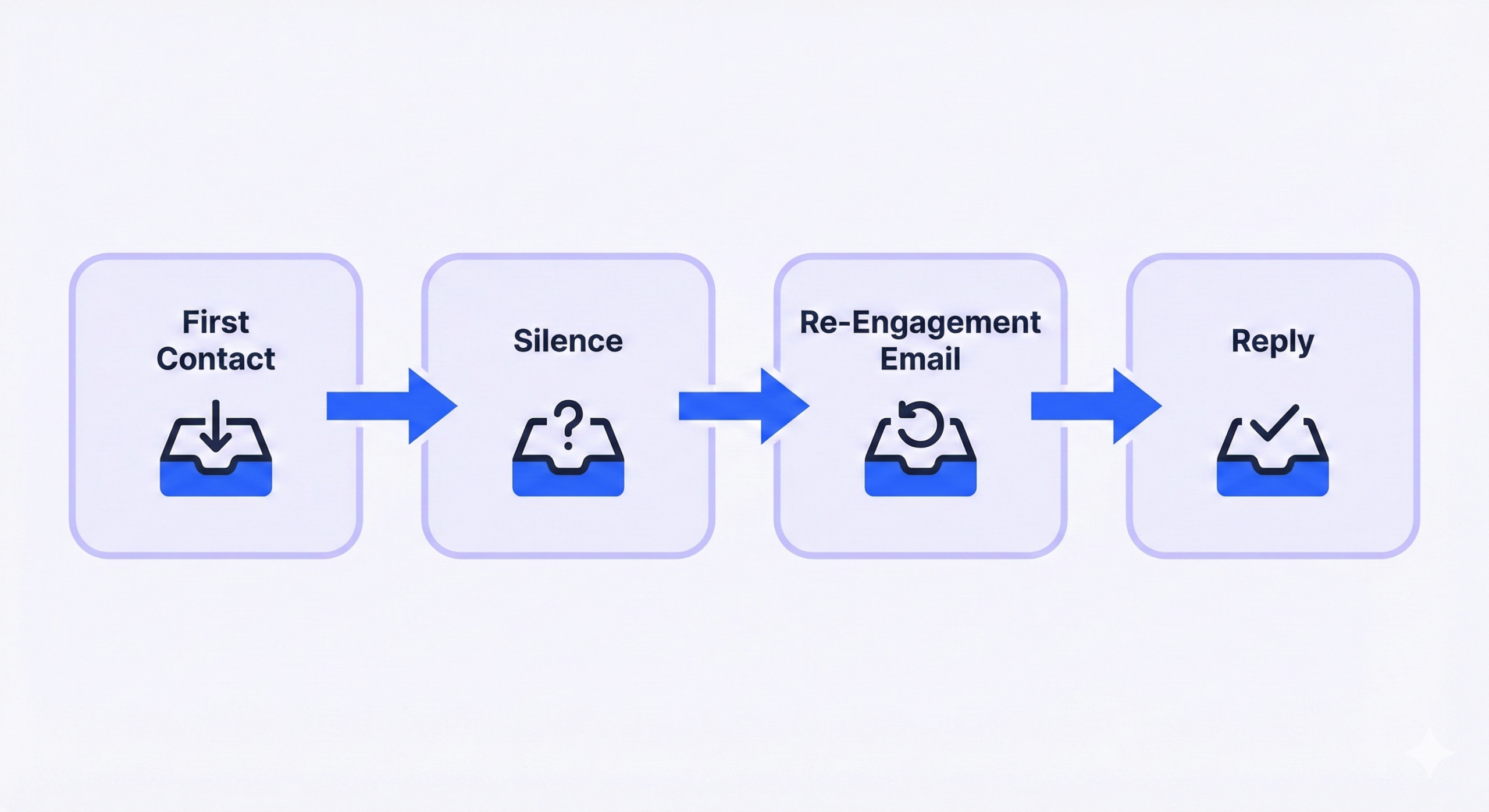
You sent the email. They opened it. Maybe they even replied once. Then — silence.

Sound familiar? You’re not alone. This is one of the biggest frustrations in outbound sales, and it happens to everyone. Cold leads go quiet all the time, and most people handle it completely wrong.

Here’s the truth: silence rarely means “no.” It usually means “I got busy” or “I wasn’t sure what to do next.” The proof? Research shows that 80% of all prospects never convert — not because they weren’t interested, but because the follow-up fell flat.

That’s a massive opportunity sitting right in your pipeline. And re-engaging cold leads the right way can unlock it.

In this guide, we’ll walk you through exactly how to write emails for re-engaging cold leads — the psychology behind it, the timing, the messaging, and the framework that actually gets replies. Plus, we’ve added real statistics and battle-tested templates to make this as actionable as possible. Lead generation doesn’t have to start from scratch every time.

How to Write Emails for Re-Engaging Cold Leads
Why Cold Leads Go Quiet (And Why It’s Not What You Think)

Before you can re-engage a cold lead, you need to understand why they went quiet in the first place.

Here’s the reality: decision-makers now receive an average of 15 cold outreach attempts per week. Their inboxes are a warzone. And 71% of ignored messages fail simply because they weren’t relevant enough.

It’s not personal. It’s noise. And your job is to cut through it.

The most common reasons leads go cold:

  • Internal priorities shifted and your deal moved down the list
  • Decision paralysis — too many options, no clear next step
  • Your original message wasn’t specific enough to warrant a response
  • They got busy and simply forgot

Understanding this lets you write re-engagement emails that don’t feel pushy — they feel helpful.

📬 Turn Cold Leads Into Booked Meetings

Our team builds complete outbound systems — targeting, messaging, and scaling — so you don’t have to guess.

The Hook Matters More Than Anything

Not all hooks are created equal. A timeline-based hook — which focuses on a compressed sequence of milestones or specific results — achieves an average reply rate of 10.01% compared to just 4.39% for a generic problem-based hook. That’s more than 2x the performance.

Here’s how they stack up:

Hook Type

Avg Reply Rate (2025)

Meeting Booking Rate

Timeline Hook

10.01%

2.34%

Numbers/Quantified Hook

8.57%

1.86%

Social Proof Hook

6.40%

1.25%

Problem/Pain Hook

4.39%

0.69%

The takeaway? When you open your re-engagement email with a specific outcome or timeframe — not a vague pain point — your chances of getting a reply more than double.

Weak hook: “Just checking in to see if you’re still interested in improving your sales process.”

Timeline hook: “Since we last spoke in October, companies like yours have cut their lead response time by 40% in under 30 days. Worth a quick look?”

This approach naturally ties into the emails that perform best for targeted outreach — specificity wins every time.

The Psychology Behind Re-Engagement Emails

Here’s what most people miss: the goal of a re-engagement email isn’t to sell. It’s to restart a conversation.

There are two powerful psychological principles at play:

Loss Aversion (The Breakup Email)

Humans feel the pain of losing something more intensely than the joy of gaining it. That’s why the “Permission to Close Out” email — often called the breakup email — works so well.

By explicitly telling someone you’re closing their file, you trigger a natural defensive response. If they were even slightly interested, they’ll often reply just to keep the option alive.

A good breakup email does three things: it acknowledges the silence without blame, offers an easy “out,” and asks for one honest response. You can see strong examples of this in well-crafted cold email outreach sequences.

Reflective Listening (Active Listening Techniques in Writing)

Active listening techniques aren’t just for calls. In written form, reflective listening means referencing the specific things your prospect told you — their exact pain point, their timeline, their goals.

“When we spoke in October, you mentioned your team was losing 2 hours a day on manual data entry. I came across something that might help — is that still the bottleneck?”

This one sentence does three things: it shows you listened, it proves you remember them as a person, and it gives them an easy reason to reply.

🎯 Skip the Guesswork on Cold Outreach

SalesSo builds and runs your outbound engine — from prospect targeting to booked meetings.

The Exact Re-Engagement Email Sequence to Use

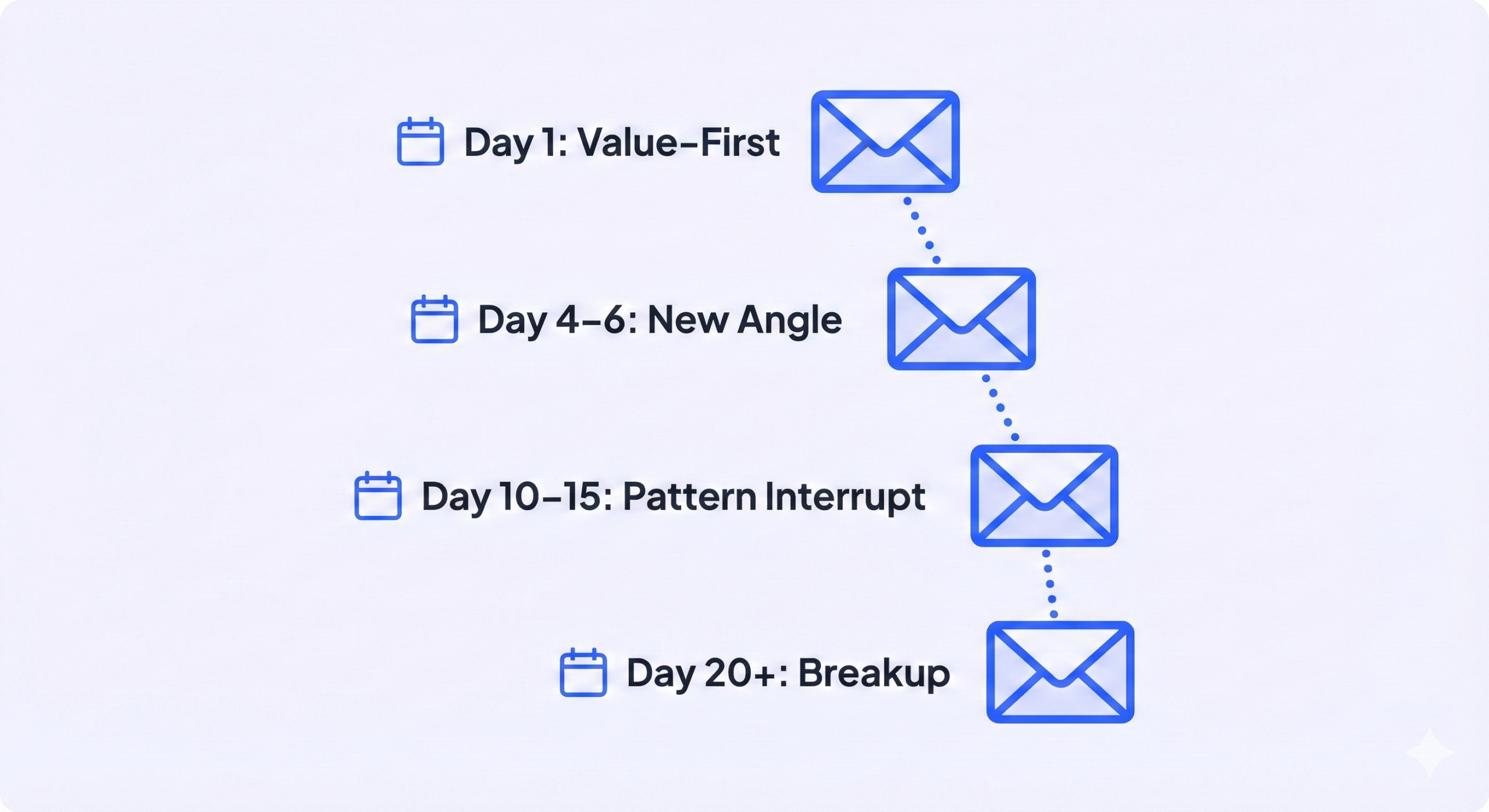
Structure matters as much as the words themselves. A solid re-engagement cadence — sometimes called the “3-7-7” model — captures 93% of all eventual replies by day 10. Here’s what that looks like in practice:

Step

Timing

Objective

Value-First Reconnect

Day 1

Reference past context; share a fresh insight or resource

The New Angle

Day 4–6

Introduce a new result, case study, or perspective shift

Pattern Interrupt

Day 10–15

Break formality; ask for honest feedback

The Breakup Email

Day 20+

Close the loop; create scarcity; offer an easy out

For deeper guidance on writing every step of this process, check out our guide on how to write a follow-up email that actually gets opened.

Also: Tuesday and Wednesday are your best days for sends. Research consistently shows mid-week gets the highest response rates. Avoid Friday afternoon — that’s auto-reply territory.
 

Timing, Deliverability, and Inbox Trust

Even the most perfectly written email fails if it lands in spam. Email deliverability is one of the most overlooked parts of any cold email strategy.

The basics are non-negotiable: SPF, DKIM, and DMARC authentication records must be configured correctly. Spam complaint thresholds have dropped to a sensitive 0.1% — just a handful of negative reports can damage your entire sender reputation.

On the content side, keep re-engagement emails under 80–100 words. Research shows that 60% of professional emails are now opened on mobile, and long blocks of text are flagged as low-value by both readers and AI-driven inbox filters.

Element

Best Practice

Why It Matters

Word Count

Under 80–100 words

Mobile readability, faster scan

CTA

One clear, low-friction question

Reduces decision fatigue

Subject Line

Outcome or question-based

Avoids “checking in” death phrase

Visuals

Minimal, Dark Mode-ready

Faster load, better accessibility

And please — never use “Just checking in” as a subject line. It signals zero value and triggers instant dismissal. Instead, try: “Is [Goal] still a priority?” or “Quick thought on [specific project].”

Great deliverability also starts with great cold email signatures — professional, clean, and trust-building.

📈 Your Outbound Deserves a Real System

We handle targeting, campaign design, and scaling so your pipeline stays full every single month.

What to Say: Real Email Frameworks That Work

Here are three frameworks you can put to work immediately:

The 9-Word Email

Inspired by marketing expert Dean Jackson, this works because it’s almost impossible to ignore. Keep it under 9 words: “Are you still looking to grow your pipeline?” That’s it. Simple question, zero friction, surprisingly high reply rate.

The “I’m Confused” Email

Best used after a demo that went cold. Call out the disconnect directly: “Hi [Name], I’m a bit confused — when we spoke, you mentioned [specific goal] was a top priority. Has something changed on your end?” This holds them accountable to their own words without being aggressive.

The Value-First Reconnect

Open with something useful, not a pitch. A relevant stat, an industry update, a case study from someone in their space. Lead with value, and the conversation naturally follows.

This is also one of the best frameworks to apply within a structured email drip campaign — where every touchpoint builds on the last.

The ROI Case for Re-Engaging Cold Leads

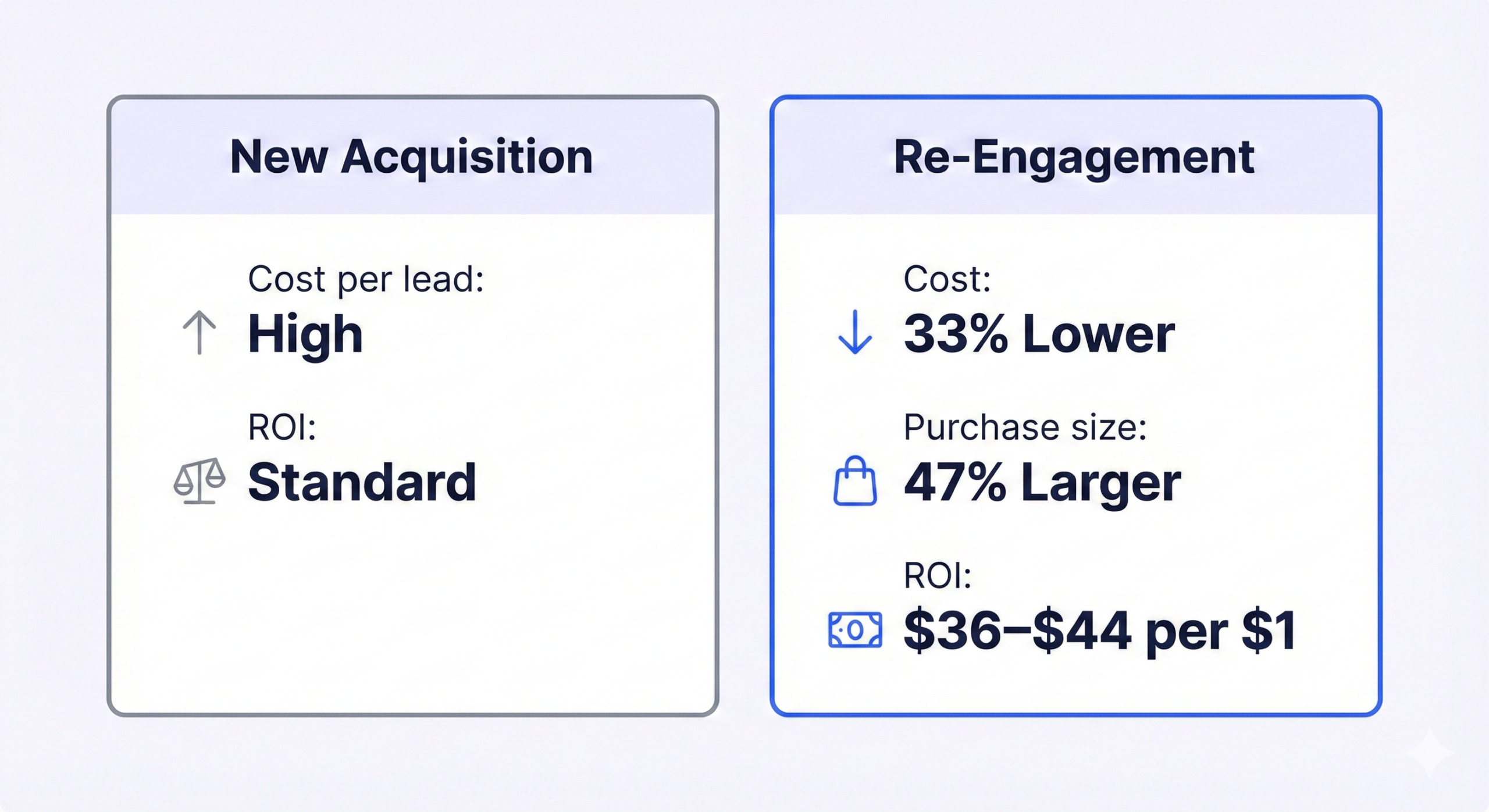
Here’s the financial reality: email delivers $36–$44 ROI for every $1 spent — the highest of any channel. And when you factor in that nurtured leads make 47% larger purchases than cold acquisitions, reactivating dormant conversations isn’t just a nice-to-have — it’s a revenue strategy.

The cost of acquiring a new contact has risen by 61% for many organizations in recent years. Companies that re-engage well generate 50% more sales-ready opportunities at 33% lower cost than those focused solely on top-of-funnel acquisition.

That math alone should make re-engagement a priority in every pipeline review meeting.
🚀 Ready to Fill Your Pipeline Again?

SalesSo runs full outbound campaigns across LinkedIn, email & more — starting with your ideal prospects.

7-day Free Trial |No Credit Card Needed.

Conclusion

Re-engaging cold leads isn’t about pestering people until they reply. It’s about showing up with the right message, at the right time, with enough respect for their attention to keep it short and specific.

Use timeline hooks over problem hooks. Use reflective listening to prove you actually remember the conversation. Build a structured sequence and don’t give up before day 10. And if all else fails — send the breakup email. You’d be surprised how often it works.

Your pipeline isn’t as dead as it looks. It just needs the right nudge. Access free templates using the frameworks above and start turning silence into conversations this week.

If you’d rather have a team handle the targeting, campaign design, and scaling while you focus on closing — that’s exactly what SalesSo does. Book a strategy meeting and let’s talk about what your pipeline could look like 90 days from now.

FAQs

How long should I wait before sending a re-engagement email?

Still waiting for leads to re-engage on their own? That's costing you deals. Most pipelines lose prospects in the 2–4 week silence window — exactly when a structured outbound sequence should kick in. At SalesSo, we design complete re-engagement campaigns with precise targeting and timing built in. Book a strategy meeting to see how we'd map your follow-up cadence.

What is the 9-word email and does it work?What is the 9-word email and does it work?

Yes — ask a single direct question in under 9 words. Example: "Are you still looking to grow your pipeline?" Requires zero effort to read and often prompts a quick reply even from busy executives.

How many follow-ups are too many?

Research shows 70% of replies come from the 2nd to 4th email. A sequence of 3–5 emails over 2–3 weeks is the sweet spot. After that, move them to a quarterly nurture list.

Should I use "Checking in" in my subject line ?

Never. It signals zero value and triggers instant dismissal. Use outcome or question-based subject lines instead: "Is [Goal] still a priority?" or "Quick thought on [project]."

How does a better LinkedIn photo help with outreach and lead generation?

Beyond profile views, a strong photo directly impacts your outreach success. When you combine a professional photo with systematic LinkedIn prospecting—including precise targeting, personalized messaging sequences, and strategic follow-ups—your response rates jump dramatically. Most cold outreach gets 1-5% responses, but our complete LinkedIn outbound system consistently hits 15-25% because we combine visual credibility with proven campaign strategies. Book a strategy meeting to learn how we help B2B companies scale qualified meetings through LinkedIn.

We deliver 100–400+ qualified appointments in a year through tailored omnichannel strategies

What to Build a High-Converting B2B Sales Funnel from Scratch

Lead Generation Agency

Build a Full Lead Generation Engine in Just 30 Days Guaranteed
