🎉Find Prospects and Send Cold Emails & LinkedIn Outbound | All in One Place

Lead Enrichment: Your Complete Guide to Better Prospecting and Faster Closes

Table of Contents

You’re staring at a CRM full of basic contact information. Just names and email addresses. But every sales professional knows the frustration of reaching out to contacts without context. Who are they? What’s their role? What does their company actually do?

This is where lead enrichment transforms your entire sales approach. It takes those bare-bones contacts and fills them with the rich, actionable data you need to have meaningful conversations.

Studies show that poor data quality costs companies an average of $12.9 to $15 million annually. Meanwhile, companies that excel at personalization generate 40% more revenue than their competitors. The difference? They’re not guessing about their prospects—they know exactly who they’re talking to.

What is Lead Enrichment?

Lead enrichment is the process of taking basic contact information and enhancing it with valuable additional data points. Think of it as upgrading from a grainy photo to a high-definition video with full context.
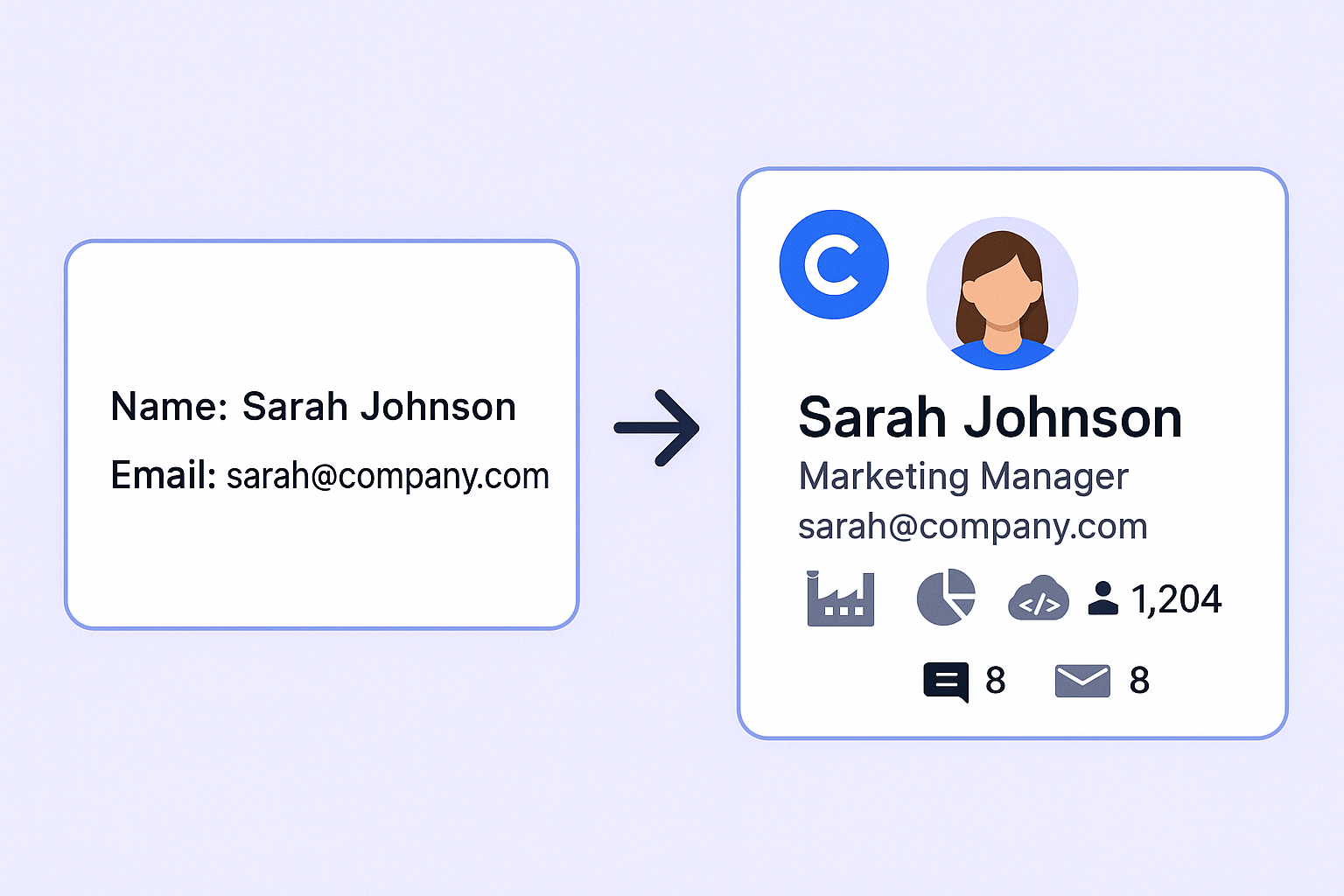
When a prospect fills out a form with just their name and email, lead enrichment automatically appends dozens of data points: job title, company size, industry, technology stack, recent funding rounds, and much more. This happens in real-time, so by the time you receive the lead, you already have everything needed for a personalized approach.

The data comes from combining first-party information (what you already know) with third-party sources (external data providers). Modern systems use APIs to make this process seamless and instant.

Here’s how lead enrichment fits into the broader sales process:

  • Lead Generation: Capturing initial contact information
  • Lead Enrichment: Adding valuable context and details
  • Lead Scoring: Ranking prospects based on enriched data
  • Lead Routing: Directing qualified leads to the right salesperson

Without enrichment, you’re essentially flying blind. With it, every conversation becomes targeted and relevant.

Why Lead Enrichment Matters for Your Sales Success

The impact of enriched data on sales performance is dramatic and measurable.

The Cost of Bad Data

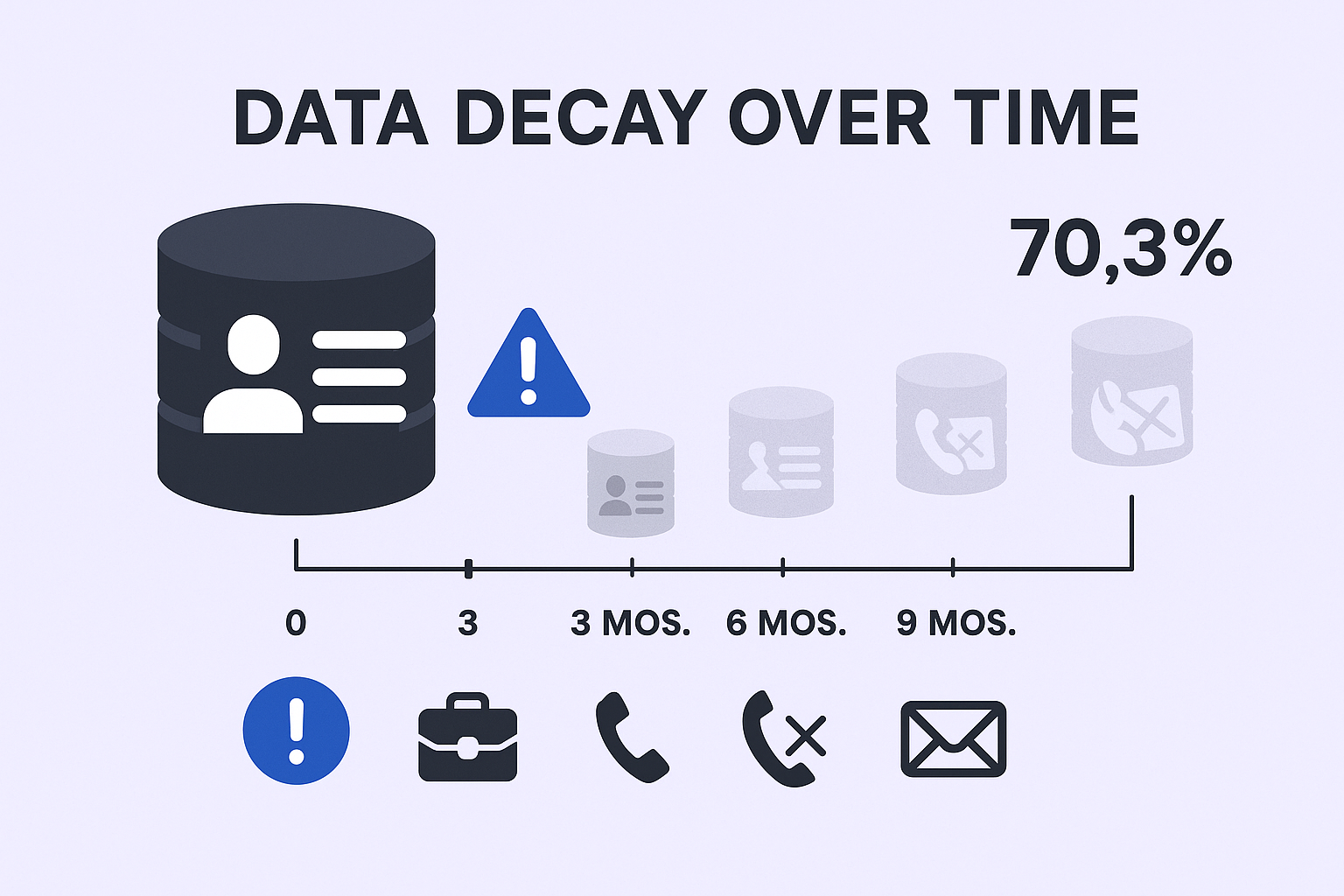
B2B contact data decays at an alarming rate—up to 70.3% per year. People change jobs, get promoted, switch phone numbers, and companies get acquired. Without a system to keep data fresh, your contact database becomes less valuable every single day.


Sales reps waste up to 550 hours annually—nearly 14 full workweeks—dealing with poor data quality. That’s time spent on bounced emails, disconnected phone numbers, and researching prospects who left their companies months ago.

 📊 Stop Chasing Decaying Data

LinkedIn outbound targets verified professionals with real-time accurate information automatically

The ROI of Quality Data

The flip side is equally compelling. Personalized emails deliver six times more transactions than generic ones and can boost campaign revenue by 10-17%. When you have the right data, you can craft messages that actually resonate.

Companies with strong data management practices improve their lead-to-conversion ratio from 143:1 to an impressive 68:1—a 152% increase in effectiveness. That’s the difference between struggling to hit quota and consistently exceeding it.

Speed matters too. Real-time enrichment means leads are instantly appended with critical data and routed to the right representative. This eliminates delays that can kill deals before they start.

Types of Data You Can Enrich

Understanding the different types of enrichment data helps you craft more targeted approaches:

Contact Data

This covers the basic professional information about individuals:

  • Full name and job title
  • Direct email and phone number
  • LinkedIn profile and professional headshot
  • Years of experience and career history

Firmographic Data

Company-level information that helps with qualification:

  • Company size (employee count)
  • Annual revenue estimates
  • Industry and business model
  • Geographic location and office count
  • Funding history and financial health

Demographic Data

Individual characteristics that inform your messaging:

  • Seniority level and reporting structure
  • Department and functional area
  • Educational background
  • Professional interests and skills

Technographic Data

The technology stack reveals immediate opportunities:

  • CRM software (Salesforce, HubSpot, etc.)
  • Marketing automation platforms
  • Cloud providers and development tools
  • Existing vendors and competitive tools

This is particularly valuable for software companies. If you sell a Salesforce integration, you can target companies already using Salesforce. If you compete with another tool, you can identify their customers for targeted switching campaigns.

Behavioral & Intent Data

The most powerful type shows active buying signals:

  • Website visits and page views
  • Content downloads and webinar attendance
  • Search behavior and research topics
  • Engagement with competitors

Intent data is the ultimate signal that a prospect is “in-market.” When you know a company is actively researching solutions you provide, you can prioritize them for immediate outreach with perfectly timed messaging.

Manual vs Automated Lead Enrichment

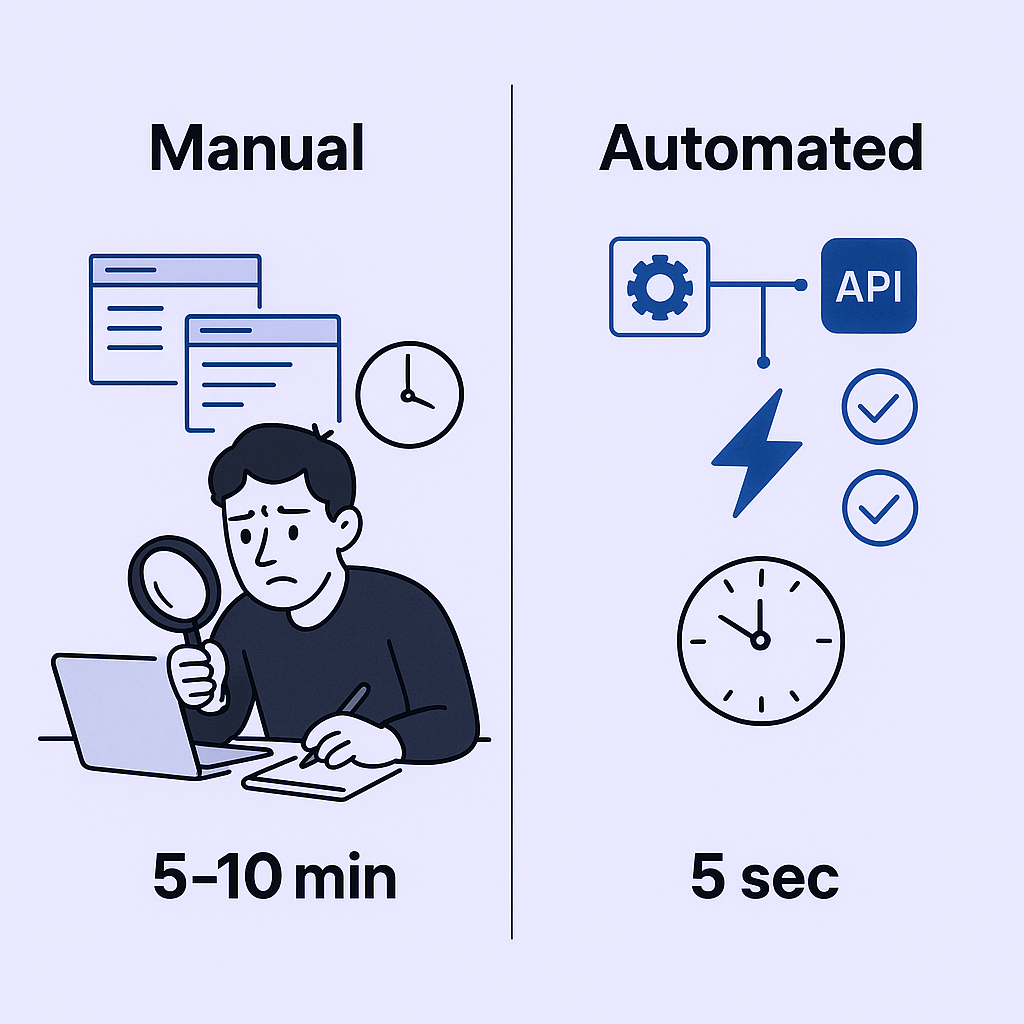
The contrast between manual and automated approaches is stark:

Manual Enrichment:

  • Time-consuming research for each contact
  • Inconsistent data collection
  • Human error and outdated information
  • Doesn’t scale with volume
  • Takes 5-10 minutes per lead

Automated Enrichment:

  • Instant data appending via APIs
  • Consistent, standardized information
  • Always current and verified
  • Scales to thousands of leads
  • Takes less than 5 seconds per lead


Modern sales teams that try to manually research every prospect are fighting an uphill battle. Sales reps spend only 30% of their time actually selling—the rest is consumed by administrative tasks and research.

âš¡ LinkedIn Data Beats Enrichment Tools

Access professional profiles with built-in job titles, company info, and engagement signals instantly

Automation doesn’t just save time; it ensures consistency. Every lead gets the same thorough treatment, and no opportunities slip through the cracks because someone forgot to look up company information.

Examples of Lead Enrichment in Action

Let’s walk through a real-world scenario:

Before Enrichment: A prospect named “Sarah Johnson” from “sarah.johnson@techcorp.com” downloads your whitepaper. That’s all you know.

After Enrichment:

  • Name: Sarah Johnson, VP of Sales
  • Company: TechCorp (250 employees, $50M revenue)
  • Industry: B2B SaaS, Marketing Technology
  • Location: Austin, Texas
  • Tech Stack: Uses Salesforce, HubSpot, Slack
  • Intent Signals: Recently visited your pricing page 3 times
  • Trigger Events: Company just closed Series B funding

Now instead of a generic “Thanks for downloading our whitepaper” email, you can send:

“Hi Sarah, I noticed you downloaded our guide on sales automation. As VP of Sales at a growing SaaS company, you’re probably evaluating solutions that integrate well with your existing Salesforce setup. Given TechCorp’s recent Series B, this might be perfect timing to scale your sales processes…”

That’s the difference between a 2% response rate and a 25% response rate.

 🎯 Get 15-25% Response Rates

Our LinkedIn outbound engine combines targeting precision, campaign design, and systematic scaling methods

Lead Enrichment vs Data Enrichment vs Lead Scoring

These terms often get confused, so let’s clarify:

Data Enrichment is the broad category—enhancing any dataset with additional information. You could enrich customer data for support, product data for e-commerce, or employee data for HR.

Lead Enrichment is specifically about enhancing prospect data for sales and marketing purposes. It’s a subset of data enrichment focused on the sales funnel.

Lead Scoring comes after enrichment. It uses the enriched data to rank leads based on how likely they are to convert. A VP at a 500-person company using competitor tools will score higher than an intern at a startup.

The sequence is: Generate → Enrich → Score → Route → Convert.

Top Lead Enrichment Tools

Choosing the right tool depends on your team size, budget, and specific needs. Here are three leading platforms:

Salesso – Best All-in-One Solution

Why Salesso Wins: As a comprehensive cold email platform, Salesso combines lead enrichment with email finding, verification, and outreach in one streamlined solution.

Key Features:

  • Real-time email finding and verification
  • Contact and company data enrichment
  • Built-in email warming and sending
  • CRM integrations and automation
  • Affordable pricing for growing teams

Best For: Sales teams who want prospecting, enrichment, and outreach in one platform.

Pricing: Competitive plans starting from basic to enterprise levels.

Apollo.io – Popular All-in-One Platform

Key Features:

  • 275M+ contact database
  • Built-in sequencing and dialing
  • Chrome extension for LinkedIn
  • Intent data and company insights

Best For: Teams wanting prospecting and outreach combined.

Pricing: Free plan available; paid plans from $49/user/month.

ZoomInfo – Enterprise-Grade Data

Key Features:

  • Massive B2B database with deep profiles
  • Advanced intent data and buying signals
  • Organizational charts and hierarchies
  • Real-time company alerts

Best For: Large enterprises with significant budgets.

Pricing: Starts around $15,000/year.

UpLead – High-Accuracy Focus

Key Features:

  • 95% data accuracy guarantee
  • Real-time email verification
  • Technographic and intent data
  • Data enrichment API

Best For: Teams prioritizing data quality over quantity.

Pricing: From $74/user/month (annual).

Understanding Lead Enrichment APIs

A Lead Enrichment API is the technical bridge that connects your sales tools, enabling real-time data flow between systems.

Without an API:

  1. Prospect fills out form
  2. Manual lookup on LinkedIn
  3. Copy information to CRM
  4. Manually assign to salesperson
  5. Total time: 5-10 minutes

With an API:

  1. Prospect fills out form
  2. API instantly enriches data
  3. CRM automatically updated
  4. Lead scored and routed
  5. Total time: Under 5 seconds

APIs enable the speed-to-lead that modern buyers expect. The difference between a 5-minute response and a 5-second response can be the difference between winning and losing a deal.

Most modern tools offer APIs that integrate with popular CRMs like Salesforce, HubSpot, and Pipedrive. The setup is typically handled by your sales operations team or technical administrator.

🚀 Skip Tool Integration Headaches

LinkedIn outbound delivers enriched targeting, personalized campaigns, and response tracking in one platform

7-day Free Trial |No Credit Card Needed.

Best Practices for Lead Enrichment

Define Your Ideal Customer Profile First

Before enriching anything, clearly define what your perfect customer looks like. What firmographics (company size, industry, revenue) and demographics (job titles, seniority levels) matter most? This becomes your filter for the entire enrichment strategy.

Automate and Integrate Everything

Set up your enrichment tool to integrate directly with your CRM. Create automation rules that trigger enrichment the moment a new lead is created. Use webhooks to ensure real-time processing.

Set Up Buying Signal Alerts

Use enriched data to identify buying triggers: executive hires, funding rounds, technology changes, or competitor mentions. Set up automated alerts so you know when to strike.

Maintain Data Hygiene

Lead enrichment isn’t one-and-done. Given that B2B data decays by over 70% annually, establish regular cleansing schedules. The best tools automatically refresh records to keep your database current.

Measure What Matters

Track how enrichment impacts your key metrics:

  • Lead-to-opportunity conversion rates
  • Sales cycle length (pipeline velocity)
  • Average deal size
  • Email response and meeting booking rates

FAQs Around Lead Enrichment

What's the difference between lead enrichment and data enrichment?

Lead enrichment is a specific type of data enrichment focused on enhancing prospect information for sales and marketing. Data enrichment is the broader term for enhancing any dataset with additional information.

How often should I enrich my data?

Continuously. Set up real-time enrichment for new inbound leads and run scheduled enrichment jobs quarterly on your existing database. Given the rapid rate of data decay, enrichment should be an ongoing process, not a one-time project.

Can lead enrichment help with Account-Based Marketing?

Absolutely. Lead enrichment is foundational to successful ABM strategies. You need deep account insights to build comprehensive target account profiles, identify all stakeholders within those accounts, and personalize outreach to the entire buying committee.

What's the typical accuracy rate for enriched data?

Top-tier providers like UpLead guarantee 95% accuracy. Most reputable platforms maintain 85-95% accuracy rates for email addresses and 80-90% for other data points. Always verify accuracy guarantees and understand what remedies are available for incorrect data.

Is the "Who's Viewed Your Profile" feature truly useful?

Yes, seeing who has viewed your profile acts as a warm lead indicator. Proactively reaching out to these individuals can significantly increase engagement chances, as prospects are 86% more likely to accept an InMail if you view their profile first.

Skip Lead Enrichment Complexity

LinkedIn profiles come pre-enriched with job titles, company data, and professional context

Segmentation That Actually Converts

LinkedIn outbound targets precise demographics with strategic campaign design and scaling methods

How to Build a High-Converting B2B Sales Funnel from Scratch on LinkedIn ​