Let's Build Your First Campaign Together with our Lead Generation Expert

Lemlist vs Apollo: 7+ Differences To Know Before Investing

Table of Contents

Choosing between Lemlist and Apollo shouldn’t take hours of research. It should take minutes. So let’s make this fast.

Here’s the reality: about 70% of B2B contact data goes stale within 12 months. The tool you pick today determines how much of your outreach budget you’re wasting on bad data, bounced emails, and spam folders.

Both Lemlist and Apollo are solid tools, but they’re built for different jobs. One is a massive prospecting engine. The other is a precision sending machine. Picking the wrong one is like bringing a bulldozer to do a surgeon’s work.

This breakdown covers 7+ key differences so you can decide in the next few minutes — and never have to Google this again.

And if you’d rather skip the tool debate entirely and just get qualified meetings booked on your calendar, SalesSo handles your complete outbound system — targeting, campaign design, and scaling — done for you.
Lemlist vs Apollo: 7+ Differences To Know Before Investing

Architectural Philosophy: All-In-One System vs. Specialized Sending Engine

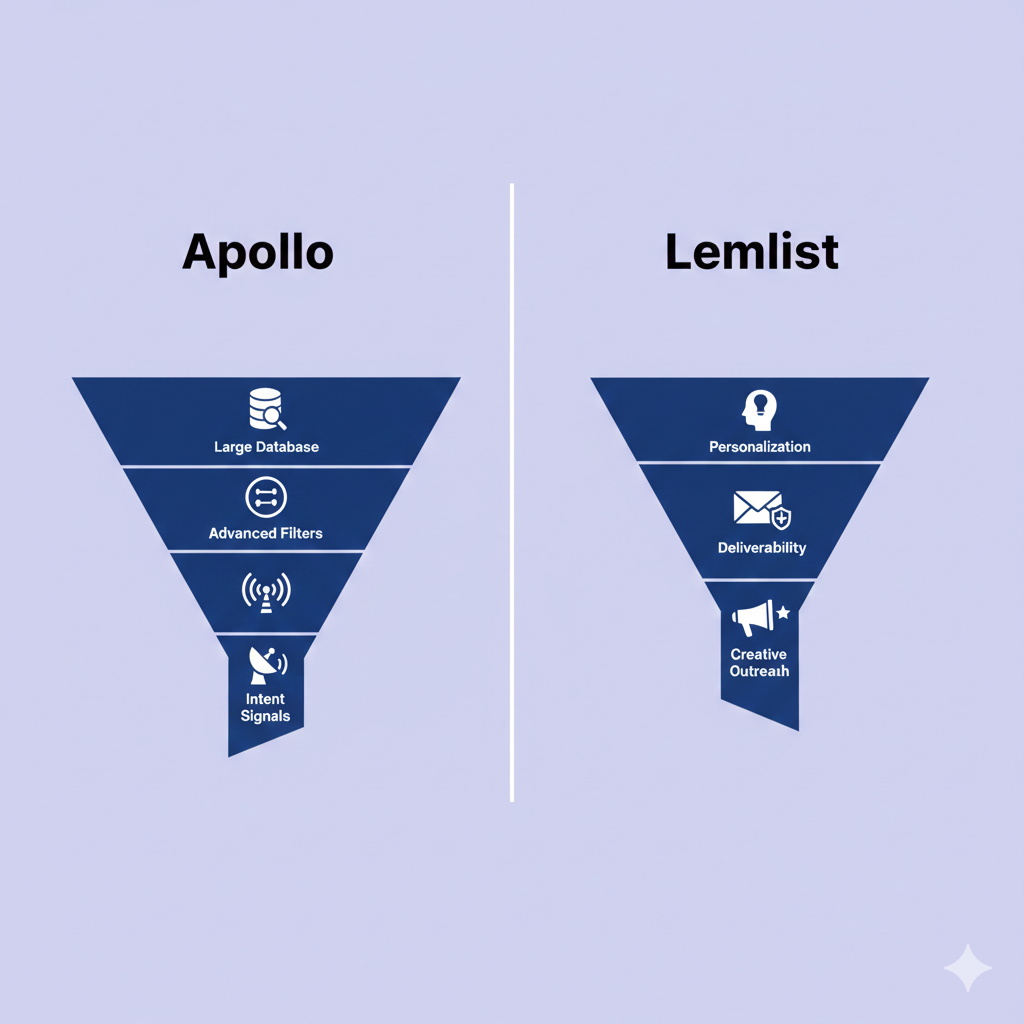
Apollo is built to be your entire outbound operating system. From finding leads to sending sequences to recording calls — it’s all in one place. This is great for reducing the “integration tax” that can eat up 25–40% of your tech spend when tools don’t talk to each other.

Lemlist is built differently. It’s a specialized sending engine that prioritizes deliverability and creative personalization above everything else. If you already have a data source (or work with a lead generation partner), Lemlist is where the magic happens in execution.

Bottom line: Apollo = find AND reach. Lemlist = reach better.

Data Acquisition: Big Database vs. Smarter Enrichment

Apollo maintains a proprietary lead database of 275M+ contacts with 60+ filters including real-time intent signals, funding alerts, and technographic

. Fast, powerful, and built for speed.

Lemlist takes a different approach with waterfall enrichment — querying up to 8 data providers sequentially to find verified emails. Instead of relying on one source that may be stale, it cascades through multiple sources until it finds a confirmed match. This pushes enrichment coverage to 85–95%, vs. around 60% for single-source providers.

Why does this matter? Because a bounce rate above 2% can tank your domain reputation. Apollo’s centralized data makes targeting fast. Lemlist’s waterfall makes it accurate. For more on finding quality prospects, see our guide on sales prospecting software.

Feature

Apollo.io

Lemlist

Contact Database

275M+ Contacts

450M+ Contacts

Data Sourcing Method

Internal Proprietary DB

Multi-Provider Waterfall

Advanced Filters

60+ (Intent, Hiring)

Standard Filters

Job Change Alerts

Yes (Native)

Limited

Verification Accuracy

~60% Coverage

85–95% Coverage

Place after the data comparison table above

Before: “Lemlist’s waterfall pushes enrichment coverage to 85–95%, vs. around 60% for single-source provide

Personalization Depth: Data-Driven Messaging vs. Creative Pattern Interrupts

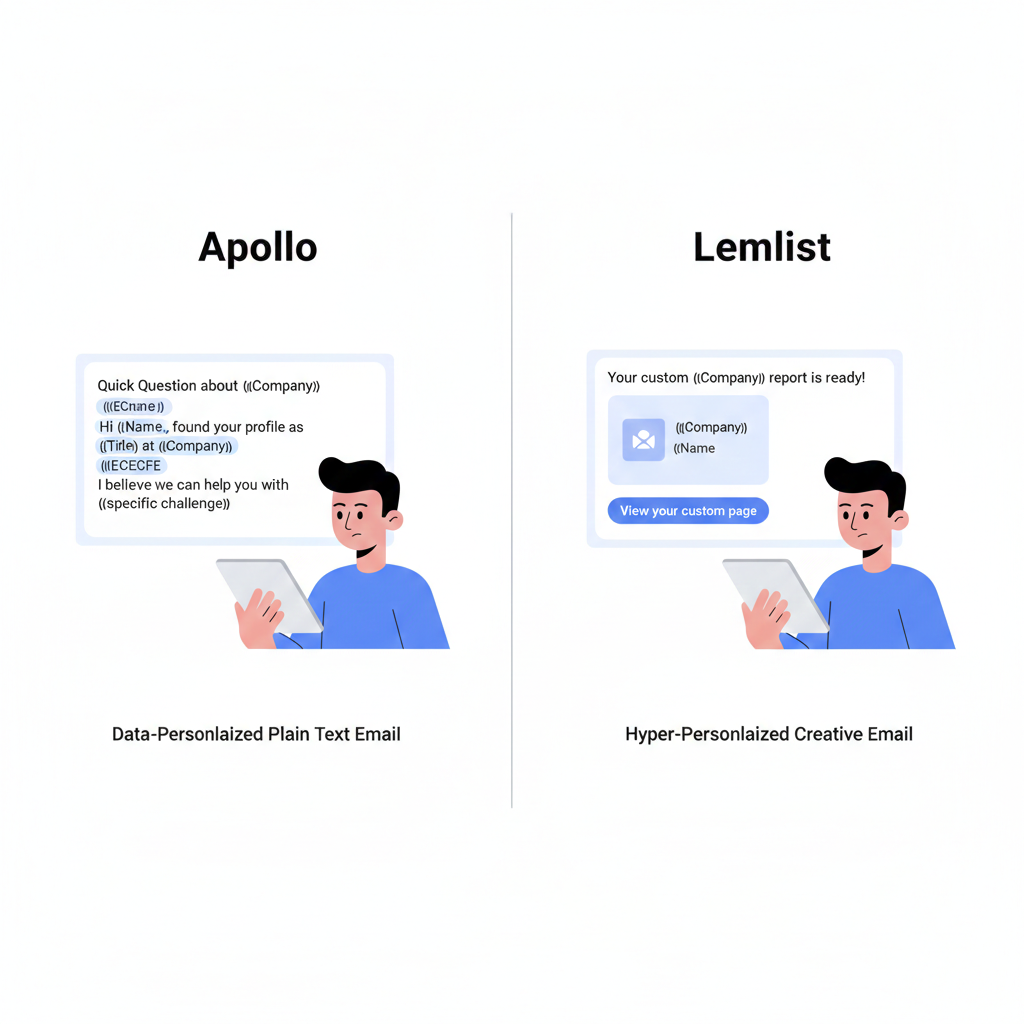
Apollo personalizes using data signals — AI-generated first lines, CRM context, firmographics, and behavioral triggers. Great for volume personalization at scale.

Lemlist goes further with visual personalization: inserting a prospect’s name, company logo, or website screenshot directly into email images and videos. It can even create a unique landing page for each prospect. These creative elements act as pattern interrupts — something different enough in a crowded inbox to actually stop the scroll.

Stat: Personalized outreach can improve conversion rates by up to 10%. Visual personalization pushes that even further in high-ticket, competitive markets.

For cold outreach that actually converts, check out our deep dive on targeted outreach.
 

Deliverability Infrastructure: Lemwarm vs. Basic Warmup

This is where Lemlist genuinely pulls ahead. It pioneered the email warmup category with Lemwarm — a peer-to-peer network of 10,000+ users that simulates real human email engagement to build your sender reputation gradually.

Lemlist also offers inbox rotation, letting you distribute one campaign across multiple sender accounts to stay under safe volume thresholds. 69% of recipients flag emails as spam based on the subject line alone — which means if your domain reputation is weak, even a great message won’t land.

Apollo has added warmup features, but user feedback consistently rates Lemlist’s deliverability infrastructure as more robust for high-volume cold email outreach. For teams sending 50+ inboxes worth of outreach, Lemlist’s granular controls matter.

See our full breakdown of email deliverability best practices to understand what’s at stake.

📬 Your Emails Deserve to Land

We manage domain reputation, inbox rotation, and warmup so your campaigns never hit spam.

Multi-Channel Orchestration: Dialer vs. Unified Social Inbox

Apollo has a fully integrated dialer with local presence dialing, call recording, and AI-powered conversation intelligence. If phone outreach is central to your process, Apollo’s call analytics make it a serious choice.

Lemlist consolidates LinkedIn, email, and WhatsApp into a unified inbox so every conversation thread stays in one place. Its visual sequence builder integrates social steps (profile visits, connection requests, messages) naturally alongside email steps. For agencies managing multiple clients, Lemlist’s Cockpit Management dashboard is genuinely useful.

Automation Logic: Adaptive Branching vs. Intent-Triggered Speed

Lemlist’s drag-and-drop sequence builder allows condition-based branching — for example, send a LinkedIn voice note only if a prospect opened the last email but didn’t reply. This level of behavioral logic lets you build truly adaptive follow-up sequences.

Apollo’s automation is more linear, which means faster setup. Where it wins is intent-triggered enrollment — automatically adding a contact to a sequence when their company posts a job opening or receives new funding. For teams that want perfectly-timed cold outreach, Apollo’s event-based logic is hard to beat.

Pricing and Scalability: Credits vs. Extra Mailboxes

Apollo starts at around $49/user/month on an annual plan. The credit-based model for exporting contacts or revealing emails works at low volume, but costs can escalate unpredictably as you scale up prospecting.

Lemlist starts between $32–$55/user/month for entry plans, with mid-tier plans matching Apollo at $79/user/month. The key differentiator: extra mailboxes cost around €9/month each without purchasing a new seat. For high-volume teams rotating dozens of inboxes, this is a major economic win.

Tier

Apollo.io

Lemlist

Entry Level

$49/user/mo

$32–$55/user/mo

Mid Level

$79/user/mo

$79/user/mo

Enterprise

$119/user/mo (min 3)

Custom

Free Option

Forever Free Plan

14-Day Free Trial

Data Model

Credit-based limits

Credits + Waterfall

Extra Mailboxes

New seat required

~€9/month each

Agency Support: Multi-Client Management

If you’re running outbound for multiple clients, Lemlist is the clear winner here. It offers dedicated client workspaces with a centralized dashboard — essential for keeping campaigns, data, and reports separate per client.

Apollo is not designed with agencies in mind. Managing multiple clients requires manual workarounds and separate accounts, which kills efficiency. For agency-specific use cases and alternatives, see our comparison of Apollo.io alternatives.

⚡ Run Outbound Across Every Client

SalesSo manages targeting, campaign design, and scaling for agencies and growing teams.

Performance Benchmarks: What Good Outbound Actually Looks Like

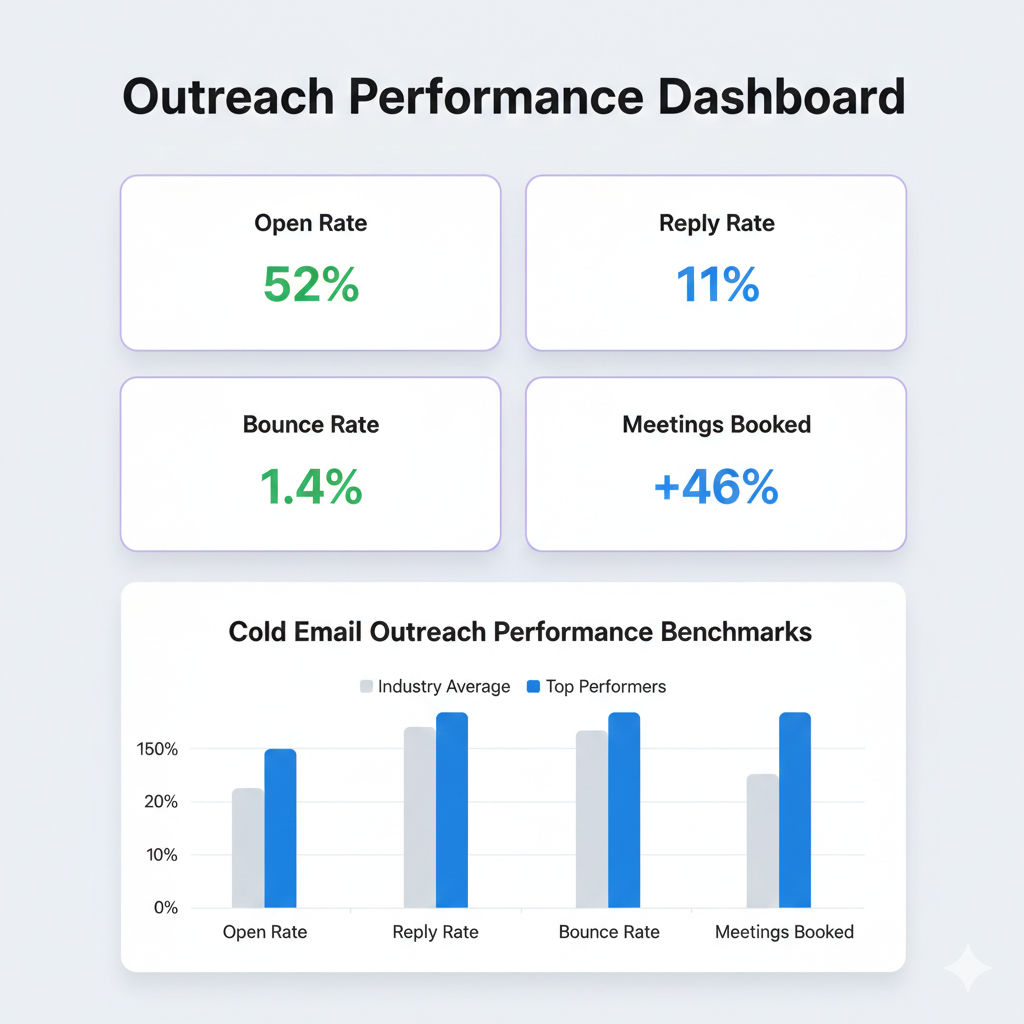
To evaluate ROI from either tool, you need realistic benchmarks. The industry average cold email open rate is 27.7% and response rates sit at around 5.1% in 2024. Top performers hit 50–60% opens and 10–15% reply rates.

Metric

Industry Average (2024)

Top 5% Benchmark

Cold Email Open Rate

27.7%

50–60%+

Reply Rate

5.1%

10–15%

Email Deliverability

83–95%

> 95%

Bounce Rate

7.5%

< 2%

Lead-to-Meeting Rate

10–15%

20–25%+

Case in point: teams using Apollo’s AI Research Agent reported 46% more meetings booked in a three-month period. Lemlist users like Spendesk doubled their outbound meetings by centralizing their workflow. The tool matters — but so does the process behind it.

Which One Should You Pick?

Here’s the quick decision guide:

  • Choose Apollo if you want an all-in-one prospecting and sending platform with a massive database, intent data, and built-in dialer.
  • Choose Lemlist if you already have data and want superior deliverability, creative personalization, and agency-grade multi-client management.
  • Use both together if you have the budget — Apollo for finding, Lemlist for sending.
  • Use neither if you want a done-for-you outbound system that handles targeting, campaign design, and scaling without you managing any tools.

For a broader view of sending platforms, our guide to the best cold email software covers everything you need to evaluate your options. You can also explore Lemlist alternatives if you’re not sold on either platform.

Place after the "Which One Should You Pick?

Section, before Conclusion Before: "For a broader view of sending platforms, our guide to the best cold email software covers everything.

7-day Free Trial |No Credit Card Needed.

Conclusion

The Lemlist vs Apollo debate doesn’t have a universal winner — it depends on where you are in your outbound journey.

Apollo wins for teams that need a fast, data-heavy, all-in-one prospecting engine. Lemlist wins for teams that prioritize deliverability, creative personalization, and agency workflows.

But the tool is only part of the equation. The best teams combine verified data, thoughtful campaign design, and disciplined scaling — regardless of which platform they use. In a market where 70% of lead data goes stale, clean data and human-first messaging matter more than the software you’re running.

If you’d rather skip the entire tool evaluation and just start getting qualified meetings, SalesSo runs your complete outbound strategy from targeting to booking — so you can stay focused on closing.

FAQs

Can Lemlist and Apollo.io be used together?

Yes — and many high-performing teams do exactly this. They use Apollo to source and filter prospects using its intent signals and advanced filtering, then export that data into Lemlist to take advantage of superior creative personalization and email campaigns. The combination gives you the best of both worlds: Apollo's data depth and Lemlist's deliverability. But if you'd rather have a team manage the entire system for you — targeting, campaign design, and scaling — SalesSo offers a done-for-you outbound solution. Book a strategy meeting here.

Which tool provides better email deliverability?

Lemlist. Its Lemwarm network and inbox rotation controls are purpose-built for protecting domain reputation at scale. Apollo's deliverability features have improved, but for high-volume cold email campaigns, Lemlist's infrastructure is more granular and reliable.

Does Apollo.io support multi-client management for agencies?

No. Apollo lacks a centralized dashboard for managing multiple client workspaces under a single login. Agencies typically prefer Lemlist because of its dedicated client workspaces and centralized campaign visibility. See our comparison of Apollo.io alternatives for more options.

Is Lemlist's lead database as good as Apollo's?

In raw numbers, Lemlist's database is larger (450M vs 275M contacts). But Apollo's database is widely considered superior for targeting precision, thanks to 60+ advanced filters and native intent data. For most use cases, Apollo wins on data quality while Lemlist wins on data accuracy through its waterfall enrichment.

We deliver 100–400+ qualified appointments in a year through tailored omnichannel strategies

What to Build a High-Converting B2B Sales Funnel from Scratch

Lead Generation Agency

Build a Full Lead Generation Engine in Just 30 Days Guaranteed