

Your competitor just posted 15 new job openings on LinkedIn. While you’re checking if they’re hiring, smart sales teams are already booking meetings with their decision-makers.
Why? Because hiring isn’t just an HR signal—it’s a buying signal. When companies expand their teams, they’re simultaneously opening their wallets for tools, software, and services to support that growth.
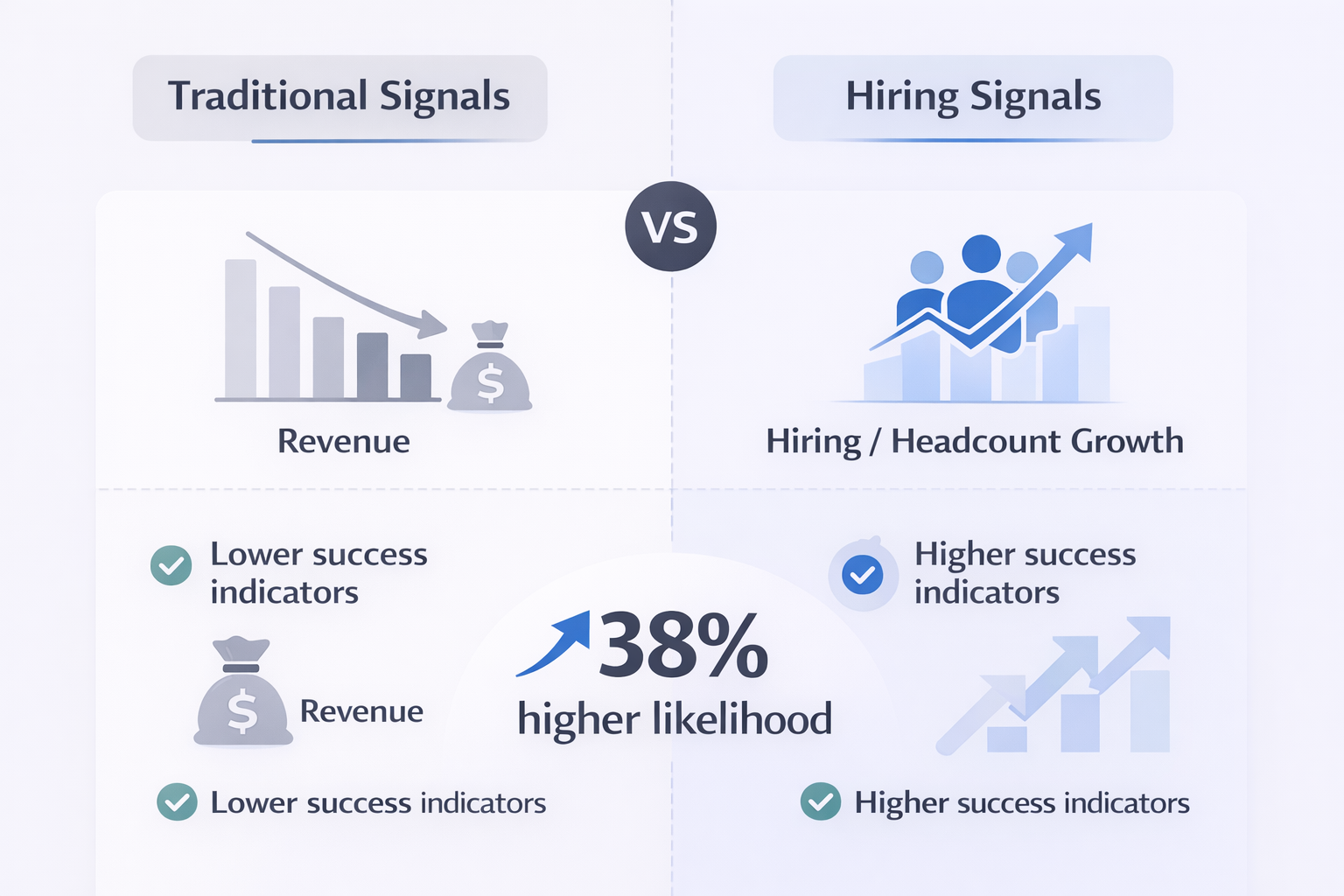
LinkedIn career page statistics confirm this: organizations exhibiting headcount growth are 38% more likely to purchase new software than their static counterparts. This isn’t speculation—it’s behavioral economics playing out in real-time across LinkedIn’s 1.15 billion user platform.
In this guide, you’ll discover the recruitment intelligence that separates average outreach from strategic prospecting. Whether you’re in sales, recruitment, or business development, understanding these patterns transforms how you identify opportunities before your competitors even notice them.
LinkedIn Career Page Statistics
The Scale of Professional Recruitment in 2025
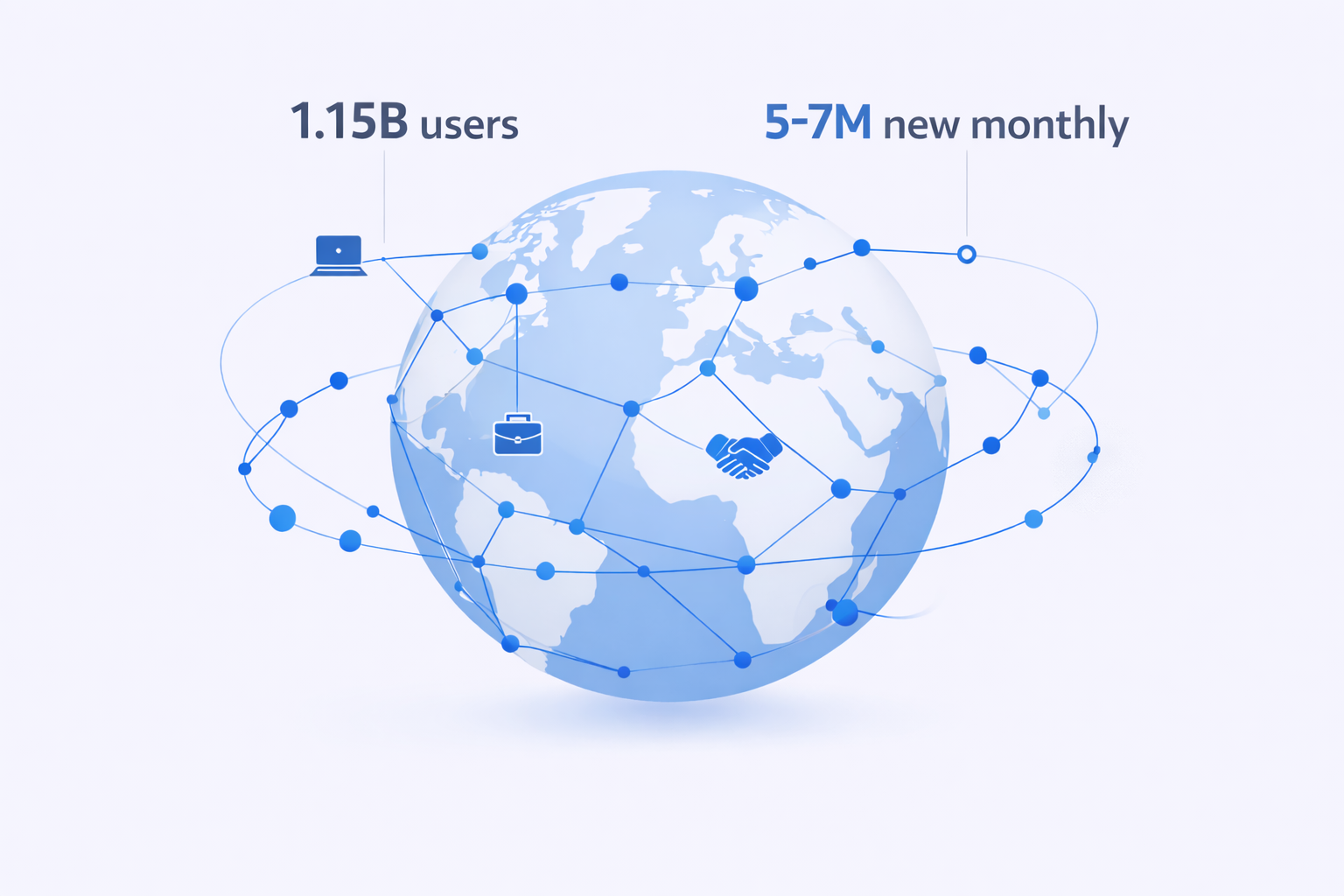
LinkedIn has become the central nervous system of global recruitment, and the numbers prove it. The platform welcomes between 5.18 million and 7.78 million new members every single month—that’s roughly 2-3 new users per second.
For anyone building prospect lists, this constant influx means your target account database needs regular updates. A list created in January becomes partially obsolete by March as millions of new decision-makers enter the ecosystem.
The geographic distribution matters too. While the United States dominates with 234 million users (approximately 31% of total traffic), emerging markets like India contribute 148+ million users. This global reach means recruitment signals on LinkedIn reflect real-time business expansion across multiple markets simultaneously.
The Career Page as Intelligence Gold
Here’s where recruitment data transforms into revenue intelligence. LinkedIn career pages aren’t just HR assets—they’re financial disclosures showing exactly where companies are allocating capital and experiencing operational pain.
Recent analysis confirms companies exhibiting headcount growth are 38% more likely to purchase new software. This correlation outperforms traditional triggers like funding announcements because hiring reflects immediate operational reality, not just bank balances.
The mechanism is “Operational Breakage.” As companies scale, existing processes managed via spreadsheets or legacy tools break under the strain:
- When a company grows from 200 to 250 employees, IT support system failures drive a 54% increase in Help Desk Software purchases
- Rapid onboarding creates information silos, leading to a 65% increase in Knowledge Base tool adoption
- New teams require coordination, resulting in a 47% increase in Project Management platform purchases
For LinkedIn growth hacking enthusiasts, this data suggests “Headcount Growth” filters predict deal closure better than traditional “Revenue” filters.
The New Executive Multiplier Effect
New C-level executives and Vice Presidents represent the single most potent trigger event. Data indicates new executive hires spend approximately 70% of their budgets within their first 100 days. This “Fresh Eyes Effect” occurs because new leaders are mandated to make impact, optimize efficiency, and often prefer toolstacks from their previous successful roles.
Consider these conversion probabilities:
- New executives are 2.5x more likely to convert on cold outreach in their first 3 months compared to tenured executives
- For existing vendors, new executives represent distinct churn risk—they have no loyalty to legacy providers and are often incentivized to cut costs or modernize the stack
Tactical application: When you access LinkedIn data through advanced search filters, prioritizing “Recent Senior Leadership Changes” (last 90 days) as your primary workflow dramatically improves conversion rates.
Skills-Based Hiring Reveals Tech Stacks
The shift toward skills-based hiring has unintentionally exposed corporate technology stacks. Job posts are now 54x more likely to list specific skills—”Must be proficient in Salesforce” or “Experience with Kubernetes”—broadcasting internal infrastructure to anyone paying attention.
This “Technographic Signal” enables highly targeted campaigns:
Integration Play: If a prospect hires for a “Marketing Manager” with “HubSpot experience” and you sell a tool that integrates seamlessly, your outreach can claim immediate compatibility.
Displacement Play: If they’re hiring “Legacy Tool X” administrators, they’re entrenched in older ecosystems. However, posting for a “Digital Transformation Director” signals an active project to replace legacy tech.
Understanding how to get phone numbers from LinkedIn becomes more effective when you’re targeting the exact decision-maker hiring for your category.
Economic Resilience in Sector-Specific Hiring
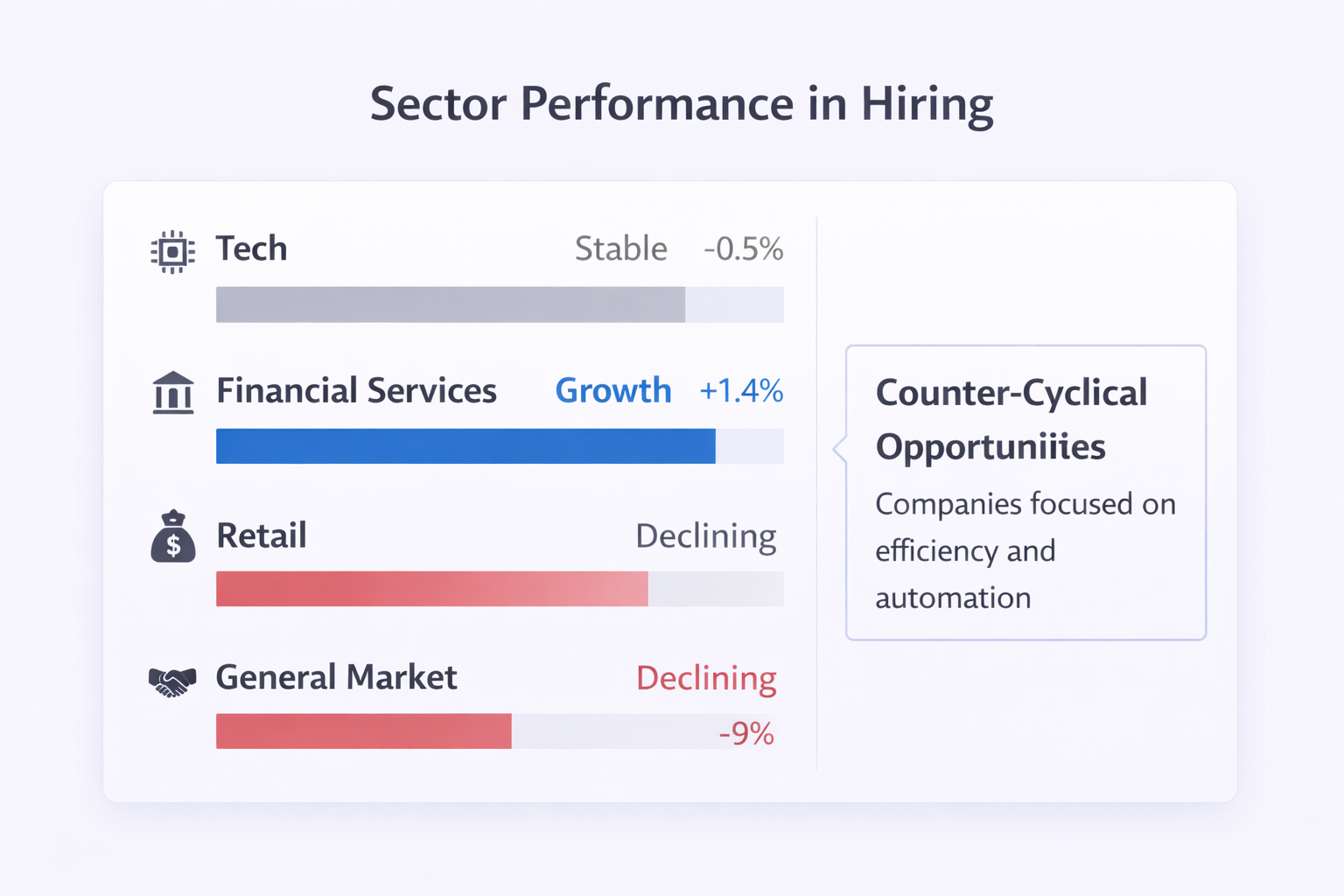
Despite broad economic uncertainty where national hiring slowed nearly 9%, specific sectors show remarkable resilience:
- Tech sector remained stable (down only 0.5%)
- Financial Services grew 1.4%
- Companies focused on “efficiency,” “loss prevention,” or “automation” hiring indicate counter-cyclical opportunities
Understanding these macro-trends is crucial for territory planning. Rather than avoiding contracting sectors, look for companies within those sectors displaying “Counter-Cyclical” signals—they’re the ones investing in efficiency while competitors cut costs.
Accessing and Interpreting Hiring Data
Accessing granular career page data requires navigating LinkedIn’s tiered access levels effectively. While the free version offers basic keyword searches, Sales Navigator unlocks the “Hiring on LinkedIn” filter—a toggle that instantly isolates companies with open roles.
For users exploring apply jobs opportunities or researching applying job trends, the “Advanced Search” capabilities serve as the primary mechanism for finding high-intent prospects. Boolean logic becomes essential for anyone without Sales Navigator:
Finding Hiring Managers:
(“hiring” OR “looking for” OR “vacancy”) AND (“Sales Manager” OR “Account Executive”) AND “SaaS”
This string searches for posts where talent acquisition professionals discuss specific open roles, often before they’re formally indexed or after they’ve become urgent. When you apply advanced search filters strategically, you discover opportunities competitors miss entirely.
The often-overlooked “Applicant Count” visible on job postings provides additional intelligence:
- High Applicant Volume: Signals strong employer brand but likely overwhelming screening processes—perfect for selling automated screening tools or HR efficiency platforms
- Low Applicant Volume: Indicates “Hard-to-Fill” roles—opportunities for staffing agencies, specialized recruitment tools, or consulting services
Automation and Data Extraction Considerations
As teams scale, manual searching becomes inefficient, leading many to explore data extraction technologies. The official LinkedIn API is highly restricted, focusing on member authorization and preventing mass data extraction for outreach purposes.
Third-party scraping tools fill this gap, though they come with compliance considerations. Browser-based extensions extract data from current Sales Navigator views, while cloud-based tools can automate extraction of job engagement data. However, excessive use can trigger LinkedIn’s commercial use limits.
Best practices suggest keeping page views under 500–1,000 daily and using proxies that mimic human behavior. Many professionals find that combining Apollo.io alternatives with compliant data providers offers better long-term sustainability.
The Future: AI and Predictive Intent
The future of leveraging LinkedIn career page statistics lies in autonomous agents and predictive intent models. New platforms use AI agents to perform complex enrichment workflows—detecting job postings, scraping text, using large language models to summarize core pain points, finding hiring managers, and drafting personalized emails.
This reduces research time from 15 minutes per lead to near-zero, enabling contextual prospecting at scale. Advanced tools are evolving to predict hiring before jobs are posted by analyzing “Topic Surges”—companies researching specific implementations likely need specialists in those areas soon.
The value of network intelligence—knowing who knows the hiring manager—will skyrocket. Features showing if colleagues are connected to prospects become essential for warm introductions, dramatically improving conversion rates over cold outreach.
Conclusion
LinkedIn career pages aren’t just recruitment tools—they’re ledgers of corporate ambition and buying signals hidden in plain sight. Every job posting represents a funded project. Every new executive is a change agent with budget authority. Every skill requirement is a technographic fingerprint pointing to tech stack decisions.
The data confirms what smart sales professionals already suspect: companies that hire are companies that buy. New executives spend money quickly. Organizations experiencing rapid growth need supporting infrastructure immediately. The only question is whether you’ll leverage this intelligence before your competitors do.
The career page has become the new lead list. Those who know how to access linkedin data effectively, interpret hiring signals accurately, and time their outreach strategically will systematically outperform those relying on outdated cold prospecting methods.

