
LinkedIn Company Statistics: The Complete Guide for 2025
- Sophie Ricci
- Views : 28,543
Table of Contents
LinkedIn Company Statistics
Platform crossed 1.2 billion members in early 2025 – representing massive scale and the world’s largest professional network
5.18-7.78 million new members join monthly – roughly 2-3 new professionals signing up every second, constantly expanding reach
134.5 million professionals log in daily – representing 16.2% of total members, showing consistent active engagement
Generated $17.1 billion in revenue in 2024 – up 8.6% from previous year, demonstrating platform’s massive commercial value
Marketing Solutions revenue jumped 34% – showing explosive growth in companies investing in LinkedIn advertising
175 million premium users (50% increase over 2 years) – when half your growth comes from paying users, they’re serious about the platform
65 million decision-makers and 10 million C-level executives – providing unprecedented access to people who sign contracts and approve budgets
Four out of five LinkedIn users drive business decisions – meaning 80% hit rate before even starting targeted campaigns
Millennials make up 59% of LinkedIn’s user base – with 11 million millennials in decision-making roles, shattering “Boomer executive” stereotypes
44% of users earn more than $75,000 annually – with 77% holding at least a bachelor’s degree globally, representing educated high-earners
Asia Pacific leads with 353 million members – followed by Europe at 322 million and North America at 270 million
Average visit lasts 11 minutes and 19 seconds – showing deep engagement and openness to messages when delivered correctly
80% of B2B leads from social media come from LinkedIn – not Facebook, Twitter/X, or Instagram, dominating B2B lead generation
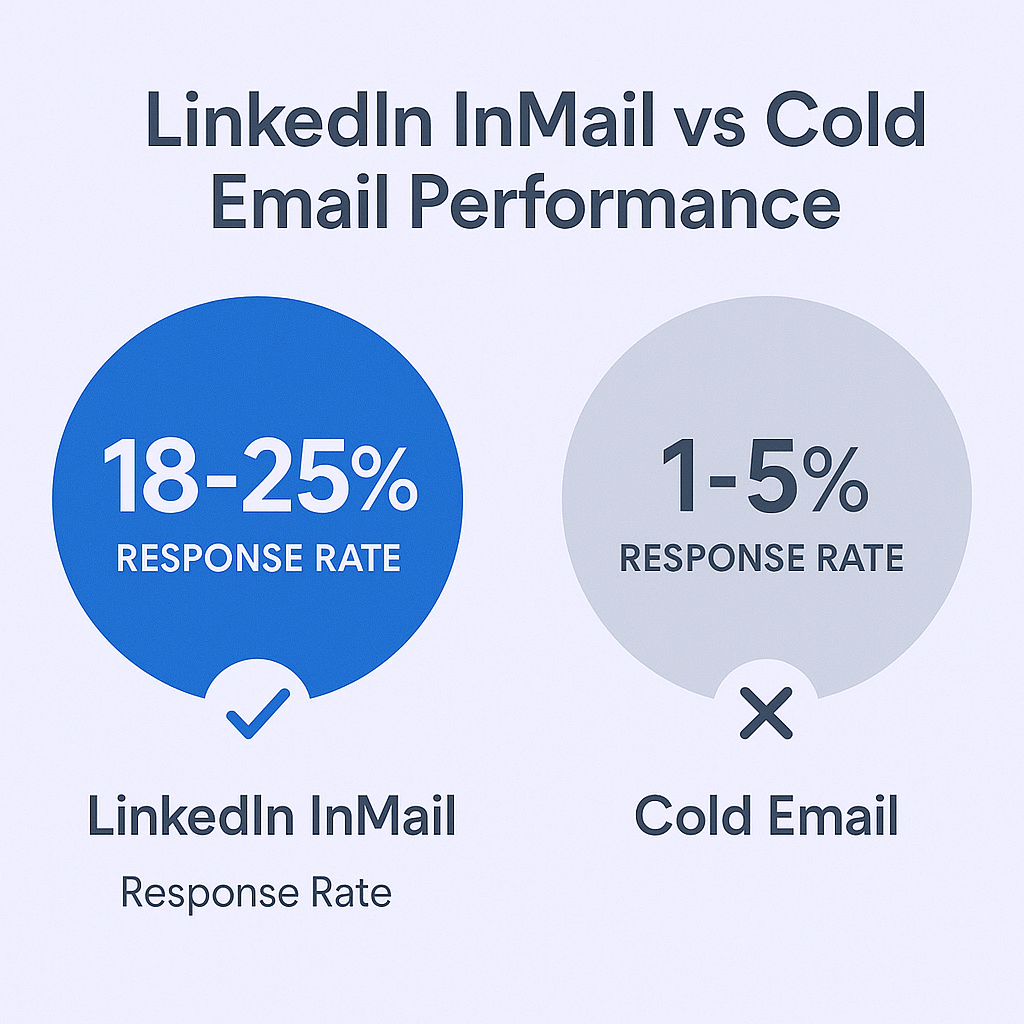
InMail achieves 18-25% response rates versus cold email’s 1-5% – representing 5-10x better performance with same message and offer
Multi-channel campaigns generate 287% more responses – than single-channel approaches combining LinkedIn with email and phone
Let’s be real here. If you’re trying to reach decision-makers in 2025, LinkedIn isn’t just another social media platform you can ignore. It’s become the single most important channel for B2B businesses.
Why? Because right now, over 1.2 billion professionals are hanging out there, making connections, consuming content, and yes—making purchasing decisions worth millions.
Whether you’re looking to understand LinkedIn post analytics, content statistics, or how companies actually perform on the platform, this guide breaks down everything you need to know. No fluff, just the numbers that matter.
LinkedIn Company Statistics
Platform Size and Growth
Here’s the thing about LinkedIn—it’s massive and still growing fast.
The platform officially crossed 1.2 billion members in early 2025. That’s not a typo. We’re talking about more than a billion professionals who’ve decided this is where they need to be.
Â

Â
But here’s what really matters: Every single month, between 5.18 and 7.78 million new members join. That’s roughly two to three new professionals signing up every second. Your potential customers are joining right now as you read this.
Now, total users vs. active users? Big difference. While the total population exceeds a billion, 300+ million people actively use LinkedIn each month. Even more interesting—134.5 million professionals (about 16.2%) log in every single day.
What does this mean for you? Your audience is there. Daily. The question is whether you’re showing up where they’re looking.
Financial Performance That Matters
LinkedIn isn’t just surviving—it’s printing money. In 2024, the platform generated $17.1 billion in revenue, up 8.6% from the previous year.
Here’s where it gets interesting for businesses. Marketing Solutions revenue jumped 34%, while Talent Solutions grew by 43%. Companies are spending serious money on LinkedIn because it works.
Premium subscriptions alone bring in $1.7 billion annually, with 175 million premium users (a 50% increase over two years). When half your user growth comes from people willing to pay, you know they’re serious about the platform.
The Decision-Maker Goldmine
This is where LinkedIn becomes absolutely critical for business growth.
The platform hosts over 65 million decision-makers and 10 million C-level executives. Add another 61 million senior-level influencers who might not sign checks but definitely influence who does.
Â

Â
Think about that. Where else can you reach 40 million people in explicit decision-making positions without cold calling or hoping they’ll see your billboard?
🎯 We Target These Exact Decision-Makers
Done-for-you LinkedIn campaigns reaching verified prospects with 15-25% response rates
Four out of five LinkedIn users drive business decisions. That’s an 80% hit rate before you even start targeting. Compare that to throwing darts in the dark with traditional advertising.
Who’s Actually Using LinkedIn
The platform’s demographics tell a powerful story. Millennials make up 59% of LinkedIn’s user base, with 11 million of them in decision-making roles. The stereotype of the “Boomer executive” being your only target? Dead wrong in 2025.
The 25-34 age bracket accounts for 47% of users, while the 35-54 demographic (VP and Director levels) represents 21.2%. You’re reaching everyone from ambitious managers to seasoned executives.
Income levels matter too. About 44% of users earn more than $75,000 annually. Education? 77% hold at least a bachelor’s degree globally, and 53% of U.S. college graduates use LinkedIn (versus just 10% of those without degrees).
Translation: You’re talking to educated, high-earning professionals who can actually afford what you’re selling.
Geographic Reach
While the U.S. remains the largest single market with 214 million users (20.25% of all traffic), the global picture is shifting.
Asia Pacific leads with 353 million members, followed by Europe with 322 million and North America with 270 million. If you’re thinking global expansion, LinkedIn is already there waiting for you.
Here’s a crucial insight: Between 67.37% and 72.18% of traffic comes directly to LinkedIn—people aren’t finding it through Google searches. They’re going there intentionally. The average visit lasts 11 minutes and 19 seconds, which is forever in internet time.
When someone’s spending 11 minutes on the platform, they’re engaged. They’re reading. They’re open to your message if you deliver it right.
Content Performance Statistics
Let’s talk about what actually works for LinkedIn content statistics in 2025.
Video dominates everything. Posts with video generate 5x higher engagement than static posts. But here’s the kicker—live video gets 24x more engagement than pre-recorded content. That’s not a marginal improvement; it’s a different game entirely.
Short-form video (under 60 seconds) performs 1.7x better per second than longer formats. Your audience wants quick, valuable insights they can consume between meetings.
Don’t sleep on carousels though. These “document posts” (PDFs you can swipe through) achieve engagement rates of 5.85% to 6.6%, often outperforming standard video. Why? They create “dwell time”—the algorithm’s favorite metric.
Multi-image posts hit 6.6% engagement rates, significantly higher than single-image posts at 4.85%. Text-only posts? They still work at around 4%, but you’re leaving engagement on the table without visuals.
Best Times to Post
Timing isn’t everything, but it sure helps. Tuesdays, Wednesdays, and Thursdays are your sweet spots for engagement.
The magic window? Between 9:00 AM and 12:00 PM. This aligns perfectly with when professionals check their feeds—right at the start of their workday and during that pre-lunch lull.
Mondays are too crazy with meetings. Friday afternoons? People are mentally checked out. Weekends show low engagement for company pages, though some personal content can catch Sunday evening “prep for the week” scrollers.
The Power of Social Selling
Here’s where LinkedIn post analytics get really interesting. LinkedIn tracks something called a Social Selling Index (SSI)—basically a score of how well you’re using the platform for sales.
Professionals with high SSI scores create 45% more sales opportunities than their peers. They’re also 51% more likely to hit their sales quotas. This isn’t correlation—it’s causation. The platform literally measures and rewards effective selling behavior.
Your profile matters enormously. Profiles with professional photos receive 21x more views and 36x more messages. That’s the easiest optimization you’ll ever make.
 💼 We Build Your SSI While Booking Meetings
Complete LinkedIn outreach system: targeting 65M+ decision-makers, optimized campaigns, zero manual work
Why LinkedIn Wins for B2B
The numbers don’t lie. 80% of B2B leads from social media come from LinkedIn. Not Facebook. Not Twitter/X. Not Instagram. LinkedIn.
Even more impressive: 65% of B2B companies report acquiring a customer directly through LinkedIn. This isn’t just lead generation—it’s closed revenue.
InMail vs. Cold Email Performance
This comparison is brutal. InMail messages achieve response rates between 18-25%, with top performers hitting 30%+.
Â

Â
Meanwhile, cold email struggles to break 1-5% response rates. Same message, same offer—but the LinkedIn environment with profile context and mutual connections creates instant credibility that email just can’t match.
Yes, InMail credits cost money. But when you’re hitting 25% response rates versus 2%, the ROI isn’t even close.

🚀 Stop Wrestling With Cold Email
Our LinkedIn outbound engine delivers 25%+ response rates through complete campaign execution and scaling
Video Content Growth
Video creation on LinkedIn is growing at 2x the rate of other content types. The platform is pivoting hard toward video-first, and companies that embrace this now will dominate their feeds.
Users want to see faces, not just logos. The “face” of your company is becoming as important as your brand colors. Video humanizes B2B in ways text simply cannot.
Mobile Usage Patterns
Here’s something critical: While 74.24% of visits happen on desktop, a growing portion of content consumption happens on mobile devices—especially among executives checking between meetings.
This means your content must work on a 6-inch screen. Long paragraphs look like walls of text on mobile. Break them up. Use line breaks. Make your message readable when someone’s walking to their next meeting.
Hiring Intelligence as a Sales Signal
LinkedIn hosts over 15 million job opportunities. For savvy businesses, this is predictive intelligence.
A company hiring aggressively? They’re spending money and growing. That’s your signal to reach out. A hiring freeze? Maybe not the best time to pitch that enterprise solution.
26% of job posts no longer require degrees, focusing instead on skills-based hiring. This shift tells you exactly what capabilities companies are desperately seeking—and therefore willing to buy solutions for.
Remote Work’s Impact
Post-2020, everything changed. Currently, 52% of remote-capable U.S. employees work hybrid, and 27% are fully remote. While 64% of job postings remain on-site, the highly skilled senior roles you’re targeting are disproportionately remote or hybrid.
This matters because traditional “field sales” is increasingly digital. Your ability to build relationships through LinkedIn and Zoom is now more valuable than golf outings ever were.
Premium Subscription Growth
The 50% growth in premium users over two years signals something important: professionals are willing to invest in their LinkedIn presence. They understand its value for career growth and business development.
When your prospects are paying for premium features, they’re serious users. They’re checking the platform regularly, engaging with content, and receptive to high-quality outreach.
Industry-Specific Engagement
Not all industries perform equally on LinkedIn. Financial Services averages 3.2% engagement—slightly below the platform average but with a loyal, steady audience.
Consumer Goods & Retail hits 3.9% engagement, likely driven by visual content and brand recognition. Utilities and Energy see 3.3%, surprisingly robust for traditionally “boring” industries.
Tech and marketing sectors typically see the fastest follower growth and highest engagement with innovation-focused content.
Device Usage and Implications
That 74.24% desktop usage tells you something crucial about intent. People on LinkedIn at their desks are working. They’re in “business mode.” They’re making decisions about tools, services, and vendors.
Mobile usage happens in those in-between moments—between meetings, during commutes. Different mindset, different content needs. Your strategy should account for both contexts.
The Algorithm’s Priorities
LinkedIn’s algorithm obsesses over “dwell time”—how long someone looks at your post. This explains why carousels (which require swiping and reading) and long-form text posts (with “see more” clicks) perform so well.
The first 60 minutes after posting are critical. Strong early engagement signals quality to the algorithm, which then distributes your content to 2nd and 3rd-degree connections—effectively turning your network into a cold outreach machine.
Posts that get no engagement in the first hour? Basically dead. Which is why posting when your audience is actually online matters so much.
Why This All Matters for Your Business
Look, these aren’t just interesting numbers. They’re a roadmap to where your customers are, when they’re there, what they’re consuming, and how to reach them effectively.
In 2025, LinkedIn has become the central nervous system of B2B commerce. The question isn’t whether you should be there—it’s whether you’re using it strategically or just going through the motions.
The companies winning on LinkedIn aren’t necessarily the ones with the biggest marketing budgets. They’re the ones who understand these statistics and use them to guide their strategy.
Every piece of content you create should consider: What format performs best? When should I post this? How can I maximize dwell time? Who are the decision-makers I’m trying to reach?
If you’re serious about B2B growth in 2025, mastering LinkedIn isn’t optional anymore. It’s the price of entry. The good news? Most of your competitors still treat it like a digital resume platform. That’s your advantage if you move now.
Connecting LinkedIn to Your Broader Strategy
Here’s where it gets practical. LinkedIn shouldn’t exist in isolation—it’s part of a larger lead generation strategy that includes email, calls, and multi-channel touchpoints.
Smart teams use LinkedIn as the anchor of their outreach sequences. They engage with a prospect’s content, send a personalized connection request, and then follow up through verified email addresses to create that “surround sound” effect.
This multi-channel approach generates 287% more responses than single-channel outreach. You can’t just blast cold emails anymore (well, you can—but don’t expect great results).
Modern social selling combines LinkedIn’s visibility with email’s scale. You build credibility on LinkedIn so your emails don’t get ignored. You use email to start conversations with prospects who haven’t accepted your LinkedIn connection yet.
The synergy is what matters. LinkedIn gives you context and credibility. Email gives you reach and automation. Together, they’re unstoppable.
âš¡ We Execute This Multi-Channel Strategy
Done-for-you LinkedIn outbound: precise targeting, campaign design, complete scaling—you close the meetings
7-day Free Trial |No Credit Card Needed.
Conclusion
LinkedIn in 2025 is a completely different platform than it was five years ago. With 1.2 billion professionals, 65 million decision-makers, and 80% of B2B leads coming from this single channel, ignoring LinkedIn means voluntarily sitting out the biggest business development opportunity of our generation.
The statistics are clear: video dominates, carousels engage deeply, and InMail outperforms cold email by 5-10x. Companies with high social selling scores aren’t just participating—they’re creating 45% more opportunities and hitting quota 51% more often.
But here’s the thing—statistics only matter if you act on them. Start by optimizing your profile with a professional photo (21x more views, remember?). Post during those peak hours on Tuesday through Thursday. Experiment with short-form video and carousel posts. Actually engage with your prospects’ content before asking for something.
The companies crushing it on LinkedIn in 2025 aren’t lucky. They’re strategic. They understand the numbers, respect the algorithm, and most importantly, they show up consistently with value.
Your competition is probably still treating LinkedIn like an online resume. That won’t last forever. The question is: will you make your move while the advantage is still there?
FAQs
How many companies use LinkedIn for marketing in 2025?
What is the average engagement rate for company posts on LinkedIn?
How does LinkedIn compare to other social media platforms for B2B?
What are the best times to post on LinkedIn for maximum engagement?
How effective is LinkedIn InMail compared to regular cold email?
How important is video content on LinkedIn?
- blog
- Statistics
- LinkedIn Company Statistics 2025: Complete Guide