
🎉Find Prospects and Send Cold Emails & LinkedIn Outbound | All in One Place

LinkedIn Employer Branding Statistics: The Data That Proves Reputation Drives Results

Table of Contents

LinkedIn Employer Branding Statistics

  • 96% of prospects research companies independently before engaging with sales reps – they’re evaluating stability, team engagement, and whether smart people want to work there
  • Companies with strong talent brands see 31% higher InMail acceptance rate – direct correlation between employer brand and sales success, difference between hitting quota and falling behind
  • Candidates trust company employees 3x more than company itself for accurate information – prospects evaluate your people while assessing your solution
  • Organizations with poor employer brands pay at least 10% more per hire in salaries – premium creates cascading effect on product development, sales enablement, and competitive positioning
  • Strong employer brands enjoy 50% reduction in cost per hire – spend less to hire better people who stay longer and perform better
  • Strong brands see 28% lower turnover rates – significantly improves team stability and performance consistency
  • Employees at strong-brand companies generate 51% more referrals – creating self-sustaining talent pipeline weak-brand competitors cannot match
  • Businesses prioritizing social selling are 51% more likely to reach sales quotas – leveraging company credibility while building personal authority
  • Sales professionals with high SSI scores create 45% more opportunities – Social Selling Index directly correlates with pipeline generation
  • 78% of social sellers outsell their peers who don’t use social media – massive performance gap between socially active and inactive sellers
  • Audiences exposed to brand messages on LinkedIn are 6x more likely to convert – LinkedIn profile is sales channel, company reputation determines leverage
  • 75% of B2B buyers use social media to make purchasing decisions – forming opinions about company, team, and culture before discovery calls
  • Average B2B deal involves 8.2 stakeholders – employer brand does selling to stakeholders you’ll never speak with during early stages
  • 90% of candidates would apply for job at company with active employer brand – massive recruiting advantage for companies investing in brand visibility
  • New employees sourced through LinkedIn are 40% less likely to leave within first six months – for sales teams with 3-5 month ramp time, stability directly impacts revenue predictability


Your company’s reputation isn’t just an HR problem anymore. It’s a revenue problem.

Think about the last time you received a cold message on LinkedIn. Did you check the sender’s company page before responding? Did you scroll through their recent posts, peek at employee profiles, maybe even dig through Glassdoor reviews? Of course you did. Everyone does.

That’s employer branding at work. And the numbers prove it’s no longer optional.
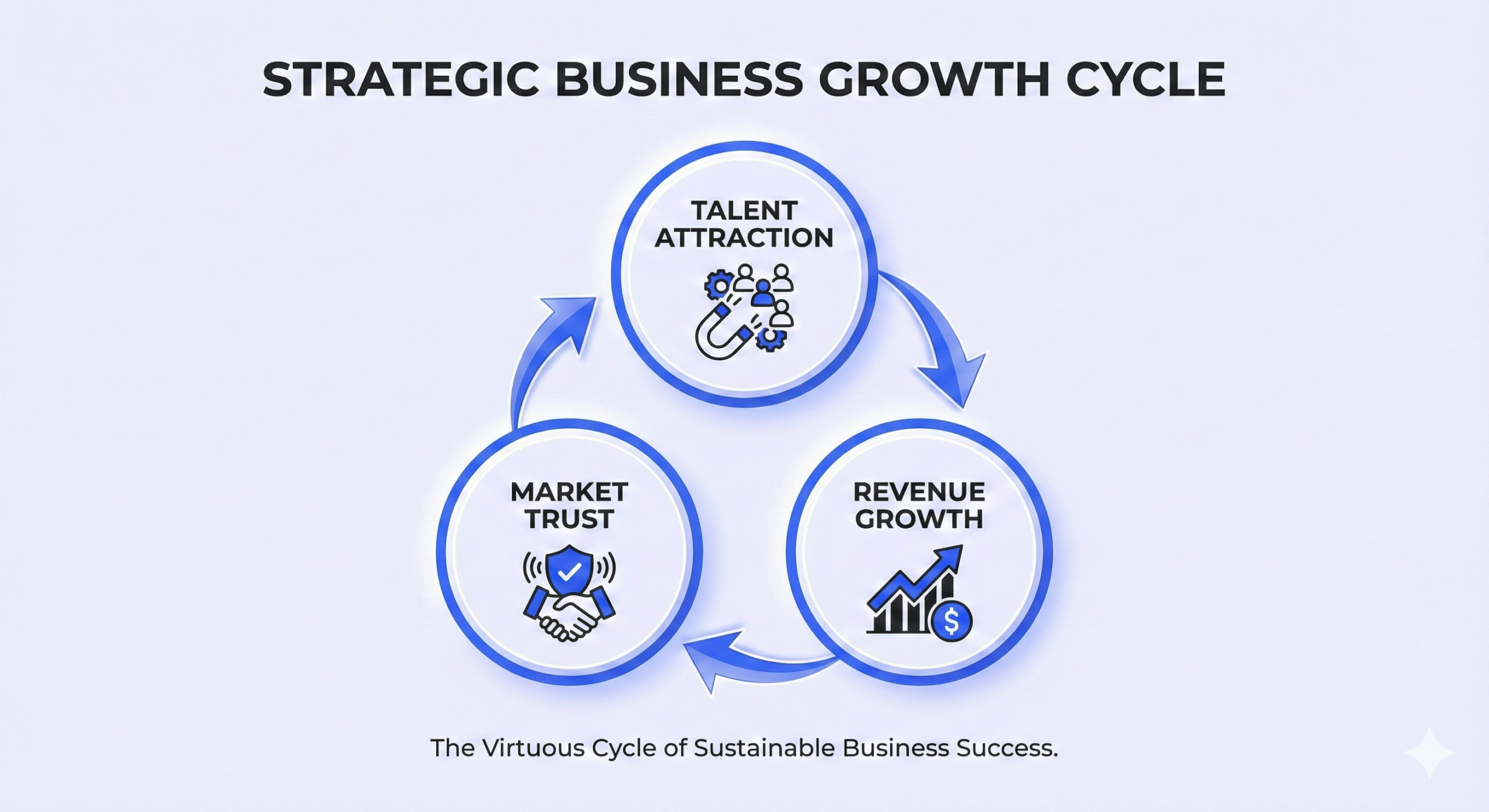


Here’s what the latest branding statistics reveal about how your company’s online presence impacts everything from hiring costs to deal closures.

The Trust Factor: Why Prospects Check Your Company First

Before anyone picks up your call or replies to your InMail, they’re doing homework.

96% of prospects research companies independently before engaging with sales reps. They’re not just checking your product features. They’re evaluating whether you’re stable, whether your team looks engaged, and whether other smart people want to work there.

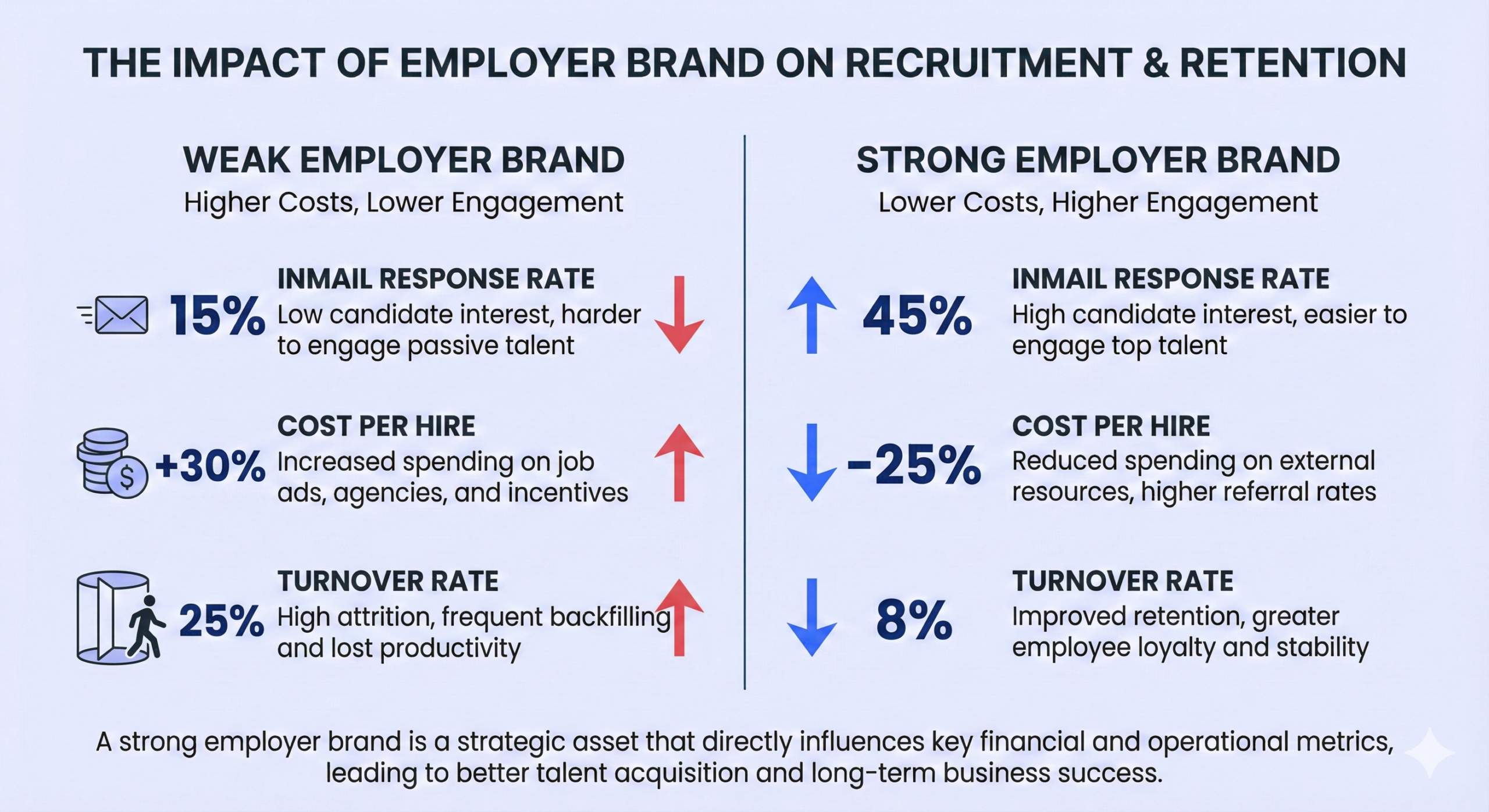
The relationship between your employer brand and sales success is direct. Companies with strong talent brands on LinkedIn see a 31% higher InMail acceptance rate. That’s not a marginal improvement—that’s the difference between hitting quota and scrambling to explain why you’re behind.


And here’s the kicker: candidates trust company employees 3x more than the company itself to provide accurate information. Your prospects are no different. When they’re evaluating your solution, they’re also evaluating your people.

💼 Struggling With Low Response Rates?

Your company brand might be holding you back—LinkedIn outbound bypasses reputation challenges entirely.

The Economics of a Strong Brand

Employer branding isn’t soft metrics and feel-good mission statements. It’s hard ROI.

Organizations with poor employer brands pay at least 10% more per hire in salaries. But the real cost isn’t the premium—it’s the cascading effect on everything else. Higher hiring costs mean less budget for product development, less investment in sales enablement, and weaker competitive positioning.

Meanwhile, strong employer brand companies enjoy a 50% reduction in cost per hire and see 28% lower turnover rates. The math is simple: spend less to hire better people who stay longer and perform better.

The referral effect multiplies this advantage. Employees at strong-brand companies generate 51% more referrals, creating a self-sustaining talent pipeline that weak-brand competitors can’t match.

Social Selling: Where Personal Brand Meets Company Brand

The best sales professionals understand something critical: your personal brand and your company’s brand are inseparable on social media.

Businesses that prioritize social selling are 51% more likely to reach sales quotas. That’s not because they’re posting inspirational quotes—it’s because they’ve figured out how to leverage their company’s credibility while building personal authority.

📈 Want 15-25% Response Rates?

Skip cold email’s 1-5% performance—our LinkedIn engine delivers complete outbound strategy that works.

Here’s what the data shows:

  • Sales professionals with high Social Selling Index scores create 45% more opportunities
  • 78% of social sellers outsell their peers who don’t use social media
  • Audiences exposed to brand messages on LinkedIn are 6x more likely to convert

Your LinkedIn profile isn’t a digital business card. It’s a sales channel. And your company’s reputation determines how much leverage you have in that channel.

The B2B Buying Reality

Modern B2B purchases don’t happen in sales meetings anymore. They happen in research sessions you’ll never see.

75% of B2B buyers use social media to make purchasing decisions. When you finally get that discovery call, they’ve already formed opinions based on what they found online about your company, your team, and your culture.

The buying committee has grown too. The average deal now involves 8.2 stakeholders—and you’ll never speak to most of them during the early stages. Your employer brand does that selling for you. While you’re pitching the champion, the other seven decision-makers are checking LinkedIn, reading employee posts, and forming impressions.

🎯 Stop Losing Deals in the Research Phase

Our targeting precision and campaign design make LinkedIn your strongest sales channel.

This is why 49% of sellers believe poorly targeted outreach damages company reputation, and 52% say it leads to ongoing missed sales. One spammy message doesn’t just hurt that deal—it poisons future opportunities.

Recruiting Advantage: Why Top Performers Join (and Stay)

The talent war isn’t slowing down. 54% of talent leaders anticipate more challenging hiring in 2024-2025, particularly for high-demand skills.


But strong brands have a massive edge in this fight. 9 out of 10 candidates would apply for a job at a company with an active employer brand, while 75% of job seekers consider an employer’s brand before even applying.

The retention story is even more compelling. Improving employer branding can reduce turnover by 28%, and new employees sourced through LinkedIn are 40% less likely to leave within their first six months. For sales teams, where ramping new reps takes 3-5 months, this stability directly impacts revenue predictability.

What This Means For Your Outreach

If you’re still treating LinkedIn like a directory of email addresses, you’re missing the point.

Your company’s employer brand is either amplifying every message you send or undermining it. That 31% InMail lift isn’t magic—it’s trust, packaged as recognition and familiarity.

The most effective lead generation strategies for B2B SaaS in 2024 don’t fight against this reality. They leverage it. They use LinkedIn’s professional context to initiate conversations where trust already exists, where your company’s reputation precedes you, and where decision-makers actually want to engage.

The alternative is cold email: spam filters, deliverability issues, and response rates stuck at 1-5%. Or you can work in an environment where employees’ networks are 10x larger than corporate follower bases, where authentic advocacy carries real weight, and where your outreach doesn’t compete with 100 other cold emails in the inbox.

âš¡ Ready to Scale Qualified Meetings?

Get the complete outbound system: targeting strategy, campaign design, and proven scaling methods.

7-day Free Trial |No Credit Card Needed.

The Privacy Question: Can My Employer See My LinkedIn Activity?

Let’s address the elephant in the room. You want to leverage LinkedIn for career growth and sales success, but you’re worried about privacy.

Can your employer see if you’re job hunting on LinkedIn?

The short answer: mostly no, with important caveats.

LinkedIn’s “Open to Work” feature has two settings. The green banner that shows on your profile photo is visible to everyone—including your boss. Never use this if you’re currently employed.

The “Recruiters Only” setting is safer. LinkedIn takes steps to hide your interest from your current company, though no system is 100% secure. External recruiting agencies might see your status, and there’s always the “small world” risk in sales.

Can your employer see if you view job postings?

No. When you view a job, that information stays between you and LinkedIn’s algorithm. The company posting the job sees aggregated analytics (like “50 people viewed this”), but they don’t see individual names unless you apply.

The biggest privacy mistake? Updating your profile with “Share profile updates” turned on. That sends a notification to your network—”John Doe updated his profile”—which is basically announcing you’re polishing your resume. Turn this off before making any changes.

Conclusion

The convergence is complete. Your company’s reputation, your personal brand, and your sales results are now inseparable on LinkedIn.

Every statistic points to the same truth: trust drives outcomes. Strong employer brands enjoy 31% higher response rates, 50% lower hiring costs, and 28% better retention. Sales professionals who understand social selling hit quota 51% more often than those who don’t.

But here’s what the statistics don’t tell you: how to actually use this information.

You can spend years building employer brand equity through content marketing and employee advocacy programs. Or you can work in an environment where trust is already established—where your outreach happens in a professional context, where decision-makers expect business conversations, and where your response rates prove it works.

The choice is yours. Keep fighting spam filters and 1-5% response rates with cold email software, or leverage LinkedIn’s 65+ million decision-makers with a system designed for actual results.

FAQs

How does LinkedIn employer branding compare to cold email for lead generation?

LinkedIn outbound delivers 15-25% response rates versus cold email's 1-5%, eliminating deliverability issues while providing direct decision-maker access through professional networking. Book a strategy meeting to see the complete system.

What are the top LinkedIn employer branding statistics for 2024?

Strong brands see 31% higher InMail response rates, 50% hiring cost reduction, and 28% lower turnover. 96% of prospects research companies before engaging.

Can my employer see my LinkedIn job search activity?

No, employers cannot see job views. Use "Recruiters Only" (not the green banner) for Open to Work, and disable "Share profile updates" before editing.

How does social selling impact quota attainment?

Sales teams prioritizing social selling are 51% more likely to reach quotas, with high Social Selling Index scores generating 45% more opportunities than low scorers.

Why do strong employer brands reduce hiring costs?

Strong brands attract 50% more qualified applicants, enjoy 51% more referrals, and reduce cost-per-hire by 50% through improved candidate quality and conversion rates.

How to Build a High-Converting B2B Sales Funnel from Scratch on LinkedIn

How to Build a High-Converting B2B Sales Funnel from Scratch on LinkedIn ​