
🎉Find Prospects and Send Cold Emails & LinkedIn Outbound | All in One Place

LinkedIn Group Statistics [2026]: Usage Data & Key Metrics

Table of Contents

LinkedIn Group Statistics

Platform sees 1.73-1.77 billion visits monthly – representing massive professional activity and active engagement, not passive scrolling

74.24% of visits come from desktop devices – meaning people access LinkedIn during work hours from office computers in professional mindset

Over 60% of LinkedIn users fall in 25-34 age bracket – the sweet spot of managers and directors making decisions and building careers

53% of US-based users from households earning over $100,000 annually – signaling purchasing power and decision-making authority

65 million decision-makers and 10 million C-level executives – providing direct access to people who can approve proposals and budgets

Each user can join maximum of 100 groups – LinkedIn’s way of ensuring selective, intentional community participation

Can manage up to 30 groups with up to 10 managers and 50 moderators each – defining clear community leadership structure limits

Average engagement per post jumped from 8.75 in 2023 to 11.32 in 2024 – representing a 22% increase showing growing feed engagement

Approximately 50 messages per day to group members – allowing direct messaging without expensive InMail credits or connection requests

Marketing agencies see 3.7% engagement rate per post – while financial services hit 3.2%, education at 2.8%, media at 2.0%

Native document uploads achieve 6.10% engagement rates – outperforming even video (5.60%) and images (4.85%) in 2025

LinkedIn is 277% more effective for lead generation than Facebook or Twitter – representing fundamental advantage in professional buyer behavior

40% of B2B marketers rate LinkedIn as most effective channel for quality leads – not just any leads, but high-quality business opportunities

LinkedIn’s visitor-to-lead conversion rate sits at 2.74% – almost 3x higher than Twitter (0.69%) and Facebook (0.77%)

Combining LinkedIn touchpoints with email increases response rates by 30-40% – showing power of multi-channel engagement strategies


The platform sees 1.73 to 1.77 billion visits monthly. That’s not passive scrolling like you’d see on entertainment platforms. These are professionals actively looking for career advancement, industry insights, and business connections.

Here’s what makes LinkedIn different: 74.24% of these visits come from desktop devices. This matters because it means people are accessing LinkedIn during work hours, from their office computers, in a professional mindset.

Compare that to other platforms where mobile dominates—LinkedIn users are sitting at their desks, focused, and ready for professional conversations. That’s the ideal environment for meaningful group discussions.

Who’s Actually Using LinkedIn?

The demographics paint a clear picture of opportunity.

Over 60% of LinkedIn users fall in the 25-34 age bracket—the sweet spot of professionals who are making decisions, evaluating solutions, and actively building their careers. These aren’t entry-level employees; they’re the managers and directors who champion new initiatives.
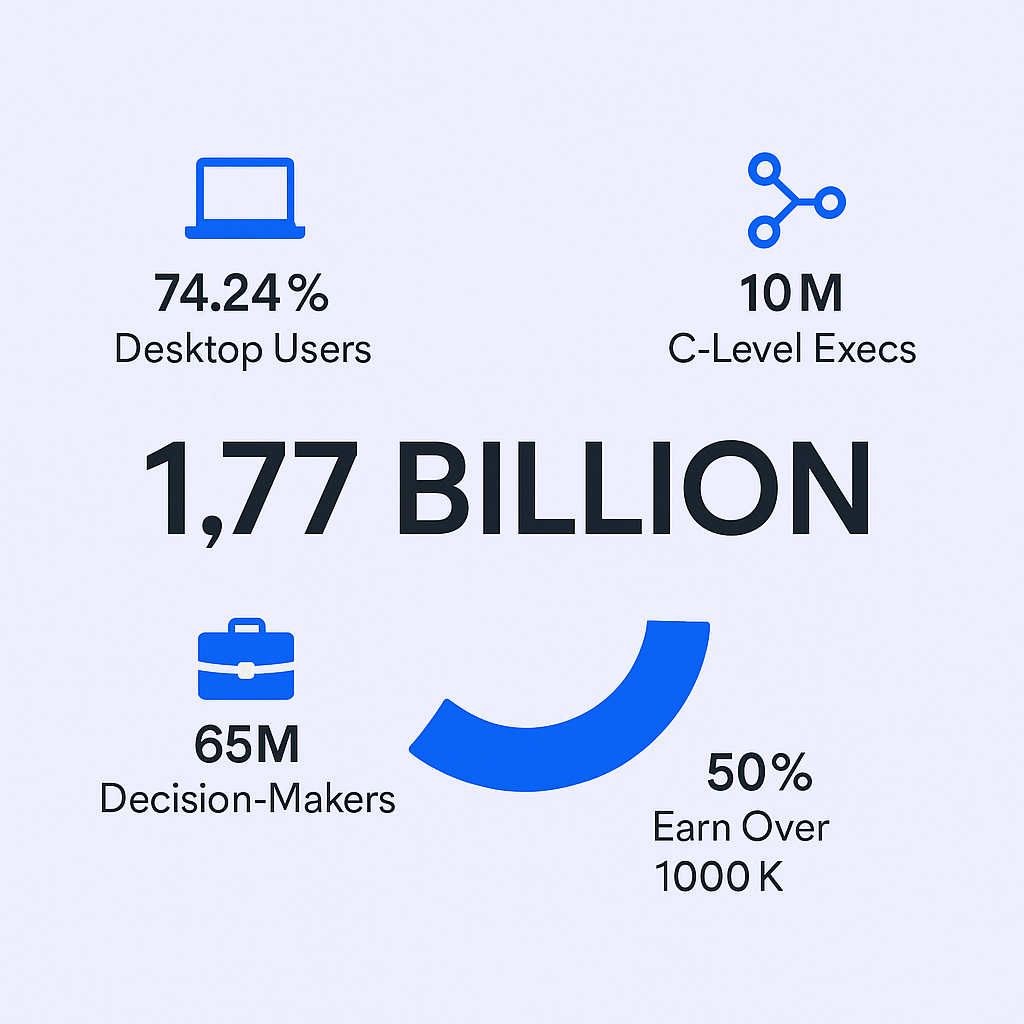


The platform sees 1.73 to 1.77 billion visits monthly. That’s not passive scrolling like you’d see on entertainment platforms. These are professionals actively looking for career advancement, industry insights, and business connections.

Here’s what makes LinkedIn different: 74.24% of these visits come from desktop devices. This matters because it means people are accessing LinkedIn during work hours, from their office computers, in a professional mindset.

Compare that to other platforms where mobile dominates—LinkedIn users are sitting at their desks, focused, and ready for professional conversations. That’s the ideal environment for meaningful group discussions.

Who’s Actually Using LinkedIn?

The demographics paint a clear picture of opportunity.

Over 60% of LinkedIn users fall in the 25-34 age bracket—the sweet spot of professionals who are making decisions, evaluating solutions, and actively building their careers. These aren’t entry-level employees; they’re the managers and directors who champion new initiatives.
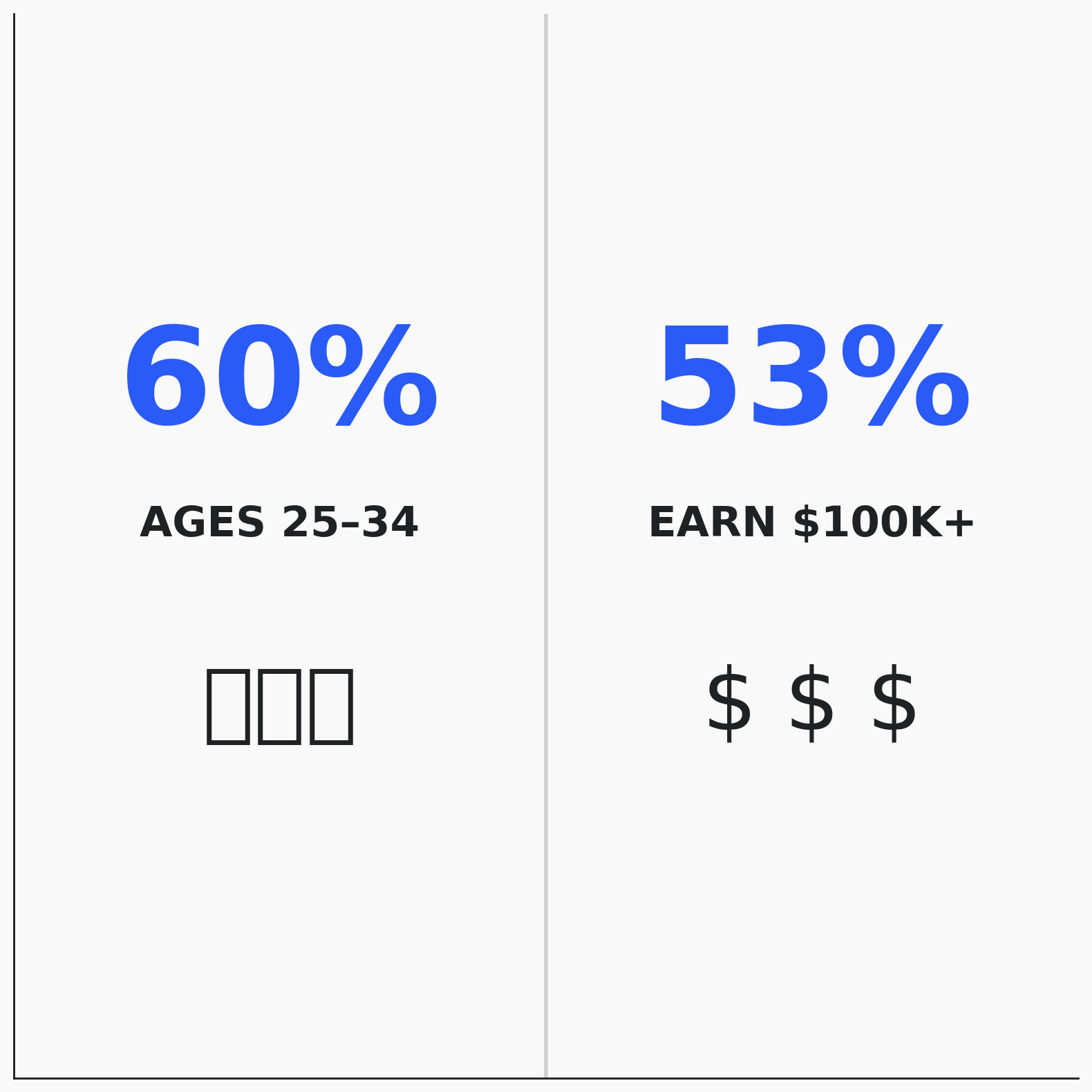


Even more interesting: 53% of US-based LinkedIn users come from households earning over $100,000 annually. This isn’t just about purchasing power—it signals that these professionals have both the authority and budget to make decisions.

The platform hosts over 65 million decision-makers and 10 million C-level executives. When you join linkedin focused on your industry, you’re not networking with random professionals—you’re connecting with the people who can actually say “yes” to your proposals.

🎯 Access 65M Decision-Makers Systematically

Our LinkedIn outbound engine reaches these exact executives with targeted campaigns—no group hunting required.

Group Membership Limits and Structure

LinkedIn puts specific boundaries on group participation, and understanding these limits is crucial for your strategy.

Each user can join a maximum of 100 groups. This isn’t a random number—it’s LinkedIn’s way of ensuring people are selective about which communities they join. When someone chooses to join your group, they’re making a conscious decision that it’s valuable enough to occupy one of their limited slots.

For those running communities, the structure is equally defined: you can manage up to 30 groups, with each group supporting one owner, up to 10 managers, and up to 50 moderators.

Think about what this means: if a group requires 50 moderators, it’s massive. The most successful B2B-focused groups typically range from 5,000 to 50,000 members—large enough for diverse perspectives but small enough for actual community building.

Engagement Patterns That Matter

Here’s where things get interesting.

Average engagement per post jumped from 8.75 in 2023 to 11.32 in 2024—a 22% increase. The feed is getting stickier, but it also means there’s more noise to cut through.

This is exactly why groups matter. While the main feed becomes increasingly saturated, well-moderated groups offer a quieter, more focused environment where your contributions actually get noticed.

The timing of your engagement matters too. LinkedIn activity peaks mid-week—Tuesdays, Wednesdays, and Thursdays—specifically between 10 AM and noon. Post during these windows and your group contributions are significantly more likely to gain traction.
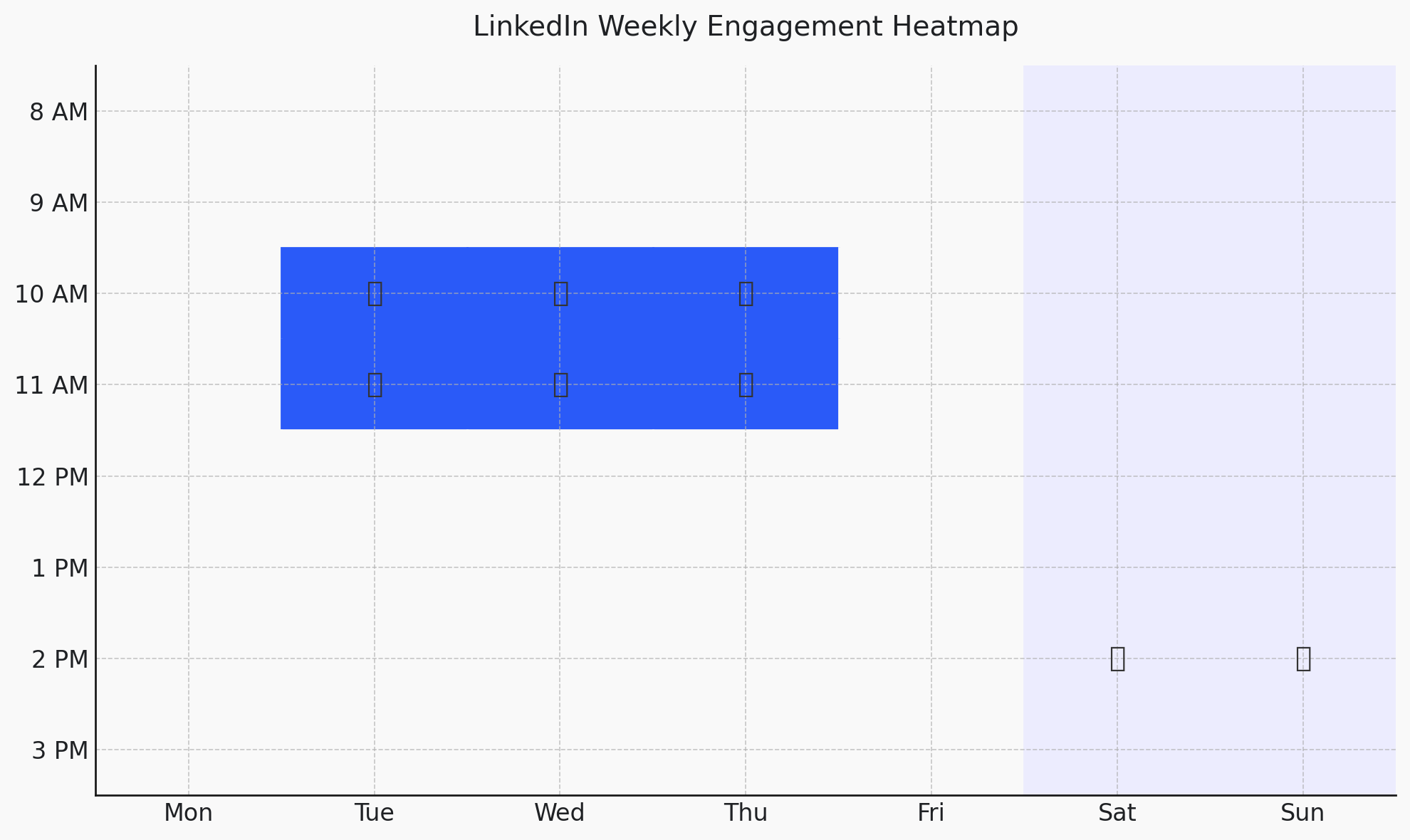


Weekends? Pretty much a dead zone for professional content. Your Saturday post will likely get buried by Monday morning’s algorithm refresh.

The Messaging Advantage

This is one of the most underutilized features: sharing a group membership with someone lets you message them directly, bypassing the need for expensive InMail credits.

💬 Skip Groups, Message Decision-Makers Directly

Our LinkedIn outbound campaigns deliver 15-25% response rates through complete targeting and campaign design.

Think about the implications. You’ve identified 50 perfect prospects in a specialized group. Instead of paying for InMails or hoping they accept your connection request, you can start conversations immediately because you’re part of the same community.

There’s a limit—approximately 50 messages per day to group members—but that’s still substantial. More importantly, these aren’t cold messages. They’re community-based conversations that feel natural and relevant.

Content Performance by Industry

Not all industries engage the same way on LinkedIn, and this directly impacts how groups perform.

Marketing agencies see engagement rates of 3.7% per post, while financial services hit 3.2%. Education lands at 2.8%, and media/entertainment trails at 2.0%.

What does this mean for group strategy? If you’re in a high-engagement industry like marketing, the bar for quality content is higher, but the potential for viral reach is also greater. In lower-engagement sectors, direct outreach and relationship building might be more effective than public posts.

The format matters too. Native document uploads (PDF carousels) are crushing it with 6.10% engagement rates in 2025, outperforming even video (5.60%) and images (4.85%).

Regional Nuances You Can’t Ignore

LinkedIn’s global reach means timing and content preferences vary dramatically by region.

In North America, video content dominates with a 29.67% view rate, particularly longer-form videos that appeal to the 35-54 demographic. Europe thrives on multilingual content and employee advocacy, which drives 8x higher engagement.

Middle East and Africa? Leadership posts in Arabic generate 31% above-average engagement. Australian professionals are most active on Wednesdays.

If you’re running a global group or targeting international audiences, a one-size-fits-all approach will fail. Time your posts for different regional peak hours and adapt your content format to match regional preferences.

The Lead Generation Reality

Here’s why all these statistics actually matter for your bottom line.

LinkedIn is 277% more effective for lead generation than Facebook or Twitter. That’s not a marginal difference—that’s a fundamental advantage in how professional buyers consume content and make decisions.

📈 277% Better Results, Zero Manual Work

Our LinkedIn outbound engine handles targeting, messaging, and scaling—you just book the meetings.

Furthermore, 40% of B2B marketers rate LinkedIn as their most effective channel for high-quality leads. When professionals are on LinkedIn, they’re thinking about their quarterly targets, not their vacation photos.

The conversion data backs this up: LinkedIn’s visitor-to-lead conversion rate sits at 2.74%—almost 3x higher than Twitter (0.69%) and Facebook (0.77%). Every person who engages with your group content has a significantly higher probability of becoming an actual business opportunity.

Understanding Agreement Privacy and Platform Rules

This is where many group strategies fall apart—not understanding the platform’s boundaries.

LinkedIn’s user agreement and privacy policy are explicit: unauthorized data collection and scraping are prohibited. This includes using browser plugins, automated tools, or crawlers to extract member information.

The platform uses sophisticated detection systems to identify violations:

  • Velocity traps catch impossibly fast profile viewing
  • Pattern recognition flags rhythmic, bot-like actions
  • IP reputation monitoring identifies data center proxies
  • Browser fingerprinting detects headless automation

Getting caught means temporary restrictions (“LinkedIn jail”) or permanent account bans. For professionals, losing your LinkedIn profile can be career-ending.

The cookie policy isn’t just about user convenience—it’s part of LinkedIn’s forensic toolkit. The platform monitors session behavior to detect anomalies. If your account makes 5,000 requests in 10 minutes, you’re essentially alerting their security team.

The Compliant Approach

Smart professionals work within the rules, not against them.

Instead of scraping, focus on genuine community participation. Share valuable insights, answer questions, and build relationships naturally. This takes longer but creates sustainable results.

âš¡ Compliant Outreach That Actually Scales

Our LinkedIn outbound campaigns reach prospects systematically without manual posting or platform violations.

7-day Free Trial |No Credit Card Needed.

When you need contact information, use legitimate tools that respect agreement privacy policies—platforms that maintain their own databases rather than live-scraping LinkedIn sessions.

Rate limiting matters: responsible tools cap actions at human-like speeds (around 50 profiles per day) and introduce random delays to avoid detection patterns.

Groups as Pre-Qualified Audiences

Think about what group membership signals.

A job title tells you what someone does. Group membership tells you what they’re interested in or worried about—which is often more valuable for starting relevant conversations.

Someone in “Chief Information Security Officers Network” isn’t just a CISO by title. They’re actively seeking community, advice, and solutions in their field. That’s intent data you can’t buy.

The beauty of groups is they’ve done the segmentation work for you. Instead of building complex filters to find your ideal audience, you’ve found a community where they’ve voluntarily gathered.

The “Walled Garden” Renaissance

Not all groups are created equal, and this distinction is critical.

Public, unmoderated groups often remain low-value spam traps. But private, heavily moderated groups have seen a resurgence in quality and engagement.

As professionals migrate away from the chaos of platforms like X (formerly Twitter), they’re returning to LinkedIn for professional stability. The groups that enforce strict rules against self-promotion and prioritize peer-to-peer learning are thriving.

For professionals, this means spray-and-pray posting is dead. The new playbook requires identifying active, protected communities and contributing genuine value. The payoff? Elevated credibility by association with respected groups.

Why Professionals Actually Join Groups

Understanding motivation is everything.

Nearly half of learning professionals report their executives are concerned employees lack the right skills. This anxiety drives professionals to seek external knowledge sources.

Career progress is the number one motivation for learning. When employees feel stuck, they look for communities that can accelerate their growth.

LinkedIn Groups fill this gap by providing:

  • Real-world advice from peers facing similar challenges
  • Playbooks and frameworks tested by practitioners
  • Networking with people who can open doors

For business professionals, this creates an opportunity: position your contributions as career development support, not marketing. Share case studies, frameworks, and insights that help people advance.

Multi-Channel Strategy Impact

Groups don’t exist in isolation—they’re part of a broader engagement strategy.

Professionals who post weekly on LinkedIn see 2x higher engagement across all their content. Consistency matters, but so does channel integration.

The data shows that combining LinkedIn touchpoints with email outreach increases response rates by 30-40%. When someone sees your name in a group discussion, then receives a personalized email referencing that conversation, you’ve created context and trust.

This multi-channel approach works because it mirrors how real relationships develop: multiple touchpoints across different contexts build familiarity and credibility.

The Engagement Benchmark

What does “good” look like in a group context?

A healthy group should see posts generating 5-10 comments on average. If a 50,000-member group’s last ten posts have zero comments, it’s a dead asset.

The comment-to-post ratio tells you everything about actual community health. Active discussion means engaged members who will notice your contributions.

Before investing time in a group, scroll through posts from 2-3 days ago. If they lack reactions or comments, move on. Your goal is to be seen by active, engaged professionals, not to shout into the void.

Social Selling Integration

Social selling has evolved beyond basic tactics, and groups are now central to this strategy.

The approach that works: build visibility through group participation before making outreach attempts. Like a comment here, add perspective to a discussion there, and suddenly your name becomes familiar.

When you later send a connection request or email, you’re not a random stranger—you’re that person who made the insightful comment about supply chain disruptions last week.

The Database Perspective

From a business database perspective, LinkedIn Groups represent something unique: self-segmented, high-intent professional pools.

Unlike purchased lists or scraped data, group members have voluntarily associated themselves with specific topics, industries, or roles. This self-selection dramatically increases relevance.

When combined with compliant data enrichment tools, group membership data becomes a foundation for highly targeted outreach campaigns—provided you respect platform boundaries and focus on relationship building rather than extraction.

Looking Forward

The trajectory is clear: LinkedIn Groups are shifting from public forums to curated communities.

AI-powered moderation is emerging, helping larger groups maintain quality discussions. Sentiment analysis tools are beginning to identify high-intent conversations automatically, surfacing opportunities for timely engagement.

Privacy enforcement will only get stricter. The cost of high-quality B2B data is rising as “easy” scraping becomes impossible. Professionals who build genuine community presence now will have a sustained advantage as automation becomes harder.

The future belongs to those who understand that LinkedIn Groups aren’t databases to mine—they’re communities to join.

Conclusion

The numbers don’t lie: LinkedIn Groups are far from dead.

With 1.2 billion professionals actively using the platform, 65+ million decision-makers, and engagement rates climbing year over year, these communities represent one of the most powerful networking tools available.

But here’s the catch: success requires a completely different approach than what worked five years ago. The era of automated extraction and spray-and-pray marketing is over, killed by platform security and user expectations.

The winning strategy? Genuine community participation, strategic engagement, and respect for platform boundaries. Join relevant groups, contribute real insights, and build relationships that translate into business opportunities.

Your competitors are either ignoring groups entirely or approaching them wrong. That gap is your opportunity.

Ready to build a predictable prospecting system? Salesso helps you identify and connect with your ideal prospects while respecting LinkedIn’s policies—combining cold email automation with strategic social selling for maximum impact.

FAQs

How many LinkedIn groups can I join?

You can join up to 100 groups. This limit is intentional—LinkedIn wants users to be selective about which communities they join, ensuring they're actually engaged in the groups they choose.

Do LinkedIn Groups actually help with lead generation?

Yes, significantly. LinkedIn is 277% more effective for lead generation than Facebook or Twitter, with a visitor-to-lead conversion rate of 2.74%—nearly 3x higher than other social media platforms.

What's the best time to post in LinkedIn Groups?

Mid-week mornings (Tuesday, Wednesday, Thursday between 10 AM and noon) see the highest engagement. Weekends are generally poor for professional content visibility.

Can I scrape member data from LinkedIn Groups?

No. LinkedIn's user agreement explicitly prohibits unauthorized data extraction, scraping, and the use of automated tools to collect member information. Violations can result in permanent account bans.

How do LinkedIn Groups compare to other social media for B2B?

LinkedIn dramatically outperforms other platforms for B2B purposes. It's 277% more effective than Facebook/Twitter for lead generation, and 40% of B2B marketers rate it as their most effective channel for quality leads.

How to Build a High-Converting B2B Sales Funnel from Scratch on LinkedIn

How to Build a High-Converting B2B Sales Funnel from Scratch on LinkedIn ​