
LinkedIn Job Search Statistics 2026: The Truth About Finding Jobs Online
- Sophie Ricci
- Views : 28,543
Table of Contents
LinkedIn Job Search Statistics
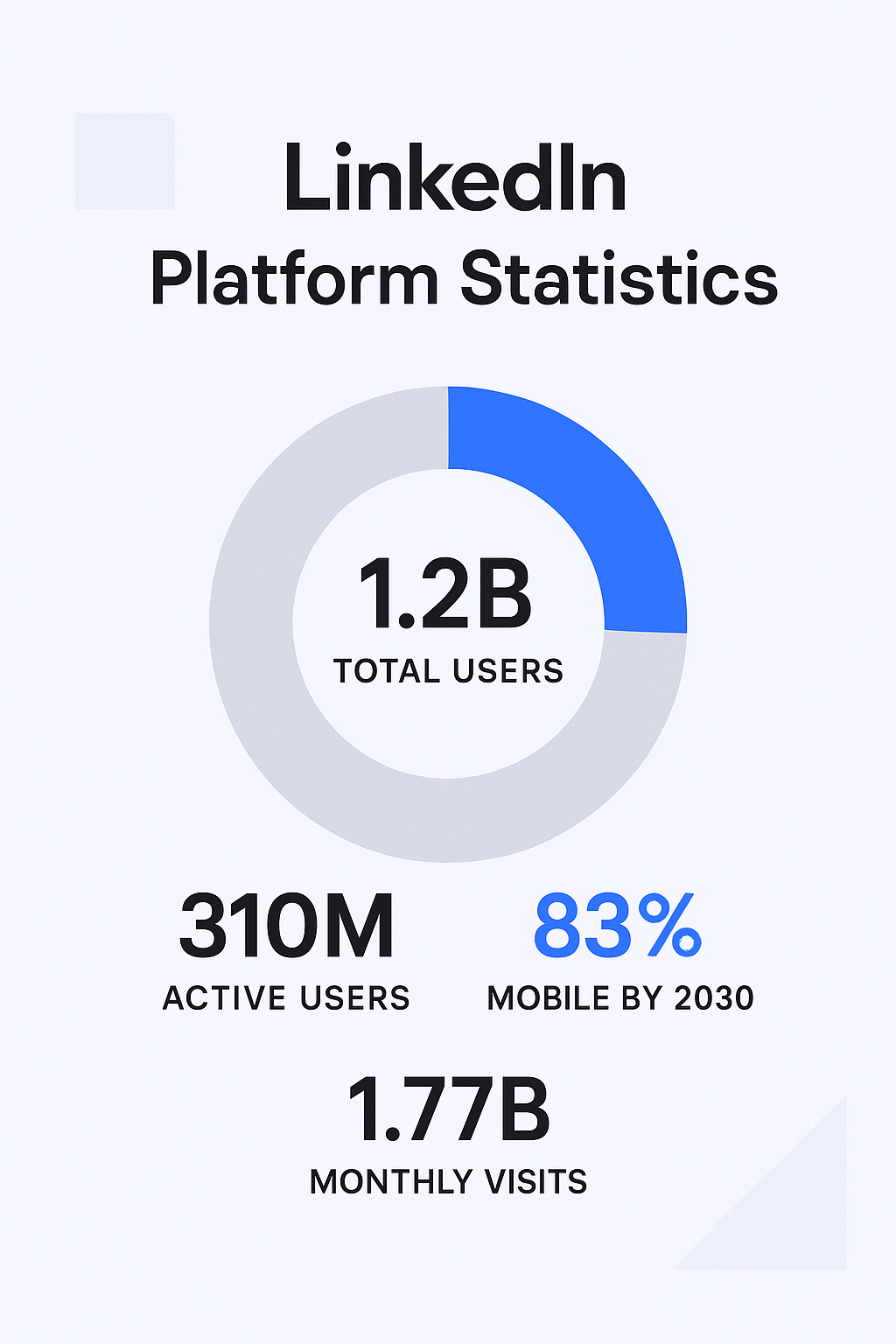
1.2 billion registered users but only 310 million active monthly – roughly 75% of LinkedIn profiles sit dormant, meaning messages often go unread for months
1.77 billion monthly visits concentrated among power users – traffic heavily skewed toward recruiters, sales professionals, and content creators
By 2030, 83% of LinkedIn’s ad spend will be mobile-focused – profiles must be optimized for 6-inch screens with 2-second attention-grabbing headlines
Asia Pacific region: 343 million users, surpassing Europe – United States leads with 243 million, India at 161 million, creating massive global talent competition
Gen Z makes up more than 25% of global workforce – visual-first generation that detects automation instantly and researches company culture obsessively
82% of candidates check brand reputation on social media before responding to recruiters – LinkedIn profile is entire professional reputation under scrutiny
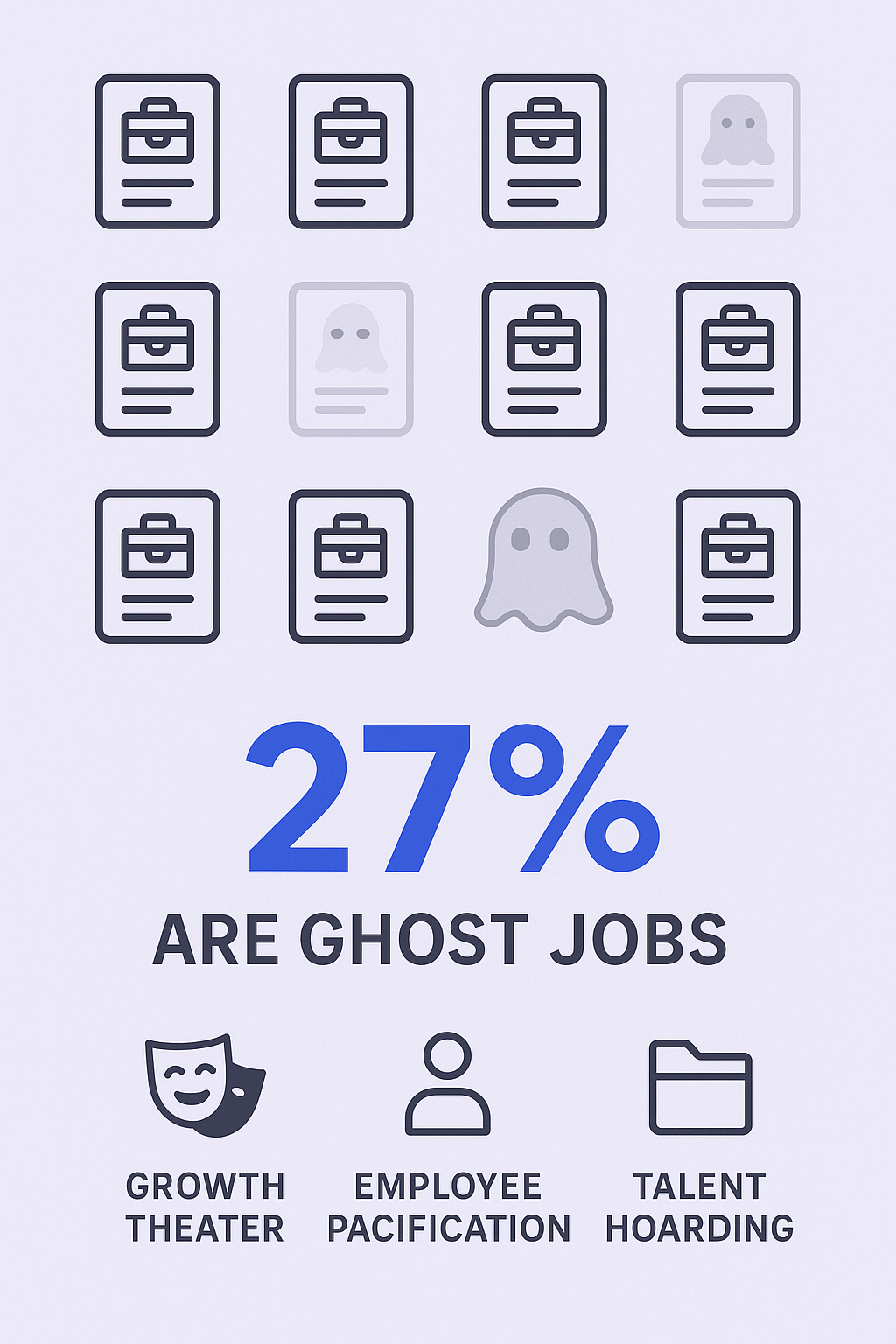
18-27.4% of all LinkedIn job listings are ghost jobs – nearly 3 in 10 jobs have no intention of being filled
70% of companies admitted to posting at least one ghost job in Q2 2024 – deliberate strategy for growth theater, employee pacification, and talent hoarding
Average candidate wastes 47 hours per ghost job application process – customizing resumes, researching companies, preparing for interviews that never happen
Connection request acceptance: 30% generic, 30-50% with personalization – personalization is only currency with value in 2025
InMail response rates: 18-25% recruiters to candidates, 5-10% job seekers to hiring managers – reality much harsher when direction is reversed
Profiles marked “Open to Work” are 37% more responsive to InMails – clear signal increases recruiter engagement if not concerned about current employer
70% of employers check candidates’ social media before hiring decisions – photos, headlines, activity, recommendations all scrutinized
Video posts: 5x more engagement than text, live video 24x more – short video introductions dramatically increase visibility over text-only content
Campaigns combining LinkedIn + email see 287% better results – multi-touch approach (profile visit, post like, email, connection request) creates familiarity and trust
LinkedIn loves to tout its billion-plus user base. It sounds impressive. But if you’re searching for a job, that number is basically meaningless.
Here’s why.
LinkedIn crossed 1.2 billion registered users in 2025. That’s the headline. But when you dig into the LinkedIn job search statistics, only about 310 million users are actually active monthly.
Do the math: that’s roughly 75% of LinkedIn profiles sitting dormant, collecting digital dust.
What does this mean for you? When you send a connection request or InMail to someone, there’s a decent chance they haven’t logged into LinkedIn in months. Your perfectly crafted message sits unread while you wait for a response that will never come.
The platform generates 1.77 billion monthly visits, but that traffic is heavily concentrated among power users—recruiters, sales professionals, and content creators. The average job seeker checks LinkedIn sporadically, usually when they’re actively searching or when they get an email notification.
The Mobile Shift Nobody’s Talking About
By 2030, 83% of LinkedIn’s ad spend will be mobile-focused. This isn’t just a tech trend—it changes how you should approach your job search.
Your profile needs to look perfect on a 6-inch screen. Your headline needs to grab attention in 2 seconds. Your experience section needs to be scannable while someone’s standing in line for coffee.
If your LinkedIn profile is optimized for desktop viewing only, you’re already behind.
Geography Matters More Than You Think
LinkedIn users aren’t evenly distributed. The United States leads with 243 million users, but the Asia Pacific region has exploded to 343 million users, with India alone at 161 million.
Why does this matter?
If you’re applying to global companies or remote positions, you’re competing with talent pools that dwarf the US market. Response rates vary dramatically by region—US executives are drowning in InMails, while emerging markets still see LinkedIn outreach as relatively novel.
The Gen Z Factor
Generation Z now makes up more than 25% of the global workforce, and they approach LinkedIn completely differently than millennials or Gen X.
They’re visual-first, preferring video content over text-heavy posts. They can smell automation from a mile away—generic “I hope this finds you well” messages get instantly ignored. And they research company culture obsessively: 82% of candidates check brand reputation on social media before even responding to a recruiter.
If you’re crafting outreach messages or building your personal brand on LinkedIn, understanding this generational shift is critical.
The Ghost Job Epidemic: Why Most LinkedIn Postings Are Fake
This is where things get dark.
Multiple independent studies from 2024-2025 reveal a disturbing trend: between 18% and 27.4% of all job listings on LinkedIn are ghost jobs—positions that companies have absolutely no intention of filling.
Let that sink in. Nearly 3 in 10 jobs you’re applying to are completely fake.
A ResumeUp.AI study found that 27.4% of LinkedIn job postings were ghosts. Greenhouse’s analysis revealed that 70% of companies admitted to posting at least one ghost job in Q2 2024 alone.
This isn’t a glitch. It’s deliberate.
Why Do Companies Post Fake Jobs?
The reasons are cynical and calculated:
Growth Theater: A company with 50 open positions looks like a rocket ship to investors and competitors. A company with zero openings looks stagnant. The job postings become props in a performance of prosperity.
Employee Pacification: Overworked teams are told “help is coming, we’ve posted the role!” The job posting serves as a placebo to prevent burnout-driven resignations—even when no hiring budget has been approved.
Talent Hoarding: Companies build a “warm bench” of resumes for a hypothetical future when budgets might materialize. They’re collecting candidates like baseball cards, with no immediate plans to make offers.
The Real Cost of Ghost Jobs
For job seekers, ghost jobs aren’t just annoying—they’re devastating.
The average candidate wastes 47 hours per ghost job application process—customizing resumes, researching companies, preparing for interviews that will never happen.
Multiply that across dozens of applications, and you’re looking at weeks of wasted effort. The emotional toll is even worse: the constant rejection, the unanswered applications, the interviews that lead nowhere.
You’re not failing. The game is rigged.
How to Spot a Ghost Job (Detection Checklist)
Smart job seekers in 2025 need to become forensic analysts. Before investing time in any application, run it through this filter:
Posted More Than 30 Days Ago: If a job has been open for over a month, it’s likely a ghost. Real urgent positions get filled quickly. Aged listings are often forgotten auto-renewals or permanent data-gathering posts.
Reposted Frequently: Jobs that disappear and reappear every few weeks are major red flags. This indicates either a “churn and burn” role with impossible expectations or a permanent listing used to collect resumes.
Not on the Company’s Actual Career Page: This is your smoking gun. If the job appears on LinkedIn but not on careers.company.com, it’s probably fake. Always cross-reference.
No Specific Salary or Start Date: Vague perks and buzzword-heavy descriptions signal marketing fluff. Real jobs have real budgets and real timelines.
Generic Job Requirements: If the posting reads like it was written by ChatGPT using only corporate jargon, proceed with extreme caution.
Before you spend three hours tailoring your application, spend three minutes verifying the job is real.
👻 27% of LinkedIn Jobs Don’t Exist
Bypass fake postings with verified decision-maker contact data and direct outreach strategies
Search Tactics That Actually Work in 2026
With ghost jobs corrupting your search results, knowing how to find real opportunities becomes a competitive advantage.
LinkedIn’s search functionality has evolved, and power users have discovered hacks to bypass the noise.
The “Last Hour” Search Hack
Standard LinkedIn job filters bury the newest postings under “Promoted” listings—jobs that paid for visibility but might be weeks old or totally irrelevant.
Here’s the workaround: edit your search URL to include f_TPR=r3600 and LinkedIn will show you only jobs posted in the last hour (3,600 seconds).
Why does this matter?
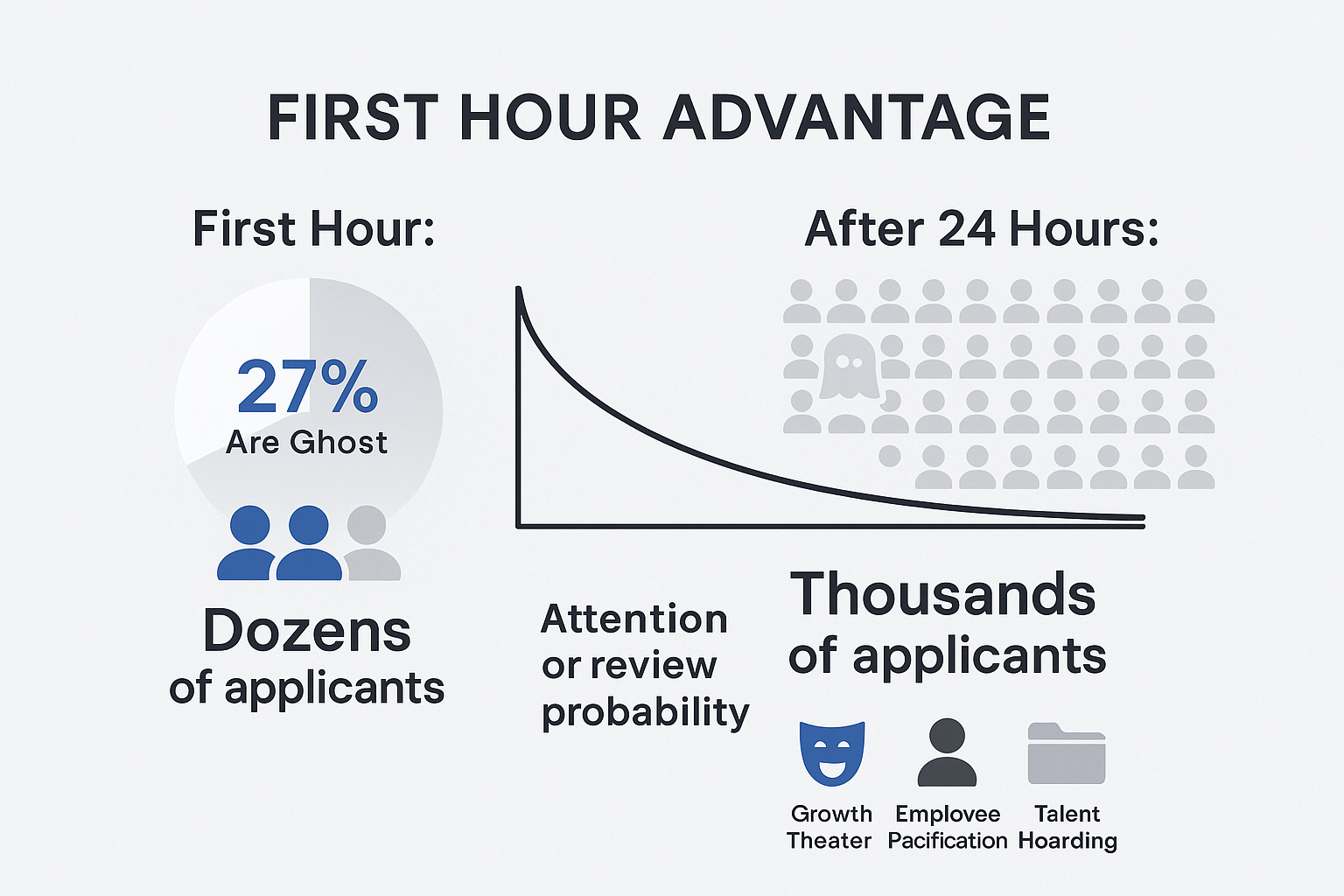
Being first matters. When you apply within the first hour of a posting going live, you’re competing against dozens of candidates instead of thousands. Your application actually gets reviewed instead of being buried in an avalanche of resumes.
Recruiters and hiring managers pay the most attention to the first batch of applications. After that, attention fatigue sets in.
Understanding the 2026 Algorithm Changes
LinkedIn has completely retooled its feed algorithm to prioritize “Knowledge Value” over “Viral Reach.”
The days of “broetry”—single-sentence paragraphs designed to game engagement—are fading fast. The algorithm now categorizes posts into Spam, Low Quality, or High Quality based on professional relevance, and heavily penalizes engagement bait like “Like if you agree.”
For job seekers, this means your profile activity matters more than ever. Posts that demonstrate genuine expertise get pushed harder than generic motivational quotes.
The Golden Hour of Engagement
For a post to gain traction, it needs meaningful engagement within the first 60 minutes. But here’s the catch: comments from random accounts do nothing. Comments from relevant profiles in your industry signal value to the algorithm.
This is why networking strategically matters. Having 5,000 random connections is worse than having 500 connections in your target industry who actually engage with your content.
Dwell Time: The Secret Metric
LinkedIn measures how long users spend looking at your content. This explains the rise of PDF carousels and long-form videos—they force viewers to stop scrolling, signaling value to the algorithm.
When building your profile or creating content, ask yourself: does this make people pause and actually read, or do they scroll past in half a second?
Job Search Behavior & What Actually Gets Responses
Let’s talk numbers. Real success rates for LinkedIn outreach in 2025.
Connection request acceptance rates average around 30%—but that’s for generic requests. When you personalize your connection request (referencing a specific post, mutual connection, or shared interest), acceptance rates jump to 30-50%.
The lesson? Generic outreach is dead. Personalization is the only currency that holds value.
InMail Response Rates: The Truth
LinkedIn loves to cite InMail response rates of 18-25%, but there’s a massive caveat: those numbers apply primarily to recruiters contacting candidates—a high-desire interaction where the recipient actually wants to hear from you.
For job seekers cold-messaging hiring managers or company employees, reality is much harsher. Response rates typically hover around 5-10% unless messages are highly personalized.
The “Open to Work” Banner Question
Should you use it or not?
The data is clear: profiles marked “Open to Work” are 37% more responsive to InMails from recruiters. If you’re actively searching and not worried about your current employer seeing it, turn it on.
However, if you’re passively exploring while employed, use the “Open to recruiters only” setting to avoid awkward conversations with your boss.
Social Proof Still Dominates
70% of employers check candidates’ social media presence before making hiring decisions. Your LinkedIn profile isn’t just a resume—it’s your professional reputation.
This means:
- Your profile photo matters
- Your headline needs to be compelling
- Your activity (posts, comments, shares) gets scrutinized
- Recommendations and endorsements carry weight
Think of LinkedIn members as your personal search committee. They’re evaluating everything.
Video Content: The Engagement Multiplier
Video posts on LinkedIn receive 5x more engagement than static text posts. Live video drives 24x engagement compared to standard posts.
For job seekers, this creates opportunity. A short video introduction, a walkthrough of your portfolio, or industry commentary can dramatically increase your visibility compared to text-only posts.
And with LinkedIn video views up 36% year-over-year, the platform is clearly prioritizing video content in its algorithm.

📈 Hit LinkedIn’s 100-Request Weekly Limit?
Scale your job search with unlimited verified emails and multi-channel outreach campaigns
The Multi-Channel Reality: Why LinkedIn Alone Isn’t Enough
Here’s the uncomfortable truth: LinkedIn is an incredible research tool, but it’s a terrible primary outreach channel for job seekers.
The Volume Problem
LinkedIn restricts most users to roughly 100 connection requests per week. If your acceptance rate drops below 20%, LinkedIn may restrict your ability to send requests entirely.
This creates a ceiling on your outreach velocity. You simply cannot scale LinkedIn networking the way you can scale email outreach.
The Email Advantage
While LinkedIn InMail response rates might seem attractive, email has one massive advantage: no artificial limits.
Studies show that campaigns combining LinkedIn touches with cold email see results improve by up to 287%. The strategy works like this:
- Visit someone’s LinkedIn profile (they get notified)
- Like one of their recent posts
- Wait 24 hours
- Send a personalized email referencing their LinkedIn content
- Then send the connection request
When they see your name in their email inbox, it’s not “cold”—it’s warm. They’ve already seen your name on LinkedIn, creating familiarity and trust.
Direct Company Applications Outperform “Easy Apply”
LinkedIn’s “Easy Apply” button is convenient, but applications submitted directly through company career pages typically perform better.
Why? Because LinkedIn’s “Easy Apply” generates an avalanche of low-effort applications. Hiring managers know most candidates are mass-applying without genuine interest.
Applications submitted through the actual company website signal higher intent and effort. Use LinkedIn to find the job, then apply through the proper channel.
Platform Risk Is Real
In March 2025, LinkedIn banned several major lead-generation browser extensions for violating their Terms of Service. Users who relied on these tools to scrape contact data found their accounts restricted or permanently banned.
Losing your LinkedIn account in 2025 is like professional exile. The risk isn’t worth the convenience.
This is why smart job seekers use compliant data providers who source contact information through ethical means rather than scraping LinkedIn in real-time.
🚀 LinkedIn + Email = 287% Better Results
Get our complete outbound playbook: precision targeting, campaign templates, and verified contact databases
Text #4
Champion Tracking & Riding the Wave of Job Changes
One of the most overlooked LinkedIn job search statistics: the velocity of workforce movement.
The average job tenure has dropped to 3.9 years, and in high-velocity sectors like tech and sales, it’s often under 2 years.
This creates massive opportunity for smart job seekers.
The New Role Window
A professional in a new role is a “buyer in motion.” They have a mandate to prove value in their first 90 days. They’re not beholden to legacy processes or vendor relationships.
For job seekers, this means targeting people who recently changed roles can be incredibly effective:
- They’re building new teams
- They have fresh budgets
- They’re looking to make an impact quickly
- They’re open to new ideas and approaches
Set up job change alerts for companies you want to work for, then reach out to new hires with personalized congratulations and a genuine offer to help.
Following Company Alumni for Intel
One underrated tactic: follow employees who leave companies you’re interested in.
People are remarkably candid about why they left when you catch them in transition. A simple “Saw you moved from Company X—congrats on the new role! What prompted the change?” can yield incredible insights about company culture, management issues, or growth challenges.
This intelligence helps you:
- Avoid toxic work environments
- Understand real company priorities
- Identify which roles actually have support and resources
- Learn what interview questions to expect
Referrals Still Dominate Hiring
Despite all the technology, employee referrals remain the #1 source of quality hires for most companies.
Use LinkedIn to identify current employees at your target companies, then ask for informational interviews. Build genuine relationships. Offer value first.
When a position opens, having an internal champion who can vouch for you is worth more than 100 perfect cover letters.
💼 Turn Job Changes Into Opportunities
Track decision-maker movements and reach them with perfect timing using our targeting intelligence system
7-day Free Trial |No Credit Card Needed.
Despite all the technology, employee referrals remain the #1 source of quality hires for most companies.
Use LinkedIn to identify current employees at your target companies, then ask for informational interviews. Build genuine relationships. Offer value first.
When a position opens, having an internal champion who can vouch for you is worth more than 100 perfect cover letters.
Content Strategy for Job Seekers: Building Visibility
Passive applications rarely work. Active job seekers need to build visibility.
Your Profile as Your Personal Landing Page
Think of your LinkedIn profile as a personal website. When someone searches your name, this is what they find.
Optimize every section:
- Headline: Not just your job title—your value proposition
- About: Tell a story, don’t just list skills
- Experience: Use metrics and accomplishments, not just responsibilities
- Featured: Showcase portfolio pieces, articles, or projects
Weekly Posting Increases Visibility 45%
Professionals who post consistently see 45% more opportunities than those with static profiles.
You don’t need to become a LinkedIn influencer. One thoughtful post per week showing your expertise is enough:
- Industry commentary
- Lessons learned from projects
- Sharing helpful resources
- Asking intelligent questions
The algorithm rewards consistency over virality.
Authenticity Beats AI-Generated Content
By 2025, over 50% of LinkedIn posts are AI-assisted. This has created “content inflation” where everything sounds the same.
Your competitive advantage? Authentic voice.
AI is good at generic content. Humans are good at:
- Specific stories from personal experience
- Contrarian takes based on real data
- Vulnerable admissions of failure and learning
- Industry analysis that requires nuanced judgment
These are the posts that cut through the noise.
Conclusion: The Smart Job Seeker’s 2025 Strategy
LinkedIn in 2025 is a paradox: it’s simultaneously the most important professional platform and increasingly difficult to use effectively.
The data tells a clear story:
- The platform is massive (1.2 billion users), but most are inactive
- Job postings are corrupted (27% are fake)
- Outreach is limited (100 requests per week)
- Competition is fierce (thousands of applicants per posting)
So what’s the winning strategy?
Use LinkedIn as your intelligence system, not your only outreach channel.
Search for real opportunities using the last-hour hack. Verify jobs on company career pages before applying. Build genuine connections with people in your target industry. Create content that demonstrates your expertise.
Then, take the action off-platform:
- Apply directly through company websites
- Use verified contact data to reach hiring managers via email
- Combine LinkedIn visibility with email follow-up for 287% better results
- Build relationships that lead to referrals, not just applications
The job seekers who win in 2025 aren’t the ones sending the most applications. They’re the ones using data intelligently, verifying opportunities ruthlessly, and building multi-channel outreach strategies.
Stop wasting time on ghost jobs. Start using LinkedIn the way it was meant to be used: as a professional directory that helps you find real people at real companies who are actually hiring.
The opportunities are there. You just need to know where to look.
Other Useful Resources
To build comprehensive multi-channel outreach strategies that extend beyond job searching, explore these complementary resources:
Market Intelligence:
- Review ecommerce shopping statistics to understand online buyer behavior and decision-making patterns applicable to professional networking
Data & Contact Intelligence Tools:
- Read our detailed Seamless AI review for understanding verified contact data alternatives to LinkedIn’s 100-connection weekly limit
LinkedIn Account Management & Compliance:
- Understand whether verified LinkedIn accounts get banned to protect your networking investment
- Learn how to recover permanently banned LinkedIn accounts if outreach velocity triggers restrictions
- Master how to merge LinkedIn accounts for consolidated profile management
Email Infrastructure & Authentication:
- Discover what BIMI is and how email authentication improves deliverability in multi-channel campaigns
LinkedIn Sales Intelligence:
- Review comprehensive LinkedIn Sales Navigator statistics showing how premium tools overcome platform limitations
Job seekers face 27% ghost jobs and 100-connection weekly limits while competing against thousands of applicants—but the multi-channel strategy that delivers 287% better results for job searches works even better for B2B outreach. While job seekers use LinkedIn + email to bypass fake postings and platform restrictions, sales professionals use the same approach to reach decision-makers who actually respond. The difference? Instead of applying to jobs that might not exist, you’re proactively messaging verified contacts with real buying authority. Our LinkedIn outbound system applies job search intelligence—direct targeting, multi-touch sequences, verified data—to fill sales pipelines with 15-25% response rates.
FAQs
What percentage of LinkedIn jobs are fake?
How many connection requests can I send on LinkedIn?
What's the best time to apply for LinkedIn jobs?
Does the "Open to Work" banner actually help?
How can I spot a ghost job posting?
- blog
- Statistics
- LinkedIn Job Search Statistics 2026: Key Data & Insights