
🎉Find Prospects and Send Cold Emails & LinkedIn Outbound | All in One Place

LinkedIn Job Statistics 2026: What the Numbers Actually Tell You

Table of Contents

LinkedIn Job Statistics 2026

  • LinkedIn now has over 1.15 billion members across 200 countries – representing essentially everyone with a professional email address
  • Over 65 million decision-makers and 10 million C-level executives – providing direct access to hiring authorities and budget holders
  • Only 1% of LinkedIn users actually post content weekly – yet this tiny fraction generates 9 billion impressions per week
  • Hiring in 2025 is running about 20% slower compared to pre-pandemic levels – companies have become more cautious with hiring budgets
  • Wholesale sector jumped 15.7% month-over-month in July 2025 – showing the highest hiring velocity among all industries
  • Technology sector showed 10.6% month-over-month growth – after two brutal years of layoffs, the trend is finally reversing
  • Data analyst average salary hit $111,000 in 2025 – jumping over $20,000 from early 2024, signaling strong demand
  • SQL shows up in 64% of data analyst job descriptions – making it a non-negotiable skill for the role
  • Profiles with “Open to Work” frame receive 37% higher response rates from recruiters – over 28 million people actively use this feature
  • LinkedIn InMail response rates: 18% to 25% – compared to cold email’s 1-5%, making InMail 5x more effective
  • Keeping InMail under 400 characters boosts replies by 22% – short, professional messages significantly outperform longer ones
  • Cold email open rates dropped from 36% to 27.7% in 2024-2025 – showing increasing deliverability and engagement challenges
  • Multichannel approaches increase engagement by 287% – combining LinkedIn + Email versus single-channel outreach
  • Professionals with high Social Selling Index create 45% more opportunities – and are 51% more likely to hit their sales quotas
  • 74.24% of LinkedIn visits come from desktop devices – meaning users are in work mode, ready to consume detailed professional content
 

Here’s the thing about job hunting in 2025: everyone’s scrolling through LinkedIn, but almost nobody knows what’s actually happening behind the scenes. You’re probably wondering if that “Open to Work” banner helps or hurts, whether data analyst roles are still hot, or if companies are even hiring anymore.

Let me break down the linkedin job statistics that actually matter—without the corporate fluff.

The Real Story Behind LinkedIn’s Numbers

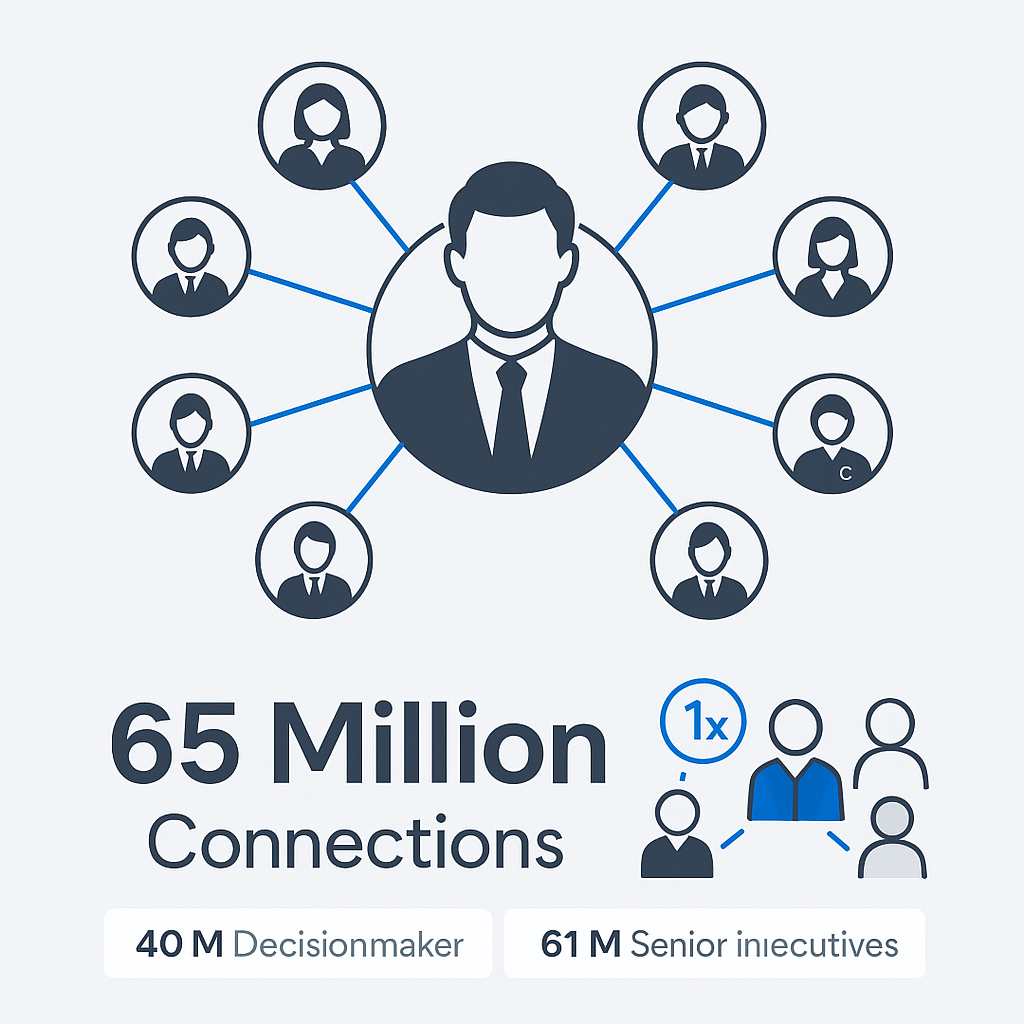
LinkedIn now has over 1.15 billion members across 200 countries. That’s basically everyone with a professional email address. But here’s what matters more: the platform hosts over 65 million decision-makers and 10 million C-level executives. That’s where your opportunity lives.


Think about it this way: if you’re trying to land a job or fill a position, you’re swimming in the same pool as a billion other people. The question isn’t whether LinkedIn works—it’s whether you’re using it right.

According to linkedin users data, about 31.25% of all LinkedIn traffic comes from the United States, making it the dominant market for B2B connections and professional opportunities. But here’s the kicker: despite having a billion members, only 1% of LinkedIn users actually post content weekly. Yet this tiny fraction generates 9 billion impressions per week.

What does this mean for you? If you’re actively engaging and posting, you’re already in the top 1% of visibility.

National Hiring Trends: What’s Actually Happening

Let’s talk about the elephant in the room. Hiring in 2025 is running about 20% slower compared to pre-pandemic levels (July 2019 baseline). Companies got cautious, budgets got tighter, and that “hiring spree” everyone talked about? It’s over.

But wait—it’s not all doom and gloom.

While national hiring saw a modest 4.6% month-over-month increase from June to July 2025, the annual comparison shows it’s still 4.9% lower than July 2024. Translation: things are stabilizing, but we’re not back to the “spray and pray” hiring days.

The reality? Companies are being selective. They’re hiring for must-have roles, not nice-to-have ones. Your application needs to hit harder and be more specific than ever before.

🚀 Target Decision-Makers Directly Instead

Access 65M+ decision-makers with campaigns designed for qualified conversations, not application black holes

Industries That Are Actually Hiring Right Now

Here’s where the linkedin job data gets interesting. Not all industries are struggling. Some are quietly booming:
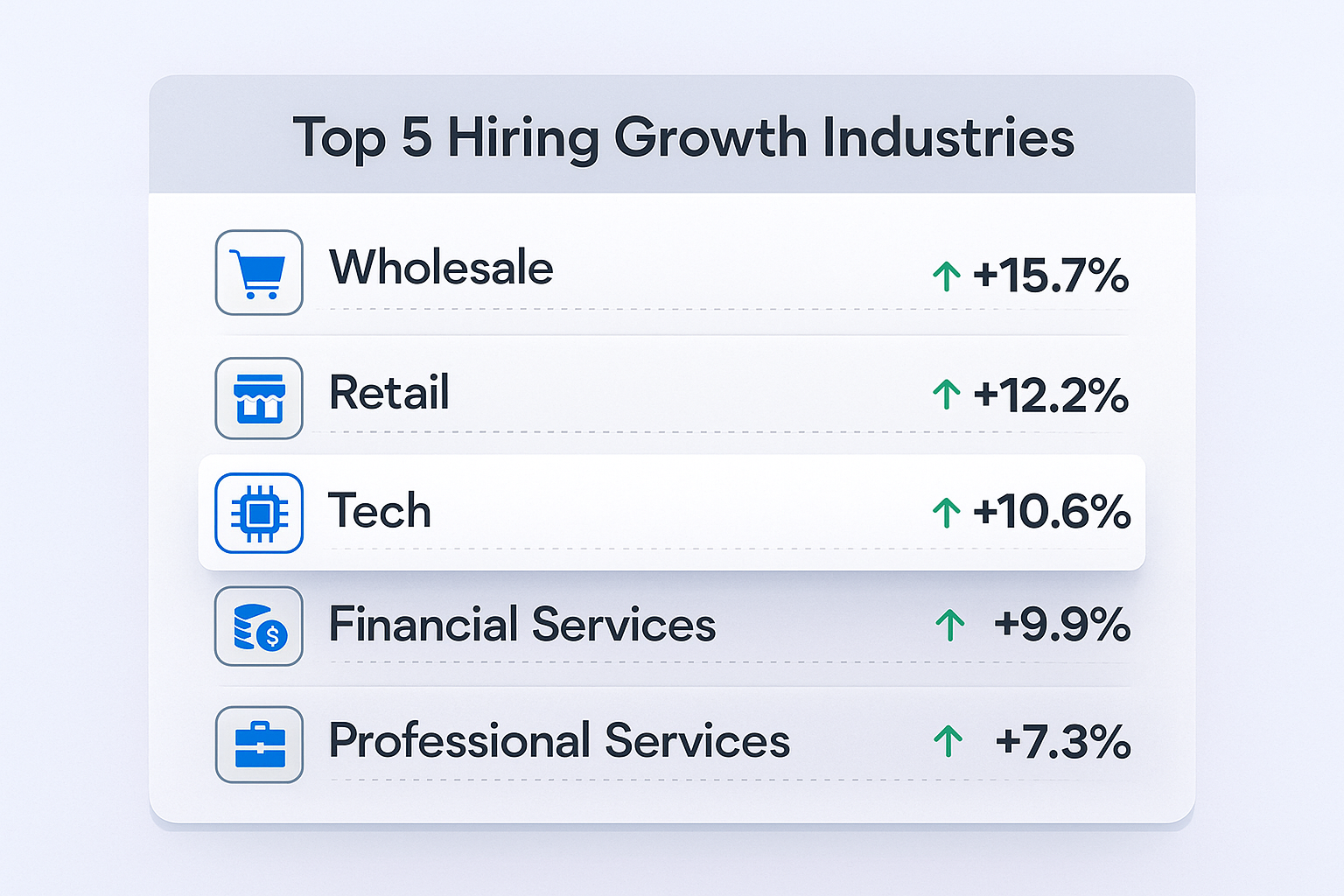


Wholesale jumped 15.7% month-over-month in July 2025. Retail followed with a 12.2% increase. If you’re in supply chain, logistics, or retail tech, opportunities are opening up.

Technology sector (yes, tech) showed 10.6% month-over-month growth after two brutal years of layoffs. While year-over-year is only up 0.3%, the trend is reversing. Companies are finally filling engineering and sales roles again.

Financial Services posted a 9.9% monthly increase, showing stability when everything else feels uncertain.

On the flip side, Government Administration dropped 13.5% year-over-year, and Holding Companies fell 9.3%. If you’re targeting these sectors, adjust your expectations accordingly.

Quick breakdown of hiring velocity by sector (July 2025):

  • Wholesale: +15.7% MoM, -6.9% YoY
  • Retail: +12.2% MoM, -1.6% YoY
  • Tech, Info & Media: +10.6% MoM, +0.3% YoY
  • Financial Services: +9.9% MoM, -0.9% YoY
  • Professional Services: +7.3% MoM, -4.0% YoY
  • Healthcare: -0.5% MoM, -3.5% YoY
  • Education: +0.1% MoM, -4.6% YoY

The pattern? Short-term gains don’t always mean long-term recovery. Focus on industries with positive monthly AND yearly trends for the safest bet.

Data Analyst Jobs: Still Worth It?

You asked about data analyst job linkedin opportunities, so let’s get specific.

Data analyst roles are not dying to AI—they’re evolving. The average salary hit $111,000 in 2025, jumping over $20,000 from early 2024. That’s a massive signal of demand, not decline.

Here’s the catch: entry-level positions (0-2 years experience) are softening as basic tasks get automated. But mid-level roles (4-6 years experience) now make up 8% of postings, and companies are willing to pay premium rates for people who can translate data into business strategy.

Skills that matter most in 2025:

  • SQL: Shows up in 64% of job descriptions (non-negotiable)
  • Excel: Still in 41.3% of postings (yes, really)
  • Tableau: Leads visualization tools at 28.1%
  • Power BI: Close second at 24.7%
  • Machine Learning: Mentions doubled year-over-year to 14% (the new frontier)

The market isn’t looking for people who can just pull reports anymore. They want data storytellers who can explain what the numbers mean for revenue, customer retention, or product strategy.

If you’re pivoting into data analysis, focus on learning business context, not just technical tools. The algorithm can clean data. It can’t yet explain why Q3 revenue dropped or which customer segment is worth targeting next.

The Geography of Opportunity

Not all cities recovered equally. New York City posted a massive 14.7% month-over-month hiring increase in mid-2025, challenging the “death of cities” narrative. If you’re in finance, media, or advertising, NYC density is your advantage again.

But secondary markets are growing too: St. Louis (+6.9%) and Denver (+6.8%) are outperforming their size. These cities offer a strategic edge: less competition, growing companies, and lower cost of living.

Meanwhile, San Francisco Bay Area hiring remains 36% below pre-pandemic levels despite a 2.0% year-over-year increase. The gold rush is over. Selling into Silicon Valley or landing a tech role there requires more sophistication than it used to.

Cities seeing decline:

  • Atlanta: -2.8% MoM
  • Cleveland: -1.2% MoM
  • Detroit: -1.0% MoM

If you’re mobile and open to relocation, target cities with momentum, not just prestige names.

Open to Work: Does That Green Banner Actually Help?

Let’s settle this debate once and for all.

Yes, it works. Profiles with the “Open to Work” frame receive 37% higher response rates from recruiters. Over 28 million people use it, and recruiters actively filter for it to find responsive candidates.

The stigma of “desperation” is mostly in your head. Recruiters don’t see it that way. They see someone who’s actively looking and likely to reply, which makes their job easier.

Should you use it? If you’re serious about finding a new role, absolutely. If you’re passively browsing while employed, maybe skip it to avoid awkward conversations with your current boss.

The data doesn’t lie: people with the banner get more outreach. Whether you get the right outreach depends on how well your profile is optimized for the roles you actually want.

Remote Work Reality Check

Here’s what the agreement privacy policy and platform data tells us about remote work in 2025:

28% of the global workforce works remotely, but here’s the gap: 98% of employees want remote work at least some of the time. That massive disconnect creates fierce competition for fully remote roles.

Hybrid work has become the compromise for senior positions. Companies list roles as “remote” to attract applicants, then reveal hybrid requirements during interviews. It’s frustrating, but common.

Fully remote postings receive exponentially more applications, allowing employers to be hyper-selective. If you’re applying to remote-only roles, your competition just multiplied by 10x.

Strategic move? Target hybrid roles in your city. Less competition, more leverage to negotiate remote flexibility once you’re in.

💼 Stop Competing With 10,000 Applicants

LinkedIn outbound puts you in front of hiring managers before roles go public—complete targeting strategy included

LinkedIn InMail vs Cold Email: What Actually Works

If you’re on the hiring or sales side, here’s the linkedin statistics jobs professionals need to know:

LinkedIn InMail response rates: 18% to 25%
Cold email response rates: 1% to 5%
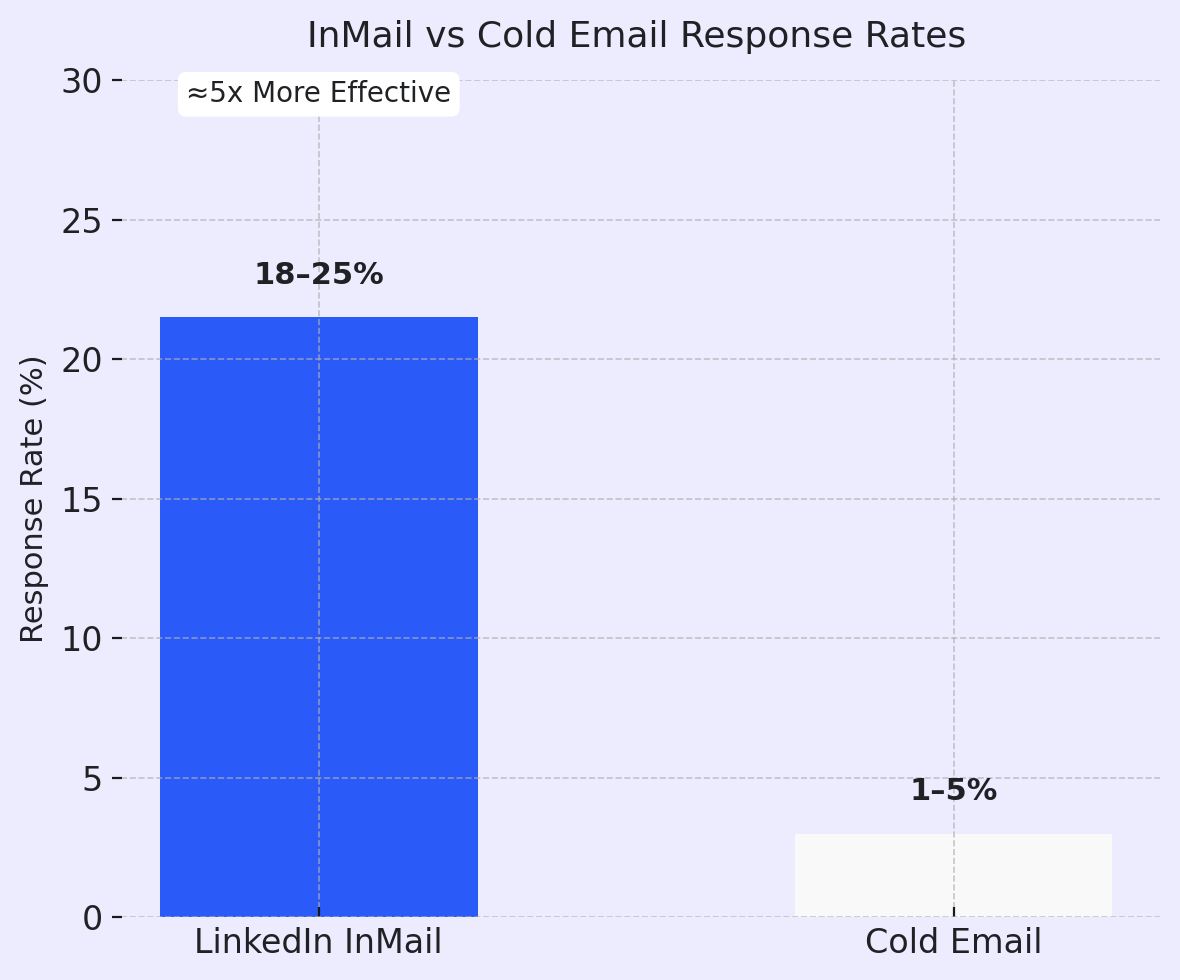


That’s not a typo. InMail is 5x more effective for reaching decision-makers. Why? Trust. The recipient can instantly verify who you are, your mutual connections, and your employment history.

Best practices for InMail:

  • Keep it under 400 characters (boosts replies by 22%)
  • Lead with context, not a pitch
  • Treat it like a professional text message, not a sales letter

Cold email isn’t dead—it’s just harder. Open rates dropped from 36% to 27.7% in 2024-2025, and 17% of cold emails never reach the inbox due to authentication failures.

The winning strategy? Combine both. Use LinkedIn to build familiarity, then follow up via email. Multichannel approaches increase engagement by 287% compared to single-channel outreach.

📊 Get 18-25% Response Rates Guaranteed

Skip SMTP headaches—our LinkedIn outbound delivers qualified meetings without deliverability issues

If you’re looking to improve your outreach strategy beyond just LinkedIn, check out our guide on lead generation for B2B SaaS for a complete multichannel framework.

The Social Selling Index: Does It Actually Matter?

Here’s an interesting stat: professionals with a high Social Selling Index (SSI) create 45% more opportunities and are 51% more likely to hit their quotas.

The SSI measures four things:

  1. Establishing your professional brand
  2. Finding the right people
  3. Engaging with insights
  4. Building relationships

Translation: If you’re actively engaging on LinkedIn—commenting thoughtfully, posting occasionally, and building genuine connections—you’re statistically more likely to succeed in your career.

Passive LinkedIn users (profile exists, never post, rarely engage) miss this multiplier effect. You don’t need to be an influencer. You just need to be visible and valuable to your target audience.

For more on leveraging LinkedIn strategically, explore social selling techniques that drive real results.

Technical Changes You Need to Know About

LinkedIn rolled out some major policy updates that affect how your data is used:

As of November 2025, LinkedIn uses member data (posts, profile details, usage patterns) to train its AI models by default. If you’re concerned about intellectual property or privacy, you can opt out manually in settings.

This affects the agreement privacy policy, cookie policy, and how your join sign data is processed. The changes expanded to EU, UK, and Swiss users in late 2025, testing GDPR boundaries.

What this means for you: LinkedIn’s AI matching tools (for jobs, connections, content) are getting smarter by feeding on billions of user interactions. If you’re job searching, this actually helps—the algorithm gets better at surfacing relevant opportunities. But if you’re posting proprietary content, be aware it might train future AI.

Privacy controls: Navigate to Settings > Data Privacy > and review your AI training opt-out options.

Device Usage: Why This Matters for Your Content

Here’s a weird stat that affects strategy: 74.24% of LinkedIn visits come from desktop devices, with only 25.76% from mobile (August 2024 – January 2025).

Compare that to Instagram or TikTok, which are mobile-first, and you realize LinkedIn users are sitting at desks, in work mode, ready to consume detailed information.

What this means:

  • Long-form posts perform better than you think
  • Detailed case studies and white papers actually get read
  • Complex infographics work (they’re not squinting at a phone screen)
  • Professional, in-depth content beats snackable content

If you’re creating content or building a personal brand, optimize for desktop viewing. That means readable fonts, detailed explanations, and content that rewards attention—not scroll-and-skip behavior.

Why LinkedIn Outbound Beats Traditional Cold Outreach

Let’s connect the dots on linkedin job data and outreach effectiveness.

Traditional cold email is struggling with deliverability issues (spam filters, authentication failures, low open rates). Meanwhile, LinkedIn provides direct access to 65+ million decision-makers with guaranteed delivery to their inbox.

The breakdown:

Feature

LinkedIn InMail

Cold Email

Response Rate

18-25%

1-5%

Open Rate

50-60%

20-28%

Deliverability

100% (no spam folder)

~83% (17% bounce/spam)

Cost

High ($29.99+/mo)

Low (near zero marginal cost)

Scalability

Limited (credit caps)

Unlimited

The smart play? Use LinkedIn for high-value targets where response rates matter. Use email for volume and follow-ups. Combine both for maximum effectiveness.

âš¡ Get Both Without the Tech Headaches

We handle targeting, campaign design, and scaling so you get qualified meetings—not deliverability problems

7-day Free Trial |No Credit Card Needed.

If your challenge is finding the right contacts and reaching them at scale without the technical headaches of SMTP configuration, deliverability monitoring, and spam filter avoidance, tools like Salesso can handle the complete outbound workflow—from targeting to campaign delivery—so you focus on conversations, not technical infrastructure.

For more on building an efficient outreach system, check out our resource on cold email software that actually delivers results.

What This Means for Your Strategy

Here’s the synthesis of all these linkedin job statistics:

If you’re job searching:

  • Target industries with positive month-over-month AND year-over-year growth
  • Use the “Open to Work” banner—it works
  • Optimize your profile for desktop viewers (detailed, professional, data-rich)
  • Focus on mid-level positions if you have 4-6 years experience (highest demand)
  • Learn business context, not just technical skills

If you’re hiring or selling:

  • LinkedIn InMail is worth the premium for qualified leads
  • Post consistently to join the top 1% of visible users
  • Target secondary markets (St. Louis, Denver) for less competition
  • Use multichannel sequences (LinkedIn + Email) for 287% better engagement
  • Focus on relationship-building, not transactional pitches

If you’re in data analysis:

  • SQL and business logic are your competitive advantages
  • Machine Learning skills are becoming table stakes
  • Mid-level roles (4-6 years) are the sweet spot
  • Salary growth (+$20K YoY) signals strong demand

The market isn’t what it was in 2021. But it’s not broken either. It’s just more selective, more strategic, and more sophisticated. The opportunities are there for people who understand the actual numbers—not the headlines.

Conclusion

The linkedin statistics jobs data for 2025 tells a clear story: macro slowdown, but micro opportunities everywhere.

National hiring is down 20% from pre-pandemic levels, but Wholesale, Retail, and Tech are rebounding. Data analyst jobs are growing in complexity and pay. LinkedIn InMail crushes cold email for response rates. Remote work is competitive, but hybrid roles offer leverage. And that “Open to Work” banner? It increases your recruiter response rate by 37%.

The biggest insight? Success in 2025 isn’t about working harder. It’s about working smarter with better data, targeting growth sectors, and leveraging platform psychology (like posting to join the top 1% of visibility).

Whether you’re job hunting, hiring, or building professional relationships, the numbers don’t lie. But they only help if you actually use them to guide your strategy.

FAQs

What are the most in-demand jobs on LinkedIn in 2025?

Data Analyst roles lead with average salaries of $111,000 and growing demand. Wholesale and Retail sectors show the highest hiring velocity (+15.7% and +12.2% month-over-month), creating opportunities in logistics, supply chain, and retail operations. Technology roles are rebounding with a 10.6% monthly increase after two years of contraction.

Is the "Open to Work" banner effective or harmful for candidates?

The data strongly supports its effectiveness. Profiles with "Open to Work" frames receive 37% higher response rates from recruiters. Over 28 million professionals use it, and recruiters actively filter for this signal to find responsive candidates. The stigma around looking "desperate" is largely perception—recruiters see it as a positive indicator of candidate availability.

What is a good response rate for LinkedIn InMail vs Cold Email?

LinkedIn InMail achieves 18-25% response rates, while cold email averages 1-5%. InMail performs significantly better because recipients can immediately verify sender identity, view mutual connections, and trust the platform's deliverability. For best results, keep InMail messages under 400 characters to boost reply rates by an additional 22%.

Has LinkedIn changed its privacy policy regarding AI training?

Yes. As of November 2025, LinkedIn uses member data (posts, profile details, usage patterns) to train its Generative AI models by default. Users can manually opt out in their settings under Data Privacy controls. This change expanded to EU, UK, and Switzerland regions in late 2025, affecting the agreement privacy policy and how user data is processed.

What skills are required for Data Analyst jobs on LinkedIn?

SQL appears in 64% of job postings (essential). Excel remains relevant at 41.3%. Visualization tools like Tableau (28.1%) and Power BI (24.7%) are critical. Machine Learning mentions doubled year-over-year to 14% in analyst roles, signaling that predictive modeling is becoming expected, not optional. Business logic and strategic thinking now matter more than pure technical execution.

Scale LinkedIn Without The Tech Headaches

Get 15-25% Response Rates With Our Done-For-You LinkedIn Outbound Engine

Segmentation That Actually Converts

LinkedIn outbound targets precise demographics with strategic campaign design and scaling methods

How to Build a High-Converting B2B Sales Funnel from Scratch on LinkedIn ​