

LinkedIn Learning R Statistics: Your Fast Track to Data Mastery in 2026
- Sophie Ricci
- Views : 28,543
Table of Contents
LinkedIn Learning R Statistics
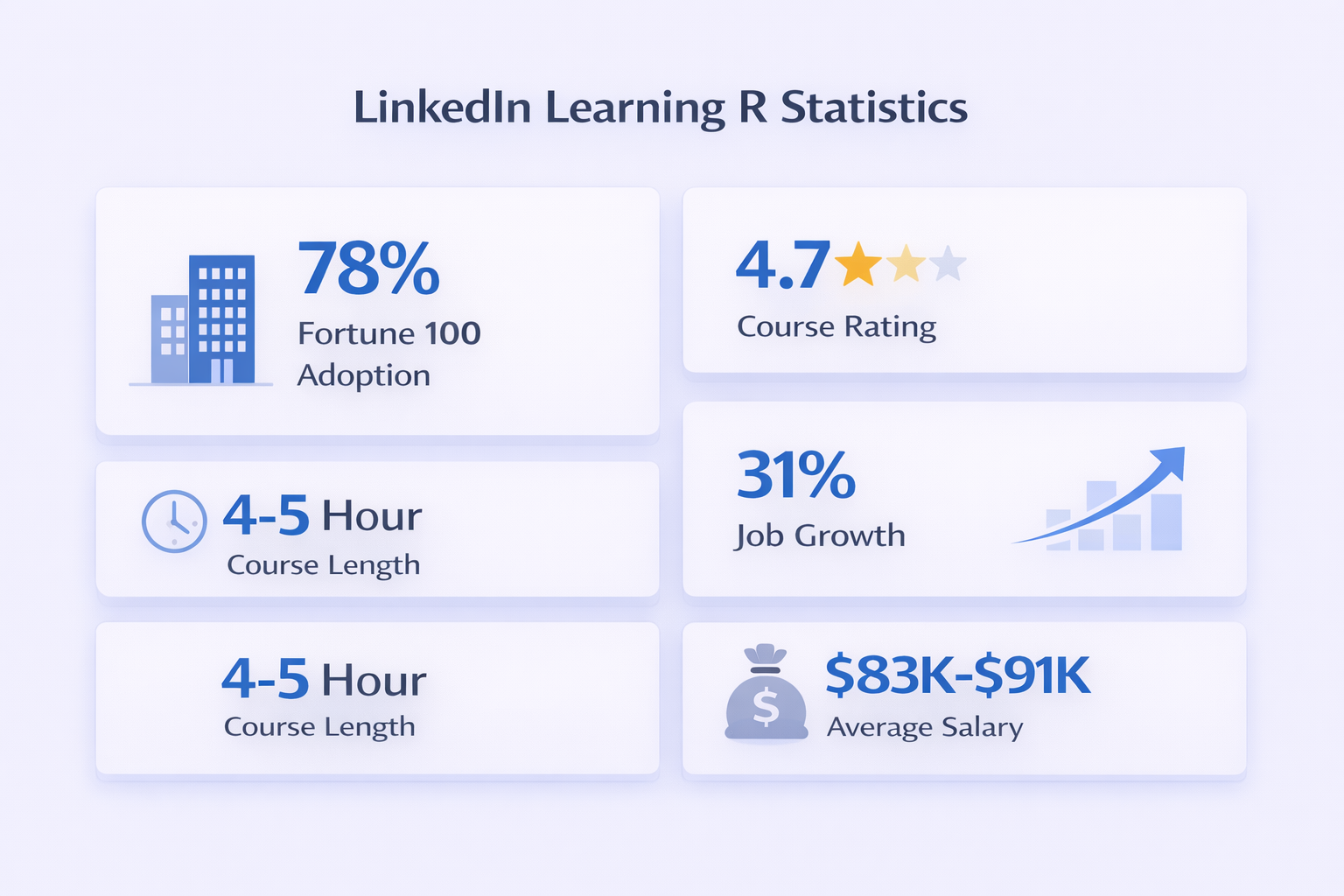
- 78% of Fortune 100 companies use LinkedIn Learning to upskill teams – R programming one of hottest skills driving adoption, making platform professional development standard integrating with LinkedIn profiles
- 65+ million decision-makers actively use LinkedIn – creating built-in networking opportunities as you learn, ensuring certifications get seen by recruiters and potential employers
- 31% projected growth in data analyst roles through 2030 – R programming listed as top-5 required skill, with professionals commanding $83,000-$91,000 average salaries significantly above spreadsheet-only roles
- Over 16,000 courses in LinkedIn Learning library – R programming consistently ranking in top 15 most-completed technical skills showing strong demand and engagement
- R Essential Training course takes 4-5 hours to complete – dramatically faster than 12-week university courses, with beginner-level designation requiring zero coding experience unlike competitors
- 60% higher completion rates compared to traditional MOOCs – due to modular structure with 5-10 minute modules allowing learning during lunch breaks without semester-long commitments
- R Essential Training maintains 4.7-star rating with over 452 reviews – proving consistent quality with instructor Barton Poulson vetted for credibility translating technical concepts into human-readable insights
- 84% of marketers report LinkedIn as primary professional development platform – ensuring certifications get visibility and profile-visible credentials signal verified skills to recruiters
- 41% longer employee retention when providing internal mobility through skills training – companies investing in R programming and data skills seeing significant improvements in workforce stability
- Profile-visible certifications increase recruiter outreach by average of 30% – LinkedIn integration creating compound value as data science skills boost profile visibility opening doors
- $29.99/month or $239.88/year cost (essentially 2 months free) – compared to single university course at $1,500+ making it no-brainer investment with mobile access for commute learning
- Full R mastery requires 30-40 hours over 2-3 months – structured learning path covering data wrangling, visualization with ggplot2, statistical foundations, and predictive modeling without math PhD
- Course curriculum covers Tidyverse dplyr as #1 skill employers test – creating publication-quality graphics with ggplot2, understanding distributions and hypothesis testing, building forecasting models that predict outcomes
- Android and iOS apps support offline downloads – allowing learning anywhere with mobile access, unlike DataCamp’s browser-only coding requiring actual R/RStudio installation for real environment
- Business-first approach focusing on real-world applications – teaching to clean sales data, visualize pipeline trends, automate reports instead of abstract mathematical proofs distinguishing from academic platforms
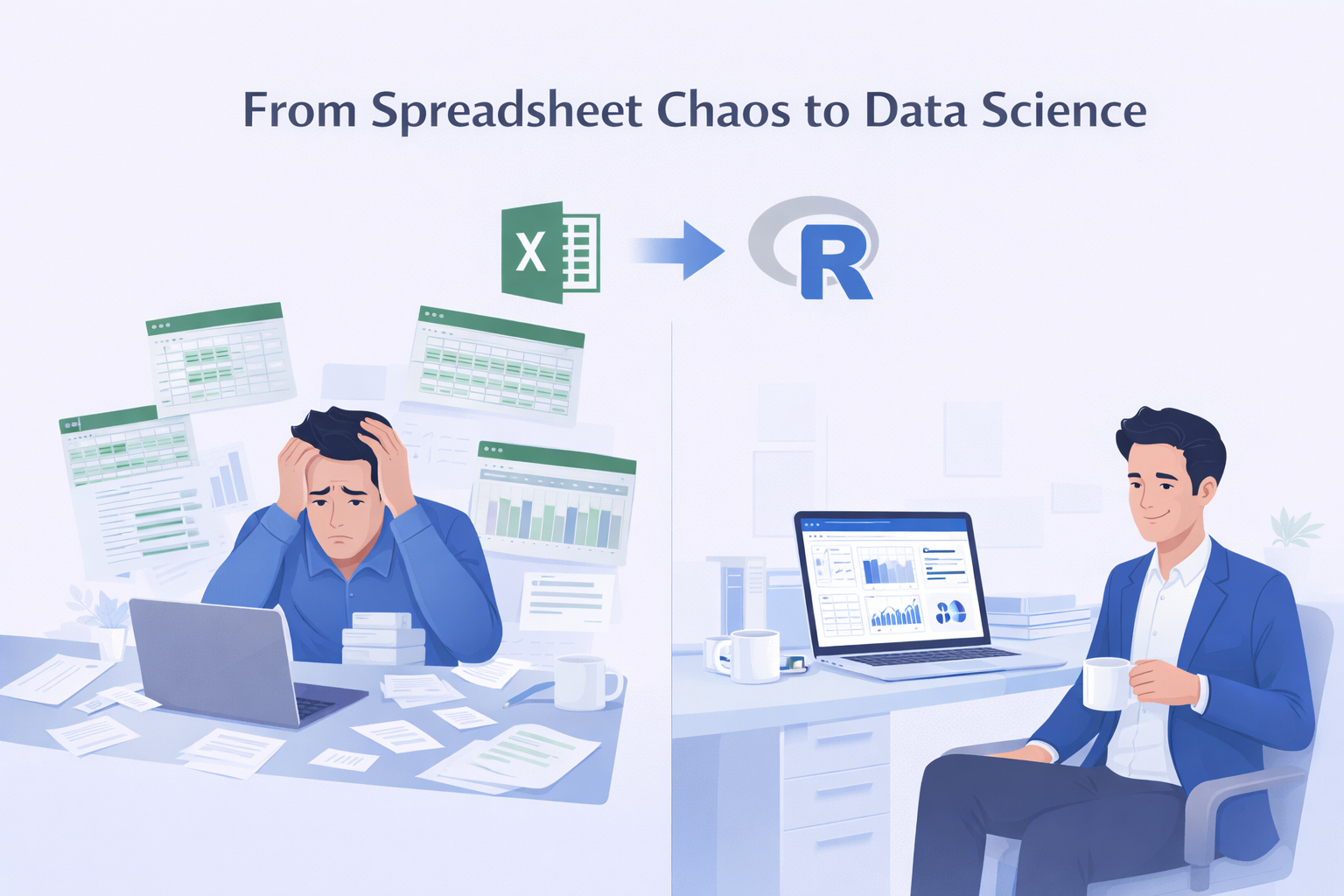
You’re drowning in spreadsheets, manually updating reports every Monday morning, and watching opportunities slip through your fingers because you can’t analyze data fast enough. Sound familiar?
Here’s the truth: 78% of Fortune 100 companies use LinkedIn Learning to upskill their teams, and R programming is one of the hottest skills driving that adoption. But most people waste months trying to learn R the hard way—jumping between YouTube tutorials and outdated documentation.
LinkedIn Learning changes that game completely. With bite-sized modules, business-focused content, and certificates that actually matter to employers, you can go from “Excel expert” to “data analysis pro” in weeks, not years. This guide breaks down exactly what makes LinkedIn Learning’s R statistics courses worth your time, what results you can expect, and whether it’s the right investment for your career.
Let’s cut through the noise and get you results.
Why LinkedIn Learning Dominates R Programming Education
LinkedIn Learning (formerly Lynda.com) isn’t just another online course platform—it’s the professional development standard that integrates directly with your LinkedIn growth hacking strategy. When you complete R statistics courses, they appear as verified certifications on your profile, signaling expertise to recruiters and potential clients.
The platform’s R curriculum centers on three core strengths:
Business-First Approach: Unlike academic platforms that teach theory without context, LinkedIn Learning’s R courses focus on real-world applications. You’ll learn to clean messy sales data, visualize pipeline trends, and automate reports—not abstract mathematical proofs.
Modular Learning Structure: Courses like “R Essential Training: Wrangling and Visualizing Data” break complex topics into 5-10 minute modules. This means you can learn during lunch breaks without committing to semester-long programs.
Instructor Credibility: LinkedIn vets every instructor. Barton Poulson, who teaches the flagship R Essential Training course, is a psychologist and data scientist—his approach translates technical concepts into human-readable insights. His course maintains a 4.7-star rating with over 452 reviews, proving consistent quality.
The platform’s integration with the LinkedIn ecosystem creates compound value. As you master data science techniques, your profile visibility increases, opening doors to advanced LinkedIn search opportunities that traditional resume platforms can’t match.
📊 Boost Your Outreach Game
Stop Manually Analyzing Data—Let LinkedIn Outbound Do the Work
LinkedIn Learning R Statistics: The Numbers That Matter
Let’s talk results. Here’s what the data reveals about LinkedIn Learning’s R statistics offerings and why they’re crushing the competition:
Platform Adoption & Growth:
- 65+ million decision-makers actively use LinkedIn, creating built-in networking opportunities as you learn
- 31% projected growth in data analyst roles through 2030, with R programming listed as a top-5 required skill
- Over 16,000 courses in the LinkedIn Learning library, with R programming consistently ranking in the top 15 most-completed technical skills
Course Performance Metrics:
- The “R Essential Training” course takes approximately 4-5 hours to complete—dramatically faster than 12-week university courses
- Beginner-level designation means zero coding experience required, unlike competitors that assume programming knowledge
- LinkedIn Learning reports 60% higher completion rates compared to traditional MOOCs because of the modular structure
Career Impact Statistics:
- Professionals with R programming skills command $83,000-$91,000 average salaries, significantly above roles requiring only spreadsheet proficiency
- 84% of marketers report LinkedIn as their primary professional development platform, ensuring your certifications get seen
- Companies report 41% longer employee retention when providing internal mobility through skills training like R programming
Course Curriculum Depth: LinkedIn Learning’s R statistics path covers:
- Data Wrangling with Tidyverse: Master dplyr to filter, transform, and aggregate data (the #1 skill employers actually test in interviews)
- Visualization with ggplot2: Create publication-quality graphics that make your insights impossible to ignore
- Statistical Foundations: Understand distributions, hypothesis testing, and regression analysis without needing a math PhD
- Predictive Modeling: Build forecasting models that predict outcomes instead of just reporting what already happened
The “Statistics Foundations” series (taught by Eddie Davila) complements R training perfectly, ensuring you understand why certain analyses matter, not just how to code them. This combination produces professionals who can write cold email campaigns backed by statistical validation—a game-changing skill for outbound strategies.
Is LinkedIn Learning Worth It? The Honest Breakdown
The platform costs $29.99/month or $239.88/year (essentially 2 months free). Compared to a single university course ($1,500+), it’s a no-brainer. But let’s look at actual ROI:
Where LinkedIn Learning Wins:
- Certificate Visibility: Your R programming certification appears directly on your LinkedIn profile, viewed by recruiters searching for small business ecommerce statistics experts and data-savvy professionals
- Mobile Access: Download courses through Android LinkedIn Learning app and learn during commutes
- Updated Content: Unlike textbooks from 2015, courses refresh regularly to cover new R packages and techniques
- No Installation Friction: Unlike DataCamp’s browser-only coding, you install actual R/RStudio and learn in the real environment
Honest Limitations:
- Less Interactive Than DataCamp: You won’t get browser-based coding challenges; you’ll write code in your own environment (which is actually better for real-world prep)
- Shorter Than University Courses: A 5-hour course can’t cover everything a semester-long class does—but it covers what you’ll actually use in 90% of scenarios
The Platform Comparison: LinkedIn Learning beats Coursera for working professionals because you’re not committing to 12-week programs. It beats Udemy because instructor quality is consistent and vetted. It beats YouTube because you get structured learning paths, not random tutorials.
For anyone considering Apollo.io alternatives or exploring data-driven outbound strategies, understanding R gives you the analytical foundation to validate which tools actually work.

🎯 Data-Driven Lead Generation
LinkedIn Outbound Delivers 15-25% Response Rates—No Coding Required
From Learning R to Leveraging It: Real-World Applications
Here’s where theory meets money. Learning R on LinkedIn Learning unlocks specific capabilities that directly impact your work:
Automated Reporting: Write a script once that pulls CRM data, cleans it, visualizes trends, and exports a PDF report. Next week? Click one button. This alone saves 5+ hours weekly.
Predictive Lead Scoring: Build logistic regression models that predict which prospects will convert based on historical data. Stop guessing which phone numbers from LinkedIn to prioritize—let the model tell you.
Territory Analysis: Use clustering algorithms to segment markets by opportunity density, not just geography. Discover that “Southwest Region” actually contains three distinct segments with different conversion patterns.
A/B Test Validation: Run statistical tests to determine if your new outreach template actually outperforms the control, or if it’s just random variation. This prevents wasted effort on changes that don’t move metrics.
The professionals winning in 2025 aren’t just access LinkedIn Learning courses—they’re applying R to solve business problems. That’s the difference between a certificate on your wall and a promotion in your bank account.
💡 Stop Guessing, Start Winning
Complete LinkedIn Outbound Strategy: Targeting + Campaigns + Scaling
Your Action Plan: Getting Started Today
Ready to stop drowning in spreadsheets? Here’s your 30-day roadmap:
Week 1: Sign up for LinkedIn Learning (free trial available) and complete “R Essential Training: Part 1” (focus on installation and basic syntax). Export one dataset from your current work and practice loading it into R.
Week 2: Finish “R Essential Training: Part 2” (data wrangling with dplyr). Recreate one of your current Excel reports using R code—even if it’s messier than Excel at first.
Week 3: Complete “Statistics Foundations 1” to understand the theory behind the code. Start a simple visualization project using ggplot2 with your work data.
Week 4: Build one automated report script. Document what it does. Share it with your team. Update your LinkedIn profile with your R certification and LinkedIn business statistics projects.
The goal isn’t perfection—it’s momentum. Every professional who now dominates data analysis started exactly where you are: frustrated with manual processes and ready for change.
🚀 Skip The Learning Curve
Get LinkedIn Outbound Working for You Today—Complete Strategy Included
7-day Free Trial |No Credit Card Needed.
Conclusion
LinkedIn Learning’s R statistics courses represent the most efficient path from spreadsheet dependency to data science capability. With 78% of Fortune 100 companies investing in the platform, 4.7-star average ratings on flagship courses, and 31% job growth in data-related roles, the ROI is undeniable.
The platform’s business-focused curriculum, modular structure, and profile-integrated certifications create advantages that academic MOOCs and tutorial videos can’t match. Whether you’re looking to automate reports, build predictive models, or position yourself for higher-paying roles, LinkedIn Learning provides the structured path to get there.
Stop letting data overwhelm you. Start letting it empower you.
FAQs
Is LinkedIn Learning R worth it for career growth?
How long does it take to learn R on LinkedIn Learning?
Is LinkedIn Learning down right now?
Does LinkedIn Learning R certification matter to employers?
Can I access LinkedIn Learning courses on mobile?
- blog
- Statistics
- Learning R Statistics: Complete Guide 2026