
- blog
- Sales Development
- LinkedIn Message to Hiring Manager: Get Noticed Fast
The High-Conversion LinkedIn Message to a Hiring Manager: Your Guide to Bypassing the ATS
Table of Contents
Hey there. If you’re actively job hunting, you already know that waiting for applications to magically turn into interviews is basically playing the lottery. You submit your resume through an Applicant Tracking System (ATS), and then… nothing. Radio silence.
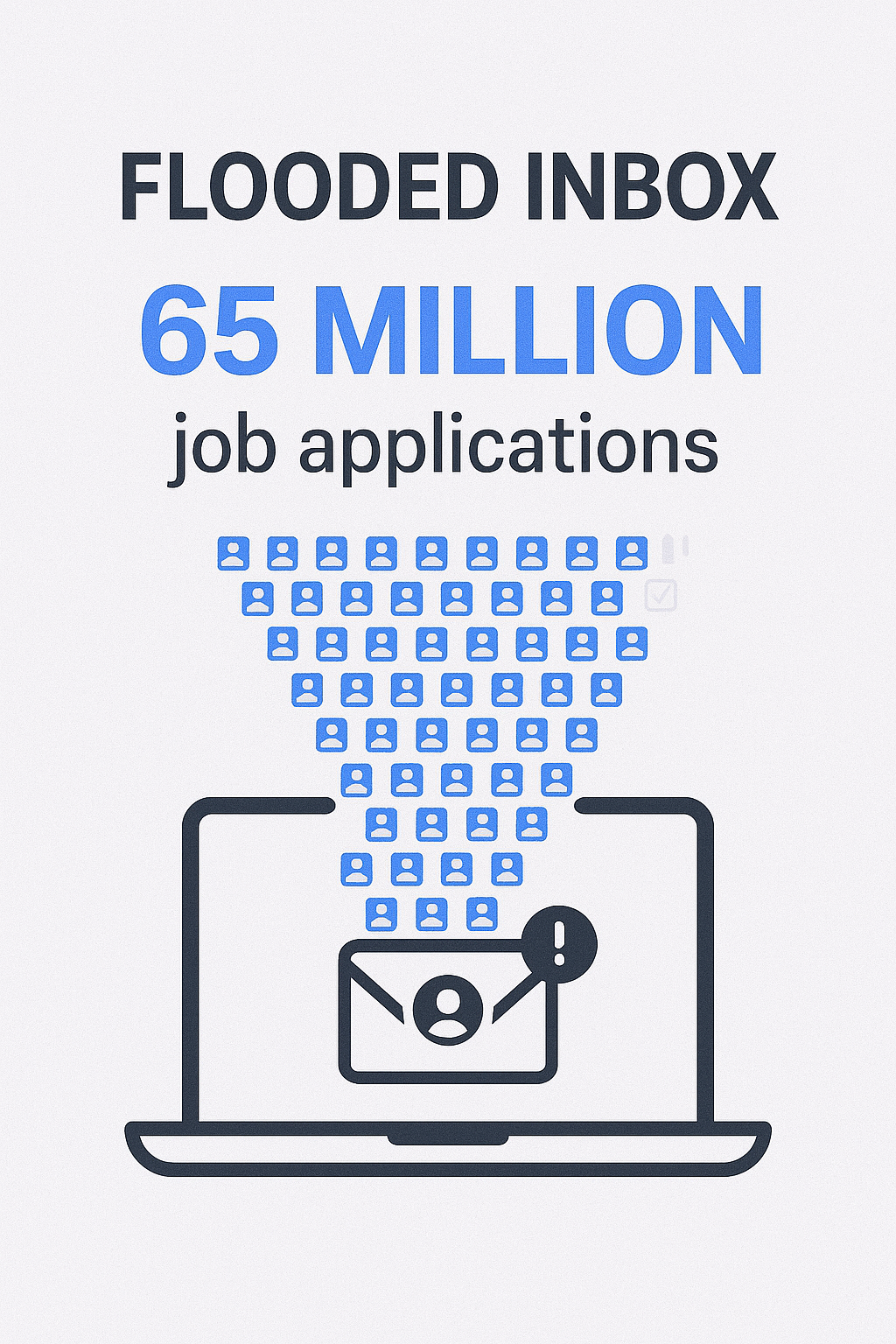
Here’s the reality: 65 million users search for jobs on LinkedIn every week. Your application is drowning in an ocean of identical submissions. The traditional application process isn’t broken—it’s just fundamentally inefficient for you as a candidate.
Â

Â
This guide shows you how to send a LinkedIn message to a hiring manager that cuts through the noise, lands directly in front of the decision-maker, and actually converts into interviews.
Why Sending a Message to a Hiring Manager Matters
Think about your application process like this: submitting through the ATS is the compliance step. Messaging the hiring manager directly? That’s the actual prospecting step that moves your job search forward.
Bypassing the ATS: Your Strategic Advantage
When you rely solely on the ATS, you’re hoping a system matches keywords. When you message the decision-maker directly, you’re making a tailored pitch designed to stand out. The ATS is a funnel designed to filter people out. Your LinkedIn message is your chance to jump the queue entirely.
Here’s what most people don’t realize: the hiring manager has way more skin in the game than any HR representative. A poor hiring decision impacts their team’s daily performance, budget, deadlines, and operational efficiency. They’re motivated by solving business problems, not just checking boxes on a requirements list.
When you message them directly, they view your application through the lens of problem-solving capacity—not just keyword alignment. They’re the final decision-maker who determines the hire, while HR primarily acts as gatekeepers managing the process.
LinkedIn: Your Highest-Response Channel
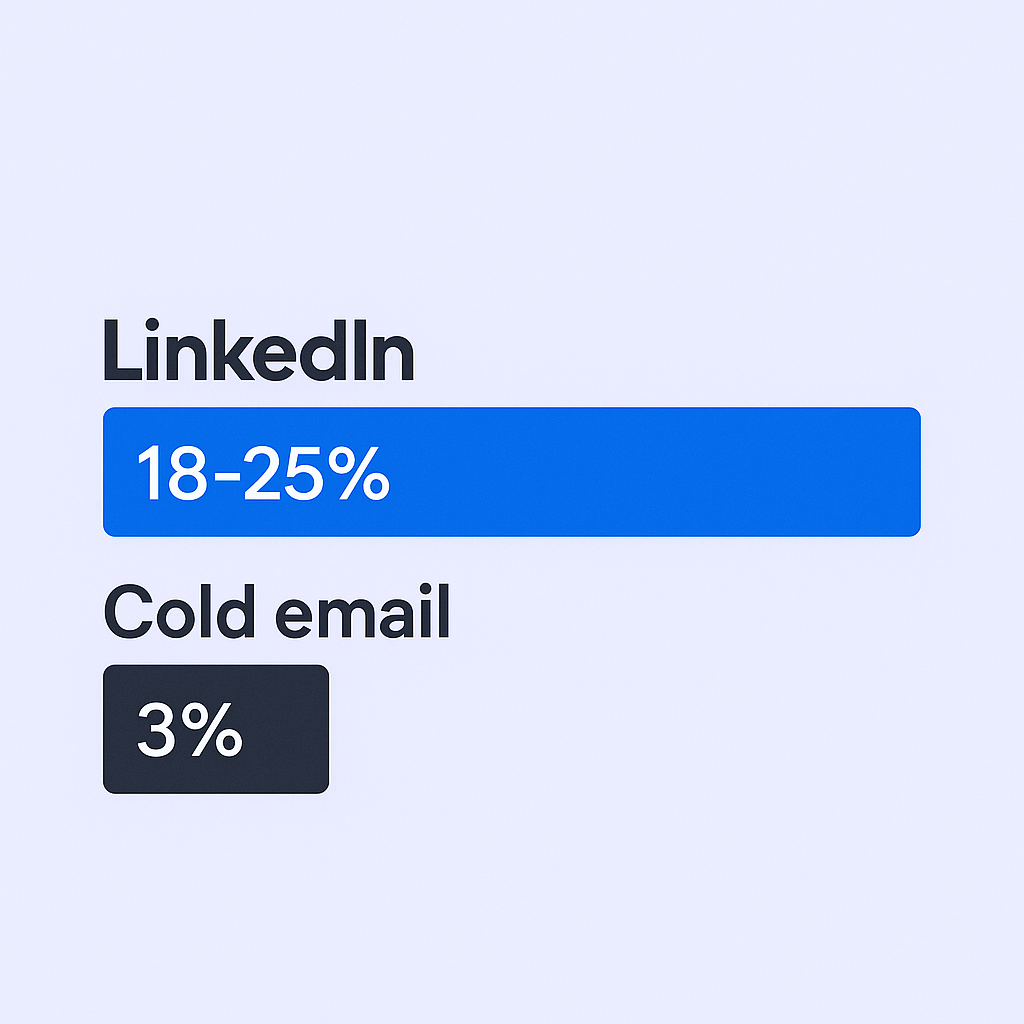
The numbers don’t lie. LinkedIn InMails receive an 18-25% response rate compared to just 3% for cold emails. That’s not a small difference—that’s a massive multiplier on your chances of getting noticed.
Â

Already Mastering LinkedIn Outreach?
Apply these same proven response rates to B2B lead generation with strategic targeting, campaigns, and scaling
Plus, 77% of recruiters actively use LinkedIn to find candidates. This confirms that decision-makers expect professional career communication on this platform. You’re not interrupting them—you’re meeting them where they already are.
How to Write a Message to a Hiring Manager
The secret? Radical brevity combined with deep personalization. You need to respect the fact that busy executives make decisions in seconds, not minutes.
Research and Personalization: The 2-Detail Rule
Generic outreach wastes the incredible response rate opportunity LinkedIn offers. Your message must be tailored to demonstrate genuine interest and effort. Personalizing your message with 2 specific profile details results in 15% higher engagement.
Â

Â
Don’t just reference the job description everyone else is reading. Find details about:
- Recent company achievements or news
- A specific post or article the hiring manager shared
- Mutual connections or shared background
- Their career trajectory or recent role changes
Mentioning these details in your opening line immediately establishes credibility. It shows you’re interested in their company’s success, not just any paycheck.
The 3-Sentence Rule: Forcing Clarity
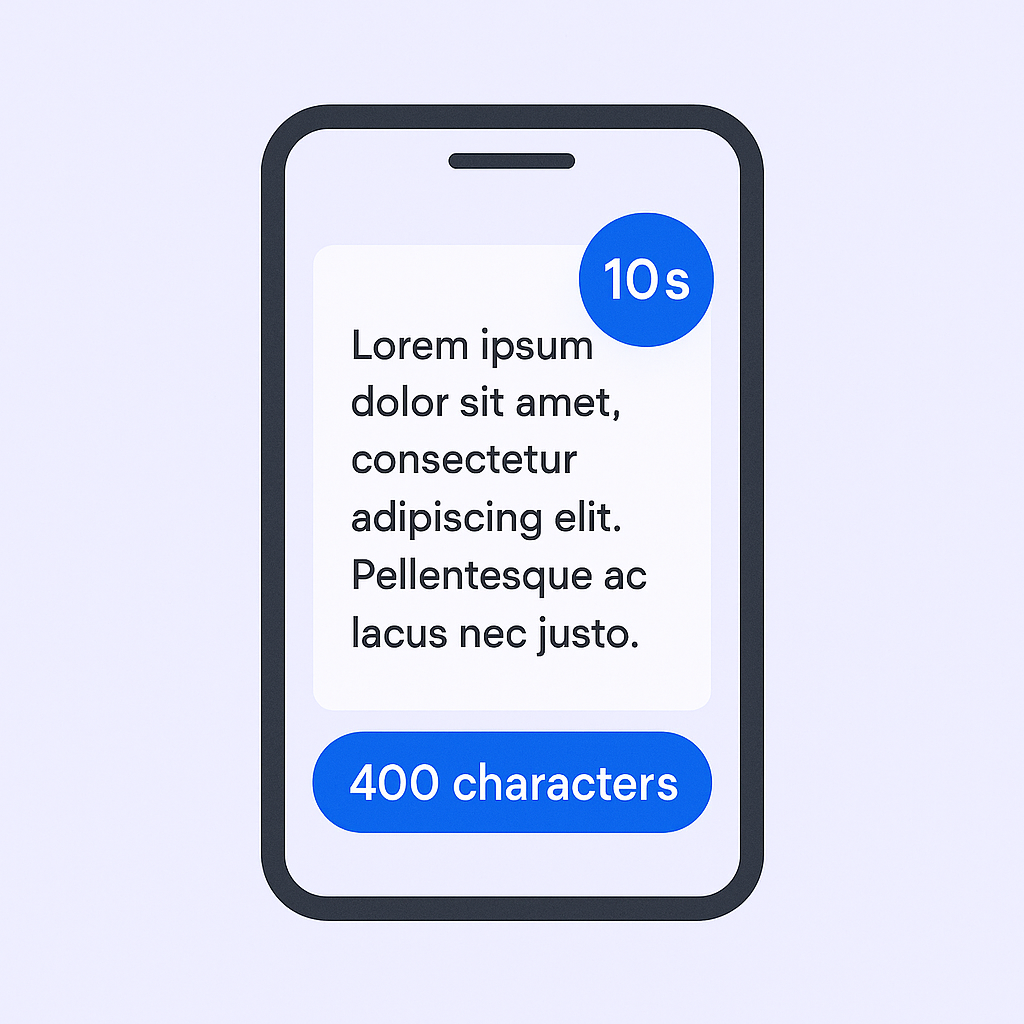
Hiring managers are busy. Your message needs to be read and understood in under 10 seconds. Messages kept under 400 characters (roughly 60 words) see a 22% increase in replies.
This constraint forces you to distill your value down to its absolute essence. Here’s the three-part formula that works:
The Hook (1 sentence): Connection/personalization + role reference
Example: “I saw your team’s Q2 results and immediately recognized the need for someone who can capitalize on that momentum.”
The Value Prop (1-2 sentences): A single, quantified achievement relevant to the role
Example: “In my current role, I closed $600K in new business in a competitive market, exceeding my targets by 120%.”
The Low-Friction CTA (1 sentence): A clear, easy request
Example: “I’d appreciate the opportunity to connect here.”
Leading with Quantifiable Value
Your value as a professional is measured in results, not responsibilities. Recruiters consistently prefer applicants who include quantifiable achievements.
Never list duties. Focus on outcomes. Instead of “Responsible for lead generation,” say “Generated $1M in qualified pipeline in 2023, reducing average cycle length by 10%.”
This approach demonstrates you understand the key performance indicators (KPIs) before you even step into the interview room. You’re pre-qualifying yourself as someone who speaks the language of business impact.

💼 Use LinkedIn Outreach For Sales
Turn job-search messaging skills into consistent B2B meetings through precise targeting and systematic campaign execution
If you’re serious about professional outreach at scale, consider using verified email tools to ensure your follow-up communication reaches the right inboxes after your LinkedIn connection is established.
Tips for Writing an Effective Message to a Hiring Manager
Getting the fundamentals right is just the start. Timing, tone, and structure matter just as much as content.
Optimal Timing and Sequence
Data shows the best day to send your initial outreach is Monday. This ensures your message is among the first things the manager sees when starting their work week.
If you’ve already submitted the official application, wait 1 to 3 weeks before sending your LinkedIn message. This timing positions you as a strategic follow-up rather than just another notification in an already-flooded inbox.
The afternoon tends to be better than morning for getting attention, as the later half of the workday can be slower and managers have more mental space for unexpected but valuable communication.
The Low-Friction Call to Action
Here’s a golden rule borrowed from effective outreach: Do Not Beg. Your message must never “beg for an interview” or ask about hiring timelines. This conveys desperation, which kills your chances.
Your initial call to action should be low-friction: simply ask to connect or follow their work. Once they accept, you’ve established a direct communication line—that’s the “foot in the door” that makes you memorable.
Always maintain a professional but friendly and positive tone. Confidence and enthusiasm leave lasting impressions far more than desperation ever could.
The 3 Worst Mistakes to Avoid
Generic Messages: Never send identical messages to multiple targets. Personalization is mandatory when LinkedIn’s algorithm and hiring managers can both spot copy-paste outreach instantly.
Long-Winded Text: Never send paragraphs where you only talk about yourself. Stick to the 3-sentence, 400-character rule. Respecting the hiring manager’s time is non-negotiable.
Demanding Language: Avoid sounding rude, harsh, or entitled. This results in immediate disengagement and potentially getting your profile flagged.
Message to Hiring Manager Examples
These templates give you the structure, but you must customize them with your specific achievements and research.
Template A: Cold Outreach (Strategic Networking)
Scenario: Reaching out when a specific job isn’t posted, or before you officially apply.
Subject Line: Insight on [Company Name]’s Expansion
Hi [Hiring Manager’s Name],
I came across your recent post discussing [Company Name]’s growth targets for the enterprise segment—I’m deeply impressed by the trajectory. As someone who consistently maintains 120% quota attainment, I have specialized in building pipelines in that exact segment. I’d love to connect and keep up with the great work your team is doing.
Best,
[Your Name]
Template B: Post-Application Follow-Up
Scenario: Following up 1-3 weeks after submitting your official application.
Subject Line: Following Up: Application for [Role Title]
Dear [Hiring Manager’s Name],
I recently submitted my application for the [Role Title] and was excited to see the emphasis on strategic account growth. I wanted to quickly mention that in my current role, I drove a 20% improvement in customer retention and successfully managed a book of business worth $750K ARR. I’m very enthusiastic about this opportunity. Please let me know if I can provide any additional information.
Thank you for your time,
[Your Name]
Template C: High-Impact Quantification
Scenario: Highlighting immediate metrics-based alignment.
Subject Line: Aligned on Pipeline Velocity for [Role Title]
Hi [Hiring Manager’s Name],
I saw the posting for the [Role Title] and noted the need for strong prospecting skills. I currently exceed my cold outreach metrics, generating an average of 40 qualified leads per month and consistently delivering 30% over my pipeline target in the last year. I believe my methodology aligns perfectly with what this role requires. Happy to connect here and potentially discuss my background in [specific methodology].
Best,
[Your Name]
For those looking to diversify their outreach strategy, combining LinkedIn messages with cold email campaigns can significantly increase your overall response rate and interview conversion.
🚀 LinkedIn Messaging Works For B2B Too
Get 15-25% response rates on outbound sales campaigns using our complete strategy: targeting, messaging, and systematic scaling
How to Reach Out to a Recruiter on LinkedIn
While the hiring manager is the ultimate decision-maker, recruiters serve a strategic role in your job search ecosystem. If the hiring manager is unreachable, or you’re networking proactively for roles not yet posted, the recruiter becomes your target.
The Strategic Distinction: Recruiter vs. Hiring Manager
The general consensus is clear: always attempt to connect with the hiring manager directly if possible. Recruiters focus on pipeline management and matching high-level skills across the organization. They’re critical for market insight and recommendations, but they don’t make final hiring decisions.
The Recruiter Outreach Formula
Messaging a recruiter is about building a relationship for long-term career support. Remember that 85% of jobs are filled through networking.
Follow this structure:
Acknowledge their Specialization: Reference their expertise in your industry
Example: “I know you recruit top-tier professionals in the SaaS space…”
Define Your Target: State clearly and concisely the type of role you’re seeking
Offer a Relationship: Ask to connect and stay in touch, even if there are no immediate openings
Once a recruiter accepts your connection request, a tactical follow-up can include attaching your resume. This makes their job easier and positions you as a streamlined candidate for future roles.
📊 Scale Your LinkedIn Outreach Strategy
Transform these messaging principles into predictable B2B pipeline with expert targeting, campaign design, and proven scaling methods
7-day Free Trial |No Credit Card Needed.
Conclusion
Your job search demands the same proactive approach you’d bring to any professional challenge. Stop passively submitting applications and waiting for validation from automated systems.
Your LinkedIn message is your high-conversion tool. Focus relentlessly on brevity (under 400 characters), personalization (2 key details), and quantified results. By following this strategy, you ensure hiring managers see you not as just another applicant, but as a proven professional ready to solve their most pressing problems.
Target the hiring manager first, follow the 3-sentence rule, and send it on Monday to maximize your visibility. The difference between a generic application and a strategic message could be the difference between another rejection email and your next career opportunity.
FAQs
What is the ideal length for a message to a hiring manager?
When is the best time to send the message?
Is it always better to contact the hiring manager over a recruiter?
Should I include my resume in the initial message?
How many people should I message for each job application?
Turn LinkedIn Skills Into Pipeline
Use these same high-response tactics for B2B outreach with our complete targeting, campaign, and scaling system
Segmentation That Actually Converts
LinkedIn outbound targets precise demographics with strategic campaign design and scaling methods