
🎉Find Prospects and Send Cold Emails & LinkedIn Outbound | All in One Place

LinkedIn Network Statistics: Your Complete Guide to Winning on the Platform in 2026

Table of Contents

LinkedIn Network Statistics

LinkedIn has 1.2 billion members across 200+ countries, growing by 3 new members every second – massive global reach with sustained momentum in professional networking

80% of people on LinkedIn drive business decisions – unlike entertainment platforms, LinkedIn users have professional intent for researching, networking, hiring, and buying

Over 50% of LinkedIn users are outside North America – geographic distribution shows United States (250M+), India (150M+), Europe (314M), Asia-Pacific (343M)

40 million decision-makers and 61 million senior-level influencers active on platform – these are people who can approve pitches, green-light projects, and sign contracts

LinkedIn audience has 2x the buying power of average web audience – making it ideal platform for high-value B2B conversations and enterprise sales

97% of B2B marketers use LinkedIn for content marketing – not a trend but common sense given concentration of decision-makers with budget authority

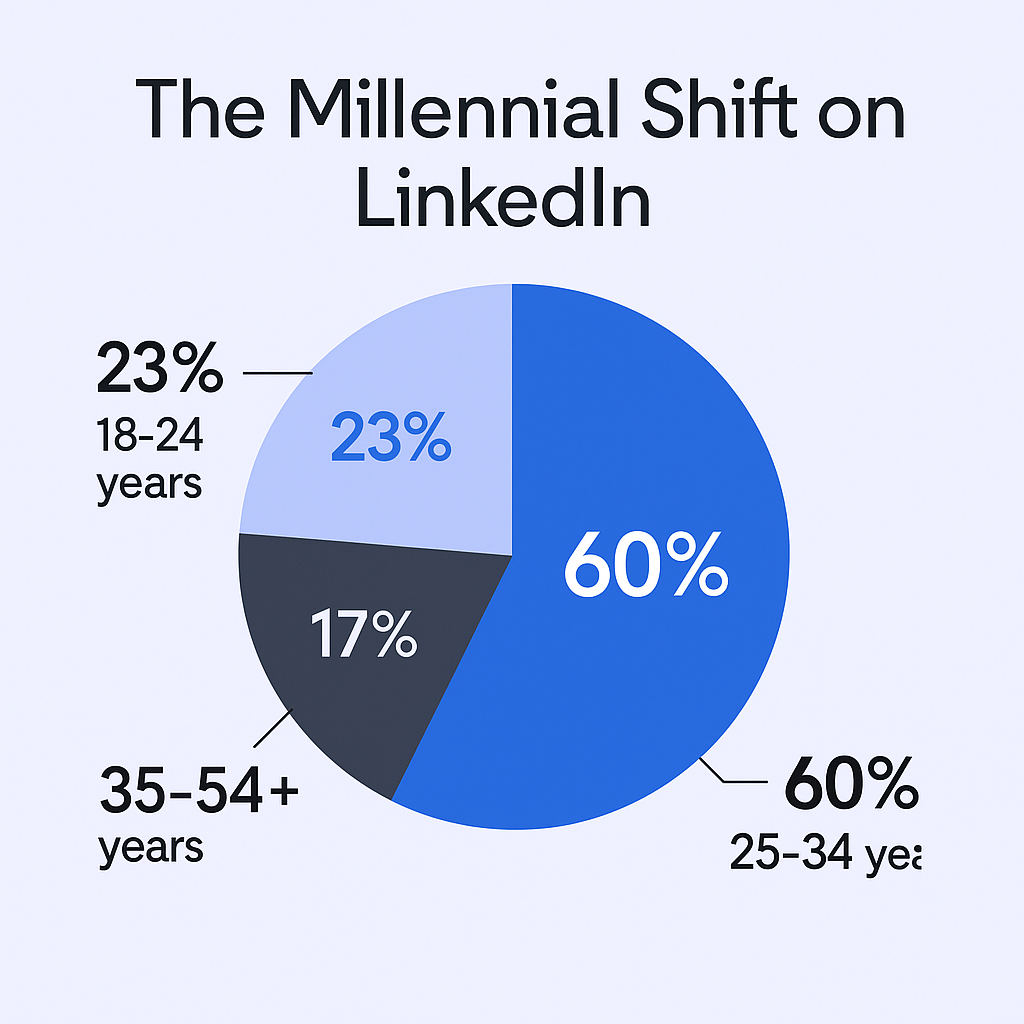
25-34 years old represents nearly 60% of users – millennial-dominated demographic means formal corporate-speak doesn’t resonate; requires authentic, direct communication

44% of LinkedIn users earn more than $75,000 annually, 54% earn over $100,000 in US – educated, high-earning professionals with authority and budget to make things happen

Only 16.2% are daily active users (134.5 million), with average 17 minutes per month spent – narrow attention window requiring immediate hooks in posts, connection requests, and profiles

Only 1% of LinkedIn users post content weekly, yet that 1% generates 9 billion impressions per week – massive opportunity to separate from 99% of silent observers simply by posting consistently

57-70% of LinkedIn traffic comes from mobile devices – requiring short paragraphs, bullet points, visual content, and mobile-optimized profiles for majority audience

Sales professionals with high SSI scores create 45% more opportunities and are 51% more likely to hit quota – Social Selling Index directly impacts career outcomes and revenue performance

78% of social sellers outsell peers who don’t use social media, high SSI scorers promoted 17 months faster – career-defining advantages from effective LinkedIn leverage

Approximately 100 connection requests per week limit for standard users – scarcity requires thoughtful, targeted, personalized outreach over spray-and-pray tactics

Multi-channel campaigns combining email + LinkedIn improve results by up to 287% – integrated approach dramatically outperforms single-channel outreach strategies

Let’s be honest—LinkedIn isn’t what it used to be. It’s no longer just a place to park your resume and hope for the best. In 2025, LinkedIn has become the most powerful professional networking platform on the planet, with over 1.2 billion members worldwide. But here’s the thing: most people aren’t using it right.

Whether you’re looking to build meaningful connections, find your next career opportunity, or grow your business, understanding LinkedIn network statistics isn’t just helpful—it’s essential. The platform has evolved, and so should your strategy.

In this guide, we’re breaking down the most important LinkedIn network statistics you actually need to know. No fluff, no jargon—just actionable insights that’ll help you make better decisions about how you show up on the platform.

Why LinkedIn Network Statistics Matter

Think about it this way: would you launch a marketing campaign without knowing your audience? Would you start a business without understanding the market? Of course not.

The same logic applies to LinkedIn. Understanding how people use the platform, who they are, and what drives engagement is the difference between wasting your time and actually building a network that opens doors.

LinkedIn network statistics reveal patterns in user behavior, show you where the opportunities are, and help you avoid common mistakes that keep most profiles invisible. They’re your roadmap to standing out in a sea of 1.2 billion users.

The Scale of LinkedIn’s Network in 2025

Let’s start with the big picture. LinkedIn’s growth hasn’t just been steady—it’s been explosive.

Global Reach and User Base

LinkedIn now has 1.2 billion members spread across more than 200 countries and territories. To put that in perspective, roughly 3 new members join every second. That’s not just growth—that’s momentum.


But here’s what really matters: 80% of people on LinkedIn drive business decisions. Unlike other social platforms where people scroll for entertainment, LinkedIn users are there with professional intent. They’re researching, networking, hiring, and buying.

Geographic Distribution

LinkedIn’s reach isn’t evenly distributed, and knowing where users are concentrated can inform your networking strategy:

  • United States: 250+ million users (the largest single market)
  • India: 150+ million users (fastest-growing major market)
  • Europe: 314 million users (massive opportunity, but requires localized approach)
  • Asia-Pacific: 343 million users (now exceeding Europe in total volume)
  • Brazil: 81 million users (dominant in Latin America)

If you’re only focusing on your local market, you’re missing the bigger picture. Over 50% of LinkedIn users are outside North America.

Company and Institution Presence

LinkedIn hosts over 69 million company profiles and 140,000 educational institutions. This creates a powerful ecosystem for:

  • Researching potential employers or clients
  • Finding alumni connections (one of the highest-converting “warm” introduction methods)
  • Identifying decision-makers within target organizations
  • Building account-based marketing strategies

LinkedIn Audience Demographics: Who’s Actually Using the Platform

Understanding who uses LinkedIn helps you tailor your approach. Here’s the breakdown that matters.

The Decision-Maker Advantage

This is LinkedIn’s secret weapon: 40 million decision-makers and 61 million senior-level influencers are active on the platform. These aren’t just users—they’re the people who can say “yes” to your pitch, approve your hire, or green-light your project.

Even more compelling: LinkedIn’s audience has 2x the buying power of the average web audience. Translation? If you’re selling something—whether that’s a product, service, or yourself—this is where the money is.

That’s why 97% of B2B marketers use LinkedIn for content marketing. It’s not a trend—it’s common sense.

Age Distribution: The Millennial Shift

Forget the stereotype that LinkedIn is full of older executives. The data tells a different story:

  • 25-34 years old: Nearly 60% of users (the dominant demographic)
  • 18-24 years old: Approximately 20-29% of users (fastest-growing segment)
  • 35-54+ years old: Around 20-22% of users (still holding many C-level positions)

What does this mean for you? The people making buying decisions and hiring choices are younger than you think. Formal, corporate-speak doesn’t resonate with a generation that grew up on social media. Your LinkedIn presence needs to be professional, yes—but also authentic, direct, and human.


But here’s what really matters: 80% of people on LinkedIn drive business decisions. Unlike other social platforms where people scroll for entertainment, LinkedIn users are there with professional intent. They’re researching, networking, hiring, and buying.

Geographic Distribution

LinkedIn’s reach isn’t evenly distributed, and knowing where users are concentrated can inform your networking strategy:

  • United States: 250+ million users (the largest single market)
  • India: 150+ million users (fastest-growing major market)
  • Europe: 314 million users (massive opportunity, but requires localized approach)
  • Asia-Pacific: 343 million users (now exceeding Europe in total volume)
  • Brazil: 81 million users (dominant in Latin America)

If you’re only focusing on your local market, you’re missing the bigger picture. Over 50% of LinkedIn users are outside North America.

Company and Institution Presence

LinkedIn hosts over 69 million company profiles and 140,000 educational institutions. This creates a powerful ecosystem for:

  • Researching potential employers or clients
  • Finding alumni connections (one of the highest-converting “warm” introduction methods)
  • Identifying decision-makers within target organizations
  • Building account-based marketing strategies

LinkedIn Audience Demographics: Who’s Actually Using the Platform

Understanding who uses LinkedIn helps you tailor your approach. Here’s the breakdown that matters.

The Decision-Maker Advantage

This is LinkedIn’s secret weapon: 40 million decision-makers and 61 million senior-level influencers are active on the platform. These aren’t just users—they’re the people who can say “yes” to your pitch, approve your hire, or green-light your project.

Even more compelling: LinkedIn’s audience has 2x the buying power of the average web audience. Translation? If you’re selling something—whether that’s a product, service, or yourself—this is where the money is.

That’s why 97% of B2B marketers use LinkedIn for content marketing. It’s not a trend—it’s common sense.

Age Distribution: The Millennial Shift

Forget the stereotype that LinkedIn is full of older executives. The data tells a different story:

  • 25-34 years old: Nearly 60% of users (the dominant demographic)
  • 18-24 years old: Approximately 20-29% of users (fastest-growing segment)
  • 35-54+ years old: Around 20-22% of users (still holding many C-level positions)

What does this mean for you? The people making buying decisions and hiring choices are younger than you think. Formal, corporate-speak doesn’t resonate with a generation that grew up on social media. Your LinkedIn presence needs to be professional, yes—but also authentic, direct, and human.


Let that sink in. In a network of 1.2 billion people, 99% are silent observers. Yet that tiny 1% of creators generates 9 billion impressions per week.

This is the single biggest opportunity on LinkedIn right now. By simply posting consistently—even just once a week—you immediately separate yourself from 99% of users. You become visible. You build credibility. You establish yourself as someone worth connecting with.

📊 Beyond Content: Direct Outbound Works

While 99% stay silent, our targeting system reaches decision-makers who actually respond

Mobile vs. Desktop Usage

Nearly 57-70% of LinkedIn traffic comes from mobile devices. This has massive implications for how you create content:

  • Large blocks of text look exhausting on a phone screen
  • Short paragraphs and bullet points improve readability
  • Visual content (images, videos, documents) performs better
  • Your profile needs to look good on a 6-inch screen

If you’re only optimizing for desktop, you’re ignoring the majority of your audience.

Understanding the LinkedIn Selling Score (SSI)

If you’re using LinkedIn for professional growth—whether that’s job hunting, business development, or personal branding—your Social Selling Index (SSI) is the metric that matters most.

What Is the Social Selling Index?

LinkedIn assigns every user a score from 0 to 100 based on four key factors:

  1. Professional Brand: Profile completeness, content publishing, follower growth
  2. Finding the Right People: Effective use of search tools and targeting
  3. Engaging with Insights: Sharing content, commenting, group participation
  4. Building Relationships: Connection acceptance rates, engagement with decision-makers

Think of your SSI as your LinkedIn credit score. It’s a numerical representation of how well you’re leveraging the platform.

Why Your SSI Score Matters

The data on SSI is compelling:

  • Sales professionals with higher SSI scores create 45% more opportunities
  • They’re 51% more likely to hit their quota
  • 78% of social sellers outsell peers who don’t use social media effectively
  • High SSI scorers get promoted 17 months faster

These aren’t small differences—they’re career-defining advantages.

What’s a “Good” SSI Score?

Here’s where you should aim:

  • Below 40: You’re underutilizing the platform
  • 40-70: Average range (most users land here)
  • 70+: Strong social seller (you’re in the top tier)
  • 75+: Thought leader status (algorithm starts favoring your content)

Checking your SSI regularly helps you understand if your LinkedIn strategy is working or if you need to make adjustments.

LinkedIn Network Growth and Connection Dynamics

Building your network on LinkedIn isn’t just about hitting that “Connect” button as many times as possible. There are limits, strategies, and best practices you need to understand.

Connection Request Limits

In 2025, LinkedIn has clamped down on spam and low-quality outreach. Here’s what you need to know:

  • Standard limit: Approximately 100 connection requests per week
  • Sales Navigator: Some users report slightly higher limits (150-200), but this varies
  • Over-limit consequences: Account restrictions or temporary suspensions

This scarcity changes the game. You can’t spray and pray anymore. Every connection request needs to be thoughtful, targeted, and personalized.

Average Network Size

The typical LinkedIn user has around 1,300 connections. But here’s the truth: size isn’t everything. A network of 500 highly relevant connections is far more valuable than 5,000 random contacts.

Focus on quality connections:

  • People in your industry
  • Potential clients or partners
  • Alumni from your school
  • Former colleagues
  • Thought leaders whose content you respect

Profile Optimization Impact

Want a simple way to 40x your opportunities? Complete your profile.

Fully optimized profiles (with a professional photo, compelling headline, detailed experience, and custom URL) are 40 times more likely to receive opportunities than incomplete profiles.

Think of your profile as your digital storefront. Would you shop at a store with broken windows and missing signs? Neither will potential connections.

LinkedIn Groups: Are They Still Relevant?

LinkedIn groups have changed. They’re not the networking goldmines they once were, but they still have value if you use them correctly.

Current State of LinkedIn Groups

Here’s the reality: many groups have become spam-filled promotional wastelands. Direct lead generation through groups has declined significantly.

However, groups remain valuable for:

  • Social listening: Understanding pain points and language your target audience uses
  • Brand building: Engaging thoughtfully in discussions positions you as helpful, not salesy
  • Boosting your SSI: Active group participation improves your “Engaging with Insights” score
  • Finding niche communities: Specialized industry groups still foster meaningful conversations

Strategy tip: Don’t join groups to pitch. Join to learn, contribute, and build relationships. The business opportunities will follow naturally.

LinkedIn Statistics for Job Seekers

LinkedIn’s original purpose was connecting job seekers with opportunities. That function is still core to the platform’s value—and the numbers prove it.

Hiring Velocity and Job Search Activity

  • 7 people are hired every minute on LinkedIn
  • 65 million people search for jobs on the platform weekly
  • 49 million people use LinkedIn to search for jobs each week

Why This Matters Beyond Job Hunting

Even if you’re not actively job hunting, these statistics are relevant. Here’s why:

Budget signal: When a company is hiring, they have budget. This is the perfect time to reach out about your services or products.

Decision-maker changes: New hires (especially at the director level and above) often evaluate existing vendors and tools in their first 90 days. This creates a window of opportunity for sales conversations.

Pro tip: Set up LinkedIn alerts for job changes in your target accounts. When someone new steps into a role, congratulate them—then offer to help them get up to speed.

LinkedIn vs. Cold Email: The Data-Driven Comparison

If you’re in sales, business development, or lead generation, you’ve probably wondered: should I focus on LinkedIn outreach or cold email?

The answer isn’t either/or—it’s both. Here’s why.

Performance Comparison

Metric

Cold Email

LinkedIn Outreach

Response Rate

2-8%

10-30%

Volume Capacity

High (50-200+ per day per inbox)

Low (capped at ~100 per week)

Cost Per Contact

$0.01-$0.05

Moderate (time-intensive or InMail credits)

Deliverability Risk

Moderate (spam filters, DNS issues)

Low (direct to inbox)

Personalization Scale

AI-driven automation

Manual research required

The Multi-Channel Advantage

Research shows that campaigns combining both email and LinkedIn touchpoints see results improve by up to 287%.

💼 We Build Your Multi-Channel Engine

Complete LinkedIn outbound strategy: precise targeting, proven campaigns, systematic scaling methods

Here’s a simple cadence that works:

Day 1: View their LinkedIn profile (soft touch to appear in their notifications)
Day 1: Send connection request (no pitch—just a brief, friendly note)
Day 2: Send cold email with your value proposition
Day 4: LinkedIn message following up on the email
Day 7: Second email touchpoint
Day 10: LinkedIn engagement (comment on their post or share their content)

This approach uses LinkedIn to build familiarity and trust while using email for scalable outreach. The combination is more powerful than either channel alone.

When to Use Each Channel

Use LinkedIn when:

  • Targeting specific high-value accounts (account-based marketing)
  • Building long-term relationships with decision-makers
  • Establishing yourself as a thought leader in your space
  • Your message benefits from social proof (mutual connections, shared groups)

Use cold email when:

  • You need to reach hundreds or thousands of prospects
  • Your offer has broad appeal and doesn’t require extensive personalization
  • You’re in early-stage prospecting (top-of-funnel activity)
  • You need consistent, predictable volume

Use both when:

  • You’re serious about results
  • You want to maximize response rates
  • You’re targeting mid-market or enterprise accounts
  • You have the resources to execute a multi-touch sequence

How to Apply These LinkedIn Network Statistics

Data is only valuable if you do something with it. Here’s how to translate these LinkedIn network statistics into action.

Audit Your Current Approach

Start with an honest assessment:

  • What’s your current SSI score? (Check it on LinkedIn)
  • When was the last time you posted content?
  • How many connection requests are you sending per week?
  • Is your profile fully optimized?
  • Are you engaging with other people’s content, or just consuming?

Set Specific Goals

Based on what you’ve learned, set measurable goals:

  • Increase your SSI to 70+ within 90 days
  • Post valuable content once a week to join the top 1%
  • Send 20 targeted connection requests weekly (with personalized messages)
  • Engage with 5 posts daily from your target audience
  • Optimize your profile to convert profile views into connections

Create a Content Strategy

Remember: only 1% of users post regularly. This is your opportunity.

Create content that:

  • Solves a specific problem your audience faces
  • Shares lessons from your experience
  • Sparks conversation (ask questions, encourage comments)
  • Adds value without being promotional

Pro tip: You don’t need to create everything from scratch. Commenting thoughtfully on other people’s posts also builds visibility and positions you as engaged and knowledgeable.

Optimize for Mobile

With 57-70% of traffic coming from mobile:

  • Keep paragraphs short (2-3 sentences max)
  • Use line breaks for readability
  • Add visuals when possible
  • Test how your profile looks on a phone
  • Front-load your most important information

Leverage the Hiring Signal

Job changes are one of the strongest buying signals available. When someone new joins a company in a relevant role:

  1. Congratulate them on the new position
  2. Wait a few weeks (let them settle in)
  3. Offer to help them with a specific challenge related to your expertise
  4. Share relevant resources (no hard sell)

This positions you as helpful rather than sales-y, and the timing makes your outreach relevant rather than random.

Combine LinkedIn with Cold Email

Don’t put all your eggs in one basket. Use LinkedIn for relationship-building and email for scale. This is where tools like Salesso come in.

Salesso offers a complete cold email solution with:

  • Email verification to protect your sender reputation
  • Automated email warming to ensure deliverability
  • Multi-channel sequencing that integrates with your LinkedIn strategy
  • Analytics to track what’s working

Whether you’re running a one-person operation or managing outreach for an entire sales team, having the right tools makes the difference between campaigns that flop and campaigns that convert.

Book a strategy meeting to see how Salesso can supercharge your outbound efforts.

Common LinkedIn Mistakes to Avoid

Now that you know what works, let’s talk about what doesn’t. Avoid these common pitfalls:

Treating LinkedIn Like a Resume Repository

Your profile isn’t a PDF upload. It’s a living, breathing representation of your professional brand. Update it regularly. Share wins. Engage with your network. Show up.

Ignoring the Algorithm

LinkedIn’s algorithm favors certain behaviors:

  • Early engagement on posts (comment within the first hour)
  • Consistent posting (weekly is better than sporadic)
  • Authentic conversations (avoid generic “great post!” comments)
  • Native content (uploading videos directly performs better than YouTube links)

Sending Generic Connection Requests

“I’d like to add you to my professional network” is lazy. It screams spam. Personalize every request with:

  • Why you want to connect
  • What you have in common
  • How you found them

Pitching Immediately After Connecting

Nobody likes being sold to the second they accept your connection request. Build the relationship first. Provide value. Earn the right to make an ask.

Neglecting Your Network

LinkedIn isn’t a “set it and forget it” platform. Stay active. Congratulate people on work anniversaries. Comment on their posts. Share their content. Relationships require maintenance.

Conclusion

LinkedIn network statistics reveal a clear picture: 1.2 billion users, 40 million decision-makers, and a platform that rewards consistent engagement and authentic relationship-building.

The opportunity is massive, but so is the competition. The difference between profiles that generate opportunities and those that collect digital dust comes down to strategy—and strategy comes down to understanding the data.

Here’s your takeaway: Join the 1% who post regularly. Optimize your profile completely. Focus on quality connections over quantity. Combine LinkedIn with cold email for maximum impact.

The platform is evolving, and so should you. Use these LinkedIn network statistics not just as interesting trivia, but as a roadmap for how to show up, stand out, and build a network that actually moves the needle.

🎯 Turn LinkedIn Stats Into Meetings

Our complete outbound system leverages these exact statistics for 15-25% response rates

And remember—if you’re running outbound campaigns at scale, you need more than just LinkedIn. That’s where Salesso comes in. With email verification, warming, automation, and seamless integration with LinkedIn workflows, Salesso helps you reach more prospects, book more meetings, and close more deals.

Ready to take your outbound game to the next level? Book a strategy meeting and let’s map out your complete prospecting system.

🚀 Advanced LinkedIn Targeting

Strategic demographic segmentation delivers personalized campaigns with systematic scaling approaches

7-day Free Trial |No Credit Card Needed.

FAQs

What are the most important LinkedIn network statistics for professionals in 2025?

The most critical stats are the 1.2 billion total members, 40 million decision-makers, and 16.2% daily active users (about 134.5 million). These numbers show both the scale of opportunity and the importance of targeting active users who actually engage with content and messages.

How many connection requests can I send per week on LinkedIn?

Most users are limited to approximately 100 connection requests per week. Sales Navigator users sometimes see slightly higher limits (150-200), but exceeding limits can result in account restrictions. Focus on quality over quantity—personalized, targeted requests perform better anyway.

What is a good Social Selling Index (SSI) score on LinkedIn?

A score of 70 or higher indicates strong social selling skills. Scores above 75 place you in the top tier and trigger algorithmic benefits. The average user hovers between 40-50, so reaching 70+ gives you a significant competitive advantage in visibility and opportunity generation.

Is LinkedIn better than cold email for outreach?

Neither is "better"—they serve different purposes. LinkedIn has higher response rates (10-30% vs. 2-8% for email) but lower volume capacity. The most effective approach combines both: use LinkedIn for relationship-building with high-value targets and email for scalable outreach to broader audiences. Multi-channel campaigns can improve results by up to 287%.

Why do "active users LinkedIn" metrics matter more than total user count?

Total user numbers include inactive accounts that won't see your content or respond to messages. Only about 16.2% of LinkedIn's 1.2 billion members log in daily. Targeting active users ensures your connection requests, messages, and content actually reach people who are engaged with the platform.

How to Build a High-Converting B2B Sales Funnel from Scratch on LinkedIn

How to Build a High-Converting B2B Sales Funnel from Scratch on LinkedIn ​