
🎉Find Prospects and Send Cold Emails & LinkedIn Outbound | All in One Place

LinkedIn Newsletter Statistics: The Complete 2026 Guide

Table of Contents

LinkedIn Newsletter Statistics

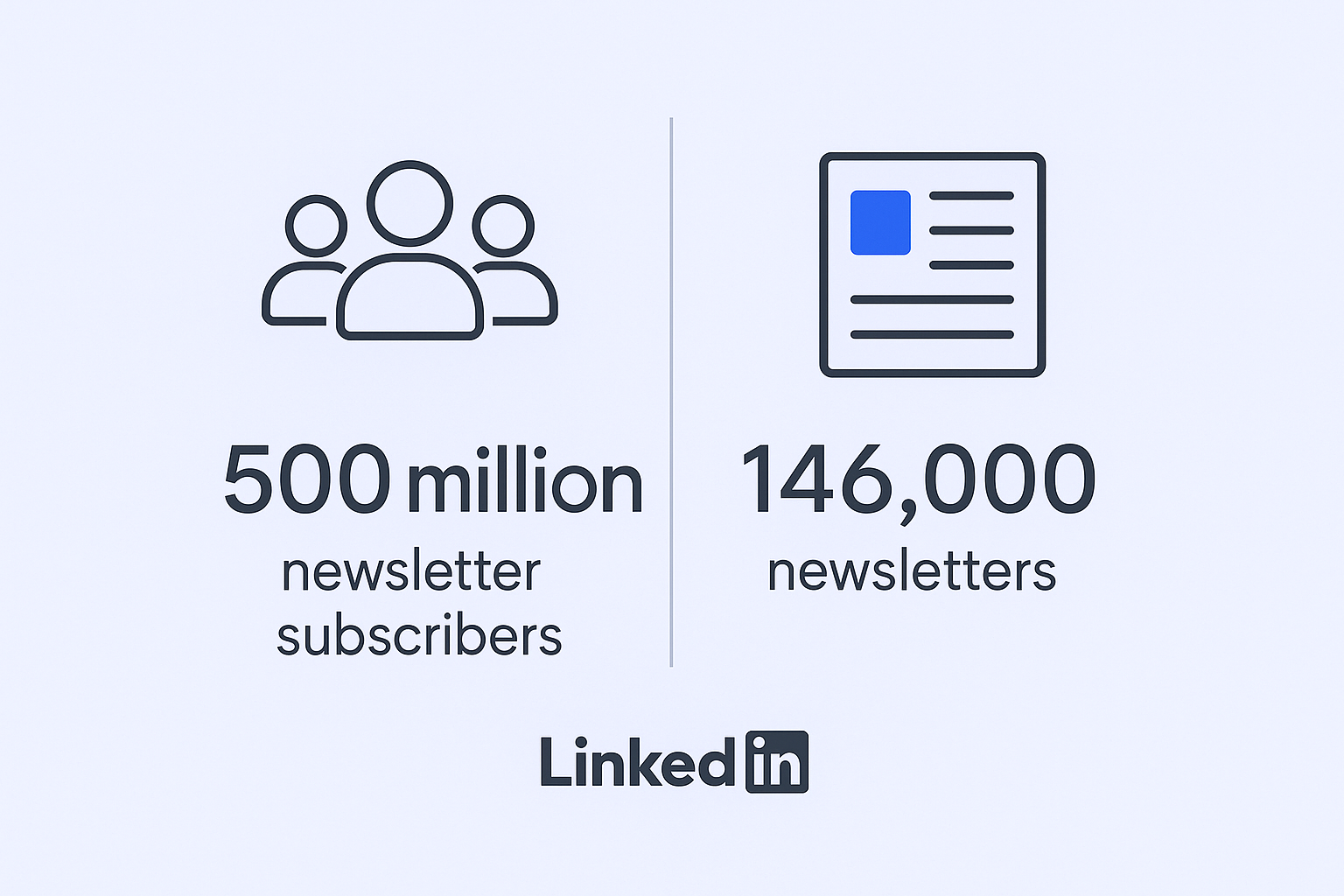
    • 500 million professionals have subscribed to newsletters – representing half a billion people who raised their hands saying “yes, I want this content”
    • 28 million unique members subscribe to newsletters – with average person subscribing to around 17 newsletters, showing they’re active information seekers
    • Only 146,000+ active LinkedIn newsletters – meaning one newsletter for every 6,800+ users, showing market isn’t saturated yet
    • 98% of top 100 newsletters written by individuals – not company pages, as LinkedIn’s algorithm favors personal brands over corporate content
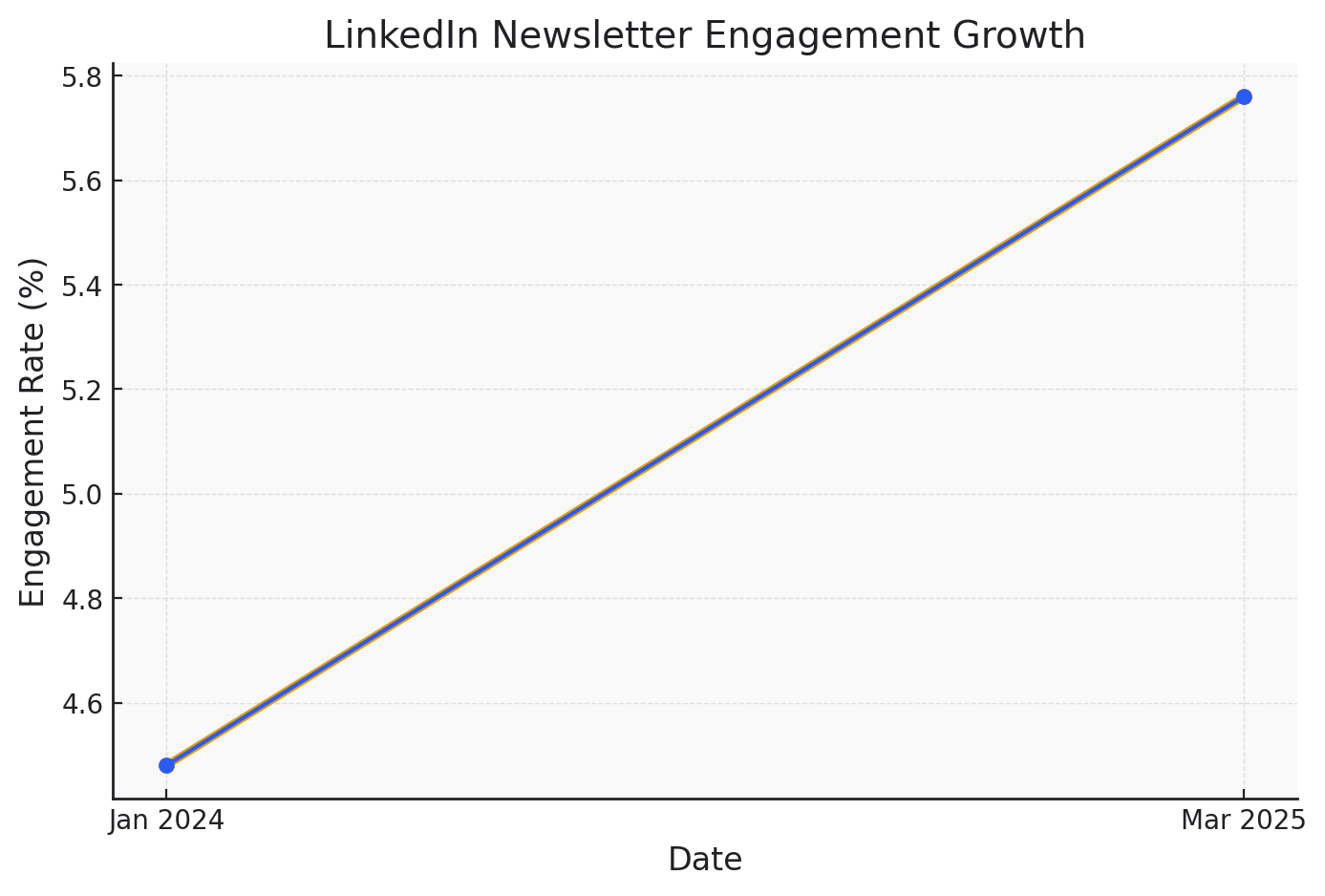
    • Engagement rates climbed from 4.48% to 5.76% – steady upward trend from January 2024 to March 2025 showing growing engagement
    • LinkedIn Conversation Ads drive 4x higher open rates – than traditional email, with newsletters benefiting from same direct-to-inbox advantage
    • 58% of decision-makers read at least one hour of thought leadership weekly – looking for insights to help make better business decisions
    • 55% of decision-makers use thought leadership to vet organizations – checking content before taking sales calls, making dormant profiles a red flag
    • 75% of decision-makers say thought leadership prompted research of new products – showing newsletters don’t just inform but create demand
    • 70% of C-suite executives admit thought leadership led them to reconsider vendor relationships – actively destabilizing competitors’ client relationships
    • 60% of decision-makers willing to pay premium – for companies demonstrating strong thought leadership, protecting pricing power
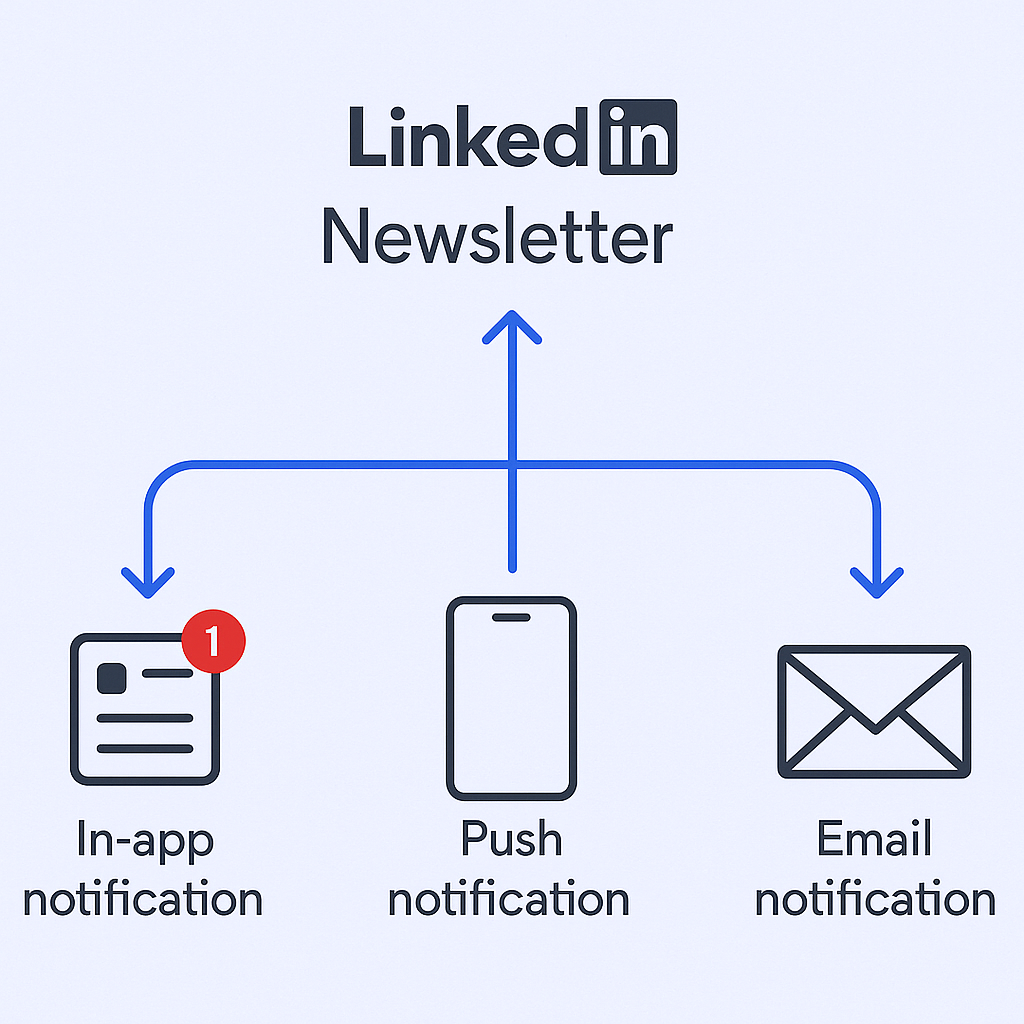
    • Near-100% delivery through triple notification system – in-app, push, and email notifications guarantee content gets seen, bypassing spam filters
    • Newsletter articles are indexed by Google – unlike regular posts that disappear after 48 hours, creating static URLs that rank in search engines
    • 72% of recruiters say LinkedIn candidates are higher quality – than other channels, with newsletters acting as filter for informed, motivated candidates
    • LinkedIn ad revenue projected to hit $10.35 billion by 2027 – showing massive platform growth while newsletters offer cost-effective alternative to paid ads
    •  

Let’s talk about something most people get wrong about LinkedIn.

You probably think posting content on LinkedIn is just about showing up consistently and hoping someone notices you. That’s what everyone does. Post. Wait. Hope.

Here’s the reality: while you’re posting into the void, smart creators are building audiences that actually care about their content—and they’re doing it with LinkedIn newsletters.

The difference? 500 million professionals have already subscribed to newsletters on the platform. That’s not a typo. Half a billion people have raised their hands and said “yes, I want this content.”

But here’s what makes this interesting: there are only 146,000+ active LinkedIn newsletters competing for those subscribers. Do the math. The market isn’t saturated yet.

If you’ve been wondering whether newsletters are worth your time, the LinkedIn newsletter statistics paint a clear picture. This isn’t another social media trend that’ll disappear next quarter. This is how professionals consume content in 2025.

Let me show you exactly what the numbers reveal.

LinkedIn Newsletter Statistics

The Scale Nobody’s Talking About

When you look at social media platforms, most of them are racing toward oversaturation. LinkedIn newsletters? Different story.

Over 500 million professionals have subscribed to at least one newsletter. But here’s where it gets interesting: those 500 million subscriptions come from approximately 28 million unique members.

What does that tell you? The average person subscribing to LinkedIn newsletters isn’t just following one. They’re following around 17 newsletters on average. These aren’t casual scrollers. These are information seekers actively hunting for insights that help them grow.

If you’re thinking “but everyone’s creating newsletters now,” think again. With over 1 billion LinkedIn members and only 146,000+ newsletters, we’re looking at one newsletter for every 6,800+ users. Compare that to the millions of dormant blogs cluttering the internet, and you start to see the opportunity.
 

🎯Target Beyond Newsletter Subscribers

Reach the 65M+ decision-makers who haven’t subscribed yet with complete LinkedIn outbound campaigns

Who Actually Wins With Newsletters?

Here’s something that’ll surprise you: 98% of the top 100 newsletters are written by individuals, not company pages.

Why does this matter? Because LinkedIn’s algorithm favors personal brands over corporate content. Your personal profile will almost always get more organic reach than your company page posting the exact same content.

Think about it—when was the last time you genuinely engaged with a corporate LinkedIn post versus someone’s personal take on an industry trend? Exactly.

Engagement Rates That Actually Matter

Most social media platforms are seeing declining organic reach. Not LinkedIn newsletters.

From January 2024 to March 2025, engagement rates climbed from 4.48% to 5.76%—a steady upward trend. While video content on the platform hits around 5.60% engagement, newsletters (categorized under native documents) consistently outperform image posts (4.85%) and polls (4.40%).


What’s driving this? LinkedIn’s triple-threat notification system:

  1. In-app notification – that red badge you can’t ignore
  2. Push notification – hits your phone immediately
  3. Email notification – lands in your inbox with priority

Traditional email marketing can’t compete with this. LinkedIn bypasses spam filters entirely and guarantees your content gets seen.



📈Get 15-25% Response Rates Guaranteed

 Our LinkedIn outbound engine delivers targeting precision, campaign design, and scaling without technical complexity

LinkedIn Conversation Ads (which use a similar direct-to-inbox mechanism) drive 4x higher open rates than traditional email. That same advantage applies to newsletters.

The Analytics Tools Revolution in 2025

If you’ve been frustrated by vague LinkedIn analytics tools in the past, 2025 brought major upgrades.

The new analytics dashboard now shows you:

  • Email Sends: Exact number of subscribers who got the email
  • Email Open Rate: How many actually opened it
  • Subscriber Demographics: Job titles, company size, location, industry

This last one is gold. Imagine knowing that 40% of your new subscribers are Sales Directors at SaaS companies. You now have data-driven proof your content resonates with your ideal audience.

You can A/B test headlines. You can see if people prefer your in-feed content versus email opens. You can identify exactly who’s reading and refine your strategy accordingly.

The Psychology Behind Newsletter Success

Decision-makers are overwhelmed. 58% of them read at least one hour of thought leadership content per week, looking for insights that help them make better business decisions.

Here’s where newsletters outperform regular posts: 55% of decision-makers use thought leadership to vet organizations they’re considering working with. Before someone takes a sales call with you, they’re checking your content. A dormant profile is a red flag. A newsletter with thousands of subscribers? That’s instant credibility.

Even more powerful: 75% of decision-makers say effective thought leadership prompted them to research products or services they hadn’t previously considered. Your newsletter doesn’t just inform—it creates demand.

The Trust Factor

Remember when I said this is about psychology? Here’s the proof.

70% of C-suite executives admit thought leadership led them to reconsider their current vendor relationship. Your newsletter isn’t just building awareness. It’s actively destabilizing your competitors’ client relationships.

And when it’s time to make a purchase decision? 60% of decision-makers are willing to pay a premium to companies that demonstrate strong thought leadership. Authority protects your pricing power.

Platform Risk vs. Owned Audiences

Let’s address something critical: platform dependency.

In late 2023, LinkedIn restricted API access and banned pages associated with data providers like Apollo.io and Seamless.ai. Overnight, companies that built their entire prospecting strategy on scraping LinkedIn data found themselves scrambling.

The lesson? Building on rented land is risky.

But here’s the smart play: newsletters create consensual audiences. People subscribe willingly. They want your content. And you can convert those subscribers into an owned email list by offering downloadable resources.

The funnel looks like this:

  • Top: LinkedIn newsletter (broad reach, high visibility)
  • Middle: Lead magnet (download our industry report)
  • Bottom: Owned email list (your CRM, zero platform risk)

Use LinkedIn’s massive reach to feed your proprietary database. That’s how you build a sustainable audience.

🚀Own Your Prospecting Strategy Completely

LinkedIn outbound eliminates platform dependency with direct targeting, managed campaigns, and predictable scaling methods

SEO Benefits Nobody Mentions

Here’s a hidden advantage: LinkedIn newsletter articles are indexed by Google.

Unlike regular LinkedIn posts that disappear into the algorithm after 48 hours, newsletter editions create static URLs. They rank in search engines. Someone searching “cold email best practices” in 2026 could discover your 2025 newsletter edition and subscribe on the spot.

This gives you two traffic sources: LinkedIn’s algorithm AND Google’s search results. How many other content formats give you that?

The Connection to Social Selling

LinkedIn newsletters fit perfectly into modern social selling strategies. Instead of cold calling or sending generic connection requests, you’re building trust at scale. When someone engages with your newsletter, you have a warm reason to reach out.

This creates what we call “inbound outbound”—you’re attracting prospects through content while maintaining the ability to proactively reach out to engaged readers. It’s the best of both worlds.

How This Compares to Cold Email

If you’re in lead generation for B2B SaaS, you know cold email response rates have plummeted. Average open rates sit around 18-22% for B2B emails, with 2-5% click-through rates.

LinkedIn newsletters? Near-100% delivery through that triple notification system. While exact click-through metrics vary, the visibility is guaranteed. Your subscriber chose to receive your content. That intent makes all the difference.

And unlike cold email software which faces increasing spam filters and compliance issues, LinkedIn manages deliverability for you. No warming required. No spam score monitoring. Just content delivery that works.

💼 LinkedIn Outbound Beats Cold Email

Access 65M+ decision-makers with campaigns achieving 15-25% response rates through complete targeting and design

7-day Free Trial |No Credit Card Needed.

The Advertising Sales Recruitment Angle

For those in advertising sales recruitment, newsletters offer a unique positioning advantage. 72% of recruiters say candidates sourced via LinkedIn are of higher quality than other channels.

A newsletter acts as a filter. Candidates who read your deep-dive industry content are typically more informed and motivated than those who just click “Quick Apply” on job boards.

Plus, job posts requiring “relationship development” skills have increased 54x. A newsletter that teaches those skills naturally attracts exactly the candidates you want to hire.

LinkedIn’s ad revenue is projected to hit $10.35 billion by 2027. For companies offering alternatives (like cold email solutions), newsletters provide a cost-effective way to reach decision-makers without paying for ads.

Content That Converts

Not all newsletter content performs equally. The data shows certain approaches drive better results:

Challenger Insights work best—content that questions common beliefs and provides data to support a different perspective. “Why ‘Open Rates’ Are Vanity Metrics in 2025” performs better than “Email Marketing Tips.”

Curated Content also wins. Busy professionals want someone to filter industry news and synthesize it into actionable takeaways. Be the person who reads 10 articles and distills them into the key lessons.

Personal Experiments build trust through vulnerability. Document your failures alongside your wins. “I Sent 500 Cold Emails Last Week. Here’s Why 490 Failed” gets more engagement than generic success stories.

Tactical Playbooks drive saves and shares. Give away specific scripts, templates, or workflows. The more actionable your content, the more valuable you become.

Conclusion

The LinkedIn newsletter statistics aren’t just numbers—they’re a roadmap.

500 million professionals have already voted with their subscriptions. They want long-form content that helps them make better decisions. They’re tired of surface-level posts. They’re looking for depth.

With only 146,000+ newsletters competing for that attention, you’re not late to the game. You’re early enough that quality content still cuts through the noise.

The platform gives you tools no other channel offers: triple notification delivery, granular analytics, built-in SEO benefits, and protection from spam filters. You get reach without paid ads and trust without cold outreach.

But here’s the thing—knowing the statistics means nothing if you don’t act on them. The creators winning with newsletters right now aren’t the ones with the biggest followings or the fanciest credentials. They’re the ones who showed up consistently, provided value, and treated their subscribers like partners instead of prospects.

The question isn’t whether newsletters work. The data proves they do. The question is whether you’ll build yours before your competitors do.

FAQs

How does a LinkedIn newsletter compare to a regular blog?

A regular blog requires you to drive traffic through SEO, advertising sales recruitment, or social shares. A LinkedIn newsletter pushes content directly to subscribers via in-app notifications, push alerts, and email. This "push" mechanism delivers significantly faster initial engagement compared to waiting for organic blog traffic. Plus, you benefit from LinkedIn's massive professional network without needing an existing audience.

Can I monetize a LinkedIn newsletter?

LinkedIn doesn't pay creators directly for newsletter content (unlike YouTube). However, indirect monetization is highly effective. Professionals use newsletters for lead generation, consulting offers, course sales, and driving traffic to paid products. Some creators also secure sponsorships or use newsletters to build audiences for paid platforms like Substack. The 60% of decision-makers willing to pay premium prices for demonstrated thought leadership shows clear ROI potential.

What happens if I change my newsletter topic?

Drastic pivots (like shifting from "Sales Strategy" to "Gardening Tips") typically trigger mass unsubscribes. However, strategic evolution works well. If you're moving from "Cold Calling" to "Holistic Sales Strategy," that's a natural expansion. Always publish a "transition edition" explaining the change before implementing it. This maintains trust and gives subscribers the option to adjust their expectations or unsubscribe gracefully.

How often should I publish my newsletter?

Consistency beats frequency. Daily newsletters work for news curation but cause fatigue in B2B contexts. Bi-weekly or monthly cadences perform best for professional audiences, allowing time for deep research and avoiding subscriber burnout. LinkedIn's algorithm rewards predictability—publishing every Tuesday at 9 AM trains both the platform and your audience to expect your content, boosting early engagement velocity.

Do I need a large following to start a newsletter?

No. The 28 million members subscribing to newsletters aren't following individual creators first—they're subscribing based on content value. Your subscriber count operates independently from your connection count. Focus on delivering specific, actionable insights to a niche audience. A newsletter with 1,000 engaged subscribers in your industry beats 10,000 unengaged connections any day.

How to Build a High-Converting B2B Sales Funnel from Scratch on LinkedIn

How to Build a High-Converting B2B Sales Funnel from Scratch on LinkedIn ​