
🎉Find Prospects and Send Cold Emails & LinkedIn Outbound | All in One Place

LinkedIn Profile Picture Statistics That Will Shock You (2026)

Table of Contents

LinkedIn Profile Picture Statistics

  • Profiles with professional photos get 21x more views than those without – 2,100% difference in visibility, not about vanity but being found, trusted, and remembered
  • 9x more connection requests received with professional photo – people dramatically more likely to reach out and connect when seeing real person behind profile
  • 36x more messages with quality profile photo – face humanizes every conversation before it starts, making InMail and DMs significantly more likely
  • 74% of first impressions based on profile picture alone – before reading headline or scanning experience, credibility already judged from photo
  • 7x more likely to appear in LinkedIn search results with photo – algorithm treats profiles without photos as incomplete, burying them in rankings
  • 100 milliseconds to form judgment about face – one-tenth of second, amygdala instantly calculates safe/dangerous, trust/flee before reading single word
  • 65% visual recall vs 10% text recall after 3 days – face becomes memory anchor, prospects remember faces not job titles or text descriptions
  • 57% of LinkedIn traffic comes from mobile – profile photo is tiny circle on mobile, face must dominate frame to be recognizable
  • 2,000 x 2,000 pixels minimum recommended – higher than LinkedIn’s 400×400 minimum, ensures crisp appearance on 4K monitors and Retina displays
  • 60% rule for composition – face should fill 60% of frame for optimal mobile visibility where photo appears as small circle
  • 28% of recruiters reject cropped group photos – disembodied hands or wedding backgrounds signal laziness and lack of professionalism
  • 38% flag AI-smoothed images as untrustworthy – showing up on video call looking different than profile creates micro-breach of trust
  • 71% of recruiters and buyers reject candidates based on visual red flags alone – profile picture either opens doors or slams them shut with no neutral
  • Update photo every 2-3 years recommended – using photo from 10+ years ago creates “catfish effect” breaking trust when prospects meet you
  • $300 professional shoot investment ($30 for AI generation) – single highest-ROI investment in personal brand with multiplicative advantages compounding over time


You spent three hours perfecting your LinkedIn headline. You rewrote your summary twice. You even added those fancy bullet points everyone talks about.

But your profile still gets zero views.

Here’s the thing—the problem isn’t your words. It’s your face. Or more specifically, the lack of a professional one staring back at prospects when they land on your profile.

LinkedIn profile picture statistics reveal something wild: profiles with professional photos get 21 times more views than those without. That’s not a typo. We’re talking about a 2,100% difference in visibility.

This isn’t about vanity. It’s about being found, trusted, and remembered in a platform with 65+ million decision-makers scrolling past hundreds of profiles every week.

Let’s break down exactly why your headshot is either making you invisible or turning you into a connection magnet.

The Numbers Don’t Lie

The data around LinkedIn profile pictures is pretty brutal if you’ve been skipping this step. But if you nail it? You’re looking at some serious advantages.

21x more profile views. Research shows that profiles with a professional photo receive dramatically more visibility than those without one. When someone searches for expertise in your field, LinkedIn’s algorithm rewards complete profiles—and your headshot is the foundation of that completeness.

9x more connection requests received. People are nine times more likely to reach out and connect when they see a real person behind the profile. Think about it—would you accept a connection request from a blank avatar? Neither would your prospects.

36x more messages. Once you’re connected, having a quality profile photo translates to 36 times more InMail and direct messages. Your face humanizes every conversation before it even starts.

📸 Profile Perfect, Pipeline Empty?

LinkedIn outbound fills your calendar while your profile attracts passive interest

74% of first impressions are based on your profile picture alone. Before anyone reads your carefully crafted headline or scans your experience, they’ve already judged your credibility, trustworthiness, and professionalism based on that tiny circle at the top of your profile.

7x more likely to appear in search results. LinkedIn’s algorithm treats profiles without photos as incomplete, burying them in search rankings. If you’re not showing up when prospects search for solutions, you might as well not exist.
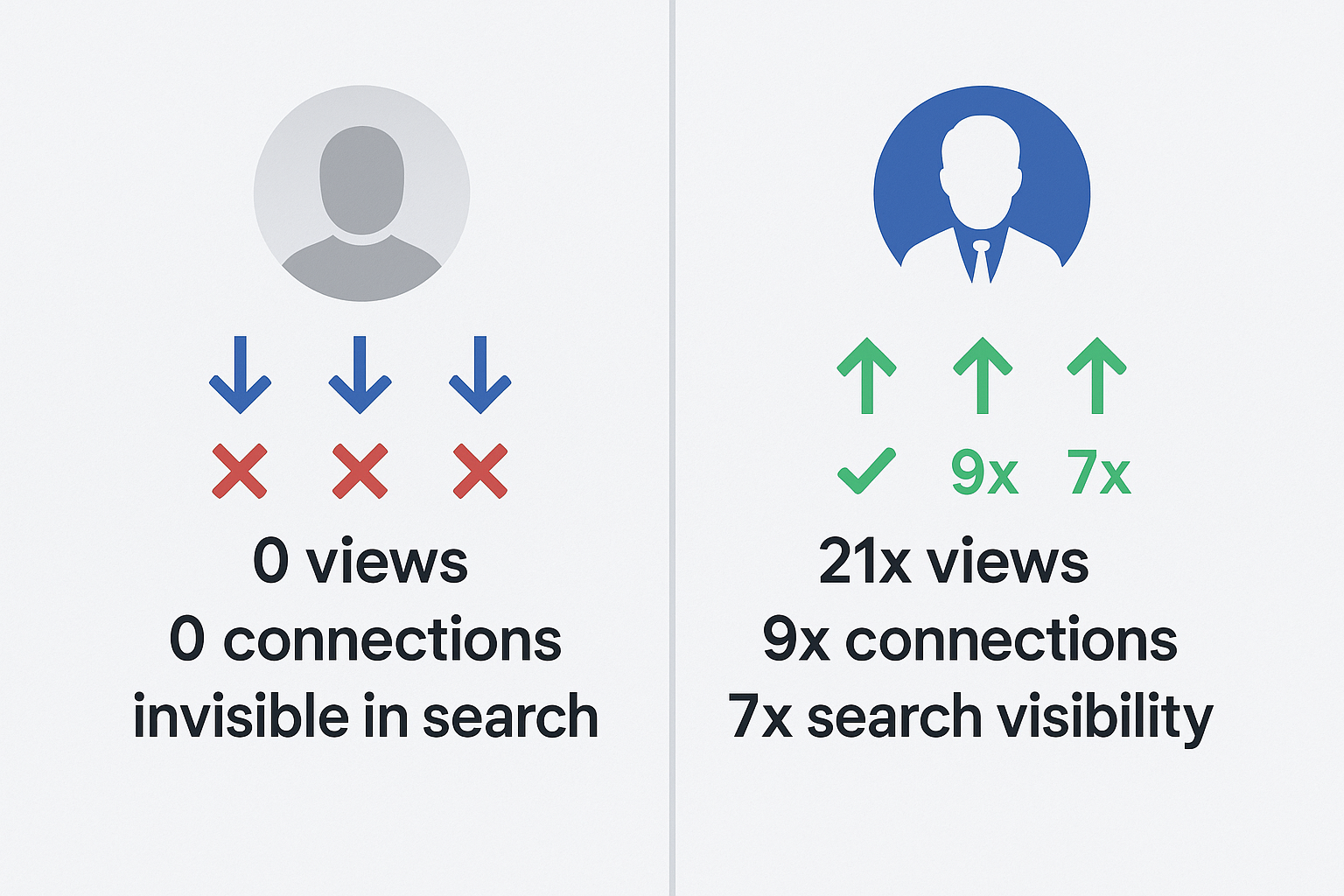


Here’s what this looks like in real terms: Two salespeople with identical experience. One has a professional headshot, the other doesn’t. The one with the photo gets 7x more visibility in searches, 9x more connection requests, and 36x more conversations. Same skills. Wildly different results.

The math is clear—your profile picture isn’t optional decoration. It’s the highest-ROI investment in your entire LinkedIn strategy.

Why Your Brain Can’t Ignore a Face

The statistics are one thing. But why does a simple photo have such an outsized impact?

It comes down to how your brain processes information—and it’s way faster than you think.

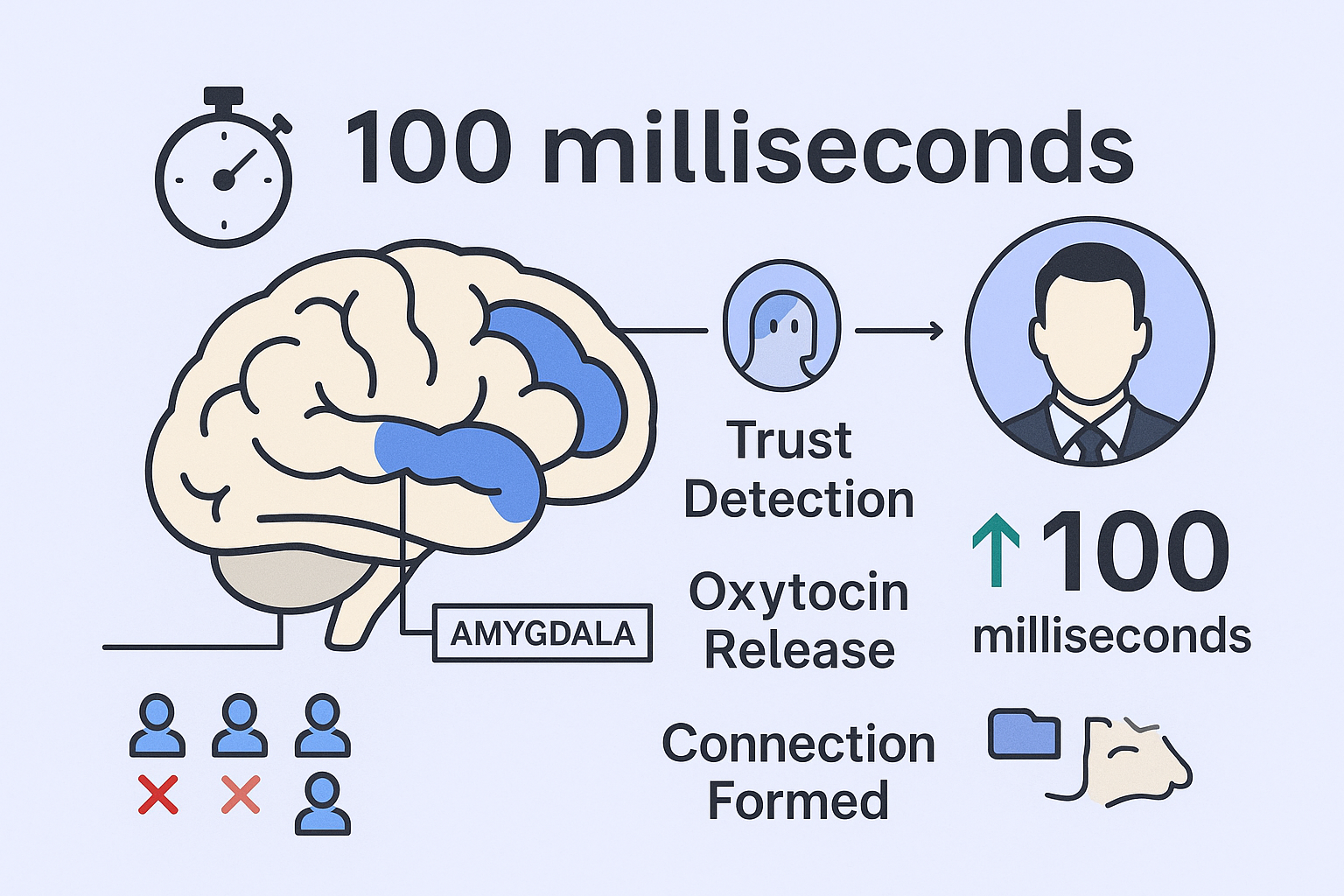
100 milliseconds. That’s how long it takes someone to form a judgment about your face. One-tenth of a second. Before they’ve read a single word of your headline, their brain has already decided whether you’re trustworthy, competent, or worth their time.

This happens in the amygdala, the part of your brain responsible for threat detection. When someone sees a face, their brain instantly calculates: “Safe or dangerous? Friend or stranger? Trust or flee?”

A missing photo? That triggers uncertainty. And uncertainty in professional contexts defaults to “skip.”

🎯 Waiting for Profile Views?

 Our outbound system books 15-25% response rates without waiting for discovery

65% visual recall vs 10% text recall. Three days after viewing your profile, prospects will remember 65% of visual content but only 10% of what they read. Your face becomes an anchor in their memory. When they see your name pop up in their feed weeks later, they’ll instantly recall who you are—not because they memorized your job title, but because they remember your face.

This is why LinkedIn profiles with photos dominate engagement. They’re not just being seen more—they’re being remembered more.

Direct eye contact triggers oxytocin release. When your photo makes direct eye contact, it activates the same neural pathways as an in-person conversation. The brain releases oxytocin—the bonding hormone—creating an instant sense of connection and trust.
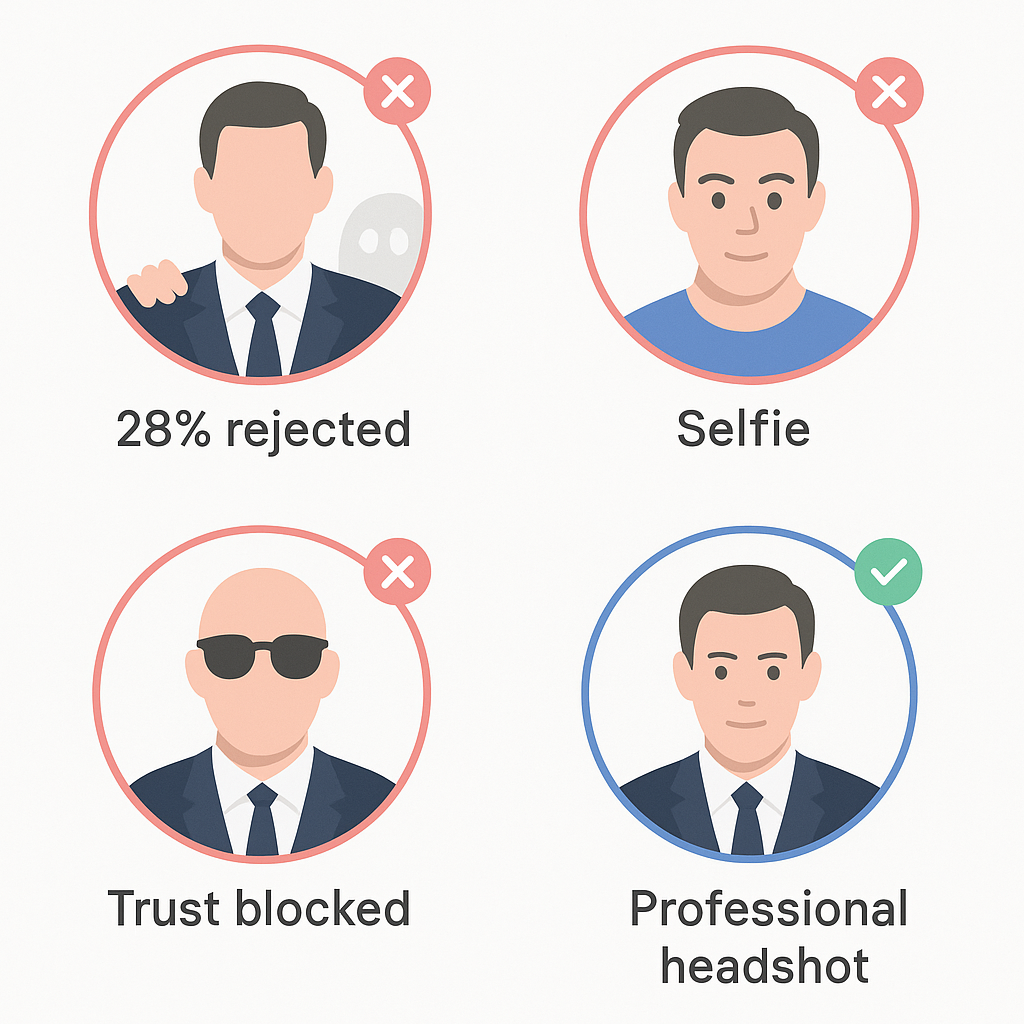


This is also why certain photo mistakes are so costly. Wearing sunglasses blocks eye contact, killing the oxytocin effect. Looking away from the camera creates distance and superiority, breaking the connection loop. Your brain registers these as deceptive or dismissive behaviors.

The “face-pop” effect in search results is the final piece. When someone scans a list of 20 profiles, their eyes automatically lock onto faces. It’s evolutionary wiring—we’re programmed to notice human faces before anything else. A blank avatar gets filtered out as noise. A professional headshot pulls focus like a magnet.

What Actually Works (The Technical Breakdown)

You don’t need a $5,000 photoshoot. But you do need to get the technical details right.

2,000 x 2,000 pixels minimum. LinkedIn recommends 400 x 400, but that’s the bare minimum. High-resolution screens (4K monitors, Retina displays) are everywhere now. Start with 2,000 x 2,000 pixels and let LinkedIn compress it down. You’ll look crisp on every device.

PNG format beats JPG. JPEG compression creates blocky artifacts around sharp edges—like the lines of a suit or the texture of hair. PNG is lossless, keeping your image clean and professional.

The 60% rule for composition. Your face should fill 60% of the frame. Not your full body. Not a tiny dot in the distance. On mobile (where 57% of LinkedIn traffic comes from), your profile photo is a tiny circle. If your face doesn’t dominate the frame, you’re unrecognizable.

💼 Optimized Profile, Zero Meetings?

We handle targeting, messaging, and follow-ups so your calendar fills predictably

Direct eye contact is non-negotiable. Look straight at the camera. This creates the oxytocin connection we talked about earlier. Looking off to the side might work for a fashion shoot, but for sales and networking, it signals distance and superiority.

Professional lighting beats AI smoothing. Natural light from a large window creates soft, flattering shadows. Ring lights work too—position them slightly above eye level, angled down. The key is avoiding harsh overhead lighting (creates raccoon eyes) and on-camera flash (creates oily skin and red-eye).

AI-generated headshots have exploded in popularity. For $30, you get hundreds of variations. But here’s the catch—38% of professionals view overly smoothed AI images as red flags. If you use AI, ruthlessly curate for authenticity. Pick the version that looks most like you in real life, not the most flattering one.

Background psychology matters. Blue backgrounds signal trust and stability—perfect for finance and tech. Grey and neutral tones communicate professionalism without distraction. Avoid busy backgrounds that compete for attention. You want faces scanning your profile to focus on you, not the bookshelf behind you.

The Mistakes Costing You Connections

Even smart professionals make these easily avoidable errors.

28% of recruiters reject cropped group photos. That disembodied hand on your shoulder or the blur of a tuxedo at a wedding screams “I couldn’t be bothered to take a proper photo.” It signals laziness and lack of professionalism.

38% flag AI-smoothed images as untrustworthy. When you show up on a video call looking 15% different than your profile picture, prospects feel tricked. That micro-breach of trust subtly undermines every conversation afterward.

Sunglasses block the trust connection. Covering your eyes is evolutionarily coded as deceptive behavior. Eyes are the primary indicator of intent. No eyes, no trust. Same goes for hair covering your face.


Selfie distortion damages authority. Selfies are taken with wide-angle phone lenses at arm’s length. This creates barrel distortion—your nose looks bigger, your ears look smaller, and your face looks compressed. Professional portraits use 85mm+ lenses that create natural focal compression, making you look more authoritative.

Outdated photos create the “catfish effect.” Using a photo from 10 years ago might make you look younger, but when prospects meet you and you don’t match the image, you’ve broken trust before the conversation even starts. Grey hair and wrinkles signal experience and competence—especially in consulting and leadership roles.

Conclusion: The $300 Investment That 10x’s Your Pipeline

Your LinkedIn profile picture isn’t a static image. It’s a working asset.

While you sleep, it’s greeting prospects, validating connection requests, and building subconscious trust with decision-makers scanning hundreds of profiles every week.

The statistics are undeniable: 21x more views. 9x more connection requests. 36x more messages. These aren’t marginal gains—they’re multiplicative advantages that compound over time.

🚀 Ready for Active Outreach?

Combine your optimized profile with systematic outbound for 40-50% engagement rates

7-day Free Trial |No Credit Card Needed.

Here’s your action plan:

Audit your current photo. If it’s more than two years old, a cropped group shot, or a selfie—it’s time for an upgrade.

Invest $300 in a professional shoot (or $30 in a high-quality AI generation if you’re careful about authenticity). This is the single highest-ROI investment in your personal brand.

Optimize the technical specs. 2,000 x 2,000 pixels minimum, PNG format, face filling 60% of frame, direct eye contact.

Test and refine. Use tools like Photofeeler to benchmark how your photo scores on competence, likability, and influence.

Remember—71% of recruiters and buyers reject candidates based on visual red flags alone. Your profile picture either opens doors or slams them shut. There’s no neutral.

Get this right, and everything else you do on LinkedIn gets easier.

FAQs

What size should my LinkedIn profile picture be?

Upload at least 2,000 x 2,000 pixels in PNG format. While LinkedIn's minimum is 400 x 400, higher resolution ensures you look sharp on 4K displays and Retina screens. Keep the file under 8MB.

Should I use an AI-generated headshot for LinkedIn?

AI headshots can work for budget-conscious professionals, but 38% of people view overly smoothed AI images as red flags. If you go this route, choose the version that looks most like your real appearance, not the most flattered version. For high-stakes roles, invest in traditional professional photography.

How often should I update my LinkedIn profile picture?

Update your photo every 2-3 years, or whenever your appearance changes significantly (new hairstyle, facial hair, glasses). Using an outdated photo creates a "catfish effect" that breaks trust when you meet prospects in person or on video calls.

Does my LinkedIn photo really affect connection requests?

Yes—dramatically. Profiles with professional photos receive 9 times more connection requests than those without. Your photo is the first trust signal prospects see when deciding whether to accept your outreach. A missing or low-quality photo triggers the "I don't know this person" response, often leading to ignored requests or account restrictions.

How can LinkedIn outbound complement my optimized profile?

LinkedIn outbound delivers 15-25% response rates through systematic targeting and campaign design. Book a strategy meeting to learn our complete methodology.

How to Build a High-Converting B2B Sales Funnel from Scratch on LinkedIn

How to Build a High-Converting B2B Sales Funnel from Scratch on LinkedIn ​